Commentary
Hiring teens instead of teachers
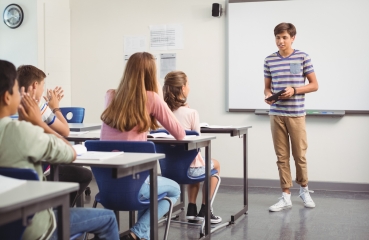
We’ve long known that kids can teach other kids all sorts of stuff. Think about how you learned about new music, novel cuss words—even the birds and the bees.
We’ve long known that kids can teach other kids all sorts of stuff. Think about how you learned about new music, novel cuss words—even the birds and the bees.

Earlier this year, I took to the pages of Education Next to make the case for NAEP to test starting in kindergarten, stating that, “The rationale for testing academic skills in the early elementary grades is powerful.” Therefore, “Starting NAEP in 4th grade is much too late.” I was wrong, and I’m sorry. Kindergarten is much too late. We must begin a program of NAEP testing for newborns.
It’s no secret that Denver’s latest school board is wreaking havoc on the suite of bold education reforms that the Mile High City was known for over the past two decades.

What makes an effective English language arts curriculum? Is it the books and other readings that it includes? The skills that it imparts to students? Something else?

“Hiccups and hard lessons: What it takes to bring big new tutoring programs to America’s classrooms.” —Chalkbeat How districts can design effective summer learning programs.
On this week’s Education Gadfly Show podcast (listen on
The Biden administration is proposing an unprecedented rewrite of the bipartisan federal Charter Schools Program (CSP): new regulations that are unprecedented not just for the CSP but for all federal K–12 programs.
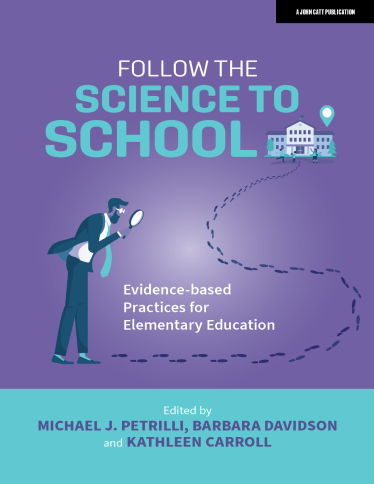
A new edited volume, “Follow the Science to School,” aims to identify what science tells us about evidence-based practices in elementary schools, and describes what they look like in the real world of classrooms. Following the science into its application in this way—and sharing how it works on the ground—enables us to suggest workable answers to key questions rather than challenging every teacher, school, or district, to figure out those answers on their own.

Those who pay attention to the “Nation’s Report Card” tend to take it for granted. In truth, most people heed it not at all.
There is much to love in George Packer’s essay on the culture wars and education in The Atlantic. He castigates both sides of the partisan aisle for their follies: the left’s support for school closures “far longer than either the science or welfare of children justified” and the
Not all college majors are created alike, but it turns out that employers want their new hires to exhibit many of same skills regardless of what they major in. A recent study examines online job ads as a proxy for what employers view as the skills inherent in various college majors.
The typical timeline for college-bound high school seniors is to start a few months after graduation—the first available opportunity. But is that unbroken path into college the right move for everyone? New research suggests that academic breaks after high school have both short- and long-term impacts on postsecondary enrollment and labor market outcomes.

California has revised its math framework, leaving some course-offering decisions to local districts to mitigate backlash its last state-level decision caused.
On this week’s Education Gadfly Show podcast, Mike Petrilli, David Griffith, and Victoria McDougald discuss Foll
Follow the Science to School: Evidence-based Practices for Elementary Education is published by John Catt Educational Press and is available for purchase from the John Catt Bookshop and Amazon.
Inflation is up, and no, I’m not talking about gas prices. I’m talking about some troubling trends observed among the 2019 graduating class of high school students in the recently released 2019 NAEP High School Transcript Study.

Joint Statement from Peggy G. Carr, Ph.D., Commissioner of the National Center for Education Statistics and Lesley Muldoon, Executive Director of the National Assessment Governing Board

High school-age Americans struggling mightily with academics aren’t well served by our current approach to secondary education. But there may be a better model that would give them a more worthwhile experience and lead to better long-term outcomes: Let them take jobs while still in high school—during the school day, during both their junior and senior years, full pay included, no strings attached.

We’re all watching the news and hating what we’re seeing, the one big exception being the patriotic heroism of millions of Ukrainians (and the much smaller but still impressive collection of others who have been traveling to Ukraine to join the fight for freedom).

Editor's note: This post was originally published on tomloveless.com.

More data confirm the severity of the post-pandemic literacy crisis, especially for students in impoverished communities. —New York Times Sociological research on thousands of teenagers finds that religious faith and communities are correlated with students’ academic success.