Mobile Navigation

  • National
    • Policy
      • High Expectations
      • Quality Choices
      • Personalized Pathways
    • Research
    • Commentary
      • Gadfly Newsletter
      • Flypaper Blog
    • Events
    • Scholars Program
  • Ohio
    • Policy
      • Priorities
      • Media & Testimony
    • Research
    • Commentary
      • Ohio Education Gadfly Biweekly
      • Ohio Gadfly Daily
  • Charter Authorizing
    • Application
    • Sponsored Schools
    • Resources
  • About
    • Mission
    • Board
    • Staff
    • Career
Home
Home
Advancing Educational Excellence

Main Navigation

  • National
  • Ohio
  • Charter Authorizing
  • About

National Menu

  • Topics
    • Accountability & Testing
    • Advanced Education
    • Career & Technical Education
    • Charter Schools
    • Curriculum & Instruction
    • ESSA
    • Evidence-Based Learning
    • Facilities
    • Governance
    • Personalized Learning
    • Private School Choice
    • School Finance
    • Standards
    • Teachers & School Leaders
    • Think Again
  • Research
  • Commentary
    • Gadfly Newsletter
    • Flypaper Blog
    • Gadfly Podcast
  • Events
  • Scholars Program

Evidence-Based Learning

Displaying 1-30 of 833 results
College graduates
Commentary
10.8.2026
Evidence-Based Learning

Defining high-wage, high-growth jobs available without a four-year degree

Jeff Murray

While four-year college degrees are largely viewed as a direct path into career-ladder jobs (AI fears notwithstanding), two-year degrees and shorter-term certificates are seen as less of a sure thing.


College graduates
Rocky terrain
Commentary
10.1.2026
Evidence-Based Learning, Curriculum & Instruction, Governance, Teachers & School Leaders

The uneven ground of the no-zero grading policy landscape

Kennedy Sundberg

The push for no-zero grading policies, which prohibit assigning zeros for class assignments or tests, began during a broader “

Rocky terrain
F grade
Commentary
10.1.2026
Evidence-Based Learning, Curriculum & Instruction, Teachers & School Leaders

Do dual enrollment students still benefit despite failing college courses?

Jeff Murray

Dual enrollment (DE) programs allow students to take college courses for credit—usually at no cost—while still in high school. Students must pass the course in order to earn credit. Efforts to increase DE access mean more high schoolers than ever are taking college courses.

F grade
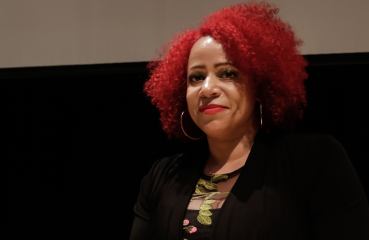
Nikole Hannah-Jones
Commentary
10.1.2026
Evidence-Based Learning, Governance, Teachers & School Leaders

The lessons we’re not learning from Nikole Hannah-Jones

Robert Pondiscio

I’m going to be impatient and blunt: Nikole Hannah-Jones’s daughter did not fail to learn fractions because she and her classmates were Black. Her teacher did not repeatedly fail to show up to work because the school was segregated. Neither did her assignments go ungraded because affluent children attended school elsewhere.

Nikole Hannah-Jones
School books
Commentary
9.25.2026
Evidence-Based Learning, Curriculum & Instruction, Governance, Teachers & School Leaders

The content opportunity: Prioritizing what we teach as much as how

Miah Daughtery

For decades, teacher professional learning in middle and high school has prioritized one thing above all else: pedagogy.

School books
Contract signing
Commentary
9.24.2026
Accountability & Testing, Evidence-Based Learning, Charter Schools, Governance

How long should charter school contract terms be?

Jeff Murray

A defining feature of charter schools is the oversight structure provided by the authorizer. It is an authorizer’s job to determine whether schools are fulfilling the terms of their charters across numerous areas, not least of which is student outcomes.

Contract signing
C grade on a chalkboard
Commentary
9.17.2026
Accountability & Testing, Evidence-Based Learning, Governance

What state standards look like on the NAEP scale

Amber M. Northern, Ph.D.

The National Center for Education Statistics (NCES) regularly publishes reports using results from NAEP testing to compare the proficiency standards that states set for their students.

C grade on a chalkboard
Clock and money jar
Commentary
9.17.2026
Evidence-Based Learning, Governance, Teachers & School Leaders

How money and time shape children’s early advantages

Kendall Rogers

The importance of childhood investments to the trajectory of life is commonly accepted, but less is known about the size and sources of disparities in these investments.

Clock and money jar
Alpha School
Commentary
9.11.2026
Evidence-Based Learning, Curriculum & Instruction, Governance, Private School Choice, Teachers & School Leaders

Alpha School’s Theranos problem

Van Schoales

I was recently walking around Austin, Texas. And a block from the new W Hotel, I passed Alpha School, housed in what looked like a tech office. Outside was a sign reading “Kids crush academics in two hours, build life skills, and thrive,” under a big photo of the founder.

Alpha School
Students on computers
Commentary
9.10.2026
Evidence-Based Learning, Curriculum & Instruction, Teachers & School Leaders

Screens, AI, and grade inflation are hollowing out the American high school experience

Amber M. Northern, Ph.D., Michael J. Petrilli

High school students report widespread screen distraction, AI misuse, and grading practices that make it easier to earn high marks without mastering the relevant material. A new Fordham survey suggests that we will only solve these problems by restoring the basic conditions for learning: attention, effort, honest work, and adults willing to hold adolescents to high expectations.

Students on computers
Bricklaying
Commentary
9.3.2026
Evidence-Based Learning, Governance

Don’t just defend or destroy the National Center for Education Statistics. Rebuild it.

Bruno V. Manno

In early 2025, the National Center for Education Statistics (NCES) was largely dismantled.

Bricklaying
Students walking to school
Commentary
8.27.2026
Evidence-Based Learning, School Finance, Charter Schools, Governance, Private School Choice

The supply side of school choice: Who participates? Who doesn’t?

Mike McShane

“If you build it, they will come” makes a great tagline for a mythical baseball movie but a poor strategy for educational improvement. Markets are not magic and are shaped by external factors that encourage or discourage participation.

Students walking to school
Student and book
Commentary
8.20.2026
Evidence-Based Learning, Curriculum & Instruction, Governance, Teachers & School Leaders

Ohio’s implementation of the science of reading

Aaron Churchill

Approximately half of American adults read at a sixth-grade level or below, according to the Barbara Bush Foundation. The consequences of poor literacy skills are profound: higher unemployment rates, lower-paying work, and struggles with routine tasks such as reading prescriptions or bills.

Student and book
Teacher observation
Commentary
8.20.2026
Accountability & Testing, Evidence-Based Learning

Expanded review process for determining school quality leads to minimal improvement

Jeff Murray

New York City Schools piloted an external qualitative review (QR) in a subset of its schools for the first time in 2005, intended to expand the definition of school quality via a school inspection-type model and to broaden the scope of educational accountability.

Teacher observation
Student test results
Commentary
8.20.2026
Accountability & Testing, Evidence-Based Learning

What early test scores can tell us about a student’s future

Kennedy Sundberg

Third-grade proficiency is one of the most consequential milestones in a child’s academic career. Around this time, students transition from learning foundational skills to using those skills to engage with more complex content.

Student test results
Bridge
Commentary
8.13.2026
Evidence-Based Learning, Facilities, School Finance, Charter Schools, Governance, Teachers & School Leaders

Missouri narrowed its charter school funding gap. But it didn’t close it.

Amber M. Northern, Ph.D., Michael J. Petrilli

For those of us who have long pushed for charter schools to receive fair funding, progress has been slow, uneven, and hard-won. That’s why we at the Thomas B.

Bridge
Teenagers taking a test
Commentary
8.13.2026
Accountability & Testing, Evidence-Based Learning, Governance, Teachers & School Leaders

The Classic Learning Test has become a graduation loophole in Florida

Charles Barone

Defense Secretary Pete Hegseth has called the CLT the nation’s new “gold standard.” USA Today’s blockbuster investigation, published today, suggests a more accurate label would be “boondoggle.” In Florida, the state that has done more than any other to

Teenagers taking a test
Teachers union illustration
Commentary
7.31.2026
Evidence-Based Learning, Governance, Teachers & School Leaders

Across the states: Reactions to Fordham’s updated teachers union strength rankings

Jill Hoppe, Meredith Coffey, Ph.D.

In the years since Fordham’s landmark 2012 study on teachers union strength, the education and policymaking landscapes have changed dramatically.

Teachers union illustration
Boy reading
Commentary
7.31.2026
Accountability & Testing, Evidence-Based Learning, Curriculum & Instruction, Teachers & School Leaders

New NAEP data show boys have made a historic comeback in reading. Is it too good to be true?

Megan Kuhfeld

New federal test score data from the long-term trend (LTT) report reveal a remarkable finding: For the first time in the 50 years of the assessment, nine-year-old boys are now scoring equally with girls in reading.

Boy reading
Union strike
Commentary
7.30.2026
Evidence-Based Learning, Governance, Teachers & School Leaders

How has teachers union strength changed? Diving deeper into "A Crowded Table"

Leslie K. Finger

A Crowded Table: Teacher Union Strength in 2026 shows what we have all seen transpire over the last several years, as the Janus decision, the post-Covid rise of right-wing parent advocacy grou

Union strike
Students working on machine
Commentary
7.24.2026
Evidence-Based Learning, School Finance, Career & Technical Education, Charter Schools, Curriculum & Instruction, Governance

Good programs aren’t enough: States need a work-based learning strategy

Rachel Canter, Bruno V. Manno

In Philadelphia, a young person leaving Launchpad Philly’s post-high school graduate training track is on pace to earn nearly $30,000 within nine months and $50,000 within one year. That far outpaces the roughly $12,500 a young Philadelphian with only a high school diploma typically earns.

Students working on machine
DNA
Commentary
7.16.2026
Evidence-Based Learning, Advanced Education

Should we use genetics to understand high-potential, low-income students? These researchers think it’s worth trying.

Brandon L. Wright

Low-income children face many disadvantages that impede academic success. But how much do those disadvantages matter, and how early do their effects become visible?

DNA
Student in a classroom
Commentary
7.10.2026
Accountability & Testing, Evidence-Based Learning, Curriculum & Instruction, Teachers & School Leaders

There’s actually more to the i-Ready story: A rebuttal

Daniel Carr

Curriculum Associates CEO Kelly Sia recently defended her company’s flagship i-Ready platform to Fordham readers. The program, used by millions of students, has come under fire from teachers, parents, and students as part of an ed-tech backlash sweeping the nation.

Student in a classroom
Bad grade
Commentary
7.9.2026
Accountability & Testing, Evidence-Based Learning, Curriculum & Instruction, Governance, Teachers & School Leaders

Through-year assessments can improve a broken testing system

Jenn Vranek, Khaled Ismail

In a recent Flypaper post, Dale Chu argues that the promise of a single assessment system doing multiple things well is “too good to be true.” He says that through-year assessments (TYA)—tests administered periodically throughout the school year that culminate in a summative score—are tryi

Bad grade
School entrance
Commentary
7.9.2026
Evidence-Based Learning, Curriculum & Instruction, Governance, Teachers & School Leaders

Sixteen years later, what did NYC’s small schools accomplish?

Amber M. Northern, Ph.D.

New York City’s Small Schools of Choice (SSC) program was one of a panoply of education reforms enacted in the early 2000s under then-mayor Michael Bloomberg and schools chief Joel Klein.

School entrance
Closed school
Commentary
7.9.2026
Evidence-Based Learning, Facilities, School Finance, Governance

Do school closures save money?

Alicia Anderson

Throughout the first quarter of the 21st century, schools built up capacity to accommodate growing student populations, adding classroom space, teacher positions, and the many resources that go into educating a child. The Covid-19 pandemic accelerated the build-up through the injection of giant sums of federal money to supplement state and local budgets.

Closed school
Empty classroom
Commentary
7.2.2026
Evidence-Based Learning, School Finance, Governance, Teachers & School Leaders

A school-closure study that does not support its own conclusions

Brian R. Fitzpatrick, Ph.D.

A new white paper from NWEA, and its accompanying op-ed in The Hill, claim that districts are more likely to permanently shutter schools with a high proportion of poor and/or Black stud

Empty classroom
Scoreboard
Commentary
6.25.2026
Accountability & Testing, Evidence-Based Learning, Governance

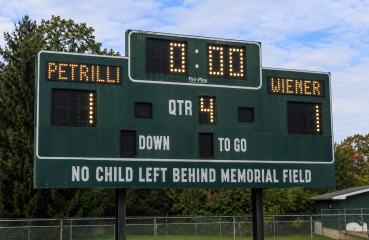
On NCLB, Wiener and Petrilli fight to a draw

Robert Pondiscio

As Americans are discovering during this summer’s World Cup, soccer often produces an outcome that is unsatisfying to our domestic sports sensibilities: a tie. One team controls possession while the other creates better scoring chances. Both leave the pitch claiming vindication, but neither gets to declare victory.

Scoreboard
Path with sun and shade
Commentary
6.18.2026
Evidence-Based Learning, Career & Technical Education, Curriculum & Instruction, Governance, Teachers & School Leaders

Creating more pathways isn’t enough. They need to work, too.

Bruno V. Manno

For several decades, K–12 ed-reformers and policy leaders have pushed to expand public school options and pathways.

Path with sun and shade
Tutoring
Commentary
6.18.2026
Evidence-Based Learning, Curriculum & Instruction

Instructionally-aligned tutoring and student literacy outcomes

Jeff Murray

While we are now several years removed from the pandemic, work continues to remediate its inadequate substitutes for in-person teaching and learning. Tutoring emerged as a favored response from schools.

Tutoring

Pagination

  • Current page 1
  • Page 2
  • Page 3
  • Page 4
  • Page 5
  • Page 6
  • Page 7
  • Page 8
  • Page 9
  • Next page Next ›
  • Last page Last »

Type

  • Book (1)
  • Commentary (810)
  • Event (1)
  • Podcast (9)
  • Report (4)

Topics

  • Accountability & Testing (503)
  • Advanced Education (266)
  • Career & Technical Education (84)
  • Charter Schools (1115)
  • Curriculum & Instruction (1589)
  • ESSA (129)
  • (-) Evidence-Based Learning (833)
  • Facilities (25)
  • Governance (1409)
  • Personalized Learning (51)
  • Private School Choice (139)
  • School Finance (167)
  • Standards (190)
  • Teachers & School Leaders (1451)

Date

  • 2026 (85)
  • 2025 (124)
  • 2024 (161)
  • 2023 (129)
  • 2022 (138)
  • 2021 (111)
  • 2020 (37)
  • 2019 (47)
  • 2007 (1)
Fordham Logo

© 2026 The Thomas B. Fordham Institute
Privacy Policy
Usage Agreement

National

P.O. Box 110
Burke, VA 22009

202.223.5452

[email protected]

Ohio

P.O. Box 82291
Columbus, OH 43202

614.223.1580

[email protected]

Sponsorship

130 West Second Street, Suite 410
Dayton, Ohio 45402

937.227.3368

[email protected]