
About Us
In 2004, the Thomas B. Fordham Foundation was approved by the Ohio Department of Education (ODE) to serve as a statewide sponsor of community (i.e., charter) schools—making us the first nonprofit organization in the Buckeye State to acquire such a responsibility. For a decade and a half, we have sought to improve school choices for families, provide individual grants to support the creation and improvement of charter schools, and support quality schools throughout the state, particularly in our hometown of Dayton. We were selected by the National Association for Charter School Authorizers (NACSA) as one of five authorizers nationally to participate in NACSA’s Quality Practice Project, which examines authorizer practices associated with high-quality school portfolios.
Overview
A Fordham-sponsored charter school exists to provide students with a thorough and well-rounded education that prepares them to succeed in the next stages of their lives and to be thoughtful, informed participants in American civic life. Schools authorized by Fordham have strong governance, outstanding leadership, stable finances, expert teachers, content-rich curricula, high standards, instructional excellence, and a commitment to serving all students—advanced learners and gifted students as well as those who need to catch up—through high-quality educational programming and responsible stewardship.
Curriculum
A Fordham-sponsored school implements a high-quality, content-rich, sequential curriculum that incorporates the “three Rs” as well as science, history, civics and the arts. Consistent with decades of research by scholars such as E.D. Hirsch Jr. and Daniel T. Willingham, Fordham recognizes that knowledge builds upon knowledge; that comprehension and critical thinking depend upon broad background knowledge; that reading proficiency is closely tied to content knowledge; and that one of the foremost responsibilities of schools is to equip students with the knowledge, skills, and character traits that lead to long-term success.
This mission extends beyond individual achievement. Fordham schools also help develop informed and capable citizens. As Hirsch and Willingham recently wrote:
The nation’s founders placed citizen literacy and the education that people need for intelligent self-government in the hands of the states to avoid ceding it to potential tyrants in the central government. Thomas Jefferson consistently stressed two themes when he wrote about instituting education in Virginia: the need for citizens to gain broad knowledge of history and, with that knowledge, to resist tyranny.[1]
Fordham does not prescribe a single curriculum model. However, we expect schools to select and implement instructional materials that demonstrate the following characteristics:
- Alignment with Ohio’s academic standards in core content areas, particularly English language arts and mathematics.
- Strong integration of history, civics, science, and the arts alongside literacy and mathematics instruction.
- High ratings from independent evaluators such as EdReports.org and/or the What Works Clearinghouse.[2]
- Compliance with Ohio’s requirements regarding the science of reading and evidence-based literacy instruction.
- Coherent sequencing and cumulative knowledge-building across grade levels and subject areas.
- Effective support for a diverse range of learners, including at-risk students, students with disabilities, and advanced learners.
Instructional Excellence Framework
Fordham’s Instructional Excellence Framework (IEF) defines, with precision, what instructional excellence looks like in a Fordham-sponsored school. It is a concrete, observable description of what strong teaching and learning look, sound, and feel like across classrooms in Fordham’s portfolio.
Fordham-sponsored schools are expected to reflect a shared instructional vision: structured, rigorous, joyous, consistent, intellectually demanding, and grounded in the science of how students learn. Schools are not expected to be identical. But they are expected to be aligned to a coherent set of practices, dispositions, and professional habits that produce strong outcomes for students.
The Instructional Excellence Framework is rooted in the cognitive science of learning. Its commitments about curriculum, instruction, assessment, and intervention are not stylistic preferences. They are the operational expression of what cognitive science has established about how learning actually works. The next section, The Foundation: How Learning Works, lays this out.
This framework serves three purposes:
- It gives school leaders and teachers a precise description of expected practice—specific enough to guide planning, coaching, and professional learning.
- It establishes a common language across the portfolio—so conversations about instruction are grounded in shared definitions, not individual interpretation.
- It gives Fordham staff a clear, consistent viewpoint for site visits, application review, sponsorship conversations, and renewal decisions.
To learn more about Fordham’s support regarding the implementation of the Instructional Excellence Framework, read about the work of the School Support and Excellence Team here.
Instructional Leadership
Excellent instruction at scale is the product of deliberate system-building, distributed execution, and durable structures, grounded in what the research establishes about how strong practice becomes routine in schools. The leader’s job is to build and steward the systems that make excellent instruction the path of least resistance.
Schools that produce excellent instruction reliably do not produce it through the heroic effort of exceptional individuals. They produce it through systems—observation cycles that generate accurate diagnostic information; coaching cycles that translate that information into teacher growth; lesson internalization meetings that turn adopted curriculum into deliverable instruction; and data meetings that close the loop between evidence and action. When those systems are designed well and run reliably, excellent instruction becomes what the school produces by default. Strong systems reduce variability. This is why instructional leadership matters.
Student Achievement
Fordham’s approach to accountability begins with student achievement as our North Star. We believe deeply in the importance of measuring academic progress and outcomes, while also recognizing that not every meaningful aspect of learning can—or should—be captured by standardized tests alone. At the same time, strong schools cannot improve what they do not measure. That is why Fordham schools make regular, disciplined, and highly sophisticated use of data to understand how students are performing, where they are growing, and where additional support is needed.
This work extends far beyond end-of-year summative assessments. Effective schools use formative assessments, interim data, classroom observations, and other indicators to inform instruction in real time, make mid-course corrections, tailor interventions, and continuously improve teaching and learning. In this sense, accountability is not simply about compliance or ratings; it is about creating a culture of evidence-informed practice focused relentlessly on helping every student grow and succeed.
Governance
The nonprofit boards that govern charter schools bear ultimate responsibility for school performance. Board members of Fordham-sponsored schools are expected to lead in ways that ensure strong academic outcomes, sound financial stewardship, compliance with applicable laws and regulations, and the highest standards of ethical conduct.
Effective governing reflects a range of experiences and expertise aligned with the school’s mission and needs. High-functioning boards focus primarily on strategic oversight rather than day-to-day operations. They use committee structures to monitor key priorities, proactively address emerging issues , and ensure that full board meetings remain focused and productive.
Financial Viability
Fordham-sponsored schools are expected to demonstrate strong stewardship of public funds. Schools must implement rigorous financial controls, budget responsibly, and maintain clean audit results.
Schools should also maintain healthy cash reserves and closely monitor enrollment trends, recognizing enrollment as a key driver of financial sustainability and long-term organizational health. Financial planning should support both immediate operational effectiveness and the school’s long-term viability.
Health, Safety, and Operations
All Fordham-sponsored schools are expected to provide safe, healthy, and orderly learning environments that support student success.
Schools must fully comply with applicable student safety laws and regulations and remain current with local, state, and federal requirements. In addition, schools are expected to maintain effective operational systems that ensure the smooth and reliable functioning of the school on a daily basis.
Performance and Accountability
Fordham’s comprehensive School Performance Framework establishes clear standards across academics, finances, operations, and mission-specific goals. Many of the benchmarks are driven by state accountability systems and Ohio School Report Card measures, including achievement, progress, gap closing, early literacy, graduation rates, and value-added growth metrics. Schools are rated across four categories—exceeds the standard, meets the standard, does not meet the standard, and falls far below the standard—with specific quantitative thresholds attached to each indicator.
Schools are expected to meet these standards consistently, using both statewide comparisons and comparisons to similar charter schools in their local market. Academic performance measures rely heavily on state-generated data such as Performance Index (PI) scores, Value-Added (VA) growth scores, chronic absenteeism rates, graduation rates, and college enrollment outcomes.
In addition to academic expectations, the framework includes qualitative measures tied to instructional quality, teacher retention, and mission-specific goals negotiated during authorization and renewal. The document notes that Fordham establishes minimum standards for meaningful mission-specific goals, requiring them to be measurable and time-bound rather than simply restating state indicators.
The framework also sets financial and operational standards schools must satisfy. These include benchmarks for asset-to-liability ratios, cash reserves, enrollment variance, debt obligations, and records compliance. Schools are evaluated not only on current-year financial health but also on multiyear financial stability and governance practices.
Based on performance, governing boards may receive full renewal, conditional renewal, or non-renewal.
Fordham also conducts onsite visits at least twice each year while school is in session and more frequently when circumstances warrant. In cases of significant concern, Fordham may take corrective action, including probation, suspension of operations, or school closure.
For more information on Fordham's sponsorship work, please see our Sponsorship Annual Report.
[1] Daniel T. Willingham and E. D. Hirsch Jr., "Rediscovering Knowledge as the Key to Literacy," Education Next, Vol. 26, No. 1 (2026).
[2] In areas where such ratings are unavailable, schools must provide evidence demonstrating why the proposed materials are likely to be effective for the intended student population and how they align with Ohio Department of Education and Workforce high-quality instructional materials rubrics.
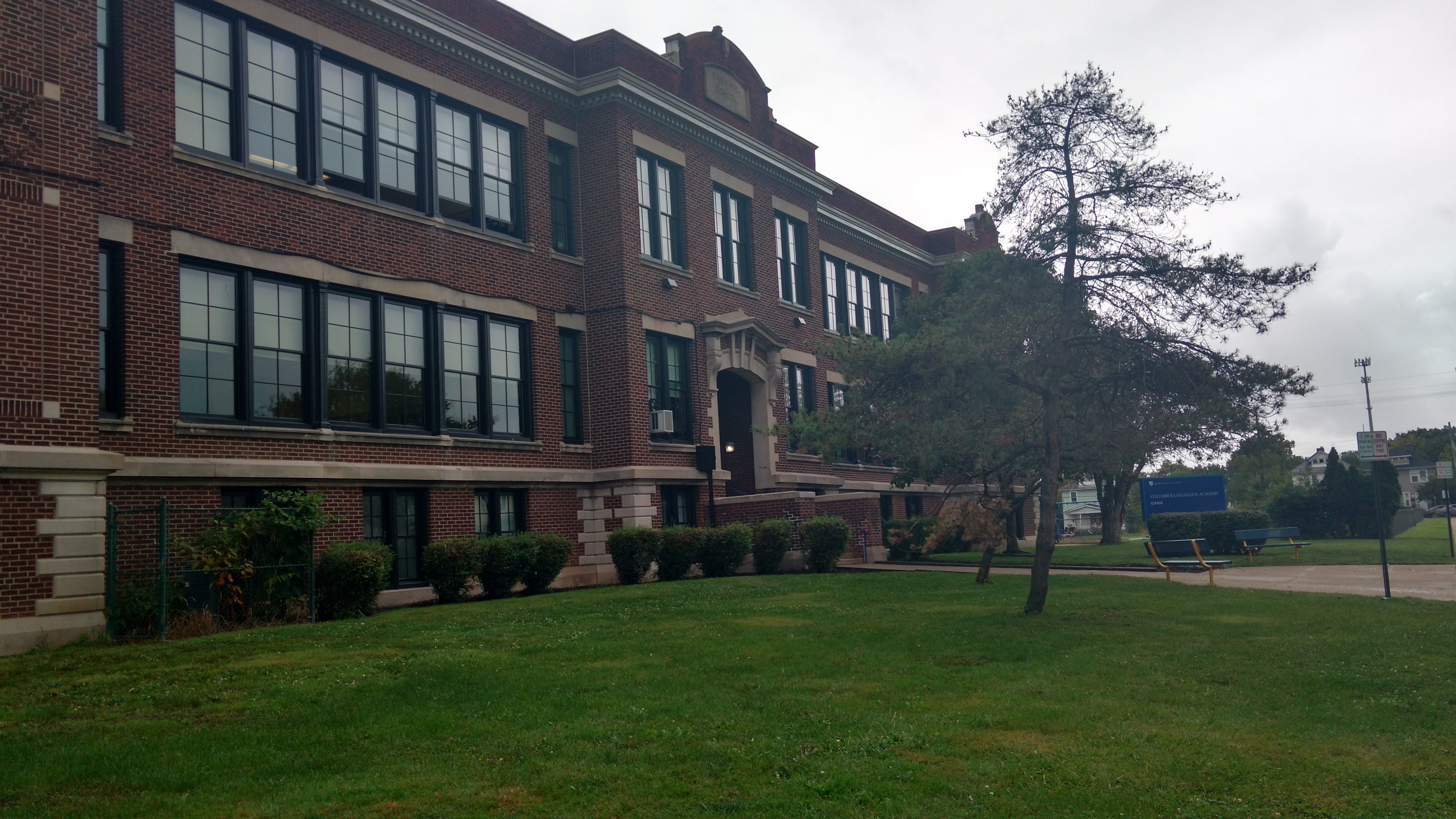
Fordham Sponsored Schools
The Fordham Foundation currently sponsors 9 public charter schools, which occupy 17 individual buildings across four cities in Ohio. Together, our sponsored schools serve about 6,700 students.

School Resources
The Thomas B. Fordham Foundation has actively sponsored charter schools in Ohio since 2005, and our portfolio includes some of Ohio’s highest performing and most highly regarded schools. As such, we have developed expertise in all the core areas of Ohio charter sponsorship, including charter school laws and regulations, finance, school evaluations, governance, compliance, facilities, new school start-up, school closure, managing the application process for new schools, contract management, school monitoring, and charter renewal decisions. We regularly provide technical assistance in these areas to our sponsored schools. Additional resources that may be helpful are included below.
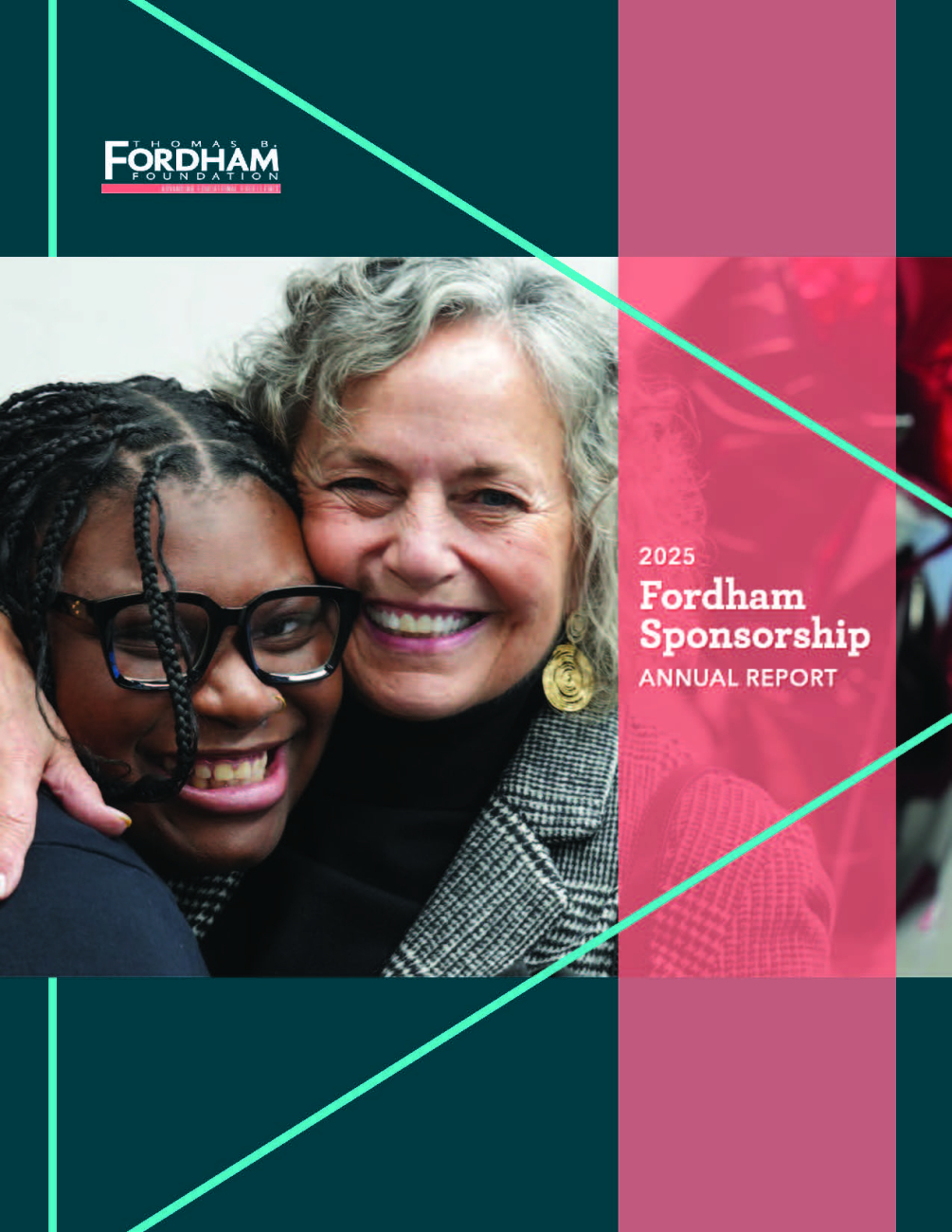
Ohio Sponsorship’s Annual Report
Our 2025 Fordham Sponsorship Annual Report details our work providing monitoring, oversight, and technical assistance to ten charter schools on nineteen campuses—serving over 6,000 students—throughout Ohio.
The report also highlights the most significant research projects produced by our colleagues at the Thomas B. Fordham Institute’s Ohio and national offices.