Undefined
Education Gadfly Show #817: Doug Lemov on rebuilding school culture amid a mental health epidemic
On this week’s Education Gadfly Show podcast, Doug Lemov, author of Teach Like a Champion, and<
On this week’s Education Gadfly Show podcast, Doug Lemov, author of Teach Like a Champion, and<
The Thomas B. Fordham Institute is pleased to announce the launch of the National Working Group on Advanced Education. The Working Group’s mission is to promote research, policies, and practices that will develop the full capacities of students with high academic potential, especially Black and Hispanic students and those coming from economically disadvantaged backgrounds.


I spent most of my twenties in northeast North Carolina teaching English in a windowless, leak-prone trailer behind an overcrowded high school. Once I got through my first year as a rookie—what fun that was!—subsequent memories are fond (smell of mildew aside).

Veteran education watchers may remember the annual MetLife Survey of the American Teacher, which for more than a quarter century took the temperature of the nation’s teaching workforce on issues pertaining to job satisfaction, pay, and prestige.

It’s now fashionable in some circles of the Right to call any teacher who supports sex education a “groomer,” lumping them into the category of pedophile. Christina Pushaw, press secretary to Florida governor Ron Desantis, referred to that state’s new legislation as an “anti-grooming” bill.

In-person instruction has been restored everywhere in the United States, and the nation’s schools once again find themselves dealing with the age-old battle of children against authority—although now it is frequently erupting into violence and threats against teachers.

Non-test-based pathways to high school graduation raise concerns among accountability hawks as being low in rigor, subject to diminished standards,


Parent Nation, by Dana Suskind, describes how we can build social and policy structures that help parents from all income backgrounds with their youngest children.

On this week’s Education Gadfly Show podcast, Jing Liu, Assistant Professor in Education Policy at the University of Maryla
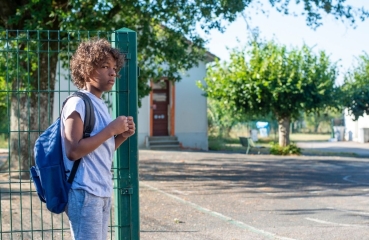
For many parents and teachers, the Covid experience has confirmed at least two pieces of common sense: It’s hard for kids to learn if they’re not in school, and those who are in school tend to learn more.

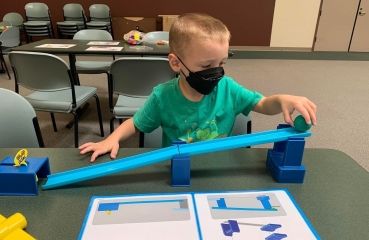
As beloved TV personality Fred Rogers once quipped, “Play gives children a chance to practice what they are learning. . . . It’s the things we play with and the people who help us play that make a great difference in our lives.”
NOTE: This editorial is adapted from Michael J. Petrilli's public comment on the U.S. Department of Education's proposed Charter Schools Program regulations, available here.
This whopping new report from a special committee of the National Academies of Science, Engineering, and Medicine (NASEM) is a whopping disappointment.


“Is political engagement contributing to the teen mental health crisis?” —Kristen Soltis Anderson Tennessee’s year-old law on teaching race and gender has led to only one complaint, leaving both sides feeling vindicated.

On this week’s Education Gadfly Show podcast (listen on Apple Podcasts and Spotify), Paul Hill
The need to understand how schools can improve student attendance has never been greater. This study breaks new ground by examining high schools’ contributions to attendance—that is, their “attendance value-added.”
Editor’s note: This was first published by the American Enterprise Institute.

Covid-19 and the miseries it caused families, children, and educators around the world over the last two years seems finally to be ebbing. But in Poland where I am writing this, the plague has been followed by a brutal and senseless war in neighboring Ukraine.

With Democrats facing trouble in the midterm elections, the Biden administration has inexplicably decided to try to stave off disaster by doubling down on the teachers unions’ hoary anti-reform agenda. One example is its not-so-sneak attack on charter schools in the form of execrable regulations that could bring charter growth to a standstill. But it’s not the only one.
Last week, Chester Finn used a recent vote of Denver’s anti-reform school board to make three points: first, that the “portfolio” reform there—based on school autonomy, family choice, and chartering out schools where kids aren’t learning—is finished; second, that Denver’s reversal predicts doom elsewhere for complex reform initiatives meant to transform the ways whole public systems operate; an

After living through the transformation of K–12 education in Alberta, Canada, we moved from Calgary to Colorado in 2010. Since then, we have watched the Denver Public Schools story unfold from next door in Jefferson County.
The influence of out-of-school activities such as sports and clubs on school outcomes has been an enduring


Due to lower dropout rates, high school NAEP data might be underestimating the progress made by students across recent decades.

We must begin a program of NAEP testing for newborns. In the hospital. Before parents take them home. Maybe before parents name them. If we wait until age five to assess students in math and literacy skills, that leaves a half-decade of missing data.