How philanthropy could reinvent math instruction
This summer, Sarah Cone wrote a provocative essay asking why today’s billionaire philanthropists don’t build institutions the way their predecessors did.


If you want to be a faster runner, research says you should run more often and farther. I used this “run more” strategy over the past year and, I kid you not, my performance has improved quite drastically. Sometimes plain ol’ common sense is the answer to life’s many problems.
The latest PISA results were mostly grim.
A little over two years ago, I wrote about how “I watched the parenting on ‘Young Sheldon’—and did the exact opposite.”
The past century has seen enormous developments in virtually all areas of life, from medicine to transportation to living standards and even to social and cultural attitudes. Yet our education system has not followed suit. One of the greatest illustrations of this is in the continued emphasis on age as the primary determinant of educational placement.
In a recent edition of his SCHOOLED newsletter, Mike Petrilli called on U.S. high schools to stop pretending to teach foreign languages. Who decides whether they are taught at all?
Low-income children face many disadvantages that impede academic success. But how much do those disadvantages matter, and how early do their effects become visible?
In the latest National Assessment of Educational Progress Long Term Trends analysis, 23 percent of the 13-year-olds surveyed report that they are enrolled in Algebra I. For those seventh and eighth graders, that’s great news.
It’s much disputed in England whether grouping students by achievement level or mixing them together is a more effective strategy for teaching in secondary schools. This practice resembles achievement grouping in the U.S., particularly when done in specific subjects like math.
For every dollar states spend on K–12 education, less than half a penny is earmarked for advanced learning. This surprising finding comes from our recent study of K–12 education spending in the U.S., generously supported by the Carina Initiative.
Jonathan Plucker, a research professor
Editor’s note: This was first published by The 74. “We want to be good readers. We want to understand, not just get a good score on a test.”
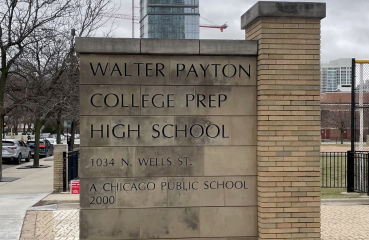
2026 is a watershed moment for Chicago Public Schools (CPS).
Every year, schools invest immense sums of money in sports programs to cultivate the performance of students who show extraordinary athletic promise.
The International Baccalaureate’s longest-lived and most rigorous iteration, the Diploma Program, remains widely misunderstood and under-covered in the U.S., even among those of us who work in and around advanced education. That’s a problem for a program that exists in almost 1,000 high schools and educates nearly 100,000 teenagers.
Across the country, tens of thousands of high-achieving children are sitting at their desks, waiting for the challenge they deserve. But for many—and above all for those from low-income families—that wait won’t end.
Why haven’t we already solved this problem?
Our latest report sheds light on the academic trajectory of high-achieving, low-income (HALO) students in Ohio. They have demonstrated their potential to reach college and use it as a springboard to the American dream. Yet due to the widespread neglect of their talents, our education system allows too many of them to fall through the cracks.
America is wasting much of its human capital. That’s because many high-achieving, low-income students—we call them HALO students—fall off the education track and never reach the gates of our top colleges and universities. Regrettably, these capable young people won’t reap the benefits of a four-year degree, which remains a generator of upward mobility and career success.
For decades, high-achieving high school students have been told the surest way to impress selective colleges is to take calculus. In a recent national survey of 133 admissions officers, 74 percent said the College Board’s Advanced Placement calculus course is among the math classes that “carry the most weight” in admissions decisions.
Editor’s note: This was first published on Mike Petrilli’s Substack, SCHOOLED.
Democratic Socialist mayoral candidate Zohran Mamdani has proposed phasing out the successful and popular Gifted and Talented (G&T) progr
Zohran Mamdani, the Democratic Party’s nominee for mayor of New York City, has announced his intention to end kindergarten entry into the city’s Gifted & Talented (G&T) programming by September 2027.
The latest twelfth-grade results from the National Assessment of Educational Progress are awful, as
In her memoir, Dear Diary Boy: An Exacting Mother, Her Free-Spirited Son, and Their Bittersweet Adventures in an Elite Japanese School, author Kumiko Makihara recounts her son Taro’s experience attending first through sixth grade in her home country of Japan.
If you had walked into the classrooms at my Rockford, Illinois, elementary school a few years ago, you would have seen something very different from what happens there today. Back then, like many schools, students stayed in their grade-level classrooms throughout the day, and we delivered reading instruction accordingly.
Graduation at Columbia Secondary, Harlem’s top selective sixth through twelfth grade school, is scheduled for Friday, June 20. Its seniors are taking advantage of their last few weeks on campus to beg District’s 5 Superintendent Dr. Sean Davenport to step in and keep the school they love from being systematically dismantled.
Overall college attendance has declined in recent years, with persistent and widening gaps in access and retention along racial and
A new wave of middle school math policies is poised to reshape who gets access to advanced math options, and when.
In April of 2022, the Thomas B. Fordham Institute launched the National Working Group on Advanced Education.