Commentary
School Finance, Governance
An updated agenda for America’s school finance reforms
For decades, education funding equity has been a primary aim of K–12 finance reform efforts.
For decades, education funding equity has been a primary aim of K–12 finance reform efforts.
At the beginning of the movie The Big Short, there is a title card with the epigram, “It ain’t what you don’t know that gets you into trouble. It’s what you know for sure that just ain’t so.” It attributes the quote to Mark Twain. Ironically, there isn’t any proof that Twain actually said or wrote that.
Contracted or purchased services (tutoring, professional development, after-school care, etc.) constitute the second-largest category of school district expenditures after staff compensation. They add up to tens of billions of dollars each year.

“If you build it, they will come” makes a great tagline for a mythical baseball movie but a poor strategy for educational improvement. Markets are not magic and are shaped by external factors that encourage or discourage participation.

For those of us who have long pushed for charter schools to receive fair funding, progress has been slow, uneven, and hard-won. That’s why we at the Thomas B.
Editor’s note: This was first published by The 74.
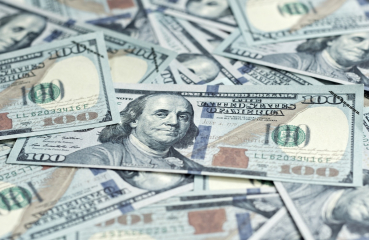
In Philadelphia, a young person leaving Launchpad Philly’s post-high school graduate training track is on pace to earn nearly $30,000 within nine months and $50,000 within one year. That far outpaces the roughly $12,500 a young Philadelphian with only a high school diploma typically earns.

As school districts across the country struggle to recruit and retain qualified teachers, policymakers have increasingly turned to financial incentives as potential solutions.

The question of whether, when, and how public funding may flow to religious schools has been contested for more than 150 years, animated by the tension between the First Amendment’s Establishment Clause, which bars the state from sponsoring religion, and its Free Exercise Clause, which restricts the burdens that can be placed on religion.
Throughout the first quarter of the 21st century, schools built up capacity to accommodate growing student populations, adding classroom space, teacher positions, and the many resources that go into educating a child. The Covid-19 pandemic accelerated the build-up through the injection of giant sums of federal money to supplement state and local budgets.

A new white paper from NWEA, and its accompanying op-ed in The Hill, claim that districts are more likely to permanently shutter schools with a high proportion of poor and/or Black stud
For every dollar states spend on K–12 education, less than half a penny is earmarked for advanced learning. This surprising finding comes from our recent study of K–12 education spending in the U.S., generously supported by the Carina Initiative.

Teacher pay has become a big contender in the education reform space, with growing agreement that paying educators a

Dear governor, Do you want to be remembered for your leadership on education? Your state may be spending nearly half its budget on schools, and yet test scores continue to fall, especially for the students who need the most help.

Bold teacher pay reforms are needed. But to maximize the long-term impact of such policies, it’s important to address the root causes of stagnant salaries. Examining data both before and after the pandemic reveals structural problems in K–12 finance that keep dollars out of teacher paychecks.
The education tax credit included in the “One Big Beautiful” act has the potential to drive tens of billions of dollars toward private school scholarships, as well as tutoring programs in public and
Nearly twenty years ago, Hurricane Katrina devastated New Orleans. Among other sweeping institutional changes, the unprecedented school reforms enacted in the immediate aftermath have left long-lasting effects on the city’s K–12 public education system. But are New Orleans schools still operating in the way that reformers intended?

Teacher salary freezes haven’t gotten much attention in either the mainstream media or in education research. Rigorous studies explore the effects of teacher performance pay, teacher benefits, and much else, but Coffey couldn’t find a single study of pay freezes. Are they pushing teachers out of the profession?

Will Democratic leaders opt their states into the new federal school choice provision, allowing families to accept scholarships that are funded by charitable donations from taxpayers nationwide? Or will they bow to the demands of the teachers unions and bar the schoolhouse door instead, creating a grand opportunity for GOP candidates running against them?

Editor’s note: This story was produced by The 74, a non-profit, independent news organization focused on education in America.
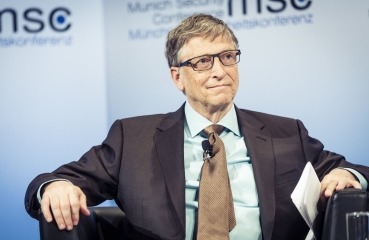
The Gates Foundation’s support for education reform has done much good. As the Foundation expends vast sums during its final twenty years, Finn urges Bill Gates to use his resources—financial, yes, but also influence—to press for fundamental changes in K–12 policies and practices.
Earlier this month, Dana Goldstein of the New York Times argued that both political parties have abandoned the ed-reform agenda. Michael Petrilli responds, offering a robust agenda that would actually bring marked improvements to public schools.

Over the past month, the Trump administration terminated $773 million in National Science Foundation (NSF) grants supporting STEM education research and innovation.

State-level school funding reforms are common means by which state policymakers can make broad changes in the flow of money to districts, schools, and students—usually aiming for increased funds to students with the most need in a quest for improved student outcomes. Still, research on the impacts of statewide funding reforms is not clear cut.

Ezra Klein’s new book has sparked an important discussion about how the left can provide more housing and transportation. However, one area that particularly needs self-reflection is education. The left has often obstructed the creation of new and innovative schools.

Education savings accounts (ESAs) are taxpayer-funded spending accounts with differing eligibility requirements and usage guidelines depending on the state. Between the 2021–22 and 2022–23 school years, participation in them nearly tripled nationally, rising to roughly 489,000 total students.

Set aside for a moment the debate about whether Elon Musk’s DOGE is an honest effort to cut waste, fraud, and abuse from the federal government. Let’s ask a different question: What would a serious effort to get more bang from our education buck look like?

When my middle child was in high school, nothing I said or did could keep him from dropping out. But what if I’d tried paying him?

While some aspects of the putative

Despite working longer hours and experiencing higher levels of stress