The AP quandary and how to resolve it
It’s hard to feel sorry for the College Board, so let’s not. But let’s also try to understand an enormous dilemma that this enormous organization faces.


In states and districts throughout the country, “Grow Your Own” (GYO) teacher programs have become a popular strategy for strengthening and diversifying the teacher pipeline.
In a recent Fordham Institute survey, 76 percent of high school students and recent graduates reported at least one form of daily unsanctioned tech use during the school day. Half reported daily social media use, while 49 percent reported messaging friends during school hours.
Sharif El-Mekki, founder and CEO of the Center for Black Educator Development (C
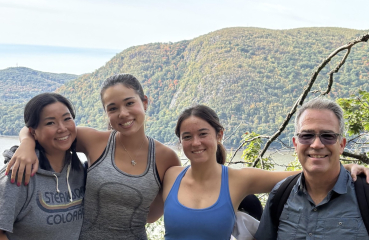
“Girls, I want to set your expectations now that we are moving to New York City. The caliber of kids in your class is going to be much higher, your homework and tests are going to be more challenging, and you can’t expect to be one of the best students anymore. And the truth is, I’m really excited about that for you.”
Data are everywhere. From political polling on the nightly news to tracking airline prices and deciding when to lock in a mortgage rate, our lives are shaped by data. Data science, the art of collecting, analyzing, and interpreting data to find patterns, answer questions, and make better decisions, is no longer a specialized technical skill.
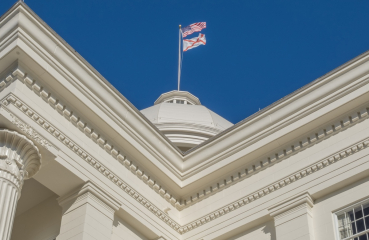
No two states are exactly alike when it comes to K–12 education. Yet, to make progress, state leaders have little choice but to learn from one another’s experiences. Hence our continued interest in the “Southern Surge,” a modest bright spot in an otherwise grim K–12 education landscape, and our decision to report on recent developments in Alabama.
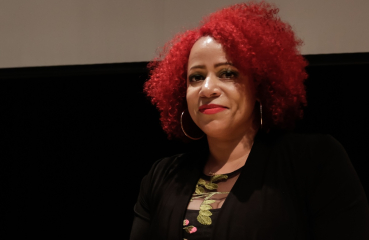
Nikole Hannah-Jones set the education world on fire with her essay last month reflecting on the school choices she made for her daughter.
The newest test data from NWEA MAP show several unmistakably positive signs of academic recovery from post-Covid lows. But they must be understood in context—between subjects, across grade levels, and among different groups of students—because not all the signs are good and much work remains to be done before pandemic education disruptions are fully remediated.
The labor market for new college graduates appears unsteady, which may be good news for schools: More new graduates consider teaching when hiring in other fields slows down. Plus, “care economy” jobs like teaching seem at least somewhat insulated from automation in the age of AI.
The Accelerated Study in Associate Programs (ASAP) at the City University of New York (CUNY) is a much-studied intervention designed to help low-income community college students overcome barriers to degree completion.
This summer, Sarah Cone wrote a provocative essay asking why today’s billionaire philanthropists don’t build institutions the way their predecessors did.
Whatever you think of AI’s potential upsides, the most urgent questions around artificial intelligence in education have to do with minimizing harm. But the most important questions have to do with the future of work.
Public charter schools are one of the most enduring—and successful—educational innovations over the past three decades.
Schools cannot fix themselves unless society fixes segregation first.
Mary Lynn Pruneda, director of education and workforce policy at Texas 2036, joins Mike Petrilli and David Griffith to discuss Texas’s Teacher Incentive Allotment (TIA), a performance-based teacher pay program that rewards great teachers with higher pay, especially in high-need schools.
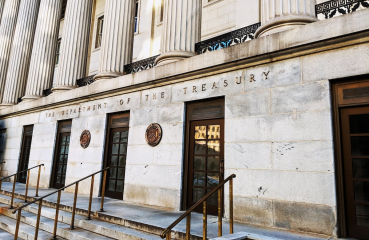
Over the summer, Edunomics Lab predicted that, once up and at scale, the federal tax credit scholarship (FSTC) could generate some $1,000 per public school student. However, now that Treasury has released its long-awaited draft regulations, we’re downgrading that prediction. It all comes down to an onerous requirement that public school participants prove they are not super rich.
On Monday, World Teachers’ Day, friends and relatives of the late Rod Paige released the trailer for a forthcoming film about his remarkable life and career. Titled Paragraphs of a Paige, the appetite-whetting trailer can be viewed here.
If you’ve paid even general attention to Texas education news over the past few years, you’ve likely heard some version of the phrase “local school districts being taken over by the state.” Maybe it registered as a Houston story, since that made statewide headlines.
If you want to be a faster runner, research says you should run more often and farther. I used this “run more” strategy over the past year and, I kid you not, my performance has improved quite drastically. Sometimes plain ol’ common sense is the answer to life’s many problems.
“What we’re going to do for our kids’ education” might be the single most common discussion I have had in my social life as a parent. Like many parents in NYC and across the country, I was captivated by Nikole Hannah-Jones’s essay in the New York Times. Parents are constantly asking themselves, “Have I done right by my kid” when it comes to education.
The push for no-zero grading policies, which prohibit assigning zeros for class assignments or tests, began during a broader “
Dual enrollment (DE) programs allow students to take college courses for credit—usually at no cost—while still in high school. Students must pass the course in order to earn credit. Efforts to increase DE access mean more high schoolers than ever are taking college courses.
I’m going to be impatient and blunt: Nikole Hannah-Jones’s daughter did not fail to learn fractions because she and her classmates were Black. Her teacher did not repeatedly fail to show up to work because the school was segregated. Neither did her assignments go ungraded because affluent children attended school elsewhere.
During my school years, I was often called a student who “could do better.” I took feedback seriously and tried to act on it. But one teacher had already made up his mind about me. He thought I was lazy and naughty. There was a reason for it, but somehow that single incident became my identity, and it showed up in my grades. I kept wondering how to get out of his bad books. I never did.
I have heard a number of leaders start discussions about AI with the question, “Are you for or against AI?”
When Nikole Hannah-Jones writes that her daughter finally told her, “Sometimes I wish instead of always thinking about other kids, you would have thought about me,” every parent who works in education should stop and sit with those words. I did.
My son is an NYC Teaching Fellow. This September, he is teaching special education middle school math in the Bronx.
For decades, teacher professional learning in middle and high school has prioritized one thing above all else: pedagogy.
This year, Teach For America marks its 35th anniversary. Few organizations have shaped education reform so profoundly. It produced not only achievement gains among students, but also an elite talent pipeline of TFA alumni. In recent years, however, those laudable outcomes have receded as the organization shifted its mission into more ideological terrain. Recent trends present an opportunity for Teach For America to rediscover what once made it so effective.