
Podcast
Standards
Family structure, school choice, and a mother’s regrets | Episode 1035 of The Education Gadfly Show
Ian Rowe, founder of Vertex Partners
Ian Rowe, founder of Vertex Partners
Recent weeks have brought a few encouraging signs that the decades-long effort to kill academic standards in the name of equity has wreaked enough havoc and that something of a counter-movement can be glimpsed.

The rollout of the Common Core State Standards (CCSS) in 2010 began as a widely applauded, bipartisan policy aimed at providing an accessible curriculum focused on conceptual understanding that could form the foundation for K–12 education content for the next generation.

Another tall education-reform tree fell the other day when Lou Gerstner passed away. The super-chief of IBM and overall business savant also spearheaded a memorable era when corporate tycoons, governors, leading educators—and U.S. presidents—joined together to get stuff done in the K–12 realm.
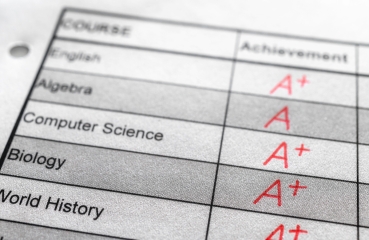
I’m no fan of many so-called “equitable” grading reforms.

First a bit of history: Before he got canceled during the #Me-Too Movement, Garrison Keillor headlined a very popular public radio variety show called “A Prairie Home Companion.” Most weeks, he regaled listeners with stories from the fictional Lake Wobegon, Minnesota; I remember lis

Rigorous education is far less popular on the ground than many policy wonks believe. Of course, everyone pays lip service to high academic and behavioral expectations in general. But when it comes to the particulars, many people—parents, teachers, and administrators alike, most kids, too—bristle at what rigorous education means in practice.

Are Dana Goldstein and I watching the same state of education politics? She claims in the pages of the New York Times that, presently, “neither party, nor even a single major political figure,” wants to claim the mantle of education reformer.

Rose Horowitch’s article in The Atlantic is getting lots of buzz.

School closures and remote learning led to widespread relaxation of student accountability at the onset of the coronavirus pandemic. Lax requirements to turn in work, fewer graded assignments, and—most perniciously—policies mandating “no zeros” or “no failing grades” were adopted (or accelerated) to lighten the load of young people whose worlds had been turned upside down.

This essay focuses on A Republic, If We Can Teach It: Fixing America’s Civic Education Crisis, a new book by Jeffrey Sikkenga and Hoover research fellow (emeritus) David Davenport.

Peter Liljedahl opens his wildly popular book on mathematics instruction, Building Thinking Classrooms, with a bold gambit.

It’s been more than two decades since Congress passed and President Bush (43) signed the Education Sciences Reform Act (ESRA), giving birth to the Institute of Education Sciences (IES) as we know it.

A simple observation: In the U.S., high school graduation rates have increased while other measures of academic achievement—from college entrance exam scores to high school
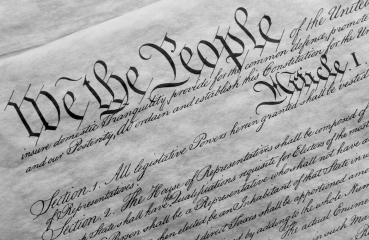
A new study from a pair of Penn State University researchers finds that passing the U.S. Citizenship Test as a high school graduation requirement does nothing to improve youth voter turnout. Within the last decade, more than a third of U.S.
Not since former Governor Scott Walker bludgeoned the unions in my home state of Wisconsin has there been such national outrage over state-level education policies. Historically, state-scale education has been a secondary affair, rarely topping the list of people’s substantive or political priorities, and most decisions have been left to local decision-making.
Aaargh. Here we go again. The new National Assessment civics and history results are as deplorable as they were predictable. Whether they’ll also serve as the action-forcer that we need is far from certain.
This April marks forty years since the National Commission on Excellence in Education issued its blockbuster report “A Nation at Risk: The Imperative for Educational Reform.” The commission, which worked for eighteen months, was created in August 1981 by U.S. Secretary of Education Terrel Bell early in his tenure with President Ronald Reagan’s administration.

The Georgia Department of Education has released a new version of proposed English language arts standards for public comment, and they contain a big surprise. If you dig into the “Texts” section and go to grade eleven, you’ll find this requirement:

When Tennessee House Republicans expelled, albeit briefly, two young, Black Democratic lawmakers late last week, it raised a number of unsettling questions—not only about the contours of our politics, but also about the future of educat
The ongoing debate over when students shoul

Within a few years of their 2010 rollout, the Common Core State Standards for math and English became a popular scapegoat for a host of perceived ills in K–12 education.

We were glad to function in that capacity for Virginia as we’ve done for many other states over the years. But it’s also been implied by some that we tried to inject the draft standards with conservative bias, even to “whitewash” history, and that is completely false.
NAGB officials recently reported on U.S. student achievement trends from 2009–19, and what they found was eye-opening. Whereas America’s higher achieving students held steady or even gained ground, our lowest performing kids saw test scores fall, at least in fourth and eighth grades and in reading and math. What might be causing these diverging trends?

Earlier this month, I argued that “education reform is alive and well, even if the Washington Consensus is dead for now.” What’s more, I wrote that we should stay the course on the current reform strategy:

The American educational system has neglected its duty to provide students with a foundational understanding of social studies for decades. Weak standards for learning were established, primary documents were ignored, and students were allowed to create their own historical truths.

Few people have done more to boost academic standards in U.S. schools than Michael Cohen and Laura Slover, coauthors of a new paper offering a bright vision for revitalizing them. But there are reasons to doubt the feasibility of its proposals.

The “tripod” of standards, testing, and accountability has taken a real beating in recent years, following decades in which it was accepted dogma within reform circles.

The proposed California Mathematics Framework generated a storm of controversy when the first draft was released in early 2021. Critics objected to the document’s condemnation of tracking and negative portrayal of acceleration for high-achieving students.