
Podcast
Topics
Commentary
Curriculum & Instruction, Standards, Teachers & School Leaders
Addressing constructive criticisms of Fordham’s report on state civics and U.S. history standards
Our recent study of states’ U.S. history and civics standards attracted some constructive criticism from both the left and the right. It was, after all, explicitly bipartisan. Here are our responses to four critiques.

Commentary
Curriculum & Instruction, Governance, Teachers & School Leaders
A commonsense alternative to critical race theory bans
There are good arguments to be made in favor of so-called critical race theory “bans” that have now been considered in some form by more than half of all US states.

Commentary
Accountability & Testing, Curriculum & Instruction, Governance, Teachers & School Leaders
A better way to improve literacy among Black and Hispanic children
For the last half-century, if you read the mission statement of virtually any education reform organization, you will find earnest language about closing the racial or class achievement gaps. Unfortunately, not only have gaps failed to narrow during this multi-decade obsession, overall achievement levels have also remained mostly static.

Commentary
Evidence-Based Learning, Curriculum & Instruction, Teachers & School Leaders
A downbeat assessment of students’ mental and social-emotional health in the Covid era
It is no exaggeration to say that very little good can likely come from a global pandemic, especially in the short term. And while the “term” of the current pandemic seems to lengthen every day, we are still firmly in the realm of the immediate when discussing impacts.

Commentary
Accountability & Testing, Evidence-Based Learning, Curriculum & Instruction, Governance, Teachers & School Leaders
NWEA measures the impact of the pandemic on student achievement and growth
Researchers at NWEA have been using data from their MAP Growth assessments to predict and analyze learning losses since the start of the pandemic.

Commentary

Commentary
What we're reading this week: September 2, 2021
“Are schools quarantining too many students?” —Education Week New books by Michael Sandel and Adrian Wooldridge discuss whether the Western world’s move toward meritocracy has been a net negative or positive, but Wooldridge’s use of history makes for a stronger case.


Podcast
Curriculum & Instruction
The Education Gadfly Show #785: Helping students fight disinformation online
Commentary
Evidence-Based Learning, Curriculum & Instruction, Governance, Standards, Teachers & School Leaders
Using deeper learning to strengthen our democracy
The past eighteen months have been some of the most tumultuous in the history of our nation. The twin pandemics of Covid-19 and social injustice have highlighted how today’s students face very different expectations than students encountered in previous generations.

Commentary
Curriculum & Instruction, Teachers & School Leaders
Leading schools with vision in a time of change
At Partnership Schools, we believe that one thing that separates effective turnaround efforts from failed experiments is the ability of the leader to articulate a clear, coherent, and actionable vision for change.

Commentary
Charter Schools, Governance, Private School Choice, Teachers & School Leaders
A bright future for open enrollment
“Hi. Welcome to the future. San Dimas, California. 2688.” Rufus, played by George Carlin, thus opened the American film classic Bill and Ted’s Excellent Adventure by explaining that, in the distant future, everything is great. The water, air, and even the dirt is clean.

Commentary
Curriculum & Instruction, Governance, Teachers & School Leaders
Every high schooler in America deserves the U.S. history and civics education I have had
Black Lives Matter protests, raging wildfires, a monumental election, and the global pandemic. As a seventeen-year-old growing up in Portland, Oregon, these past eighteen months have been the craziest I have ever experienced. Never would I have thought that I would essentially miss the entirety of my junior year of high school, forced into taking classes in a solely online environment.

Commentary
Curriculum & Instruction, Governance, Teachers & School Leaders
Lax school discipline won’t cut it as kids return to school
As traumatized students return to classrooms, educators must be ready to handle worsened behavior issues, as some kids externalize the suffering they’ve been through and re-learn how to “do school.” Unfortunately, the discipline policies in place in many schools may exacerbate the challenge, potentially setting us up for disaster.

Commentary
Accountability & Testing, Governance, Teachers & School Leaders
More dumb things done in the name of educational “equity”
Parents across the country are up in arms over their school systems’ equity initiatives. To be clear, this is not “equity” as I came to define it when I started teaching nearly a quarter century ago.

Commentary
Charter Schools, Governance, Private School Choice, Teachers & School Leaders
A third disrupted year can only strain Americans’ ties to traditional public schools
In the early days of the pandemic, I was dismissive of “new normal” talk about Covid’s long-term impact on schooling. There was good reason for skepticism.

Commentary
Career & Technical Education, Curriculum & Instruction, Teachers & School Leaders
Examining the benefits of career and technical education at scale
When it comes to career and technical education, there’s one state that seems to be getting things just about right: Connecticut.


Podcast
Curriculum & Instruction, Personalized Learning
The Education Gadfly Show #784: Remote learning worked well for some students. What schools can learn from that.
Commentary

Commentary
What we're reading this week: August 26, 2021
The pandemic derailed many high schoolers who are no longer on track for graduation. Here’s how schools can fix that.

Commentary
Curriculum & Instruction, Teachers & School Leaders
Don’t ignore direct SEL instruction
Advocates for social and emotional learning (SEL) have pushed for schools to embrace the teaching of healthy life skills to students.

Commentary
Charter Schools, Governance, Teachers & School Leaders
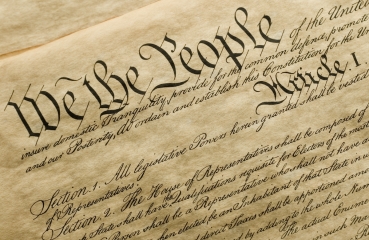
School choice upholds America’s founding ideals
There is a heated debate going on among school choice advocates, in which the essential question is whether school choice is sufficient to reform American education. The civil disagreement belies a tension within the conservative movement writ large between the libertarians and the institutionalists. But it needn’t be a stalemate. A means to palliate the competing undercurrents can be found in our nation’s very founding.
Commentary
Governance, Teachers & School Leaders
The future of local school politics: Division or détente?
Divisions about mask and vaccine mandates, in-person versus remote learning, student discipline, and racism and anti-racism in the curriculum will make it difficult for schools to serve anyone well this year.

Commentary
Curriculum & Instruction, Teachers & School Leaders
Science class is a great place for social and emotional learning
We don’t usually picture science class when we think of social and emotional learning (SEL) or whatever we decide to call it, perhaps because scientists and engineers, unlike artists and writers, are often depicted as socially awkward or emotionally cold in popular media.

Commentary
Evidence-Based Learning, Curriculum & Instruction, Teachers & School Leaders
Does the medium matter? Academic outcomes for print versus digital reading.
Reading on a computer screen became a must for millions of youngsters at the onset of pandemic-induced school closures when they lost access to classrooms and library books in school buildings.

Commentary
Charter Schools, Curriculum & Instruction, Teachers & School Leaders
A thoughtful but dated criticism of “no excuses” charter schools
In the early days of KIPP, or the Knowledge Is Power Program, and other networks of urban charter schools that drafted in its considerable wake, the highly prescriptive form of classroom management and teaching these schools pioneered was a subject of intense fascination and considerable optimism.


Podcast
Curriculum & Instruction, Private School Choice, Teachers & School Leaders
The Education Gadfly Show #783: One teacher’s call for choice and content-rich curricula
Commentary

Commentary
What we're reading this week: August 19, 2021
Advances in neurotechnology hold promise for improving memory and enhancing learning.

Commentary
7 of the best education podcasts in 2021
K–12 education in the United States is notoriously complex, as every state, district, and school has some autonomy when it comes to moulding the minds of our youngsters.