
Mobile Navigation

  • National
    • Policy
      • High Expectations
      • Quality Choices
      • Personalized Pathways
    • Research
    • Commentary
      • Gadfly Newsletter
      • Flypaper Blog
    • Events
    • Scholars Program
  • Ohio
    • Policy
      • Priorities
      • Media & Testimony
    • Research
    • Commentary
      • Ohio Education Gadfly Biweekly
      • Ohio Gadfly Daily
  • Charter Authorizing
    • Application
    • Sponsored Schools
    • Resources
  • About
    • Mission
    • Board
    • Staff
    • Career
Home
Home
Advancing Educational Excellence

Main Navigation

  • National
  • Ohio
  • Charter Authorizing
  • About

National Menu

  • Topics
    • Accountability & Testing
    • Advanced Education
    • Career & Technical Education
    • Charter Schools
    • Curriculum & Instruction
    • ESSA
    • Evidence-Based Learning
    • Facilities
    • Governance
    • Personalized Learning
    • Private School Choice
    • School Finance
    • Standards
    • Teachers & School Leaders
    • Think Again
  • Research
  • Commentary
    • Gadfly Newsletter
    • Flypaper Blog
    • Gadfly Podcast
  • Events
  • Scholars Program

Curriculum & Instruction

Displaying 781-810 of 1594 results
Podcast
11.30.2021
Curriculum & Instruction

Education Gadfly Show #797: Why debunked reading practices continue to spread


Commentary
11.18.2021
Curriculum & Instruction, Governance, Teachers & School Leaders

What is virtue and why does it matter?

Jennifer Frey

Contemporary education has become too technocratic and divorced from virtue. This is a disservice to students because it robs them of what a classical education provides: the tools students need to succeed, not just academically and professionally, but in the deep and abiding sense of being able to flourish as free and good human beings.

Commentary
11.12.2021
Curriculum & Instruction, Governance, Teachers & School Leaders

Effectively implementing social-emotional learning means getting the terminology right

William Rost, Jeremy Smith

Two charter networks, Uplift Education and Distinctive Schools, have provided models for supporting social-emotional learning (SEL) that other schools should emulate.

Commentary
11.11.2021
Curriculum & Instruction, Governance, Teachers & School Leaders

How media coverage of critical race theory misses the point

Robert Pondiscio

It is not a controversial statement to say that the debate over critical race theory in schools has shed more heat than light. This is not surprising. When a relatively obscure and arcane academic field suddenly becomes a high-profile political football, hotly debated on cable news shoutfests, it is almost certainly because it has been reduced to bumper-sticker simplicity.

Commentary
11.11.2021
Curriculum & Instruction, Governance, Advanced Education, Teachers & School Leaders

A descriptive look at the structure of gifted programs in Washington State

Amber M. Northern, Ph.D.

Gifted education has been a much-debated issue

Commentary
11.4.2021
Curriculum & Instruction, Governance, Teachers & School Leaders

Reconnecting knowledge and virtue

Jennifer Frey

Editor’s note: We're happy to introduce Jennifer Frey, who will be writing regularly for the Fordham Institute over the next year. She is an associate professor at the University of South Carolina, where she focuses on virtue ethics.

Commentary
11.4.2021
Curriculum & Instruction, Governance, Teachers & School Leaders

Lessons on protecting viewpoint diversity in classrooms

Robert Pondiscio, Tracey Schirra

A story that became a flashpoint in national conversations around the effects of “CRT bans” is reaching its denouement: This past week, a hearing officer appointed to adjudicate the case ruled that the Sullivan County, Tennessee, school board was justified in

Commentary
10.28.2021
Curriculum & Instruction, Governance, Teachers & School Leaders

Not everyone’s on board with turning schooling into therapy

Robert Pondiscio

Schools have been concerned with character formation and values since Plato sat with students under an olive tree. Today’s “social and emotional learning” is consistent with this age-old impulse. But in its form and function it can represent something different—and more worrisome—than its progenitors, especially when employed without full discussion of its priorities and methods.

Commentary
10.28.2021
Accountability & Testing, Curriculum & Instruction, Governance, Teachers & School Leaders

The case for K–2 testing

Dale Chu

Under federal law, states must assess students annually in reading and math in grades 3–8 and at least once during high school, as well as testing science once in elementary, middle, and high school.

Commentary
10.28.2021
Curriculum & Instruction, Governance, Teachers & School Leaders

How reopening decisions affected public school disenrollment

Amber M. Northern, Ph.D.

During the first full school year after the onset of the Covid-19 pandemic, enrollment in U.S. public schools fell by about 1.1 million students, or 2 percent of prior K–12 enrollment.

Commentary
10.28.2021
Curriculum & Instruction, Teachers & School Leaders

Students are interested in computer science, but many of them lack access

Jeff Murray

Results of a recent survey published by Amazon’s Future Engineer offshoot show several disconnects between the interests, experiences, and aspirations of U.S. students in regard to computer science.

Commentary
10.14.2021
Curriculum & Instruction, Governance, Advanced Education, Teachers & School Leaders

Bill de Blasio is decimating gifted education in New York. Will Eric Adams save it?

Brandon L. Wright

Mayor de Blasio is axing New York City’s long-standing gifted education programs. He plans to replace them with something else, but his proposal is almost entirely wrong. Fortunately, Eric Adams, who’s almost certain to replace him in January, has a vision of gifted education that’s mostly right, and he’ll enter office in time to fix de Blasio’s blunders.

Commentary
10.14.2021
Curriculum & Instruction, Governance, Teachers & School Leaders

Seeking a constitutional shortcut to educational excellence

Dale Chu

Do students have a right to a high-quality education? A proposed ballot initiative filed in California last Thursday says yes.

Getty Images/monkeybusinessimages
Commentary
10.14.2021
Evidence-Based Learning, Curriculum & Instruction, Teachers & School Leaders

Sorry Edutopia, the research base on project-based learning remains weak

Daniel Buck

As one paper put it, there is a “paucity of robust research” on project-based learning. Yet in the ed-school world and in many journals and professional organizations, it’s often touted as a pedagogical gold standard.

Getty Images/monkeybusinessimages
Commentary
10.14.2021
Evidence-Based Learning, Charter Schools, Curriculum & Instruction, Teachers & School Leaders

How well do diverse-by-design charter schools work?

William Rost

The persistence of racial segregation between and within school districts has motivated some in the school choice community to develop diverse-by-design charters (DBDCs), which are defined as schools without a 70 percent majority of students of any race or ethnicity, plus 30 to 70 percent low-income pupils.

Commentary
10.8.2021
Evidence-Based Learning, Curriculum & Instruction, Governance, Teachers & School Leaders

How well are schools teaching disadvantaged students to read? In California, it depends where you live.

Todd Collins

How do we know if a school district is doing one of its most basic jobs—teaching students to read? That’s one of the main questions the California Reading Coalition, which I helped organize earlier this year, set out to answer with the California Reading Report Card, released in September.

Commentary
10.7.2021
Evidence-Based Learning, Curriculum & Instruction, Governance, Teachers & School Leaders

The college gender gap begins in kindergarten

Michael J. Petrilli

A recent Wall Street Journal article set off a pundit-palooza on the topic of the female advantage in higher education, with many suggesting that young men have “given up on college.” But American students who are academically well-prepared for college continue to matriculate and graduate. It’s just that many more of them are female. The reason for that starts in kindergarten.

Commentary
10.7.2021
Curriculum & Instruction, Governance, Teachers & School Leaders

Critical race theory distracts from academic underachievement

Bob Woodson, Ian Rowe

With a new school year underway, parents, teachers, and children anxiously return to classrooms amidst an ongoing coronavirus pandemic. But this year, school board members, teachers, academics, politicians, and parents continue to argue over critical race theory and how to enact its version of equity.

Commentary
10.5.2021
Curriculum & Instruction, Teachers & School Leaders

There’s more to the education story than what’s in the news

Emily Freitag

Education news is pretty depressing these days. Last week’s feed included articles about cafeteria staffing shortages and supply chain concerns, reporting about declining enrollment, predictions about resignations due to vaccine mandates, findings on teacher stress, reporting about an uptick in student fights, and lots of documentation of demonization in adults’ battles over mask policy.

Commentary
10.1.2021
Curriculum & Instruction, Teachers & School Leaders

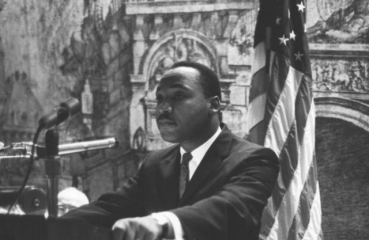
Inspire a reverence for liberty by teaching the full story of American slavery

Ian Rowe

On September 12, 1962, Dr. Martin Luther King Jr. spoke at the request of the New York Civil War Commission at the Centennial Celebration of the Emancipation Proclamation.
Commentary
9.30.2021
Evidence-Based Learning, Curriculum & Instruction, Governance, Advanced Education, Teachers & School Leaders

We are squandering the talents of too many low-income high achievers

Aaron Churchill , Michael J. Petrilli

Far too many high-achieving children are drifting through middle and high school. Despite their potential, they don’t end up taking AP exams, achieving high marks on their ACTs, or going to four-year colleges. This limits their ability to move up the social ladder, threatens U.S. economic competitiveness, and derails our aspirations for a more just society. We must stop buying into the false assumption that high-achieving kids will do fine on their own.

Commentary
9.30.2021
Evidence-Based Learning, Curriculum & Instruction, Governance, Teachers & School Leaders

Measuring the social, emotional, and academic toll of remote learning

Amber M. Northern, Ph.D.

After more than eighteen months of pandemic-induced commotion to education, data continue to roll in regarding various negative impacts on young people.

Commentary
9.23.2021
Curriculum & Instruction, Governance, Teachers & School Leaders

Performative teaching is undermining trust in schools

Robert Pondiscio

Increasingly, teachers are not shy about expressing their views on charged racial and political views. This may be a symptom of a profound shift in our relationship with institutions and the role they play in our lives. Where institutions once functioned as molds of our character and behavior, they’re now platforms on which we stand to be seen. And this could be cratering our trust in them.

Commentary
9.23.2021
Curriculum & Instruction, Advanced Education, Teachers & School Leaders

Rigorous courses are a good thing—and good for equity

Brandon L. Wright

“As a broader mechanism for equity, [Advanced Placement] has fallen short, unable to overcome the powerful structural forces that disadvantage far too many students,” writes Anne Kim in a recent long-form article in Washington Monthly titled “AP’s Equity Face-Plant.” “If the ultimate goal

Commentary
9.17.2021
Curriculum & Instruction, Governance, Teachers & School Leaders

Five crucial considerations to protect social and emotional learning

The Master Teacher, Inc.

The growth in popularity of social and emotional learning (SEL) is bringing with it increased attention to and scrutiny of what exactly SEL means and questions about whether it is something more than just another educational fad or ideological movement.

Commentary
9.16.2021
Evidence-Based Learning, Charter Schools, Curriculum & Instruction, Governance, Private School Choice, Teachers & School Leaders

School choice is a better instrument for racial justice than critical race theory

Daniel Buck

The outlook has gotten bleak for the anti-racist and CRT movements in U.S. classrooms, as Americans saw these ideas in action and largely recoiled from them. But there's another K–12 strategy for achieving racial justice: school choice.

Commentary
9.16.2021
Accountability & Testing, Curriculum & Instruction, Governance, Teachers & School Leaders

Blinding ourselves to America’s achievement woes

Chester E. Finn, Jr.

Much as happened after A Nation at Risk, the U.S. finds itself facing a bleak education fate, even as many deny the problem. Back then, however, the denials came mostly from the education establishment, while governors, business leaders, and even U.S.

1
Commentary
9.16.2021
Accountability & Testing, Evidence-Based Learning, Curriculum & Instruction, Governance, Teachers & School Leaders

Ohio data show the pandemic's heavy toll on student achievement and the importance of in-person learning

Vladimir Kogan, Stéphane Lavertu

The Covid-19 pandemic caused unprecedented disruptions to teaching and learning across America, including school closures, sudden changes to instructional delivery, economic hardship, and social isolation.

1
Commentary
9.16.2021
Curriculum & Instruction, Governance, Teachers & School Leaders

What U.S. teens think about their futures—and the country’s

Jeremy Smith

The Washington Post and Ipsos recently surveyed fourteen to eighteen year olds on their attitudes toward the state of the U.S.

Commentary
9.9.2021
Curriculum & Instruction, Governance, Teachers & School Leaders

What 9/11 means for America’s schools twenty years later

Dale Chu

This week, we remember and reflect upon an unforgettably tragic day. This comes amid throes of national conflicts over information, misinformation, even the nature of facts and truth themselves. Schools can’t fix all this, but they must reclaim their vital role in ensuring that Americans understand their history and the interconnectedness of today’s world.

Pagination

  • First page « First
  • Previous page ‹ Previous
  • Page 23
  • Page 24
  • Page 25
  • Page 26
  • Current page 27
  • Page 28
  • Page 29
  • Page 30
  • Page 31
  • Next page Next ›
  • Last page Last »

Type

  • Book (3)
  • Commentary (1464)
  • Event (11)
  • Podcast (68)
  • Report (34)

Topics

  • Accountability & Testing (504)
  • Advanced Education (267)
  • Career & Technical Education (84)
  • Charter Schools (1117)
  • (-) Curriculum & Instruction (1594)
  • ESSA (129)
  • Evidence-Based Learning (837)
  • Facilities (25)
  • Governance (1416)
  • Personalized Learning (51)
  • Private School Choice (140)
  • School Finance (169)
  • Standards (190)
  • Teachers & School Leaders (1456)

Date

  • 2026 (121)
  • 2025 (158)
  • 2024 (142)
  • 2023 (148)
  • 2022 (197)
  • 2021 (203)
  • 2020 (170)
  • 2019 (94)
  • 2018 (13)
  • 2017 (5)
  • 2016 (46)
  • 2015 (76)
  • 2014 (50)
  • 2013 (38)
  • 2012 (15)
  • 2011 (83)
  • 2010 (6)
  • 2009 (8)
  • 2008 (6)
  • 2007 (2)
  • 2005 (2)
  • 2004 (3)
  • 2003 (4)
  • 2002 (1)
  • 2000 (2)
  • 1998 (1)
Fordham Logo

© 2026 The Thomas B. Fordham Institute
Privacy Policy
Usage Agreement

National

P.O. Box 110
Burke, VA 22009

202.223.5452

[email protected]

Ohio

P.O. Box 82291
Columbus, OH 43202

614.223.1580

[email protected]

Sponsorship

130 West Second Street, Suite 410
Dayton, Ohio 45402

937.227.3368

[email protected]