Mobile Navigation

  • National
    • Policy
      • High Expectations
      • Quality Choices
      • Personalized Pathways
    • Research
    • Commentary
      • Gadfly Newsletter
      • Flypaper Blog
    • Events
    • Scholars Program
  • Ohio
    • Policy
      • Priorities
      • Media & Testimony
    • Research
    • Commentary
      • Ohio Education Gadfly Biweekly
      • Ohio Gadfly Daily
  • Charter Authorizing
    • Application
    • Sponsored Schools
    • Resources
  • About
    • Mission
    • Board
    • Staff
    • Career
Home
Home
Advancing Educational Excellence

Main Navigation

  • National
  • Ohio
  • Charter Authorizing
  • About

National Menu

  • Topics
    • Accountability & Testing
    • Advanced Education
    • Career & Technical Education
    • Charter Schools
    • Curriculum & Instruction
    • ESSA
    • Evidence-Based Learning
    • Facilities
    • Governance
    • Personalized Learning
    • Private School Choice
    • School Finance
    • Standards
    • Teachers & School Leaders
    • Think Again
  • Research
  • Commentary
    • Gadfly Newsletter
    • Flypaper Blog
    • Gadfly Podcast
  • Events
  • Scholars Program

Governance

Displaying 481-510 of 1405 results
Teacher and unhappy student
Commentary
3.21.2024
Governance, Teachers & School Leaders

Quit asking teachers to play therapist

Daniel Buck

When the TV salesman pitches a beauty product to eliminate wrinkles or a politician promises no new taxes, most of us raise a skeptical eyebrow. If only we afforded that same skepticism to education fads.

Teacher and unhappy student
Child doing homework
Commentary
3.21.2024
Evidence-Based Learning, Curriculum & Instruction, Governance, Teachers & School Leaders

How an online tool affected math performance during pandemic closures

Jeff Murray

For many students and teachers, the pivot from in-person to remote learning in March 2020 was a sudden lurch from the known to the unknown. Writ large, research shows the academic impact of that move was devastating. But details matter—and so do exceptions.

Child doing homework
Virginia Governor Glenn Youngkin
Commentary
3.14.2024
Governance

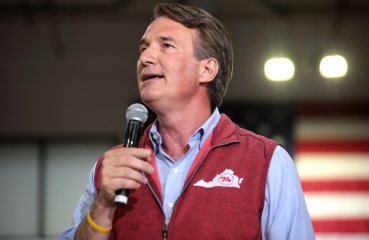
Four states that are leading the charge for conservative education

Frederick M. Hess, Mike McShane

It’s looking like this year’s election will feature a Trump-Biden rematch—a pairing that’s especially frustrating for education, where the nation is wrestling with a raft of real problems:

Virginia Governor Glenn Youngkin
Girl at school around friends
Commentary
3.8.2024
Evidence-Based Learning, Curriculum & Instruction, Governance, Advanced Education, Teachers & School Leaders

Can we ditch the “gifted” label and just focus on what each student needs?

Alina Adams

Editor’s note: This was first published by The 74.

Girl at school around friends
Student report card
Commentary
3.7.2024
Evidence-Based Learning, Curriculum & Instruction, Governance, Teachers & School Leaders

Doing educational equity right: Grading

Michael J. Petrilli

The way we grade student work is flawed—in some ways inequitable—and is in need of reform. But like so many things in American education, the push for “equitable grading” has often been implemented piecemeal, bringing along with it all manner of unintended consequences, the most important of which is lowered standards.

Student report card
Students raising their hands in a school classroom
Commentary
3.7.2024
Evidence-Based Learning, Charter Schools, Governance

The research is clear: Charter schools work

Daniel Buck

Late last year, researchers Sarah Cohodes and Susha Roy partnered with the MIT Department of Economics to release a paper summarizing the results of lottery-based charter studies. The topline conclusion is straightforward and promising:

Students raising their hands in a school classroom
Jeb Bush
Commentary
3.7.2024
Governance

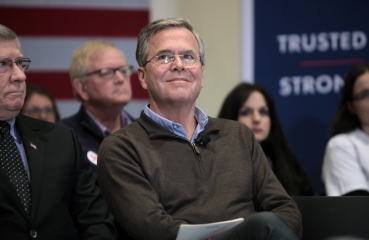
What if Jeb Bush had won?

Dale Chu

Neither of the major parties’ presumptive presidential nominees has anything serious in the offing to help American students get back on track.

Jeb Bush
Mother and daughter walking to school
Commentary
3.7.2024
Evidence-Based Learning, Governance

How to build a better public school choice program: Evidence from Los Angeles

Amber M. Northern, Ph.D.

School choice discussions often overlook intradistrict open enrollment, allowing students to attend any public school within their resident district.

Mother and daughter walking to school
Standardized test in school
Commentary
3.1.2024
Accountability & Testing, Evidence-Based Learning, Governance, Teachers & School Leaders

The way we set grade-level norms on tests masks pandemic learning loss

Woody Paik

There are, generally speaking, two ways to report students’ performance on tests. One is normative, and it compares a student’s performance to his peers. The second is criterion, and it compares a student’s performance to learning standards, indicating grade-level proficiency and is independent of peers’ test performance.

Standardized test in school
American school building exterior
Commentary
2.29.2024
Governance, Teachers & School Leaders

Getting education (almost) right

Chester E. Finn, Jr.

Rick Hess and Mike McShane have provided the education world with a thoughtful, accessible, perceptive, and—in its way—persuasive book on improving education. Though sub-titled (and marketed as) “a conservative vision,” it’s both more and less than that.

American school building exterior
Upside down empty piggy bank
Commentary
2.29.2024
Evidence-Based Learning, School Finance, Governance, Teachers & School Leaders

ESSER funds are ending. What does this mean for pandemic learning loss?

Elainah Elkins

Districts have used almost $190 billion in ESSER funds to help students recover from pandemic learning loss by implementing a wide variety of initiatives, including

Upside down empty piggy bank
Horace Mann
Commentary
2.22.2024
Governance

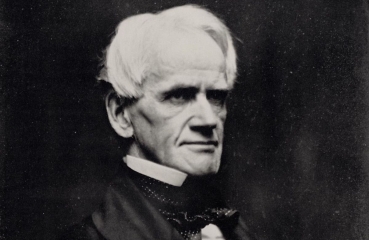
Horace Mann’s solution to political turmoil in education

Daniel Buck

Fights over books, an exodus from public schools, politically obsessed adolescents, the need for civics education—Horace Mann predicted it all back in 1848. Thankfully, this education luminary also provided wisdom and insight in the common school era for how we can turn down the culture war heat in modern times.

Horace Mann
Bipartisan handshake agreement
Commentary
2.22.2024
Governance

Education reform is a bipartisan endeavor

Chester E. Finn, Jr.

In their FUSION essay “The Past and Future of Education Reform,” drawing heavily on their worthy

Bipartisan handshake agreement
Teacher in a classroom
Commentary
2.22.2024
Evidence-Based Learning, Governance, Teachers & School Leaders

Gag order? Or gag reflex?: State laws on teacher speech

Robert Pondiscio

A new report from PEN America claims that 1.3 million teachers, roughly a third of full-time classroom staff in the United States, are now forced to work under “educational gag orders.” PEN tallies forty pieces of legislation restricting teacher speech across twenty-two states as of November 1, 2023.

Teacher in a classroom
Black student doing math in school
Commentary
2.21.2024
Evidence-Based Learning, Curriculum & Instruction, Governance, Advanced Education, Teachers & School Leaders

Why schools are failing to narrow excellence gaps in math

Jeff Murray, Brandon L. Wright

Marginalized students have long lacked access to advanced education programs in the U.S., compared to more advantaged peers, and have been under-identified and therefore underserved when such programs exist.

Black student doing math in school
Commentary
2.15.2024
School Finance, Governance, Teachers & School Leaders

On teacher housing, is the juice worth the squeeze?

Meredith Coffey, Ph.D.

In recent months, housing programs for school teachers have begun to receive high-profile attention. And with good reason: As costs of living have risen, teacher salaries have not kept pace, thereby decreasing some educators’ ability to live near their workplaces. But are such policies actually a good thing? In short: We really don’t know.

Commentary
2.15.2024
Charter Schools, Governance

Idaho’s charter school law rewrite: Better, not perfect

Terry Ryan

Idaho’s public charter school law turned twenty-five last year. Over that quarter century, the statute has grown warts. It’s also too complicated, burdened by vestigial code and rules, and confusing to schools, authorizers,[1] and state education agencies alike.

Commentary
2.8.2024
Evidence-Based Learning, Curriculum & Instruction, Governance, Teachers & School Leaders

NCTQ analyzes how well states are using policy to promote the science of reading

Jessica Poiner

Many states are overhauling their early literacy policies to align with the science of reading, an evidence-based approach that emphasizes phonics and knowledge building. Effectively implementing these reforms is crucial, as high-quality reading instruction can improve both academic and life outcomes for children.

Commentary
2.1.2024
Evidence-Based Learning, Curriculum & Instruction, Governance

Grading New York’s “back to basics” reading plan

Robert Pondiscio

Better late than never, New York State has stirred itself to change the way reading is taught in its 800-plus local school districts. Last month, Governor Kathy Hochul announced a plan to spend $10 million to train 20,000 teachers in the “science of reading,” including a “microcredentialing” program via the state’s public universities. Assuming the legislature grants the request, here’s how New York could maximize the program’s impact.

Commentary
2.1.2024
Accountability & Testing, Governance

Colorado’s accountability fiasco

Dale Chu

Last year, Colorado’s legislature established an “Accountability, Accreditation, Student Performance, and Resource Inequity Task Force”—a twenty-six-member behemoth charged with, among other things, making recommendations on the future of the state’s K–12 asses

Commentary
1.31.2024
Accountability & Testing, Evidence-Based Learning, Curriculum & Instruction, Governance, Advanced Education, Teachers & School Leaders

Gifted under-identification: How to improve diverse student access to gifted programming

Jonathan Klingeman, Ed.D.

As the population of English learners (ELs) in grades K–12 grows, so do the challenges school districts face in identifying gifted students and putting in place appropriate enrichment and acceleration opportunities for them.

Commentary
1.25.2024
Evidence-Based Learning, Charter Schools, Governance, Teachers & School Leaders

The right to school choice is also about the right to stay put

David Griffith, Ph.D., Amber M. Northern, Ph.D.

Fordham’s latest report, "New Home, Same School," analyses the relationships among residential mobility, school mobility, and charter school enrollment. It finds, among other things, that changing schools is associated with a small decline in academic progress in math and a slight increase in suspensions—and that residentially mobile students in charter schools are less likely to change schools than their counterparts in traditional public schools.

Students working together
Commentary
1.25.2024
Evidence-Based Learning, Curriculum & Instruction, Governance, Advanced Education, Teachers & School Leaders

Doing educational equity right: Advanced education

Michael J. Petrilli

This is the fourth in a series on doing educational equity right.

Students working together
Commentary
1.25.2024
Governance

If Trump returns...

Chester E. Finn, Jr.

Now that President Trump has soundly defeated Governor Haley in New Hampshire and thus appears to have sewn up the GOP nomination, it’s time to consider what a second Trump term may mean for education.

Commentary
1.19.2024
Facilities, School Finance, Charter Schools, Curriculum & Instruction, Governance, Advanced Education, Teachers & School Leaders

High schools where students routinely graduate with college degrees: An interview with Kevin Teasley, CEO of GEO Academies

Brandon L. Wright

Khaya Njumbe enrolled at GEO Academies’ 21st Century Charter School, in Gary, Indiana, when he was eleven years old. By age thirteen, he’d become the youngest student in state history to earn an associate degree.

Teacher speaking to a student
Commentary
1.18.2024
Evidence-Based Learning, Governance, Teachers & School Leaders

Doing educational equity right: School discipline

Michael J. Petrilli

If school funding is the issue around which it’s easiest to find common ground across left and right, school discipline might be the hardest. That shouldn’t be surprising, given how divisive our country’s debate has been on the related issue of criminal justice and law enforcement. But we can begin to bridge these ideological differences if we commit to “doing educational equity right.”

Teacher speaking to a student
Commentary
1.18.2024
Evidence-Based Learning, Governance, Teachers & School Leaders

Teachers are fed up with no-consequence discipline

Daniel Buck

I used to judge teachers who quit midyear. How could they abandon their students? Didn’t they sign a contract? Could they just really not cut it? Well, now I get it. Midyear quitting may be unseemly, but it’s understandable.

flag
Commentary
1.18.2024
Accountability & Testing, Evidence-Based Learning, Governance

The rise and fall of Finland mania, part two: Why did scores plummet?

Tim Daly

Editor’s note: This was first published on the author’s Substack, The Education Daly.

flag
Commentary
1.18.2024
Evidence-Based Learning, Governance, Teachers & School Leaders

Do alternative pathways to teacher licensure depress teacher pay? Evidence from Texas

Amber M. Northern, Ph.D.

Alternative licensure pathways—which equip prospective new educators for the classroom in ways other than traditional, university-based teacher preparation programs—aim to expand and diversify the ranks of K–12 teachers.

Commentary
1.16.2024
Career & Technical Education, Governance

Congress’s bipartisan progress on strengthening America’s workforce

Bruno V. Manno

The U.S. House of Representatives Committee on Education and the Workforce ended 2023 with some tidings of potential joy for America’s workforce by approving two proposed bills on a strong bipartisan basis. Committee approval in one chamber is just a start, of course, but bipartisanship in the current House is a good sign.

Pagination

  • First page « First
  • Previous page ‹ Previous
  • Page 13
  • Page 14
  • Page 15
  • Page 16
  • Current page 17
  • Page 18
  • Page 19
  • Page 20
  • Page 21
  • Next page Next ›
  • Last page Last »

Type

  • Book (3)
  • Commentary (1229)
  • Event (2)
  • Podcast (80)
  • Report (78)

Topics

  • Accountability & Testing (501)
  • Advanced Education (265)
  • Career & Technical Education (84)
  • Charter Schools (1115)
  • Curriculum & Instruction (1588)
  • ESSA (129)
  • Evidence-Based Learning (832)
  • Facilities (25)
  • (-) Governance (1405)
  • Personalized Learning (51)
  • Private School Choice (138)
  • School Finance (166)
  • Standards (190)
  • Teachers & School Leaders (1446)

Date

  • 2026 (138)
  • 2025 (192)
  • 2024 (189)
  • 2023 (177)
  • 2022 (184)
  • 2021 (220)
  • 2020 (156)
  • 2019 (56)
  • 2018 (11)
  • 2017 (13)
  • 2016 (4)
  • 2015 (4)
  • 2014 (5)
  • 2013 (8)
  • 2012 (11)
  • 2011 (7)
  • 2010 (1)
  • 2009 (2)
  • 2008 (5)
  • 2007 (4)
  • 2006 (1)
  • 2005 (1)
  • 2004 (1)
  • 2003 (1)
  • 2002 (1)
  • 2001 (6)
  • 2000 (3)
  • 1999 (2)
  • 1998 (2)
Fordham Logo

© 2026 The Thomas B. Fordham Institute
Privacy Policy
Usage Agreement

National

P.O. Box 110
Burke, VA 22009

202.223.5452

[email protected]

Ohio

P.O. Box 82291
Columbus, OH 43202

614.223.1580

[email protected]

Sponsorship

130 West Second Street, Suite 410
Dayton, Ohio 45402

937.227.3368

[email protected]