Mobile Navigation

  • National
    • Policy
      • High Expectations
      • Quality Choices
      • Personalized Pathways
    • Research
    • Commentary
      • Gadfly Newsletter
      • Flypaper Blog
    • Events
    • Scholars Program
  • Ohio
    • Policy
      • Priorities
      • Media & Testimony
    • Research
    • Commentary
      • Ohio Education Gadfly Biweekly
      • Ohio Gadfly Daily
  • Charter Authorizing
    • Application
    • Sponsored Schools
    • Resources
  • About
    • Mission
    • Board
    • Staff
    • Career
Home
Home
Advancing Educational Excellence

Main Navigation

  • National
  • Ohio
  • Charter Authorizing
  • About

National Menu

  • Topics
    • Accountability & Testing
    • Advanced Education
    • Career & Technical Education
    • Charter Schools
    • Curriculum & Instruction
    • ESSA
    • Evidence-Based Learning
    • Facilities
    • Governance
    • Personalized Learning
    • Private School Choice
    • School Finance
    • Standards
    • Teachers & School Leaders
    • Think Again
  • Research
  • Commentary
    • Gadfly Newsletter
    • Flypaper Blog
    • Gadfly Podcast
  • Events
  • Scholars Program

Topics

Displaying 1741-1770 of 18422 results
Commentary
9.22.2022
Accountability & Testing, Evidence-Based Learning, Charter Schools, Curriculum & Instruction, Governance, Teachers & School Leaders

Charter school achievement in D.C. was decimated by the pandemic. Here’s what we can learn from that.

Marc Porter Magee

Nine percent. That’s how many Black boys met expectations in math in D.C.’s traditional public schools in 2022, down from 17 percent before the pandemic. It’s also how many met those expectation in the city’s charter schools, down from 22 percent. The word “disaster” is used a lot lately, but it is absolutely the right fit here. There are, however, lessons we can learn from this catastrophe.


Commentary
9.22.2022
Evidence-Based Learning, Teachers & School Leaders

A pandemic back-to-school reminder: Friendships count

Bruno V. Manno

The school and college lockdowns that came with the pandemic brought formal education’s friend-making and relationship-sustaining roles front and center in a way few could have imagined. School-based friendships and other personal relationships—a form of social capital—help prepare young people to pursue opportunity and human flourishing.

Commentary
9.22.2022
Accountability & Testing, Evidence-Based Learning, Curriculum & Instruction, Governance

High-quality schooling is a necessary component of economic growth, according to 60 years of international test data

Harry Anthony Patrinos

International student assessments are commonplace today, though none existed before 1965, and few countries participated at the outset.

Commentary
9.22.2022
Evidence-Based Learning, Curriculum & Instruction, Teachers & School Leaders

Which factors best predict classroom placements of students with disabilities?

Amber M. Northern, Ph.D.

A recent study from the Journal of Learning Disabilities sheds light on the vitally important question of which students with disabilities (SWDs) are placed primarily outside of general education classrooms. Specifically, analysts seek to document the level of racial or ethnic disparities in placement and whether those disparities are explained by bias or other factors.

Commentary
9.22.2022

Cheers and Jeers: September 22, 2022

The Education Gadfly

Cheers

Commentary
9.22.2022

What we're reading this week: September 22, 2022

The Education Gadfly

Almost one-third of American workers with a teaching degree were employed outside of the education field in 2020. —Washington Post Donda Academy, a K–12 private school founded by Kanye West and named in honor of his late mother, opens in California.

iStock / Getty Images Plus/ djedzura
Podcast
9.21.2022
Charter Schools

Education Gadfly Show #838: Was the charter sector too slow to reopen schools for in-person learning?

    On this week’s Education Gadfly Show podcast, Karega Rausch, Pr

iStock / Getty Images Plus/ djedzura
Commentary
9.16.2022
Career & Technical Education, Curriculum & Instruction, Governance, Teachers & School Leaders

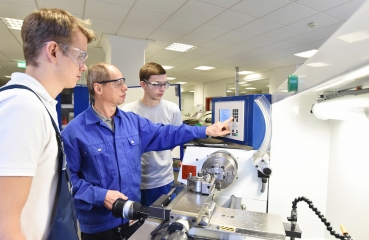
Industry-recognized credentials can be very transformational, depending on the local context

Dale Fowler

A new Fordham Institute report authored by University of Texas professor Matt Giani finds that industry-recognized credentials (IRCs) are “mostly not transformative” for the high school students who earn them. But the truth is that it’s all about the context.

Commentary
9.15.2022
Charter Schools, Curriculum & Instruction, Governance, Teachers & School Leaders

Supporting student wellness through challenging academic learning

Eva Moskowitz

The pandemic accelerated a mental health crisis for children and teens that was already apparent prior to spring 2020. It is a serious issue, and schools have expanded mental health services to meet the needs of a greater number of struggling students. At the same time, as we commence a school year in which educators must continue the intensive work of repairing the pandemic’s academic damage, focusing on student emotional wellness does not require relinquishing academic learning.

Commentary
9.15.2022
Evidence-Based Learning, Curriculum & Instruction, Governance, Teachers & School Leaders

Wanted: A Science of Reading Comprehension movement

Robert Pondiscio

Just in the nick of time for the last days of summer beach reading, there were a pair of big stories about reading instruction in TIME magazine and The New Yorker last month.

Commentary
9.15.2022
Evidence-Based Learning, Charter Schools, Curriculum & Instruction, Governance, Teachers & School Leaders

A teacher’s-eye view of the culture of a “No Excuses” school

Daniel Buck

Whether or not the bipartisan education consensus is dead, one of its most visible and effective reforms lives on: so-called “No Excuses” model schools, institutions famous for their exacting behavioral and academic standards.

Commentary
9.15.2022
Evidence-Based Learning, Career & Technical Education, Curriculum & Instruction, Teachers & School Leaders

Multiple positive outcomes for CTE students

Jeff Murray

As money and attention focus on career and technical education (CTE) at ever greater levels, researchers can help gauge program effectiveness by digging into the data.

Commentary
9.15.2022
Evidence-Based Learning, Curriculum & Instruction, Governance, Teachers & School Leaders

Four-day school weeks: Is the trade-off worth it?

Jeanette Luna

Four-day school weeks saw a sharp increase in popularity between 1999 and 2019, then the pandemic added impetus to the already growing trend—with districts seeing shortened school weeks as a way to retain teachers and cut expenses.

Commentary
9.15.2022

Cheers and Jeers: September 15, 2022

The Education Gadfly

Cheers

Commentary
9.15.2022

What we're reading this week: September 15, 2022

The Education Gadfly

"The State of the American Student," —CRPE The twists and turns of the Choose Your Own Adventure series encouraged children to experience books—and the world—through exploration and curiosity.

iStock / Getty Images Plus / Caiaimage/Robert Daly
Podcast
9.13.2022
Curriculum & Instruction

Education Gadfly Show #837: Re-stating education: Not as modest as it sounds!

  On this week’s Education Gadfly Show Podcast, Elliot Regenstein joins

iStock / Getty Images Plus / Caiaimage/Robert Daly
Commentary
9.13.2022
Evidence-Based Learning, Curriculum & Instruction, Governance, Advanced Education, Teachers & School Leaders

Rural gifted children are being neglected: An interview with Paula McGuire

Brandon L. Wright

Editor’s note: This is an edition of “Advance,” a newsletter from the Thomas B. Fordham Institute written by Brandon Wright, our Editorial Director, and published every other week. Its purpose is to monitor the progress of gifted education in America, including legal and legislative developments, policy and leadership changes, emerging research, grassroots efforts, and more.

Commentary
9.13.2022
Accountability & Testing, Evidence-Based Learning, Curriculum & Instruction, Governance, Teachers & School Leaders

Explaining NAEP math “haves”: Software and private tutoring?

Mike Goldstein

Earlier this month, Michael Petrilli wrote about America’s top-quartile students making gains from 2009 to 2019 over their already high baseline—in math, reading, and science—and our lower-quartile kids declining from their already low baseline.

Commentary
9.12.2022
Evidence-Based Learning, Career & Technical Education, Governance, Teachers & School Leaders

The case for specialized career and technical education

Zeyu Xu, Ben Backes

About three-quarters of students in the U.S. take at least one credit in high school linked to career and technical education (CTE). When high school students take multiple CTE credits, they are often encouraged to focus in a specialized career pathway, like business, health sciences, or hospitality and tourism.

Commentary
9.8.2022
Accountability & Testing, Evidence-Based Learning, Governance, Teachers & School Leaders

Beware of whiplash from clashing achievement results

Chester E. Finn, Jr.

The last month has brought both bleak new NAEP results and a deeply researched piece on “a half-century of student progress nationwide.” The former abounds with gloom about the dire and declining state of U.S. educational achievement and widening gaps between groups. The latter is an upbeat rejoinder to the doomsayers and a well-documented celebration of half a century of gains and gap-narrowings. What’s going on here?

Commentary
9.8.2022
Accountability & Testing, Governance, Teachers & School Leaders

It’s far too early to declare victory over Covid-era learning loss

Dale Chu

New findings released last week from the NAEP long-term trend assessment (LTT) suggest an alarming downswing among U.S. nine-year-olds in both math and reading between 2020 and 2022.

Commentary
9.8.2022

Cheers and Jeers: September 8, 2022

The Education Gadfly

Cheers

Commentary
9.8.2022

What we're reading this week: September 8, 2022

The Education Gadfly

A new study suggests that there is no gap in access to effective teachers between high- and low-poverty schools. —Education Next Two decades of research have shown that private school voucher programs improve educational attainment but hurt academic achievement.

iStock / Getty Images Plus/ sengchoy
Podcast
9.6.2022
Curriculum & Instruction

Education Gadfly Show #836: How should schools handle any Covid waves this school year?

  On this week’s Education Gadfly Show Podcast, John Bailey, nonresident senior fellow at the American Enterprise Institute,

iStock / Getty Images Plus/ sengchoy
Commentary
9.6.2022
Curriculum & Instruction, Teachers & School Leaders

Tennessee trains thousands of secondary teachers in reading science

Barbara Davidson

For all the welcome attention being paid to the Science of Reading, and literacy in general, there has been little focus in public policy on how to address the learning needs of secondary students who, for whatever combination of reasons, have failed to learn to read in elementary school.

Commentary
9.6.2022

National Working Group on Advanced Education: Summary of second meeting

The Education Gadfly

On June 29, 2022, members of the National Working Group on Advanced Education held their second meeting. Here we summarize the discussions, with particular focus on social and emotional support for high-achieving students, especially those from especially those from underserved backgrounds; support for educators of advanced students; the importance of high-quality instructional materials; and how best to use ability (or “achievement”) grouping. Read more.

Commentary
9.2.2022
Evidence-Based Learning, Career & Technical Education, Curriculum & Instruction, Governance, Teachers & School Leaders

What’s the purpose of industry-recognized credentials?

Jay Plasman

A new Fordham Institute publication by Dr.

Commentary
9.1.2022
Curriculum & Instruction, Governance, Teachers & School Leaders

Educating young Americans for citizenship is our schools’ top job

Chester E. Finn, Jr.

In the realm of elementary and secondary education, we so often focus on one or two trees instead of the forest. We go off and argue about the best way to teach reading, about which books belong in the school library, about whether everyone should take “college prep” courses, about how to teach race or evolution or climate change or even algebra.

Commentary
9.1.2022
Accountability & Testing, School Finance, Governance, Teachers & School Leaders

What happens when school leaders are allowed to abandon “step and lane” pay scales

Amber M. Northern, Ph.D.

In 2013, the British government ended the use of “annual progression” pay scales for teachers. These were similar to U.S.-style “step and lane” models but were set at the national level across the pond.

Commentary
9.1.2022

Cheers and Jeers: September 1, 2022

The Education Gadfly

Cheers

Pagination

  • First page « First
  • Previous page ‹ Previous
  • Page 55
  • Page 56
  • Page 57
  • Page 58
  • Current page 59
  • Page 60
  • Page 61
  • Page 62
  • Page 63
  • Next page Next ›
  • Last page Last »

Type

  • Book (10)
  • Commentary (17507)
  • Event (51)
  • Podcast (383)
  • Report (258)
  • Video (98)

Topics

  • Accountability & Testing (504)
  • Advanced Education (267)
  • Career & Technical Education (84)
  • Charter Schools (1116)
  • Curriculum & Instruction (1593)
  • ESSA (129)
  • Evidence-Based Learning (835)
  • Facilities (25)
  • Governance (1413)
  • Personalized Learning (51)
  • Private School Choice (139)
  • School Finance (169)
  • Standards (190)
  • Teachers & School Leaders (1455)

Date

  • 2026 (375)
  • 2025 (427)
  • 2024 (411)
  • 2023 (411)
  • 2022 (440)
  • 2021 (468)
  • 2020 (444)
  • 2019 (421)
  • 2018 (495)
  • 2017 (531)
  • 2016 (650)
  • 2015 (554)
  • 2014 (665)
  • 2013 (523)
  • 2012 (403)
  • 2011 (2413)
  • 2010 (1941)
  • 2009 (1489)
  • 2008 (1923)
  • 2007 (501)
  • 2006 (512)
  • 2005 (448)
  • 2004 (441)
  • 2003 (524)
  • 2002 (610)
  • 2001 (319)
  • 2000 (9)
  • 1999 (5)
  • 1998 (11)
  • 1997 (1)
  • 1969 (57)
Fordham Logo

© 2026 The Thomas B. Fordham Institute
Privacy Policy
Usage Agreement

National

P.O. Box 110
Burke, VA 22009

202.223.5452

[email protected]

Ohio

P.O. Box 82291
Columbus, OH 43202

614.223.1580

[email protected]

Sponsorship

130 West Second Street, Suite 410
Dayton, Ohio 45402

937.227.3368

[email protected]