Mobile Navigation

  • National
    • Policy
      • High Expectations
      • Quality Choices
      • Personalized Pathways
    • Research
    • Commentary
      • Gadfly Newsletter
      • Flypaper Blog
    • Events
    • Scholars Program
  • Ohio
    • Policy
      • Priorities
      • Media & Testimony
    • Research
    • Commentary
      • Ohio Education Gadfly Biweekly
      • Ohio Gadfly Daily
  • Charter Authorizing
    • Application
    • Sponsored Schools
    • Resources
  • About
    • Mission
    • Board
    • Staff
    • Career
Home
Home
Advancing Educational Excellence

Main Navigation

  • National
  • Ohio
  • Charter Authorizing
  • About

National Menu

  • Topics
    • Accountability & Testing
    • Advanced Education
    • Career & Technical Education
    • Charter Schools
    • Curriculum & Instruction
    • ESSA
    • Evidence-Based Learning
    • Facilities
    • Governance
    • Personalized Learning
    • Private School Choice
    • School Finance
    • Standards
    • Teachers & School Leaders
    • Think Again
  • Research
  • Commentary
    • Gadfly Newsletter
    • Flypaper Blog
    • Gadfly Podcast
  • Events
  • Scholars Program

Governance

Displaying 901-930 of 1416 results
Commentary
12.9.2021
Curriculum & Instruction, Governance, Teachers & School Leaders

Proof that online credit recovery has been on the rise

Adam Tyner, Ph.D.

Recent years have seen a move to eliminate homework and relax grading standards, and struggles by teachers and students to do their work during the pandemic have accelerated this trend. Some educators and commentators, however, fret that these new practices amount to lowering standards.


Report
12.8.2021
Evidence-Based Learning, Governance, Teachers & School Leaders

America’s Best and Worst Metro Areas for School Quality

Thomas B. Fordham Institute

"America’s Best and Worst Metro Areas for School Quality" is the first analysis to use nationally comparative data to evaluate the effectiveness of large and mid-size metro areas on school quality. Use our interactive data tool to see how your metro area stacks up.

Commentary
12.3.2021
Evidence-Based Learning, Governance, Teachers & School Leaders

In defense of suspensions

Daniel Buck

A student was arrested after an attempted stabbing at Montgomery Blair High School.

Commentary
12.3.2021
Curriculum & Instruction, Governance, Teachers & School Leaders

Education is progressive. Schools are conservative.

Robert Pondiscio

Editor’s note: This was first published by Newsweek.

Commentary
12.2.2021
Evidence-Based Learning, Curriculum & Instruction, Governance, Advanced Education, Teachers & School Leaders

Attacking gifted education is bad policy and bad politics

Brandon L. Wright

Education for high achievers has come under siege in blue cities and states as the national focus has shifted to racial equity in the aftermath of George Floyd’s murder. But such attacks, even when well-intentioned, are misguided. They target a problem’s symptom rather than its cause, and in doing so, harm students and defy parents.

Commentary
12.2.2021
Career & Technical Education, Curriculum & Instruction, Governance, Teachers & School Leaders

Redesigning early college credit to reach underserved students

Jeff Murray

In 2012, Tennessee lawmakers created the Statewide Dual-Credit program (SDC) to help more students earn college credit while completing high school.

Commentary
12.2.2021
Curriculum & Instruction, Governance, Teachers & School Leaders

The state of computer science education

Jessica Poiner

In early November, the Code.org Advocacy Coalition, the Computer Science Teachers Association, and the Expanding Computing Education Pathways Alliance teamed up to release the 2021 State of Computer Science Education.

Commentary
11.23.2021
Evidence-Based Learning, Governance, Teachers & School Leaders

Stop pestering education leaders to “follow the evidence.” Instead, host forecasting tournaments.

Mike Goldstein

Education leaders—principals, superintendents, state chiefs, philanthropy heads—make lots of decisions, and we exhort them to “use evidence” when they do. But we should stop doing that for at least four reasons.

Commentary
11.18.2021
Curriculum & Instruction, Governance, Teachers & School Leaders

What is virtue and why does it matter?

Jennifer Frey

Contemporary education has become too technocratic and divorced from virtue. This is a disservice to students because it robs them of what a classical education provides: the tools students need to succeed, not just academically and professionally, but in the deep and abiding sense of being able to flourish as free and good human beings.

Commentary
11.18.2021
School Finance, Governance, Teachers & School Leaders

In almost every state, funding gaps between rich and poor schools have been closed

Adam Tyner, Ph.D.

The conventional wisdom is that American students from poor families are mostly stuck in sorely underfunded public schools while more affluent families have access to well-resourced ones. For decades, this was largely true.

Podcast
11.16.2021
Governance

Education Gadfly Show #796: What Glenn Youngkin’s election says about education politics today

  On this week’s show, Andrew Rotherham, cofounder and partner at Bellwether Education partners, joins Mike Pet

Commentary
11.12.2021
Governance, Teachers & School Leaders

Communicating the “learning” in social-emotional learning

Sheldon Berman, Linda Darling-Hammond

Editor’s post: This post was originally published on November 8, 2021, by the Learning Policy Institute as part of its “Educating the Whole Child“ blog series.

Commentary
11.12.2021
Governance, Teachers & School Leaders

The fall of the yellow-school-bus system requires swift modernization

Matthew Ladner

“How did you go bankrupt?” Bill asked. “Two ways,” Mike said. “Gradually and then suddenly.” —Ernest Hemingway, The Sun Also Rises

Commentary
11.12.2021
Curriculum & Instruction, Governance, Teachers & School Leaders

Effectively implementing social-emotional learning means getting the terminology right

William Rost, Jeremy Smith

Two charter networks, Uplift Education and Distinctive Schools, have provided models for supporting social-emotional learning (SEL) that other schools should emulate.

Commentary
11.11.2021
Curriculum & Instruction, Governance, Teachers & School Leaders

How media coverage of critical race theory misses the point

Robert Pondiscio

It is not a controversial statement to say that the debate over critical race theory in schools has shed more heat than light. This is not surprising. When a relatively obscure and arcane academic field suddenly becomes a high-profile political football, hotly debated on cable news shoutfests, it is almost certainly because it has been reduced to bumper-sticker simplicity.

Commentary
11.11.2021
Curriculum & Instruction, Governance, Advanced Education, Teachers & School Leaders

A descriptive look at the structure of gifted programs in Washington State

Amber M. Northern, Ph.D.

Gifted education has been a much-debated issue

Commentary
11.11.2021
Accountability & Testing, Governance, Teachers & School Leaders

Would eliminating college admissions tests really make education more equitable?

Adam Tyner, Ph.D.

When the University of California began phasing-out college admissions test scores as part of a recent legal settlement, the rationale was “equity.” Lawyers for the students who brought the lawsuit said that “SAT and ACT scores are largely a proxy for a student’s socioeconomic background and race,” rather than measures of ac

doctor
Commentary
11.5.2021
Governance, Teachers & School Leaders

Want your kids to thrive in school? Call the pediatrician.

Tim Daly

The pandemic has provided a stream of unsettling headlines reminding us that our kids are not OK. They have grappled with surges in loneliness, anxiety, and depression.

doctor
Commentary
11.4.2021
Governance, Teachers & School Leaders

2021 election recap: How four key school board races shook out

Dale Chu

While the gubernatorial upset in Virginia drew the brightest spotlight, Tuesday’s election featured an unusual surge in the number of school board candidates vying for thousands of seats all over the country. Four races were especially noteworthy, both for the charged political rancor leading up to November 2, as well as the potentially broader implications from the results.

Commentary
11.4.2021
Curriculum & Instruction, Governance, Teachers & School Leaders

Reconnecting knowledge and virtue

Jennifer Frey

Editor’s note: We're happy to introduce Jennifer Frey, who will be writing regularly for the Fordham Institute over the next year. She is an associate professor at the University of South Carolina, where she focuses on virtue ethics.

Commentary
11.4.2021
Curriculum & Instruction, Governance, Teachers & School Leaders

Lessons on protecting viewpoint diversity in classrooms

Robert Pondiscio, Tracey Schirra

A story that became a flashpoint in national conversations around the effects of “CRT bans” is reaching its denouement: This past week, a hearing officer appointed to adjudicate the case ruled that the Sullivan County, Tennessee, school board was justified in

Podcast
11.4.2021
Governance

Education Gadfly Show #794: Universal pre-K seems imminent. Should we celebrate?


Commentary
10.29.2021
Career & Technical Education, Governance

The “big quit” is an opportunity to fix our broken education system

Bruno V. Manno

Covid-19 sent a shock wave through an already changing U.S. job market, provoking “a great reassessment of work in America.”

Commentary
10.28.2021
Curriculum & Instruction, Governance, Teachers & School Leaders

Not everyone’s on board with turning schooling into therapy

Robert Pondiscio

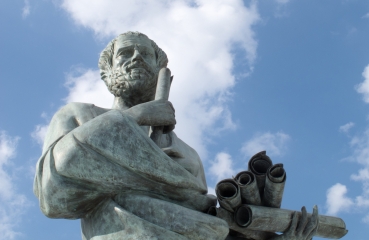
Schools have been concerned with character formation and values since Plato sat with students under an olive tree. Today’s “social and emotional learning” is consistent with this age-old impulse. But in its form and function it can represent something different—and more worrisome—than its progenitors, especially when employed without full discussion of its priorities and methods.

Commentary
10.28.2021
Accountability & Testing, Curriculum & Instruction, Governance, Teachers & School Leaders

The case for K–2 testing

Dale Chu

Under federal law, states must assess students annually in reading and math in grades 3–8 and at least once during high school, as well as testing science once in elementary, middle, and high school.

Getty Images/Jovanmandic
Commentary
10.28.2021
Evidence-Based Learning, Governance

The fault in our genes: Should education policies consider DNA?

Matthew Levey

Kathryn Paige Harden is a behavioral genetics rock star at UT Austin. Unsurprisingly for a college professor in a liberal town, she identifies as progressive. The seeming contradiction between her research interests and her political views has drawn broad attention to her first book, The Genetic Lottery.

Getty Images/Jovanmandic
Commentary
10.28.2021
Curriculum & Instruction, Governance, Teachers & School Leaders

How reopening decisions affected public school disenrollment

Amber M. Northern, Ph.D.

During the first full school year after the onset of the Covid-19 pandemic, enrollment in U.S. public schools fell by about 1.1 million students, or 2 percent of prior K–12 enrollment.

Commentary
10.21.2021
Governance, Teachers & School Leaders

Declining NAEP scores are flashing red lights for the Covid generation

Michael J. Petrilli

Last week brought the latest results from the National Assessment of Educational Progress’s Long Term Trend series, and they were sobering. Just before the pandemic kicked in, U.S. thirteen-year-olds saw statistically-significant declines in both math and reading—a first in the study’s nearly 50-year history. Black, Hispanic, and low-achieving students saw the largest declines. Here’s the case that the Great Recession was largely at fault.

Commentary
10.21.2021
School Finance, Governance, Private School Choice

How do parents use education savings accounts?

Amber M. Northern, Ph.D.

Whether due to the pandemic, political opportunism, popular demand, or a combination, education savings accounts (ESAs) are enjoying much attention and growth

Commentary
10.15.2021
Governance, Teachers & School Leaders

Reforming licensing policies will help alleviate teacher shortages

Shannon Whitworth

With the effects of the pandemic dragging on for another year, labor markets are acting strange and organizations are struggling to find qualified workers. Schools are no different. The teacher pipeline has slowed to a trickle as teacher preparation programs see fewer and fewer candidates. Teachers have been leaving the profession early.

Pagination

  • First page « First
  • Previous page ‹ Previous
  • Page 27
  • Page 28
  • Page 29
  • Page 30
  • Current page 31
  • Page 32
  • Page 33
  • Page 34
  • Page 35
  • Next page Next ›
  • Last page Last »

Type

  • Book (3)
  • Commentary (1239)
  • Event (2)
  • Podcast (81)
  • Report (78)

Topics

  • Accountability & Testing (504)
  • Advanced Education (267)
  • Career & Technical Education (84)
  • Charter Schools (1117)
  • Curriculum & Instruction (1594)
  • ESSA (129)
  • Evidence-Based Learning (837)
  • Facilities (25)
  • (-) Governance (1416)
  • Personalized Learning (51)
  • Private School Choice (140)
  • School Finance (169)
  • Standards (190)
  • Teachers & School Leaders (1456)

Date

  • 2026 (149)
  • 2025 (192)
  • 2024 (189)
  • 2023 (177)
  • 2022 (184)
  • 2021 (220)
  • 2020 (156)
  • 2019 (56)
  • 2018 (11)
  • 2017 (13)
  • 2016 (4)
  • 2015 (4)
  • 2014 (5)
  • 2013 (8)
  • 2012 (11)
  • 2011 (7)
  • 2010 (1)
  • 2009 (2)
  • 2008 (5)
  • 2007 (4)
  • 2006 (1)
  • 2005 (1)
  • 2004 (1)
  • 2003 (1)
  • 2002 (1)
  • 2001 (6)
  • 2000 (3)
  • 1999 (2)
  • 1998 (2)
Fordham Logo

© 2026 The Thomas B. Fordham Institute
Privacy Policy
Usage Agreement

National

P.O. Box 110
Burke, VA 22009

202.223.5452

[email protected]

Ohio

P.O. Box 82291
Columbus, OH 43202

614.223.1580

[email protected]

Sponsorship

130 West Second Street, Suite 410
Dayton, Ohio 45402

937.227.3368

[email protected]