Mobile Navigation

  • National
    • Policy
      • High Expectations
      • Quality Choices
      • Personalized Pathways
    • Research
    • Commentary
      • Gadfly Newsletter
      • Flypaper Blog
    • Events
    • Scholars Program
  • Ohio
    • Policy
      • Priorities
      • Media & Testimony
    • Research
    • Commentary
      • Ohio Education Gadfly Biweekly
      • Ohio Gadfly Daily
  • Charter Authorizing
    • Application
    • Sponsored Schools
    • Resources
  • About
    • Mission
    • Board
    • Staff
    • Career
Home
Home
Advancing Educational Excellence

Main Navigation

  • National
  • Ohio
  • Charter Authorizing
  • About

National Menu

  • Topics
    • Accountability & Testing
    • Advanced Education
    • Career & Technical Education
    • Charter Schools
    • Curriculum & Instruction
    • ESSA
    • Evidence-Based Learning
    • Facilities
    • Governance
    • Personalized Learning
    • Private School Choice
    • School Finance
    • Standards
    • Teachers & School Leaders
    • Think Again
  • Research
  • Commentary
    • Gadfly Newsletter
    • Flypaper Blog
    • Gadfly Podcast
  • Events
  • Scholars Program

The Education Gadfly Weekly

Sign Up to Receive Fordham Updates

We'll send you quality research, commentary, analysis, and news on the education issues you care about.
Thank you for signing up!
Please check your email to confirm the subscription.

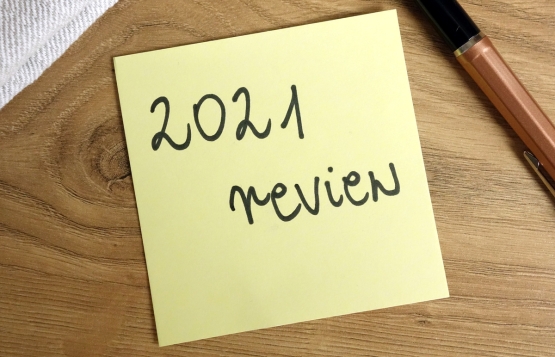
The Education Gadfly Weekly: Fordham’s best of 2021

Volume 21, Number 50
12.23.2021
12.23.2021

The Education Gadfly Weekly: Fordham’s best of 2021

Volume 21, Number 50
view
High Expectations

Fordham’s top 10 articles of 2021

The past year has brought hope and progress, but also setbacks and new challenges. At Fordham, we did our best to keep up with all of it, following our well-rehearsed practice of asking tough questions, conducting rigorous research, debating issues rather than propagandizing about them, and proposing workable solutions whenever we could. All of this is evident in Fordham’s 2021 commentary.

Julia Wolf 12.23.2021
NationalFlypaper

Fordham’s top 10 articles of 2021

Julia Wolf
12.23.2021
Flypaper

The top Education Gadfly Show podcast episodes of 2021

Pedro Enamorado
12.23.2021
Flypaper

Counting down the top education studies of 2021

Amber M. Northern, Ph.D.
12.23.2021
Flypaper

Charter attendance, education outcomes, and civic participation

Amber M. Northern, Ph.D.
12.23.2021
Flypaper

Education Gadfly Show #800: Why we need virtue education in our classrooms

12.21.2021
Podcast

Cheers and Jeers: December 23, 2021

The Education Gadfly
12.23.2021
Flypaper

What we're reading this week: December 23, 2021

The Education Gadfly
12.23.2021
Flypaper
view

The top Education Gadfly Show podcast episodes of 2021

Pedro Enamorado 12.23.2021
Flypaper
view

Counting down the top education studies of 2021

Amber M. Northern, Ph.D. 12.23.2021
Flypaper
view

Charter attendance, education outcomes, and civic participation

Amber M. Northern, Ph.D. 12.23.2021
Flypaper
view

Education Gadfly Show #800: Why we need virtue education in our classrooms

Michael J. Petrilli, Jennifer Frey, David Griffith, Ph.D., Amber M. Northern, Ph.D. 12.21.2021
Podcast
view

Cheers and Jeers: December 23, 2021

The Education Gadfly 12.23.2021
Flypaper
view

What we're reading this week: December 23, 2021

The Education Gadfly 12.23.2021
Flypaper
view

Fordham’s top 10 articles of 2021

Julia Wolf
12.23.2021
Flypaper

The past year has brought hope and progress, but also setbacks and new challenges. We made strides toward racial equity, even as some took advantage of the positive momentum and pushed misguided policies. Schools reopened, but then struggled to keep kids in classrooms. And education reform mainstays like testing and accountability continued to be debated, while new issues like masks and student quarantines were added to the mix.

At Fordham we did our best to keep up with new challenges, following our established practice of asking tough questions, conducting rigorous research, debating issues, and proposing workable solutions whenever we could. All of this is evident in Fordham’s 2021 commentary, which comprised around 500 editorials, 120 newsletters, and fifty podcasts, spanning every education issue facing the nation. Here are ten of our best posts, listed in order of publication date.

1. What to do about the Covid kindergarten cohort?, by Michael J. Petrilli, January 28

Everyone has been impacted by the pandemic in some shape or form. One group that has faced especially tough challenges is kindergarteners. Mike explains that, due to a great deal of variation in how parents handled learning during Covid-19, these children are entering “real school” with a very wide spectrum of preparedness. Mike’s solution is to add an additional grade in elementary school. While this would pose logistical challenges for schools, for these kindergarteners, it might be the only way to make up for so much lost learning.

2. I believe “antiracism” is misguided. Can I still teach Black children?, by Robert Pondiscio, April 29

In this piece, Robert wrestles with what antiracism has come to mean in 2021, and does so as a teacher who’s been in the classroom since 2002. When he decided to be an educator, he was driven by “the manifest unfairness of American education to low-income, Black, and Brown children who comprise, without exception, every student I’ve ever taught.” As an educator, he’s come to believe that holding students to high expectations and using high-quality curricula creates a culture that values achievement—and above all, that children don’t fail, but rather adults fail children. He says that “antiracism,” as it’s expressed today, attempts to shift education away from these principles. So, in this piece, he dives deep into a difficult question: “Is a professed commitment to the tenets of antiracism now non-negotiable in our profession?”

3. The common ground on race and education that’s hiding in plain sight, by Michael J. Petrilli, May 27

Following heated debates about diversity and critical race theory, Mike voices his discontent with the polarized nature of education’s “culture wars.” He argues that, in spite of great extremes in opinion, there is common ground on race and education right below our noses. The five ideas presented are straightforward and evidence-based. They provide opportunities for compromise that could improve our current situation.

4. “Public education sucks” is a weak argument for school choice, by Robert Pondiscio, August 5

In a year when public schools have often come under fire, Robert shows us how pro-school-choice arguments have devolved into anti-public-school messaging, framing charters as a superior alternative rather than worthy on their own merits. He views this line of advocacy for charters as unnecessary, unhelpful, and weak. With the new year and even more debates just around the corner, hopefully we can focus on the pros of each opposing side, not just the cons of the other.

5. More dumb things done in the name of educational “equity”, by Dale Chu, August 26

Dale addresses some of the year’s misguided actions that allege to advance equity, such as ditching grades, waving graduation standards, and scrapping standardized tests. Inspired by an episode of the “8 Black Hands” podcast that critiques these trends, Dale shares examples from California, New York, and Oregon to illustrate why these efforts stand to harm the very students they’re designed to help.

6. Blinding ourselves to America’s achievement woes, by Chester E. Finn, Jr., September 16

Grade inflation, easier (or no) tests, and turning a blind eye—oh my! Checker exposes issues that are being tossed under the rug in modern day America, and compares these with what was addressed in the 1980s with A Nation at Risk. He argues not only that we still lag far behind in performance and achievement, we are also in denial that our standards are slipping. He places what he views as our greatest obstacles to progress on the table for all to see.

7. Rigorous courses are a good thing—and good for equity, by Brandon L. Wright, September 23

Brandon responds to an article implying that Advanced Placement courses are failing to distribute their benefits proportionately across socioeconomic and racial lines. This critique is well-meaning but misguided. AP’s rigorous curriculum already benefits millions of Black and Hispanic students who would learn less if the classes were made easier. Instead, we should improve the education of disadvantaged students, and do so from an early age, so more of them are prepared later for advanced courses.

8. The college gender gap begins in kindergarten, by Michael J. Petrilli, October 7

Gender gaps in literacy begin in kindergarten and grow in elementary school, leading to and exacerbating the gender gap seen in higher education. Mike evaluates the implications of the reading gap beginning in kindergarten and discusses ways to address it via higher expectations and more male teachers in grade schools. Narrowing the elementary literacy gap could narrow the college gender gap, killing two birds with one stone.

9. Reconnecting knowledge and virtue, by Jennifer Frey, November 4

Classical education is focused on teaching not only information and skill, but also how virtue is linked with knowledge. In this post, Jennifer pulls from her experience at this year’s Higher Education Summit to explain the ways in which schooling has become disconnected from classical education’s values, as well as how and why we can reverse that. Doing so, she says, would help develop students’ character and help them better understand the world and each other—something that seems especially urgent today.

10. Teacher mental health days demonstrate districts’ priorities—and it’s not the students, by Dale Chu, November 18

What is driving sporadic school cancellations and remote learning days in places that aren’t dealing with Covid-19 outbreaks? Some claim they’re caused by labor shortages in schools, but Dale peels back the layers to expose artificial extensions of weekends and school holidays for the purposes of teacher “self-care,” with scant regard for how it affects students and parents. He calls for a new approach to managing teacher stress, especially as new virus variants emerge, that doesn’t exacerbate students’ already grave learning loss.

—

We cannot yet know what 2022 has in store. Facing what will undoubtedly be another challenging trip around the sun, we move forward with hope in our schools, our vaccines, and each other. Whatever comes, the Flypaper blog will cover it, and we invite you back for more quality commentary in the new year.

view

The top Education Gadfly Show podcast episodes of 2021

Pedro Enamorado
12.23.2021
Flypaper

This year, the Education Gadfly Show podcast covered many hot-button education issues. But our most-listened-to episodes reflect what we already knew: This was a big year for education politics!

The politics of school choice, testing, federal funding, and quarantine protocols dominated the topics discussed in our top ten. But we were also pleased to see that our faithful listeners continue to love the research: Our number one episode was an entry in our “Research Deep Dive” series, forgoing current events for an exploration of an important area of study. Listeners were also drawn to episodes exploring social and emotional learning, standards-based reforms, and Fordham’s school recovery plan, The Acceleration Imperative.

Be sure to stay tuned next year as we continue to give you our ed reform updates, as well as emerging research. And don’t forget to tell your friends to subscribe to the Education Gadfly Show on Apple and Spotify!

1. Research Deep Dive: The impact of urban charter schools, June 16

2021’s most popular episode featured Brian Gill, senior fellow at Mathematica, who has twenty years of experience in charter school research. He explained that studies of leading charter management organizations, such as KIPP, find some of the largest achievement impacts of any intervention. He also discussed charters’ long-term impacts on criminality, college and civic outcomes, segregation, and district finances.

2. What does Miguel Cardona’s time in Connecticut imply about his future in Washington?, January 6

When Miguel Cardona’s was appointed the United States Secretary of Education, we had Subira Gordon on the show. The executive director of Connecticut’s ConnCAN, she has known Cardona for a decade. She talked about his solid record in the state on tackling chronic absenteeism, pushing for school reopening when it was safe, encouraging parent choice, and being willing to work with ed reformers of diverse opinions. Also on that podcast, Amber Northern summarized the best research of 2020.

3. The virus isn’t done with schools, July 14

As the Delta variant of the virus started to make headlines, we asked John Bailey, a nonresident senior fellow at the American Enterprise Institute, to discuss how it would impact fall reopenings. He explained the early data on Delta and predicted that overly-cautious school quarantine protocols would disrupt student learning. Sadly, he was right. On the Research Minute, Olivia Piontek, filling in for Amber, examined a study on standalone technical high schools.

4. Whatever you do, don’t call it social and emotional learning, August 12

David Griffith hosted this week’s discussion of Fordham’s report How to Sell SEL. Adam Tyner, our associate director of research, who authored it, summarized the main takeaway: Parents of both political parties broadly support the substance of social and emotional learning. But moms and dads dislike how some SEL initiatives are framed, especially the term itself. Amber talked about the effects of school-based mentoring.

5. Can curriculum reform succeed where the rest of standards-based reform failed?, July 1

Morgan Polikoff, Associate Professor of Education at the University of Southern California and author of a new book called Beyond Standards, came on the show to talk about it. He argued that standards-based reform has failed to improve instruction, urged reformers to focus instead on getting quality material into classrooms, and called for a stronger state role in curricular reform. Then Amber discussed a study about universal free meals’ impact on students’ perception of safety.

6. The education issues facing state legislatures in 2021, January 20

What could state governments do to tackle education issues in the wake of the pandemic? Patricia Levesque, chief executive officer of ExcelinEd, described how states like New Hampshire expanded access to tutoring to mitigate learning loss, and the challenge of giving districts sound guidance on using federal stimulus funds, dealing with enrollment shifts, and meeting parents’ rising demands for school choice. On the Research Minute, Amber looked at critics’ claims that charters are taking the best students from district schools and pushing the worst into them.

7. How districts are spending federal aid, July 21

Halfway through the year, we talked to Bree Dusseault, practitioner-in-residence at the Center on Reinventing Public Education, about how districts make use of federal aid. She said that schools have mostly focused on recovering student learning, mental health, and technology. Instead, she said more funds should go into reengaging absent students and supporting teacher capacity. Amber also examined a study of remote learning’s negative impact on student wellness and academic outcomes.

8. The House Democrats’ attack on charter schools, August 4

This year, the U.S. House of Representatives passed a bill that proposed a $40 million cut to federal Charter School Programs startup funds and also put other charter funding at risk. Our guest on this podcast was Ron Rice, senior director of government relations at the National Alliance for Public Charter Schools, who laid out the harmful consequences, especially for disadvantaged students, if this bill were to become law. (The bill is currently before the Senate Committee on Appropriations, and that iteration undoes the cut.) Amber then reviewed data on the academic and professional benefits of participating in sports in high school and college.

9. Another reason we need to test students in 2021, January 13

Guest Eric Parsons, associate teaching professor of economics at the University of Missouri, discussed the Fordham report that he authored, Bridging the Covid Divide—in particular, how waiving annual testing requirements in 2020 would affect metrics for school improvement. He found that it’s possible to accurately gauge school growth while missing one year of data but not two. On the Research Minute, Amber examined a virtual charter school’s impact on student achievement.

10. Accelerating learning post-pandemic, March 24

In 2021, Fordham released The Acceleration Imperative, a crowd-sourced school recovery plan written with input from practitioners and other experts to help educators and district leaders with post-pandemic challenges. On this episode, we hosted David Steiner, executive director of the Johns Hopkins Institute for Education Policy, who explained how educators can accelerate learning to help students make up lost ground. He argued that remediation doesn’t close gaps, but that teaching targeted grade-level content can. Then Amber discussed approaches to measuring teacher quality at scale.

view

Counting down the top education studies of 2021

Amber M. Northern, Ph.D.
12.23.2021
Flypaper

Subscribers to our podcast, the Education Gadfly Show, are treated weekly to the Research Minute, a segment where I highlight a recent rigorous, useful, or intriguing education-related study (ideally all three).

I cannot pretend to have read every study that fits that description. But here is my countdown of the top five studies (well, six) that I reviewed this past year.

Honorable Mention: Mahsi’choo for the Info! Molly of Denali teaches children about informational text, by Ready To Learn Research (reviewed on the show in July).

A cool little study by the Educational Development Center and SRI International sheds light on how we can use public media to improve childhood literacy. Specifically, the research team conducted two randomized control trials of the PBS Kids show Molly of Denali, an award-winning series designed to teach children ages three to eight how to use informational text. The show is distributed nationally and features an Alaska Native female lead character who, along with her friends, models the use and creation of informational text to solve authentic problems in their everyday life in our largest state. They rely on sources like field guides, instruction manuals, maps, weather reports, and even homemade recipes (including one for mosquito repellant).

The key finding is that the Molly of Denali resources improved children’s ability to use informational text to solve real-world problems. This impact was more pronounced for the youngest kids and those who used the resources for longer periods. The overall effect size was small, but analysts say the impacts are notable for a nine-week intervention in which children interacted with the materials roughly an hour a week, while “other education interventions rely on intensive year-long curricula to achieve similar impacts.” I liked that intentionally-developed digital content was made to strengthen particular skills and that this high-quality public TV show was available to all kids, even those without broadband or computers.

Number Five: Accountability-Driven School Reform: Are there unintended effects on younger children in untested grades?, by Gary T. Henry, Shelby M. McNeill, and Erica Harbatkin (reviewed on the show in February).

February brought a study that examined the impact of test-based accountability on young children. It looked at an initiative conducted from 2015 to 2017 in North Carolina to turn around its lowest performing schools. Did this effort impact the outcomes of young children, as well as the assignment of teachers into untested grades?

Teachers in K–2, which are untested grades in North Carolina, have effectiveness scores calculated by their students’ text reading comprehension (TRC) scores. Researchers leveraged these scores in a regression continuity design, estimating the effect of being just below the cut-off score for assignment to the turnaround initiative.

Initial results saw negative effects on early literacy and reading in the first year of the intervention, but a rebound soon followed, showing positive effects in the second year in the range of 0.08 to 0.09 standard deviations for both subjects. Analysts found that low-effectiveness teachers in tested grades across the full sample were more likely to be reassigned to untested early grades in 2016 but no more often than in comparison schools. The bottom line for me was that accountability-driven reform may not be leading to huge gains, but it also isn’t doing youngsters harm.

Number Four: The evolution of gender gaps in numeracy and literacy between childhood and young adulthood, by Francesca Borgonovi, Alvaro Choi, and Marco Paccagnella (reviewed on the show in April).

Research indicates that gaps in numeracy and literacy skew along gender lines, with boys tending to outperform girls in numeracy and girls tending to outperform boys in literacy. But we know little about how these gaps evolve as children grow up. An international study in the Economics of Education Review aimed to chart their evolution between childhood and young adulthood.

Analysts combined data from existing cross-sectional large-scale assessments that contain representative samples of the same birth cohort at different points in time in up to eleven countries. Thus they could track the evolution of gender gaps for a single cohort of students that participated in different waves of different assessments from ages ten to twenty-seven. They pull data from TIMSS, PIRLS, PISA, and PIACC test administrations.

The key finding is that, in a large majority of countries, the gender gap in numeracy in favor of boys tends to be linear, growing as students age. It’s particularly pronounced after they exit compulsory schooling and enter post-secondary education or the labor market. By contrast, the gender gap in literacy is widest during the teenage years. Specifically, girls have a large advantage at ages nine and ten, which grows larger by ages fifteen and sixteen. At ages twenty-six and twenty-seven, however, the advantage shrinks to essentially zero, as young men then have a surprising (but non-statistically-significant) advantage of 13 percent of a standard deviation. Most of these findings also hold true in the United States, although numeracy gaps in favor of boys are even larger.

Interestingly, the analysts posit that literacy skills are more universal, so perhaps men are able to develop them on the job and catch up with women after formal education has ended. Their study raises the question of how to increase the math competency of girls in the elementary years, so that we prevent gaps from opening in the first place. But there was good news, too, in that adult males can make up for lost ground on the literacy front.

Number Three: Why Does Education Increase Voting? Evidence from Boston’s Charter Schools, by Sarah Cohodes and James Feigenbaum (reviewed on the show in September).

This NBER paper leverages the natural experiment generated by school choice lotteries to analyze the impacts of charter school attendance on academic outcomes, which has been examined before, but this study adds the newer wrinkle of citizenship effects (a.k.a voting outcomes).

It includes data from applicants to all twelve Boston charters with lottery records from the classes of 2006 to 2017 and matches student data to voter files in Massachusetts. The voting data include party registration and election turnout in elections from 2008 to 2018. Analysts measure voter participation as “ever voted,” as well as participation in the first presidential election after a student turns eighteen.

Results show that Boston charters continue to show large gains in scores on state exams, AP test taking and scores, SAT scores, and college enrollment. Next, analysts find that charter school attendance makes little difference in the likelihood of registering to vote, with many students—around 45 percent—registering to vote by their nineteenth birthday regardless of their lottery status. But charter attendance does boost the rate at which students ever vote, from about 44 to 50 percent, which is a 6-percentage-point increase—mainly driven by presidential election participation.

Charter attendance does not impact voting in non-presidential general elections or in primaries. Importantly, the researchers find that the voting gains come almost entirely from a boost in girls voting in their first possible presidential election. This all sounds positive for girls, but we can’t afford to neglect the plight of our young boys.

Number Two: To What Extent Does In-Person Schooling Contribute to the Spread of COVID-19? Evidence from Michigan and Washington, by Dan Goldhaber, Scott A. Imberman, Katharine O. Strunk, Bryant Hopkins, Nate Brown, Erica Harbatkin, and Tara Kilbride (reviewed on the show in February).

A septet of superstar analysts brought us this timely and actionable research related to the ongoing pandemic, wherein they examined the extent to which in-person schooling contributed to the spread of Covid-19.

They analyzed data on reported Covid cases in Michigan and Washington, as reported by the CDC and the respective state health agencies, as well as data on district-level instructional modality—in-person, hybrid, or remote—collected via monthly surveys administered to school district leaders. Basically, they knew the approximate share of students receiving education in each of these different modes. They also included controls designed to account for non-schooling risk factors for Covid spread—including the share of individuals who mask, the share who stay at home, the county unemployment rate, the share of the population that attend county public schools, the share who are age sixty-five or older, the share that live in a nursing home, and so on.

The results show that in-person schooling is not associated with increased spread of Covid—at least in counties reporting low levels of pre-existing Covid cases overall. But increased Covid-19 spread does occur relative to in-person learning in areas with moderate to high pre-existing Covid rates.

Still, the estimated effect of in-person schooling on Covid spread depends greatly on what students and staff in the counterfactual situation (no in-person schooling) are doing at home. In other words, we can’t assume fully-remote learning is safer, since some remote families are participating in learning pods, others may be hiring babysitters and nannies who watch several kids, or families may be involving kids in other social activities because they are missing school. These non-school activities could serve to expose kids and adults to Covid as a direct result of imposing a remote learning modality meant to keep them safe.

At the time, their finding that in-person schooling has a significant impact only at higher pre-existing levels of community spread was commonsensical and in line with other guidance. Their study added to our growing knowledge of how to approach schooling in highly uncertain times.

Number One: The Revealed Preferences for School Reopening: Evidence from public-school disenrollment, By Thomas S. Dee, Elizabeth Huffaker, Cheryl Philips, and Eric Sagara (reviewed on the show in August).

The most consequential report I reviewed this year was also pandemic-related. It was published in August and received quite a bit of attention. The authors began by noting that, during the first full school year after the onset of the Covid-19 pandemic, enrollment in U.S. public schools fell by about 1.1 million students, or 2 percent. They examined how school reopening decisions affected those declines.

They used federal and state data to gather district enrollment counts from 2015–16 through 2020–21. They also collected district opening plans as aggregated by Burbio and tracked instructional mode status for roughly 1,200 districts at various points in time by school and grade level. The sample encompassed 35 percent of all public school students. Analysts tracked Covid-19 prevalence at the county level and state decisions around Covid-related restrictions, such as stay-at-home orders and public transportation limitations, which could influence schools’ instructional mode and parents’ perceptions of the Covid risk.

The headline finding: The decision to offer remote-only instruction in fall 2020 contributed materially to disenrollment from public schools. Specifically, the study found that offering remote-only instruction exacerbated disenrollment by 42 percent relative to in-person instruction, while hybrid instruction had small and statistically insignificant effects. Yet roughly 57 percent of students faced remote-only instruction as of November 2020.

That decline implies that public schools lost roughly 300,000 K–12 students as a result of those decisions. Which suggests that widespread adoption of remote-only instruction explains roughly a quarter of the disenrollment from public schools. The researchers also found that the effects of remote-only instruction on the decline in enrollment were particularly concentrated in the kindergarten and elementary grades. Remote instruction did not appear to influence middle or high school enrollment—or contribute to dropout behavior—nor did hybrid instruction have an impact either way.

Most of us had concerns early on that remote instruction would portend adverse effects for kids. This study quantified those unfortunate impacts for young learners, though we don’t know the extent to which they transferred to private or home schools (or delayed kindergarten entry). Thankfully, the enrollment repercussions of remote-only schooling appear to have been minimal for the older kids. While we’re grateful for timely pandemic-related research like these latter two studies, here’s hoping that we have less need for them in 2022.

—

There you have the top 5 6 research publications I reviewed this year. Merry Christmas, Happy Holidays, and Happy New Year to all of our listeners out there! The Research Minute will be back again on January 5 with more of the best studies. Don’t miss it!

view

Charter attendance, education outcomes, and civic participation

Amber M. Northern, Ph.D.
12.23.2021
Flypaper

For those of us old enough to remember, the “Rock the Vote” campaign in the 90’s showcased many celebrities—including Madonna in a red bikini and American flag—trying to convince young people to participate in elections. Looking at the PSAs again makes for amusing yet embarrassing memories. All the more reason to appreciate a serious study that leverages school choice lotteries to analyze school attendance impacts on both academic outcomes and voting behavior. (And appreciate it we did, as it is one of our favorites reviewed this year.) The only previous lottery-based study on charters and voting focused on a civics-minded school and, while it showed increases in voter participation among students, the question remains whether such civic-mindedness is required to see that outcome.

Researchers Sarah Cohodes and James Feigenbaum analyze applicants to Boston charters from the classes of 2006 to 2017 and match student data to voter files from Massachusetts—and nearby states, as well, in order to account for out-of-state moves and nearby college attendance. The voting data include party registration and voter participation in elections from 2008 to 2018. Their sample includes all twelve Boston charter schools with lottery records that enrolled students who turned at least eighteen by the 2016 general election. They measure voter participation as “ever voted,” as well as participation in the first presidential election after turning eighteen. For a subset of Boston students, they are also able to link parents to their children’s voter files to assess whether charter school attendance (or losing the lottery) incents parental voting after the charter lottery occurs. They observe parental voting prior to the lottery to help control for selection.

They use a two-stage least squares methodology to exploit the natural experiment created by charter lotteries via randomly assigned offers of charter school seats. First, they present results that repeat findings from earlier studies, showing that Boston charters continue to post large gains in scores on state exams, AP test taking and scores, SAT scores, and college enrollment—although charter students do take longer to graduate high school than their traditional public school peers. Next, Cohodes and Feigenbaum turn to the questions around voting. They find that charter school attendance makes little difference in the likelihood of registering to vote in Massachusetts, with approximately 45 percent registering by their nineteenth birthday, regardless of their lottery status, i.e., regardless of whether they were admitted to a charter school or not. But charter attendance does boost the rate at which students ever vote, from about 44 to 50 percent, which is a 6-percentage-point increase. When separated by election type, they find that the main effects are driven by presidential elections; charter attendance does not impact voting in other general elections or primaries. They also find that the voting gains come almost entirely from a boost in girls voting in their first possible presidential election. Besides gender, overall voting impacts are driven to a lesser extent by family income, with lower-income students’ voting rates at 33 percent versus 42 percent for their higher-income peers.  

Cohodes and Feigenbaum then look into various mechanisms for the voting impact and hypothesize that measures of non-cognitive skills—specifically, days of high school attendance and SAT taking—serve as proxies for persistence and follow-through and are the same types of skills needed to complete voter registration and actually cast a ballot. They find that the attendance effect, like the voting effect, operates entirely by changing girls’ behavior such that girls attend twenty-two more days of school than their control peers, while there is no difference for boys. Likewise, attending a charter school boosts SAT-taking rates more for girls than boys. Since these differences align with the patterns in voting, they surmise that charters’ impact on non-cognitive skills may be the path towards engaged civic participation for girls. Finally, they find that charter school attendance appears to have a small positive impact on the likelihood that a parent votes, with the important caveat that this voting impact was driven by the 2016 election when charters likely encouraged parents to vote given that a charter school cap measure was on the Massachusetts ballot in that election.

It is unfortunate that a slew of good news in this study—charters boost achievement and non-cognitive skills; persistence and follow-through learned in charters have positive real-world outcomes; education and civic participation are linked—is overshadowed by yet more negative news about the performance of young men in K–12 education and beyond. There is no evidence that civic participation would be more of a draw for girls than for boys, so what could be happening within our education system to inhibit both the adoption of certain non-cognitive skills by young men and the good habits that flow from them (assuming that’s what is driving the turnout boost)? That’s the question that charter leaders need to ask and answer for themselves.

SOURCE: Sarah Cohodes and James J. Feigenbaum, “Why Does Education Increase Voting? Evidence from Boston’s Charter Schools,” NBER Working Paper #29308 (September 2021).

view

Education Gadfly Show #800: Why we need virtue education in our classrooms

12.21.2021
Podcast
 

On this week’s Education Gadfly Show podcast, Jennifer Frey, associate professor at the University of South Carolina and a regular guest writer for Fordham’s Flypaper blog, joins Mike Petrilli and David Griffith to discuss why and how we should incorporate virtue education in classrooms. Then, on the Research Minute, Amber Northern runs down the best education research of 2021.

You can find this and every episode on all major podcast platforms.

Recommended content:

  • Jennifer’s ongoing Flypaper blog post series on virtue education:
    • “Reconnecting knowledge and virtue”
    • “What is virtue and why does it matter?”
    • “Teaching gratitude beyond Thanksgiving”
    • “Civility, democracy, and education”
  • Amber’s list of the top six studies she reviewed this past year on the Research Minute:
    1. Thomas S. Dee et al., “The Revealed Preferences for School Reopening: Evidence from Public-School Disenrollment,” Annenberg Institute at Brown University (August 2021).
    2. Dan Goldhaber, Scott A. Imberman, Katharine O. Strunk, Bryant Hopkins, Nate Brown, Erica Harbatkin, and Tara Kilbride, “To What Extent Does In-Person Schooling Contribute to the Spread of COVID-19? Evidence from Michigan and Washington,” NBER Working Paper #28455 (February 2021).
    3. Sarah Cohodes and James J. Feigenbaum, “Why Does Education Increase Voting? Evidence from Boston’s Charter Schools,” NBER Working Paper #29308 (September 2021).
    4. Francesca Borgonovi, Alvaro Choi, and Marco Paccagnella, “The evolution of gender gaps in numeracy and literacy between childhood and young adulthood,” Economics of Education Review (June 2021).
    5. Gary T. Henry, Shelby M. McNeill, and Erica Harbatkin, “Accountability-Driven School Reform: Are There Unintended Effects on Younger Children in Untested Grades?,” retrieved from Annenberg Institute at Brown University (February 2021).
    6. Joy Lorenzo Kennedy et al., “Mahsi’choo for the Info! Molly of Denali Teaches Children About Informational Text,” Education Development Center (April 2021).

Feedback welcome!

Have ideas or feedback on our podcast? Send them to our podcast producer Pedro Enamorado at [email protected].

view

Cheers and Jeers: December 23, 2021

The Education Gadfly
12.23.2021
Flypaper

Cheers

  • Great news for Virginia students: Governor-elect Youngkin announces Aimee Rogstad Guidera, longtime advocate for standards, school choice, and accountability, as his education secretary. —Washington Post
  • “Hiring Students to Ease Staffing Shortages: One School District’s Unorthodox Solution.” —Education Week
  • Roosevelt Montás, a Dominican immigrant who fell in love with the Western canon and became a senior lecturer at Columbia University, explains why we need the Great Books in our schools. —John McWhorter
  • “We learned our lesson last year: Do not close schools.” —New York Times
  • When Louisa County Schools ran out of hamburger buns, culinary arts teacher Ben Howell and his class readied their baking ovens to meet the need. —WTVR

Jeers

  • We shouldn’t underestimate the rising cases of student misbehavior, like this article from The Grade does, or fail to revisit the misguided discipline policies that prevent teachers from addressing them.
  • “Harvard won’t require SAT or ACT through 2026 as test-optional push grows.” —Washington Post
  • As high school sports return, young athletes are experiencing more verbal abuse, sexual harassment, and even racial epithets from the stands. —Washington Post
view

What we're reading this week: December 23, 2021

The Education Gadfly
12.23.2021
Flypaper
  • The CDC’s case for masking in schools is flawed and doesn’t square with European and global health organizations’ guidance. —The Atlantic
  • Gordon S. Wood, leading scholar of America’s Founding, exposes the 1619 Project’s historical illiteracy. —George Will 
Fordham Logo

© 2026 The Thomas B. Fordham Institute
Privacy Policy
Usage Agreement

National

P.O. Box 110
Burke, VA 22009

202.223.5452

[email protected]

Ohio

P.O. Box 82291
Columbus, OH 43202

614.223.1580

[email protected]

Sponsorship

130 West Second Street, Suite 410
Dayton, Ohio 45402

937.227.3368

[email protected]