Mobile Navigation

  • National
    • Policy
      • High Expectations
      • Quality Choices
      • Personalized Pathways
    • Research
    • Commentary
      • Gadfly Newsletter
      • Flypaper Blog
    • Events
    • Scholars Program
  • Ohio
    • Policy
      • Priorities
      • Media & Testimony
    • Research
    • Commentary
      • Ohio Education Gadfly Biweekly
      • Ohio Gadfly Daily
  • Charter Authorizing
    • Application
    • Sponsored Schools
    • Resources
  • About
    • Mission
    • Board
    • Staff
    • Career
Home
Home
Advancing Educational Excellence

Main Navigation

  • National
  • Ohio
  • Charter Authorizing
  • About

National Menu

  • Topics
    • Accountability & Testing
    • Advanced Education
    • Career & Technical Education
    • Charter Schools
    • Curriculum & Instruction
    • ESSA
    • Evidence-Based Learning
    • Facilities
    • Governance
    • Personalized Learning
    • Private School Choice
    • School Finance
    • Standards
    • Teachers & School Leaders
    • Think Again
  • Research
  • Commentary
    • Gadfly Newsletter
    • Flypaper Blog
    • Gadfly Podcast
  • Events
  • Scholars Program

Governance

Displaying 1171-1200 of 1405 results
Commentary
7.29.2020
Governance, Teachers & School Leaders

School districts could try harder to reopen

Dale Chu

As coronavirus cases continue to rise, Colorado’s two largest school districts, Denver and Jeffco, recently announced their intention to start the school year remotely.

Commentary
7.29.2020
School Finance, Governance

With its next stimulus bill, Congress should return federal education aid to its roots

Michael J. Petrilli

Senate Republicans released their relief bill this week, the HEALS act, which proposes to steer the bulk of education aid to schools that open for in-person instruction. This is triggering angry reactions from most of the education establishment. Here's a less controversial and more constructive suggestion: Return federal education policy to its roots and require schools to provide “targeted assistance” to their disadvantaged, low-achieving students.

Commentary
7.22.2020
Curriculum & Instruction, Governance, Teachers & School Leaders

Tutoring as an effective strategy in our troubled times

Robert Slavin, David Steiner

As state and district leaders face the challenges posed by Covid-19, safely reopening schools within the current budgets is first, second, and third on their priority list.

Commentary
7.17.2020
Charter Schools, Governance

Biden’s education plan should be more student-centric

Tressa Pankovits

Given its makeup, it’s no surprise that the task force report trots out the oft-refuted canard that charter schools “undermine” traditional schools. The National Education Association (NEA) used identical language in a 2017 policy statement pledging “forceful support” for limiting charter schools. “The growth of charters has undermined local public schools and communities, without producing any overall increase in student learning and growth,” the NEA claimed.

Podcast
7.15.2020
Facilities, Governance

The Education Gadfly Show: What the coronavirus resurgence means for reopening schools

On this week’s podcast, Mike Petrilli and David Griffith discuss whether and how schools should reopen in the fall.

Commentary
7.8.2020
Curriculum & Instruction, Governance, Teachers & School Leaders

Pity the history teachers

Michael J. Petrilli

As the start of the school year rushes toward us, teachers across America are girding themselves for their new role as “essential workers” during a persistent pandemic. But one group of teachers has it particularly rough: U.S. history instructors, who must also perform their duties during a full-scale culture war over how to tell the American story, especially on the central issue of race. As tempting as it may be, they shouldn’t sidestep controversies or smooth the edges with bland, antiseptic readings. This would lead only to bored, disengaged students, and contribute to our woeful knowledge of our nation’s history.

Commentary
7.8.2020
Charter Schools, Governance

Is it finally, at long last, time for religious charter schools?

Chester E. Finn, Jr.

Seventeen long years ago, I urged the creation of “religious charter schools,” either encouraging their start from scratch or—more realistically—allowing extant Catholic and other faith-based schools to convert to charter status

Commentary
7.6.2020
Governance, Teachers & School Leaders

What are we going to do about school?

Jonathan V. Last

Editor’s note: This post was first sent as an email in The Bulwark’s newsletter “The Triad: Three things to read, from JVL.” 1. School?

Commentary
7.1.2020
Curriculum & Instruction, Governance, Teachers & School Leaders

Why grades matter

Chester E. Finn, Jr.

Pass-fail ratings in schools are widespread this pandemic-stricken spring. But when “passing” denotes anything that’s not “failing,” what signifies excellence? What distinguishes a first-rate research paper or book review or math proof from one that’s barely serviceable? Where’s the recognition for a student whose class participation is well-prepared, attentive, thoughtful and articulate versus the pupil who yawns, smirks, whispers, peeks at his phone and responds to direct questions with surly, one-word answers? Grades surround us and we depend on them in one realm of our lives after another.


Commentary
7.1.2020
Accountability & Testing, Governance

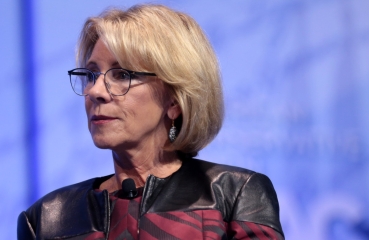
Why Secretary DeVos should reject Michigan’s testing waiver request

Dale Chu

Today, Michigan became the first state to formally seek federal permission to suspend standardized testing in 2021 because of learning disruptions caused by the coronavirus.

Commentary
7.1.2020
Governance, Teachers & School Leaders

Anti-bullying laws work for female students

Tran Le

In the past twenty years, every state and the District of Columbia has passed state-level anti-bullying laws (ABLs), requiring school districts to develop policies that define bullying, encourage students to report victimization, and punish offenders.

Commentary
6.29.2020
Governance, Teachers & School Leaders

The worst is yet to come

Robert Pondiscio

We’ve reached the mop-up phase at the end of the fractured school year, the worst that most of us have ever seen. The consensus view, unsurprisingly, has been that the past few months have been a disaster. School districts were caught flat-footed and unprepared for the pandemic.

Podcast
6.24.2020
Curriculum & Instruction, Governance

The Education Gadfly Show: The case for good schools as a state constitutional right

On this week’s podcast, Nina Rees, President and CEO of the National Alliance for Public

Commentary
6.24.2020
Governance

Empty pedestals and diminished history

Chester E. Finn, Jr.

A legitimate grievance against Confederate monuments has degraded into something deeply troubling. Statues of George Washington, Thomas Jefferson, Benjamin Franklin, Theodore Roosevelt, Winston Churchill, and the like are now getting removed, toppled, or vandalized. It’s a threat to our history based on disapproval of some actions and practices of past individuals, never mind how central—even heroic—their roles were to the history that we want our kids to learn more about. Few young Americans are learning American history as it is. We shouldn’t want them to learn even less.

Podcast
6.17.2020
Curriculum & Instruction, Governance

The Education Gadfly Show: Effecting real change in America

On this week’s podcast, Checker Finn, Mike Petrilli, and David Griffith discuss what it takes for real change to happen in America.

Commentary
6.17.2020
Governance, Teachers & School Leaders

How fundamental change happens in America

Chester E. Finn, Jr.

America faces three urgent challenges right now: beating Covid-19, reforming law enforcement in the wake of the George Floyd's killing, and rebooting K-12 education. Each creates the opportunity for major, lasting change. Yet that won’t happen without successful models to view, sustained leadership with a modicum of centrism or bipartisanship, and—toughest of all—cultural shifts that demand and entrench those changes.

Commentary
6.17.2020
Governance

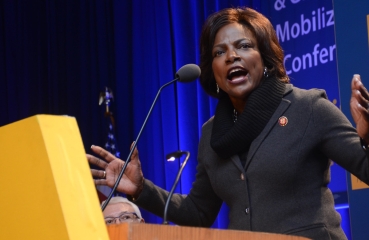
Four VP long shots and their views on ed reform

Dale Chu

Last month, I examined nine of the top candidates for Democratic VP nominee and their views on education. The upshot was that there wasn’t much to get enthused about.

Commentary
6.17.2020
Governance, Personalized Learning, Teachers & School Leaders

Let’s rebuild special education when schools reopen

Anne Delfosse, Miriam Kurtzig Freedman

This spring’s school closures have challenged us to look at many things differently and to be open-minded, creative, and brave about moving toward necessary change. As we consider reopening schools in the fall, let’s hold on to that mindset and ask what should special education become? Does the forty-five-year-old federal law (IDEA) need a thorough redo? We believe it does.

Commentary
6.17.2020
Evidence-Based Learning, Governance

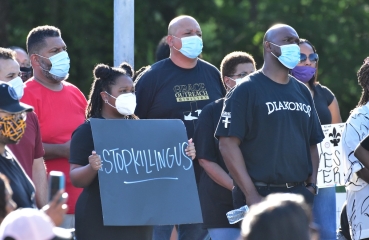
How police killings affect children’s academic outcomes

Tran Le

As national unrest builds along with the deaths of George Floyd, Breonna Taylor, and too many others at the hands of police officers, people worldwide are responding with marches, protests, critical reflection, and grief. Right now, the Black Lives Matter movement rages on.

Commentary
6.17.2020
Accountability & Testing, Evidence-Based Learning, Governance, Teachers & School Leaders

The case for statewide diagnostic assessments in the fall

Trinady Maddock

The start of a new school year is always filled with challenges. New teachers, new classes, and new expectations can be difficult for both teachers and students. But what if teachers and students haven’t been in school for six months or more? How can schools try and prepare to get back to a sense of normalcy after all of this?

Commentary
6.16.2020
Governance

I teach civics. And I’m not voting.

Robert Pondiscio

A few years ago, a close friend and colleague made a surprising confession. Even though we worked at a charter school network devoted to civic education, she admitted to me that she’d never voted and wasn’t even registered. She felt guilty and hypocritical. How could she promote the virtue of voting to children starting in kindergarten but not vote herself?

Policy Brief
6.16.2020
Evidence-Based Learning, Governance

Moonshot for Education: A Federal Policy Proposal to Spur Effective Research and Development for K-12 Education

Thomas B. Fordham Institute

In dozens of fields, federally-supported research and development translates into new ideas, technologies, and actions. Why not in education, particularly as the Covid-19 crisis makes it abundantly clear that our educational systems are severely lacking innovative technologies that could have improved the resiliency and flexibility of our classrooms and facilitated a nationwide shift to remote instruction?

Commentary
6.15.2020
Governance, Teachers & School Leaders

Why an earnings premium matters for students and policymakers

Michael Itzkowitz

Earlier this month, John Winters, associate professor from Iowa State University, released a study, What You Make Depends on Where You Live: College Earnings Across States and Metropolitan Areas, which examined the economic premium of earning different college credentials across all fif

Commentary
6.12.2020
Career & Technical Education, Curriculum & Instruction, Governance, Advanced Education, Teachers & School Leaders

Why not eliminate at least one year of high school entirely?

Kalman R. Hettleman

Michael J. Petrilli’s recent article “Half-Time High School may be just what students need” is compelling. Yet proposals to cut school time in half in grades nine through twelve may be only half right.

Commentary
6.11.2020
Career & Technical Education, Governance, Teachers & School Leaders

Want to make your college degree count? Here’s where to live.

Tyler Ransom

Most people agree that a college education is a worthwhile investment for a young person. For example, across the U.S., bachelor’s degree holders earn on average 55 percent higher salaries than those with no education beyond high school. However, it is less well understood that there are stark geographical differences in how much return one gets on their educational investment.

Commentary
6.10.2020
Governance, Standards

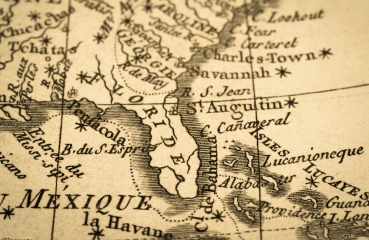
Florida’s new math and English standards aren’t ready for prime time

Amber M. Northern, Ph.D., Michael J. Petrilli

When policymakers contend that their standards deserve to be replicated, especially when those policymakers lead big, highly regarded states like Florida, we at Fordham think their claims merit a closer look. So we gathered a team of expert reviewers to review the state's new standards, and published a new report based on their results. The verdict: Other states should indeed look for models to emulate, but they won’t find them in Florida.

Commentary
6.10.2020
Governance, Teachers & School Leaders

If a spike in Covid-19 cases does not follow the mass demonstrations, it should change the calculus for reopening schools

Dale Chu

In a few weeks, the planning underway for the start of the coming school year could take an interesting and unexpected turn.

Commentary
6.3.2020
Curriculum & Instruction, Governance, Teachers & School Leaders

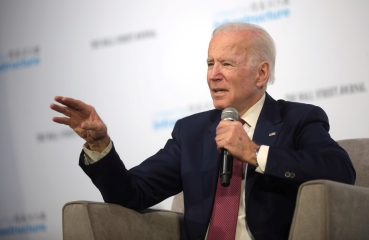
With his remarks on the murder of George Floyd, Joe Biden showed us how to teach empathy and American history

Michael J. Petrilli

America’s schools could learn a lot about how to handle two hot-button issues from Joe Biden’s comments in response to George Floyd’s horrific murder: how to model and cultivate empathy for our fellow citizens, and how to teach an inclusive version of history. He carved a middle path between right and left that is anything but the mushy middle.

Commentary
6.3.2020
Governance, Teachers & School Leaders

Scrapping admissions tests won’t cure what ails education

Chester E. Finn, Jr.

On May 21, driven by exquisitely progressive intentions, the regents of the University of California made the worst policy decision in the recent history of American higher education: to eliminate SAT and ACT admissions testing for in-state applicants to all nine of their undergraduate campuses, which comprise one of the country’s biggest and historically most prestigious state systems.

Commentary
6.3.2020
Evidence-Based Learning, Governance, Teachers & School Leaders

The failure of virus experts and their models—and what it means for K–12

Mike Goldstein

1. Problems with models Nobel Physicist Richard Feynman wrote about models: [Physicists have] learned to realize that whether they like a theory or they don’t like a theory is not the essential question.

Pagination

  • First page « First
  • Previous page ‹ Previous
  • Page 36
  • Page 37
  • Page 38
  • Page 39
  • Current page 40
  • Page 41
  • Page 42
  • Page 43
  • Page 44
  • Next page Next ›
  • Last page Last »

Type

  • Book (3)
  • Commentary (1229)
  • Event (2)
  • Podcast (80)
  • Report (78)

Topics

  • Accountability & Testing (501)
  • Advanced Education (265)
  • Career & Technical Education (84)
  • Charter Schools (1115)
  • Curriculum & Instruction (1588)
  • ESSA (129)
  • Evidence-Based Learning (832)
  • Facilities (25)
  • (-) Governance (1405)
  • Personalized Learning (51)
  • Private School Choice (138)
  • School Finance (166)
  • Standards (190)
  • Teachers & School Leaders (1446)

Date

  • 2026 (138)
  • 2025 (192)
  • 2024 (189)
  • 2023 (177)
  • 2022 (184)
  • 2021 (220)
  • 2020 (156)
  • 2019 (56)
  • 2018 (11)
  • 2017 (13)
  • 2016 (4)
  • 2015 (4)
  • 2014 (5)
  • 2013 (8)
  • 2012 (11)
  • 2011 (7)
  • 2010 (1)
  • 2009 (2)
  • 2008 (5)
  • 2007 (4)
  • 2006 (1)
  • 2005 (1)
  • 2004 (1)
  • 2003 (1)
  • 2002 (1)
  • 2001 (6)
  • 2000 (3)
  • 1999 (2)
  • 1998 (2)
Fordham Logo

© 2026 The Thomas B. Fordham Institute
Privacy Policy
Usage Agreement

National

P.O. Box 110
Burke, VA 22009

202.223.5452

[email protected]

Ohio

P.O. Box 82291
Columbus, OH 43202

614.223.1580

[email protected]

Sponsorship

130 West Second Street, Suite 410
Dayton, Ohio 45402

937.227.3368

[email protected]