Mobile Navigation

  • National
    • Policy
      • High Expectations
      • Quality Choices
      • Personalized Pathways
    • Research
    • Commentary
      • Gadfly Newsletter
      • Flypaper Blog
    • Events
    • Scholars Program
  • Ohio
    • Policy
      • Priorities
      • Media & Testimony
    • Research
    • Commentary
      • Ohio Education Gadfly Biweekly
      • Ohio Gadfly Daily
  • Charter Authorizing
    • Application
    • Sponsored Schools
    • Resources
  • About
    • Mission
    • Board
    • Staff
    • Career
Home
Home
Advancing Educational Excellence

Main Navigation

  • National
  • Ohio
  • Charter Authorizing
  • About

National Menu

  • Topics
    • Accountability & Testing
    • Advanced Education
    • Career & Technical Education
    • Charter Schools
    • Curriculum & Instruction
    • ESSA
    • Evidence-Based Learning
    • Facilities
    • Governance
    • Personalized Learning
    • Private School Choice
    • School Finance
    • Standards
    • Teachers & School Leaders
    • Think Again
  • Research
  • Commentary
    • Gadfly Newsletter
    • Flypaper Blog
    • Gadfly Podcast
  • Events
  • Scholars Program

Topics

Displaying 391-420 of 444 results
Commentary
2.18.2020
Curriculum & Instruction

Questions after that New York Times article on the teaching of reading? Here are some answers.

Daniel Willingham

Over the weekend the New York Times published an article on the front page about the teaching of reading. A friend posted in on Facebook saying “I won't know what to think about this until Dan comments on it.” I thought some background for people like my friend might be useful.

Commentary
2.12.2020
Charter Schools, Governance

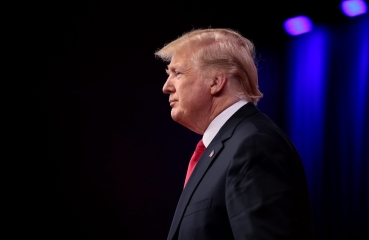
Has Trump turned against charter schools?

Chester E. Finn, Jr.

The Trump administration’s proposed budget takes the Education Department’s $440 million program of financial assistance for charters and melds it with twenty-eight other programs into a big new K–12 block grant. Although there’s scant political likelihood that Congress will adopt the plan, the proposal itself will be interpreted and welcomed by charter foes as a sign that even Trump and his allies and supporters have lost their enthusiasm for these independent public schools of choice.

Commentary
2.12.2020
Curriculum & Instruction, Governance, Teachers & School Leaders

Training teachers to fail

Jasmine Lane, Jon Gustafson

There’s been a lot of talk recently about the reading crisis in U.S. schools.

Commentary
2.12.2020
Curriculum & Instruction, Advanced Education

AP versus the excellence gap

Chester E. Finn, Jr.

That K–12 education in the U.S. has long been plagued by “excellence gaps” is no secret, although the terminology may be just a decade old (and owes much to Jonathan Plucker and his colleagues).

Commentary
2.12.2020
Governance, Personalized Learning, Teachers & School Leaders

The harm of special education enrollment caps

Amber M. Northern, Ph.D.

A couple years ago, a high-profile dispute played out between the Texas Education Agency (TEA) and the federal Department of Education, with a January 2019 New York Times headline pronouncing,

Commentary
2.12.2020

Associate degrees and certificates are more valuable than you may think

Jessica Poiner

As its name suggests, the middle-skills pathway sits between a high school diploma and a bachelor’s degree. There are a wide variety of credentials associated with this pathway, but certificate and associate degrees are the most popular. In general, associate degrees include a mix of general education courses and career preparation, while certificates are almost exclusively career oriented.

Podcast
2.12.2020
Standards

The Education Gadfly Show: Why teachers with higher grading standards get better student outcomes

On this week’s podcast, Seth Gershenson, associate professor at American University, joins Mike Petrilli and Da

Policy Brief
2.11.2020
Accountability & Testing, Advanced Education

The Role of Advanced Placement in Bridging Excellence Gaps

Chester E. Finn, Jr., Andrew Scanlan

This report presents key findings from Learning in the Fast Lane: The Past, Present, and Future of Advanced Placement, by Chester E. Finn, Jr. and Andrew E. Scanlan, and published by Princeton University Press in 2019.

Commentary
2.6.2020
Governance, Teachers & School Leaders

Beware the Democrats’ new teachers-union-loyalty test

Derrell Bradford

In The Gulag Archipelago, Aleksandr Solzhenitsyn writes of a rally held for communist leader Josef Stalin. At the event’s end, a tribute to Stalin was called for. As Solzhenitsyn writes, “Of course, everyone stood up (just as everyone had leaped to his feet during the conference at every mention of his name)....

Commentary
2.6.2020
Governance

Lamar Alexander’s education legacy

Dale Chu

No sooner had Senator Lamar Alexander released his statement last Thursday on the impeachment witness vote than the handwringing began.

Commentary
2.5.2020
Accountability & Testing, Teachers & School Leaders

Students learn more from teachers with high grading standards

Amber M. Northern, Ph.D., Michael J. Petrilli

Fordham’s newest report, "Great Expectations," delves into high school grading practices and the impact they have on student outcomes. Turns out that higher standards benefit students of all types and in all kinds of schools. Whether black, Hispanic, white, male, or female, students learn more when taught by teachers with higher expectations. Unfortunately, American schools are gradually making it harder, not easier, for teachers to keep standards high.

Commentary
2.5.2020
Charter Schools, Private School Choice

The Florida LGBTQ controversy: A gut-check moment for school choice

Robert Pondiscio

Florida’s Tax Credit Scholarship program has provided more than 780,000 scholarships since its inception in 2001.

Commentary
2.5.2020
Curriculum & Instruction, Teachers & School Leaders

Do community schools benefit disadvantaged families?

Brandon L. Wright

Achievement gaps between affluent and low-income students are caused by much more than what happens in the classroom. Poverty is associated with a litany of social consequences that make learning more difficult, such as unstable housing, poor healthcare, and greater exposure to violence and other traumas.

Commentary
2.5.2020
Curriculum & Instruction

Civics education, civic activism, civic participation

Chester E. Finn, Jr.

Civics-education aficionados (and worriers) are generally acquainted with the 2018 issue brief from the Center on American Progress titled The State of Civics Education.

Podcast
2.5.2020
Charter Schools

The Education Gadfly Show: Finding the right school for your child

On this week’s podcast, Andrew Campanella, president of National School Choice Week, joins Mike Petrilli and David Griffith to discuss whether

Commentary
2.4.2020
Evidence-Based Learning

Why is it so hard to improve reading achievement?

Timothy Shanahan

Interesting question. Before I answer, let me ask one: What keeps Jeff Bezos, the founder of Amazon, up at night? You know Amazon, the trillion-dollar corporation that delivers something like a five billion packages a year. I’m at a professional meeting. The chair asks what “levers” we have for improving reading achievement in the U.S.

Report
2.4.2020
Accountability & Testing

Great Expectations: The Impact of Rigorous Grading Practices on Student Achievement

Seth Gershenson, Ph.D.

One indicator of teachers’ expectations is their approach to grading—specifically, whether they subject students to more or less rigorous grading practices. Unfortunately, “grade inflation” is pervasive in U.S. high schools, as evidenced by rising GPAs even as SAT scores and other measures of academic performance have held stable or fallen. The result is that a “good” grade is no longer a clear marker of knowledge and skills. This report examines to what extent teachers’ grading standards affect student success.

Commentary
2.4.2020
Teachers & School Leaders

NEW REPORT: Great Expectations: The Impact of Rigorous Grading Practices on Student Achievement

The Education Gadfly

One indicator of teachers’ expectations is whether they subject students to more or less rigorous grading practices. Unfortunately, “grade inflation” is pervasive in U.S. high schools, as evidenced by rising GPAs even as SAT scores and other measures of academic performance have held stable or fallen. A “good” grade is no longer a clear marker of knowledge and skills. This report examines how teachers’ grading standards affect student success.

Commentary
2.3.2020
Accountability & Testing

Lessons from New Hampshire’s innovative approach to assessment and accountability

Charles Barone

Although most states are only about a year and a half into implementation of the Every Student Succeeds Act (ESSA), we’re seeing an uptick in conversations about what the next generation of school assessment and accountability systems should look like. Those discussions should begin with what we’ve learned since the passage of ESSA in 2015.

Commentary
1.30.2020
Private School Choice

We need schools that form the backbone of communities, and Catholic schools have been doing that for generations

Kathleen Porter-Magee

Last week, the Supreme Court heard arguments in Espinoza v.

Commentary
1.30.2020

Accountability without testing = trouble

Chester E. Finn, Jr.

An unhappy episode in Montgomery County, Maryland, (where I live) reminds us that the quest for accountability options other than standardized assessments can open the door to new forms of chicanery.

Commentary
1.29.2020
Evidence-Based Learning, Teachers & School Leaders

The endless, rocky path to reading science

Chester E. Finn, Jr.

The National Council on Teacher Quality just released its third review of America’s elementary teacher prep programs, seeking to determine, among other things, whether ed schools provide adequate instruction in scientifically-based reading instruction. The first investigation of this question, back in 2013, resulted in most programs receiving D’s and F’s, and just 35 percent earning A’s and B’s. But this year, slightly more than half of traditional prep programs received honors grades. That’s progress. But there are still miles to go.

Commentary
1.29.2020
Accountability & Testing, Advanced Education

Enduring math woes jeopardize America’s standing in the world

Brandon L. Wright

Considerable research suggests that “math skills better predict [individuals’] future earnings and other economic outcomes than other skills learned in high school,” report Eric A. Hanushek, Paul E. Peterson, and Ludger Woessmann.

Commentary
1.29.2020
Governance, Teachers & School Leaders

Hiding in plain sight: Advancing SEL by tackling today’s urgent problems

Chester E. Finn, Jr.

Partisans of social-emotional learning are wont to make their case in utopian terms: Create better learning environments and good things will happen to kids, to academic achievement, to the society in which we live, etc. From the home page of the Collaborative for Academic, Social, and Emotional Learning (CASEL):

Commentary
1.29.2020
Evidence-Based Learning, Curriculum & Instruction

Using screen-time to boost children’s science and engineering knowledge

Brandon L. Wright

Children’s screen-time is an important issue.

Commentary
1.29.2020
Curriculum & Instruction, Teachers & School Leaders

The case for focusing SEL on social-network building

Tran Le

While education reform conversations about social and emotional learning (SEL) often include the value of interpersonal skills in creating and maintaining relationships, a new report from the American Enterprise Institute calls for increased emphasis on expanding student access to relationships and networks.

Podcast
1.29.2020
Charter Schools, Teachers & School Leaders

The Education Gadfly Show: School Choice Week 2020

On this week’s podcast, Mike Magee, CEO of Chiefs for Change, joins Mike Petrilli and David Griffith to discuss National School Choice Week. On the Research Minute, Amber Northern examines how teachers who specialize instead of teaching all subjects affect elementary school outcomes.

Commentary
1.23.2020
Governance, Private School Choice

Espinoza and the myth of values-neutral schooling

Dale Chu

The education world was slow on the uptake, but oral argument this week in the case of Espinoza v.

Commentary
1.22.2020
Evidence-Based Learning

What American education could buy with a larger investment in research and development

Michael J. Petrilli

For R & D to work in education, we must consistently secure funding from governments and philanthropies. That means presenting them with realistic, sensible ideas that can be adopted and implemented at a reasonable cost—both in money and teachers’ time. Fordham and CAP’s Moonshot for Kids competition yielded proposals for several such tools.

Commentary
1.22.2020

Rekindling confidence in key institutions, schools included

Chester E. Finn, Jr.

I haven’t yet got my hands on the much-discussed new book by Yuval Levin, one of the most thoughtful conservative public intellectuals and writers of our time (also editor of National Affairs and head of “social, cultural and constitutional studies” at the American Enterprise Institute).

Pagination

  • First page « First
  • Previous page ‹ Previous
  • Page 7
  • Page 8
  • Page 9
  • Page 10
  • Page 11
  • Page 12
  • Page 13
  • Current page 14
  • Page 15
  • Next page Next ›
  • Last page Last »

Type

  • Book (2)
  • Commentary (382)
  • Event (4)
  • Podcast (48)
  • Report (6)

Topics

  • Accountability & Testing (50)
  • Advanced Education (15)
  • Career & Technical Education (6)
  • Charter Schools (39)
  • Curriculum & Instruction (170)
  • Evidence-Based Learning (37)
  • Facilities (9)
  • Governance (156)
  • Personalized Learning (13)
  • Private School Choice (10)
  • School Finance (23)
  • Standards (4)
  • Teachers & School Leaders (203)

Date

  • (-) 2020 (0)
  • September 2020 (56)
  • October 2020 (56)
  • November 2020 (58)
  • May 2020 (66)
  • March 2020 (67)
  • June 2020 (73)
  • July 2020 (66)
  • January 2020 (62)
  • February 2020 (58)
  • December 2020 (52)
  • August 2020 (61)
  • April 2020 (90)
Fordham Logo

© 2026 The Thomas B. Fordham Institute
Privacy Policy
Usage Agreement

National

P.O. Box 110
Burke, VA 22009

202.223.5452

[email protected]

Ohio

P.O. Box 82291
Columbus, OH 43202

614.223.1580

[email protected]

Sponsorship

130 West Second Street, Suite 410
Dayton, Ohio 45402

937.227.3368

[email protected]