Mobile Navigation

  • National
    • Policy
      • High Expectations
      • Quality Choices
      • Personalized Pathways
    • Research
    • Commentary
      • Gadfly Newsletter
      • Flypaper Blog
    • Events
    • Scholars Program
  • Ohio
    • Policy
      • Priorities
      • Media & Testimony
    • Research
    • Commentary
      • Ohio Education Gadfly Biweekly
      • Ohio Gadfly Daily
  • Charter Authorizing
    • Application
    • Sponsored Schools
    • Resources
  • About
    • Mission
    • Board
    • Staff
    • Career
Home
Home
Advancing Educational Excellence

Main Navigation

  • National
  • Ohio
  • Charter Authorizing
  • About

Daniel Buck
9.11.2025
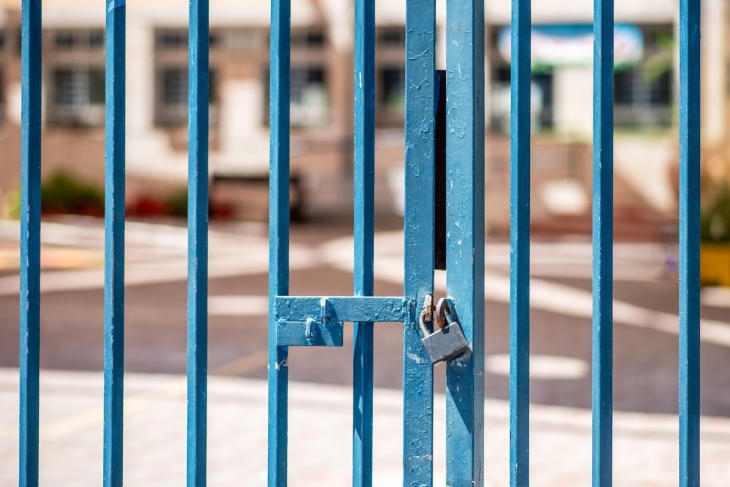
Locked school
Getty Images/Inna Reznik
Listen to this article
Loading the Elevenlabs Text to Speech AudioNative Player...

By now, we’ve all heard the news from Minnesota: A lone gunman opened fire during morning mass at a Catholic elementary school, claiming innocent lives and traumatizing a whole community. As a former elementary school teacher and administrator, I can tell you that news of school shootings hits differently when you work in one.

You notice thin windows and the vulnerability of dismissal and outdoor recess. You reflect on the responsibility to protect the students in your care and wonder which student in your class might crack.

These scenarios are not abstract to me. As a building administrator, I had to think through how to prevent a mass shooting—consulting with police, analyzing our policies, and wondering where in our budget we could find millions to replace windows.

Through it all, I’ve come to a conclusion that I don’t like: There’s not much schools can do to prevent mass shootings. The best, or even the only, approach may be to focus on the everyday threats to student safety that receive far less attention.

Conservatives tend to support “campus hardening”—security measures intended to make schools less vulnerable to attack. But some measures might only make matters worse. TSA-style single points of entry and exit create a chokepoint for lone gunmen. Since most shooters are themselves students, active shooter drills may only broadcast where the most potential victims will be and when. To date, according to one review of the research, there is simply no “empirical evidence” that campus hardening can “diminish firearm violence in schools.”

Anyone intent on violence will find a way and any system will have a loophole.

The left champions gun control, but the correlation between school shootings and gun ownership are weaker than they admit. Rates of gun-ownership had been declining for four decades prior to the pandemic. Yet, by any measure, school shootings increased during that period. And with 500 million firearms in America, the only regulation with any possible hope of eliminating school shootings would be universal confiscation, which is unconstitutional, a political nonstarter, and also likely wouldn’t fix the situation.

A bipartisan approach might champion early warning reporting and threat assessments. Alas, school loners are plentiful, but few turn violent. It’s worse than trying to find a needle in a haystack. It’s more akin to seeking a slightly grayer shell on a vast beach of gray shells. Deputizing students and teachers into threat assessment experts is no workable solution.

To assess what schools can actually do requires an honest assessment of the issue, which is harder to do than one might think. According to Education Week there were 39 school shootings in 2024. But that statistic doesn’t capture the reality. A revealing 2023 paper from JAMA Pediatrics analyzed 253 school shootings across 26 years and found that the majority arose from personal disputes and involved a handgun.

They were instances of targeted interpersonal violence, not mass killings. I’ve never been in a building with a Columbine-style gunman, but I have experienced this more common occurrence. Gang members have threatened to kill a rival in our building and a criminal once flashed a gun when a brawl spilled onto our playground.

In the face of such violence and uncertain remedy, what can teachers and administrators do to keep their students safe? The JAMA paper provides insight: Focus on the everyday threats to student safety that you can control.

Here’s the harsh reality: It’s unlikely that we can do much to prevent mass shootings, but better policing can reduce the crime that spills over into our classrooms. Stronger discipline policies can secure the more prosaic safety—hallway fights and weapons stashed in backpacks—that every student deserves. Moreover, cellphone bans, stronger family policies, and more community institutions create the sense of belonging that keep potential shooters from a path of isolation and violence.

What should schools not do? If there’s one thing that I advise against, it’s safetyism. During the early 2000s, child abduction scares led many parents to lock their children up despite the relative safety of the decade.

I worry the same may happen here. According to the National Center for Education Statistics, homicides on school grounds have halved since the 1990s. Statistically speaking, these buildings are safer than they ever have been. It would be an error to host fewer outdoor assemblies, spend vast sums on metal detectors or facilities updates instead of better curricula or pay raises, or constantly preach to our children that they’re in danger. None of this is a call to complacency, but an attempt at a sober reckoning of what we can do to mitigate the effects of these horrifying tragedies. Schools can’t stop every mass shooter, but they can make students safer by addressing everyday threats—and by resisting the temptation to overreact to rare ones.

Editor’s note: This was first published by the American Enterprise Institute.
Policy Priority:
High Expectations
Topics:
Teachers & School Leaders
Jill Hoppe
9.11.2025
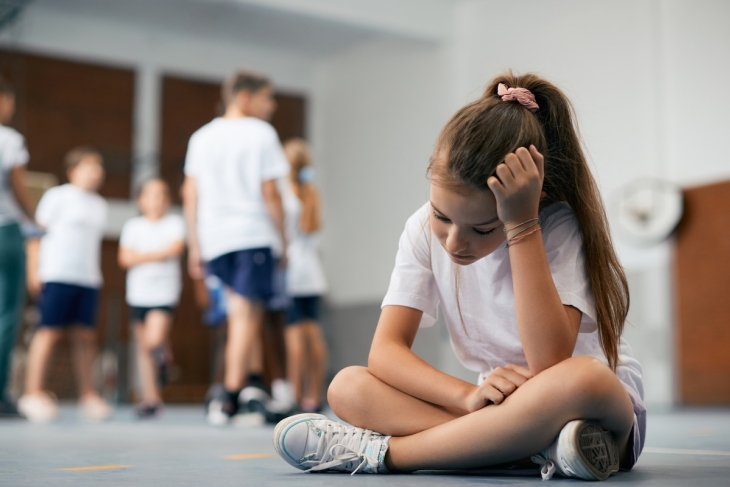
Sad student in gym class
Getty Images/Drazen Zigic
Listen to this article
Loading the Elevenlabs Text to Speech AudioNative Player...

I remember standing on my high school track, clutching my inhaler, knowing I was about to fail. Officially, the Obama administration had phased out the Presidential Fitness Test, but my district hadn’t gotten the memo. So, once a year, my Rhode Island classmates and I still lined up for the evaluation.

When I finally crossed the finish line, wheezing and ready to collapse, my more athletic classmates were waiting on the turf. I was the only thing standing between them and heading back to the locker room, and the judgment on their faces told me everything I needed to know. Following the test, there was no feedback, no support, no plan for improvement—just a score that told everyone I wasn’t fit enough. My teachers insisted that my test score was based on effort, but the grading rubric said otherwise, and my GPA paid the price. My experience wasn’t unique. As I gathered research for this piece, I also came across countless articles where people shared their own negative experiences with fitness testing.

Now, more than a decade after the Presidential Fitness Test ended, the Trump administration has announced its return, citing concerns over public health and national security. But the program’s origins reveal how out of touch the test is with modern fitness goals. In 1956, amid Cold War fears about military readiness, President Eisenhower established the President’s Council on Youth Fitness, and the original version of the test included pull ups, sit-ups, a shuttle run, a standing broad jump, a 50-yard dash, and a softball throw (which was apparently supposed to mimic throwing a grenade). By the 1960s, the test had become a competitive national ritual

By 2012, when the Obama team ended it, the test included a one-mile run, sit-ups, push-ups or pull-ups, sit-and-reach flexibility, and a shuttle run (but no real or imagined hand grenades). To replace the test, the administration created the Presidential Fitness Youth Program to focus on “assessing health versus athleticism for America’s youth.” It also discouraged grades based on performance (though many states kept some form of annual fitness testing in place). The Trump administration brought back the test to “promote the physical, mental, and civic benefits of daily movement, exercise, and good nutrition.”

There are three problems with this approach to measuring fitness.

First, the tests themselves are unscientific. As noted, they are loosely modeled on military readiness benchmarks, not on child development or health outcomes. Decades of research show that fitness scores are influenced by countless external factors including test conditions, motivation, and differences in body type. The tests also misrepresent what it means to be fit: A marathoner may struggle with pull-ups and an Olympic powerlifter may never run like Usain Bolt, but both are still unquestionably fit.

Second, there is no evidence that fitness testing promotes a healthier lifestyle, despite that being the intent. A 2009 review found that fitness tests have unclear links to healthy lifestyles and do little to motivate young people or develop the knowledge and skills that are important to sustained engagement in an active lifestyle. And the best predictor of whether young people stay active isn’t their mile time, but their attitude toward exercise (i.e., whether exercise is evaluated as pleasant versus unpleasant). As one veteran PE teacher explains, “I can say with complete confidence that it will not promote a healthy, physically active lifestyle. It will do one thing: single out and label children as either capable or incapable of passing the test.”

Finally, the tests can inflict lasting damage on kids’ self-esteem. In a study of over 1,000 adults, 34 percent cited embarrassment, 18 percent lack of enjoyment of activities like fitness testing, 17 percent bullying, and 14 percent social-physique anxiety as their worst PE memories, with these negative memories linked to adult sedentary behavior. As one former student recalled, “The Presidential Fitness Test scarred me for years and made me think I was physically incapable of doing anything exercise related. I’m 68 now, but I will never forget the humiliation.”

So what might we do instead of simply testing one’s fitness in these ways? 

First, evaluate students based on effort and improvement. Instead of penalizing a student’s PE grade because they can’t run the mile in a set amount of time, schools should focus on year-to-year progress, cumulative effort, or achieving meaningful personal benchmarks (e.g., do five more sit-ups than at the beginning of the school year, cut 30 seconds off one’s mile-time, take 10,000 steps every day). That should matter more than an arbitrary national cutoff that ignores differences in characteristics like body types, baseline fitness levels, nutrition, disabilities, chronic conditions, and countless others.

Second, give PE teachers the support they need. Right now, they are asked to administer fitness tests without the resources, training, or time to do so. A (small) study of ten middle and high school PE teachers in California revealed that many teachers receive little to no training for administering these evaluations, and those who did relied on outdated or self-sought workshops. Rethinking high-stakes fitness tests means providing teachers with standardized guidance and tools to implement multicomponent curricula to foster lifelong fitness, otherwise both teachers and students are set up to fail.

Third, provide real, comprehensive support—especially for students who struggle the most. If a student bombs an important math test, we don’t just slap on a failing grade and move on, but we reteach, support, and give them multiple opportunities to demonstrate improvement. Fitness should be no different, yet the Presidential Fitness Test only gives students one or two chances a year with no system to track growth. Instead of labeling kids as “unfit” and stopping there, schools that use fitness testing should follow up with individualized guidance, focus on growth, and encourage a variety of fitness activities so students can explore exercises they may enjoy more than running, and get credit for improvement. 

Yes, declining physical fitness is a problem. So is humiliation. But we don’t have to choose either one.

Policy Priority:
High Expectations
Topics:
Governance
Teachers & School Leaders
Jeff Murray
9.11.2025
School graduation
Getty Images/EyeEm Mobile GmbH
Listen to this article
Loading the Elevenlabs Text to Speech AudioNative Player...

Every once in a while, an older research paper pops back into the discourse unexpectedly and invites another look. A 2023 NBER working paper analyzing the determinants and effects of attending America’s most elite colleges has been recently updated, and has gained attention anew as many on the political right continue to call into the question the influence that such institutions have in America, amid a broader discussion of the value of college.

National Bureau of Economic Research (NBER) heavyweights Raj Chetty, David Deming, and John Friedman used five different sources to build their dataset: federal income tax records on parents and children’s incomes from 1996–2021; 1098-T tax forms on college attendance from 1999–2015; Pell grant records from the Department of Education’s National Student Loan Data System from 1999–2013; standardized test score data from the College Board every year from 2001–2005 and every other year from 2007–2015, as well as ACT scores from 2001–2015; and admissions records for undergraduate first-year students spanning subsets of years from 1998–2015 from a list of private and public colleges. That list has two parts. What’s sometimes termed “Ivy-Plus” consists of the eight Ivy League schools plus Stanford, MIT, Duke, and the University of Chicago. All colleges in the University of California (UC) and California State University (CSU) systems, as well as all four-year public institutions in Texas, were labeled as a “flagship public colleges” comparison group. These data sources were linked together, and all analyses were conducted using the linked, anonymized, individual-level dataset.

The headline finding was that children from families in the top 1 percent of the income distribution were more than twice as likely to attend an Ivy-Plus college as those from middle-income families with comparable SAT/ACT scores. Two-thirds of this gap was due to higher admission rates for students from high-income families with test scores comparable to their lower-income peers; the remaining third was due to differences in rates of application and matriculation among the two groups. By comparison, children from the highest-income families demonstrated no such admissions advantage at the flagship public colleges. To be fair, flagship public colleges also admit a larger share of students from top 1 percent families than from middle-income families, but the gap there is driven almost entirely by disparities in application rates rather than anything to do with admissions.

Chetty and colleagues also used their longitudinal data to show that attending an Ivy-Plus college instead of a flagship public college on average boosted students’ chances of reaching the top 1 percent of the earnings distribution by 50 percent, nearly doubled their chances of attending an elite graduate school, and almost tripled their chances of working for a prestigious employer. Interestingly, “prestigious” is defined here as an employer that disproportionately employs students from Ivy-Plus colleges, which is somewhat circular and does raise a question or two about the findings. More on this below.

The high-income admissions advantage at Ivy-Plus colleges was driven by three factors, two of them pretty obvious: preferences for admitting children of alumni and athletic recruitment (think: “rich kid” sports like crew, squash, etc.). The third—weighting placed on non-academic credentials like “extracurricular activities, leadership traits, etc.”—is one sure to raise hackles among proponents of meritocracy. In fact, all three factors are uncorrelated or negatively correlated with post-college outcomes, whereas academic credentials such as SAT/ACT scores are highly predictive of post-college success. As Chetty and team lay it out, students of equal academic ability are being shut out of elite colleges because such ability is systematically subsumed beneath highly gameable non-academic admissions factors. And that’s a problem, not only for higher education, but also for our society at large.

To illustrate the problem, the researchers tweaked their formula to reflect a putative admissions policy without the advantage that arises from the highly-weighted non-academic factors enjoyed by students from high-income families. This change reduced the percentage of admitted students from the highest income category from 15.8 percent of the actual admitted student body to 11.1 percent of the hypothetical admitted student body. The places thus vacated could be readily filled by lower-income students with a high likelihood of college achievement based on their SAT/ACT scores. Assuming a similar distribution of outcomes (graduate school attendance, employment, income level, etc.) for the new, more-diverse cohort, the many post-college advantages of an Ivy-Plus degree are projected to be distributed beyond top income families where they are currently concentrated.

Fast forward to today: Would a change like this—leading to the diversification of society’s future leaders, per the report’s title—be enough to turn down the heated rhetoric aimed at these elite institutions? The current administration in Washington seems to be on a mission to find out, although it is hedging its bets by also trying to change the academic culture, which could easily impact the Ivy-Plus “advantage” for whomever might earn it—although not in the way this report’s authors envision it.

SOURCE: Raj Chetty, David J. Deming, and John N. Friedman, “Diversifying Society’s Leaders? The Determinants and Causal Effects of Admission to Highly Selective Private Colleges,” National Bureau of Economic Research (first published July 2023; updated August 2025).

Policy Priority:
High Expectations
Topics:
Evidence-Based Learning
Jeff Murray
9.10.2025
Gadfly Bites logo
Listen to this article
Loading the Elevenlabs Text to Speech AudioNative Player...

News stories featured in Gadfly Bites may require a paid subscription to read in full. Just sayin’.

  1. Let’s start with some more great coverage of our recent CTE report. No idea why it’s hitting so big just now, but I love it! (Statehouse News Bureau, 9/3/25) Here’s another hit for that report, but quite a bit more peripheral than the others. (Dayton Daily News, 9/8/25)

  2. Despite the fact that school districts in and around Athens County—an area that still has a lot fewer non-district of options than other parts of the state—have been experiencing steady enrollment declines for the last 10 years, voucher grouchers are still blaming EdChoice expansion for the latest decreases. Such ridiculous single-mindedness—fully disconnected from reality—almost makes me wish that vouchers would go away just to prove them and all their mindless, sheep-like followers disastrously wrong. Almost, but not quite. (Athens Messenger, 9/3/25)

  3. Staying in Ohio’s bucolic countryside for another clip: Here’s a look at the Rural Teacher Corps operating out of Ohio University’s Eastern Branch campus. The program provides support specific to pre-service educators who are committed to teaching in rural schools once they graduate. What they get that other teacher prep programs don’t provide is a little unclear, but let’s hope it’s more about respect for local environment, culture, and history than it is about any “deficits” us country folks might need fillin’ via a soft-hearted carpetbagger with a fancy learnin’ degree. (Times Leader, 9/8/25)

  4. Meanwhile, in another rural(ish) area of Ohio, administrators of Cloverleaf Local Schools (yep, I had to look it up too) will be asking the elected school board to reduce the amount of its three property tax levies by about 3.3 mills total, cutting how much funding it receives from residents by more than half. Supe points out that while they do have some additional money right now (from a gas pipeline and state construction funding) which helps them to be able to provide this particular round of tax relief, this is actually the fifth time the district has cut taxes in this way. Nice! And before you ask, my research indicates that Cloverleaf’s student enrollment has remained decently steady to slightly on the rise over the last few years. Just sayin’. (Ideastream Public Media, 9/8/25)

  5. Not too far away from Cloverleaf, leaders of Akron City Schools recently gave a preview of their upcoming state report card—to be released with all the others officially next week. The big news is that they are predicting the district will level up from last year’s 2.5 stars (out of 5) to 3 stars this year. This despite the fact that all of their test scores will remain below pre-pandemic levels and that many of those—especially reading achievement (!?)—will show a decline from last year. As if that irony wasn’t hilarious enough for you, please be amused at the fact that the published piece from the ABJ is still posted with a blatant error in counting the number of takeaways they are discussing. Kind of like a big old neon sign clearly indicating “This Ain’t Right”. (Akron Beacon Journal, 9/4/25)

  6. In slightly better news, Willoughby-Eastlake City Schools is reporting that last year’s kindergarteners went from 30 percent readiness to 73 percent readiness in reading from the beginning to the end of the school year. Probably not a huge deal given the district’s overall quality and the fact that they were using a science-of-reading-fueled curriculum for some years before it was required of them. But it’s probably not nothing. (News 5 Cleveland, 9/3/25)

  7. Here is a rare piece of coverage on one of my favorite topics: Cellphone policies in schools. No, not for students; for their teachers. And here in Ohio it boils down to exactly what you think it is I thought it was—do as we say, not as we do. (Columbus Dispatch, 9/5/25)

  8. This piece is more like a game of telephone disguised as journalism. As in, a story with some grain of fact to it that becomes distorted—and less and less credible—with each retelling. The topic should not be surprising: Providing busing for charter and private school students in Ohio. Omitted for good this time is the vital point that no Ohio school district is required to transport any high school students at all (except those with IEPs that include bus service). Thus what Dayton was “forced to cancel” was something that they were not ever “forced to provide”. (To say nothing of the complete debacle their efforts had been for a decade). And while this omission is, I’m sure, just the result of journalists repeating what they’ve heard from others in their tribe (looking at you, Guardian), we all know that correcting the record would simply end the story. Then, those reporters—who are clearly working together to blast this increasingly error-riddled but also-increasingly-clickable story around the world—would have to hang up their conference line and actually move on to real news. And I’m sure we can’t have that. (Associated Press, 9/6/25)

  9. Whew. Let us cleanse our palates now with a couple of lovely school profiles. First up: Veritas Classical Academy, a private school in Marietta…looked at a might jealously (if I do say so myself) from across the border in West Virginia. (WTAP-TV, Parkersburg WV, 9/6/25) Next up is the Academy for Urban Scholars, whose sixth Ohio charter school campus opened in Toledo last week. I’m pleased to see lots of hometown talent running and supporting the school, which will hopefully help AUS attract some of the quirky, only-in-Toledo appreciation that certain Glass City charters are lucky enough to get. (Toledo Blade, 9/8/25)

  10. Finally today, here’s a look at some glow ups in schools across the state. First we catch up with Westwood Elementary in Dayton City Schools, which now boasts both a game room and a Virtual Reality room. The latter is supposed to help teach science and social studies. Well, I say “teach”, but what the district says is to “immerse [students] in science and social studies learning”. So, yeah, I could be wrong about the point of the VR. The game room, however, is being promised to help with lots of school stuff, including boosting attendance, motivating good behavior, and incentivizing higher grades. It will also allow staff members to connect with kids over the games, to be a safe space, and to let students “engage more with one another and work on some social skills.” How did video games get to be so beneficial? I’m ready to play! (Dayton Daily News, 9/8/25) The bougie Miami Valley School is probably about as far as you can get from an urban district elementary school, and nothing illustrates that more than a couple of photos of the private school’s swanky new cafeteria built to serve scratch-made meals in a convivial setting. Wowza. Why no, MVS still doesn’t take EdChoice vouchers. Why do you ask? (Dayton Daily News, 9/7/25) Not to be outdone, here’s a quick profile of Parma City Schools’ new farm-to-school coordinator. Among the trained chef’s responsibilities in her new position will be turning local produce into scratch-made recipes at the district’s elementary and secondary schools, overseeing the district’s gardens, and running the experiential learning program related to food science. Now I want a salad and to go play video games. (Cleveland.com, 9/10/25)

Did you know you can have every edition of Gadfly Bites sent directly to your Inbox? Subscribe by clicking here.

Policy Priority:
School Funding
Topics:
Governance
Chester E. Finn, Jr.
9.4.2025
Bored student in school
Getty Images/Ridofranz
Listen to this article
Loading the Elevenlabs Text to Speech AudioNative Player...

Lots of smart folks have lately been writing about new approaches to assessment and (sometimes) accountability for schools and (rarely) for students. This is happening in tandem with Oklahoma’s request to waive federal ESSA testing requirements and ample evidence from many places that the country’s longstanding push for results-driven school accountability is slackening, if not reversing. Even the weak-kneed version in ESSA—focused on the lowest-performing 5 percent of Title I schools in a state—lacks energy, oversight, and impact. In recent years, state after state has eased or abolished some of its own tests, graduation requirements, and grade-to-grade promotion rules.

Today’s push to ease off comes from both left and right, the former on equity grounds (and fealty to teachers unions, which loathe accountability), the latter because of its view that schools of choice, particularly the private variety, ought to be regulation-free and accountable only to the marketplace.

No, it doesn’t help that the Trump administration, despite occasional use of words like excellence, pays no attention to academic achievement—and has defenestrated the National Center for Education Statistics while attempting to defund various K–12 programs. But the neglect didn’t start on January 20. The Biden team was just as heedless, and ESSA happened under Obama. Any Congressional achievement-and-accountability champions are certainly lying low. What’s popular in Washington today is defunding universities and using overwrought (dare I say Trumped-up?) civil rights and free speech arguments to wage culture wars in and on educational institutions at every level. Uncle Sam, in short, is AWOL or worse, save for a recent nudge to school choice. (It’s also said that they’re going to rebuild at least the parts of NCES that are responsible for the Nation’s Report Card (NAEP).)

Perhaps Washington’s slackening attention to K–12 achievement has created a window of opportunity for scholars, analysts, and think-tankers to focus on how—someday—assessments of schools might be done differently and better. They seem well-intentioned and generally start with an important reality: The multiple-choice tests in general use today, although familiar, efficient, relatively economical, and seemingly objective, tap into just a portion of what schools do and what kids learn. And while they’re better than pre-NCLB assessments—and vastly superior to the norm-referenced variety of yesteryear—they’re also technologically archaic, imprecise at both ends of the learning spectrum, and better at retrospective, summative judgments than at helping teachers gauge, diagnose, and improve upon what kids are (and aren’t) learning during the school year.

So it’s no bad thing for smart folks to devise possible improvements and alternatives. As Van Schoales of Colorado’s Keystone Policy Center recently wrote in Education Week:

[W]e have more than 50 years of research on what makes an effective school. We know the key indicators—strong leadership, clear mission, effective teaching, monitoring of student progress, safe environment with high expectations, family connections, and data-driven decision-making. In short, we know what to look for when evaluating school quality. Given dramatically changing roles at the federal Department of Education and a growing likelihood that states gain even greater flexibility to define and measure their own school-quality progress, the moment is ripe to build evaluation systems that far better reflect how schools are serving students.

Sounds great, but this silver cloud has a dark lining: the risk that, as we seek better ways of gauging how schools serve students across an ever-growing menu of domains, we’ll stop pressing them to improve in the realms that they’re most explicitly responsible for—core academic skills and content.

We also cannot be sure that information about school performance across a wide array of metrics will itself yield better performance. What’s the mechanism whereby more information yields changed behavior and better results? There’s long been a big divide between, on the one hand, those who trust that school leaders, faced with good diagnostic and analytic information about what is and isn’t working in their classrooms, will muster the vision, capacity, and guts to make big changes, and—on the other hand—those who see complex organizations like schools seldom improving unless forced to.

Nobody likes the forcing part, neither those pushing nor those receiving, and it doesn’t always work. States and districts generally opt for the mildest possible push on a low-performing school and typically lack the capacity and will to engage in a thorough reboot. “School turnaround” efforts have a spotty success record (to put it generously). Shutting a school and reconstituting it from the ground up—perhaps turning it into a charter or outsourcing its management—is deeply unpopular, politically risky, and success is not guaranteed.

Which brings us back to the dream of today’s smart rethinkers: that dramatically better ways of gauging and reporting on the many strengths and weaknesses of existing schools will lead to their improvement. And to an unavoidable counter-question: might we not be wiser to concentrate on what sorts of policy changes, school interventions, and alternative options would result in more kids reaching “proficient” on state tests of reading and math?

Let me pause for a couple of the more impressive rethinks, starting with Georgetown’s FutureEd’s “Quality Check: The New, Best Way to Measure School Performance.” The awesome Lynn Olson brought it out in April, jointly with Van Schoales’s center, and she and Tom Toch discussed it on The Education Gadfly Show.

It itemizes 14 “metrics for judging school quality” and organizes them in five sensible clusters: “growth in student achievement,” “access to rigorous instruction,” “effective school staff,” “supportive school climate,” and “postsecondary outcomes.”

They all make sense for purposes of a holistic, 360-degree review of school performance and I can picture a competent team of school inspectors or accreditors looking at these very things during a visit.[1] But what is to be done with this information after they depart? And absent some sort of inspectorate, what is the school team—or its district, its authorizer, its board—to do with this information after receiving it? Because Olson acknowledges that just four of the 14 metrics are currently suitable for accountability purposes—they’re measurable and reasonably objective—the rest are best thought of as grist for the school improvement mill. Which assumes that the will and capacity exist to make changes on the basis of them. Where will that come from? And will the impulse to improve on 14 different metrics not reduce attention to the schools’ core mission of academic skills and knowledge?

I have the same apprehension about efforts to rethink school evaluations by another solid outfit, Scott Marion’s Center for Assessment. They’ve been at it for a long time. To date, they’ve been strong on accountability, urging that states persist with it even if Uncle Sam slacks off—are you listening, Oklahoma?—and, like FutureED, they’re working to devise improved means of judging school performance in more comprehensive ways. The latest is a provocative blog post by the Center’s Laura Hamilton that has me both stimulated and concerned. Consider this key passage:

[D]ata gathered from teachers, parents, students, and the general public show support for a more holistic approach to student development, one that includes providing supports for students’ social, emotional, and civic learning in addition to core academic instruction. Employers highlight the importance of competencies like collaboration, communication, resilience, and adaptability—skills that go beyond what traditional achievement tests measure. As these data show, Americans broadly endorse attending to outcomes beyond academic test scores.

Of course we want young people to acquire all those skills and attributes, want them to be emotionally strong, socially competent, civically prepared—and to possess the “soft skills” that employers want and that successful adulthood usually features. Those are all legitimate goals for the next generation.

But how much of all this should we push onto K–12 schools with their 180-day years, their five-day (and shrinking) weeks, their six-hour (if you’re lucky) days? How many of those competencies and learnings should they be expected to impart—and held to account for? How much can they manage along with the Three R’s (that most kids still aren’t getting much of) plus science, history, and phys-ed? How much can they be expect to counteract the oft-negative influences of neighborhood, peer group, social media, televised role models, and family?

As we broaden the scope of what we will judge schools for without radically expanding their footprint on the lives of children, are we not setting everyone up for failure? A triple failure, if you will, for aren’t we likely, at one and the same time, to (a) find schools doing a weak job of all those other responsibilities while (b) dinging them for doing an even worse job of basic academics and (c) letting other institutions off the hook on grounds that “the schools will handle it”? And will we not also—inevitably—put even less weight on the four objective measures that FutureEd says are valid accountability metrics and slack off, perhaps with federal backing, on the modest versions of results-driven accountability that we’re barely managing to hold onto today?

Think about it.


[1] Indeed, one of the 14 proposed metrics is “comprehensive school ‘inspections’ by trained evaluators.”

Policy Priority:
High Expectations
Topics:
Accountability & Testing
Governance
Teachers & School Leaders
Dale Chu
9.4.2025
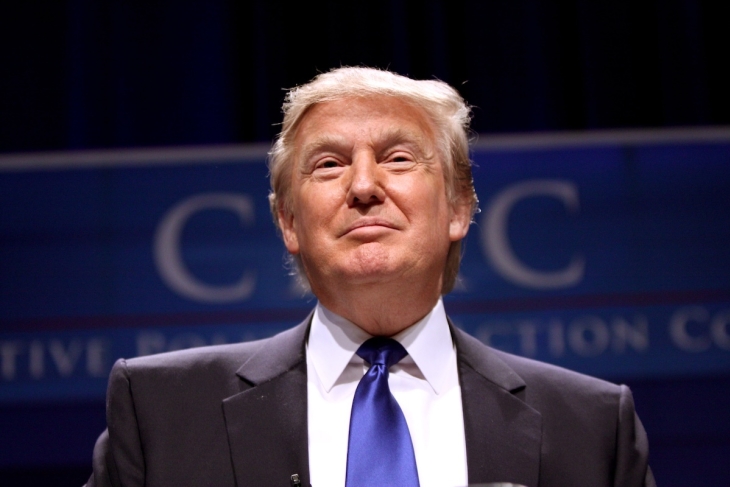
Donald Trump
Gage Skidmore/Flickr
Listen to this article
Loading the Elevenlabs Text to Speech AudioNative Player...

Last month, Education Secretary Linda McMahon expressed hope that Donald Trump will be remembered as an “education president,” arguing that “sending education back to the states” warrants that distinction. So far, Trump’s second-term record on K–12 includes a first-of-its-kind national school choice program and a significantly smaller U.S. Department of Education. At the same time, the administration has used federal levers more aggressively than ever to wage battles over culture and ideology in schools. If education ends up being one of Trump’s legacies, it raises a fundamental question: What defines an “education president,” and will he qualify?

The original education president, of course, was George H.W. Bush, who seized the issue for his 1988 campaign when he told a group of New Hampshire high school students, “I want to be the education president.” His tenure kicked off an era of federal-state cooperation and bipartisanship on education that lasted nearly 30 years through Clinton’s “Goals 2000” and Bush 43’s No Child Left Behind, along with much that followed under Obama. Together, these presidencies set a high bar for what it means to lead on schooling, combining ambition, policy action, and federal leadership.

Trump’s approach to education has been, to put it mildly, markedly different. He has largely used the issue as a cultural wedge—a strategy that has bolstered his political fortunes and energized his base, but left federal leadership fragmented and uncertainty high for states and districts. In short, Trump’s imprint on education is unmistakable, though it has been defined more by political theater than by the kind of serious policy leadership that previously earned the title of education president.

McMahon’s hope for her boss may simply reflect the loyalty of a friendship that dates back to the early 1980s. But whether any president earns the moniker has always been tied, in large part, to his choice of education secretary. Some appointees, like Lamar Alexander, Dick Riley, Margaret Spellings, and Arne Duncan, were widely respected for their policy expertise, leaving a lasting imprint on the sector. Others have left a far less favorable mark. Miguel Cardona, McMahon’s immediate predecessor, was almost universally panned as ineffectual and a failure. Few remember Lauro Cavazos.

By this measure, it’s still too early to assess McMahon’s impact or how Trump will ultimately be remembered in education. What matters more than anecdotes or activist praise is how effectively the president and his secretary work in partnership to influence student outcomes and federal leadership. Trump’s first education secretary, Betsy DeVos, provides a cautionary tale: Her singular focus on school choice—rooted in the belief that every education challenge could be solved through “competition from choice”—came at the expense of a broader federal agenda and limited her long-term impact on learning. To be an education president, a president must offer a comprehensive approach to education reform.

Looking ahead, much of Trump’s potential education legacy will hinge on how McMahon steers the department and executes upon his second-term policies. She is facing a real-time test with Oklahoma’s request to bypass federally-mandated end-of-year exams—a move that, if approved, could invite other states to follow suit and undermine the comparability that has been a hallmark of accountability for more than two decades. While McMahon hasn’t outright denied the state’s request, her official response is encouraging:

[The Trump] administration’s priorities are improving academics, empowering parents and expanding high quality school choice options. Assessment and accountability is critical to all three of those things… And we made it clear in [responding to Oklahoma’s proposal] that we’re going to closely scrutinize any waiver requests that pertain to assessment and accountability.

Holding the line on Oklahoma’s quixotic proposal matters, but waivers are a stopgap at best. Truly cementing a presidential education legacy demands far more.

At the heart of McMahon’s assignment lies a stark reality: The administration’s most ambitious education initiative—abolishing the Education Department—remains out of reach without Congress, leaving the ongoing effort to shrink it vulnerable to reversal by a future administration. Waivers, meanwhile, are a separate challenge. Used judiciously, they can help shape policy and telegraph priorities to states, but they carry many risks of eroding consistency and accountability. How she navigates these trade-offs—between advancing the administration’s aims and protecting core federal safeguards—could determine whether Trump’s education agenda is consequential.

When all is said and done, whether Trump will be remembered as an education president may come down less to slogans or grand gestures than to student achievement. NCLB, despite public misperception, actually produced modest but real gains, particularly in math. If McMahon can pair today’s unabated zeal for school choice with a genuine commitment to clear and consistent reporting of academic outcomes, she would leave a lasting mark that justifies a place for her boss among the pantheon of education presidents. If not, Trump’s education legacy will be more performative than substantive.

Policy Priority:
High Expectations
Topics:
Charter Schools
Governance
Private School Choice
Almudena Abeyta Tracy Curley Dianne Kelly Ed Lambert Vanessa Lipschitz
9.4.2025
Student reading
Getty Images/Userba011d64_201
Listen to this article
Loading the Elevenlabs Text to Speech AudioNative Player...

Much commentary has been offered on the literacy crisis plaguing the country. Massachusetts, often recognized as a leader in student achievement, has experienced the same challenge. Signs of the problem were clear in advance of the pandemic with NAEP fourth-grade reading proficiency rates falling from 50 percent to 45 percent between 2011 and 2019. The most recent 2024 NAEP results for fourth-grade reading in Massachusetts show the proficiency rate has fallen to 40 percent. Yet a recent $25 million state investment in early literacy high-dosage tutoring, spearheaded by Governor Healey, presents a new strategy to reverse the trend.

High-dosage tutoring has become a common tool to address literacy gaps across states. Many of these programs have produced smaller outcomes than anticipated, with researchers pointing to issues with planning and logistics that compromised dosage. The work in Massachusetts, however, takes a different approach by focusing on a first-grade literacy safety net in districts with predominantly low-income students. This aligns with the emerging hypothesis that tutoring results might be bolstered by saturating a grade or school.

The high-dosage tutoring safety net was first tested in a two-year, $11 million pilot by the One8 Foundation. In fall 2023, the One8 Foundation funded 13 districts across Massachusetts to partner with Ignite Reading to provide high-dosage, in-school tutoring to first-grade students who did not meet grade-level benchmarks on the district’s state-mandated fall screener. The program paired each student with a trained Ignite Reading tutor who provided them with one-on-one virtual instruction for 15 minutes every day from late September to early June.

Two characteristics differentiated the One8 program. First, for districts to be eligible for the program, they needed to use currently or be in the process of adopting a high-quality English language arts curriculum and have engaged teachers in professional learning to use the curriculum.[i] This meant that by design, Ignite Reading’s science of reading-based tutoring used a similar, structured approach to what students were experiencing with their classroom teachers, avoiding the risk that tutoring become a crutch to prop up outdated or ineffective approaches to literacy instruction. The curriculum requirement also guaranteed that in ensuing years, students would continue to receive ELA instruction grounded in high-quality instructional materials aligned with the science of reading.

Second, the program was fully targeted at first-grade students with literacy gaps. Tutoring is expensive, and resource-constrained districts are often forced into tough choices about which students get seats for what purpose. These choices can create logistical and instructional challenges for classroom teachers that affect dosage, are difficult to integrate into a comprehensive support system, and may not deliver sustained student outcomes. The One8 program placed a major bet on first grade, given the strength of the literacy tutoring efficacy research for that grade. If foundational reading skills are developed in first grade and instruction relies on high-quality ELA curriculum, then a student’s ability to become a capable reader in second grade and beyond is dramatically amplified. The pilot aimed to provide comprehensive coverage for first graders with need, creating a structural intervention or “safety net” first-grade teachers could count on and build around.

Johns Hopkins University evaluated the program results from the 2023–24 school year and found that tutored students grew substantially more (with over five months of instructional gains), as compared to national norms, and significantly more than similar untutored peers in the same district. Gains were consistent across student subgroups and particularly notable among Black students and English learners suggesting the program’s potential to close persistent literacy achievement gaps. The evaluation included surveys and focus groups, with educators frequently noting that the level of personalized instruction and individualized practice provided through high-dosage tutoring simply could not be replicated by school systems.

Based on the strength of these results, the $25 million state investment is designed to scale the first-grade literacy safety net to approximately 10,000 students during the 2025–26 school year. The level of investment is calculated to meet the projected need among first-grade students in districts with predominantly low-income students that are using a high-quality core curriculum. If successful, this statewide program moves toward creating a systematic, high-impact intervention for students with literacy gaps, deploying resources early and efficiently to catch them up so they can be on pace to become fluent readers in second grade. This first-grade safety net also offers an opportunity to streamline program operations, anchor on real time data to more closely monitor student progress, and provide critical support for educators so they can effectively teach across a wide range of student needs.

Moving forward, we can foresee updates to the design of school-level multi-tiered systems of support in later grades as the number of students requiring support declines and the size of learning gaps shrinks. Districts in the One8 pilot described seeing the highest rates of literacy proficiency they had ever experienced after the pilot, with fewer students requiring additional support in later grades and updates in the design of their special education referral processes. If we maintain the impact shown in the pilot, we foresee an opportunity to update the design of supports in later grades to make them more targeted, concentrated and effective.

Studies have shown the promise of high-dosage tutoring as a response to the national literacy crisis. Yet it is an expensive intervention that often is hard for schools to effectively incorporate into their existing systems of support. The new Massachusetts program offers an interesting roadmap for how we might use tutoring as a consistent and sustainable tool that teachers, students, and families can count on to help all students become capable readers.


[i] High quality ELA curricula were defined as those receiving green ratings for Gateway 1 and 2 on EdReports, those endorsed by the Knowledge Matters Campaign, or those with ratings of at least Partially Meets Expectations on all CURATE ratings. If the core curriculum did not include foundational skills, the district or local education agency needed to also be using a high-quality foundational skills supplemental program.

Policy Priority:
High Expectations
Topics:
Evidence-Based Learning
Curriculum & Instruction
Governance
Alicia Anderson
9.4.2025
Students reading in a classroom
Getty Images/DGLimages
Listen to this article
Loading the Elevenlabs Text to Speech AudioNative Player...

Reading skills in the early grades can predict future academic success, and too many children begin formal schooling already behind. By fourth grade, only 33 percent of U.S. students are considered proficient in reading, and each year it becomes harder to catch up. U.S. children are not alone in this struggle. Much like the science of reading laws proliferating across the U.S., New Zealand is implementing a national effort to improve literacy, requiring daily class time dedicated to reading and writing instruction.

Among several approved options to meet this requirement, the Better Start Literacy Approach (BSLA) was developed by researchers from the University of Canterbury as a targeted, phonics-based teaching approach for five- to seven-year-olds. BSLA teachers undergo a micro-credentialing program that takes about six months to complete, during which they learn to develop students’ skills in vocabulary, oral narrative, and listening comprehension. They are trained in phonological awareness and phonics and ways of helping children apply these skills in both reading and writing. Children participate in daily 30-minute lessons, along with 10–15 minute small group reading sessions with books aligned to the phonic patterns from the main lessons. Prior to a large-scale implementation of the BSLA method, the approach showed positive effects for smaller samples of students from low socioeconomic backgrounds and in a randomized study of a diverse range of students.

To evaluate the effectiveness of the Better Start Literacy Approach at scale, a team of researchers affiliated with the University of Canterbury and the Better Start program analyzed data from 56,122 students in 885 New Zealand schools. Most children in New Zealand begin school on or near their fifth birthday, rather than on a school year schedule, so the study collected data on a rolling basis to capture comparable data for each child. It focuses primarily on the experience of 4,796 students who began BSLA instruction upon entering school and were assessed at 10 weeks and 30 weeks (approximately one school year).

The researchers used multilevel regression to see how factors like school size, peer performance, gender, English learner status, ethnicity, and reading skills at school entry affect student literacy progress. Student outcomes were measured by non-word reading and non-word spelling skills after 30 weeks of the BSLA teaching. Sometimes called “nonsense” or “pseudo-words,” these assessments parse out a student’s decoding skills separate from word memorization which can mask phonological awareness. The analysis affirmed that school- and student-level factors are strong predictors of student success, and that students perform better surrounded by high-performing peers. However, the findings also suggest that early student growth in the first 10 weeks of BSLA instruction may be a stronger predictor of their end-of-year literacy outcomes, even when controlling for student demographics.

The authors also compared BSLA students’ 10-week assessment scores against baseline data from a random sample of 4,270 demographically matched students who received standard teaching rather than the BSLA implementation. They used predictive modeling to estimate differences between these groups after a full year of formal schooling, and suggest that BSLA students are 1.6 times as likely to perform at the advanced proficiency level for both reading and spelling. And it’s not just the high flyers: The approach leads to an estimated 1.5 times decreased chance of performing at the lowest levels. The models suggest positive improvements for students starting school with different backgrounds and across all levels of early literacy skills.

The study has important limitations. Student literacy outcomes were assessed based on the BSLA scope and sequence, and the aligned assessment may overstate the positive effects of the instruction method. This analysis also relies heavily on predictive modeling, which provides more timely but less reliable evidence compared to a longer term study using student data. The researchers acknowledge that achievement gaps begin before students start school and those gaps tend to endure. Given the stated importance of skills at the time of school entrance and the disruptive early childhood experiences for this sample—toddlers and preschoolers during the Covid-19 pandemic shutdowns—a randomized controlled study of future cohorts could provide more reliable insights.

Note, too, that while this latest evaluation appears in the peer-reviewed International Journal of Educational Research, the authors have a vested interest in the program’s success. In fact, the University of Canterbury offers government-funded training in the approach so that teachers can bring BSLA instruction to their communities to meet the national structured literacy requirement.

Still, the approach—and the broader implementation of structured reading instruction in New Zealand—is worth reviewing as U.S. states rush to adopt evidence-backed methods to support early literacy development. As programs take shape to address urgent shortcomings in literacy instruction, monitoring these efforts over time can guide improvements and help states, districts, and individual schools select approaches that give children a better start toward literacy.

SOURCE: Megan Gath, Gail Gillon, Brigid McNeill, and Amy Scott, “Evaluating the large-scale implementation of structured literacy teaching in New Zealand: Evidence from the Better Start Literacy Approach,” International Journal of Education Research 129 (2025).

Jeff Murray
9.3.2025
Gadfly Bites logo
Listen to this article
Loading the Elevenlabs Text to Speech AudioNative Player...

News stories featured in Gadfly Bites may require a paid subscription to read in full. Just sayin’.

  1. The main reason I’m clipping this piece is because Fordham is namechecked and data from our most recent report on the state of CTE education in Ohio is cited and linked. The other reason is that the expansion of Tolles Career and Technical Center in Madison County is awesome. Their student body has more than doubled in just five years and they want to be able to serve even more K-12 students and adults looking to get training and certification in welding, cybersecurity, pre-nursing, car repair, and more. The big new expansion should open its doors next fall. (Columbus Dispatch, 9/2/25) And our CTE report can be found here if you haven’t had a chance to check it out yet.

  2. Also expanding: T-Squared Honors Academy, a homegrown charter school network in northeast Ohio whose latest campus opened in East Cleveland yesterday. The new school is housed in a former GE headquarters building (that looks like a gorgeous Gilded Age home) and welcomed ninth and tenth graders for its first year. This piece goes into great detail about charters—getting everything right; kudos—and about the leaders, history, and mission of T-Squared. It is named for W.E.B. Du Bois’ theory of the “Talented Tenth”, and the vision for the school follows suit: “every student has the potential to think critically, lead boldly, and care deeply about the issues affecting their communities and the wider world.” And the staff are dedicated to making that a reality for their students through every aspect of education. Take a look. You won’t be sorry. (The Land, 8/31/25)

  3. When last we checked in on the Maritime Academy of Toledo, the news was a little grim. Their longtime school leader had debarked and, on his way down the gangplank, warned that continued poor academic performance could sink the unique and well-loved charter school and cause it to furl its sails for good. Today we learn that a new school year launched on August 27 and that a new superintendent—Misha Stredrick, who I think needs to update her Captain’s Log (aka her LinkedIn page) if I may be so bold, Ma’am—has recently come aboard. No word in this brief piece about the school’s potential course to the future, but I reckon that discussion is just over the horizon and will be coming alongside as soon as state report cards are released later this month. (WTOL-TV, Toledo, 9/2/25)

Did you know you can have every edition of Gadfly Bites sent directly to your Inbox? Subscribe by clicking here.

Policy Priority:
School Funding
Topics:
Governance
Michael J. Petrilli
9.2.2025
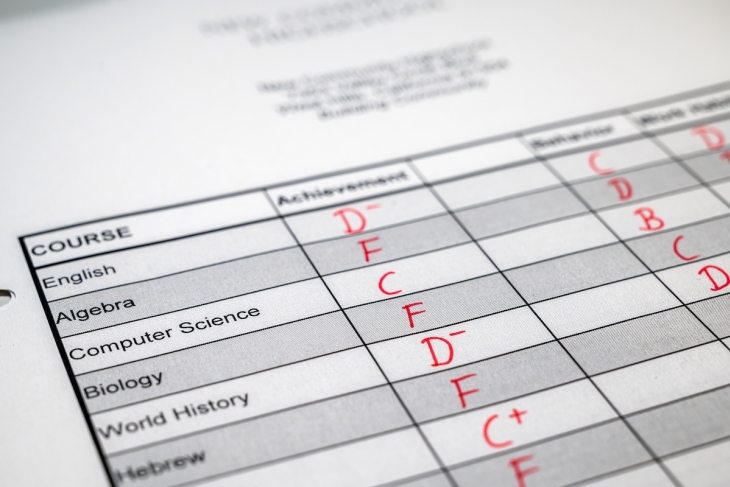
Report card
Getty Images/Ralf Geithe
Listen to this article
Loading the Elevenlabs Text to Speech AudioNative Player...

Given our moniker as “The Education Gadfly,” we at the Thomas B. Fordham Institute are not accustomed to lavishing praise on education leaders. That’s OK, considering how rarely they deserve it. But when someone in a position of authority demonstrates leadership, courage, and common sense, it’s important for us gadflies (and reformers) to say so.

So here goes: Montgomery County Public Schools (Maryland) superintendent Thomas Taylor deserves plaudits for tightening up the district’s policies and practices around grading, discipline, and cell phone use. These are critical elements of the “tough love” agenda we’ve encouraged all schools to embrace, including those in MCPS, and I’m especially happy to see such progress in the system that serves my own teenaged children.

But no, the reforms don’t go far enough, and yes, there’s a lot more for Dr. Taylor and his team to do!

Grading reform

Let’s start by celebrating the simple but powerful changes they’ve launched in Montgomery County middle and high schools around student grading. Previously, the district mandated that teachers give students 50 percent, rather than zero, for missed assignments and bombed tests as long as they “showed effort” (a vague and low bar). It also required teachers to allow essentially unlimited retakes for tests and quizzes. Perhaps most ridiculously, it determined that semester grades (the ones that count and show up in transcripts) would result from combining—and rounding up—quarter grades. For example: an A- in the first quarter and a B- in the second quarter would result in an A for the semester. (No joke.) Even worse: An A in one quarter and a D in another would result in a B (!!!).

Like so-called grading “reforms” elsewhere, these practices were sold as being pro-“equity.” Yet as anyone could see, they were really anti-student effort. Why would adolescents study for a test when they knew they could bomb it and retake it? Why do more than go through the motions on assignment if the worst mark you could get was 50 percent? Why work hard during the second quarter if a first quarter grade of an A- almost assured that your semester grade would be an A?  

As a new national survey by the Fordham Institute found, teachers hate policies like these, especially the “no zeros” rule (or what one teacher deliciously called “the gifty 50”). And a blockbuster article in Bethesda Magazine last year indicated that Montgomery County teachers are frustrated by this stuff, too. One (former) teacher told reporter Amy Halpern:

…the first year she taught AP literature at one of the county’s top high schools, she was called into the department chair’s office and told she wasn’t doling out enough A’s. “I said, ‘Wait … just let the students adjust to my standards and the A’s will come,’” she says. It turns out the students did rise to the challenge, she says, “but I had to ask for that faith.”

While educators might want some flexibility to figure out how to motivate kids who start the semester with a string of bad grades, forcing them to give 50 percents and endless retakes removes the few tools in their toolbox that might get kids to put in effort. And student effort is where it’s at.

Going forward, Montgomery County will determine semester grades by averaging the numeric grades for each quarter. So a 91 percent in the first quarter and an 81 percent in the second will result in a semester grade of an 86 percent—a B rather than an A, as before.

Meanwhile, teachers will only be required to give the “gifty 50” if students show “evidence of making progress toward standards” on a given assignment or test. And retakes will be limited to two per assignment, which must happen within two weeks.

This is not as far as I would have gone, but still, hooray!

Discipline

As with the loosey-goosey grading policies, Montgomery County (like many districts) had also embraced a soft approach to student discipline. Again the rationale involved “equity,” particularly the concern that Black students are more likely to be sent to the office, suspended, or expelled than their peers.

In its new student code of conduct, the system retains its five levels of severity for punishments. As Ashlyn Campbell of Bethesda Magazine explained:

“Level one consequences are ‘teacher-led’ and could include detention, restorative practices, and/or guardian outreach. Level four consequences are “administration supported and short-term out of school exclusionary responses,” and could include a student and guardian conference, in-school suspension, or a behavioral intervention plan.

What’s changed is that some infractions have been elevated to higher-level punishments, including:

…drug possession and distribution, theft, bomb threats, and attacks on students and staff. For example, students accused of making a bomb threat now face consequences ranging from level one through five. Under the revision, students would face consequences at levels four and five.

That’s right: Previously, making a bomb threat could have resulted in nothing more than a reprimand from a teacher. There’s more. Under the former code:

…students who attack a teacher or support staffer would face consequences ranging from level one to five, “meaning that you’re communicating to a teacher or supporting service member…that if they were to be attacked by a student, it would be appropriate for them to respond themselves,” [Peter Moran, MCPS chief school leadership officer] said. “That’s not the way that our system should run and demonstrates extremely low expectations for the character that we want to see out of our students.” 

Darn straight!

Moran said infractions subjected to level four consequences were expanded to include recording and posting school fights on social media—an issue MCPS has had to navigate in recent years—among others.

None of these new policies seems particularly draconian. What’s nuts is how lax the previous behavior expectations were. And the district remains committed to “restorative practices,” which many teachers, among others, find dubious. Still, progress!

Phones

Here’s where Taylor’s reforms are most modest. After piloting a bell-to-bell ban in some middle schools and classroom bans in some high schools last year, officials are mandating the changes districtwide. Elementary students are to keep their phones in their lockers or backpacks all day long. It’s the same with middle school students, though it’s up to their principals whether they can use them at lunch. And high school students have to keep their phones in their pockets (or in classroom “phone cubbies”) during class, but can use them in the hallways, at lunch, etc.

I would have gone much farther. Elementary school students should be prohibited from bringing phones to school, period. And middle school and high school students should have to turn in their phones (and watches and laptops) when they enter the building. These should be locked up, then returned at the end of the day. Such “bell to bell” bans are the only proven way to actually get phones out of classrooms—and not slide back into a regime that forces teachers to fight a daily battle to get kids to keep their devices away. Such total bans are also the only way to get kids talking to each other again during class breaks and at lunch. But taking kids’ phones can be logistically challenging and unpopular with parents. I do hope MCPS does it eventually.

What’s next for Montgomery County

What these three sets of reforms have in common is that they are popular with teachers. Dr. Taylor is no dummy—as a newish superintendent in a deep-blue district, he’s ensuring that there’s no daylight between himself and his teachers (and, importantly, their union). It’s not just these classroom practices. He also proposed a gargantuan, teacher-pleasing increase in his first budget, one the county largely funded.

All well and good, but I hope he’s building up goodwill with the teachers (and union) because he knows he’s going to need it when he tackles even tougher issues—like paying teachers in high-need schools much more than those in affluent ones; moving ineffective instructors out of the classroom; and totally overhauling the system’s expensive and unnecessary retiree healthcare benefits.

So two cheers for Dr. Taylor! Now back to work.

Policy Priority:
High Expectations
Topics:
Curriculum & Instruction
Governance
Teachers & School Leaders

Pagination

  • First page « First
  • Previous page ‹ Previous
  • Page 86
  • Page 87
  • Page 88
  • Page 89
  • Current page 90
  • Page 91
  • Page 92
  • Page 93
  • Page 94
  • Next page Next ›
  • Last page Last »
Fordham Logo

© 2026 The Thomas B. Fordham Institute
Privacy Policy
Usage Agreement

National

P.O. Box 110
Burke, VA 22009

202.223.5452

[email protected]

Ohio

P.O. Box 82291
Columbus, OH 43202

614.223.1580

[email protected]

Sponsorship

130 West Second Street, Suite 410
Dayton, Ohio 45402

937.227.3368

[email protected]