Commentary
The pragmatism of personalized pacing
The variance across students’ current abilities and interests is an age-old challenge for educators, and one that’s resulted in a long list of proposed solutions.
The variance across students’ current abilities and interests is an age-old challenge for educators, and one that’s resulted in a long list of proposed solutions.

A recent study uses data from Charlotte-Mecklenberg Schools in North Carolina along with juvenile and adult arrest data to try to isolate the effect of peers on a range of outcomes, including long-term ones.

Florida is celebrating the twenty-year mark of its A+ Plan for Education, which brought accountability, parental choice, and evidence-based practices to the state’s schools. These efforts produced results that put almost every other state to shame, and lifted Florida from the middle of the pack to the top tier. But even more impressive is that these outcomes occurred while the state kept spending per pupil flat as a pancake. This makes Florida a serious outlier, and represents an incredible and laudable return on investment.
This essay is part of the The Moonshot for Kids project, a joint initiative of the Fordham Institute and the Center for American Progress.
A recent study in The Review of Economics and Statistics looks at changes in school funding over the last several decades, a period when courts ordered states to remedy the huge funding inequalities that had resulted from local funding of education by allocating additional state funds to poorer districts.

Early college high schools are those in which students pursue college credits as a requirement for graduation.
This essay is part of the The Moonshot for Kids project, a joint initiative of the Fordham Institute and the Center for American Progress. This is the second of three parts.
To a degree most of us would prefer not to acknowledge, classroom practice tends to run less on research and empirical evidence than on some combination of philosophy, faith, or personal preference.

“Credentials Matter,” a new report released by the Foundation for Excellence in Education and Burning Glass Technologies, joins other recent
Almost every article on gifted education highlights inequity as an issue for the field. Indeed, inequity and large excellence gaps are among society’s most vexing educational problems, and scholars have proposed a variety of approaches to address them.

Good teachers are warm and compassionate people, and like parents, they tend to love all their kids equally. Nevertheless, they also have a special tenderness for the students who struggle in their classrooms and feel a particular urgency about meeting their needs. This often means less attention paid to high flyers. Educators tend to believe these children will be fine no matter what. But they’re are their own “high-needs” subgroup because they’re at the greatest risk for extreme boredom.

As we wrap up Teacher Appreciation Week, I’ve done some reflecting about my own years as a student. There are teachers who have a lasting impact on our lives and on April 2, I lost one of mine. Mr. Murphy wasn’t just special because of how much knowledge of history and politics was crammed into his brain and shared with all of us, but he pushed us in ways that every student deserves to be pushed. He challenged us to think and come to our own conclusions. He may not have agreed with where we all landed but he sure did love to wave his hands in the air and debate us when he didn’t.

Earlier this week, I had the pleasure of speaking on a panel at the Education Writers Association’s (EWA) National Seminar, the largest annual gathering of journalists covering the education beat. With over five hundred education reporters in attendance, it was an opportunity to talk (on the record, of course) about the ins and outs of state accountability systems in the ESSA era, and to meet face-to-face with an assortment of folks I’ve long admired from afar and only previously known through social media.
Things might look very different in education—we might even manage to sustain promising practices and reform initiatives long enough for them to bear fruit—if advocates for various programs and policies were required to temper their pitches with warning labels, akin to pharmaceutical ads. Make your case. Sell yourself as hard as you want to the consumer—but then comes the legally required disclaimers and warnings about potentially harmful side effects. This piece offers some examples to get us started.

This essay is part of the The Moonshot for Kids project, a joint initiative of the Fordham Institute and the Center for American Progress. It will run in three parts, with the second and third appearing in the next two issues of the Education Gadfly Weekly.
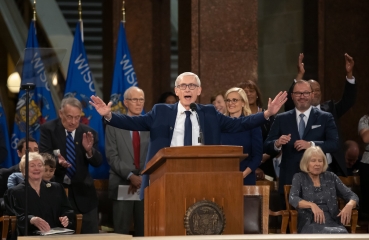
In January of this year, we made predictions for Fordham about the future of education reform in Wisconsin under newly elected Democratic Governor Tony Evers.
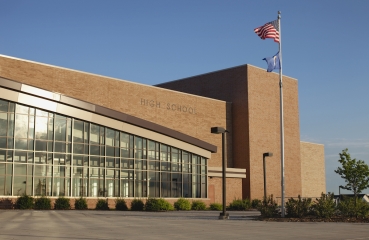
In the wake of yet another tragedy, the most recent IES report on school crime and safety is a reminder that it gets better, statistically speaking. Among the highlights:
Next year, states will for the first-time report actual school-by-school spending as required under ESSA. This effort represents a quantum leap from the typical practice of tracking and reporting average district per-pupil spending, and is arguably the most complex piece of the law—so much so that states were given an extra year to comply with the new requirement. Marguerite Roza and her team at the Edunomics Lab have ably taken the lead on addressing the many policy related and technical questions involved, but there’s an even larger question of whether we are preparing ourselves for the political challenges that lay ahead.

The first obligation of schools is to keep kids safe, and the second is to create and preserve a calm environment in which those who want to learn are able to do so with minimal interruption. We may empathize with the travails that cause kids to disrupt that environment, but it’s still the school’s responsibility—if it can’t speedily and durably solve the problem within its classrooms—to put disrupters somewhere else. So it’s disheartening to see forces exclude and punish institutions that have high suspension rates, independent of reason and regardless of academic outcomes. They’re warring against the very schools that successfully educate thousands of poor and minority kids.

One of the hallmarks of charter schools is their unique ability to align closely with parents’ values. Every American has fundamental moral and ethical principles, some of which can’t always be accommodated by traditional public schools.
I’ve beaten the drum forever about the importance of building students’ content knowledge if we want to improve their reading comprehension, but another key insight from rigorous research is that kids will read better only if exposed to complex texts. This insight was embedded into the Common Core and other high-quality English language arts standards.

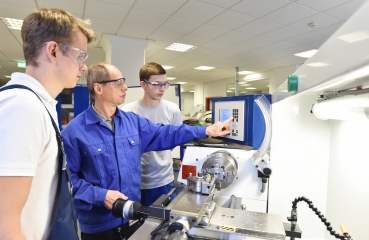
Governors and legislative leaders in almost every state have made expanding and improving career and technical education (CTE) a top priority, yet the importance of quality data is often overlooked. The recent reauthorization of the Carl D.

It’s one of the great conundrums of American public education: Even when calculated in constant dollars, and even after the Great Recession, we spend dramatically more per pupil than in decades past, yet teacher salaries have barely kept pace with inflation. Where is the money going? And how much could we pay teachers if we had prioritized higher salaries instead? This new analysis compares average teacher salaries to average per-pupil spending—by state, and over time, all in inflation-adjusted dollars. The results aren’t what you’d expect.

I used to give a talk about teaching reading comprehension to struggling students, mocking some of the dumb and deleterious techniques I was taught in my teacher training and professional development, and arguing that none of it works as well as ensuring kids have a knowledge-rich core curriculum.
This essay is part of the The Moonshot for Kids project, a joint initiative of the Fordham Institute and the Center for American Progress. This is the second of two parts.
Having recently unburdened ourselves of seven large gobbets of advice for the champions of today’s surging interest in Social and Emotional Learning (SEL), we intend occasionally to point to developments that strike us as problematic or promising. Our goal isn’t to point fingers—though that can be kind of fun. It’s because we see a clear and present danger that SEL could go off the rails in any number of ways, and wind up compromising academic instruction or serving to advance ideological causes and agendas.

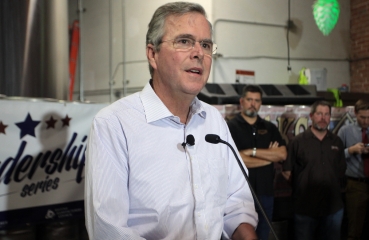
Teachers will always have to figure out how to provide the right level of instruction to each student that’s neither so difficult it's overwhelming, nor so easy it's boring. Fitness studios face a similar challenge: provide a great, challenging experience for thirty-some students that accounts for great variation in fitness levels and goals and enables participants to gauge their own progress on metrics that they trust and understand. The approaches of one studio and one educational model are especially promising.

This essay is part of the The Moonshot for Kids project, a joint initiative of the Fordham Institute and the Center for American Progress. It ran in two parts.
From AOC to Stuyvesant to the Varsity Blues scandal, high-stakes assessments have returned to their role as punching bags after a brief hiatus.