Mobile Navigation

  • National
    • Policy
      • High Expectations
      • Quality Choices
      • Personalized Pathways
    • Research
    • Commentary
      • Gadfly Newsletter
      • Flypaper Blog
    • Events
    • Scholars Program
  • Ohio
    • Policy
      • Priorities
      • Media & Testimony
    • Research
    • Commentary
      • Ohio Education Gadfly Biweekly
      • Ohio Gadfly Daily
  • Charter Authorizing
    • Application
    • Sponsored Schools
    • Resources
  • About
    • Mission
    • Board
    • Staff
    • Career
Home
Home
Advancing Educational Excellence

Main Navigation

  • National
  • Ohio
  • Charter Authorizing
  • About

National Menu

  • Topics
    • Accountability & Testing
    • Advanced Education
    • Career & Technical Education
    • Charter Schools
    • Curriculum & Instruction
    • ESSA
    • Evidence-Based Learning
    • Facilities
    • Governance
    • Personalized Learning
    • Private School Choice
    • School Finance
    • Standards
    • Teachers & School Leaders
    • Think Again
  • Research
  • Commentary
    • Gadfly Newsletter
    • Flypaper Blog
    • Gadfly Podcast
  • Events
  • Scholars Program

Topics

Displaying 301-330 of 421 results
Commentary
4.10.2019

The corruption continuum

Chester E. Finn, Jr.

I’m as appalled and disgusted as anyone over the Varsity Blues admissions scandal, and it’s fine with me if those parents end up in prison. But I also worry about hypocrisy. So many of us now throwing up our hands in outrage have tiptoed in our own ways onto a continuum at the far end of which is the bribery and conspiracy that’s recently been revealed.

Commentary
4.10.2019

The civic education crisis

Perhaps George Orwell was thinking of a moment like this when he said, “We have now sunk to a depth at which restating the obvious is the first duty of intelligent men.” The obvious now is that the Republic faces a seemingly overwhelming number of crises.

Commentary
4.10.2019

College graduation or bust

Jeff Murray

For the last seven years, the National Student Clearinghouse Research Center (NSCRC) has published data on college completion rates.

Commentary
4.8.2019

Two new school choice studies offer nuanced findings about test scores and long-term impacts

Michael J. Petrilli

Warning: this one’s going to get super wonky.

Commentary
4.5.2019

Should middle-class private schools be part of education reform?

The debate about private schools often centers around vouchers and poor families. I want to bypass that here, examine four points about private schools and middle class families, and then tie them together.

Commentary
4.5.2019
Governance

The year’s best State of the State address for education reform

Dale Chu

Each year, the Education Commission of the States (ECS), based in my adopted home of Denver, reviews the governors’ State of the State addresses and offers an analysis of their main education components. Mentioned by at least thirty-six governors, this year’s top education priority was school finance, followed by workforce development, teacher quality, early learning, postsecondary financial aid, and school safety.

Commentary
4.4.2019

Can we stop pretending fraud in education is victimless?

That line comes from a lawyer who interviewed witnesses in a major education scandal. No, it wasn’t the recent college bribery bombshell that led to dozens of federal indictments. It was in relation to an epidemic of cheating in Atlanta Public Schools that came to light more than a decade ago.

Commentary
4.3.2019
Career & Technical Education

Are career-tech students preparing for jobs that actually exist?

Amber M. Northern, Ph.D., Michael J. Petrilli

To our knowledge, no study has empirically examined the degree to which CTE course-taking in high school aligns with the kinds of work available in local labor markets, as our newest report does. It shows that the country needs local business, industrial, and secondary and postsecondary education sectors to join hands. At the top of their to-do list should be better integration of what is taught in local high school CTE programs with the skills, knowledge, and positions needed in area labor markets, both now and in the future.

Commentary
4.3.2019

Slouching toward aristocracy

Robert Pondiscio

A little over a year ago, Education Week ran an op-ed arguing for “gradeless classrooms” and an “end to the perpetual lies” that numbers and letters tell about learning. “Honor and merit rolls would disappear.

Commentary
4.3.2019

Five lessons from my time on the Maryland State Board of Education, part II

Chester E. Finn, Jr.

This is the second installment of an essay originally published by Education Next.

Commentary
4.3.2019
Curriculum & Instruction

The prevalence and effects of math anxiety

Jeff Murray

In the U.S. we call it “math phobia”; in the U.K. they call it “maths anxiety.” Either way you dub it, a negative emotional reaction to mathematics, which can manifest as a fear of or aversion to doing math-related work, is a real threat to mathematical competency. A new summary of research from the University of Cambridge adds a huge amount of detail to the picture of what causes math phobia in young people and what if anything can be done to mitigate its effects.

Podcast
4.3.2019

The Education Gadfly Show: CTE and local labor markets

On this week’s podcast, Cameron Sublett, associate professor of education at Pepperdine University, joins Mike Petrilli and David Griffith to discuss the findings of Fordham’s newest report, How Aligned is Career and Technical Education to Local Labor Markets?, that he and Griffith coauthored. On the Research Minute, Amber Northern examines how the New Leaders’ Aspiring Principals Program prepares school leaders for success.

How Aligned is CTE
Report
4.3.2019
Career & Technical Education

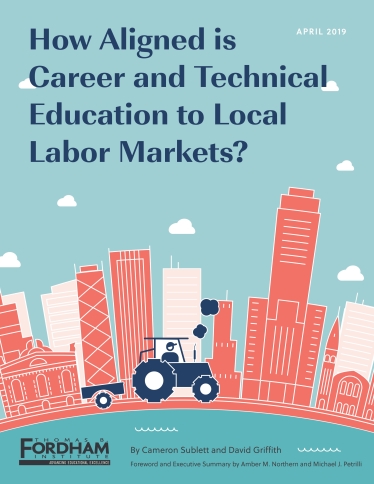
How Aligned is Career and Technical Education to Local Labor Markets?

The recent reauthorization of the Carl D. Perkins Career and Technical Education Act—the principal federal education program supporting career and technical education (CTE)—expressly aims to “align workforce skills with labor market needs.” Our latest report examines whether students in high school CTE programs are more likely to take courses in high-demand and/or high-wage industries, both nationally and locally.

How Aligned is CTE
Commentary
4.2.2019

Acclaimed Princeton professor to America’s high schools: Please send us students who can think for themselves

The Education Gadfly

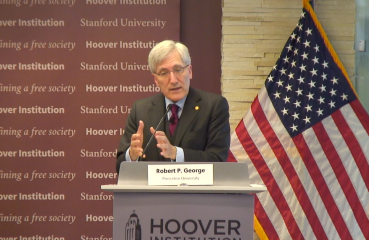
Last week, as part of the Thomas B. Fordham Institute’s and the Hoover Institution’s Education 20/20 speaker series, renowned Princeton University professor of jurisprudence Robert P. George addressed the importance of “viewpoint diversity” in American colleges and universities. Are you a high school teacher or administrator, a school board member, parent or state education leader? Please watch the eight minute segment now.

Commentary
4.2.2019

Re-weaving the fabric of character

Chester E. Finn, Jr.

As I gird my loins for several upcoming events where we will wrangle over the “social and emotional learning” approach to educating-the-whole-child, I benefited—and perhaps you could, too—from a conceptual reset, courtesy of a fine new book by Anne Snyder, who leads the “character initiative” at the Philanthropy Roundtable, of which Fordham is a member and where I once had the honor of serving on the board.

Commentary
3.29.2019
Curriculum & Instruction

From great materials to great instruction

Three years ago, two districts with similar enrollments, proficiency scores, and student demographics—not twenty miles apart—chose the same curriculum for middle school English language arts: Expeditionary Learning. But that is where the similarity in this story ends.

Commentary
3.29.2019
Charter Schools

At the wheel of Idaho’s public charter school program

A willfully one-sided and misguided “study” emerged the other day from something that calls itself the “Network for Public Education” that purports to show that the federal government has wasted a lot of money trying to expand and improve America’s public charter schools. This outfit, which appears to get support from the teacher unions and their fellow travelers, cites several states that, in the authors’ view, have mishandled the money and bungled the program.

Event
3.28.2019
Career & Technical Education, Curriculum & Instruction

Education 20/20: Arthur Brooks and Adam Meyerson

The Fordham-Hoover “Education 20/20” speaker series continued on April 11 with another star-studded double feature.

Commentary
3.27.2019

The misplaced focus on New York City's selective high schools

Brandon L. Wright

The time and energy that Mayor Bill de Blasio and Chancellor Richard Carranza are devoting to revamping admissions for New York's eight selective exam-based high schools are misplaced. Those institutions provide a unique and valuable service that drives excellence and upward mobility. Leaders should instead focus on how the city’s black and Hispanic students are failed by Gotham’s other 1,700 schools, and how the exam schools' diversity problem is exacerbated by the lack of policies that would bolster those kids' achievement.

Commentary
3.27.2019

Five lessons from my time on the Maryland State Board of Education

Chester E. Finn, Jr.

This essay, originally published by Education Next, will run in two parts.

Commentary
3.27.2019

A guidebook for high schoolers who want to be teachers

Robert Pondiscio

Working for the National Council on Teacher Quality can’t be fun or easy. Since 2003, the organization has set itself to the task of evaluating the nation’s teacher prep programs, which can only be compared to a department-store photographer telling mothers their babies are ugly. No one is glad to hear it, even if it’s observably true.

Commentary
3.27.2019

Strengthening and diversifying the teacher workforce

Jessica Poiner

Each year, teacher candidates across the nation take licensing exams designed to check their mastery of pedagogy and of content knowledge. Though each state selects its own licensing tests, the Praxis Elementary Education: Multiple Subjects assessment, created by the Education Testing Service (ETS), is the most widely used elementary content exam.

Podcast
3.27.2019
School Finance

The Education Gadfly Show: Are schools ready for an economic downturn?

On this week’s podcast, Marguerite Roza, director of the Edunomics Lab and a research associate professor at Georgetown University, joins Mike Petrilli and David Griffith to remind schools to prepare for a rainy day, which is likely coming soon. On the Research Minute, Amber Northern examines students’ reading habits, and which books are most popular from K to 12.

Commentary
3.27.2019

A moonshot for kids

Michael J. Petrilli

Our schools are nowhere close to delivering the learning outcomes that our kids deserve and our country requires. What we need is a Moonshot for Kids. That’s what we at Fordham, in conjunction with the Center for American Progress, now propose to stimulate. During the next twelve months, we will explore the rationale, potential, and possible design of a sizable new investment in basic and applied research and development that leads to innovation on behalf of America’s children. At its heart is an open competition meant to elicit and highlight breakthrough ideas that could best leverage a major public or private investment of $1 billion or more to improve outcomes for school-age kids.

Commentary
3.25.2019

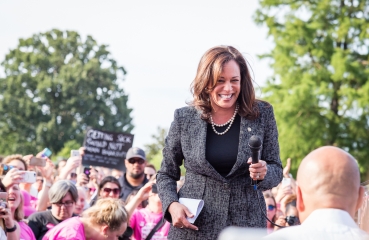
Kamala Harris comes out swinging on education and picks the unions over students and parents

Erika Sanzi

Democratic presidential hopeful Kamala Harris must have been one of the people AFT president Randi Weingarten was referring to when she said on C-Span, in the context of the 2020 hopefuls being “eager for the teachers’ backing”, that her “phone had rung a lot” because Harris has quickly morphed into a union mouthpiece. The language is so familiar it reads like the same old script. Students are nowhere to be found in her comments, parents are absent from her tweets and learning outcomes don’t even get a single mention.

Commentary
3.22.2019

Moms and choice: An interview with Abigail Hasberry from San Antonio, Texas

Erika Sanzi

This is the third in a series of interviews called “moms and choice,” in which I talk with mothers who—because of issues like bullying, weak academics, poor instr

Commentary
3.21.2019
Accountability & Testing

Liberation theology is no savior for low-income schools

Dale Chu

For better or for worse, hard-left politics continue to cast an outsized shadow over the education sector. Nowhere is this more prevalent than within the echo chamber of ed school thinking, where the tweed-jacketed have their feet firmly planted in midair with regard to the nation’s most pressing education challenges. This goes doubly so for low-income schools, where the academy’s hubris makes for swell sounding monographs, but often has little grounding in the difficult work required to raise student performance.

Commentary
3.20.2019

Achievement quandaries

Chester E. Finn, Jr.

An ambitious, important new piece of analysis in Education Next concludes that young Americans across the socioeconomic spectrum have made some progress over the past half century in academic achievement, but that rising tide hasn’t narrowed key gaps among them and hasn’t lifted the high school boats. This raises some really tough questions. How much does gap-closing matter versus tide-rising? Why has the tide stopped rising at the high school door? And—of course—what, if anything, is to be done, besides more of what we’ve been doing, at least since we began to get serious about addressing mediocrity and closing gaps back in the 1960s?

Commentary
3.20.2019

Are grantmakers giving up on education reform?

I’ve been tugging at this issue for twenty years now, going back to the late 1990s when Checker Finn came to speak before the Massachusetts Board of Education. My state had passed ambitious education reform legislation five years earlier, and its controversial high-stakes provision—requiring passage of the tenth-grade MCAS test as a graduation requirement—was scheduled to kick in.

Commentary
3.20.2019

What charter school applications and approvals say about the state of authorizing

Jessie McBirney

Running a charter school involves more than an independent leader and an alternative learning atmosphere for students—charter quality is supported by several layers of oversight and supervision, even before schools open their doors.

Pagination

  • First page « First
  • Previous page ‹ Previous
  • Page 7
  • Page 8
  • Page 9
  • Page 10
  • Current page 11
  • Page 12
  • Page 13
  • Page 14
  • Page 15
  • Next page Next ›
  • Last page Last »

Type

  • Book (2)
  • Commentary (352)
  • Event (10)
  • Podcast (49)
  • Report (7)

Topics

  • Accountability & Testing (65)
  • Advanced Education (22)
  • Career & Technical Education (10)
  • Charter Schools (49)
  • Curriculum & Instruction (94)
  • ESSA (7)
  • Evidence-Based Learning (47)
  • Governance (56)
  • Personalized Learning (12)
  • Private School Choice (7)
  • School Finance (5)
  • Standards (15)
  • Teachers & School Leaders (86)

Date

  • (-) 2019 (0)
  • September 2019 (61)
  • October 2019 (70)
  • November 2019 (72)
  • May 2019 (70)
  • March 2019 (69)
  • June 2019 (63)
  • July 2019 (64)
  • January 2019 (63)
  • February 2019 (62)
  • December 2019 (46)
  • August 2019 (54)
  • April 2019 (73)
Fordham Logo

© 2026 The Thomas B. Fordham Institute
Privacy Policy
Usage Agreement

National

P.O. Box 110
Burke, VA 22009

202.223.5452

[email protected]

Ohio

P.O. Box 82291
Columbus, OH 43202

614.223.1580

[email protected]

Sponsorship

130 West Second Street, Suite 410
Dayton, Ohio 45402

937.227.3368

[email protected]