Mobile Navigation

  • National
    • Policy
      • High Expectations
      • Quality Choices
      • Personalized Pathways
    • Research
    • Commentary
      • Gadfly Newsletter
      • Flypaper Blog
    • Events
    • Scholars Program
  • Ohio
    • Policy
      • Priorities
      • Media & Testimony
    • Research
    • Commentary
      • Ohio Education Gadfly Biweekly
      • Ohio Gadfly Daily
  • Charter Authorizing
    • Application
    • Sponsored Schools
    • Resources
  • About
    • Mission
    • Board
    • Staff
    • Career
Home
Home
Advancing Educational Excellence

Main Navigation

  • National
  • Ohio
  • Charter Authorizing
  • About

National Menu

  • Topics
    • Accountability & Testing
    • Advanced Education
    • Career & Technical Education
    • Charter Schools
    • Curriculum & Instruction
    • ESSA
    • Evidence-Based Learning
    • Facilities
    • Governance
    • Personalized Learning
    • Private School Choice
    • School Finance
    • Standards
    • Teachers & School Leaders
    • Think Again
  • Research
  • Commentary
    • Gadfly Newsletter
    • Flypaper Blog
    • Gadfly Podcast
  • Events
  • Scholars Program

The Education Gadfly Weekly

Sign Up to Receive Fordham Updates

We'll send you quality research, commentary, analysis, and news on the education issues you care about.
Thank you for signing up!
Please check your email to confirm the subscription.

The Education Gadfly Weekly: Republicans and school boards

Volume 22, Number 1
1.6.2022
1.6.2022

The Education Gadfly Weekly: Republicans and school boards

Volume 22, Number 1
view
High Expectations

Republicans and school boards

Recent months have brought much hand-wringing and ink spilling over the possibility that hordes of Republicans are gearing up to plunge into local school board elections, this as part of their discovery that public education is rich with political opportunity (cue incoming Virginia governor Glenn Youngkin, his campaign advisors, and observant GOP strategists).

Chester E. Finn, Jr. 1.6.2022
NationalFlypaper

Republicans and school boards

Chester E. Finn, Jr.
1.6.2022
Flypaper

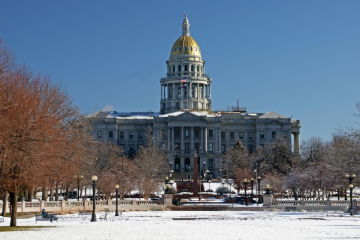
Colorado’s curriculum crackdown

Dale Chu
1.6.2022
Flypaper

Student retention and third-grade reading: It’s about the adults

Todd Collins
1.6.2022
Flypaper

Early childhood education and later educational outcomes

Julia Wolf
1.6.2022
Flypaper

An enlightening look into school funding inequalities

Amber M. Northern, Ph.D.
1.6.2022
Flypaper

Education Gadfly Show #801: Grumpy New Year with Checker Finn

1.5.2022
Podcast

Cheers and Jeers: January 6, 2022

The Education Gadfly
1.6.2022
Flypaper

What we're reading this week: January 6, 2022

The Education Gadfly
1.6.2022
Flypaper
view

Colorado’s curriculum crackdown

Dale Chu 1.6.2022
Flypaper
view

Student retention and third-grade reading: It’s about the adults

Todd Collins 1.6.2022
Flypaper
view

Early childhood education and later educational outcomes

Julia Wolf 1.6.2022
Flypaper
view

An enlightening look into school funding inequalities

Amber M. Northern, Ph.D. 1.6.2022
Flypaper
view

Education Gadfly Show #801: Grumpy New Year with Checker Finn

Michael J. Petrilli, Chester E. Finn, Jr., David Griffith, Ph.D., Amber M. Northern, Ph.D. 1.5.2022
Podcast
view

Cheers and Jeers: January 6, 2022

The Education Gadfly 1.6.2022
Flypaper
view

What we're reading this week: January 6, 2022

The Education Gadfly 1.6.2022
Flypaper
view

Republicans and school boards

Chester E. Finn, Jr.
1.6.2022
Flypaper

Recent months have brought much hand-wringing and ink spilling over the possibility that hordes of Republicans are gearing up to plunge into local school board elections, this as part of their discovery that public education is rich with political opportunity (cue incoming Virginia governor Glenn Youngkin, his campaign advisors, and observant GOP strategists).

Good thing or bad? Likely to succeed or not? Of course, it’s early days and way too soon to tell. All that’s really clear, besides the Virginia gubernatorial contest, is that school boards have become exceptionally contentious and that a nontrivial number of long-serving members are heading for the exits. The Atlantic reported seventy resignations in Minnesota alone between summer 2020 and autumn 2021 compared with fewer than twenty in a typical pre-Covid year. Recall campaigns against sitting board members are more frequent. And board meetings themselves have had enough angry protests that the head of the National School Boards Association famously sought federal help, leading Attorney General Merrick Garland to alert the Justice Department—or, in the words of critics, to “deploy the FBI.” This then led to an infamous memo from Montana’s acting U.S. attorney detailing the many ways that federal laws can be invoked to suppress such protests and punish the perpetrators.

Why all the agitation and seeming political potential? The big reason, pretty much everyone agrees, is millions of parents angry over school shutdowns, learning interruptions, and other education malfunctions associated with Covid, inflamed in some places by the ruckus over schools’ handling of race in general and “critical race theory” in particular. As The Atlantic’s Adam Harris sees it, “Although that [CRT] fight has garnered a lot of attention, the current animus toward school boards, and the members who sit on them, goes back to the start of the pandemic, when many schools shut down, prompting intense anger from some parents.”

In normal times, we tend to think of school boards as quiet backwaters, produced by thinly attended off-cycle elections and without much to do beyond hiring (and occasionally micromanaging) the superintendent and producing an annual budget. But that’s not quite right, as University of Chicago political scientist William Howell explained to Harris: “They’ve been places where issues involving race, involving our obligations to the less advantaged, involving citizenship and immigration status” have been sorted out, “and they invite all kinds of attention: threats, lobbying, and, of course, some positive engagement from people who want to be helpful. But boy, that temperature will often go up.”

Today it’s up for sure—which doesn’t necessarily mean that a lot of different people, notably people in Republican clothes, will soon be elected to serve on America’s thousands of local school boards. Though moves are underway in several states to turn school board elections into partisan affairs, around most of the country they remain nonpartisan, a legacy of the original expectation that this form of governance would not only preserve local control of the schools but it would also insulate public education from the messy dealmaking and logrolling and corruption of conventional politics while inducing each community’s leading citizens—the best and the brightest, the great and the good, call them what you like—to engage selflessly in the vital civic work of educating the next generation as well as possible.

I’ve long lamented how far school boards in many places have slipped from that pedestal, how their ranks have filled instead with aspiring politicians, fellow travelers of the teacher union, and revenge-minded former employees of the school system itself; how their off-cycle elections have yielded thin turnouts that could easily be manipulated by adult interests (often the union) with selfish agendas; and how the occasional slate of earnest reformers gets ousted at the next election by reactionary forces of the status quo. I’ve also lauded alternative arrangements such as mayoral control (though I’m more mindful than I once was that their achievements, too, can be undone by the next election).

Because I don’t think they work as intended, and because so often they’re barriers to needed reforms, I’m not nearly as troubled as some, including my friend, Harvard’s astute Martin West, by the prospect that GOP strategists are eying local school boards as an opportunity to make a difference. If enough get elected, they may at least shake up a complacent status quo and stodgy bureaucracy and offer a substantial counterweight to the unions and others that—visibly and vividly during the Covid plague—have pressed for decisions that served the interests of the school system’s adult employees far more than the interests of children and families.

Yes, they’ll doubtless cause missteps and excesses of their own, especially if the newcomers intrude farther than board members should into curricular matters. It’s great to mandate that primary teachers follow reading science, phonics and all, when introducing Kindergartners and first graders to the first and most fundamental of the three R’s. It’s great to insist that history and civics give patriotism its due. But history and civics also bring the risk of further polarization, particularly if board members go beyond asking for “the whole story” and insist on just the good parts. Pushing back against CRT and 1619 in the K–12 curriculum is one thing, but neglecting inclusion and tolerance is quite another.

We might reasonably hope, however, that Republican board members (along with right-thinking Democrats and independents) will also push their school systems to stick with high academic standards, clear metrics of achievement, and results-driven school accountability. And we should be able to count on them to support school choice, whether within the district, between districts, or by welcoming (and authorizing) the independent public schools we know as charters. That would be a seismic change in a great many places—and one that is apt to do poor and minority youngsters more good in the long run than a steady infusion of CRT, 1619, and other dubious curricular changes made in the name of equity.

All of which is to say that a purposeful GOP quest to infiltrate local school boards could turn out to be a good thing but only so long as it goes beyond political opportunism, manages to keep schools open, and incorporates the thoroughgoing overhaul that so many of them and their school systems sorely need.

view

Colorado’s curriculum crackdown

Dale Chu
1.6.2022
Flypaper

To start the year off on an upbeat note, Colorado’s muscular effort to improve K–3 reading curriculum finally appears to be paying off. One of twenty states that passed or recently considered measures related to the science of reading, the Centennial State began cracking down on how its teacher preparation programs cover early literacy. It is now in the process of requiring teachers to demonstrate more in-depth knowledge about reading pedagogy as well as tightening the reins on which reading programs may be used by districts. Last year, barely two in five of the state’s many local districts used reading curricula from the state’s list of approved programs. That has already risen to 63 percent. 

The encouraging news can be traced back to Colorado’s READ Act, a major law enacted ten years ago requiring districts to help struggling readers in the early grades. But laws are blunt instruments, particularly when it comes to improving classroom practice, and the READ Act was no exception. Frustrated by the slow rate of progress, lawmakers passed an update to the statute in 2019, which spurred the state to take a more assertive role in compelling districts to pick from the list of state-approved curricula. Notably, Colorado’s four largest districts—Denver, Jefferson County, Douglas County, and Cherry Creek—have all recently publicized plans to adopt new elementary reading programs that adhere to reading science.

The state’s department of education sent out dozens of letters last fall notifying districts that plans for complying with the curriculum requirement must be submitted later this month. Those that don’t risk having their accreditation rating lowered—a toothless consequence by itself but one that could lead to greater sanctions down the road. Colorado districts have long enjoyed wide latitude on their curriculum choices—it’s a “local control” state, after all—so it’s not surprising that some districts have pushed back by playing games or disregarding the state’s directives. But in a foreshadowing of what may be to come, the state’s fifth largest district, Aurora Public Schools, made an abrupt about-face in December after arguing for months that the state’s rules didn’t apply to it. What’s important to understand here is how and why Colorado’s policy is getting results. Other states may have similar laws on the books, but they haven’t yet seen this kind of response. So what’s the secret? Four things come to mind.

The first was an unusual level of legislative involvement in the details of classroom teaching, emanating from both sides of the aisle. Consider just this one passage from the final law:

Each [district] that enrolls students in kindergarten or first, second, or third grade shall provide to the students the instructional programming and services necessary to…develop the reading skills to enable them to master academic standards and expectations....The instructional programming and services for teaching students to read must be evidence based and scientifically based and must focus on reading competency in the areas of phonemic awareness, phonics, vocabulary development, reading fluency including oral skills, and reading comprehension.

I have mixed feelings about how heavy a hand state legislatures should take when it comes to the nuts and bolts of curriculum and instruction. Those of us who have had a hand on the switch when it comes to influencing state policy often have strong feelings about what is and isn’t within the state’s bailiwick. But if there’s an exception, it might be in Colorado’s unapologetic attention to reading in the early grades, where the battle to ensure the success of our students is largely won or lost.

Second, Colorado’s elected state board of education—which is directly accountable to voters for shaping policy—has been animated by an urgency to raise reading proficiency scores. For example, a report commissioned last year to review the state’s landmark reading law recommended giving districts more time to replace state-rejected reading materials because curriculum adoption is “expensive and time consuming.” Several state board members balked at the suggestion, with one saying, “Reading should be the highest priority that any school district has so they need to be allocating the resources to make the adjustment as soon as possible.” Another added, “Some of the [reading] programs that are in use are actually detrimental to the science of reading. I don’t think we need any more time. I don’t think we have any more time.”

Third, ongoing pressure applied by parents focused attention on the abysmal number of students reading at grade level as well as the barriers—including financial ones—that several districts had erected to obfuscate how literacy is taught. Indeed, officials in Jefferson County, the state’s second largest district, initially reported that it didn’t know what reading programs its schools used! Thanks to the efforts of COKID, a group of parents of children with dyslexia, among others, the legislature enacted a transparency bill requiring districts to submit information about their core and supplemental reading programs for posting on the state department’s website.

Lastly, the news coverage about flawed instructional approaches galvanized by Emily Hanford’s indispensable work sounded the clarion call. Curriculum reform advocates flogged her stuff to state lawmakers, district leaders, and other key stakeholders. Without Hanford’s oeuvre, it’s hard to imagine Colorado making progress at its recent pace. By shining a spotlight on the deficiencies in how elementary schools approach teaching reading, she helped equip policymakers and parents alike with the tools to become knowledgeable and persuasive advocates for high-quality instructional materials.

The open question is how far can literacy laws move the needle on student learning. But good policy is always preferable to crappy policy, and adopting a high-quality curriculum should be low-hanging fruit for school districts, more so after receiving Uncle Sam’s ESSER largesse. Although it remains to be seen how vigorously Colorado will continue to exercise its oversight over curriculum in the face of countervailing pressures to ease up, it’s nonetheless heartening to see state leaders leaning in to ensure that schools employ sound methods for teaching children how to read. If they haven’t already, more states should keep an eye on Colorado’s curriculum reform efforts.

view

Student retention and third-grade reading: It’s about the adults

Todd Collins
1.6.2022
Flypaper

Improving reading results, especially for Black and Hispanic students, is one of our top educational priorities. The numbers are dire, as we see almost half of these youngsters performing “Below Basic” on the fourth grade NAEP—a truly alarming level of performance.

Yet there are a few bright spots. As we look at those NAEP results, only two states rank in the top five for both Black and Hispanic students: Florida and Mississippi. They also place first and second overall on the demographically adjusted NAEP rankings published by the Urban Institute. Even more impressive, both have risen from near the bottom of the rankings twenty years ago.

They are doing something right.

Much has been written about Mississippi’s successful reading program (a good review of its multifaceted approach is here). Similar reading initiatives, based on a common playbook, have been rolled out in several states over the last decade.

Yet many states with similar reforms have not had the same success. Consider Arizona and Nevada: both have improved, they still significantly lag Mississippi and other top states for Black and Hispanic students.

That could be because they lack a key feature of Mississippi and Florida’s approach: a vigorously applied, test-based student retention policy—the so-called “third-grade reading gate.” As others have written, this is “the elephant in the room.”

Most states retain few students. Data from 2017 show a national retention rate of 1.7 percent for grades K–3 (versus 7 percent for Mississippi and 4 percent for Florida, among the nation’s highest). National grade retention levels have been falling for decades.

That’s because most educators believe that retaining students is ineffective and even harmful; some have called it “educational malpractice.” According to Linda Darling-Hammond, an emeritus Stanford education professor who now serves as President of the California State Board of Education,

“The findings are about as consistent as any findings are in education research: the use of [retention based on] testing is counterproductive: it does not improve achievement over the long run, but it does dramatically increase dropout rates.”

That presents us with a puzzle: how could something that many educators call "educational malpractice" be one of the core components of the nation's most effective reading programs?

First, retention in these states isn’t just “repeating the grade.” In Mississippi, retained students are given, at minimum, an individualized reading plan, assigned to a highly qualified teacher, and receive at least ninety minutes of daily reading instruction with targeted interventions. Florida’s approach is similar. More effective retention is likely to lead to a better result.

Second, the research that led to the conventional wisdom—based primarily on twentieth-century studies—has been superseded by newer studies, generally larger and more statistically sophisticated, which tell a somewhat different story. While retention per se does not seem to be a highly effective student intervention—it’s mixed—it also does not have the negative consequences, like higher dropout rates, found in earlier studies.

This raises the question: If retention is a mixed intervention for students, why would it have a big impact on the result?

A likely reason is that a fixed, public promotion standard is one of the most effective tools we've found to change the actions of adults. Retention policy may or may not be effective for the kids who repeat a grade, but it is very effective in getting adults—teachers, administrators, even parents—to focus their attention and change their behavior.

The prospect of student retention forces all these adults to come to grips with the fact that a child they care deeply about is significantly behind in one of the most crucial areas of their education. This often comes as a surprise to parents and sometimes also to the teacher. Yet that arresting realization, made vivid by the risk that a wonderful child might be retained, helps them focus on the problem and change their own behaviors.

It takes a lot to change settled adult behavior. We are trained to do things a certain way, and our routines are comfortable. Change is hard and, despite the best intentions, usually we just can’t sustain it. Anyone who’s ever made a New Year’s resolution knows this firsthand. System-wide change in how reading is taught—across multiple districts, schools, and classrooms—calls for very powerful and effective tools to make sure that the changes will stick. Student retention has proven to be a very effective tool.

Retention by itself is likely of little value; it needs to work in support of an effective reading improvement program. Oklahoma and Louisiana have K–3 retention levels comparable to Florida and Mississippi, but without their robust reading programs, these states do not have similar results. The point is to support a system-wide improvement program, not punish teachers or students for disappointing results.

Yes, it feels unfair to retain a child who, through no fault of their own, has been failed by adults. But it’s also unfair to fail millions of children, year after year, by not doing what’s needed to change how the system works.

Todd Collins is one of the organizers of the California Reading Coalition and a school board member in Palo Alto, California.


view

Early childhood education and later educational outcomes

Julia Wolf
1.6.2022
Flypaper

Much attention has recently focused on early childhood education (ECE), thanks in part to its inclusion in President Biden’s Build Back Better bill. A new study by Robert C. Carr and colleagues investigated how the longitudinal effects of ECE are mediated by the quality of the K–12 schooling that follows.

The researchers used data on eighteen cohorts of North Carolina (NC) students enrolled in public schools, grades three through eight, between 1996 and 2019. They measured school district achievement and achievement growth from end-of-year assessments administered in all NC public schools during the years of this study. To identify the effect of ECE programs, they used a regression analysis for each of the pupil cohorts. Included in this analysis were variables for school district quality, which the researchers measured by average school district achievement growth.

Carr and colleagues found that investments in Smart Start, a NC ECE program focused on developing holistic skills, increase student achievement but only for students who went on to receive a high-quality education in school.

Meanwhile, NC Pre-K, an ECE program that focuses on literacy, also had positive effects but only for students in average or lower-quality school districts.

Carr and colleagues speculated that because Smart Start is more holistic, it enhances performance for students who then move on to high quality K–12. Meanwhile, because NC Pre-K is more focused on literacy, it may equip students in lower-quality districts with elevated literacy skills; however, this may be redundant for students who would learn these skills anyway in higher quality districts.

These findings make the challenge for policymakers and practitioners clear: It’s not enough to offer early childhood education programs. They need to be high quality to make a difference—and so does the public education that follows.

SOURCE: Robert C. Carr et. al., “Do the long-term impacts of North Carolina's early childhood programs depend on the quality of educational opportunity during school?” Annenberg Institute at Brown University (December 2021).

view

An enlightening look into school funding inequalities

Amber M. Northern, Ph.D.
1.6.2022
Flypaper

It is widely taken for granted that schools with large numbers of poor students and students of color receive less funding than schools with more white and wealthy students. A recent study digs deeper and, in so doing, shakes up what we think we know.

The study improves upon previous research in multiple ways. First, it taps better data, specifically newly available school-level spending data for 2017–18, cleaned up and housed at the National Education Resource Database on Schools (or NERD$) via the Edunomics Lab at Georgetown University. Second, to measure school poverty levels, it uses not only free and reduced-price lunch (FRL) numbers but also data from the Small Area Income and Poverty Estimates (SAIPE), which are only available at the district level but are more accurate than FRL numbers. Third, it uses the Consumer Price Index to account for regional differences in costs and other adjustments to ensure that spending and per-pupil amounts are properly reflective of the respective area. Finally, it incorporates analyses at the national, state, and district levels to make more detailed and accurate funding comparisons.

The analysts employ a fixed-effects regression model that is weighted by enrollment. Personnel expenditures, teacher salaries, FTE counts, and novice FTE counts come from the Office for Civil Rights database. In a nutshell, the study compares how funding and teacher resources are distributed to Black and Hispanic versus white students and to poor versus non-poor students to determine whether distributions are progressive (meaning they favor disadvantaged kids) or regressive (meaning they favor advantaged kids).

At the national level, the picture is partly regressive. Black, Hispanic, and poor students—per the FRL measure—receive less K–12 expenditures per pupil than white and economically advantaged students (between $400 to $1,200 less per pupil). When they use SAIPE data, however, the researchers find that poor kids actually receive $325 more per pupil than non-poor kids, so the results are sensitive to the measure. What’s more, there is heterogeneity and complexity across states, with some looking progressive when comparing state-level expenditure gaps between poor and non-poor students, while others look regressive when comparing gaps between Black-white and Hispanic-white students.

Digging deeper, at the state level, Black and poor kids receive more K–12 expenditures per pupil than white and economically advantaged students (between $200 to $400 dollars more), an amount that grows even larger when using the SAIPE poverty measure. The notable exception is Hispanic students, who receive no additional funding per pupil compared with white students (on average at the state level). Capital expenditures are regressive at the state level, consistently favoring advantaged students.

Viewed at the district level, the picture is also progressive, with Black students receiving $416 more per pupil than white students and students on FRL receiving $316 more than non-FRL kids. Here, Hispanic students also see progressive spending as they receive $232 more than white students on average.

In terms of allocating teachers, Black, Hispanic, and FRL students have more full-time teachers per hundred students than do their white peers and those who don’t receive FRL. This gap equates to, on average, disadvantaged kids having about two more FTEs per thousand students than their counterparts. They have smaller class sizes, too, although they also have greater exposure to inexperienced teachers (about one additional novice per thousand students).

Finally, the researchers look into what may be driving district-level spending favoring disadvantaged kids and find no evidence that it can be explained by district size, average total district spending, teacher turnover, or the size of the special education population.

It seems that the conventional wisdom about underspending on disadvantaged students is only true at the national level and only when we use the increasingly problematic FRL measure. At the state and district level, the picture changes for the better. This fiscal progress is notable and calls into question at least one type of structural inequality that we hear so much about. Some of the advancement is likely due to historical involvement from the courts. Regardless, education funding policies have improved in ways that appear to balance the scales. That doesn’t mean that the nature of education looks the same in poor and non-poor schools, nor necessarily that resources are adequate to yield the learning gains and gap reductions that we need, which is why we still need to focus on the quality of teaching and learning, especially in places where it gets shortchanged.

SOURCE: Kenneth Shores, Hojung Lee, and Elinor Williams, “The Distribution of School Resources in The United States: A Comparative Analysis Across Levels of Governance, Student Sub-groups, And Educational Resources,” Social Science Research Network (August 2021).

view

Education Gadfly Show #801: Grumpy New Year with Checker Finn

1.5.2022
Podcast
 

On this week’s Education Gadfly Show podcast (listen on Apple Podcasts and Spotify), Checker Finn, Fordham’s senior fellow and president emeritus, joins Mike Petrilli and David Griffith to discuss the big education issues of the past year and look ahead to 2022. Then, on the Research Minute, Amber Northern examines a study showing that Black and Hispanic students are less likely to major in lucrative fields.

You can find this and every episode on all major podcast platforms, as well as share it with friends.

Recommended content:

  • Checker’s 2021 Flypaper blog posts on:
    • Teacher unions’ response to CDC guidelines for schools: “CDC school guidelines, acceleration, stimulus, and other goings-on”
    • Civics and history curricula: “Proof that it’s possible to approach civics and U.S. history in a balanced way”
    • School choice: “Charter schools at 30: Looking back, looking ahead”
  • The study that Amber reviewed on the Research Minute: Zachary Bleemer and Aashish Mehta, “College Major Restrictions and Student Stratification,” retrieved from Annenberg Institute at Brown University (December 2021).

Feedback welcome!

Have ideas or feedback on our podcast? Send them to our podcast producer Pedro Enamorado at [email protected].

view

Cheers and Jeers: January 6, 2022

The Education Gadfly
1.6.2022
Flypaper

Cheers

  • At UChicago Charter School Woodlawn Campus, educators collaborated with fourteen Black high schoolers to create an initiative that helped them raise their GPA by a full point. —Chalkbeat Chicago
  • Maryland Superintendent Mohammed Choudhury vows to do what it takes to keep school open. —Baltimore Sun
  • “Long disparaged, education for the skilled trades is slowly coming into fashion.” —Hechinger Report
  • In Florida, Pasco County School District is collaborating with charters to keep up with growing enrollment. —Tampa Bay Times

Jeers

  • Chicago’s teacher union voted to go virtual, forcing the district to cancel classes suddenly on Wednesday. —CNN
  • Several large districts across the country, such as Atlanta, Detroit, Milwaukee, and Newark, are returning to remote learning. —PBS
view

What we're reading this week: January 6, 2022

The Education Gadfly
1.6.2022
Flypaper
  • Keller Independent School District, under pressure by the state of Texas, is convening an anonymous committee to ban books they deem questionable. —Dallas Morning News
  • “Chicago quietly launches overhaul of schools serving its ‘forgotten students.’” —Chicago Sun-Times
  • Education will remain an important issue in politics in the next elections. —Washington Post
  • Republicans in many states are pushing to make school board elections partisan. —Politico
Fordham Logo

© 2026 The Thomas B. Fordham Institute
Privacy Policy
Usage Agreement

National

P.O. Box 110
Burke, VA 22009

202.223.5452

[email protected]

Ohio

P.O. Box 82291
Columbus, OH 43202

614.223.1580

[email protected]

Sponsorship

130 West Second Street, Suite 410
Dayton, Ohio 45402

937.227.3368

[email protected]