Mobile Navigation

  • National
    • Policy
      • High Expectations
      • Quality Choices
      • Personalized Pathways
    • Research
    • Commentary
      • Gadfly Newsletter
      • Flypaper Blog
    • Events
    • Scholars Program
  • Ohio
    • Policy
      • Priorities
      • Media & Testimony
    • Research
    • Commentary
      • Ohio Education Gadfly Biweekly
      • Ohio Gadfly Daily
  • Charter Authorizing
    • Application
    • Sponsored Schools
    • Resources
  • About
    • Mission
    • Board
    • Staff
    • Career
Home
Home
Advancing Educational Excellence

Main Navigation

  • National
  • Ohio
  • Charter Authorizing
  • About

Kentucky’s Teacher Union Strength Profile

This profile is one of 51 state profiles accompanying Fordham’s report, A Crowded Table: Teacher Union Strength in 2026, which updates Fordham’s 2012 rankings of state teacher union strength.

  • Read more about Kentucky’s Teacher Union Strength Profile

Utah’s Teacher Union Strength Profile

This profile is one of 51 state profiles accompanying Fordham’s report, A Crowded Table: Teacher Union Strength in 2026, which updates Fordham’s 2012 rankings of state teacher union strength.

  • Read more about Utah’s Teacher Union Strength Profile
Chester E. Finn, Jr.
6.25.2026
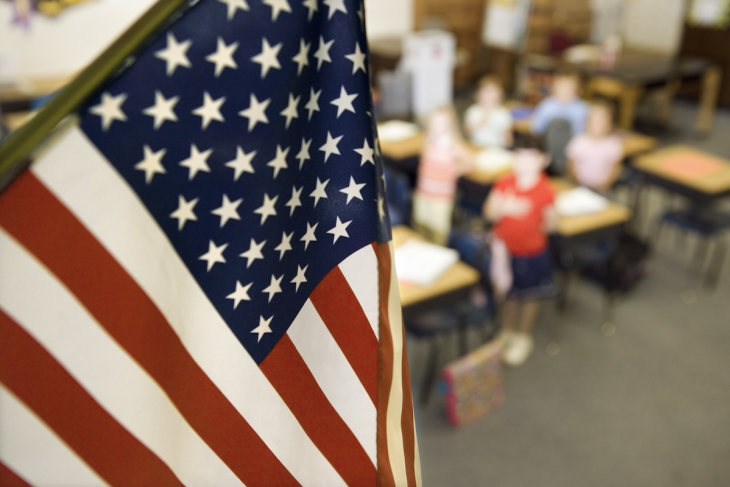
American flag in a classroom
Getty Images/Thinkstock Images
Listen to this article
Loading the Elevenlabs Text to Speech AudioNative Player...

With July 4 around the corner and amid mounting anxiety that its observance in the nation’s capital may consist of little more than parades, flyovers, and whoop-de-dos, mounting numbers of people who are serious about civics, citizenship, democracy, and history are doing their best to ensure that we commemorate the audacious events of July 1776 in ways that those events and their aftermath deserve.

This includes a boatload of revealing (and mostly worrying) opinion-and-attitude surveys, including a terrific new release from AEI (see below), as well as an Ipsos poll conducted in April and a fascinating change-over-time analysis sponsored by More Perfect and conducted by Hart Research Associates for NBC.

People are also absorbed by Ken Burns’s spectacular documentary on the American Revolution, the timing of which is hardly a coincidence, and which has deepened my own understanding of that complex, perilous, and momentous period.

In the scholarly world, Harvard’s Danielle Allen has just published a major book on antecedents to the Declaration and the Revolution that, wrote the Wall Street Journal reviewer:

…is a major work of interpretation. The Age of Revolutions is usually narrated around America and France, but Ms. Allen argues that its initial chapter unfolded in England during the 1760s, the turbulent first decade of George III’s reign. The ideas of “the rights of man, the theory of revolution, and calls for popular sovereignty—all of these developed earlier in London than in the colonies,” she writes. Revolution spread from the imperial center to the colonial periphery, rather than the reverse.

I’m pleased also to report widening attention to the Hoover Institution’s new Civic Profile, an online self-assessment of one’s own citizenship, and its widening use by educators and organization leaders to stimulate thoughtful discussion among their students and members. (Anyone can take it and learn more about themselves. Check out CivicProfile.org.)

In the education sphere, iCivics’s Louise Dube reports that “we are witnessing the rise of civic seals, formal credentials that recognize student excellence in civic readiness upon high school graduation. Seventeen states, spanning the political spectrum, have now adopted civic seal programs, reaching nearly half of all K–12 students in the United States. In just the last few months, seven states have taken action on civic seals.”

In higher education, the new Alliance for Civics in the Academy has grown to some 300 members on 85 campuses, attesting to the revival of civics education as an important college subject.

The new release from the American Enterprise Institute that I flagged above incorporates a perceptive analysis by Karlyn Bowman, AEI Distinguished Senior Fellow Emeritus, and Nicole Penn, assistant director of AEI’s Social, Cultural, and Constitutional Studies department. Titled America at 250: Surveying Change and Continuity on Civic Values, most of it consists of data from a February survey of more than 5,000 Americans, which asked 30 wide-ranging questions about values, attitudes, historical knowledge, rights, immigration, American exceptionalism, the qualities of good and bad citizens, and more. The analysis is particularly telling in its age-difference comparisons, especially Gen Z versus “baby boomers,” as well as comparisons by political affiliation, race, education, and more.

Substantial differences emerged. For example, “Barely half of the Gen Z cohort (52 percent) described the United States as unique, compared with 80 percent of baby boomers.” As to whether “schools should make a special effort to teach new immigrants about American values and beliefs,” the answer was yes from 63 percent of Gen Z versus 84 percent from my generation. Often-wide partisan divergences include a “roughly 40-point difference between Democrats and Republicans on whether the Founding Fathers deserve respect for what they created, and, separately, whether we have made substantial progress in addressing past wrongs.”

Especially interesting to me, the authors unearthed a 1998 survey of parents, conducted by Public Agenda, sponsored by the Thomas B. Fordham Foundation (!), which for once was teamed up with the two national teacher unions, and authored by my friend, the late Steve Farkas. This enabled them to replicate a number of the same questions on parental attitudes toward civics education, and these, too, led to some fascinating comparisons over nearly three decades. Probably the most significant change is somewhat diminished enthusiasm among parents for schools and teachers emphasizing the positive side of American history:

Eighty-four percent of these parents in 1998 felt America was a unique country that stands for something special in the world; 62 percent gave that response in the new survey. Sixty-seven percent in 1998 and 42 percent in 2026 said it was absolutely essential for schools to teach that America is a fundamentally good country.... Eighty-five percent of parents in 1998 said it was absolutely essential for public schools to teach that we are all one nation regardless of background, compared with 70 percent of parents in 2026.

Seventy percent is still a huge share—but not as huge as 85! What’s more problematic for civics educators is that today’s parents aren’t quite as sure that civics education itself is essential:

Although parents in both surveys agreed that civic education requirements in schools are necessary, parents in 2026 feel less strongly about this. Eighty-six percent in 1998 supported making it a graduation requirement for students to show they understand the common history and ideas that tie all Americans together. A lower but still solid majority (66 percent) gave that response in the new survey.

There’s plenty more to be examined, both in the over-time comparisons of parents and in the new data assembled by Bowman and Penn, who have also written separate commentaries that bear attention, as have others, including Matthew Continetti, cautioning that the decline in patriotism among Gen Zers is a major problem.

I agree. What’s somewhat reassuring, however, in this semiquincentennial year is the attention being paid to these challenges, to civic education, and to the requisites of good American citizenship at a time when we’re not seeing nearly enough examples of it and when we must resolve to alter that situation both in the run-up to July 4 and long thereafter.
Policy Priority:
High Expectations
Topics:
Curriculum & Instruction
Governance
Teachers & School Leaders
Robert Pondiscio
6.25.2026
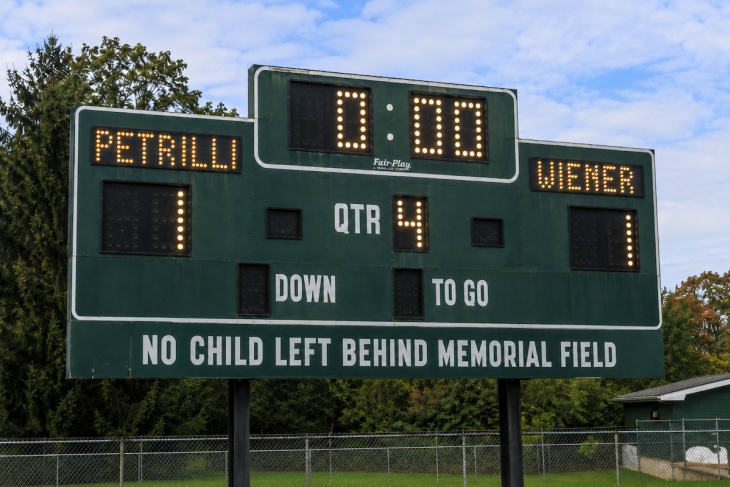
Scoreboard
ChatGPT
Listen to this article
Loading the Elevenlabs Text to Speech AudioNative Player...

As Americans are discovering during this summer’s World Cup, soccer often produces an outcome that is unsatisfying to our domestic sports sensibilities: a tie. One team controls possession while the other creates better scoring chances. Both leave the pitch claiming vindication, but neither gets to declare victory. That was my reaction in a nutshell to this week’s education policy match pitting reform veterans Ross Wiener and Mike Petrilli, both of whom I esteem greatly, against each other over the legacy of No Child Left Behind.

Writing in The New York Times, Wiener, the former policy director at the Education Trust who later played a leading role at the Aspen Institute, lamented his past support for ed reform’s accountability movement and questioned whether the high-stakes testing regime ushered in by NCLB ultimately helped schools. It was a mistake “to treat test scores as the purpose of public schools rather than as partial proxies for what a good education actually delivers,” Wiener wrote, adding that “test-based accountability policies were not sufficient decades ago. They are even less adequate now.”

On Substack, Petrilli responded by defending accountability as one of the most successful education reforms of the last quarter century. Wiener “is simply wrong about the lack of progress in the consequential-accountability era, especially in reading,” he insisted. “Ross thinks we reformers are too enamored with testing. I fear that Ross may have given up on academic achievement.”

After reading both pieces, I’m inclined to call it a 1-1 draw. Here’s my game summary:

Wiener scores

The accountability era promised more than it could deliver. The theory behind No Child Left Behind seemed straightforward enough: establish standards, measure performance, identify and target failure, and attach consequences. Schools would respond to incentives by improving instruction, and achievement would rise. The first half worked. The second half proved far more complicated.

Accountability systems became very good at identifying struggling schools. They were far less successful at helping schools improve, or even understand how to improve. And nowhere was this more evident than in reading. For years, schools responded to accountability pressures by doubling down on mindless test-prep and instruction in “reading strategies.” Ad nauseam, students practiced finding main ideas, making inferences, identifying author’s purpose, and answering multiple-choice questions. Testing pressure functionally encouraged teachers to treat reading as a set of transferable skills that could be directly taught and practiced.

The problem, then and still, is that reading simply doesn’t work that way. Decoding (phonics) is a necessary skill, but reading comprehension leans heavily on vocabulary, background knowledge, and familiarity with language structures and conventions. It is not a transferable “skill” in the way that your ability to ride one bike transfers to nearly every other bike. The student who knows more about history, science, literature, and the world generally understands more of what he reads; the student who doesn’t struggles. Yet state reading tests, the coin of the accountability realm, enshrined an impoverished view of reading achievement and functionally demanded poor practice, thereby encouraging schools to focus on skills-and-strategies lessons rather than the systematic accumulation of knowledge. There’s an undeniable mismatch between what schools believed (or were encouraged to believe) would raise student scores and what actually leads to stronger readers. While this may have been an unintended consequence, it’s one that accountability advocates must nonetheless own.

The central flaw of the accountability era was mistaking measurement for a theory of improvement. Wiener scores with his clear-eyed diagnosis that accountability gave “unprecedented authority to the idea that standardized test performance is the most important outcome schools produce and made it the organizing principle of American schooling.”

1-nil, Ross Wiener.

Petrilli equalizes

But then Wiener fails to get back on defense. It is one thing to recognize that test scores do not capture everything that matters. It is another to conclude that schools should focus primarily on goals such as helping students find “meaning and purpose” in their education, goals that are difficult to define, influence, or measure. “Do we really believe it’s impossible to do that in schools that are also trying to help students make year-to-year progress in reading, writing, and math?” Petrilli asks.

I share Mike’s concern. The history of American education is littered with high-minded aspirations: self-esteem, creativity, critical thinking, social-emotional growth, student agency, and now “belonging.” Many of these goals are worthwhile, well-intentioned, even noble. But they’ve often functioned as substitutes for academic achievement rather than complements to it. Reading, writing, and mathematics are among the few outcomes that schools can—and must—be expected to shape at scale. The danger, which Wiener omits or elides, is not that schools will stop caring about reading and math. It’s that they will convince themselves that success can be defined without them.

It’s worth remembering why the appetite for accountability emerged in the first place. It wasn’t because policymakers suddenly fell in love with standardized tests. It was because indisputable quantitative evidence revealed that vast numbers of students—especially poor children and children of color—were not mastering basic academic skills. Those uncomfortable facts supplied the moral oxygen and bipartisan political force behind the education reform movement. Without these facts, it becomes easier to mistake good intentions for good outcomes.

The growing tendency to treat No Child Left Behind as a cautionary tale—or worse, a policy failure—is its own form of revisionist history. Before accountability, achievement gaps were easier to ignore. States routinely reported averages that concealed enormous disparities between affluent students and their less advantaged peers. Before mandatory state-level NAEP reporting, states could set standards so low that they—and their schools—could proclaim success while large numbers of children could not actually read (or cipher). For all its shortcomings, No Child Left Behind changed that.

For the first time, schools were required to pay attention to the performance of all students, including low-income children, English language learners, and minority students whose outcomes had often been buried inside aggregated data. Mike is right: The achievement gains of the early 2000s were real. Achievement gaps did not disappear, but they narrowed. Progress was uneven and incomplete, but it was progress nonetheless. Petrilli notes, for example, that “Hispanic and Black fourth graders respectively gained 20 and 21 points on NAEP reading from 1994 to 2015.” Of equal, even paramount importance, accountability established a principle that should remain non-negotiable: Schools should be expected to produce academic results.

That may sound obvious, but it wasn’t always. It’s increasingly common today to hear schools judged by their climate, culture, student engagement, social-emotional supports, or any number of worthy goals. Those things matter. But measuring whether students can read, write, and do mathematics is not a distraction from that holistic mission, it’s central to it. On this point, Petrilli scores.

The final score is 1-1

Let me offer some post-game analysis. The deeper lesson of this debate, to my mind, is that both Ross and Mike are arguing about the last match rather than applying its lessons to the next one. The real story of the past 25 years is not accountability vs. anti-accountability. It is—or ought to be—understanding that accountability alone cannot produce excellence.

The reform era focused primarily on incentives, as if schools knew what to do and rewards or punishments would make them do it. If schools were made to care enough about results, policymakers assumed (at least tacitly), improvement would follow organically. What we underestimated or overlooked was the difficulty of the work itself.

How should reading be taught? What knowledge should students acquire? What curriculum should schools use? How should teachers be trained, coached, and supported? What organizational structures make effective instruction possible? Those questions turned out to matter at least as much—and frankly more—than the accountability systems designed to measure outcomes.

The states and districts showing the strongest results today are not those that abandoned accountability. Nor are they those that relied on accountability alone. They are the ones that paired accountability with coherent instructional strategies, high-quality curricula, teacher support, and a clearer understanding of how children learn. Mississippi’s literacy gains did not emerge from testing by itself. Neither did the progress seen in places like Louisiana or, more recently, Houston. Accountability provided urgency and focus. It did not provide the instructional playbook. That distinction matters. In sports, the scoreboard can only tell you whether you’re winning. It does not tell you how to score. For too long, education reformers conflated the two.

Game summary: Ross Wiener is right that accountability could not deliver everything its advocates promised. Mike Petrilli is right that abandoning accountability would solve nothing. Twenty-five years after No Child Left Behind, the final score is 1-1.

But the next match isn’t just about accountability. It’s also—even more—about the quality of instruction.

Policy Priority:
High Expectations
Topics:
Accountability & Testing
Evidence-Based Learning
Governance
Joshua Dunn
6.25.2026
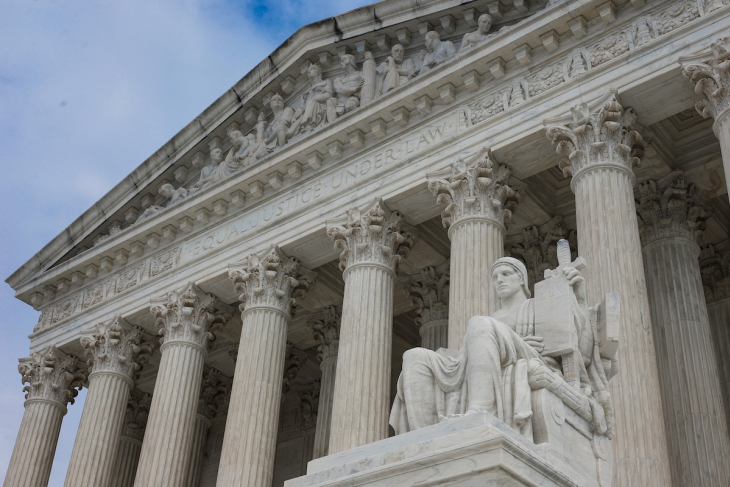
US Supreme Court Building
Getty Images/Fintan Trimble
Listen to this article
Loading the Elevenlabs Text to Speech AudioNative Player...

When the Supreme Court bases a decision on policy considerations, the downstream consequences can be significant. A compelling example is 1982’s Plyler v. Doe, when the court struck down a 1975 Texas law allowing public school districts to exclude children of foreign-born parents who were not “legally admitted” to the United States. The court’s concerns were obvious. Denying access to education would harm these children, who often had no choice in the decision to come to America, which could in turn harm society.

The only problem is those concerns were not grounded in the Constitution’s text or the court’s own doctrine. Thus, regardless of the decision’s merits as a matter of policy, it has always been difficult to defend as a matter of law. Now Plyler is being targeted by state legislatures, making it likely the court will have to confront the legal weaknesses of its decision four decades ago and the practical effects of overturning it.

The problems with Plyler begin with the court’s own precedents. Nine years earlier, it had ruled in San Antonio v. Rodriguez that education is not a fundamental right guaranteed by the Constitution. And in Plyler, the court for obvious reasons refused to consider those illegally present in the United States a suspect class, a status that would require it to subject the Texas law to its most demanding level of review. With that foundation, the decision should have been straightforward. Texas’s law should only have received the most lenient level of review—rational-basis review—which it could easily satisfy.

The majority in the 5–4 decision, however, refused to let constitutional text or precedent get in its way. The opinion, written by Justice William Brennan, focused on the innocence of the children in question and the burden that Texas’s law would impose on them and society: “without an education, these undocumented children, ‘already disadvantaged as a result of poverty, lack of English-speaking ability, and undeniable racial prejudices . . . will become permanently locked into the lowest socio-economic class.’” Texas, the court said, was not justified in saying “that exclusion of undocumented children is likely to improve the overall quality of education in the State.”

But the prudence of Texas’s judgment should not matter. The Constitution does not prevent states from doing unwise things; it only prevents them from doing unconstitutional things. As critics, including the four dissenting justices, immediately noticed, the court had created a bespoke and textually unmoored variant of rational-basis review just to reach its desired policy outcome.

Despite the legal infirmities of the court’s ruling, the policy concerns that motivated it were, and are, real. The children would be punished for the sins of the parents who decided to enter the country illegally. These children would be isolated from the rest of society and turned into permanent truants. One need not consult the oracles of social science to know that unoccupied children are a source of social disorder. And absent a coherent and enforced immigration policy, those children were likely to stay in the United States into adulthood, creating a class of uneducated and unassimilated persons.

But, despite what Plyler’s defenders say, the policy considerations do not run only in one direction. The financial and administrative burden of educating the children of the unlawfully present are not distributed equally. Some districts—often those that are most financially and socially challenged—have disproportionate numbers of these children, who are also more likely to need English-language instruction, among other costly services. State and local governments operate under significant financial constraints. Unlike the federal government, they cannot just print money to finance programs. A dollar spent on one program means it cannot be spent on another. States, in other words, have to consider opportunity cost, which is normally considered a hallmark of rationality. Individuals who don’t consider opportunity cost end up in bankruptcy.

When the federal government, including the Supreme Court, imposes mandates on state and local governments, it pretends that tough trade-offs don’t exist. Absent a clear constitutional violation, decisions about spending scarce public dollars should belong to politically accountable institutions.

States, and even members of Congress, are now exploring challenges to Plyler. In its most recent session, the Tennessee legislature considered two such laws. One would have allowed school districts to deny enrollment or charge tuition based on immigration status, and another would have required K–12 schools and public universities to collect and report the immigration status of students to law enforcement. Neither bill passed, but they will undoubtedly resurface elsewhere if not in Tennessee. Additionally, the U.S. House Judiciary Committee held a hearing this spring on the “The Adverse Effects of Plyler v. Doe.”

Clearly there is a growing appetite to bring a challenge to Plyler, and it would be foolish to believe that the court won’t have to reconsider its precedent. Given the Supreme Court’s current composition, it is difficult to count five votes that would find Plyler’s reasoning convincing, or that think policy consequences should outweigh what they see as the meaning of the Constitution. After all, they take an oath to uphold the Constitution, not precedents that they think were wrongly decided in the first instance.

But that does not mean overturning Plyler would lead to mass exclusion of these children from public schools. It would instead return the question to the states and potentially Congress. Some states would likely limit enrollment or charge families tuition. Many others, perhaps even most, would not do so on both policy and moral grounds. Advocates for these children would face a more difficult political landscape, since they would need to make their case in each state rather than relying on a single federal court decision.

Congress could conceivably enter the fray, but a potential federal law would face both political and constitutional hurdles. Any such action would likely not take the form of a mandate, as a majority willing to compel states to educate the children of unauthorized parents is unlikely to emerge. What’s more, a mandate would have to be justified under the Commerce Clause, an argument that would also face skepticism from the Supreme Court.

Instead, Congress would need to condition a requirement to educate undocumented children on the receipt of related federal funding. One can at least imagine such a policy passing and being signed by a future president, but it would still have to be carefully drawn. The Supreme Court has said that Congress cannot make the receipt of federal funds unconstitutionally coercive. No one knows exactly where that line exists, but conditioning all federal education funding would almost certainly cross it. The funding in question would likely need to be both new and relatively small.

This returns us to the original problem with Plyler. Whether Texas’s policy was wise or morally compelling was not a constitutional question, but the court tried to make it one. Decisions based on that kind of judicial alchemy are always at risk of being overturned. The costs that come from undoing a bad decision should be blamed not on the court that corrects it but on the court that first chose to bypass the political process.

Editor’s note: This was first published by Education Next.

Policy Priority:
High Expectations
Topics:
Governance
Jeff Murray
6.24.2026
Gadfly Bites logo
Listen to this article
Loading the Elevenlabs Text to Speech AudioNative Player...

News stories featured in Gadfly Bites may require a paid subscription to read in full. You have been warned.

  1. You can add Dayton City Schools to the list of districts worried about possible budget holes in the near future, although they are, as noted here, not nearly in as bad a shape (“historically…better off financially than the state averages”) as many others. Lots of folks are quoted here as to the reasons for budget instability—notably, however, no one from Dayton City Schools—including Fordham’s own school funding guru Aaron Churchill. “Schools, generally speaking, should be reducing their employee headcounts consistent with enrollment declines,” he explains, bringing staff-to-pupil ratios “back to historical norms from a decade ago.” At the same time, districts “also need to clamp down on spending on ineffective staff, programs, (and) tech that do little to deliver results for students.” Right on! (Dayton Daily News, 6/24/26)

  2. Personally, I think the elected board that controls Akron City Schools’ budget could benefit from taking that righteous Churchillian advice to heart. Here’s why. The details of this story have been decades in the making and super twisty, so I will spare you the full recap. But suffice it to say that the same elected board members who put their thumbs on the scale during the last contract process for selecting a provider to transport special needs and homeless youth to district buildings (who also allowed that preferred provider to upcharge them $4 million on that contract) have once again rigged the system to reward a preferred provider without regard to spending and budget concerns. “If this was all about the bottom line, about funding,” explained the company president whose lower bid was tossed out on a technicality, “then they were not fiscally responsible tonight.” Tonight. Last night. Tomorrow. Last week. Next week… (Signal Akron, 6/24/26)

  3. In a very timely blog post, the superintendent of schools for the Catholic Diocese of Cleveland was recently discussing this very topic. “A quick perusal of the news lately…finds plenty of people convinced that the state has reduced its investment in public education,” writes Frank O’Linn. “And they all somehow similarly point to Ohio's relatively small investment in school choice as the source of their ills.” This is false, he says, and lays out the truth. Ohio spends “more on primary and secondary education than at any other time in state history. And state education spending will continue to increase, per the Ohio Department of Education and Workforce.” Neither, he says, can private school vouchers be blamed for districts’ budget woes. “EdChoice is, in fact, the best value for taxpayers in Ohio. The EdChoice Expansion scholarship, which became available to every Ohio household on a sliding scale in 2023, ranges from $616 to $8,408, and averaged payments of $4,958 per pupil in fiscal year 2025.” That all sounds practically Churchillian to me. (Catholic Diocese of Cleveland, 6/22/26)

Did you know you can have every edition of Gadfly Bites sent directly to your Inbox? Subscribe by clicking here.

Policy Priority:
School Funding
Topics:
Governance
Kelly Sia
6.23.2026
Student teacher classroom computer
Getty Images/jacoblund
Listen to this article
Loading the Elevenlabs Text to Speech AudioNative Player...

Editor’s note: The following piece is written by Kelly Sia, chief executive officer of Curriculum Associates, the company behind i-Ready, a widely used online assessment and instructional program for reading and math. In recent months, i-Ready has faced a wave of criticism concerning screen time, implementation, and the strength of the evidence supporting its effectiveness. We invited Curriculum Associates to respond to those concerns and to explain how it believes schools should use and evaluate the program.

In recent months, i-Ready has become a focal point in the broader backlash against classroom technology, with parents, teachers, and researchers raising concerns about excessive or mandated screen time, the role of technology alongside teacher-led instruction, and whether the program’s academic benefits are supported by sufficiently rigorous and independent evidence. Those concerns raise important questions that the education-reform community should be asking about all edtech: What does responsible adoption look like? What usage thresholds should districts monitor? What drives meaningful growth and learning? And what does good evidence actually require?

Recently I heard from a teacher troubled by all of this. She wanted to push back and share the historic progress she’d seen in her own district using our program. She told me: “You can’t fight darkness with a stick; you have to shine a light.” She wanted to correct the record.

So do I. We welcome honest scrutiny of our research, our data practices, and the student experience. But scrutiny that starts from incomplete data doesn’t serve educators, and it doesn’t serve kids.

What is i-Ready, really?

i-Ready is a three-part system: an adaptive assessment, personalized digital instruction, and teacher resources that include printable mini-lessons for small-group or whole-class instruction, all driven by students’ individual assessment results.

We built the program to help educators do what they do best: teach. Walk into a fourth-grade math class working on comparing fractions with unlike denominators. Some students don’t yet know that ¼ is less than ½, a third-grade skill. Others can’t compare fractions with like denominators, a skill covered earlier in fourth grade. And a few are already converting fractions into decimals, a fifth-grade concept. One teacher. One lesson. Multiple starting points.

i-Ready identifies exactly where each student’s foundational understanding breaks down, then works to fill those gaps before the teacher-led lesson begins. When they arrive at a whole-class discussion equipped with prerequisite knowledge, the lesson has a real chance to land. The teacher isn’t spending half the period recovering lost ground, and students who would have sat in quiet confusion can actually participate.

This approach works. An independent, peer-reviewed study from Georgia State University, funded by the Institute of Education Sciences and covering nearly 28,000 students, found that students using i‑Ready scored statistically significantly higher on MAP assessments. The greatest gains were among students traditionally at risk. For example, students who were “Black, male, free and reduced-price meals–eligible, or with intellectual disabilities experience(d)…up to 14 weeks of instructional growth,” leading the authors to note i-Ready’s particular ability to “assist populations of greater need and of fewer resources.” The study also found that outcomes improved further when teachers assigned lessons in addition to computer-assigned ones, confirming that “teacher input is critical to the effectiveness” of the platform and that i-Ready works best as a “supplement to (versus replacement) for—traditional face-to-face instruction”.

Our own state-specific research across grades, subjects, and student groups corroborates that students who use i-Ready Personalized Instruction as recommended consistently score higher on summative assessments than peers who don’t. Additional ESSA Tier 2–3-aligned studies support these findings. And I’ve met with many district leaders across the US who are excited to share their results, including at Cincinnati Public Schools, where between 2022 and 2025, math proficiency climbed across all tested Grades 3–8, with CPS achieving the highest percentage and largest increase in student proficiency among the eight large urban districts in Ohio.

That’s i-Ready’s role. Not to replace what teachers do, but to extend their reach to every student.

How much time should students actually spend in i-Ready?

When you see coverage describing students spending an hour in the program every day, that’s likely conflating two distinct products: i-Ready Personalized Instruction, a supplemental tool, and i-Ready Classroom Mathematics, our comprehensive (print-based) core curriculum where students spend 50–90 minutes a day with books, teacher-led lessons, and traditional materials.

For i-Ready Personalized Instruction, our recommendation is 30–49 minutes per week, per subject, which equates to roughly 6–10 minutes of active use per school day. For Grades K–2 specifically, where debate about screen time in schools is most concentrated, the data show the typical student spends about 33 minutes per week in their interactive reading or math lessons.

Underuse and overuse are real, and we work with districts to address both. Underuse is often a training and awareness issue as staff find their footing with a new tool. Overuse is rarer than the coverage suggests: Across grades and subjects, on average only about 3 percent of Grades K–2 students use i-Ready Personalized Instruction well beyond our guidelines. Even for these outliers, “well beyond our guidelines” translates to about 16 minutes/day, still a small fraction of total instructional time. 

While more time in i-Ready continues to show a positive relationship with learning gains, more isn’t always better. Our guidelines exist to protect something no program can replace: the time students spend collaborating with their teachers and peers. The back-and-forth of a well-led lesson doesn’t just build academic skills, it supports the development of the whole child. That’s paramount.

We recognize that ideal conditions aren’t always possible. A substitute, a snow day, these are moments when students may end up spending more time in the platform than we recommend. It still drives learning, but it’s the exception, not the design. Students using i-Ready at truly extreme levels—the scenarios generating those alarming headlines—are quite rare and counter to explicit directives from school and district leaders and from us.

Policy Priority:
High Expectations
Topics:
Curriculum & Instruction
Jessica Poiner
6.23.2026
Innovative waiver pathway blog image
Getty Images/travelview
Listen to this article
Loading the Elevenlabs Text to Speech AudioNative Player...

For the last decade, Ohio’s dual credit program, College Credit Plus (CCP), has been giving academically eligible students in grades 7–12 the opportunity to earn postsecondary credit by taking college courses for free.

According to the most recent annual report, more than 94,000 students participated in CCP during the 2024–25 school year. But the report also shows sizable enrollment gaps between White and minority students, as well as economically disadvantaged pupils and their more affluent peers. There have been some improvements, especially among low-income students. But for the most part, traditionally underserved kids are missing out on the program’s benefits.

In an effort to address this issue, state lawmakers established the Statewide Innovative Waiver Pathway in the 2023 state budget. This program allows institutions of higher education and industry partners to apply to the Ohio Department of Higher Education (ODHE) to create a CCP pathway with a waiver for student eligibility requirements, thereby making pathways available to students who don’t meet traditional college readiness standards. Upon completion, students earn an industry-recognized credential, certificate, or degree that’s aligned with an in-demand job field. Any public or nonpublic secondary school, as well as any public or nonpublic higher education institution, can use an approved waiver pathway.

Ohio’s first approved pathway focuses on the in-demand job fields of engineering technology and advanced manufacturing. It was granted to Columbus State Community College, Sinclair College, and Lorain County Community College (LCCC) for a timeframe of three academic years: 2025–26, 2026–27, and 2027–28. The associated waiver eliminates requirements for students to achieve a cumulative unweighted GPA of 3.0 or pass placement tests before they can take entry-level CCP courses. It applies only to students who are pursuing technician degrees or certificates in certain areas of engineering (electro-mechanical, electronic, mechanical, and manufacturing), manufacturing equipment, or semiconductor fundamentals. ODHE’s website identifies pathways toward five approved certificates, six approved associate degrees, and one approved baccalaureate degree.

It makes sense for the state’s inaugural waiver pathway to focus on these career fields. Ohio is home to the nation’s third-largest manufacturing workforce and a $117 billion industry. According to ODHE Chancellor Mike Duffey, the state’s fastest-growing jobs include engineering technician roles connected to advanced manufacturing. And a quick look at Ohio’s top jobs list indicates that several of the waiver-approved associate degrees lead to salaries that are pretty close to the statewide median of $71,000. An associate degree for electro-mechanical and mechatronics technologists and technicians, for instance, has a median salary of $67,000. A similar degree for mechanical engineering technologists and technicians has a median salary of $68,000.

It also makes sense for the inaugural pathways to be housed at Columbus State, Sinclair, and LCCC. They are among the largest schools currently providing these credentials. They have plenty of experience working with high schoolers, as they each enrolled more than 4,000 CCP students last year. (Columbus State and Sinclair both enrolled more than 10,000.) They also collectively cover a broad geographic swath of the state: LCCC is in northeast Ohio, Columbus State calls central Ohio home, and Sinclair can be found in the southwest. The participation of LCCC is particularly noteworthy, as it’s located in a more rural part of the state. If this initiative is successful, it could be a blueprint for how to ensure that more of Ohio’s rural students get better access to training for in-demand careers.

Clearly, there’s a lot of potential here. But it’s important to remember that the key feature of a Statewide Innovative Waiver Pathway is the waiver itself, which exempts students from GPA and testing requirements designed to signal their readiness for college-level coursework. Proponents of the program are quick to argue in favor of such exemptions. Lieutenant Governor Jim Tressel, for example, has said that expanding CCP this way will “give more of our home-grown talent an affordable pathway to high-demand careers.” David Harrison, President of Columbus State, noted that waiver pathways will “open the door for students from all backgrounds to great jobs and high-growth careers.”

Expanding access to affordable pathways that lead to in-demand careers is a worthy pursuit. But objective measures of college readiness exist for a reason. When students aren’t academically prepared for college-level rigor, they’re more likely to struggle in their courses. These struggles can increase the likelihood that students don’t earn a credential or degree.

The good news is that this particular policy was designed with two important guardrails that can help ensure students don’t fall through the cracks.

First, the higher education institutions offering CCP courses as part of a waiver must build wraparound student support services into their pathways. Guidance from the state notes that these services should be “tailored to the needs of students who do not meet traditional college readiness standards and/or are underrepresented in higher education.” Institutions must provide evidence of a plan to provide these services as a condition of approval. Whether or not they actually follow through on offering these services—and the quality of what they provide—is up in the air. But the expectation is there, and ODHE has a responsibility to hold institutions accountable for meeting it.

Speaking of ODHE, the second guardrail requires the department to annually collect data to evaluate the success of waiver pathways and track the progress of students who utilize them. It’s unclear how transparent the state will be with these data or how willing department officials will be to act on it by expanding (or eliminating) pathways based on outcomes. Given that the program is still in its first year of implementation, the lack of clarity is understandable. But going forward, being transparent about this data is absolutely crucial.

If waiver pathways prove to be an effective way to help students who don’t meet traditional college-ready benchmarks get to and through a postsecondary program that sets them up for a well-paying job in an in-demand career, the public should know that. Advocates should know what to champion. State lawmakers should know where to direct state investment. Families and students should be aware of their opportunities.

But if, in a few years’ time, innovative waiver pathways have failed to live up to their potential, Ohioans need to know that, too. State officials can’t, in good conscience, maintain established pathways if they have proof that most participants are failing to complete them and earn a credential. Industry partners shouldn’t recruit traditionally underserved students into career fields that are on the downswing or lead to dead-end jobs that don’t pay a good wage. And higher education institutions shouldn’t open their doors to high-need students in this context unless they’re committed to providing the support and services that these students need.

The Statewide Innovative Waiver Pathway is exactly the kind of policy that Ohio should be testing out as it strives to do better by its students. Thus far, it looks like it could be a big win for everyone involved. But only time will tell.

Policy Priority:
School Funding
Topics:
Governance
Jeff Murray
6.23.2026
Efficiency-equity tradeoffs in schools SR image
Getty Images/Prasong Maulae
Listen to this article
Loading the Elevenlabs Text to Speech AudioNative Player...

School leaders regularly make decisions on how to deploy their finite resources—staff, money, time—in ways they believe will best serve their students. While distribution is likely intended to be both efficient (providing the maximum benefit possible) and egalitarian (not benefiting one group of students over another), reality dictates that tradeoffs between these two goals must regularly be made, per the “leaky bucket” theory propounded by Arthur Okun in 1975.[1] Can such tradeoffs be measured? A new study from the American Educational Research Journal gives it a try.

Researchers Paul Yoo of Stanford and Paul Hanselman of the University of California, Irvine, use data on elementary school students from one unnamed western state—specifically, 375,000 unique students who entered fourth and fifth grades between 2005–06 and 2013–14 at 700 unique public schools. This represents almost 95 percent of the state’s fourth and fifth graders during those school years. According to the researchers, per-pupil spending was within 10 percent of the national average, and funding policy was less progressive than the median state in providing compensatory support for high-poverty districts. Average third-grade achievement in math and reading ranked below the national median on a nationally normed metric, and the achievement gaps between lower- and higher-income students were wider than the median state. Student data include demographic characteristics (gender, race/ethnicity, special education status, gifted status, and economic disadvantage status), attendance, and academic outcomes for each year in reading and math. They standardize test scores within each year, grade, and subject to have a mean of 0 and a standard deviation of 1.

Yoo and Hanselman create value-added models of student achievement to generate annual estimates of schools’ (a) overall effectiveness in promoting learning and (b) differential effectiveness in promoting more learning for low-income students relative to higher-income peers.

What they find is that the schools in their study are, overall, minimally effective at promoting learning compared to the average expected value-add of schools in the state, with sample schools adding approximately 1 month of learning in math and reading for students in grades four and five, as compared to 2 to 3 months for the average school serving those grades. They also find that the most effective schools achieve that result by adding more learning to their higher-income students than to their lower-income students. The difference is small but significant, with higher-income students coming closer to the average (2–3 months of learning), while lower-income students fall just short of a month of learning. This doesn’t mean that the schools are ineffective for low-income students, just that there is a difference between high- and low-income kids, which they say is proof of a tradeoff made between equity and efficiency in provision of education.

Or, more accurately, a set of tradeoffs. The researchers tested a number of variables that impacted the outcomes of students, including prior academic achievement levels, racial/ethnic diversity in schools, and concentrations of low- and high-income students, among others. Most of them had small and modestly-significant impacts on student learning. Some were positive and some were negative, but no obvious patterns were discernable among schools. They conclude that “many important aspects of tradeoffs are rooted in organizational practices” from building to building, but do not have enough evidence at the school level to speculate about mechanisms. Even in districts where financial allocations are made centrally, school- and even classroom-level use of funds will have a differential impact on students.

Yoo and Hanselman are convinced from their findings that their resource buckets are leaking (per Arthur Okun) in these schools, but cannot generalize beyond them—or, likely, even beyond the specific grade levels they study. However, they seem equally convinced that the mechanisms are knowable and would be useful to know, especially for school leaders charged with allocating resources. They suggest several avenues of deeper research that could get closer to isolating specific allocation decisions, and their effects on students, including case studies comparing similar schools with differing outcomes.

SOURCE: Paul Y. Yoo and Paul Hanselman, “Efficiency-Equity Tradeoffs in Schools: Evidence from Elementary School Learning,” American Educational Research Journal (May 2026).


[1] The researchers offer this example of such a tradeoff: “Consider a school administrator deciding how to allocate limited staff. Assigning all staff as classroom teachers would minimize average class sizes, potentially providing the richest learning environments overall, but this allocation would preclude targeted, compensatory use of resources, such as for tutoring, that could support more equitable outcomes.”

Policy Priority:
School Funding
Topics:
Governance

Ohio’s Teacher Union Strength Profile

This profile is one of 51 state profiles accompanying Fordham’s report, A Crowded Table: Teacher Union Strength in 2026, which updates Fordham’s 2012 rankings of state teacher union strength.

  • Read more about Ohio’s Teacher Union Strength Profile

Pagination

  • First page « First
  • Previous page ‹ Previous
  • Page 25
  • Page 26
  • Page 27
  • Page 28
  • Current page 29
  • Page 30
  • Page 31
  • Page 32
  • Page 33
  • Next page Next ›
  • Last page Last »
Fordham Logo

© 2026 The Thomas B. Fordham Institute
Privacy Policy
Usage Agreement

National

P.O. Box 110
Burke, VA 22009

202.223.5452

[email protected]

Ohio

P.O. Box 82291
Columbus, OH 43202

614.223.1580

[email protected]

Sponsorship

130 West Second Street, Suite 410
Dayton, Ohio 45402

937.227.3368

[email protected]