Mobile Navigation

  • National
    • Policy
      • High Expectations
      • Quality Choices
      • Personalized Pathways
    • Research
    • Commentary
      • Gadfly Newsletter
      • Flypaper Blog
    • Events
    • Scholars Program
  • Ohio
    • Policy
      • Priorities
      • Media & Testimony
    • Research
    • Commentary
      • Ohio Education Gadfly Biweekly
      • Ohio Gadfly Daily
  • Charter Authorizing
    • Application
    • Sponsored Schools
    • Resources
  • About
    • Mission
    • Board
    • Staff
    • Career
Home
Home
Advancing Educational Excellence

Main Navigation

  • National
  • Ohio
  • Charter Authorizing
  • About

National Menu

  • Topics
    • Accountability & Testing
    • Advanced Education
    • Career & Technical Education
    • Charter Schools
    • Curriculum & Instruction
    • ESSA
    • Evidence-Based Learning
    • Facilities
    • Governance
    • Personalized Learning
    • Private School Choice
    • School Finance
    • Standards
    • Teachers & School Leaders
    • Think Again
  • Research
  • Commentary
    • Gadfly Newsletter
    • Flypaper Blog
    • Gadfly Podcast
  • Events
  • Scholars Program

The Education Gadfly Weekly

Sign Up to Receive Fordham Updates

We'll send you quality research, commentary, analysis, and news on the education issues you care about.
Thank you for signing up!
Please check your email to confirm the subscription.

The Education Gadfly Weekly: Why grades matter

Volume 20, Number 26
7.1.2020
7.1.2020

The Education Gadfly Weekly: Why grades matter

Volume 20, Number 26
view
High Expectations

Why grades matter

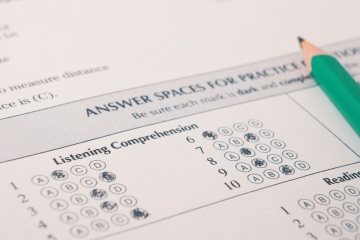
Pass-fail ratings in schools are widespread this pandemic-stricken spring. But when “passing” denotes anything that’s not “failing,” what signifies excellence? What distinguishes a first-rate research paper or book review or math proof from one that’s barely serviceable? Where’s the recognition for a student whose class participation is well-prepared, attentive, thoughtful and articulate versus the pupil who yawns, smirks, whispers, peeks at his phone and responds to direct questions with surly, one-word answers? Grades surround us and we depend on them in one realm of our lives after another.

Chester E. Finn, Jr. 7.1.2020
NationalFlypaper

Why grades matter

Chester E. Finn, Jr.
7.1.2020
Flypaper

Why Secretary DeVos should reject Michigan’s testing waiver request

Dale Chu
7.1.2020
Flypaper

David Brooks, please don’t give up on education

Michael J. Petrilli
6.26.2020
Flypaper

A snapshot of substitute teaching in the U.S.

Amber M. Northern, Ph.D.
7.1.2020
Flypaper

Anti-bullying laws work for female students

Tran Le
7.1.2020
Flypaper

The Education Gadfly Show: How assessment data can drive instruction this fall

7.1.2020
Podcast
view

Why Secretary DeVos should reject Michigan’s testing waiver request

Dale Chu 7.1.2020
Flypaper
view

David Brooks, please don’t give up on education

Michael J. Petrilli 6.26.2020
Flypaper
view

A snapshot of substitute teaching in the U.S.

Amber M. Northern, Ph.D. 7.1.2020
Flypaper
view

Anti-bullying laws work for female students

Tran Le 7.1.2020
Flypaper
view

The Education Gadfly Show: How assessment data can drive instruction this fall

Michael J. Petrilli, David Griffith, Ph.D., Tran Le, Amber M. Northern, Ph.D. 7.1.2020
Podcast
view

Why grades matter

Chester E. Finn, Jr.
7.1.2020
Flypaper

A tenth-grader I happen to know pretty well takes her school grades seriously and derives satisfaction and pride from good ones (which, I might add, she routinely seems to get). This spring was hard for her—no fun for a teenager to be home with mom and dad all day, no contact with friends except on screens, and none of the face-to-face classroom interaction with teachers and fellow students that she adores. Her (private) school did a commendable job of online instruction, and she worked diligently on the assignments. But then no grades, just written comments by teachers. What a bummer, never mind that the sentences emailed to her were highly supportive.

I suppose you might term such kids grade grubbers, but that’s not how I see it. I see them as young people eager for external validation of their work and glad to be judged on it. I also see them as savvy observers of the world around them, a world that uses grades and ratings of all sorts as clues and cues as to whether something is great, so-so, or not very good at all.

That’s what’s wrong with pass-fail in schools, a practice so widespread this pandemic-stricken spring that UMass professor Jack Schneider, in a long, thoughtful New York Times column, forecast the permanent end of grading. He’s no great fan of pass-fail, but contends that grades “fail to advance the multiple purposes they ostensibly serve,” that they distort student motivation, and that their high-stakes nature makes them a bad vehicle for teachers to communicate student progress.

But grades surround us, and we depend on them in one realm of our lives after another. How eager are you to dine in (or get take-out from) a restaurant that gets one star from your local newspaper food critic, another single star on TripAdvisor, and just one from Yelp, too? Paying for a movie judged “rotten” on the “Tomatometer”? How about staying in a two-star hotel when there’s one nearby that’s no pricier and gets four stars? How about sending your child to a school that earned a D last year in the state’s ESSA rating system? Getting your kidney stone dislodged by a one-star doctor or having your chest cracked in a hospital with just one or two stars on Medicare.gov? Buying a car with a one- or two-star safety rating from NHTSA?

I could go on. Sure, some of those ratings get overused and some of the “crowd-sourced” kind are solicited or faked. Yet for sound reasons we routinely and gratefully employ ratings and grades of all kinds to help us distinguish quality from mediocrity, safe from unsafe, enjoyable from dismal, reliable from risky. Many of us also look at the GPA, AP scores, GRE or LSAT scores, even the transcripts, of job seekers. Sure, one could, I suppose, invest hours in due diligence, actually reading the candidate’s senior thesis, phoning professors and previous employers, engaging in lengthy interviews. That would probably yield a fuller picture of the person. But what if you had to do it for twenty applicants? What if you’re an admissions officer facing stacks of hundreds, maybe thousands, of folders? Holistic admissions, conscientiously and fairly applied, is praiseworthy, but it’s also costly in time, effort, and money and is, of course, vulnerable to favoritism, manipulation, corruption, and all the other woes that accompany subjective judgments of people. Worse, it disadvantages those least likely to have connections, resources, navigators, and advisors to help burnish everything that enters those folders.

As for holistic comment or pass-fail ratings instead of school grades, inasmuch as “passing” denotes anything that’s not “failing,” what then signifies excellence? What distinguishes a first-rate research paper or book review or math proof from one that’s barely serviceable? Where’s the recognition for a student whose class participation is well-prepared, attentive, thoughtful, and articulate versus the pupil who yawns, smirks, whispers, peeks at his phone, and responds to direct questions with surly, one-word answers?

Worse still, if end-of-year assessments also bite the dust, ESSA assessments continue to get waived, and SAT and ACT scores are either impossible to generate or ignored by colleges, what then happens when kids’ schoolwork doesn’t get graded either? That’s akin to denying a navigator both longitude and latitude, denying a chef both timer and thermometer, denying a doctor both cardiograph and stethoscope.

Of course grading is fraught. A 2018 Fordham study by Seth Gershenson found nontrivial discrepancies between teacher-conferred grades and student scores on end-of-course exams in the same subject, as well as evidence that grade inflation has recently been more severe in affluent than high-poverty schools. In The Opportunity Myth, also in 2018, TNTP analysts found that many American students get top marks for schoolwork that’s sorely inadequate in relation to their postsecondary and career aspirations, which is to say the inflation of their report cards serves to deflate their life prospects.

A newer Fordham study, again by Gershenson, indicates that kids learn more from teachers who are tough graders! Yet it’s all hugely discrepant from place to place because, as Schneider points out, the U.S. lacks the kind of standardized grading scales and systems found in many other countries. Thus the same student work may reap different grades, depending on district, school, and teacher. Absent uniform grading standards, pushy parents and kids feel free to give teachers grief when grades are low, even if honest, and principals may ding teachers whose tough grading leads to parent complaints and other woes, up to and including students exiting the school or dropping out.

Take away grades, however, and everything gets even more complicated. Schneider favors portfolios, and they’re dandy when scored “blind” by carefully trained and calibrated individuals, much as AP and IB exams are evaluated. But that’s expensive, cumbersome, and time consuming.

Teacher comments can be a rich source of valuable feedback and insight for pupil and parent alike, but they, too, are time consuming, and they, too, are fraught with the agony—or unwarranted pride—that might result from an ill-chosen adjective, the risk of favoritism and the potential for corruption.

The core problem is that we’re getting more squeamish about evaluating and comparing individuals and putting labels on them and their work. That’s increasingly the situation in just about every realm but athletics. We’re ambivalent about meritocracy and more comfortable denying differences and distinctions. There are important realms where such denial is praiseworthy but many others where it serves nobody well in the long run, neither individuals who lack clear signals as to “how they’re doing” and “how they compare,” nor the society they will inhabit once their schooling is complete.

As for the aforementioned tenth grader, now a rising junior, with luck—and virus containment—come fall she’ll again be able to work for the grades she covets.

As for me, five-star take-out is feeling like a mighty fine dinner option.

view

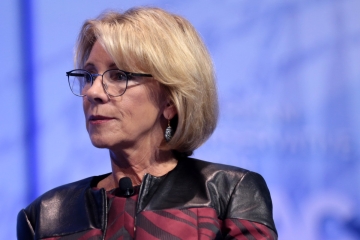
Why Secretary DeVos should reject Michigan’s testing waiver request

Dale Chu
7.1.2020
Flypaper

Today, Michigan became the first state to formally seek federal permission to suspend standardized testing in 2021 because of learning disruptions caused by the coronavirus. Following the abrupt nationwide cancellation of state testing last spring, the announcement was as sudden—the exams are still some ten months away—as it was unsurprising for those who have been pessimistic about reform's prospects and wary of the strange bedfellows that have steadily coalesced against annual testing.

Indeed, the pandemic has provided the anti-testing brigades an Overton window through which they are ebulliently jumping. Like lemmings to the sea, Georgia led the charge two weeks ago when it signaled its intention to pursue a waiver, followed by South Carolina two days later. Two other states—Tennessee and Oklahoma—have also had rumblings about seeking another waiver from the feds. At some point, it might be clear that testing next year is impossible—like if most schools in Michigan are shuttered next spring. But it’s way too early to make that call.

What’s more, the blowback against assessment predates Covid-19. States like Georgia had already been in the throes of a full-bore campaign against testing; the crisis was simply fuel for the fire. And they’re not alone. Since 2014, forty-four states have introduced over four hundred bills in response to the broad critiques of over-testing. Along with a recent report from FutureEd, this war on testing has been extensively covered by my colleague, Checker Finn. As the dominos continue to fall, with more states likely to line up for waivers, there are three key reasons why Secretary DeVos should reject Michigan’s request.

First, turning it down would be consistent with DeVos’s record of pushing states to think boldly and outside the box. Remember her “tough love” speech to state chiefs two years ago in response to their woefully unambitious ESSA plans: “I see too many plans that only meet the bare minimum required by the law.” Her team was similarly tough-minded in pledging to hang a scarlet letter on states for falling down on the job vis-à-vis ESSA’s financial transparency requirement.

If DeVos and company were upset at states for only meeting the “bare minimum” back then, they should be livid now that some are saying they don’t even want to do that much. For this reason alone, she would be justified in turning down any such waiver request, or at least saying to states, “It’s too soon, come back this winter if the conditions are warranted.”

Second, DeVos has an opportunity to stand tall on accountability at a time when the winds are blowing strongly against it. Earlier this week, Georgia announced an online survey to get the public’s feedback on their proposed waiver. Parents strongly support the return of testing, but DeVos could still face pressure from other groups to cede the ground once again. She’s certainly no stranger to being a Lone Ranger with controversial issues, but testing advocates would do well not to expect her to carry the water on annual assessments.

Opposing another round of waivers carries the risk of being tagged as tone deaf and insensitive at a time when our schools remain stuck in the middle of a pandemic. Popular opinion is understandably stacked in favor of providing leniency and flexibility to schools, but two years of no data would be a disaster for efforts to monitor learning loss. If we want to understand the Covid-related drag on student performance, we need testing—even without accountability strings attached.

Third, states have already inked multi-year contracts with assessment vendors, and many are still working with them to unscramble the cancellation of 2020 testing. Such negotiations are largely out of the public eye, but surely painful for both sides. The majority of costs associated with state testing programs are fixed and get incurred well before the tests are administered. This situation should encourage out-of-the-box solutions (e.g., boosting item banks and getting ahead of the typically rushed assessment cycle) that can be mutually beneficial to states and assessment providers. But kicking the can down the road again would further complicate the situation.

What this comes down to is a craven abdication of leadership on the part of states at a time when having a cost-effective—states are facing brutal budget shortfalls—and transparent reporting of assessment data is arguably more important than it’s ever been. All of this early talk about waivers is symptomatic of the larger and systemic lack of imagination that DeVos has lamented since the day she took office. Sure, if future disruption makes testing untenable, we should certainly address it then. But it’s premature to cross that bridge now, especially amid the more urgent and pressing priority of returning students to school safely.

When DeVos delivered her tough love speech on ESSA, one former state chief responded to the criticism by saying, “I appreciate the push. She’s challenging us to rethink our flexibilities.” On the question of these hastily conceived testing waivers, now would be another good time to push.

view

David Brooks, please don’t give up on education

Michael J. Petrilli
6.26.2020
Flypaper

David Brooks has long been a stalwart supporter of education reform, both the choice-and-charters flavor and the testing-and-accountability variety. So it was a real downer to read his recent column declaring that, when it comes to Black America, “Better education is not leading to equality.”

What he should have said is that “more education is not leading to equality,” because Brooks slipped into the tempting trap of confusing educational attainment with academic achievement.

Here’s the heart of his column:

We Americans believe in education. We tend to assume that if you help a young person get a good education and the right skills, then she’ll be able to make her way in American society. Opportunity will be bountiful. Social harmony will reign.

This formula has not worked for many African Americans.

Over generations, great gains have been made in improving Black students’ education. In 1968, just 54 percent of young Black adults had a high school diploma. Today, 92 percent do. In 1968, about 9 percent of young African American adults had completed college. Today, roughly 23 percent have.

And yet these gains have not led to the kind of progress that those of us who preach the gospel of the American dream would have predicted and that all young people are entitled to.

The median income for a White head of household with a college degree is $106,600. The median income for a comparable Black college graduate is only $82,300. As my colleagues on the editorial page noted in 2017, Black college graduates earned about 21 percent less per hour than White college graduates. Over all, Black families earn $57.30 for every $100 White families earn. These pay gaps have been widening since 1979, not shrinking.

I don’t dispute his facts, nor his depressing assertions that the wealth gaps between college-educated White and Black adults are big and getting bigger. On top of that, a recent Fordham Institute study by John Winters at Iowa State found that the “college earnings premium” for African Americans is significantly smaller than for Whites nationwide and in every state with a substantial Black population.

So, yes, Brooks is right that “Better schooling is essential to creating a fair and equal America. But it is not nearly enough.”

But “better schooling” should not be defined by degrees earned. It’s achievement, not just attainment, that matters—what one learns, not just the diplomas on one’s wall.

That’s the essential takeaway from twenty-five years of research showing that:

  1. The Black-White college wage gap diminishes after controlling for differences in academic skills.
  2. Black adults with moderate levels of academic achievement are more likely to go to and through college than similarly achieving Whites.
  3. Higher cognitive performance is associated with higher earnings for all groups, but especially for African Americans (and Hispanics).

Let’s unpack all this.

Almost a quarter-century ago, Derek Neal and William Johnson published a landmark—if controversial—paper looking at the Black-White college earnings gap. Controlling for scores on a basic skills test given at the end of high schools, the scholars found, “greatly reduces the measured White-Black wage gap for young adults,” which suggests “that the Black-White wage gap primarily reflects a Black-White skill gap that exists before young men and women enter the labor market.”  

The paper was controversial because it implied that college-educated African Americans were not, in fact, facing much discrimination in the labor market. But as Kevin Lang and Michael Manove argued ten years later, that was an incorrect interpretation. What Neal’s and Johnson’s findings really pointed to was a strategy on the part of Black people to overcome employment discrimination. Because employers were less likely to hire Black applicants with minimal education, more of them sought and earned higher education credentials, including four-year degrees, than one would expect given their academic skills coming out of high school. As a result, the typical college-educated African American had lower academic skills than the typical college-educated White worker—which explains much of the earnings gap. But it doesn’t disprove employment discrimination.

I stumbled across this finding a few years ago when I noticed that the percentage of Black students graduating from college was higher than the percentage prepared for college, according to National Assessment data for twelfth graders. In other words, attainment for African Americans has been outstripping achievement, at least at the “college ready” level.

Which brings us back to the big question for K–12 education: If schools improve, boosting the academic achievement of Black students, does that increase their earnings as adults? If we could make more progress narrowing the achievement gap before students leave high school, especially among those going to college, could we narrow the wage gap as well?

A 2016 paper from University of Virginia scholars Dajun Lin, Randall Lutter, and Christopher J. Ruhm indicates that the answer is yes. Like the classic Neal and Johnson paper, it finds that wages are related to academic skills, as measured at the end of high school—and not just for early career workers, but over the course of a lifetime. Even more importantly, it also finds that African Americans (and Hispanics) see a greater return to cognitive skills than Whites do.

And a 2015 study by David Deming, Sarah Cohodes, Jennifer Jennings, and Christopher Jencks finds that accountability policies in Texas boosted the percentage of “at-risk” students from high-poverty, low-performing schools who passed the state’s high-stakes exam, and that more of these students went on to graduate from college and earn higher wages as adults.

None of these studies imply that education alone will end discrimination or bring about racial equality in America. Differences in academic skills explain only part of the differences in earnings. Nor do they mean that attaining college degrees is not important. The best results generally come from a combination of higher achievement and higher attainment.

Taken as a whole, however, the research literature demonstrates that looking at attainment alone—and at college earnings gaps unadjusted for academic achievement gaps—can lead to mistaken conclusions.

So to David Brooks I say: More education might not lead to greater equity, but better education almost certainly will.

view

A snapshot of substitute teaching in the U.S.

Amber M. Northern, Ph.D.
7.1.2020
Flypaper

Illness. Family emergencies. In-service training requirements. On average, classroom teachers in the U.S. are absent for these and other reasons nearly eleven days out of a given school year. That’s between 5 and 6 percent of the school year in which coverage is needed—usually in the form of substitute teachers. The ways in which school districts handle these absences matter greatly, given observed productivity losses, lower student achievement, and discipline problems associated with substitute teaching. A new study from a trio of scholars at Brown and Syracuse Universities asks a plethora of mostly descriptive yet informative questions about this understudied area of K–12 education.

They use data from an unnamed large urban district with a diverse population of students. The district has a total of 122 K–12 schools serving roughly 53,000 students. Their data cover all teacher absences from schools in this district from 2011 through 2018, including the reason for the absence, the experience levels for both teacher and substitute, and demographic data. They also have survey data—with high response rates—from teachers asking them their views on substitute teaching in their schools and from substitutes asking them, among other things, which schools they prefer most and least to sub in and why. In total, analysts observe over 5,200 unique teachers who accrued 19,000 absences of various lengths and roughly 1,900 unique substitute teachers over the seven-year study period.

All told, teachers in this district are absent an average of 11.8 days per year, or 6.6 percent of a 180-day school year. (Incidentally, the district’s collective bargaining agreement allows teachers ten days of paid sick leave, up to seven of which can be used for personal leave rather than strictly for illness.) Data show that sick leave comprises the largest portion of absences, averaging about five days per school year. Subs cover most but not all teacher absences. Specifically, an average of 0.9 days per teacher is not covered by a sub each year. When subs do not cover a class, teacher survey data show that students are most often either split up into other classrooms with permanent teachers or a teacher with a prep period covers the class.

Next the researchers examine how various teacher attributes might impact the probability of coverage. They find that White and Asian teachers are more likely to have their absences covered than are Black and Hispanic teachers and that those teaching math, bilingual education, foreign language, or students with special needs are significantly less likely to find coverage. High school teachers are also less likely to be covered than are elementary school teachers. This makes sense given the specialized knowledge required. Then they look at whether coverage is impacted by the characteristic of the absence or job posting. They find that, relative to substitute jobs advertised with one hundred or more hours before the start time, absences beginning within a half day of the time that they are posted are 22.8 percentage points less likely to be covered by a sub. In other words, short-notice gigs are far less likely to be covered by subs. Jobs beginning on Mondays have the highest coverage rates, while those that begin on Friday are 5.6 percentage points less likely to be filled by a sub.

The study also finds that teacher absences are higher in schools with more Black and Hispanic students, with higher poverty levels, and with more staff turnover. While the differences are still fairly small, those schools tend to have more non-sub-covered annual absences per teacher than do the most advantaged schools. For instance, survey data show that nearly half of teachers in schools with the highest share of Black and Hispanic students report that their schools are not able to find a sub when they are absent, versus 9 percent of teachers in schools with the lowest share of those students.

Finally, analysts look into whether differences across schools lessen when they account for observable differences (like school and teacher characteristics)—and they do somewhat—but they basically conclude that substitute teachers are choosing jobs based on factors that are not easily observed. Survey data provide additional clues: Subs consistently prefer one subset of schools while avoiding another. They tend to avoid schools that have significantly lower average achievement, more minority students, higher suspension rates, and more middle school students. Qualitative comments in the survey consistently praise supportive teachers and staff at their preferred schools and cite student misbehavior at those they shun.

The ongoing issue of covering teacher absences could become even bigger next year as teachers who are older or medically vulnerable weigh the risks of returning in the wake of the coronavirus pandemic. Schools should build on sensible practices to cover classes when teachers are absent—including having on staff a few permanent subs who serve as utility players; preparing in advance high-quality evergreen lessons for last minute absences; and building a strong culture of teamwork whereby same-grade-subject teachers are incentivized and rewarded to cover (occasionally) a peer’s class. Such steps will go a long way in planning for a return to school that’s already got its fair share of uncertainty.

SOURCE: Jing Liu, Susanna Loeb, and Ying Shi, “More Than Shortages: The Unequal Distribution of Substitute Teaching,” retrieved from Annenberg Institute at Brown University (April 2020).

view

Anti-bullying laws work for female students

Tran Le
7.1.2020
Flypaper

In the past twenty years, every state and the District of Columbia has passed state-level anti-bullying laws (ABLs), requiring school districts to develop policies that define bullying, encourage students to report victimization, and punish offenders. With the number of teenage suicides increasing dramatically during this period, the latest statistic from 2017 puts the rate at 11.8 suicides per 100,000 individuals aged fifteen to nineteen years old. A new working paper from the National Bureau of Economic Research explores the effects of ABLs on bullying victimization and suicidal behaviors among high school students, particularly those of historically marginalized groups.

The researchers used two different data sets: the Youth Risk Behavior Surveys (YRBS) from 2009–2017 and the National Vital Statistics System (NVSS) from 1993-2016. The YRBS is a biennial, nationally representative survey of high school students’ health and health behaviors, conducted by the Centers for Disease Control and Prevention (CDC). For this study, the survey questions included in the data collection pertained to bullying victimization, suicidal behaviors (i.e., suicidal ideation, planning, and attempts), and depression. To determine the state-by-year suicide rates among fourteen- through eighteen-year-olds, the researchers used multiple cause-of-death mortality data from the NVSS, which is based on death certificates. A differences-in-differences regression framework allowed the researchers to control for state-level factors and nationwide trends when examining ABL adoption—in different states at different times to varying degrees of comprehensiveness (strong versus weak)—on youth mental health and suicides.

The authors find that ABLs are associated with lowered rates of bullying victimization, depression, and suicidal behaviors among female high school students. The effect seems to be largest for historically marginalized groups, namely students of color and those identifying as lesbian, gay, bisexual, or questioning (LGBQ, the abbreviation used by the study's authors). For female LGBQ students, ABLs are associated with a 21 percent drop in being bullied at school and an 18 percent reduction in planning how to commit suicide. Moreover, ABLs are associated with a 13–16 percent decrease in completed suicides among females, and this number jumps to 26 percent for all teenagers of color.

Despite these impressive results, ABLs were found to have no impact on male teenagers. While there were reductions in all the examined variables (i.e., bullying victimization, depression, suicidal behaviors, and completed suicides), these decreases were statistically insignificant. The authors offer two possible explanations based on extant research: (a) because females are more likely than males to suffer psychological trauma from bullying, the decreased bullying due to ABLs generates more mental health benefits for them; and (b) ABLs are intended to create safer environments for students to express their emotions and seek social support (behaviors that deter suicides), but females more frequently than males engage in these activities.

Even so, the researchers conclude that state anti-bullying laws are effective deterrents of bullying and suicidal behaviors among teenagers, especially those who belong to marginalized groups. One indicator of success is that these laws are most helpful for those who need it the most, i.e., female students of color and LGBQ students—both groups of which are disproportionately targeted by bullies. Furthermore, the drops in adverse outcomes become larger as the statutes increase in comprehensiveness. State policymakers should act on this knowledge and maximize impact by adopting the strongest ABLs through incorporating these school district requirements: (1) provide written records of bullying and how each incident was resolved; (2) implement strict investigatory procedures for bullying incidents; (3) implement graduated sanctions for bullying; (4) offer training to teachers, staff, and parents; and (5) clearly define behaviors that constitute bullying. Of course, district and school implementation of ABLs is a different conversation, but we can’t ignore the power of policy here—especially since we’re talking about potentially saving teenage lives.

SOURCE: Rees, Daniel I., Joseph J. Sabia, and Gokhan Kumpas. “Anti-Bullying Laws and Suicidal Behaviors among Teenagers.” Working Paper No. 26777. National Bureau of Economic Research, 2020.

view

The Education Gadfly Show: How assessment data can drive instruction this fall

7.1.2020
Podcast

On this week’s podcast, Mike Petrilli, Tran Le, Amber Northern, and David Griffith discuss Fordham’s new case study on data-driven instruction in Washington, D.C. On the Research Minute, Amber Northern examines little interruptions’ big effect on classroom learning.

Amber's Research Minute

Matthew A. Kraft & Manuel Monti-Nussbaum, “The Big Problem with Little Interruptions to Classroom Learning,” retrieved from Annenberg Institute at Brown University (May 2020).

The Education Gadfly Show is available on Google Podcasts, Libsyn, Spotify, iHeartRadio, Apple Podcasts, TuneIn, The Podcast App, PodBean, Podbay, Chartable, Castbox, and myTuner Radio.

Fordham Logo

© 2026 The Thomas B. Fordham Institute
Privacy Policy
Usage Agreement

National

P.O. Box 110
Burke, VA 22009

202.223.5452

[email protected]

Ohio

P.O. Box 82291
Columbus, OH 43202

614.223.1580

[email protected]

Sponsorship

130 West Second Street, Suite 410
Dayton, Ohio 45402

937.227.3368

[email protected]