Getting good teachers to stay
As school districts across the country struggle to recruit and retain qualified teachers, policymakers have increasingly turned to financial incentives as potential solutions.
Public school districts are microcosms of American civic life—operated by and for members of the community, with their agendas susceptible to the cultural and political winds that blow through those communities. Even in states where school choice is common, the school district and its elected board still remain part of the infrastructure of cities, towns, and counties.
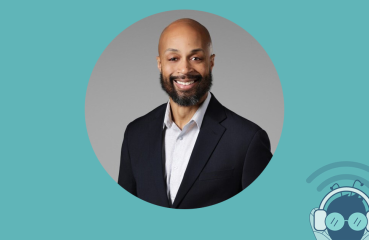
Tyrone Holmes, chief impact officer at Curriculum Associates, joins M
In December, the board of the Cleveland Metropolitan School District (CMSD) unanimously approved a building consolidation plan.
CHEERS Cheers (again!) to the Lone Star State, via Chad Aldeman (again!):
Career and technical education deserves its growing support but cannot compensate for a diploma that no longer signals readiness. States seeking stronger workforce and college pathways should start by restoring the credibility of the credential that every graduate receives.
The question of whether, when, and how public funding may flow to religious schools has been contested for more than 150 years, animated by the tension between the First Amendment’s Establishment Clause, which bars the state from sponsoring religion, and its Free Exercise Clause, which restricts the burdens that can be placed on religion.
Good evidence shows that we’re stuck in a “learning recession.” We also need to consider the likelihood of a connected recession in something indispensable to student learning, namely effective teaching.
Low-income children face many disadvantages that impede academic success. But how much do those disadvantages matter, and how early do their effects become visible?
Curriculum Associates CEO Kelly Sia recently defended her company’s flagship i-Ready platform to Fordham readers. The program, used by millions of students, has come under fire from teachers, parents, and students as part of an ed-tech backlash sweeping the nation.
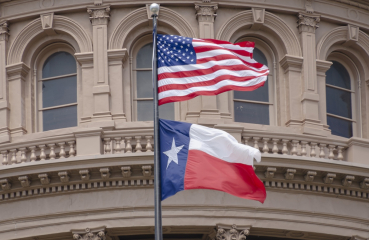
Texas’s new social studies standards, required literature list, and curriculum have all drawn familiar charges of culture-war excess, with their inclusion of Bible stories, canonical books, and “patriotic” content. But taken together, these initiatives suggest something more consequential than conservative provocation. Read more.
Dale Chu’s recent critique of through-year assessment revisits a familiar concern: that state assessments cannot serve both accountability and instruction without compromising one purpose or the other. It is a concern worth taking seriously.
In a recent Flypaper post, Dale Chu argues that the promise of a single assessment system doing multiple things well is “too good to be true.” He says that through-year assessments (TYA)—tests administered periodically throughout the school year that culminate in a summative score—are tryi
New York City’s Small Schools of Choice (SSC) program was one of a panoply of education reforms enacted in the early 2000s under then-mayor Michael Bloomberg and schools chief Joel Klein.
Throughout the first quarter of the 21st century, schools built up capacity to accommodate growing student populations, adding classroom space, teacher positions, and the many resources that go into educating a child. The Covid-19 pandemic accelerated the build-up through the injection of giant sums of federal money to supplement state and local budgets.
In the latest National Assessment of Educational Progress Long Term Trends analysis, 23 percent of the 13-year-olds surveyed report that they are enrolled in Algebra I. For those seventh and eighth graders, that’s great news.
Mike Petrilli takes the mic to consider whether America’s schools need a renewed sense of urgency around
The newest Long-Term-Trend NAEP results bring some welcome news: Lower-performing nine-year-olds made substantial gains in reading and math. But it also brought unwelcome news: students at the top barely moved, while high-performing thirteen-year-olds remain well below their pre-pandemic marks. For the country’s highest achievers, progress remains elusive.
In nearly every part of the country, the school year is over. The final bell has rung; report cards have been issued; summer vacation has begun. For teachers and schools, the clock has run out.
The Trump administration is in the midst of a sweeping reorganization of the U.S. Department of Education.
A new white paper from NWEA, and its accompanying op-ed in The Hill, claim that districts are more likely to permanently shutter schools with a high proportion of poor and/or Black stud
A recent study in the Journal of Educational Psychology examines the extent to which disruptive classroom environments contribute to children’s experiences of victimization (i.e., bullying) in elementary school.
Editor’s note: This was first published as part of a newsletter for Mike’s Substack, SCHOOLED.