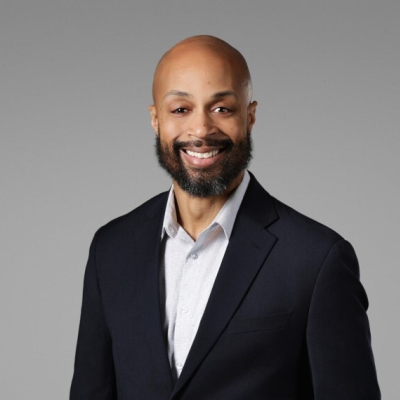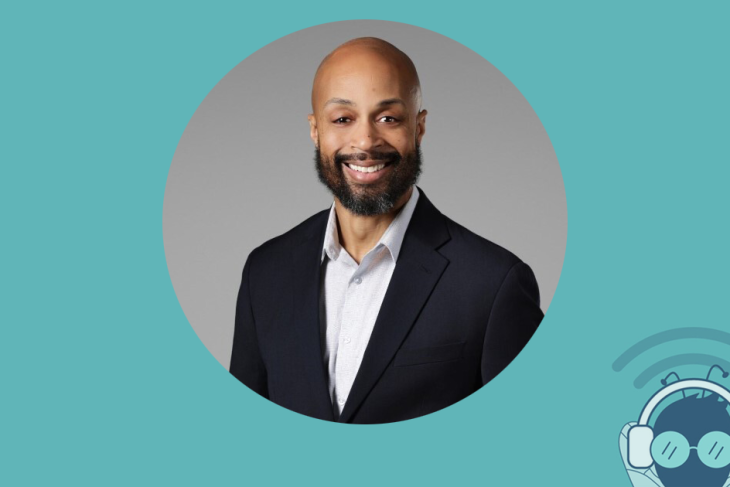
Tyrone Holmes, chief impact officer at Curriculum Associates, joins Mike Petrilli and David Griffith to discuss the growing parent backlash against education technology and why i-Ready has become one of its most visible targets. They unpack the differences among i-Ready’s assessments, teacher-led resources, and personalized online instruction; consider concerns about screen time and overuse; and discuss why teachers and schools need to communicate more clearly with families about how these tools are being used.
Then, on the Research Minute, Brian Fitzpatrick reviews a new study tracking the effects of Massachusetts charter schools over two decades and examines why their benefits rose, receded, and then rebounded.
Recommended content:
- There’s more to the i-Ready story —Kelly Sia for the Thomas B. Fordham Institute
- There’s actually more to the i-Ready story: A rebuttal —Daniel Carr for the Thomas B. Fordham Institute
- Are Chromebook carts the answer? —Michael J. Petrilli, SCHOOLED
- Can schools escape the digital delusion? | Episode 1026 of The Education Gadfly Show
- How “No Excuses” charter schools went off the rails, with Steven Wilson | Episode 961 of The Education Gadfly Show
- Two Decades of Massachusetts Charter School Effects —Geoffrey Kocks, Blueprint Labs (2026)
Feedback Welcome: Have ideas for improving our show? We would love to hear them. Send them to [email protected]
Transcript
This transcript was generated with the assistance of AI and lightly edited for clarity and readability.
Introduction
Mike Petrilli [00:01]
Welcome to The Education Gadfly Show. I’m your host, Mike Petrilli of the Thomas B. Fordham Institute.
This week, Tyrone Holmes, chief impact officer at Curriculum Associates, joins us to discuss the backlash against i-Ready, how its products are intended to be used, and what schools should communicate to families worried about education technology in the classroom.
Then on the Research Minute, Brian Fitzpatrick reviews a new study tracking the effects of Massachusetts charter schools over two decades.
All that and more this week on The Education Gadfly Show.
Clip [00:35]
This is The Education Gadfly Show.
No, definitely my mother used to call me Michael, not when I was in trouble. If I was in trouble, the middle name came into play.
What does Gadfly say?
Mike Petrilli [00:46]
Hello, this is your host, Mike Petrilli of the Thomas B. Fordham Institute, here at The Education Gadfly Show and online at FordhamInstitute.org.
Please welcome our special guest for this week, Tyrone Holmes. Tyrone, welcome to the show.
Tyrone Holmes
Hey, thanks for having me. Thanks, Mike. Thanks, David.
Mike Petrilli
Tyrone is chief impact officer at Curriculum Associates, which is the education company behind i-Ready. That gives you a hint on what we are going to be talking about, if you know a little bit about i-Ready.
He has spent more than two decades working alongside educators and district leaders to improve student outcomes. Ty, really glad to have you here with us.
Also joining us, as always, my co-host, David Griffith.
David Griffith
Hey, Mike. Always a pleasure.
Mike Petrilli
Yeah, well, hey, it’s great to see you guys. I got to be off last week. So, David, you’re going to have to tell us a little bit about your interview because it is related to today’s interview.
We are talking about the big topic of 2026, which is the techlash, the grassroots parent backlash to education technology. i-Ready has played a role in that, maybe unfairly. We’ll get to hear Ty’s take on that.
Let’s do that in Ed Reform Update.
Ed Reform Update: i-Ready and the ed-tech backlash
Mike Petrilli [02:06]
All right. Tyrone, do you like Tyrone? Ty? How do you like to go?
Tyrone Holmes
Either one works. If you say them, I’ll respond.
Mike Petrilli
All right. Same with me. I’m Michael. I’m Mike. Definitely my mother used to call me Michael, not when I was in trouble. If I was in trouble, the middle name came into play as well. But in certain parts of my life, I am either Michael or Mike.
Anyway, Ty, we have seen this really fascinating and fast backlash happening out there to technology. David had on the show last week the author of the book that kind of kicked it all off. David, tell us just a little bit, for folks who didn’t tune in last week or were on vacation like I was supposed to be.
David Griffith
Yeah, we had Jared Cooney Horvath on. He’s written a book called The Digital Delusion, which sort of gives away the plot. He made his case essentially that there is not a ton of evidence that digital tools are actually helping kids and that kids are spending too much time online, basically, on computers.
I pushed on some aspects of that, although I actually agree with large parts of what he said. I think it’s one perspective in the conversation, and I think it’s good that we’re getting a different perspective this week.
Mike Petrilli
So let’s talk about that, Ty.
To my eyes, this is reminiscent of other grassroots backlashes we’ve seen in education before. I lived through the Common Core wars, for example, as I think you did, too.
This one, it seems like, Jared has written a great book that helped get things going, but it does feel like this is a grassroots thing. There are a bunch of parents out there who are hearing from their kids, especially elementary school-age kids, that they’re on screens quite a bit. Maybe these parents are trying to limit screen time at home, and it’s making them nervous.
i-Ready has become a part of this narrative. There was some reporting that, at least in a few locations, there were some kids who seemed to be on the i-Ready platform a whole lot.
Before we get into the i-Ready piece, tell me just generally: How do you think about this backlash? Is it well-founded? Does it make sense? Is it an overreaction? Where are you at on it?
Tyrone Holmes
I think you both touched on a few things in your intro.
Parents are, and I’m a parent, too, concerned about screen time. We’re concerned about the amount of time kids are spending on their phones, on social media, and on things of that nature. I think that is pouring over into folks being concerned about what’s actually happening within schools, which is really important and a great concern.
I think the real question underneath all this is: What’s actually supporting and driving learning in schools?
We know that we live in a digital era. It’s important for kids to have familiarity with technology, with computers, and things of that nature. But folks are asking good questions: How much? And specifically, what is it for?
That’s where we get to have rich, deep, and broad conversations about what i-Ready and a host of other tools are actually about and why they’re in schools in the first place.
What i-Ready is, and is not
Mike Petrilli [05:44]
Yeah. Well, and LAUSD is now out of the chute as one of the first and largest school districts with a very comprehensive screen-time policy, basically banning screens in the earliest grades, kindergarten and first, very little in the rest of elementary, and then a little more in middle school and high school.
They do make an exception for standardized testing, like i-Ready, but not digital curriculum in those early grades.
So let’s talk about i-Ready. First of all, it’s confusing to people. It’s a test. It’s also a personalized learning platform. It’s also a comprehensive curriculum. I think these things get all mixed up and jumbled together.
So explain just the basic design to folks who don’t know.
Tyrone Holmes
Absolutely. I will say, when we look at our products, it’s like saying, “Oh, we love our children so much, we gave them all the same name,” which sort of plays into the difficulty.
But let’s take a step back for a bit.
Our company, Curriculum Associates, was founded in 1969 with a real simple mission, which was to make classrooms a better place for teachers and students.
Now, what does that mean, and how do you do it?
If you understand the classroom, as I’m sure you both do, there is what is typically called, in today’s nomenclature, core curriculum or tier-one instruction in reading and math. Mike, David, for you and for me, that would be the textbook that we brought home from math class. It was the thing we used most of the time, 90-plus percent of the time.
Then schools, for a long, long time, have also purchased supplemental material. And the reason they purchased supplemental material is because all of the kids in their building or district weren’t getting the outcomes that they were hoping for with that tier-one core resource.
So in the 70s, we were known for supporting schools with supplemental material in reading and supplemental material in math.
When we launched i-Ready, what i-Ready was, and is, is a multi-part system and solution for educators. It starts with a kindergarten through twelfth grade adaptive assessment in reading and math.
The purpose of that assessment is this: David, if you were a fifth-grade teacher and Mike was one of your students, Mike might be sitting in your fifth-grade math class and be on a fifth-grade level with numbers and operations, but a fourth-grade level with algebraic thinking, a third-grade level with geometry, and a second- or third-grade level with measurement.
It’s really hard for David to know that, even if he just gives Mike a paper-and-pencil quick question or so. And then once you know that, what do you do with it?
So what the i-Ready assessment does is it lets educators, students, and parents, when they look at the reports, know exactly where students are on a K–12 spectrum. You might be ahead in some domains and behind in others. Then it ties that to actionable instruction.
That’s at the level of the assessment. So that’s the i-Ready assessment.
And that actionable instruction is teacher-led. There are these teacher-facilitated instructional resources or tools, these lesson plans that teachers can use with Mike or groups of students like Mike.
That’s first and foremost.
Then, on top of that, i-Ready is tied to, for supplemental support, personalized online instruction. This would be online instruction that is essentially student-led and computer-driven. That’s based on data and tied to the things that, in a perfect world, if we want to call them academic cavities, need to be filled. These are things you would have learned in a perfect world before you ever got to David’s fifth-grade class, but you didn’t learn them. And you’ve got to learn them to fully participate in the tier-one instruction.
We named that i-Ready Personalized Instruction, or MyPath. So again, the name i-Ready.
On top of that, we still had print-bound supplemental books. One, and you can probably guess the name, was called Ready Math. The other was called Ready Reading. Then Ready Writing.
All of these are supplemental resources designed to support educators and students so that they can fully engage in the tier-one instructional class that dominates the proceedings of their day.
Mike Petrilli
All right. That’s very helpful. Thank you.
Tyrone Holmes
Now, on top of that, just know that in the past few years, we’ve branched into core curriculum for reading and core curriculum for math.
The core curriculum for math we named i-Ready Classroom Mathematics. It is a print book that comes home with that title.
Then for reading, instead of naming it i-Ready Reading, we named it Magnetic Literacy. It’s a print book that comes home, or that teachers use, for their tier-one instruction.
So that gives you a sense. I’m probably leaving products out, but that at least gives you a sense.
Mike Petrilli [11:15]
And that’s good. Look, some of my listeners are going to be like, “Come on, Mike, you’re letting him give you this big pitch on their products.”
But the point is this: When people say, “Oh my God, some kids are spending hours a day doing i-Ready,” the question is, well, which i-Ready?
Tyrone Holmes
Right.
Mike Petrilli
Because if it’s the personalized learning that they do online, which is basically, again, sitting in front of the computer working through math problems or working through reading comprehension, yeah, you wouldn’t want a kid doing that for hours a day. In fact, as I understand it, Curriculum Associates strongly discourages anybody from doing that. You’re only supposed to do that for a couple of minutes, right?
Tyrone Holmes
Effectively, our recommendation has been 30 to 49 minutes a week for a subject.
Mike Petrilli
A week. Of the personalized computer stuff?
Tyrone Holmes
Personalized instruction. And these are lessons that, again, in a perfect world, you would have mastered, but you need additional support.
What we have found, just so we’re clear, is that the data is overwhelmingly clear that the vast majority of our districts use it around 30 minutes a week.
Mike Petrilli
A week.
Tyrone Holmes
Right. A week.
Mike Petrilli
So you’re talking about a couple minutes a day. Fifteen minutes twice a week or something.
Tyrone Holmes
And that fits along the lines of, again, in schools, you have tier-one instruction that dominates the day. And a lot of schools have time they name different things, so forgive me for not getting all the names, but it’s WIN time, “what I need” time, or they have an RTI or MTSS protocol to support students who typically need additional support to fully engage with grade-level instruction.
They’re going to use some resources there. What i-Ready does is make sure that if David is running small groups, one, you can group the groups based on like needs because you have the data. These students are struggling with this thing. You have time in a group, if you’re using that in your WIN time, to actually teach kids, teacher to student.
And while the other students are either working through a hands-on activity or some are online on the i-Ready instruction, they’re working on lessons that are tied by data to what they actually need to learn. So when they’re in the tier-one class later that day, or however your schedule works, they’ve got a better chance of actually participating.
If the lesson was adding fractions with unlike denominators, they at least know how to rank and order fractions. Some of the students needed support with this other element. Now they have that, or they’ve had some exposure to it again.
Testing, screens, and instructional usefulness
Mike Petrilli [14:02]
Right, right, right. No, and look, probably over ten years ago, maybe fifteen, I got to go up to the Curriculum Associates headquarters in Billerica, Massachusetts, and dig into this. It was in the Common Core times.
Part of what was interesting about this new approach was that one of the complaints about standardized testing is that kids would take the test, let’s say the state test, and it didn’t provide that much information to teachers. That’s still an issue. We still have this debate about providing instructional advice to teachers.
At the time, MAP was very popular, NWEA. That’s still popular out there. At the time, you’d come back and get some more information, but you wouldn’t necessarily know, “Okay, well, what do I do the next day to try to fill in some of these gaps?”
So this notion of saying, “Hey, we’re going to build something to go with the i-Ready assessment that can fill in these gaps, that kids can do on a personalized basis,” is interesting.
Now, with part of this backlash to screens, this touches on testing, too. Some people, like Dale Chu, one of our fellows, have said maybe part of the problem here is that we have the state standardized test on screens. Therefore, districts feel pressure to prepare kids to take that assessment on a screen, and that pushes them toward the i-Readys and the MAPs.
Maybe we need to totally rethink all of this. If we’re going to start to dismantle, especially at the elementary school level, and try to pull back on technology, we have to start thinking about all of this in a very different way.
Tyrone Holmes
I think, though, what’s interesting about that is that even before the state tests were on computers, if you took the Regents, I grew up in New York, or whatever the state final test was, you’re right that you take that test in the spring, and the data wasn’t really actionable because usually it was returned and now the kids have moved on to the next grade and they’re with a different teacher.
But if you’re going to, at the start of the year, try to get a sense of where students are in relationship to where they need to be, even if you did it in print, what becomes really challenging is if you just give a sort of summative-like test and say, “Okay, here’s what a fifth-grade final is going to look like for you, Mike. Let’s take it at the beginning of the year to see where you are.”
David, you don’t really get a sense, just because Mike got a question wrong, of exactly where the cavity lies.
That’s the challenge that these tech-based interim assessments that districts have been purchasing for years are there to solve.
What i-Ready did really well was it said, instead of just having what we call comparative data, like comparing Mike with the Tyrones in the class and all these other folks, let’s see where Mike is in relationship to the grade-level standard. Mike might be ahead in some places and behind in others. Oh, that’s the cavity that probably is impacting this problem. Let’s tie that to instruction.
So when you have that instructional time that you carve out to support kids with what they need, you can focus more deeply on that.
Mike Petrilli
Right, right, right. And that’s true, especially way above or below grade level, which even the state standardized tests can’t do, partly because of federal policy trying to keep them more narrowly limited.
All right, I want to get David in here, in part because he is more of a screen-time hawk than I am. David, what’s on your mind?
David Griffith [17:47]
Yeah, well, thanks. I like that “hawk” always makes it sound positive, right?
Mike Petrilli
Exactly.
David Griffith
Paranoid? No, I’m not paranoid. Whack job? No.
Listen, I certainly don’t want to be misunderstood in the following sentences. I certainly don’t want anyone to think I’m against adaptive testing. And I certainly don’t want anyone to think that I’m against formative testing or testing that informs instruction. That’s how it’s supposed to work, as I understand it.
I have had the experience of getting some random required test foisted on my kids, getting the results, and then having it have essentially nothing to do with what was happening in the classroom. That’s not what we want. We want a test that’s relevant.
I’m not going to specify the number of times that kids should be formatively assessed in math throughout the year, but it’s at least once or twice. And then that should inform student groupings, instruction, and content.
I do think Dale makes a fantastic point, and I have not yet figured out what I think the solution is. Because to be honest with you, it makes a lot of sense to me to assess online. Computers are very fast. They can take the information from the assessment and generate useful next steps essentially instantaneously. I have to assume that when we’re talking about standardized tests, it’s more secure. It’s the 21st century, and I don’t know if we can go back.
So I am looking for a way to have my cake and eat it too, basically. I like the modern nature of the assessments, and I am trying to figure out how to stop teachers from putting kids, or at least, reading between the lines, how to stop a subset of teachers from putting kids on computers all the time so they’re ready to take tests on computers. Because I think there is something to that. I think that may be going on in some places, and that doesn’t strike me as healthy.
So the question is: How do we stop them from doing that? And how do we deal with this from a national level? You’re a national company. This backlash is national. If we could just get schools to do a better job using only the good stuff, not the bad stuff, and help make sure that teachers are doing the good stuff and not the bad stuff, we wouldn’t have a problem. But we don’t know how to do that.
Instead, the parents just get angry, including angry at national companies like Curriculum Associates.
One more thing really quickly before Tyrone jumps in: Unfortunately, there is evidence that it matters when you assess kids on a computer. So teachers aren’t just imagining this. There’s pretty good evidence that when you take a kid who isn’t computer literate and put them on a computer, they’re going to pay some sort of penalty. And that penalty may be declining as everything becomes more online, but you can’t just say to teachers, “Oh, it doesn’t matter,” because it probably does a little.
Sorry, Tyrone. You go.
Tyrone Holmes [21:20]
No, no, no. I think you’re absolutely right.
One of the things this says for us is that we have about a third of our force that works in service. That means these are people who are literally in schools communicating with educators every day, not only training folks on how things are supposed to work, but also what strong pedagogy looks like. A lot of former teachers work for us and so forth.
So we get feedback, and a lot of it. We take the feedback very, very seriously. As you can imagine, with any national company, you get an ocean of feedback. You do your best to sort through the feedback and figure out what you can take action on.
A few things have come up even in recent years. Educators told us that we needed to build out more resources, both online and in print, to support Spanish speakers. So we did that. We didn’t have it before. It took a long time. We didn’t want to do a low-level translation. We really wanted to make sure that we had authentic Spanish speakers helping create authentic content.
Folks said they wanted the assessments to be shorter. It took a long time, but this fall, we’re releasing what we’re calling i-Ready Inform. It’s a shorter, more focused assessment that is still adaptive. We’ve learned a lot over the past number of years to give educators the data that they need.
At the middle school level, which is a really important level, because students are not only going to high school, but they learn a lot of practical stuff in middle school, in mathematics and reading and science and so forth, we wanted to make sure that our content, even if a student was a year or so below, was still appropriate for their maturity level. We didn’t want students to feel like they were getting lower-level content, because that affects a student.
So we created a whole host of lessons that match the maturity level but also meet students where they are, adapting quicker to get them to grade level.
Mike Petrilli [23:52]
What advice do you have for how to talk to parents about all of this stuff? Parents are saying, “Wait, why is my kid doing this thing online?”
Tyrone Holmes
One, and I’m a parent, too, there’s a lot of nuance in this. The socials and the stuff that’s happening on phones dominate screen time, period, full stop, in kids’ lives. Educational resources, on the whole, are not that.
Then there’s looking at, okay, what is my school using and why? The why is really pivotal. And then how much time are they spending between the teacher-directed and the online? Those are all not only conversations, but we support our educators in having those conversations with districts.
This lesson on a fourth-grade level for comprehension of informational text for your sixth-grade student, they’re not just getting some questions to answer. They’re getting an actual lesson that the teacher themselves may not have the time, with all the kids they have, to reteach one on one. The logistics of that doesn’t always flesh out during the school day. So this is an added support.
I think it’s also important to note that the teacher is at the center of the learning experience. These are all tools, whether they’re print, online, activities, whatever they are. They’re tools within the teacher’s book bag, so to speak, to support the kids.
So it’s great that parents are getting involved and asking good questions. I think it’s just important to remember: What is the problem someone is trying to solve? What are the tools they’re using? If they’re worried about screens and screen time, how much time are students spending on this specific thing? Are they doing other things on the computer? How much time are they spending there?
That level of nuance and detail, I think, can start to help.
Mike Petrilli [26:03]
Well, we are going to have to leave it there.
Ty, Tyrone Holmes at Curriculum Associates, chief impact officer, really appreciate you coming. I know I’ve learned a lot, and it makes a lot more sense to me. We are going to watch how this thing unfurls. I don’t think it’s over yet. We’ll see as the new year begins.
Tyrone Holmes
We shall see. Well, thank you, Michael. Thank you, David. Appreciate you.
Mike Petrilli
All right. Thanks for coming on the show.
Research Minute: Massachusetts charter schools over time
Mike Petrilli [26:26]
Now it’s time for everyone’s favorite, Amber’s Research Minute.
Brian, welcome to the show.
Brian Fitzpatrick
Hi. Thanks for having me.
Mike Petrilli
Okay, Brian Fitzpatrick filling in again for Amber, who is on a well-deserved vacation. It is that time of year, summertime.
Brian, we just had a good interview with Ty Holmes at Curriculum Associates, the company that sells i-Ready. One thing that became clear is that they need to do some rebranding, I think. Whoever’s in charge of their brand, it was brilliant that they branded everything they do as i-Ready, and now that’s causing them some serious headaches.
You’re hearing these stories about people saying, “Oh my God, my kids are doing i-Ready hours a day.” It’s like, well, if you’re talking about the version of i-Ready that’s the test, that would be a problem. Or the version that’s the personalized online computer-based learning module, that’s also a problem. But they also have i-Ready that is the core curriculum that has things like books.
So anyway, maybe they need to bring in some branding experts to rethink that.
It reminds me of when we came up with Common Core. I didn’t come up with it. Whoever came up with it, Common Core was too easy. Of course, it quickly became Commie Core, Obamacore. Branding issues are an issue.
But I don’t know, David, what do you think? Are you convinced by this that, hey, this is still worthwhile? We don’t want to throw out the baby with the bathwater?
David Griffith [28:02]
Of course we don’t want to throw out the baby with the bathwater. We’re gradually laboring our way toward a more nuanced conversation here.
Where I get off the train is when we start talking about kids who are behind, let’s say in math, and need some sort of personal, individualized plan for getting back on track. It’s fine if the computer wants to come up with that plan, but an adult needs to sit with them and make it happen.
The idea that you can leave an at-risk kid who is two grade levels behind with the computer and they’ll learn fractions and then be able to participate in primary instruction, that doesn’t wash for me personally.
That’s not necessarily what he was saying, but I think that’s the risk when you start offloading differentiation onto a computer.
As always, the counterfactual matters. If the kid is in an in-school suspension and they’ll be staring at a wall otherwise, sure, that’s better than staring at a wall. But if you’re replacing an actual human teaching assistant or teacher or tutor with a computer screen, that’s a recipe for disaster.
Hopefully people out there are thinking about that and hearing that and not kidding themselves.
Mike Petrilli [29:24]
Well, look, and we talk about that now with these AI tutors. It’s going to be even better because there’s AI involved, which I’m not sure actually helps that much.
Again, we’ve had it with i-Ready and some of these other programs, and the issue is always motivation. How do you get the kid motivated enough to do the work?
Khan Academy had all these exciting ideas with Khanmigo, their AI thing, and nobody ever did the lessons. Or very few did.
Maybe in the earliest grades, that’s the irony here. In the earliest grades, where school districts are most likely to get rid of screen time entirely, the kids might be young enough that you can motivate them more easily with gamified, targeted, personalized stuff that could help if what they need is practice. Maybe they’ve got to practice some basic math facts.
I don’t know. As kids get older, the motivation issue becomes huge. At that point, your only hope is to have a tutor give them a plan. That’s super helpful if you say this is a particular skill this kid needs to work on. But having them do it on their own doesn’t seem to make sense.
And we didn’t even talk about reading, where there are all kinds of issues about kids practicing “skills” with reading, where we now know, the E.D. Hirsch and Robert Pondiscio argument, that reading is not a skill. Especially after you do the foundational reading thing, the phonics thing, it’s really about building reading comprehension by building vocabulary and content knowledge and knowing about history and civics and science and all the rest.
David Griffith
Yeah. I can only agree.
Mike Petrilli
Whoa, that’s great.
The other thing I noticed is that none of you have mentioned my new haircut, which is fine, especially for those of you listening. But yes, I was very unhappy with my last haircut, so I went kind of radical on this one. I haven’t decided yet if this is a new thing or if I’m just going to let it grow now in the summertime.
David Griffith
It’s almost hard to believe we didn’t bring that up spontaneously.
Mike Petrilli [31:34]
All right, Brian, you’ve been kind enough to carve out time on your calendar to come on the show. We should actually let you talk. Brian, what do you have for us this week on the research front?
Brian Fitzpatrick [31:43]
Today I have for you a paper out of the state of Massachusetts by Jeffrey Kocks, who works at Blueprint Labs at MIT and has access to some phenomenal data on charter schools across the state of Massachusetts.
Though I’m going to be talking about Massachusetts, mostly the charter schools in Massachusetts are in Boston. I don’t have an exact percentage. I’ll probably switch back and forth as I talk about them.
They have some wonderful data using a lottery design, meaning they looked at charter schools where not enough students could get in, so it was up to a lottery to decide which students got in. That is the perfect design to look at the impact of charter schools on student performance.
They really do have two decades of data, starting in 2002 and running through 2022. They can say, overall, over this whole time period, charter schools are benefiting students who attend them, insofar as they can be seen by this design. That benefit seems to be larger in math and science than in reading.
But I think the interesting takeaway from this study is the time variation. They have many years, twenty years, and they broke this timeframe up into sections.
In the first section, 2002 through 2008, you saw charter schools having a small benefit. That benefit increases to kind of a massive benefit in 2009 through 2014. Then that benefit disappears in 2015 through 2019, only to reappear in 2020 through 2022, so post-Covid.
Though it’s worth noting that the benefit is relative to the local public school district, and post-Covid, scores are declining, presumably for everyone, just less quickly or with less of a decline for students in charter schools. So it’s a benefit relative to the counterfactual.
There are a couple of interesting takeaways here. They could validate the disappearance of the benefit in the 2015 to 2019 timeframe using SAT scores and college attendance. Just because of timing, they couldn’t extend that analysis until post-Covid.
They could say it’s not because of changing composition of the charter schools, and it’s not because of changes to the test scores. There were some changes to the test scores, but they could rule that out through some fancy analytics.
A couple of possible explanations they give are, one, the turnover in the initial leadership of these charter schools seems to coincide with this dip in quality. And two, there was a move away from the traditional no-excuses policy they had early on. That would be a focus on strict discipline and a no-excuses atmosphere.
Though I think the caveat with that final explanation, which is interesting, is that insofar as that works as an explanation for the dip in quality starting in 2015, and that has certainly gotten a lot of attention from press looking into wokeness in charter schools and that sort of thing, they didn’t bring back a focus on zero tolerance and discipline starting in 2020 or 2021.
So insofar as you’re seeing this rebound, that doesn’t really work as an explanation. There are a lot of moving pieces here that we can discuss, but I thought that was the most interesting piece of all this.
Mike Petrilli [35:44]
Wow. All right. Well, a lot to unpack here.
First of all, I should say it’s always great, in my mind, to have a study showing again the charter school impact. I still meet smart people who are education policy people who will say, “Oh, yeah, the research shows that the impact of charter schools is mixed. They’re no better or worse than traditional public schools on average.”
And I say, “Oh my God, where have you been? Have you not been following along?” In urban areas especially, it’s quite a significant impact. And of course, in Massachusetts, in Boston, we’ve long known that it probably had the strongest charter school sector, or at least one of them. And we see that here again.
This dip and then this rebound is interesting. I do think the rebound, and it’s important for people to get this, we don’t really know how much rebound it is. 2020 to 2022 is not exactly post-Covid. We’re still in the heart of Covid there.
The point is that in the public schools, there was a complete collapse, and maybe in the charter schools they kind of hung in there. Maybe they did some of the online learning a little bit better. Maybe they got kids, toward 2022, caught up a little bit faster. That’s great, but it’s still hard.
I’m going to want to see how this looks the next time we have test scores to really say, okay, we’re kind of back to normal, and now what has happened?
This issue with the no-excuses ideology coming under attack in the late 2010s into 2020, we had Stephen Wilson on the show probably six months ago to talk about his book about all of this. I find it compelling. I find that believable. David, what do you think?
David Griffith [37:33]
Yeah, something was definitely happening then. I think that’s right.
Brian, can you just help me understand? Is it simply that this was the time of the backlash against police killings and so forth? Or is there data that supports this? Like, are there fewer suspensions, for example, in charter schools during this period? Anything of that nature? Or is it mostly a vibe thing?
Brian Fitzpatrick [37:58]
The data itself comes from a survey they did once in 2012 and once in 2024, where they asked administrators at charter schools across the state a number of questions about what they are doing and, presumably, what they are doing differently, to look at the change over time.
The exact things that changed are self-reported emphasis on strict adherence to school-wide standards and emphasis on discipline and comportment. So, however the survey respondents interpreted that.
It is vibes in the sense that you’re just asking survey questions to administrators, but presumably that reflects actual change in policy because these are administrators of the schools themselves.
Mike Petrilli [38:48]
Yeah. Look, most things have multiple causes, right? And unless I missed something, none of the potential causes seems to track the rise and fall and rise of charters in Boston exactly. So presumably, there is more than one cause. I think that is a plausible explanation for some of it. I also think there are probably other things going on.
This leadership question strikes me as really important and troubling insofar as the implication, if that’s a major driver, is that charters are dependent on heroic founder leadership to exceed the performance of traditional schools by a meaningful amount. I hope that’s not true, but it would not shock me to learn that there is something to it.
David Griffith
I think there are some other things that could be going on, too, but I think it’s sort of speculation, honestly.
Mike Petrilli
Right.
I would contrast it with what we know was happening in Ohio, where all of you know that we do on-the-ground work at Fordham, especially on charter schools. We’re a charter school authorizer. We study charter schools. We advocate for charter schools.
At that period, in the late 2010s, the charter school movement in Ohio was getting better, according to studies that we’ve done with Stéphane Lavertu and others. The schools were improving.
Now, it was also the case that charter school funding was improving. So that is something that helps. It came on the heels of a big reform of how charter schools are held accountable, a big reform of charter school authorizers. A whole bunch of authorizers got out of charter schooling, which was a good thing because some of them weren’t doing a very good job. A bunch of low-performing schools closed.
So it’s not inevitable.
But I will say, in the Midwest, it did not feel like we were having the same conversation about the no-excuses model, about Black Lives Matter, about all of that, that they were having in Boston, in New York, and in California.
I always argued with Robert Pondiscio that this did feel like more of a coastal thing, and that if you went to big chunks of America, this big culture-war stuff just didn’t register.
I remember walking into KIPP Columbus, which we authorize, in the middle of all of this, and they still had up on their wall, “Work hard. Be nice.” Nobody thought anything about it.
So anyway, it’s interesting. It might be a sort of coastal phenomenon that happened at that period of time. I think it’s over. I think peak woke is over. I think maybe we’re back to just a focus on trying to help kids catch up from the pandemic. But I don’t know. We’ll see.
David Griffith [41:34]
Yeah, I remember struggling, honestly, with the whole moment because we never got anything that you could call data. And I have to say, in hindsight, that I think it was a bigger deal than I realized at the time.
I just sort of assumed common sense among people who were generally associated with the rhetoric, and there wasn’t always common sense. I think it had an impact on real policies. It’s tough to gauge, but I think it influenced human behavior. People were watching their shadows in ways that aren’t healthy.
So, yeah, I don’t totally disagree with you, Mike.
I guess the one thing I will say is that I do think the counterfactual matters here. It is also possible, just as an example, Massachusetts has, I think, a hold-harmless provision that means traditional public schools get more and more money as more kids move into charter schools. Stop me if you’ve heard this before, but they get more and more money as more kids move into charter schools.
It would not shock me to learn that traditional public schools had also recovered a bit relative to charter schools in Massachusetts during this period.
Mike Petrilli [42:46]
All right. Well, we could speculate all day. It is one of our favorite activities to do. But really good stuff.
Thank you, Brian, for filling in, and thanks for bringing this important study to us.
Brian Fitzpatrick
Thanks so much for having me.
Mike Petrilli
All right. Well, that is all the time we’ve got for this week. So until next week...
David Griffith
I’m David Griffith.
Mike Petrilli
And I’m Mike Petrilli of the Thomas B. Fordham Institute, signing off.
The Education Gadfly Show is a production of the Thomas B. Fordham Institute, located in Washington, D.C. For more information, visit us online at FordhamInstitute.org.