Commentary
While the Every Student Succeeds Act (ESSA) gave states the opportunity to broaden and deepen their visions of what makes for an excellent education, researchers and states have both struggled to design measures and systems that take meaningful steps in that direction. Most of us would agree that primary grade literacy, knowledge of U.S.

Last week, the first randomized control trial study of “restorative justice” in a major urban district, Pittsburgh Public Schools, was published by the RAND Corporation.

“We ain't asking you to love us You may place yourself high above us Mr. President, have pity on the working man.” —Randy Newman, Mr. President (Have Pity on the Working Man)
Over the past thirty years, I’ve witnessed one education reform effort after another. We’ve had standards-testing-accountability, school choice in innumerable forms, curriculum reform, teacher reform, and much more. All have been worthwhile and should continue. However, while we persist on these paths, I suggest we also look at reforming where our students are educated in the first place.
Just before Christmas (or about ten thousand news cycles ago) the Trump administration took the widely anticipated step of reversing the Obama administration’s much-debated guidance on school discipline, the essential goal of which was to pressure school districts to address the well-documented and longstanding r

Before the holiday break, I wrote a series of posts discussing how we might turn the “End of Education Policy” (as I see it) into a Golden Age of Educational Practice. It’s time to pick up where I left off.

Late December brought not one but two excellent disquisitions on moral education, both the importance of rekindling an emphasis on it in American schools and some thoughtful advice as to how to go about it.
“Restorative practices” are an increasingly popular alternative to suspensions. To examine the effectiveness such practices, researchers at the RAND Corporation studied Pittsburgh’s new restorative justice program. It’s the largest study of its kind, and the first randomized control trial of this disciplinary strategy—and unfortunately, the results are decidedly mixed.

A month ago, a prominent philanthropist described today’s education reform climate to me as “The Empire Strikes Back.” I had to acknowledge that 2018 capped off an extraordinary run for opponents of education reform. If only the American public understood how high the stakes are as we enter 2019.

The ringing in of the new year brings a changing of the guard as twenty new governors take office. This new cohort could bring new opportunities for education reform, but there are indications that they may be less enthused than their predecessors were on the issue.

The Fordham Institute’s analysis of “charter school deserts” helps answer a vital question: Where are neighborhoods in which low-income children lack access to schools of choice?

For the new year to bring a new politics to America—one marked by a pragmatic search for solutions, with good ideas from left, right, and center—it’s going to have to come from the bottom up, far away from the Washington outrage machine. A good place to start would be the contentious challenge of school discipline.

On January 7, 2019, State Superintendent of Public Instruction Tony Evers, a Democrat, will take the oath of office as Wisconsin’s next governor. His narrow defeat of Republican Scott Walker represents the end of an era for education reform in the Badger State, which now faces a governor who is famously hostile to school choice.
During the news lull between Christmas and New Years, the Wall Street Journal published an alarmist piece about the high rate of teachers and other public educators quitting their jobs.

In 2015, Ohio imported a successful program used to help community college students in the City University of New York (CUNY) system persist in school and complete a degree in three years or less.
For the better part of two decades, school improvement has been focused on narrowing “achievement gaps” by raising the reading and math scores of low-performing students. While this charge has undeniable merit, it also carries some real costs.

No, this has naught to do with the next election. It’s about an immediate target here at Fordham: to generate and publish some fresh thinking, mostly from prominent conservatives and other sensible folk, about the future direction of American education.
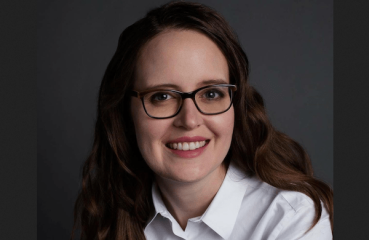
Natalie Wexler is a name you should know, if you don’t already.

In education, 2018 brought some worthy new beginnings. Policymakers, wonks, and teachers alike realized that large-scale education reform is waning, and that a renewed focus on instruction and practice is needed.

Prior survey studies have found that providing adults with accurate information can alter their perceptions or actions.
One of America’s wealthiest jurisdictions, Montgomery County, Maryland, is experiencing rapid demographic changes. The D.C. suburb’s Latino population has nearly doubled since 2000, and now comprises almost 40 percent of Montgomery County Public Schools (MCPS) students.
2018 revealed that the education-reform gas tank was empty. This turned out, however, to be not such a big deal because the “movement” didn’t have a destination in mind either. So the travelers pulled over, jumped out of the car, and yelled at one another as the rest of the world passed by.

The year-end wind-down means new legislative sessions are just around the corner. From early childhood and teacher pay to funding formulas and career readiness, there are many fights to be had, and advocates will invariably end up duking it out over their share from states’ coffers.

It’s easy for those of us who opine on education to think about—and talk about—school choice as a policy, a concept, and an issue worth pushing in Washington and state legislatures. But school choice is really about parents, children, and the very personal stories that drive people to look beyond their traditional neighborhood public schools.

In a recent commentary on this blog, I expressed concern regarding the growth of specialized charter schools: that is, schools designed solely or primarily to educate students with disabilities.

If we are going to take advantage of the End of Education Policy, and usher in a Golden Age of Educational Practice, we need our field to start taking rigorous evidence much more seriously.

Recent weeks have seen multiple efforts to declare and prove that the United States has entered a post-policy era, complete with multiple references to Francis Fukuyama’s famous 1992 book, The End of History and the Last Man.