Mobile Navigation

  • National
    • Policy
      • High Expectations
      • Quality Choices
      • Personalized Pathways
    • Research
    • Commentary
      • Gadfly Newsletter
      • Flypaper Blog
    • Events
    • Scholars Program
  • Ohio
    • Policy
      • Priorities
      • Media & Testimony
    • Research
    • Commentary
      • Ohio Education Gadfly Biweekly
      • Ohio Gadfly Daily
  • Charter Authorizing
    • Application
    • Sponsored Schools
    • Resources
  • About
    • Mission
    • Board
    • Staff
    • Career
Home
Home
Advancing Educational Excellence

Main Navigation

  • National
  • Ohio
  • Charter Authorizing
  • About

National Menu

  • Topics
    • Accountability & Testing
    • Advanced Education
    • Career & Technical Education
    • Charter Schools
    • Curriculum & Instruction
    • ESSA
    • Evidence-Based Learning
    • Facilities
    • Governance
    • Personalized Learning
    • Private School Choice
    • School Finance
    • Standards
    • Teachers & School Leaders
    • Think Again
  • Research
  • Commentary
    • Gadfly Newsletter
    • Flypaper Blog
    • Gadfly Podcast
  • Events
  • Scholars Program

Curriculum & Instruction

Displaying 841-870 of 1594 results
Commentary
7.29.2021
Evidence-Based Learning, Curriculum & Instruction, Teachers & School Leaders

How do suspensions affect classroom learning?

Jeremy Smith

A recent study in the journal Education Finance and Policy uses quarterly achievement and discipline data on nearly 16,000 seventh through eleventh grade students in an inner-ring suburban California school district to estimate the effect of suspensions on the English language arts and math achievement of non-suspended classmates.


Commentary
7.23.2021
Curriculum & Instruction, Teachers & School Leaders

What I learned about high school by running a one-week summer camp

Mike Goldstein

In 2019, my friend Jal Mehta and his colleague Sarah Fine, thinking about whether high schools could adopt some of the best qualities of summer camp, wrote:

Commentary
7.22.2021
Curriculum & Instruction, Governance, Teachers & School Leaders

Thinking requires knowledge

Daniel Buck

Editor’s note: This was first published by National Review.

Commentary
7.22.2021
Curriculum & Instruction, Governance, Teachers & School Leaders

Give a universal curriculum a chance: The NYC initiative holds promise

Robert Pondiscio

When Mayor de Blasio and Schools Chancellor Meisha Porter recently announced the city would spend more than $200 million dollars to develop a citywide reading and math curriculum, the smart and obvious take was

Commentary
7.22.2021
Curriculum & Instruction, Governance, Teachers & School Leaders

Factors that help teaching candidates find and keep jobs

William Rost

A recent CALDER working paper examined links between teacher preparation programs and the chance that their candidates will enter or remain in the public school system for their first two years post-graduation. Its findings can help school systems improve teacher retention—a problem that many districts face, especially those that mostly educate disadvantaged students.

Commentary
7.15.2021
Curriculum & Instruction, Governance, Teachers & School Leaders

Schools face a double whammy this fall: illiteracy and illiberalism

Dale Chu

We’re not even midway through the summer and the start of the new academic year is in some cases just weeks away.

Commentary
7.15.2021
Curriculum & Instruction, Governance, Advanced Education, Teachers & School Leaders

Preparing students of all races to achieve greatness

Ian Rowe

When looking for models of ambitious inspiration, Americans often hearken back to President John F. Kennedy’s “moonshot” address at Rice University on September 12, 1962:

Commentary
7.9.2021
Curriculum & Instruction, Standards, Teachers & School Leaders

Strong standards are vital for making history and civics central in K–12 education

Peter Gibbon

Gone are the days when we could all agree with Ben Franklin’s sunny admonition: “Indeed the general tendency of reading good history must be, to fix in the minds of youth deep impressions of the beauty and usefulness of virtue of all kinds.” Instead, we must cope with political polarization, schools preoccupied with the achievement gap, students who learn from social media, and adults who are t

Commentary
7.8.2021
Charter Schools, Curriculum & Instruction, Governance, Teachers & School Leaders

No, school choice is not the answer to critical race theory

Robert Pondiscio

Why fight over critical race theory when we can choose? You teach oppression studies; I’ll teach American exceptionalism. It’s a simple and obvious solution. But it’s also a naïve and unsatisfying one. School choice may “solve” the CRT problem for an individual family, but it can’t address the clear interest that every American holds in the education of the next generation.

Commentary
7.8.2021
Curriculum & Instruction, Governance, Teachers & School Leaders

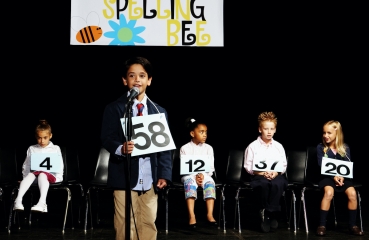
We have spelling bees. Why aren’t there reading bees?

Adam Tyner, Ph.D.

Today, the Scripps National Spelling Bee finals

Commentary
7.8.2021
Evidence-Based Learning, Curriculum & Instruction, Teachers & School Leaders

Texting parents helps improve student literacy. But how much is too much?

Jeremy Smith

Text-message nudges have been a viable tool in early-childhood literacy in recent years, with parents or guardians receiving occasional missives to encourage specific literacy activities with their children.

Commentary
7.8.2021
Accountability & Testing, Evidence-Based Learning, Curriculum & Instruction, Teachers & School Leaders

Are Virginia’s elementary schools worsening achievement gaps?

William Rost

A new working paper from researchers out of the University of Virginia uses data from the state’s kindergarten literacy assessment, the Phonological Awareness Literacy Screening (PALS), to examine how the subsequent achievement trajectories of kindergarteners who enter school with similar literacy levels differ by race and/or SES. The findings are worrying.

Commentary
7.6.2021
Curriculum & Instruction, Governance, Teachers & School Leaders

What parents and teachers think about critical race theory

Angela Sailor , Adam Kissel

A new Heritage Foundation survey of more than 2,000 parents and teachers shows significant divides about teaching critical race theory. But there largely is consensus that civics content should focus on the duties of citizenship, not CRT.

Commentary
7.2.2021
Curriculum & Instruction, Standards, Teachers & School Leaders

5 things I’ve learned from teaching U.S. history to high schoolers

José A. Gregory

I’ve taught U.S. history to high schoolers for almost twenty years, during which time I’ve worked in multiple states with students of varying personal and cultural backgrounds. Below are the five things that I think I’ve learned. 1) Our students need more exposure to U.S. history.

Commentary
7.1.2021
Curriculum & Instruction, Governance, Standards, Teachers & School Leaders

We need better civics education, but it won’t happen anytime soon

Dale Chu

Fordham’s new report found that twenty states have “inadequate” civics and U.S. history standards that need a complete overhaul. An additional fifteen states were deemed to have “mediocre” standards that require substantial revisions. This fits the lackluster showing of U.S. students on the NAEP exams in these subjects, and suggests that some schools barely teach this content at all. Unfortunately, the obstacles in the way of improving this sad state run up and down the line.

Commentary
7.1.2021
Evidence-Based Learning, Curriculum & Instruction, Governance, Standards, Teachers & School Leaders

How to strengthen U.S. history and civics standards

Louise Dubé

For our constitutional democracy to survive, much rests on our ability to resolve “…differences even as we respect them,” which is The State of State Standards for Civics and History in 2021 report’s definition of the social purpose of civic education.

Commentary
7.1.2021
Evidence-Based Learning, Curriculum & Instruction, Teachers & School Leaders

Dan Willingham’s "Why Don’t Students Like School" stands the test of time. That was the point.

Robert Pondiscio

My 2009 copy of Why Don’t Students Like School by Dan Willingham is among the most dog-eared and annotated books I own. Along with E.D. Hirsch’s The Knowledge Deficit (2006) and Doug Lemov’s Teach Like a Champion (2010), I’m hard-pressed to think of another book in the last twenty years that had a greater impact on my teaching, thinking, or writing about education.

Commentary
7.1.2021
Evidence-Based Learning, Curriculum & Instruction, Governance, Teachers & School Leaders

How gender gaps in math and literacy change as students age

Amber M. Northern, Ph.D.

While women have largely erased, and in some areas even reversed, the historic gender gap in educational attainment, some career outcomes can still skew along gender lines.

Getty Images/Evgeny Ostroushko
Podcast
7.1.2021
Curriculum & Instruction, Standards

The Education Gadfly Show #776: Can curriculum reform succeed where the rest of standards-based reform failed?


Getty Images/Evgeny Ostroushko
Commentary
6.24.2021
Curriculum & Instruction, Governance, Standards, Teachers & School Leaders

Proof that it’s possible to approach civics and U.S. history in a balanced way

David Griffith, Ph.D., Chester E. Finn, Jr.

Is America a racist country? Or the greatest nation on earth? Or both or neither or some of each?

Commentary
6.24.2021
Curriculum & Instruction, Governance, Standards, Teachers & School Leaders

Teaching U.S. history and civics in America’s pluralistic society

John Wood, Jr.

The Thomas B. Fordham Institute’s review of state standards for U.S. history and civics comes at a critical moment in American civic life.

Commentary
6.24.2021
Evidence-Based Learning, Curriculum & Instruction, Teachers & School Leaders

Five pandemic-era education practices that deserve to be dumped in the dustbin

Michael J. Petrilli

A crisis like a pandemic can spark unpredictable changes in trends and behavior, like widespread mask wearing in the United States. But it also can accelerate changes that were already underway but otherwise would have taken root much more slowly.

Commentary
6.21.2021
Charter Schools, Curriculum & Instruction, Teachers & School Leaders

Preparation that helps first year teacher gets results: Three lessons learned

Kevin Hall

I have such vivid memories of my first day of my first year of teaching. Kids filling into their desks—so many different personalities, moving pieces, things to keep track of. That first class seemed to both fly by and stretch on for eternity. At the end, I was wiped. I had no idea how I’d do this four more times that day and then 180 more times this year.

Commentary
6.17.2021
Curriculum & Instruction

The essential counternarrative to the 1619 project

Robert Pondiscio

Red, White, and Black is a collection of essays published under the aegis of 1776 Unites, the “radically pragmatic and unapologetically patriotic” initiative launched last year by the Woodson Center, a forty-year old Washington, D.C.–based nonprofit.

Emily Freitag guest blog image
Commentary
6.7.2021
Curriculum & Instruction

The recovery plans we need and how to develop them

Emily Freitag

A few months ago I shared some reflections from Race to the Top and implications for this moment. As I am now supporting a number of state and district planning processes, the macro lessons hold true but I am struck by the degree of difficulty of the present task:

Emily Freitag guest blog image
Commentary
6.4.2021
Evidence-Based Learning, Curriculum & Instruction, Governance, Teachers & School Leaders

President Biden’s $220,000,000,000 “American Family Plan” should also pivot home

Miriam Kurtzig Freedman

Sitting on a Boston city bus, I watched a mother with a young child. For the twenty-five-minute ride, they didn’t speak a word. No “Look at that little girl on the bicycle” or “We’re having pizza for dinner!” When you’re with a young child for that long, do you talk to her?

Event
6.3.2021
Curriculum & Instruction

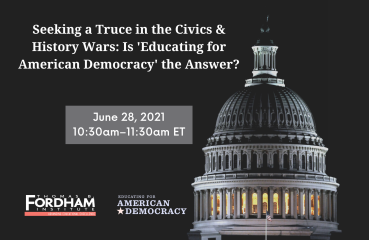
Seeking a Truce in the Civics & History Wars: Is 'Educating for American Democracy' the Answer?

Like the cicadas now infesting the mid-Atlantic, debates over how to present American history and civics to our children come around with striking regularity. In the early 1990s, the focus was on proposed national standards for U.S. history, which the Senate eventually condemned with a vote of 99–1. A few years ago, the dust-up was over the Advanced Placement U.S. History course.

Commentary
6.3.2021
Evidence-Based Learning, Curriculum & Instruction, Governance, Teachers & School Leaders

Tennessee’s excellent plan to address unfinished learning

Dale Chu

Nearly three months have passed since the third round of ESSER funding was signed into law as part of the American Rescue Plan (ARP). These dollars can be used for almost anything under the education sun, and most of them will flow directly to districts, but the limited set aside for states merits attention if only for the staggering scale of Uncle Sam’s total outlay.

Commentary
6.3.2021
Accountability & Testing, Evidence-Based Learning, Curriculum & Instruction, Governance, Teachers & School Leaders

Zombie ideas in education

Bryan Goodwin

Editor’s note: This was first published in Educational Leadership.

Commentary
5.27.2021
Evidence-Based Learning, Curriculum & Instruction, Governance, Teachers & School Leaders

Fast break: Instilling emotional safety and engaged learning in high schools

Barry E. Stern, Ph.D.

Editor’s note: This essay is an entry in Fordham’s 2021 Wonkathon, which asked contributors to address a fundamental and challenging question: “How can schools best address students’ mental health needs coming out of the Covid-19 pandemic without shortchanging academic instruction?”

Pagination

  • First page « First
  • Previous page ‹ Previous
  • Page 25
  • Page 26
  • Page 27
  • Page 28
  • Current page 29
  • Page 30
  • Page 31
  • Page 32
  • Page 33
  • Next page Next ›
  • Last page Last »

Type

  • Book (3)
  • Commentary (1464)
  • Event (11)
  • Podcast (68)
  • Report (34)

Topics

  • Accountability & Testing (504)
  • Advanced Education (267)
  • Career & Technical Education (84)
  • Charter Schools (1117)
  • (-) Curriculum & Instruction (1594)
  • ESSA (129)
  • Evidence-Based Learning (837)
  • Facilities (25)
  • Governance (1416)
  • Personalized Learning (51)
  • Private School Choice (140)
  • School Finance (169)
  • Standards (190)
  • Teachers & School Leaders (1456)

Date

  • 2026 (121)
  • 2025 (158)
  • 2024 (142)
  • 2023 (148)
  • 2022 (197)
  • 2021 (203)
  • 2020 (170)
  • 2019 (94)
  • 2018 (13)
  • 2017 (5)
  • 2016 (46)
  • 2015 (76)
  • 2014 (50)
  • 2013 (38)
  • 2012 (15)
  • 2011 (83)
  • 2010 (6)
  • 2009 (8)
  • 2008 (6)
  • 2007 (2)
  • 2005 (2)
  • 2004 (3)
  • 2003 (4)
  • 2002 (1)
  • 2000 (2)
  • 1998 (1)
Fordham Logo

© 2026 The Thomas B. Fordham Institute
Privacy Policy
Usage Agreement

National

P.O. Box 110
Burke, VA 22009

202.223.5452

[email protected]

Ohio

P.O. Box 82291
Columbus, OH 43202

614.223.1580

[email protected]

Sponsorship

130 West Second Street, Suite 410
Dayton, Ohio 45402

937.227.3368

[email protected]