Mobile Navigation

  • National
    • Policy
      • High Expectations
      • Quality Choices
      • Personalized Pathways
    • Research
    • Commentary
      • Gadfly Newsletter
      • Flypaper Blog
    • Events
    • Scholars Program
  • Ohio
    • Policy
      • Priorities
      • Media & Testimony
    • Research
    • Commentary
      • Ohio Education Gadfly Biweekly
      • Ohio Gadfly Daily
  • Charter Authorizing
    • Application
    • Sponsored Schools
    • Resources
  • About
    • Mission
    • Board
    • Staff
    • Career
Home
Home
Advancing Educational Excellence

Main Navigation

  • National
  • Ohio
  • Charter Authorizing
  • About

National Menu

  • Topics
    • Accountability & Testing
    • Advanced Education
    • Career & Technical Education
    • Charter Schools
    • Curriculum & Instruction
    • ESSA
    • Evidence-Based Learning
    • Facilities
    • Governance
    • Personalized Learning
    • Private School Choice
    • School Finance
    • Standards
    • Teachers & School Leaders
    • Think Again
  • Research
  • Commentary
    • Gadfly Newsletter
    • Flypaper Blog
    • Gadfly Podcast
  • Events
  • Scholars Program

The Education Gadfly Weekly

Sign Up to Receive Fordham Updates

We'll send you quality research, commentary, analysis, and news on the education issues you care about.
Thank you for signing up!
Please check your email to confirm the subscription.

The Education Gadfly Weekly: Lax school discipline won’t cut it as kids return to school

Volume 21, Number 34
8.26.2021
8.26.2021

The Education Gadfly Weekly: Lax school discipline won’t cut it as kids return to school

Volume 21, Number 34
view
High Expectations

Lax school discipline won’t cut it as kids return to school

As traumatized students return to classrooms, educators must be ready to handle worsened behavior issues, as some kids externalize the suffering they’ve been through and re-learn how to “do school.” Unfortunately, the discipline policies in place in many schools may exacerbate the challenge, potentially setting us up for disaster.

Michael J. Petrilli 8.26.2021
NationalFlypaper

Lax school discipline won’t cut it as kids return to school

Michael J. Petrilli
8.26.2021
Flypaper

More dumb things done in the name of educational “equity”

Dale Chu
8.26.2021
Flypaper

A third disrupted year can only strain Americans’ ties to traditional public schools

Robert Pondiscio
8.26.2021
Flypaper

Examining the benefits of career and technical education at scale

Olivia Piontek
8.26.2021
Flypaper

What supports do high schoolers need to achieve their college enrollment goals?

Jeff Murray
8.20.2021
Ohio Gadfly Daily

The Education Gadfly Show #784: Remote learning worked well for some students. What schools can learn from that.

8.26.2021
Podcast

Cheers and Jeers: August 26, 2021

The Education Gadfly
8.26.2021
Flypaper

What we're reading this week: August 26, 2021

The Education Gadfly
8.26.2021
Flypaper
view

More dumb things done in the name of educational “equity”

Dale Chu 8.26.2021
Flypaper
view

A third disrupted year can only strain Americans’ ties to traditional public schools

Robert Pondiscio 8.26.2021
Flypaper
view

Examining the benefits of career and technical education at scale

Olivia Piontek 8.26.2021
Flypaper
view
College prep program SR image

What supports do high schoolers need to achieve their college enrollment goals?

Jeff Murray 8.20.2021
Ohio Gadfly Daily
view

The Education Gadfly Show #784: Remote learning worked well for some students. What schools can learn from that.

Michael J. Petrilli, David Griffith, Ph.D., Amber M. Northern, Ph.D., Alyson Klein 8.26.2021
Podcast
view

Cheers and Jeers: August 26, 2021

The Education Gadfly 8.26.2021
Flypaper
view

What we're reading this week: August 26, 2021

The Education Gadfly 8.26.2021
Flypaper
view

Lax school discipline won’t cut it as kids return to school

Michael J. Petrilli
8.26.2021
Flypaper

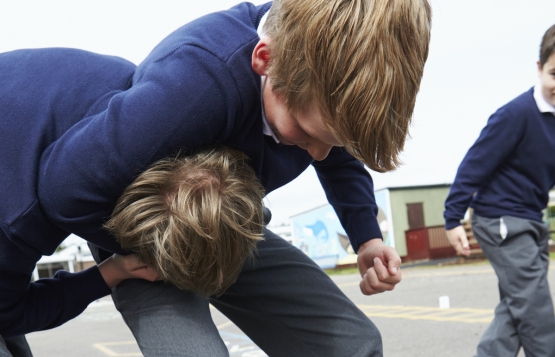
Parents, educators, and experts agree: Millions of American children are facing major mental health challenges related to the pandemic and associated school closures. Thankfully, we’ve already seen administrators begin to ramp up services to support students when they return to school full-time this fall, with the help of billions of dollars in new federal funding. But as traumatized students come back to class, we also need educators ready to handle increased behavioral issues, as some kids “externalize” the suffering they’ve been through and re-learn how to “do school” again. Unfortunately, the discipline policies in place in many schools nationwide may actually exacerbate the challenge, potentially setting us up for disaster.

That’s largely due to the multi-year campaign to reduce suspensions and expulsions, as well as the number of school security guards and police in the corridors. In the past year, according to Education Week, at least thirty-three school districts, serving more than 800,000 students, have eliminated their school police officers, and both Los Angeles and Chicago have reduced their budgets for school security and the number of officers in their schools.

Unlike the movement to “defund the police,” which is generally seen as a fringe position, the movement to “defund the school police” while curbing suspensions and expulsions of disruptive students is getting support from high places. The Democratic attorneys general from twenty-two states plus the District of Columbia signed a letter this spring calling on the Biden administration to reinstate Obama-era limits on discipline in the classroom, a process that administration officials have since launched.

The impulse is understandable. There continue to be big disparities by race and class in the use of exclusionary discipline, as well as in arrests of students by school police officers. Black students, in particular, are two to three times as likely to be suspended, expelled, and arrested as their White peers. Reducing these disparities, it is hoped, will interrupt the so-called “school to prison pipeline.”

Whatever you think of this analysis—and there are good reasons to doubt the conventional wisdom—the answer can’t be simply to stop disciplining kids who misbehave or act out. Indeed, just as less policing can lead to more crime, less discipline can lead to more disorder in classrooms and school corridors.

That’s doubly true, given what so many students have been through over the past year, including suffering from higher incidence of neglect or abuse, dealing with the economic struggles associated with parents’ unemployment, grieving the deaths of friends or loved ones, and the social isolation and loss of routines from not attending school in person. On top of which come the heightened anxieties associated with America’s belated reckoning with racial justice, the murder of George Floyd, and the awful spike in violent crime in most cities. Tragically, all these stressors have hit Black, Hispanic, and poor children harder, on average, than their White and middle-class peers, given the unequal impact of the pandemic and other crises of the past year.

Now imagine what may happen when we combine all that with a cutback in security personnel and new policies on school discipline that make it harder for teachers and principals to address misbehavior. At the very least, we should expect a rise in classroom disruptions, creating yet another barrier to addressing the learning loss experienced by so many children over the past year, plus student pushback to Covid-19 protocols like masking or social distancing. Much worse would be a spike in school violence, akin to what we’re seeing now on too many streets.

Sadly, the victims of disorder and violence are much more likely to be students who are themselves poor, Black, or Brown, and who live in the high-poverty neighborhoods that have been most harshly impacted by this year’s events. It’s going to be hard enough to get their families to send them back to school, given the spike in cases driven by the Delta variant. Imagine how many parents will make their kids stay home if they sense that their schools are out of control.

So what can educators do to support students as the school year begins? By all means, schools and their community partners should continue to expand mental health supports for students, especially in the toughest schools with the greatest needs. And principals need to get to work building (or rebuilding) a positive culture of high expectations, trust, and affirmation. But they also need a realistic plan for addressing misbehavior when it inevitably arises. This can be done respectfully, seeking to help young people understand and meet high expectations around behavior; punishment is not the point. Nor does it necessarily mean more out-of-school suspensions or expulsions. In-school suspensions that allow students to follow their classes via video from down the hall are something we should consider now that the technology is widely available. (The Dallas school district, for example, plans to experiment with reforms along these lines.)

But our empathy for what so many kids have been through shouldn’t lead us to embrace lax discipline standards that prevent the safe and orderly return of students this fall. Two years ago, the Fordham Institute surveyed teachers nationwide about discipline policies. The most interesting responses came from a representative sample of Black teachers. In general, they agreed that Black students were unfairly disciplined, but they also wanted more discipline in their schools, not less.

Educators and policymakers, including Biden administration officials, would be wise to listen to those teachers and come into the new school year with eyes wide open and ready to tackle these challenges. In particular, they should rethink their efforts to reduce policing and discipline in the schools. Our kids have been through enough over the past fifteen months. The last thing they need is for us to allow their classrooms, cafeterias, and corridors to become conduits for further pain and suffering.

view

More dumb things done in the name of educational “equity”

Dale Chu
8.26.2021
Flypaper

Parents across the country are up in arms over their school systems’ equity initiatives. To be clear, this is not “equity” as I came to define it when I started teaching nearly a quarter century ago. No, in the late nineties, “equity” was commonly understood as keeping a focus on outcomes and holding all students to high expectations, especially those living in marginalized communities. Indeed, the term so defined was the coin of the realm among education advocates of all stripes. Since then, however, “equity” has been slowly bastardized and adulterated to such ill effect that it’s been rendered almost bankrupt of meaning.

This insolvency was underscored in a new episode of the 8 Black Hands podcast titled “Dumb things done in the name of equity.” The show examined recent examples of actions taken in schools with the purported goal of benefiting students. From purposely segregated classrooms to privilege walks, the four co-hosts—Ray Ankrum, Charles Cole, Sharif El-Mekki, and Chris Stewart—offered their analyses and critiques of what’s been happening amid our raging culture wars and currents of negative partisanship. By my lights, the pandemic has unwittingly provided cover to further erode what little currency “equity” has left. Three examples from this summer come to mind:

Ditching grades in California. The first is an emergency statute that was signed into law in July requiring all districts in the Golden State to allow high school students to erase any letter grade received during the last academic year and instead receive a Pass or No Pass. Shifting a letter grade to pass/fail likely increases a student’s GPA—a critical part of a college application, and more so in California, where most post-secondary institutions no longer require SAT or ACT scores. There are no limits to how many course grades or which courses can be changed in this way. Notably, some parents are not even aware of the new law. And can you guess which families those are likeliest to be?

This well-meaning but misguided policy attempts to “show grace” to high school students, especially those from low-income backgrounds, who spent most of the year online wrestling with a subpar educational experience. This diktat fails, however, to recognize the unintended consequences pointedly observed by Doug Lemov: Doing away with grading usually benefits those least in need. In this case, the students who are able to whitewash their poor marks are skewing an already imperfect process to their own advantage.

Ditching graduation standards in Oregon. Look no further than California’s neighbor to the north to find how prevalent the impulse has become to lower the bar for Black and Hispanic students. Last month, Oregon’s governor quietly signed a bill that allows students to graduate without proving that they can write or do math. A spokesperson explained that the new law provides for “equitable graduation standards, along with expanded learning opportunities and supports.” This lavish trafficking in feel good language shouldn’t fool anyone in light of the danger that Oregon’s new policy poses to students.

AEI’s Rick Hess has (as usual) penned a scathing piece that’s exactly on point. “It’s hard to think of a policy more threatening to minority kids than the insistence that it’s okay for them to graduate without being able to read.” What’s worse, proponents of the law seem to have used their ideological distaste for standardized tests as justification for their “reform,” no matter that Beaver State students have had multiple ways to demonstrate mastery of standards and need not pass any exam to graduate. One would be hard pressed today to find another state plumbing lower depths when it comes to failing to meet its basic obligations to students and families. But tomorrow may show that we haven’t yet reached the bottom.

Trying to ditch academic testing in New York. Not to be outdone, a group of teachers in the Big Apple just launched a bid to ditch academic testing, among other items, via an online petition that has already exceeded its initial goal of five thousand signatories. The group calls for “no academic screening/diagnostic assessments for so-called deficit of learning/learning loss.” Making no effort to obscure their true intent, they add, “We desire a pause in required high stakes state standardized testing until performance-based alternatives are explored.” Their message seems to be, “Never mind the billions in dollars of academic relief Uncle Sam is pouring into our schools. Just take our word for how your kids are doing ‘because equity.’”

This episode is as callous as it is grotesque. The petitioners have threatened to walk if they don’t get their way—this after two years of disrupted learning in Gotham schools. It takes a particularly virulent strain of unscrupulousness to issue ultimatums after all the trials and tribulations that parents and students have recently suffered. As in California and Oregon, “equity” is being deployed here as a smokescreen, but the academic needs of children are nowhere to be found.

—

When it comes to doing what’s best for America’s neediest students, these three incidents make it seem as if some have thrown in the towel. To be fair, Covid-19 has exerted pressure on schools and systems in unprecedented ways, but that’s all the more reason for elected leaders and officials to stand up for students. What’s more, those who attack objective measures of merit while flying the flag of “equity” would do well to consider the long-term ramifications—an admonition that Stewart voiced at the close of the podcast:

How many of our kids are actually leaving your schools capable of doing something in the world that changes all the numbers we care about: homeownership, jobs, income, business development, ability to get government contracts and loans, and qualifying for things that require qualifications?… [I]f [what schools do in the name of equity] doesn’t end up with us with more capital somewhere down the line, it’s nonsense.

Nonsense indeed.

view

A third disrupted year can only strain Americans’ ties to traditional public schools

Robert Pondiscio
8.26.2021
Flypaper

In the early days of the pandemic, I was dismissive of “new normal” talk about Covid’s long-term impact on schooling. There was good reason for skepticism. Americans may hold in low regard public education at large, but we have long demonstrated a deep and abiding fondness for the schools that our own children attend. The idea that the pandemic had transformed us into a nation of homeschoolers, hybrid and distance learners, and micro-schooling enthusiasts struck me at the time as akin to insisting that passengers thrown from sinking ships into lifeboats had taken up rowing.

With the prospect of a third school year disrupted or rendered unreliable due to Covid, I’m a lot less confident about this take than I was sixteen months ago. Mounting evidence suggests that parents are becoming more likely not just to say they support school choice, but to actively choose an alternative to their local public school—at least the school their kids attended when the pandemic hit. 

The New York Post reported this week that enrollment at a top elementary school in Brooklyn’s well-off Park Slope neighborhood has shrunk by a third since the start of the pandemic. Kindergarten enrollment has fallen by more than 50 percent. “School sources said some families have abandoned the city outright while others are opting for local parochial or private schools with consistent full-time schooling,” the Post reported.

The word “consistent” is key, and the calculus is pretty simple: Parents want good schools, but of equal or greater importance are reliable schools. No one in the wonk world likes to think of school as daycare, but working parents, even those with the luxury of working from home, need to know that the plans they’ve made for their children’s education aren’t likely to change at a moment’s notice.

There could be non-Covid factors at play in the case of this Park Slope school, but it reflects a larger theme: Brooklyn is the object of a controversial “community-based diversity plan” engineered by New York’s former schools chancellor Richard Carranza, a plan that not every parent supports. For over a year, parents have had direct and unfiltered access to what their kids are doing all day, prying open for millions the black box of teacher quality, curriculum, and classroom culture, with school Zoomed directly onto kitchen tables. For many, perhaps most, it was reassuring. For others, not so much. The past several months have seen countless examples of agitated parents complaining to school boards about diversity, equity and inclusion initiatives, and protests over programs and curriculum informed by critical race theory. Even as schools prepare to return to full-time, in-person instruction, fights over mask mandates or their absence have further strained bonds to the breaking point.

For all these reasons, it’s becoming clearer that the long-standing relationship between parents and local schools they have long supported has become unstable, particularly among relatively well-off families with other options. But everywhere you look, the trend appears deep and wide. Data from thirty-three states obtained by Chalkbeat and The Associated Press show that public K–12 enrollment this fall has dropped across those states by more than 500,000 students, or 2 percent, in the past year. In Philadelphia, for example, kindergarten enrollment declined by more than a quarter between fall 2019 and fall 2020. Hawaii’s schools, which operated almost entirely remotely last fall, suffered one of the biggest declines in the country—down 14 percent between fall 2019 and fall 2020, according to the New York Times. Overall enrollment at all 178 Colorado school districts has dropped 3.3 percent across all grade levels.

Of particular note is the unaccountable behavior of the teachers unions, most notably the American Federation of Teachers, whose President Randi Weingarten has been on a public relations suicide mission for months, brazenly insisting she has been working to reopen schools, despite lobbying the CDC to manipulate school reopening guidance. She seems blithely unaware that parents’ patience is not inexhaustible, and bizarrely determined to alienate her members’ most stalwart supporters: parents like those in Park Slope who pride themselves on being good progressives and public school parents. Writing in Commentary, Christine Rosen takes note of a rising tide of parent activism, particularly among liberal and progressive parents—“because it was in their Democratic, union-dominated states that schoolchildren were most likely to languish in virtual learning.” It has become a common joke among choice advocates that Weingarten has done more for their cause than anyone since Milton Friedman.

Choice advocates have long lamented the disconnect between parents’ stated preference for school options versus their revealed preference, namely how relatively few families opt out of their zoned schools. I suspect they underestimate the big ask they’re making of parents. The act of sending our children to a local neighborhood school is a cultural habit formed over generations. As I wrote sixteen months ago, it persists because we value it, not for want of alternatives or a more efficient delivery mechanisms for education. But with a third school year opening under a cloud in many places, that “big ask” is starting to feel a lot less burdensome than it used to. The Overton Window has shifted significantly. For a growing number of families, the greater burden may now be staying put.

I’m still of the mind that “new normal” talk is overwrought, but I’m far less confident of that assertion than I was at the outset of the pandemic. The long-standing practice of sending kids to zoned neighborhood schools is still a hard habit to break. What I didn’t expect was how many public school supporters—from governors and teachers unions to local administrators and school boards—would be so determined to break it.

With reporting by Jessica Schurz.

view

Examining the benefits of career and technical education at scale

Olivia Piontek
8.26.2021
Flypaper

When it comes to career and technical education, there’s one state that seems to be getting things just about right: Connecticut. It boasts a long history of strong CTE programming and, thanks to efforts beginning in the early 2000s, all the locally-administered career schools across the state were integrated into a single statewide system known as the Connecticut Technical High School System (CTHSS). Today, the system includes seventeen diploma-granting technical high schools and one technical education center, serving approximately 10,200 full-time high school students—a whopping 7 percent of the state’s high school student population—with comprehensive education and training in thirty-eight occupational areas.

How well do those schools prepare students for postsecondary success? A recent working paper from a trio of researchers from the University of Connecticut and Vanderbilt University seeks to answer this question. The quasi-experimental study is the first of its kind, examining the causal impacts of attending a comprehensive high school CTE program. The strength of this study comes from the fact that it examines every school in the system, thus examining a program that is being offered at scale, whereas previous analyses used only schools that agreed to participate in the study.

CTHSS is a unique, all-encompassing program that begins when students apply for admission as eighth graders. They can apply to up to three schools and rank order their choices. Application scoring is based on standardized eighth grade test scores in math and English, student GPA, attendance in middle school, and extracurricular activities and written statements. School administrators establish a threshold score for admission, and students above that threshold are generally first to be offered seats. Because the schools are always oversubscribed, however, remaining seats from students that decline an offer are offered to applicants with lower application scores. Some students below the threshold are admitted in the first round to increase diversity.

Because of the complexity of the admission process, researchers in this analysis use a “fuzzy” regression discontinuity model that treats application scores as cut scores. Students just above the threshold are 87 percent more likely to receive an acceptance letter, and such students are more likely to attend the school to which they applied, compared to students just below the threshold. Importantly, researchers also create separate models for male and female students to account for the well-documented gender differences in CTE specialization, with men focusing on construction and manufacturing trades and women on human services and tourism. Counterfactual schools were determined by the town or city in which the student resided in eighth grade when applying to CTHSS. This was a strong counterfactual, as most students attend the high school in the district they live in if they did not receive admission to a CTHSS school.

Part of what makes this study so strong is the size and quality of the panel data used to perform the analysis. Researchers used applications from approximately 57,000 eighth graders who applied to CTHSS between 2006 and 2013. These students are then matched to the Connecticut Department of Education’s longitudinal data system, and information on race, gender, free-and-reduced-price-lunch status, English-learner status, and special education status is collected, in addition to short- and medium-term outcomes, like standardized test scores prior to and during high school, attendance, and high school graduation. Then they use National Student Clearinghouse data to determine the number of semesters of college attended, if any, between high school graduation and the first quarter of 2018. They also match graduates to the Connecticut State Department of Labor’s employment data through the state’s P20 WIN initiative.

The first finding to note: Attendance at a CTHSS school had no effect on female student outcomes as compared to non-CTHSS peers. For male students, however, attendance at CTHSS increases high school graduation rates by 10 percentage points (relative to the sample average of 83 percent) and reduces the number of semesters ever enrolled in college by almost one half of a semester. For the full sample, CTHSS students see 44 percent higher total earnings and 32 percent higher quarterly earnings than their counterfactual sample means. CTHSS graduates’ earnings show a marginal decrease around age twenty-three, but are still a whopping 33 percent higher than the earnings of their non-CTHSS peers.

In discussing the potential mechanisms that yield these results, the researchers first point to higher motivation among students while attending CTHSS. Attendance rates at CTHSS schools are 1.7 percentage points higher than the counterfactual school, tenth grade test scores improve by 18 percent of a standard deviation, and math and English language arts scores improve by 13 and 16 percent of an SD, respectively. CTE coursework positively contributes to student outcomes, an effect boosted by the integrated experience of that coursework in the fully career-focused CTHSS schools. They also suggest that CTHSS students, and indeed students who take CTE courses in non-CTHSS schools, gain important general work skills that are in demand, readily marketable, and scalable with increasing experience. Finally, rather than seeing the earnings decline around age twenty-three as a negative, the researchers suggest it is an indication that older CTHSS graduates are pursuing formal college or advanced certification once they are more financially secure.

Overall, the effects of CTHSS attendance and graduation seem undoubtedly positive for the young men participating. But the lack of any positive effects for young women is concerning. If acquiring general and marketable work skills is the key, why isn’t it working for girls? One explanation could be that efforts to boost college enrollment and success among female students have borne fruit in recent years, which could help explain why CTE does not appear to be a positive experience for them. Even those young women graduating from CTHSS may simply be moving on to formal higher education, as if a career high school is the same as any other secondary educational track. Or perhaps it’s not that career and technical education is good for boys, but that general education is bad for them. Whichever the case, we cannot look askance at the CTHSS model, which does appear to be working very well for many young men as a springboard toward higher earnings. Making sure that more girls can gain the same marketable skills would be icing on the cake.

SOURCE: Eric Brunner, Shaun Dougherty, and Stephen L. Ross, “The Effects Of Career And Technical Education: Evidence From The Connecticut Technical High School System,” NBER Working Paper (May 2021).

view
College prep program SR image

What supports do high schoolers need to achieve their college enrollment goals?

Jeff Murray
8.20.2021
Ohio Gadfly Daily

Post-secondary preparation supports are numerous and common in high schools across the country. They run the gamut from Advanced Placement courses and immersive career-technical training to advising and guidance counseling. While voluntary, such supports are often indispensable for students of all backgrounds, especially when the goal is college enrollment. A recent paper provides an interesting case study of one such program in Ohio, aiming to show whether its structure helps build the “cultural capital” of students to help them achieve their college enrollment goals. Even though the data are incomplete, they nonetheless provide insight into students’ engagement in these initiatives.

Researchers from Adrian College, Drexel University, and Bowling Green State University—along with a counseling staffer from Toledo City Schools—looked at the local implementation of a college preparation program funded in part by the federal GEAR UP initiative in an unnamed Ohio high school. The U.S. Department of Education does not codify GEAR UP’s structure, nor do the states receiving funding. The Ohio Department of Higher Education says it is “focused on embedding a college-going culture in targeted schools and communities” through GEAR UP in order “to increase the number of low-income students prepared to enter and succeed in postsecondary education.”

Each grant recipient—generally a consortium of K–12, higher education, and community partners—is responsible for creating a program that it feels is most supportive of its students. The version under study here provides direct student services such as academic coaching, tutoring, and multiple college visits. It also offers parents information about financial aid and how to maximize college fair contacts, as well as providing teacher professional development to support students in their college-going goals. While the state prioritizes lower-income students, most GEAR UP providers don’t limit participation based on income. Students can earn college scholarships via participation, based on their course grades/GPA, discipline and attendance record, community service, and extracurricular activities.

For the program under study, these four activities are measured in a Benchmark Binder that students must compile during high school, along with parental/adult involvement and some bonus activities. Points are assigned on a rubric for each area—with the heaviest weight on academic outcomes and community service—and students who reach a prescribed minimum of points by graduation receive a GEAR UP scholarship (approximately $2,000 to $5,000 per year) to be used at any postsecondary institution of their choice. A high school teacher and four graduate students from a local university partner are available at the students’ convenience to advise, assist, and check progress on Binder completion.

While previous investigations have examined the outcomes of students with GEAR UP access to students without such organized support, the current study looks at a single school where all students had access to GEAR UP but chose varying levels of engagement with it.

The researchers examined a sample of the seniors in the graduating class of 2011, all of whom indicated that they planned to pursue higher education after graduation. Just over 58 percent of the sample were categorized as “active”—that is, they completed their Benchmark Binder and successfully earned the minimum amount of Binder points by graduation to qualify for the scholarship award—and the rest were categorized as “passive,” not having completed or earned the minimum number of Binder points. While demographic comparison was not a primary interest of the researchers, they note that there were 40 percent more females and almost 10 percent more non-white students in the active GEAR UP group compared to the passive group. There were slightly more than 30 percent more low-income students in the passive GEAR UP case group compared to the active case. Focus group interviews were held with students in both groups to determine motivational differences between then.

The results are reported by areas of similarity and areas of difference between the active and passive groups. For example, average GPA increased and average attendance rate decreased for both groups from ninth grade to twelfth grade, while average student behavioral incidents decreased for both groups. Focus group data indicated that students in both groups realized at some point in their four years that they needed to “buckle down” if they were serious about matriculating, and the language each group used was similar. The later students realized they needed to put in more work to reach their goal, the harder it was for them to do so successfully, whether they followed the GEAR UP protocols or not. Participation in extracurricular activities was reported to be easy for members of both groups thanks to numerous sports offered by the school, while community service hours proved more difficult for both groups. Generally, this was due to the off-campus, after-hours nature of the service opportunities available. Positive adult involvement in activities related to building college-going capital was reported as equally important by students in both groups.

However, it was differences between the groups that ultimately told the tale. Although both groups saw an increase in average GPA over four years, students in the passive group went from just 1.88 to 1.97 while the active group went from 2.79 to 3.17. The active group notched a final GPA average of 2.93 (equivalent to a B), while passive students reached just 2.03 (or a C average). Behavioral incidents among the passive students decreased significantly during their high school careers (from 2.11 incidents per year as freshmen to a dramatically lower 0.31 incidents per year as seniors), but the early suspensions and other disciplinary actions took their toll on many students’ momentum and confidence. By contrast, active students started low (0.19 behavioral incidents per year) and ended even lower (0.06 incidents per year). While these data indicate hugely unequal starting points for students, the ultimate goal of such college preparatory efforts is to equalize them over time. It is specifically these students—those who don’t already have an inside track toward college-going capital through family history, financial support, or early academic success—who need the focused support GEAR UP is meant to provide.

In the end, it is a lost opportunity that the researchers chose not to investigate or report how many students in each group ended up successfully enrolling in college. Did the Binder completion effort help students gain capital they would not have otherwise had? Or was it simply one more checkmark for overachievers? Did students who dismissed the effort as early as ninth grade get to college without GEAR UP? If so, who were they and who or what else guided them to their college goal? Could students who didn’t enroll in college have changed their fate with a stronger or earlier effort to complete the Binder activities? With any luck, the research team will examine questions such as these in future studies.

While there is no one sure path into college, college preparatory programs in our high schools should provide the broadest possible opportunity for students to show what they know and can do. And those opportunities must start early, be aligned to what colleges value, be accessible realistically around students’ lives, and clearly demonstrate their importance to students’ future plans.

SOURCE: Christine M. Knaggs, Toni A. May, Kathleen T. Provinzano, John M. Fischer, and Jeffrey Griffith, “Measuring College-Going Cultural Capital of Urban High School Seniors in a Voluntary College Preparatory Program,” The High School Journal (April 2021).

view

The Education Gadfly Show #784: Remote learning worked well for some students. What schools can learn from that.

8.26.2021
Podcast
 

On this week’s podcast, Alyson Klein, assistant editor and education writer at Education Week, joins Mike Petrilli and David Griffith to discuss why some students thrived in virtual schooling and what brick-and-mortar schools might learn from that. On the Research Minute, Amber Northern examines how school reopening decisions affect enrollments.

Amber's Research Minute

Thomas S. Dee et al., “The Revealed Preferences for School Reopening: Evidence from Public-School Disenrollment,” retrieved from Annenberg Institute at Brown University (August 2021).

If you listen on Apple Podcasts, please leave us a rating and review - we'd love to hear what you think! The Education Gadfly Show is available on all major podcast platforms.

view

Cheers and Jeers: August 26, 2021

The Education Gadfly
8.26.2021
Flypaper

Cheers

  • Newark’s Great Oaks Legacy Charter School is piloting a tutoring program to combat learning loss for ninth and tenth graders, whether enrolled in charter or district schools. —NJ.com
  • Dozens of civil rights organizations wrote a letter demanding that the Biden administration commit to K–12 annual testing to measure and address the impact of the pandemic on students. —U.S. News and World Report
  • The Aristocracy of Talent by Adrian Wooldridge explores the transformation that meritocratic ideals have had on the world and on our nation’s founding, and hopes that they can survive this generation’s eroding trust in elites. —Kay Hymowitz
  • “Some governors use federal virus aid to expand school choice.” —AP
  • We must get past the presentism in ed reform. —Andrew Rotherham

Jeers

  • St. Louis school board halts a districtwide initiative because Better Futures, a participating organization, has ties to charter schools. —St. Louis Post-Dispatch
  • “If parents thought that teachers’ unions might emerge somewhat chastened by their performance during the nation’s pandemic year, think again.” —Commentary
  • Closures have failed students from the beginning, with disadvantaged students faring worst. Schools need real plans to help students recover. —New York Times
view

What we're reading this week: August 26, 2021

The Education Gadfly
8.26.2021
Flypaper
  • The pandemic derailed many high schoolers who are no longer on track for graduation. Here’s how schools can fix that. —Robert Balfanz
  • “Weary of turmoil and division, most teens still voice faith in future, Post-Ipsos poll finds.” —Washington Post
  • How one Colorado school is addressing the pandemic’s toll on literacy. —Chalkbeat
  • “Civil rights law is the wrong weapon for fighting bans of masks in schools.” —Megan McArdle
  • New survey evidence indicates that Black and Hispanic parents opted for remote learning more frequently than others because they were more likely to be out of work and available to help their children at home. —The Atlantic
Fordham Logo

© 2026 The Thomas B. Fordham Institute
Privacy Policy
Usage Agreement

National

P.O. Box 110
Burke, VA 22009

202.223.5452

[email protected]

Ohio

P.O. Box 82291
Columbus, OH 43202

614.223.1580

[email protected]

Sponsorship

130 West Second Street, Suite 410
Dayton, Ohio 45402

937.227.3368

[email protected]