Mobile Navigation

  • National
    • Policy
      • High Expectations
      • Quality Choices
      • Personalized Pathways
    • Research
    • Commentary
      • Gadfly Newsletter
      • Flypaper Blog
    • Events
    • Scholars Program
  • Ohio
    • Policy
      • Priorities
      • Media & Testimony
    • Research
    • Commentary
      • Ohio Education Gadfly Biweekly
      • Ohio Gadfly Daily
  • Charter Authorizing
    • Application
    • Sponsored Schools
    • Resources
  • About
    • Mission
    • Board
    • Staff
    • Career
Home
Home
Advancing Educational Excellence

Main Navigation

  • National
  • Ohio
  • Charter Authorizing
  • About

National Menu

  • Topics
    • Accountability & Testing
    • Advanced Education
    • Career & Technical Education
    • Charter Schools
    • Curriculum & Instruction
    • ESSA
    • Evidence-Based Learning
    • Facilities
    • Governance
    • Personalized Learning
    • Private School Choice
    • School Finance
    • Standards
    • Teachers & School Leaders
    • Think Again
  • Research
  • Commentary
    • Gadfly Newsletter
    • Flypaper Blog
    • Gadfly Podcast
  • Events
  • Scholars Program

The Education Gadfly Weekly

Sign Up to Receive Fordham Updates

We'll send you quality research, commentary, analysis, and news on the education issues you care about.
Thank you for signing up!
Please check your email to confirm the subscription.

The Education Gadfly Weekly: Eight recommendations for the Biden administration

Volume 21, Number 3
1.21.2021
1.21.2021

The Education Gadfly Weekly: Eight recommendations for the Biden administration

Volume 21, Number 3
view
High Expectations

Eight recommendations for the Biden administration

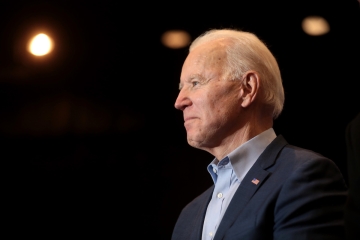
Besides pumping tons more recovery dollars into schools, getting more teachers vaccinated, and trying to get many more kids back into classrooms, what might the Biden-Cardona team do in K–12 education that would actually be worthwhile?

Chester E. Finn, Jr. 1.21.2021
NationalFlypaper

Eight recommendations for the Biden administration

Chester E. Finn, Jr.
1.21.2021
Flypaper

One option for giving children their pandemic year back: Add an extra year to elementary school, forever

Michael J. Petrilli
1.21.2021
Flypaper

What the Capitol riot means for civics education

Dale Chu
1.21.2021
Flypaper

How gifted students improve the outcomes of their classmates, regardless of their ability levels

Brandon L. Wright
1.21.2021
Flypaper

Changing the currency of the job market: Moving up through skills rather than degrees

Jeff Murray
1.19.2021
Ohio Gadfly Daily

The Education Gadfly Show: The education issues facing state legislatures in 2021

1.21.2021
Podcast

What we're reading this week: January 21, 2021

The Education Gadfly
1.21.2021
Flypaper
view

One option for giving children their pandemic year back: Add an extra year to elementary school, forever

Michael J. Petrilli 1.21.2021
Flypaper
view

What the Capitol riot means for civics education

Dale Chu 1.21.2021
Flypaper
view

How gifted students improve the outcomes of their classmates, regardless of their ability levels

Brandon L. Wright 1.21.2021
Flypaper
view
Navigating with the STARs SR image

Changing the currency of the job market: Moving up through skills rather than degrees

Jeff Murray 1.19.2021
Ohio Gadfly Daily
view

The Education Gadfly Show: The education issues facing state legislatures in 2021

Michael J. Petrilli, Patricia Levesque, David Griffith, Ph.D., Amber M. Northern, Ph.D. 1.21.2021
Podcast
view

What we're reading this week: January 21, 2021

The Education Gadfly 1.21.2021
Flypaper
view

Eight recommendations for the Biden administration

Chester E. Finn, Jr.
1.21.2021
Flypaper

Besides pumping tons more recovery dollars into schools, getting more teachers vaccinated, and trying to get many more kids back into classrooms, what might the Biden-Cardona team do in K–12 education that would actually be worthwhile?

The big relief package that they’ve already outlined contains $170 billion for schools and colleges, which is roughly thrice the total annual federal outlay for elementary and secondary education. So significant funds are in play, but they’re nearly all earmarked for immediate recovery of school operations and student learning. Urgent, yes, but not the whole education story. More details will doubtless emerge from the new administration as to what they intend, and Congress will have a say, too. But—writing on a very welcome Inauguration Day—I have a few suggestions of my own. Most could be melded into the relief package. Or they can wait for the new FY ’22 budget request that the White House will shortly have to send to Capitol Hill.

I’ll set aside for now what we already know to be forthcoming efforts to undo parts of the Trump-DeVos era that the new team doesn’t like. In my view, some of that undoing will be harmful, especially at the Office for Civil Rights, and I’ll object. Perhaps partisan warfare is unavoidable, though my colleague Bruno Manno, who is always worth taking seriously, has offered a thoughtful “call for détente in the K–12 school wars” in The Hill. But putting politics and hot buttons aside for now, what else might Washington usefully contribute, not just to the revival, but also to the renewal of primary-secondary education in America over the next four years? Herewith an octet of recommendations:

1. Put the two most obvious conditions on those billions of additional school dollars. Insist that schools getting them actually reopen fast, especially for the hardest-hit kids. And insist that all schools, including charter and private, get their fair share of these funds. They, too, enroll millions of hard-hit students, and they, too, have been hit hard by the pandemic.

2. Beef up research and evaluation. The Institute of Education Sciences has a solid leader in Mark Schneider, whose term still has three years to run, but it has been starved for funds. All manner of important research has been neglected, especially pricey longitudinal studies and significant experiments. And the Covid-19 recovery period is a terrific opportunity to investigate a range of interventions. Schneider recently rekindled the idea of a “DARPA for education“ and has invited path-breaking research initiatives as a way to juice that idea. Assuming the Biden crew wants to “follow the science” in education as well as health, there’s no better place to focus than the one governmental entity dedicated to education science.

3. Revitalize the National Assessment of Educational Progress. Secretary DeVos’s letter to Congress explaining why the 2021 NAEP reading-and-math cycle needs to be delayed because of Covid-19 also contained a number of ideas for a NAEP refresh. Some of its testing practices are archaic. Tight budgets have forced long delays in assessing other subjects—and often make it impossible to do so in all three of NAEP’s grade levels (four, eight, and twelve). There’s an inexcusable dearth of state-level NAEP data for twelfth graders. And the NCLB-ESSA mandate to assess reading and math every two years for grades four and eight could easily be stretched to three or four. For better and worse, achievement just doesn’t change that fast!

4. Make a serious but cautious stab at strengthening civics education. Any number of recommendations are already available, some good, some pretty awful. More will soon be forthcoming from the Education for American Democracy project. This strengthening mission may prove fractious, and is surely a heavy lift, but something much needed by the country. At the federal end, it should continue to be shared with the Humanities Endowment and perhaps the Corporation for National and Community Service, not just the Education Department. Uncle Sam has to tread carefully here, of course, as he mustn’t mess with curriculum, and civics is inherently a touchy topic. (For example, “action” civics versus governmental nuts and bolts?) NAEP has a role to play here, too. So might some version of a “blue ribbon schools” award program? Summer institutes for teachers? A “presidential scholars” type program for kids? Support for a “civics bowl” or “civics bee”? And a lot of bully pulpit! Note, too, Bruno Manno’s suggestion in the aforementioned Hill op-ed that strengthening civics be linked to economic mobility and personal success.

5. Beef up career and technical education. This one needs to be shared with the Labor Department and other agencies, but it’s time for full-throated and sophisticated implementation of the re-enacted Perkins Act, now known as the Strengthening Career and Technical Education for the 21st Century Act. Combine this legislative update with an earnest push to legitimate high-quality career preparation as a worthy high school outcome and diploma pathway, while also connecting it to post-secondary opportunities that incorporate apprenticeships, as well as college and employment.

6. Refresh IDEA. Maybe this is politically unattainable, but only politics has kept special education from the overhaul that it has needed for at least twenty years. It’s too expensive. It’s too litigious. It’s overregulated. It encourages far too many kids to be “identified” after the fact instead of teaching them to read from the get-go. And once identified, far too many special ed students learn far too little. It’s been more about “rights” than about actual education, and that should change.

7. Hold the line on accountability. This is no time to give up on testing and school accountability—and one of Secretary Cardona’s toughest early decisions will be whether to offer another round of ESSA testing waivers. He shouldn’t—and if he does, states shouldn’t take them. (Or if they must wait until autumn to get most of their pupils back into classrooms, states should schedule 2021 testing for first thing in the fall.) That doesn’t mean this year’s scores need to be used for school accountability, but information on where kids are—and aren’t—academically is vital if recovery is to occur. Thereafter, however, it’s essential to recommit to results-based school accountability. That doesn’t mean current state ESSA plans are perfect. It may be time to encourage a rewrite. Which brings me to the final instrument in this octet.

8. How about another summit? It’s been an astonishing thirty-two years since Bush 41 assembled the nation’s governors to focus state and federal education leaders on the urgency of reform, and frankly, a lot of governors seem to have tuned out even as much has changed. Without renewed high-level attention from state and national leaders, we’re apt to slip back into our tired old ways instead of formulating bold plans for recovery, determining what changes from pandemic-era schooling to keep, and more generally, charting the next generation of K–12 reform at every level.

—

To repeat, some of these suggestions could be worked into stimulus funding, others into the Fiscal 2022 budget. The summit and one or two others could be done via executive action. Others need legislation. Détente among all the battling education factions may be a bridge too far, but bipartisanship on a handful of worthy federal initiatives may not be too much to hope. It’s got to start somewhere, however—and the new administration’s first hundred days feels like the right place to begin.

view

One option for giving children their pandemic year back: Add an extra year to elementary school, forever

Michael J. Petrilli
1.21.2021
Flypaper

Editor’s note: This is the second in a series of posts about envelope-pushing strategies schools might embrace to address students’ learning loss in the wake of the pandemic. Find the first one here.

With a fair amount of luck, almost all students will be back in classrooms five days a week by September 2021, as a vaccinated population allows Covid-19 to fade into the rearview mirror. That will mark the beginning of a new and monumental challenge for our nation’s schools: educational recovery. Most will likely go back to something approaching normal, with some supplemental strategies, like high-dosage tutoring and beefed-up mental health supports added to the mix.

But that’s not the only path to recovery and it may not be the right one. It is my fervent hope that at least a handful of schools will experiment with much bolder approaches, especially strategies that blow up our traditional thinking about moving kids through the grade levels in lockstep fashion, as we have done for over a hundred years. In coming weeks I’ll explore some of these options, such as getting away from grade levels entirely and embracing “personalized pacing“ instead.

Today we’ll dig into another radical idea, though one that doubles-down on grade levels. Quite literally: Experimenting with adding a “second 2nd grade“ to elementary schools, or at least some high-poverty ones. In my opinion, this was a good idea long before the pandemic, is an especially good idea in the wake of the pandemic, and is a good enough idea to embrace long after the pandemic is history.

The reason is that even our very best elementary schools fail to prepare all of their students for the rigors of middle school. To my knowledge, not a single high-poverty school in the country gets all of its students to grade-level standards by the end of the fifth grade. Few schools even come close. As I wrote a few years ago, even KIPP-DC, which starts with three-year-olds, spends over $20,000 a year, embraces evidence-based practices, and provides extended learning time, doesn’t reach this lofty mark.

And that was before the pandemic stole a year or more of classroom instruction from many of our disadvantaged children—kids whose schools were more likely to be remain shuttered throughout the crisis, and for whom remote learning has proven particularly challenging.

The failure to prepare students for middle school results in much of the educational dysfunction that follows. Teachers face the impossible task of instructing students who are two or three or four grade levels behind; adolescents experience frustration and failure; and few teenagers reach the finish line having tackled the challenging academic or technical courses that will prepare them for success in higher education or beyond.

How much better off we’d be if we made sure that most students mastered the elementary school curriculum before moving on to the next level, with strong foundations in reading, writing, and mathematics, plus a growing knowledge base of American and world history, geography, science, and the arts. Not to mention the social and emotional skills to succeed in school and in larger society.

This is what excellent elementary schools have forever aimed to achieve. But because of the tragic challenges of poverty, few schools serving disadvantaged children can claim to come close to hitting these goals. The best ones get in the ballpark, thanks to a strong curriculum, excellent and well-supported teachers, an obsession with maximizing instructional time, and the other timeless elements of effective schools. But true readiness for middle school is a very high bar—especially since the adoption of the Common Core and other college-and-career readiness standards—and poor children continue to enter kindergarten with academic skills that already put them years behind their more affluent peers. They need and deserve highly effective schools. But they also need a whole lot more time to get on track for success in sixth grade and beyond.

Great schools have long known this, and have found smart ways to give their charges more time on task. They reduce disruptions to a minimum, they lengthen the school day and school year, and they expect their students to work hard at home, too. Some are lucky enough to start with their students at age three or four. And this works, and gets their scholars much closer to grade level by the time they leave their care.

All of this is worth trying by all schools, everywhere, especially when recovering from the pandemic. Expanding the school year is particularly worthwhile, if vaccinations allow for universal summer school this June, July, and August.

But it still won’t be enough. Not for kids who were already behind, and will have been effectively out of school for fifteen months or more. So why not give them a whole extra year of instruction? Rather than taking six years to move through grades kindergarten through five, why not do it in seven—a boost of 17 percent more instructional time.

Next fall’s kindergarteners, especially those in high-poverty schools, are going to be even less “kindergarten ready” than normal. This year’s kindergarteners, especially those who have yet to set foot in their actual schools, are going to be in no shape to deal with the academic demands of first grade, given that they missed out on all of the in-person kindergarten activities designed to acclimate them to school in the first place. And this year’s first and second graders probably aren’t doing great shakes either.

An extra year of elementary school, for the Covid generation, may not be enough to get them all to middle school readiness by the end of the fifth grade, given the massive learning loss they have experienced. But it will get them a lot closer than doing business as usual. And for the kids who follow them, 17 percent more instructional time just might be enough to send most into middle school ready for grade-level material.

Here’s how it might work.

Introducing grade 2.5

The leaders of Innovative School District decide they like the idea of giving their students more time to master the elementary school curriculum, so they add grade 2.5 to all of their elementary schools, starting with the 2021–22 school year. Today’s second-graders matriculate to grade 2.5 instead of third grade. Today’s third, fourth, and fifth graders keeping move forward as usual.

Over the summer, district officials and early elementary teachers work together on adjusting the scope-and sequence for grades K–2, spreading out the material over four years instead of three. Third grade teachers work together on their plans for grade 2.5, which is the level they will be teaching going forward.

In the short term, the addition of grade 2.5 poses few logistical challenges. The elementary schools in Innovative School District haven’t grown any larger, and its third grade teachers just switch to grade 2.5. But bigger changes are coming. In the 2022–23 school year, today’s second graders will be ready for third grade, to be taught by today’s fourth grade teachers. In 2023–24, they will be ready for fourth grade, to be taught by today’s fifth grade teachers. And in 2024–25, they will be ready for fifth grade, to be taught by today’s sixth grade teachers—teachers who are currently at Innovative Middle School.

That’s also the year that ISD’s elementary schools will have seven grade levels instead of six. That could pose logistical challenges in terms of finding extra space, though it helps that student enrollment in the early grades is down in Innovation, like most school districts, because of the nation’s ongoing baby bust.

As the first cohort of grade 2.5 students matriculate through the system, there will be other challenges to tackle. Innovation Middle School will shrink for a year when it has virtually no sixth graders; Innovation High School will do the same the year it has virtually no ninth graders.

I say “virtually” because it will be important for ISD to identify students who are ready to accelerate through this new, slower pace of instruction. (That may be particularly important for kindergarten-age students whose parents “redshirted” them this year rather than enroll them in remote school.) High-achieving kids may not need grade 2.5, or might be ready to leap over other grade levels in the progression. ISD should make it feasible for them to do so. The difference between today’s practice is that an extra year of elementary school will become the norm, the default. This isn’t about “holding students back” because most kids will get the opportunity of the additional learning time.

And what about the money? The student population of Innovation School District won’t actually grow until this year’s second-graders reach the twelfth grade, a decade from now. At that point, the district will have fourteen age-cohorts of kids instead of thirteen, an increase of 8 percent. Which also implies in increase in costs of 8 percent. That’s a hefty price tag, but the good news is that the district has ten years to prepare—and lots of time to convince state officials to pay for the added expenses.

That raises another important question: Will it be worth it? Some economists may say no, since an additional year of K–12 schooling also means that students will spend one less year in the labor market. Others will worry that more students will drop out of high school, given that they will hit the legal age for leaving school before they cross the graduation stage. That age, of course, could be raised.

So the answer to “Is it worth it?” is surely “It depends.” If the extra year of instruction is maximized, then more students will enter middle school and then high school ready for the challenges therein and graduate ready to succeed in post-secondary education—and the extra investment will have been worth making. Plus, if students are experiencing more success as adolescents because they are better prepared for their courses, they will be less likely to drop out. But if ISD just takes longer to do the same old same old, then you have what Secretary of Education Bill Bennett used to call the thirteen-egg omelet problem: You don’t improve a bad twelve-egg omelet just by adding another egg.

—

Discerning readers will notice that there are more questions than answers here about how adding a grade 2.5 might play out in the long run. That’s another good reason for embracing this idea as an experiment. Allow a few school districts to try it, and promise to cover their costs ten years hence. Design an evaluation with treatment and control districts, and see if students who get the benefit of extra time in the early elementary grades do better as they move through school and beyond. What happens to the high school dropout rate? College attendance and completion? Do students enjoy gains in wages that would make up for the year in lost income? There’s only one way to know for sure, and that’s to give it a try.

view

What the Capitol riot means for civics education

Dale Chu
1.21.2021
Flypaper

Still reeling from the assault on the Capitol and the subsequent impeachment effort against Former President Trump, the education sphere’s attention has understandably returned to the need to resuscitate the teaching of civics and history. If schools did a better job of grounding our students in the principles of a free society and a basic understanding of U.S. history, laws, and institutions, the thinking goes, the body politic might be less susceptible to the inflamed passions animating today’s self-destructive behavior. Calls for addressing America’s civic ignorance are nothing new, but they’ve taken on heightened urgency in the dark shadow of sedition and insurrection.

Sadly, Americans’ thumbless grasp of civics and history is well documented and nearly a cliché. According to the Institute for Citizens and Scholars, as of 2018, fewer than one in three adults could pass the U.S. Citizenship Test (the old, easier version). A survey by the Annenberg Public Policy Center found that only a quarter of Americans can name all three branches of government—a task that my daughter, who is in kindergarten, has already mastered. And the National Assessment of Educational Progress reminds us that students’ knowledge of civics remains dismal and underwhelming. Indeed, former talk show host Jay Leno famously made a mockery of all of this in his “Jaywalking” segments, where ordinary Americans provided cringeworthy responses to questions from the nation’s naturalization exam.

The importance of an informed and engaged citizenry is unassailable. But what if it’s just the tip of the iceberg for getting schools back on track? That’s the thrust of a thought-provoking piece Andy Rotherham recently wrote in which he challenged the prescription of civics education as a remedy for the problems that were on display in our nation’s capital earlier this month:

I’m not sure a better understanding of our civic traditions might have dissuaded [the mob that stormed the Capitol]. They were there because they believed the election was stolen or were opportunists hoping to create chaos, launch a race war, or set up a white or Christian ethnostate—among other toxic and batshit crazy theories.

Seems like that is more about a toxic blend of misinformation and ideology more than it is about civics? I’m not arguing the rioters were paragons of civic knowledge… But to say [the assault] owes to a failure of civic education seems like blaming a shooting on a lack of understanding of firearms laws.

Rotherham goes on to posit that there are larger forces at play, namely the negative polarization and nationalization of today’s politics as well as the gradual erosion of civil society. The internet and social media in particular have inundated us with a river of misinformation that Americans are drowning in. Rotherham asks, “What if math and logic are a more powerful intervention than civics?”

People are always going to disagree, which is why civics education is important. It can help our students to keep those disagreements within (non-violent) bounds. But what’s happening now is part of what Rotherham calls a “post-modern information nightmare.” When 70 percent of Republicans believe the election was illegitimate, it means we have a far deeper problem than just how civics and history are taught. There are no easy answers, but it often feels like education—of any variety—is weak medicine for this dark phase of America’s politics.

Perhaps what’s really needed is a recommitment to the values of the Enlightenment: reason, facts, and science. The rabble that ransacked the Capitol probably wouldn’t have changed if they had been better versed in the theory behind America’s founding. But from an education standpoint, they might not have become so strident if they hadn’t been so vulnerable to brainwashing in the first place—a vulnerability that could have been inoculated against in school as part of a curriculum that trains students to think critically and instills a respect, even a reverence, for knowledge and evidence.

What’s more, the Founding Fathers prized reason and wisdom, regarding a well-educated citizenry as requisite for our survival as a free people. The starting point for the early American republic was a literate and virtuous electorate that could read the newspapers being printed everywhere and distinguish fact from fiction, as well as conspiracy from reality. Reason could override the tyranny of the masses, which the Founders—particularly James Madison—were presciently concerned about as a lurking threat to the American experiment. Now more than ever, schools must impress upon the minds and souls of our young people the importance of sound judgment, integrity, modesty, and dignity.

Plans, road maps, and studies abound for tackling this daunting assignment. To wit, my colleague Checker Finn wrote a smart paper last summer arguing for a national citizenship curriculum. My other colleague Robert Pondiscio just authored a beautifully written piece on the need for students to weigh present circumstances against like challenges of the past. Both articles offer compelling ideas worth pursuing, but broadly translating them to schools and classrooms has proven to be an elusive exercise—in large part because civics education is a harrowing landscape fraught with major fault lines and potential minefields.

Few will accuse schools of doing a good job teaching about any of this, but the breaking points are by now obvious. The violent endgame of Trump’s presidency echoed the all too frequent tendency among schools to teach our students why American institutions are fundamentally irredeemable rather than inheritances for which to be grateful. Although the two aren’t mutually exclusive, this split will be uniquely difficult to bridge if students are reared without clear moral principles and aren’t explicitly taught how to argue and disagree in good faith.

view

How gifted students improve the outcomes of their classmates, regardless of their ability levels

Brandon L. Wright
1.21.2021
Flypaper

Gifted education is usually thought of as comprising separate classrooms that participating students attend for part of the day, and that move faster through curricular material or examine it at greater depth than “regular education” classrooms. This, of course, is only possible because all of the students in gifted classrooms are up to the challenge of this enhanced instruction. In this way, among others, gifted students benefit from being in a class with other gifted peers.

But if gifted students benefit their gifted peers, do they also benefit their peers who aren’t given that designation when they sit with them in heterogenous classrooms? If so, by how much and in what ways? Those questions are the focus of a new study conducted by Simone Balestra, Aurélien Sallin, and Stefan C. Wolter, faculty members of universities in Switzerland.

They use student-level data from the Swiss education system. This, they say, is an ideal environment for such a study for two reasons. One, giftedness is “assessed and determined by the school psychological service, an independent and centralized institution that provides students and their families with diagnosis and counseling for school-related issues.” And two, those identified as gifted aren’t grouped into separate programs or schools, though they may receive enrichment outside of the classroom. Their final sample includes 31,625 students in 1,592 classes from eighty schools, and comprises ten consecutive school cohorts from 2008 to 2017.

The researchers identify giftedness using a combination of IQ scores greater than 130 and more qualitative diagnoses and comments of caseworkers employed by the aforementioned school psychological service. In other words, they’re equating the “gifted” label with intelligence and clearly differentiating it from high achievement. Then they measure the effect these students have on the academic achievement and career choices of their peers who were not given that label. They use linear regression and control for gender, native language, and age.

They measure achievement using the math and language arts components of the Stellwerk test, which is administered to every eighth grader in the Canton of St. Gallen (the Swiss equivalent of a U.S. state). They also determine career trajectory using administrative data on students’ choice of “track,” which in Switzerland is done at age sixteen, and includes a “selective track” (the equivalent of pursuing a bachelor’s degree in the U.S.), a “vocational track” (usually apprenticeships), or the option of ending their education altogether.

There are four key findings. First, daily exposure to gifted peers over two school years has a consistent, positive, statistically significant effect on non-gifted students’ academic achievement, with the greatest impact on non-gifted students who are male or high-achieving. Second, as the researchers write, “male students benefit from the presence of gifted peers in all subjects regardless of their gender, whereas female students seem to benefit primarily from the presence of female gifted students.” Third, these benefits don’t occur when gifted students have emotional or behavioral disorders. In such cases, these gifted students can actually have a negative effect on the academic achievement of their non-gifted peers. And fourth, effects of prolonged exposure to gifted peers extend beyond secondary school, increasing non-gifted students’ likelihood of pursuing Switzerland’s “academic track” (again, much like a U.S. bachelor’s degree program), as opposed to opting for the vocational track or no track at all.

Although these findings occur in Switzerland’s education system, they’re very relevant in the United States. In many of our schools and districts, gifted programs don’t exist at all. When they do, they are often unsubstantial, comprising a smattering of gifted courses among mostly heterogenous ones. In other words, American gifted students spend a lot of time in heterogenous classrooms—where, according to this study, they’re ostensibly having mostly positive effects on their peers’ achievement and college plans.

It bears emphasizing, though, that we ought not take these findings to mean gifted programs should be abandoned. Quite the opposite. For one, the study didn’t examine the effect gifted students had on their gifted peers in heterogenous classes. Two, it didn’t compare the effects it found to the proven beneficial peer effects within gifted classrooms. And three, the idea that the potential to maximize gifted students’ educations should be sacrificed so they might boost those of others is misguided and wrong.

Nevertheless, these findings are actionable stateside. They suggest that U.S. school leaders should be more active in identifying giftedness, and more deliberate in how they compose classrooms where these students are mixed with peers of varying ability levels. This would not only maximize their peer effects, it would also set the stage for improved gifted programs—something, I’ve long argued, the U.S. would benefit greatly from pursuing.

SOURCE: Simone Balestra, Aurélien Sallin, and Stefan C. Wolter, “High-Ability Influencers? The Heterogeneous Effects of Gifted Classmates,” CESifo (December 2020).

view
Navigating with the STARs SR image

Changing the currency of the job market: Moving up through skills rather than degrees

Jeff Murray
1.19.2021
Ohio Gadfly Daily

In March 2020, a group of researchers and economists led by Peter Q. Blair of Harvard University published a working paper exploring the idea that on-the-job skills acquisition could be just as valuable as a bachelor’s degree, or more, in helping workers move up the career ladder to higher-wage work. A full review of that earlier work can be found here, but the bottom line was that college was not the only route to upward mobility. “In-demand jobs might be filled from the ranks of skilled, hard-working lower-wage workers” as well as from the ranks of B.A. holders, Blair wrote.

The group Opportunity@Work, home of the economists on the original research team, has pursued this line of thought into a number of additional analyses. Its new report looks at the mechanisms for employment mobility—how workers successfully leverage their skills into higher-wage jobs and the barriers that can prevent their rise.

The new analysis uses data contained in the O*NET database, a comprehensive collection of occupational information, to compare the skills required for any two given jobs. The framework calculates a “distance” between those two jobs based on the amount of similarity in skills. The greater the overlap in skills, the shorter the distance between jobs.

Using data from the Current Population Survey, the analysis also identified over 130 million job transitions occurring between 2010 and 2019 to understand which workers change jobs, how successful those moves are, and the different ways in which those with skills[1] and those with degrees fare in their new jobs. Transitions are classified as upward, downward, or stagnant based on the impact on worker wages.

Downward and stagnant transitions predominate for workers without college degrees, or 61 percent of the transitions observed. The upward transitions this population do make are of a smaller skills distance than their degreed peers. That is, there is more of a skills match between the origin and the destination jobs. Workers with college degrees, meanwhile, make more upward transitions than their non-degreed peers. That’s not surprising. More striking, though, is the distance over which they transition, often rising between jobs with very different skill requirements. That is, the destination job requires more and different skills than the origin job. The lack of skills overlap between the jobs indicates that degreed workers likely don’t have all the needed skills of the destination job. While it could be that employers in the destination job assume that their new employees “have what it takes” to adapt, the researchers suggest more pessimistically that the lack of skills is literally “papered over” with the indicator of a college degree. Wage growth in upward transitions is also higher for degreed workers than for non-degreed ones.

In looking at the 31 million upward transitions non-degreed workers did make, specific mobility pathways recurred. Researchers identified fifty-one so-called “gateway” jobs that were reasonably accessible to lower-skilled workers, employed large numbers of people, and reliably led to additional upward transitions. Examples include customer service representatives, pipefitters, computer support specialists, licensed practical and vocational nurses, and advertising sales agents.

Unfortunately, even these few avenues of upward mobility were not accessible to enough workers. Those with college degrees still comprised the majority (59 percent) of those working in these specific gateway paths. Historic patterns of job discrimination were also front and center in upward transitions. Black and Hispanic workers started out in lower-wage jobs more often than their White counterparts and made shorter distance transitions, despite likely having the same skills. Women showed the same transition patterns as Black and Hispanic workers and also were less well-compensated than men even when they made transitions of an identical skills distance.

Ultimately, this work shows that there is far more potential for upward mobility in our present workforce than is being realized, and the folks from Opportunity@Work are convinced that reverence for the college degree among employers is a large part of the problem. The report’s recommendations are strongly targeted at employers, urging them to open and strengthen pathways of employment for skilled workers by investing in their existing non-degreed workforce and helping them move up. But who knows how the coronavirus pandemic will distort the world of work going forward? Perhaps higher education’s loss will be skilled workers’ gain.

SOURCE: “Navigating with the STARs,” Opportunity@Work (December 2020).


[1] The acronym STARs in the report title is a branding created by Opportunity@Work. It stands for workers who are “Skilled Through Alternative Routes”. For the purposes of this review, the more generic term “workers without a college degree” will be used.

view

The Education Gadfly Show: The education issues facing state legislatures in 2021

1.21.2021
Podcast
 

On this week’s podcast, Patricia Levesque, chief executive officer of ExcelinEd, joins Mike Petrilli and David Griffith to discuss what’s on the ed reform agenda in state legislative sessions nationwide. On the Research Minute, Amber Northern examines whether schools of choice are able to pull high-performing students from traditional public schools and push out low performers. 

Amber's Research Minute

Adam Kho, Ron Zimmer, & Andrew McEachin, “A Descriptive Analysis of Cream Skimming and Pushout in Choice versus Traditional Public Schools,” Education Finance and Policy (December 21, 2020). 

If you listen on Apple Podcasts, please leave us a rating and review - we'd love to hear what you think! The Education Gadfly Show is available on all major podcast platforms.

view

What we're reading this week: January 21, 2021

The Education Gadfly
1.21.2021
Flypaper
  • In Newark, New Jersey, newly opened public schools dedicated to fashion, data science, and international studies are raising criticisms over their strict admission criteria. —Chalkbeat Newark
  • Children with dyslexia and who were receiving special literacy supports were severely set back by school closures. —Boston Globe
  • Men were already falling behind women in college enrollment. The pandemic made this even worse. —Hechinger Report
  • Replacing exam-based admission to elite high schools with lotteries for equity’s sake might actually lower low-income students’ odds of attending a selective college. —Max Eden
  • Matt Yglesias believes curricula can be culturally relevant without choosing between traditional literary works and diverse authors. “Only culture warriors want to force that choice...” —Eduwonk
  • Tennessee Gov. Bill Lee is backing education bills to address pandemic learning losses and to improve literacy rates in a special state assembly session. —Tennessean
  • Biden made good on his promise to nominate educators to the Department of Education: nominee for Deputy Secretary, Cindy Marten, was serving as San Diego Unified’s superintendent and has over a decade of teaching experience. —EdSource
  • “How can we, as [education] researchers, inform debates about highly charged issues without becoming partisans ourselves?” —Jon Valant
  • This survey finds that “in-person instruction is both least common where it is most likely to be safe, and vice versa,” raising concerns about the decision-making process around school reopenings. —Education Next
  • Experts worry about the babies and toddlers with disabilities who aren’t being referred to for special services, since referral rates fell during pandemic daycare closures. —Chalkbeat New York
Fordham Logo

© 2026 The Thomas B. Fordham Institute
Privacy Policy
Usage Agreement

National

P.O. Box 110
Burke, VA 22009

202.223.5452

[email protected]

Ohio

P.O. Box 82291
Columbus, OH 43202

614.223.1580

[email protected]

Sponsorship

130 West Second Street, Suite 410
Dayton, Ohio 45402

937.227.3368

[email protected]