Mobile Navigation

  • National
    • Policy
      • High Expectations
      • Quality Choices
      • Personalized Pathways
    • Research
    • Commentary
      • Gadfly Newsletter
      • Flypaper Blog
    • Events
    • Scholars Program
  • Ohio
    • Policy
      • Priorities
      • Media & Testimony
    • Research
    • Commentary
      • Ohio Education Gadfly Biweekly
      • Ohio Gadfly Daily
  • Charter Authorizing
    • Application
    • Sponsored Schools
    • Resources
  • About
    • Mission
    • Board
    • Staff
    • Career
Home
Home
Advancing Educational Excellence

Main Navigation

  • National
  • Ohio
  • Charter Authorizing
  • About

National Menu

  • Topics
    • Accountability & Testing
    • Advanced Education
    • Career & Technical Education
    • Charter Schools
    • Curriculum & Instruction
    • ESSA
    • Evidence-Based Learning
    • Facilities
    • Governance
    • Personalized Learning
    • Private School Choice
    • School Finance
    • Standards
    • Teachers & School Leaders
    • Think Again
  • Research
  • Commentary
    • Gadfly Newsletter
    • Flypaper Blog
    • Gadfly Podcast
  • Events
  • Scholars Program

Teachers & School Leaders

Displaying 1291-1320 of 1450 results
Commentary
4.8.2020
Governance, Teachers & School Leaders

How the feds can help schools run at 80 percent capacity

Dale Chu

With more states and districts foreclosing upon the possibility of in-person learning through the end of the school year, the next few months will tell us a lot about whether our sector can muster the will and skill to overcome the contractual, logistical, and budgetary hurdles required to sufficiently meet the current challenge.


Commentary
4.6.2020
Governance, Teachers & School Leaders

Reimagining school

Emily Freitag

The COVID-19 pandemic is first and foremost a healthcare crisis. But it also causes an identity crisis for schools. The next year and a half will require our education system to constantly reinvent itself in response to rapidly changing needs, and school system leaders will need grace, high expectations, and new mental models for what school can become to best serve students and families.

Commentary
4.3.2020
Curriculum & Instruction, Governance, Teachers & School Leaders

A revolution in education, born of necessity

Kathleen Porter-Magee

Given his track record of studying and analyzing the real world of classroom-based instruction, Doug Lemov may not be the person you’d expect to be paving the way forward on online learning. But if you view Lemov’s work through the lens of the entrepreneurial, “find a way” spirit that sparked the modern education reform movement, it makes a little more sense.

Commentary
4.2.2020
Governance, Teachers & School Leaders

How to make more autonomous schools effective

Trinady Maddock

The education reform world is beset by many constant refrains. “Give schools more money,” for example, “recruit more highly-trained teachers,” or “schools need more autonomy.” But what do these things actually mean when put into practice? If reform is as easy as that, then why hasn’t someone done it already?

Podcast
4.2.2020
Governance, Teachers & School Leaders

The Education Gadfly Show: How school districts are dealing with COVID-19

On this week’s podcast, Robin Lake, director of the Center on Reinventing Public Education (CRPE), joins Mike Petrilli and David Griffi

Sanzi repost blog image
Commentary
3.19.2020
Teachers & School Leaders

They didn’t get to say goodbye

Erika Sanzi

I have spent the week having flashbacks to a Friday in 2001 when I sobbed in my classroom. It was the middle of March and I was leaving my teaching job to accompany my future husband on his Navy orders to San Diego. There is plenty to debate about my personal decision to leave mid-year, but that’s far from the point of this piece.

Sanzi repost blog image
Commentary
3.12.2020
Curriculum & Instruction, Governance, Teachers & School Leaders

With the coronavirus bearing down on schools, educational content providers have a chance to shine

Michael J. Petrilli

If there were any doubt that the coronavirus pandemic would be disruptive to schools and families, the last few days have put that to rest.

Commentary
3.11.2020
Curriculum & Instruction, Governance, Teachers & School Leaders

America’s schools and the formation of human beings

Chester E. Finn, Jr.

In addition to Bill Damon’s profound essay on “purpose,” Mike’s and my new book, How to Educate an American: The Conservative Vision for Tomorrow’s Schools

Commentary
3.11.2020
Governance, Teachers & School Leaders

Social justice and K–12 education reform

Andy Smarick, Bruno V. Manno

Two views of social justice underly many debates in K–12 reform, and the differences between them lead to tensions and conflicts in discussions about policy and practice. One is invoked by progressives and geared toward activism and uniformity. The other is invoked by conservatives and—while also encouraging activism—is different in what it aims to accomplish.

Commentary
3.11.2020
Teachers & School Leaders

Do suspensions improve the academic achievement of non-suspended students?

Amber M. Northern, Ph.D.

Discussion of student discipline has, for the last several years, focused strongly on potentially discriminatory misuse of suspensions and the social

Commentary
3.5.2020
Curriculum & Instruction, Governance, Teachers & School Leaders

Who am I to judge? The case for classical liberal education

Clare Basil

The New York Times is no stranger to initiating debates over curricular content, as the release of the “1619 Project” by the New York Times Magazine last year demonstrates.

Commentary
3.4.2020
Accountability & Testing, Charter Schools, Curriculum & Instruction, Governance, Private School Choice, Standards, Teachers & School Leaders

Back to basics for conservative education reform

Yuval Levin

This major essay comprises one of the concluding chapters of our new book, "How to Educate an American: The Conservative Vision for Tomorrow's Schools." Levin brilliantly—and soberingly—explains what conservatives have forfeited in the quest for bipartisan education reform. He contends that future efforts by conservatives to revitalize American education must emphasize “the formation of students as human beings and citizens,” including “habituation in virtue, inculcation in tradition, [and] veneration of the high and noble.”

Commentary
3.4.2020
Curriculum & Instruction, Governance, Teachers & School Leaders

Saving the science of reading from becoming the next edu-fad

Robert Pondiscio

“When the Gods wish to punish us, they answer our prayers.” —Oscar Wilde

Commentary
3.4.2020
Curriculum & Instruction, Governance, Teachers & School Leaders

Five lessons for early literacy efforts from other reform successes and failures

Dale Chu

Everywhere you look, the science of reading is the toast of the town.

Commentary
3.4.2020
Teachers & School Leaders

Using classroom videos to improve teacher evaluations

Amber M. Northern, Ph.D.

Depending on whom you ask, teacher evaluation is a vital part of helping educators grow and improve, good for some situations but not for others, or a

Commentary
2.26.2020
Curriculum & Instruction, Teachers & School Leaders

A case for giving teachers more budgetary autonomy

Trinady Maddock

With so many quick-fixes proposed to raise student achievement, it’s hard to tell who school reform is really for. Is it for superintendents trying to appease their school board? Is it for politicians who need to make themselves look re-electable?

Event
2.24.2020
Curriculum & Instruction, Governance, Advanced Education, Teachers & School Leaders

WEBINAR: How to Educate an American—A conversation with Michael J. Petrilli and Chester E. Finn Jr.

America’s schools have ceded significant ground to trendy nostrums and policy cure-alls that do little to adequately teach young people the skills and knowledge required to realize their full potential and emerge from school as fully-functioning citizens. The latest round of dire NAEP civics and U.S. history scores underscore our continuing failure on the citizenship front.

Commentary
2.20.2020
Accountability & Testing, Curriculum & Instruction, Teachers & School Leaders

The biggest scandal in education is hiding in plain sight

Dan Weisberg

Kids hear all the time that working hard and earning A’s and B’s in school will open opportunities for them later in life. Families rely on those grades to tell them whether their kids are getting what they need out of school to become happy, successful adults.

Commentary
2.19.2020
Teachers & School Leaders

Most school districts have little effect on academic mobility

Robert Pondiscio

A new report published in the journal The Annals of the Unsurprising reports that a child’s performance relative to other students on their third grade state tests in reading and math predicts where he or she will rank in tenth grade.

Commentary
2.12.2020
Curriculum & Instruction, Governance, Teachers & School Leaders

Training teachers to fail

Jasmine Lane, Jon Gustafson

There’s been a lot of talk recently about the reading crisis in U.S. schools.

Commentary
2.12.2020
Governance, Personalized Learning, Teachers & School Leaders

The harm of special education enrollment caps

Amber M. Northern, Ph.D.

A couple years ago, a high-profile dispute played out between the Texas Education Agency (TEA) and the federal Department of Education, with a January 2019 New York Times headline pronouncing,

Commentary
2.6.2020
Governance, Teachers & School Leaders

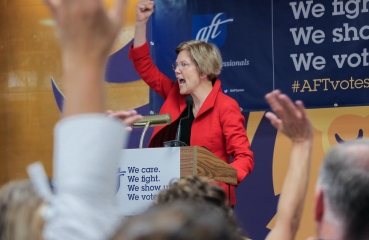
Beware the Democrats’ new teachers-union-loyalty test

Derrell Bradford

In The Gulag Archipelago, Aleksandr Solzhenitsyn writes of a rally held for communist leader Josef Stalin. At the event’s end, a tribute to Stalin was called for. As Solzhenitsyn writes, “Of course, everyone stood up (just as everyone had leaped to his feet during the conference at every mention of his name)....

Commentary
2.5.2020
Accountability & Testing, Teachers & School Leaders

Students learn more from teachers with high grading standards

Amber M. Northern, Ph.D., Michael J. Petrilli

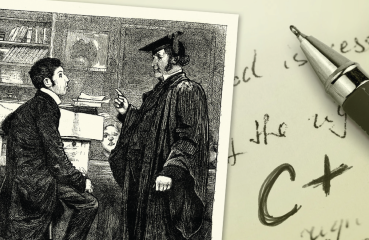
Fordham’s newest report, "Great Expectations," delves into high school grading practices and the impact they have on student outcomes. Turns out that higher standards benefit students of all types and in all kinds of schools. Whether black, Hispanic, white, male, or female, students learn more when taught by teachers with higher expectations. Unfortunately, American schools are gradually making it harder, not easier, for teachers to keep standards high.

Commentary
2.5.2020
Curriculum & Instruction, Teachers & School Leaders

Do community schools benefit disadvantaged families?

Brandon L. Wright

Achievement gaps between affluent and low-income students are caused by much more than what happens in the classroom. Poverty is associated with a litany of social consequences that make learning more difficult, such as unstable housing, poor healthcare, and greater exposure to violence and other traumas.

Commentary
2.4.2020
Teachers & School Leaders

NEW REPORT: Great Expectations: The Impact of Rigorous Grading Practices on Student Achievement

The Education Gadfly

One indicator of teachers’ expectations is whether they subject students to more or less rigorous grading practices. Unfortunately, “grade inflation” is pervasive in U.S. high schools, as evidenced by rising GPAs even as SAT scores and other measures of academic performance have held stable or fallen. A “good” grade is no longer a clear marker of knowledge and skills. This report examines how teachers’ grading standards affect student success.

Commentary
1.29.2020
Evidence-Based Learning, Teachers & School Leaders

The endless, rocky path to reading science

Chester E. Finn, Jr.

The National Council on Teacher Quality just released its third review of America’s elementary teacher prep programs, seeking to determine, among other things, whether ed schools provide adequate instruction in scientifically-based reading instruction. The first investigation of this question, back in 2013, resulted in most programs receiving D’s and F’s, and just 35 percent earning A’s and B’s. But this year, slightly more than half of traditional prep programs received honors grades. That’s progress. But there are still miles to go.

Commentary
1.29.2020
Governance, Teachers & School Leaders

Hiding in plain sight: Advancing SEL by tackling today’s urgent problems

Chester E. Finn, Jr.

Partisans of social-emotional learning are wont to make their case in utopian terms: Create better learning environments and good things will happen to kids, to academic achievement, to the society in which we live, etc. From the home page of the Collaborative for Academic, Social, and Emotional Learning (CASEL):

Commentary
1.29.2020
Curriculum & Instruction, Teachers & School Leaders

The case for focusing SEL on social-network building

Tran Le

While education reform conversations about social and emotional learning (SEL) often include the value of interpersonal skills in creating and maintaining relationships, a new report from the American Enterprise Institute calls for increased emphasis on expanding student access to relationships and networks.

Podcast
1.29.2020
Charter Schools, Teachers & School Leaders

The Education Gadfly Show: School Choice Week 2020

On this week’s podcast, Mike Magee, CEO of Chiefs for Change, joins Mike Petrilli and David Griffith to discuss National School Choice Week. On the Research Minute, Amber Northern examines how teachers who specialize instead of teaching all subjects affect elementary school outcomes.

Commentary
1.22.2020
Accountability & Testing, Teachers & School Leaders

D.C. continues to improve its teacher evaluation system

Amber M. Northern, Ph.D.

Amid all of the hullabaloo over teacher evaluations, fewer states are now using test scores to assess the quality of their teacher workforce.

Pagination

  • First page « First
  • Previous page ‹ Previous
  • Page 40
  • Page 41
  • Page 42
  • Page 43
  • Current page 44
  • Page 45
  • Page 46
  • Page 47
  • Page 48
  • Next page Next ›
  • Last page Last »

Type

  • Commentary (1363)
  • Event (3)
  • Podcast (34)
  • Report (37)

Topics

  • Accountability & Testing (503)
  • Advanced Education (266)
  • Career & Technical Education (84)
  • Charter Schools (1115)
  • Curriculum & Instruction (1589)
  • ESSA (129)
  • Evidence-Based Learning (833)
  • Facilities (25)
  • Governance (1409)
  • Personalized Learning (51)
  • Private School Choice (139)
  • School Finance (167)
  • Standards (190)
  • (-) Teachers & School Leaders (1450)

Date

  • 2026 (143)
  • 2025 (188)
  • 2024 (159)
  • 2023 (156)
  • 2022 (206)
  • 2021 (269)
  • 2020 (203)
  • 2019 (86)
  • 2018 (8)
  • 2017 (9)
  • 2016 (3)
  • 2014 (3)
  • 2013 (3)
  • 2012 (4)
  • 2008 (1)
  • 2007 (1)
  • 2006 (1)
  • 2005 (1)
  • 2004 (1)
  • 2001 (2)
  • 2000 (1)
  • 1999 (2)
Fordham Logo

© 2026 The Thomas B. Fordham Institute
Privacy Policy
Usage Agreement

National

P.O. Box 110
Burke, VA 22009

202.223.5452

[email protected]

Ohio

P.O. Box 82291
Columbus, OH 43202

614.223.1580

[email protected]

Sponsorship

130 West Second Street, Suite 410
Dayton, Ohio 45402

937.227.3368

[email protected]