Mobile Navigation

  • National
    • Policy
      • High Expectations
      • Quality Choices
      • Personalized Pathways
    • Research
    • Commentary
      • Gadfly Newsletter
      • Flypaper Blog
    • Events
    • Scholars Program
  • Ohio
    • Policy
      • Priorities
      • Media & Testimony
    • Research
    • Commentary
      • Ohio Education Gadfly Biweekly
      • Ohio Gadfly Daily
  • Charter Authorizing
    • Application
    • Sponsored Schools
    • Resources
  • About
    • Mission
    • Board
    • Staff
    • Career
Home
Home
Advancing Educational Excellence

Main Navigation

  • National
  • Ohio
  • Charter Authorizing
  • About

National Menu

  • Topics
    • Accountability & Testing
    • Advanced Education
    • Career & Technical Education
    • Charter Schools
    • Curriculum & Instruction
    • ESSA
    • Evidence-Based Learning
    • Facilities
    • Governance
    • Personalized Learning
    • Private School Choice
    • School Finance
    • Standards
    • Teachers & School Leaders
    • Think Again
  • Research
  • Commentary
    • Gadfly Newsletter
    • Flypaper Blog
    • Gadfly Podcast
  • Events
  • Scholars Program

The Education Gadfly Weekly

Sign Up to Receive Fordham Updates

We'll send you quality research, commentary, analysis, and news on the education issues you care about.
Thank you for signing up!
Please check your email to confirm the subscription.

The Education Gadfly Weekly: What 9/11 means for America’s schools twenty years later

Volume 21, Number 36
9.9.2021
9.9.2021

The Education Gadfly Weekly: What 9/11 means for America’s schools twenty years later

Volume 21, Number 36
view
High Expectations

What 9/11 means for America’s schools twenty years later

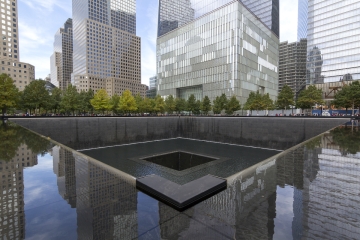
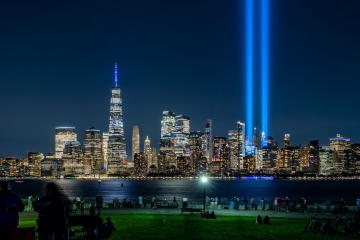
This week, we remember and reflect upon an unforgettably tragic day. This comes amid throes of national conflicts over information, misinformation, even the nature of facts and truth themselves. Schools can’t fix all this, but they must reclaim their vital role in ensuring that Americans understand their history and the interconnectedness of today’s world.

Dale Chu 9.9.2021
NationalFlypaper

What 9/11 means for America’s schools twenty years later

Dale Chu
9.9.2021
Flypaper

Seven questions about September 11

Lamar Alexander
9.9.2021
Flypaper

From the personal to the political, for the love of freedom

William Damon
9.9.2021
Flypaper

Alternative certification policies and teacher recruitment outcomes

Amber M. Northern, Ph.D.
9.9.2021
Flypaper

The wide-ranging benefits of natural mentorships

William Rost
9.9.2021
Flypaper

The Education Gadfly Show #786: Research deep dive: The impact of school voucher programs

9.9.2021
Podcast

Cheers and Jeers: September 9, 2021

The Education Gadfly
9.9.2021
Flypaper

What we're reading this week: September 9, 2021

The Education Gadfly
9.9.2021
Flypaper
view

Seven questions about September 11

Lamar Alexander 9.9.2021
Flypaper
view

From the personal to the political, for the love of freedom

William Damon 9.9.2021
Flypaper
view

Alternative certification policies and teacher recruitment outcomes

Amber M. Northern, Ph.D. 9.9.2021
Flypaper
view

The wide-ranging benefits of natural mentorships

William Rost 9.9.2021
Flypaper
view
Girl with teacher

The Education Gadfly Show #786: Research deep dive: The impact of school voucher programs

Michael J. Petrilli, Patrick Wolf, David Griffith, Ph.D. 9.9.2021
Podcast
view

Cheers and Jeers: September 9, 2021

The Education Gadfly 9.9.2021
Flypaper
view

What we're reading this week: September 9, 2021

The Education Gadfly 9.9.2021
Flypaper
view

What 9/11 means for America’s schools twenty years later

Dale Chu
9.9.2021
Flypaper

This week, we remember and reflect upon an unforgettably tragic day—some through flashbulb memories of where they were when the twin towers fell, others through the lens of their early youth, and for students like my daughter, who just entered the first grade, through their social studies curriculum, if at all. I was teaching third grade in California on that fateful morning and am struck by how, twenty years later, the teaching of civics, patriotism, and U.S. and world history remain conspicuously absent from so many schools despite entreaties at the time to the contrary.

Indeed, the twentieth anniversary of the “War on Terror” comes amid throes of national conflicts over information, misinformation, even the nature of facts and truth themselves. School board meetings across the country have become ground zero for today’s raging culture wars. But unlike 9/11, which brought the nation together, if only briefly, people today are being inexorably pulled further and further apart. Schools can’t fix all this, but they must reclaim their vital role in ensuring that Americans understand their history and the interconnectedness of today’s world.

To this end, it’s worth reviewing two gems written in the aftermath of that dark day in September. The first, “September 11: Seven Lessons for the Schools,” resonates as much today as it did when Diane Ravitch wrote it all those years ago. In the wake of the terrorist attacks on American soil, Ravitch identified seven lessons that schools would do well to keep in mind during this year’s back to school season: (1) it’s okay to be patriotic, (2) not all cultures share our regard for equality and human rights, (3) we must recognize the presence of evil in the world, (4) pluralism and divergence of opinion are valuable, (5) knowledge of U.S. history is important, (6) knowledge of world history and geography is important, and (7) we must teach students to appreciate and defend our democratic institutions.

Today, lessons one and three in particular would raise eyebrows amid an unhealthy resurgence of nationalism and a noxious climate of intensely negative polarization. It’s important to understand, as Ravitch noted, that the unprecedented attacks of 9/11 rallied the public around the American flag as acutely as the current pandemic has helped pushed people farther into their respective corners. Finding the sweet spot on teaching patriotism has proven elusive, even more so among educators who insist upon a narrative with their students that America is fundamentally irredeemable.

On this question, Ravitch excoriates the “dogma of cultural relativism”—the belief that no culture is better or worse than any other—embraced by the U.S. education system since the late 1960s. While there are many reasons to reject this reprehensible pedagogy, the simplest one is that it flies in the face of reality. As we were reminded in the time of 9/11—and even more recently with America’s retreat from Afghanistan—there are cultures in which women are ruthlessly oppressed, religious freedom is unknown, and political dissidents are mercilessly slaughtered. Ravitch was right, and is right, on the implications for schools: “We should not tell our students that our nation's commitment to due process and the rule of law is no better than the practices of societies that abuse fundamental human rights.”

The second gem, “A Basic Education for the Post-9/11 World,” was penned ten years later by Andy Rotherham as one of ten short essays assembled by Fordham in an outstanding compendium, “Teaching about 9/11 in 2011: What Our Children Need to Know.” (An earlier version appeared in the organization’s 2003 compilation, “Terrorists, Despots, and Democracy: What Our Children Need to Know.”) Echoing Ravitch’s call for history and honesty, Rotherham asserted that all students must start by studying the Charters of Freedom as a way to become critical thinkers vis-à-vis the health of our nation and its ideals. To wit, students should understand that our most cherished institutions and ideas did not develop accidentally or in a vacuum, but arose and survive today as a result of blood, sacrifice, and vigilance.

Rotherham also understood clearly that neither contemporary terrorism nor yesterday’s history could be fathomed without grasping the role of religion and dealing intelligently with its place in schools:

It’s impossible to make sense of current events without a basic understanding of the history of Islam and its major theological divisions. Learning about Christianity, Islam, Judaism, Hinduism, and Buddhism also gives students a richer understanding of their world and the causes of some of its most virulent conflicts. Unfortunately, teaching about religion in schools is too often a casualty of the culture wars or unwarranted anxiety about what the First Amendment does and does not permit in public school classrooms. That must be rectified. Beyond the nostrums of left and right, there is room to fashion a curriculum on this complex yet vital aspect of history.

At a time when curriculum-based reform is experiencing an encouraging resurgence in the form of robust attention and interest in scientifically-sound reading instruction, a proper level of scrutiny to the role of religion in history teaching is also long overdue.

In the heat of today’s many debates and conflicts, the teaching of patriotism and religion may seem daunting, even a fool’s errand while schools are opening into their third consecutive year of turmoil, forcing educators to prioritize student safety ahead of academics once again. But it’s also a uniquely crucial assignment given the stakes, and one to be taken on, if not immediately, before it gets forgotten again through the passage of time.

view

Seven questions about September 11

Lamar Alexander
9.9.2021
Flypaper

This advice from my friend Lamar Alexander for teaching about 9/11 was published twice by Fordham, first in 2003 and again (lightly revised) in 2011. It remains as apt and compelling today as it was then. In truth, it’s even more compelling now, for as the actual events of 9/11 fade into history, there to join the innumerable other key events in our history that few young Americans are learning much about, his seven points take on greater and greater salience.

As many readers know (and all should), Lamar is the only person in U.S. history to serve as a state governor, U.S. secretary of education, and United States Senator, not to mention other key posts from White House staffer to university president. His accomplishments in the education space are far too numerous to itemize. His love for America and his passion to see its history well taught to its children are legendary.  I have treasured his friendship and colleagueship for half a century.

—Chester E. Finn, Jr.

—

During a previous Senate campaign shortly after September 11, 2001, I listened carefully, as politicians do, for the words that seemed to resonate most with my audiences. To my surprise, I found there was just one sentence I could not finish before every audience interrupted me by breaking into applause: “It is time to put the teaching of American history and civics back in its rightful place in our schools so our children grow up learning what it means to be an American.”

The terrorists who attacked us on September 11 weren’t just lashing out at buildings and people—they were attacking who we are as Americans. Most Americans recognize this, and that’s why there has been a national hunger for leadership and discussion about our values. Parents know that our children are not being taught our common culture and shared values. National tests show that three-quarters of the nation’s fourth, eighth, and twelfth graders are not proficient in civics knowledge, and one-third do not even have basic knowledge, making them civic illiterates.

That’s why I made American history and civics the subject of my maiden speech and first piece of legislation in the United States Senate. By a vote of 90-0, the Senate passed my bill to create summer residential academies for outstanding teachers and students of American history and civics. Their purpose is to inspire better teaching and more learning of the key events, key persons, key ideas, and key documents that shaped the institutions and democratic heritage of the United States.

So if I were teaching about September 11, these are some of the issues I would ask my students to consider:

  • Is September 11 the worst thing to happen to the United States? The answer, of course, is no, but I’m surprised by the number of people who say yes. It saddens me to realize that those who make such statements were never properly taught the history of our country. Many doubted America would win the Revolutionary War. The British sacked Washington and burned the White House to the ground in the War of 1812. In the Civil War, we lost more Americans than in any other conflict, as brother fought against brother. The list goes on. Children should know why we made those sacrifices and fought for the values that make us exceptional.

  • What makes America exceptional? I began the first session of a course I taught at Harvard’s Kennedy School of Government by making a list of one hundred ways America is different than other countries—not always better, but unique. America’s exceptionalism has been a source of fascination since de Tocqueville’s trip across America in 1830, where he met Davy Crockett and Jim Bowie on the Mississippi River. His book, Democracy in America, is still the best description of America’s unique ideals in action. Another outstanding text is American Exceptionalism by Seymour Martin Lipset.

  • Why is it you can’t become Japanese or French, but you must become American? If I were to emigrate to Japan, I could not become Japanese; I would always be an American living in Japan. But if a Japanese citizen came here, he could become an American, and we would welcome him with open arms. Why? Because our identity is based not on ethnicity but on a creed of ideas and values in which most Americans believe. Historian Richard Hofstadter wrote, “It is our fate as a nation not to have ideologies, but to be one.” To become American citizens, immigrants must take a test demonstrating their knowledge of American history and civics.

  • What are the principles that unite us as Americans? In Thanksgiving remarks after the September 11 attacks, President Bush praised our nation’s response to terror. “I call it the American character,” he said. Former Vice President Al Gore, in a speech after the attacks, said, “We should fight for the values that bind us together as a country.” In my Harvard course we put together a list of some of those values: liberty, e pluribus unum, equal opportunity, individualism, rule of law, free exercise of religion, separation of church and state, laissez faire, and a belief in progress.

  • If we agree on these principles, why is there so much division in our politics? Just because we agree on these values doesn’t mean that we agree on their application. Most of our politics is about the hard work of applying these principles to our everyday lives. When we do, they often conflict. For example, when discussing President Bush’s proposal to let the federal government fund faith-based charities, we know that “In God We Trust,” but we also know that we don’t trust government with God. When considering whether the federal government should pay for scholarships that middle- and low-income families might use at any accredited school—public, private, or religious—some object that the principle of equal opportunity can conflict with the separation of church and state.

  • What does it mean to you to be an American? After September 11, I proposed an idea I call “Pledge Plus Three.” Why not start each school day with the Pledge of Allegiance—as many schools still do—followed by a teacher or student sharing for three minutes “what it means to be an American”? Some of the newest American students will probably be some of the best speakers. I found in teaching my Harvard class that the student who best understood American identity was from the Ukraine.

  • Ask students to stand, raise their right hand, and recite the Oath of Allegiance, just as immigrants do when they become American citizens. I did this at a speech I gave recently on my American history and civics bill. It’s quite a weighty thing to “absolutely and entirely renounce and abjure all allegiance and fidelity to any foreign prince, potentate, state, or sovereignty” and to agree to “bear arms on behalf of the United States when required by the law.”

Our history is the struggle to live up to the ideals that have united us and defined us from the very beginning, the principles of the American Character. If that is what students are taught about September 11, they will not only become better informed. They will strengthen our country for generations to come.

view

From the personal to the political, for the love of freedom

William Damon
9.9.2021
Flypaper

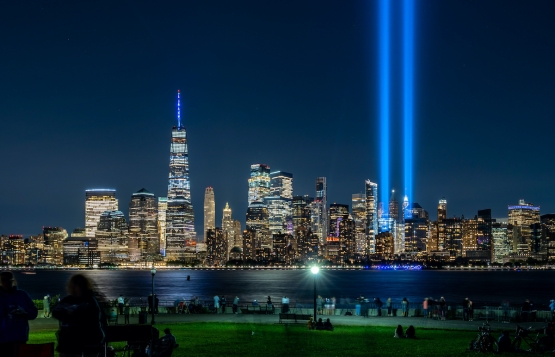
This superb short essay by Stanford professor Bill Damon is a hard-hitting piece from a gentle, thoughtful, and learned psychologist, and (as with Senator Alexander's contribution) was first published by Fordham in 2003 and then again in 2011. Yes, he, too, is my friend and colleague, and I’ve admired his scholarly work for decades, especially his pioneering studies of the role of “purpose” in people’s lives. No captive of standardized test scores and basic skills, Bill has long explained why schools must attend to the “whole child” and thereby the whole society, especially in fostering the traits of character, morality, citizenship, patriotism, and love of liberty that make democracy possible. (For more on the schools’ role in building citizens, see his excellent book Failing Liberty.)

The present essay pulls no punches about the failure of “social studies” as conventionally taught to imbue young Americans with a clear appreciation of the freedoms that they and their fellow citizens enjoy and what is at stake in preserving them. We can and must do better going forward!

—Chester E. Finn, Jr.

—

For the most part, American schoolchildren are exceptionally astute when it comes to matters of personal relations. They know a lot about themselves, their families, and their friends. No doubt their fine social awareness is related to how they spend their spare time—for the most part, interacting with family and friends or consuming mass-media entertainment that focuses on the nuances of interpersonal situations (sitcoms, soaps, teen horror movies, rap songs, and so on). As active learners, contemporary children become extraordinarily sophisticated in small-scale human behavior far younger than previous, more sheltered, generations.

One thing that they learn very quickly is that they love “freedom.” For the most part, what American children mean by “freedom” is the license to do and say what they want. Because their world is bounded by themselves and their immediate social relationships, this amounts to the liberty to resist demands by others for conformity in thought and deed. Many young people in America will go to the mat for the right to make their own value judgments, to enjoy their own music, to dress as they like, to spend their time and money as they wish, and to choose their own friends. In general, our culture supports the sense of personal autonomy that young people cherish.

Unfortunately, today’s schoolchildren understand very little about the world beyond their own intimate circles of friends and family. Their ignorance most notably includes an almost complete lack of awareness about how rare their most prized possession, freedom, is in large parts of the world. Nor do they have much appreciation of what freedom means for a civic and political life that deals with matters more serious than recreational choices.

Indeed, young people in our country know practically nothing about national or global politics, and they care even less. By the end of the twentieth century, social scientists and educators were beginning to express concern about the troublesome know-nothingism that had spread among the ranks of American youth. In normal times, this would be a grave problem for the future of civic life in our democracy. But now we no longer live in normal times. We are now at war, a war that may endure well into the maturity of today’s students. It is our responsibility to prepare them for their engagement in it, and our schools need to participate in this charge. They must do a far better job of educating youngsters about the world beyond their own personal lives and pleasures.

Schools must help our children understand freedom on a national and global stage. As part of this understanding, students must learn why freedom always needs to be defended—to understand the wisdom behind the maxim that eternal vigilance is the price we pay for our liberties. And our children must come to understand this in contemporary terms: the price of freedom in the world today; who threatens it; and what should we do, as U.S. citizens, to preserve and advance freedom in the world?

How can our schools impart this essential understanding? To begin with, they must abandon the well-intentioned but intellectually corrosive species of moral relativism that now infests public-school curricula in the name of “multiculturalism.” Schools must start teaching the plain truth about the world—namely that all cultures are not equally benign with respect to their support of individual freedom. And our schools must teach what life is like in places that do not honor freedom.

Social studies—which now emphasize tolerance for non-Western cultures and criticism of our own—must give students a living sense of what the absence of freedom really means in some parts of the world. Teach them about how writers feel in societies where the reward for writing a critical statement about the government is a death sentence. Teach them about how women feel in cultures that intentionally keep them illiterate and disenfranchised, in cultures that force them to wear veils and other smothering clothes, punish them (rather than their attackers) when they are raped, and threaten them with harm as a means of extorting dowries from their families. Draw the contrast with societies where everyone gets to vote, protest, join unions, start businesses, worship or not as they wish, and (to bring the point home) even choose their own manner of dress and leisure pursuits.

Once students come to understand what is really at stake when freedom is won or lost, they must learn about the history of freedom, how it has grown in some places and slipped away in others, and why that happens. Teach them how American rights were forged through suffering at Valley Forge and Selma; how utopian Russian dreams vanished into tyranny; how a budding German democracy succumbed to terrorism and divisiveness in the Weimar years; how zealous, or corrupt, dictators in the Middle East have ruled their populations through fear, thuggery, and intimidation. History should be taught as a narrative of what has gone right and what has gone wrong along the road to liberty.

In teaching history, balance is key. My daughter’s high school U.S. history course relied on the highly critical People’s History of the United States as a primary text. It did not offer a balanced approach. It’s an acceptable part of the reading list, but it is too lopsided to be the main source of historical knowledge. I would place the terrible errors that this critical text highlights (e.g., the Tulsa race riots, the American Indian massacres) in context of the self-corrections that they spawned. And I would point out that it is a rare and precious freedom to allow teachers to talk with students about shortcomings of their own culture (compare, for example, with the education that students get in an Islamic madrasa). Students also need to learn about historical horrors in countries that have destroyed freedom—such as the Nazi pogroms, the Soviet purges, and the Cambodian killing fields. A balanced history course will give students such compelling reasons to care enough about our free society that they will eagerly defend it when it is threatened and work to correct it when it does not live up to its own high ideals.

If schools would encourage students to care about our society, this would be a crucial first step in getting them to take responsibility for it as engaged citizens. It would be a big step, but there is one more that is needed: to take responsibility for human freedom wherever it is in peril. John Dunne’s Meditation XVII, with its famous line, “No man is an island, entire of itself; every man is a piece of the continent, a part of the main,” should be compulsory reading for American school children. In our increasingly global existence, our students need to know that, in order to protect our own freedoms, we must work to ensure the freedoms of others. We must resist people who despise freedom wherever they are, and we must discredit the warped ideologies that feed their hatred. Our schools can play a key role in this by teaching students how our constitutional rights have secured our freedoms for generations, and how America throughout her history has successfully fought the threats of enslaving ideologies.

view

Alternative certification policies and teacher recruitment outcomes

Amber M. Northern, Ph.D.
9.9.2021
Flypaper

A recent study published in Educational Policy is a timely look at the ways in which states’ alternative certification (or AC) policies for teachers have impacted the composition of the corps of novice educators. AC policies have historically been controversial, simultaneously attracting complaints that their recruitment standards are too low or too high, compared to traditional university-based teacher training programs.

The study—conducted by the University of Florida’s Christopher Redding—uses five waves of data from the federal Schools and Staffing Survey (SASS) starting in 1993 and ending in 2012, and one wave from the National Teacher and Principal Survey, which superseded SASS and covers 2015–16. It homes in on first-year teachers, with a sample of roughly 9,700, and includes information on teacher demographics, educational background, teaching assignments, and salaries, among other things. The difference-in-differences (DD) study design compares the characteristics of beginning teachers in states before and after the adoption of or changes to AC policies to determine whether the following were impacted: the fraction of new teachers to graduate from highly competitive institutions; the average SAT scores of those institutions; the fraction of new teachers of color; the fraction of male teachers; and the fraction of new in-demand teachers—meaning those teaching math, science, special education, or English as a second language. The model controls for a number of variables, including state overall population, fraction of people of color, fraction of bachelor’s degree holders, unemployment rate, per capita income, and student enrollment. Unfortunately, due to small n-sizes, the design cannot rule out that observed differences might be explained by pre-existing trends building before AC policy adoption or changes took place.

Descriptively, Redding finds that a smaller fraction of traditionally-prepared teachers graduated from competitive institutions than did AC teachers and the average SAT/ACT scores of the AC teachers’ undergraduate institutions was 13.5 points higher than those of traditionally-prepared teachers. Black teachers and those of other races and ethnicities were also more likely to enter teaching through AC programs.

The DD results show that states had a greater fraction of teachers who both graduated from highly competitive and from less competitive colleges—so more bifurcation among the corps—compared to before the state adopted or changed these policies. Specifically, there was a 6.1 percentage-point increase in the fraction of new teachers from competitive colleges—which was driven by highly- and very-competitive colleges according to the influential Barron’s index—and a comparatively lower 3.7 percentage point increase in the fraction of new teachers to graduate from less competitive institutions. The policy was also associated with an 8.4 percentage-point increase in the fraction of new teachers of color in a state. More specifically, there was a 1.8 percentage-point increase in Black teachers in a state and a 6.2 percentage-point increase in “other race” teachers (which were combined in this report). On the other hand, no relationship was found relative to the share of male teachers or teachers of in-demand subjects.

Redding also looks to see whether the changes in new teacher characteristics are driven by the presence of Teach For America (TFA) in a state—since it is one of the larger and most prominent of AC programs—but finds no evidence of that (though these data are less robust).

Increasing diversity within the teaching ranks has been a primary focus in education for many years. So it is very good news that AC policies are showing success on this front. Still, AC programs are no monolith when it comes to purpose or operator, although this study treats them as one. They exist to serve the varied needs of students and communities, with some run by public school districts, some by education nonprofits, and some by public charter networks. Tellingly, traditional four-year colleges and universities now routinely offer alternative certification routes, too, with some programs recruiting high-achievers at super-competitive colleges, while others draw from local colleges to fulfill local diversity goals.

Alternative certification policies were once accused of “deprofessionalizing” teaching, but experience and time have proven that claim false, and they are now fairly commonplace. All things considered, our teacher workforce and students are the better for it.

SOURCE: Christopher Redding, “Changing the Composition of Beginning Teachers: The Role of State Alternative Certification Policies,” Educational Policy (May 2021).

view

The wide-ranging benefits of natural mentorships

William Rost
9.9.2021
Flypaper

A recent Annenberg working paper explores the effects of “natural” mentorships, which researchers define as voluntary and informal relationships between school personnel and students. It finds many benefits, especially for teens from low-income households.

The study used survey data gathered over twenty-five years from 105 schools and over 20,000 students who were in seventh to twelfth grade at the start. Surveyors periodically queried cohort members as they aged, beginning with the 1994–95 academic year. When respondents were between the ages of eighteen and twenty-six, they answered whether a non-parent adult had made a positive difference in their lives since they were fourteen years old. For those who responded yes, researchers asked follow-up questions to determine whether this was a natural mentoring relationship.

Using a fixed-effects models to control for as many unobserved factors impacting outcomes as possible, the study found that natural mentorships had several beneficial effects for the mentees in high school and beyond. During high school, mentees saw a 0.24 GPA increase, a 1.7–3.4 percentage-point decrease in the rate of annual course failures, and the acquisition of 0.17–0.33 more year-length credits than non-mentored students. Analysts also found links between mentorship and a 10–25 percentage-point increase in mentees’ likelihood of attending college, and a boost in annual earnings of about $1,750–$2,700 dollars after high school.

Notably, many of these benefits were more pronounced for students with low socio-economic backgrounds, as gauged by characteristics such as household income, unemployment, adult education levels, and neighborhood demographics. For instance, lower-SES mentees’ course-failure rate reductions were 1.9 percentage points larger than those of higher-SES mentees. Similarly, the likelihood of attending college for lower-SES mentees increased by 16.7 percentage points compared to the 11.5 percentage-point increase for higher-SES mentees.

Other findings have implications for schools on how they can create environments that promote the formation of natural-mentoring relationships. The researchers found that schools with more sports teams, smaller class sizes, and a greater sense of collective belonging were linked with increases in the likelihood of mentoring relationships forming.

Overall, the study suggests that school-based natural mentoring relationships can be remarkably beneficial, especially for disadvantaged students. But it is important to remember that these relationships are voluntary and informal. Though schools can implement practices that may encourage their formation, they cannot guarantee them.

SOURCE: Matthew A. Kraft, Alexander Bolves, and Noelle M. Hurd “School-based Mentoring Relationships and Human Capital Formation,” Annenberg Institute at Brown University (July 2021).

view
Girl with teacher

The Education Gadfly Show #786: Research deep dive: The impact of school voucher programs

9.9.2021
Podcast
 

On this week’s podcast, Patrick Wolf, Distinguished Professor at the University of Arkansas, joins Mike Petrilli and David Griffith on the fifth edition of our Research Deep Dive series to discuss the impact of voucher programs—both on participating students and on kids in nearby public schools. Also check out our other deep dives on teacher effectiveness, school discipline, school closures, and urban charters.

Recent studies on school choice programs mentioned on this episode:

  1. Anna J. Egalite, Ashley Gray, and Trip Stallings, A Comprehensive Evaluation of the North Carolina Opportunity Scholarship Program, Reports 1–7, North Carolina State University (2017–2020).
  2. M. Danish Shakeel, Kaitlin Anderson, and Patrick Wolf, "The Participant Effects of Private School Vouchers Across the Globe: A Meta-Analytic and Systematic Review," EDRE Working Paper No. 2016-07 (May 2016).
  3. David Figlio and Krzysztof Karbownik, "Evaluation of Ohio’s EdChoice Scholarship Program: Selection, Competition, and Performance Effects," Thomas B. Fordham Institute (July 2016).
  4. Jonathan N. Mills and Patrick J. Wolf, "Vouchers in the Bayou: The Effects of the Louisiana Scholarship Program on Student Achievement After 2 Years," Educational Evaluation and Policy Analysis (February 2017).
  5. Megan Austin, R. Joseph Waddington, and Mark Berends, "Voucher Pathways and Student Achievement in Indiana’s Choice Scholarship Program," The Russell Sage Foundation journal of the social sciences (March 2019).
view

Cheers and Jeers: September 9, 2021

The Education Gadfly
9.9.2021
Flypaper

Cheers

  • Stop ignoring the science: We can’t teach reading or close racial reading disparities without phonics. —John McWhorter
  • Jay Miller: Let’s dismantle the union-controlled Milwaukee School Board and install transformative experts to effect real change for students. —Journal-Sentinel (Wisconsin)
  • Central Falls District in Rhode Island created a Teaching Fellowship to solve their substitute teacher crisis and recruit from within the community. —Education Week
  • The claim that learning loss is a myth or a racist notion is absurd. —LA Times

Jeers

  • “Attack ad revives charter schools as political issue in Boston’s mayoral race.” —GBH News
  • New York City’s Department of Education wants to drop the honor roll and other markers of excellence, which will only hurt the underprivileged kids that most benefit from them. —New York Post
view

What we're reading this week: September 9, 2021

The Education Gadfly
9.9.2021
Flypaper
  • “What schools teach about 9/11 and the war on terror.” —Houston Chronicle
  • Men are trailing women’s college enrollment in record numbers. —Wall Street Journal
  • “As virtual options split off from traditional school, interest dips.” —Chalkbeat
  • America’s rural schools still suffer from outdated textbooks, understaffing issues, poor ventilation, and chronically stagnant student outcomes. —New York Times
  • Scholar Kathryn Paige Harden wants the left and right to understand that, when it comes to social outcomes, including educational attainment, genetics aren’t everything, but they do matter. —New Yorker
  • “‘Cultural responsive education’ can morph from appealing theory to troubling practice.” —Rick Hess
Fordham Logo

© 2026 The Thomas B. Fordham Institute
Privacy Policy
Usage Agreement

National

P.O. Box 110
Burke, VA 22009

202.223.5452

[email protected]

Ohio

P.O. Box 82291
Columbus, OH 43202

614.223.1580

[email protected]

Sponsorship

130 West Second Street, Suite 410
Dayton, Ohio 45402

937.227.3368

[email protected]