Mobile Navigation

  • National
    • Policy
      • High Expectations
      • Quality Choices
      • Personalized Pathways
    • Research
    • Commentary
      • Gadfly Newsletter
      • Flypaper Blog
    • Events
    • Scholars Program
  • Ohio
    • Policy
      • Priorities
      • Media & Testimony
    • Research
    • Commentary
      • Ohio Education Gadfly Biweekly
      • Ohio Gadfly Daily
  • Charter Authorizing
    • Application
    • Sponsored Schools
    • Resources
  • About
    • Mission
    • Board
    • Staff
    • Career
Home
Home
Advancing Educational Excellence

Main Navigation

  • National
  • Ohio
  • Charter Authorizing
  • About

National Menu

  • Topics
    • Accountability & Testing
    • Advanced Education
    • Career & Technical Education
    • Charter Schools
    • Curriculum & Instruction
    • ESSA
    • Evidence-Based Learning
    • Facilities
    • Governance
    • Personalized Learning
    • Private School Choice
    • School Finance
    • Standards
    • Teachers & School Leaders
    • Think Again
  • Research
  • Commentary
    • Gadfly Newsletter
    • Flypaper Blog
    • Gadfly Podcast
  • Events
  • Scholars Program

The Education Gadfly Weekly

Sign Up to Receive Fordham Updates

We'll send you quality research, commentary, analysis, and news on the education issues you care about.
Thank you for signing up!
Please check your email to confirm the subscription.

The Education Gadfly Weekly: Three hypotheses to explain this year’s big wins on school choice

Volume 21, Number 28
7.14.2021
7.14.2021

The Education Gadfly Weekly: Three hypotheses to explain this year’s big wins on school choice

Volume 21, Number 28
view
Quality Choices

Three hypotheses to explain this year’s big wins on school choice

Despite much anti-choice talk in national politics and some Congressional pushback, 2021 has seen an impressive string of victories for school choice at the state level, which is where it matters most. Was it the pandemic? Has the salience of the anti-school choice argument weakened over the past year? Or does Donald Trump deserve a lot of the credit? Read more.

Michael J. Petrilli 7.14.2021
NationalFlypaper

Three hypotheses to explain this year’s big wins on school choice

Michael J. Petrilli
7.14.2021
Flypaper

Schools face a double whammy this fall: illiteracy and illiberalism

Dale Chu
7.15.2021
Flypaper

Preparing students of all races to achieve greatness

Ian Rowe
7.15.2021
Flypaper

Scaling up the Florida Tax Credit Scholarship program helped public schools improve

Jeff Murray
7.15.2021
Flypaper

The Education Gadfly Show #778: The virus isn’t done with schools

7.14.2021
Podcast

Cheers and Jeers: July 15, 2021

The Education Gadfly
7.15.2021
Flypaper

What we're reading this week: July 15, 2021

The Education Gadfly
7.15.2021
Flypaper
view

Schools face a double whammy this fall: illiteracy and illiberalism

Dale Chu 7.15.2021
Flypaper
view

Preparing students of all races to achieve greatness

Ian Rowe 7.15.2021
Flypaper
view

Scaling up the Florida Tax Credit Scholarship program helped public schools improve

Jeff Murray 7.15.2021
Flypaper
view

The Education Gadfly Show #778: The virus isn’t done with schools

Michael J. Petrilli, John Bailey, David Griffith, Ph.D., Olivia Piontek 7.14.2021
Podcast
view

Cheers and Jeers: July 15, 2021

The Education Gadfly 7.15.2021
Flypaper
view

What we're reading this week: July 15, 2021

The Education Gadfly 7.15.2021
Flypaper
view

Three hypotheses to explain this year’s big wins on school choice

Michael J. Petrilli
7.14.2021
Flypaper

As has been reported and celebrated widely, the legislative sessions that just ended in many states brought great progress on the school choice front. According to the American Federation for Children, five states created new private-school choice programs this year, while eight jurisdictions expanded existing programs, and another two did both. Standouts include major new education savings account (ESA) programs in West Virginia and New Hampshire; major expansions and improvements to Florida’s ESA and tax credit scholarship programs; the enactment of Iowa’s first real charter school bill; and huge wins in Fordham’s home state of Ohio on the voucher, ESA, and charter fronts, including direct, formula-driven funding for choice programs.

But why? Especially given all the anti-choice talk in national politics and some Congressional pushback, what was it about 2021 that explains such an impressive string of victories at the state level, which is where it matters most? It’s important to understand so that choice supporters can work to replicate it again in the future. I see three main hypotheses to explore. Let’s dig into each.

First is what we might call the “conventional wisdom” hypothesis: It was the pandemic, stupid. As Education Week reported recently, the defenders of traditional public schools were on their heels this year, given parent and taxpayer anger over lengthy school closures related to Covid-19. Why not offer parents the option of escape, especially when the schools they are escaping from weren’t even open for business? Especially given the counterexample of private schools, which remained available for in-person learning almost everywhere, even in the face of pandemic restrictions.

It surely might have been a factor, but the problem with this argument is that the school closures were most pronounced in the states and communities that lean heavily Democratic. And it was almost entirely red states, not purple or blue, that embraced school choice during this legislative session. Indeed, of the fifteen states that created or expanded private school choice programs this year, twelve have a Republican “trifecta,” with the GOP in control of the Governor’s mansion and both houses of the state legislature. Two others have mixed control, and just one is fully led by Democrats—Nevada, the exception that proves the rule. 

Indeed, the parents who were most up in arms about school closures tend to live in the suburbs along the coasts, outside cities like Washington and the San Francisco Bay Area. And school choice remains nowhere to be found in those deep blue locales, except for families rich enough to choose private schools, or public schools in million-dollar neighborhoods.

The second theory—what we might call our “wishful thinking” hypothesis—is that the salience of the anti-school choice argument weakened over the past year. Namely, the talking point that school choice hurts traditional public schools. We know from years of polling that this is the attack that is most effective for school choice opponents—and for understandable reasons, given the enormous size of the public school parent population and their interest in protecting their beloved institutions.

The good news, though, is that evidence continues to pile up showing that competition from private school choice and charter schools helps, not hurts, traditional public schools. Student achievement in both district and charter schools improves as charters expand, as our path-breaking study found a few years ago. And another Fordham study concluded that school district finances aren’t harmed by the expansion of charter schools either.

Indeed, there’s a strong argument to be made that school choice and traditional public schools are better together. They are complementary, even symbiotic, as is the case in Washington, D.C., a city that has made more progress in recent years than any other. It’s surely no coincidence that it educates half of its students in charter schools, and the other half in a rapidly improving traditional school system.

If advocates could get this message through to the general population, it would be a really big deal. Consider the example of the gay marriage movement. There were many factors in its success, but as argued in this Washington Post article, opposition melted away once it became clear that there was no evidence that gay marriage hurts straight marriage. If Americans could come to see that there is no evidence that school choice hurts traditional public schools, opposition to this idea should melt away, as well.

And to be sure, we see signs that opposition to school choice has decreased in the past year—no doubt in part because of school closures. But we are still stuck with the reality that we haven’t seen much progress on the school choice front in states where Democrats have significant power. So softening opposition to school choice hasn’t yet led to bipartisan victories.

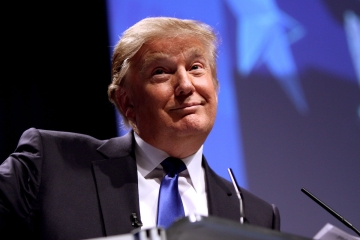
That leaves us with hypothesis number three, which I will call my “worst case” scenario. The hypothesis is that Donald Trump deserves a lot of credit for this year’s string of school choice victories. This one is a tough pill to swallow because of my deep opposition to Donald Trump for what he has done to the Republican Party and to our democracy, but I have to admit that this is the hypothesis with the best evidence.

President Trump, of course, made school choice a key plank in his domestic policy agenda during the campaign. So did the surrogates around him, and many of the speakers at last year’s Republican national convention. Not to mention Secretary DeVos’s non-stop advocacy for choice.

Granted, it’s nothing new for Republican presidents and education secretaries to talk about school choice. They’ve been doing it since Ronald Reagan. But here’s what was different about Trump: His base was not in the affluent suburbs, full of libertarian-leaning Republicans who resonate with market-based reforms, but in America’s small towns and rural communities. And until Trump, many rural Republicans have been among the staunchest opponents of school choice and charter schools. It’s not hard to see why. There aren’t that many private schools or charter schools in rural America. And rural school districts are major employers, as superintendents surely remind their state lawmakers whenever a school choice bill comes up for a vote.

But suddenly, the political calculus has changed. Rural Republican lawmakers know not to get crosswise with former President Trump. And Trump likes school choice! Ergo, Republican lawmakers like school choice now, too. 

This is still just a hypothesis, as we would need strong evidence of changes in voting behavior among rural Republican lawmakers to nail it down. That might be harder than it sounds given that school choice legislation is often rolled into omnibus bills, like Ohio’s biennial budget bill that just passed last week. Somehow we would have to see how the sausage actually got made, and whether rural Republican lawmakers who would have stopped school choice proposals in committees or behind closed doors in the past changed their behavior this session and instead assented. But the basic political math adds up. It would explain why GOP-controlled states are the ones that made the most progress this year, especially as compared to years past.

There’s good news and bad news if this third hypothesis is correct. The bad news, for me, is that I have to give Donald Trump some credit. The good news is that, if this shift in favor of school choice for rural Republicans is permanent, it should make school choice legislation easier to enact going forward. If the entire Republican caucus is united, it means that, even in purple states, school choice supporters just need to find support from a handful of Democrats. And given that so many Black and Hispanic voters support school choice, that should be doable.

The best news is that it wasn’t just the pandemic that explains this Year of School Choice. That’s good because we never want to go through this ordeal again in our lifetimes. But it also shows the importance of political leadership. And on this issue at least, President Trump’s legacy is likely to be a positive one. There, I said it!

view

Schools face a double whammy this fall: illiteracy and illiberalism

Dale Chu
7.15.2021
Flypaper

We’re not even midway through the summer and the start of the new academic year is in some cases just weeks away. As Tennessee Education Commissioner Penny Schwinn recently told the Wall Street Journal, students and teachers “will walk into school and it will feel like school pre-pandemic.” It’s one of many signals that Americans are eager to move on. However, in breathing a collective sigh of relief, educators and policymakers should be prepared for the tempest that’s been brewing and building: a dual threat posed by students who cannot read and districts taken hostage by our broader cultural wars.

Sadly, illiterate children are nothing new in America. Even before the pandemic took hold, more than 80 percent of Black and Native American students scored below proficient on national reading tests, and 77 percent of Hispanic students have been stuck under that same threshold. Despite these abysmal numbers, Emily Freitag, CEO of Instruction Partners, says the data on reading from this past school year across forty-one states looks especially “terrifying”:

According to one commonly used reading assessment, the DIBELS benchmark measures, the percentage of students falling into the “well-below benchmark” category that predicts future reading failure grew from 26 percent in December 2019 to 43 percent in December 2020. All demographic subgroups were affected, but Black and Hispanic students were particularly impacted. There is no precedent for this kind of decline in the last twenty years of using these reading measures [emphasis added].

And it gets worse. We now have a full set of student test scores from Texas that suggests the pandemic erased the last seven years of gains in reading and math. And that’s in a state whose school closures were relatively short-lived.

At the same time, local school boards find themselves in a no-win situation as a kind of collective cultural panic triggers vast numbers of people on both sides of the aisle to embrace illiberalism. From Dr. Seuss to Ruby Bridges, new battles are being waged over how to teach the American story. Alas, this attempt to chill thought and speech marks a departure from previous efforts to reexamine history, as author and commentator Jonah Goldberg observes:

Radical historians, primarily in the 1910s, the 1930s, and the 1960s, rewrote or revised the standard American story (necessarily, in some cases). It was a mixed effort. But this is how things go. The intergenerational construction of an American narrative must be conversational.... This is how we understand our past, present, and future selves. No historical school monopolizes our national narrative; only competition/conversation of narratives and interpretations deepens our appreciation of our national identity. But today’s efforts are not voices in this conversation; they are attempts to shut up everyone else.

What’s more, it’s nothing short of ironic that many students cannot even read the texts that zealots on both sides of these arguments are squabbling over.

Illiteracy and illiberalism would seem to put students on a collision course with long-term failure, but it’s not a predetermined outcome. Freitag believes that schools can eradicate illiteracy if they use data regularly to track progress; employ a strong, evidence-based reading curriculum; and allocate real focus and attention to the success of every student. With coffers newly flush with Uncle Sam’s cash, schools have little excuse not to pull out all the stops to make up for lost time.

Short of that, districts should heed Robert Pondiscio’s advice and buy every student and parent one of the best-selling education books of the Covid era: Teach Your Child to Read in 100 Easy Lessons. I used the program with my students as a principal, and I’ve since used it to great success with my daughter and niece. Its highly scripted approach is completely out of line with the prevailing education zeitgeist, but its track record of effectiveness is unparalleled and the price, less than $14 a pop, can’t be beat. If there’s one area for consensus in our topsy-turvy, all-consuming education argy-bargy, it should be with the teaching and mastery of foundational reading skills.

Solving the eminently solvable problem of illiteracy would go a long way towards loosening illiberalism’s stranglehold. Perhaps attorney Bob Litan is on to something when he says that it’s time for schools, especially high schools, to consider a revival of speech and debate programs via debate-centered instruction. The goal wouldn’t be to turn every student into a competitive debater per se, but to assist every graduate to become able to speak clearly and logically in front of their peers, using compelling evidence and doing so from multiple sides of any issue.

As temperatures rise in schoolhouses this summer, the burden of remedy falls disproportionately upon the shoulders of educators. Two of the biggest flashpoints are the wars being fought over reading and culture. By homing in on literacy and the virtues of knowledge, persuasion, and reasoned debate, schools can help ensure a more decent, tolerant and literate society in the future.  

view

Preparing students of all races to achieve greatness

Ian Rowe
7.15.2021
Flypaper

When looking for models of ambitious inspiration, Americans often hearken back to President John F. Kennedy’s “moonshot” address at Rice University on September 12, 1962:

We choose to go to the moon. We choose to go to the moon in this decade and do the other things, not because they are easy, but because they are hard, because that goal will serve to organize and measure the best of our energies and skills, because that challenge is one that we are willing to accept, one we are unwilling to postpone, and one which we intend to win.

At this time of pessimism and deep division in our country, it often feels like we have no choice but to look back sixty years to resurrect the sense of optimism and unity that was generated when Kennedy catapulted our collective imagination by setting the goal for America to be the first nation to send a man to the moon and return him safely to earth.

Yet in just the last six months, two equally, if not more, inspiring “moonshots” have been achieved, one in space and the other here on earth. On July 11, 2021, Virgin Galactic launched fifty miles into space a small rocket plane, named V.S.S. Unity, that carried six people—two pilots, David Mackay and Michael Masucci, and four passengers, including the CEO of Virgin Galactic, Richard Branson. For nearly two decades, Branson has worked towards the dream to make safe, commercial air travel to and from space a routine and affordable adventure for private citizens. This inaugural trip makes Branson’s dream achievable within our own lifetimes.

Here on earth, our planet has been gripped by a Covid-19 pandemic that has killed more than four million people worldwide during the last eighteen months. In a college commencement speech, Pfizer CEO Albert Bourla explained how he had to mobilize his team of scientists, engineers, researchers, and distributors to “think far out of the box and design completely new ways of working” to craft an effective vaccine:

If we had asked our scientists to find ways to develop the vaccine in eight years instead of the ten that it usually takes, they would have found it very difficult and likely would have tried to achieve it by improving the existing process.... But we asked them to do it in eight months, not eight years.

And if we had asked our engineers to manufacture 250 million doses within a year, they would try to do it by improving the way we already work. But we asked them to make two and a half billion doses. Both groups recognized immediately that simply making improvements wouldn’t bring them even close to achieving these goals.

Much of the reason all of us are now able to walk mask-free, see and hug our families, and even contemplate fully reopening schools is because of the utter audacity of the goals set by Bourla and the relentless pursuit of his team to achieve them.

The innovation doesn’t end there. We are on the verge of all-electric air mobility that makes possible a “service that will combine the ease of conventional ridesharing with the power of flight.” Breakthroughs in the battle against climate change, strengthening the global food supply chain, and continued discoveries in artificial intelligence all hold within them the promise to make the lives of millions of Americans safer, healthier, and more upwardly mobile.

With these prospects, it should be a phenomenal time to be an educator because we have the solemn and exciting responsibility to ensure the rising generation of preK–12 students are prepared to be leaders and active participants in this world of innovation. Yet more often than not, educators are mired in one or another academic brouhaha, with the latest hullabaloo dominated by critical race theory. The intense focus on critical race theory has become the latest and massive distraction to the decades-long literacy crisis that is truly subverting the life prospects of children of all races, as I argued in a C-SPAN discussion with a Bryn Mawr professor who is a CRT advocate.

Yet the only way to make progress on the issue is to have constructive dialogue on how best to move forward. Sharif El-Mekki and I had the opportunity to speak about the topic at the National Charter School Conference, and we appreciate Andy Rotherham’s offer to provide an opportunity to share our thoughts via Eduwonk, where this was first published.

Since it seems that most discussions regarding critical race theory are hampered because there isn’t even a common definition, I ground my thoughts in the meaning provided by two of CRT’s intellectual architects, Richard Delgado and Jeanne Stefancic. In the Foreword of their co-authored book Critical Race Theory: An Introduction, Delgado and Stefancic write, “Unlike traditional civil rights, which embraces incrementalism and step-by-step progress, critical race theory questions the very foundations of the liberal order, including equality theory, legal reasoning, Enlightenment rationalism, and neutral principles of constitutional law.”

I, for one, am opposed to an ideology that, by definition, questions equality theory that encompasses equal rights, equal protection under the law, and equality of opportunity. I choose to work every day and run schools to make those ideals true for every American, especially given the country’s scarred history when “equality theory” was not true in practice for people of all races. But the answer, as some state laws are sometimes falsely accused of doing, is not to ban critical race theory (as you wouldn’t ban the teaching of communism). Rather, expose it as one of several frameworks through which to evaluate laws and history. Those who want to “question the very foundations of the liberal order,” should be given the floor to make that argument. Simultaneously, they must be enjoined by those like me who want to protect the principles that critical race theory, by definition, repudiates—such as equality theory and neutral principles of constitutional law.

Given the sophisticated nature of these concepts, I think this type of CRT debate happens best in higher education, and not as indoctrination nor inaccessible content in K–12 classrooms. Within K–12 however, disturbing practices associated with critical race theory should be addressed. For example, Randi Weingarten, head of the American Federation of Teachers, has created a fund for her union to “defend any member who gets in trouble for teaching honest history.” If a teacher were somehow barred from teaching about racism, slavery and Jim Crow, and the incredible American story of emancipation and progress in their aftermath, then obviously the school leadership should be penalized. Though it has to be said: If Ms. Weingarten genuinely wants to improve the outcomes of kids, she should reverse her organization’s fierce and longstanding opposition to school choice and public charter schools, and instead empower low-income families with the power to select the best education for their child.

Where I get concerned is if in the real world, practices related to critical race theory, or anti-racism, result in actions that violate the equal protection clause of the Civil Rights Act of 1964 that already prohibit discrimination on the basis of race. For example, a teacher in Evanston, Illinois is suing her district on the basis that “its race-conscious training, policies, and curriculum violate federal law through ‘conditioning individuals to see each other’s skin color first and foremost, then pitting different racial groups against each other.’” Among the discriminatory actions the Evanston district is accused of using are privilege walks in which kids are lined up horizontally. White kids are told to take three steps forward because they are White and Black kids are told to take five steps backward because they are Black.

Equally noxious is either coerced speech or suppressed speech associated with CRT that would violate the First Amendment. In a federal lawsuit, a Nevada charter school is being sued for violating a “high school senior’s First Amendment rights by ‘repeatedly compelling his speech involving intimate matters of race, gender, sexuality, and religion’ during a required civics class.”

We should all stay abreast of these legal challenges and their ultimate judgments. Yet while all of this legal maneuvering is happening, America’s literacy crisis rages on, now even further worsened by eighteen months of inadequate schooling. This is especially true in low-income communities in which remote learning was far from sufficient. It is still the raw truth that barely one-third of all American kids are reading at NAEP proficiency levels. In my next post, I will focus on how a decades-long obsession with closing the racial achievement gap, and more recently the fight to achieve “racial equity,” has not only not closed the racial achievement gap, it has also not materially improved reading outcomes for kids of all races.

However, there is one area in which the need to teach broader history can align with the effort to address the nation’s literacy crisis. I think most people can agree that all kids should learn a more complete history of the United States through more content-rich curricula. It is unfortunate that recent offerings like the New York Times 1619 Project, before clandestinely scrubbing their content, falsely claimed that America’s true founding was 1619, not 1776, and that the primary reason the American Revolution was fought was to defend slavery. That said, the 1619 Project can be credited with revealing strong interest in materials that offer a more accurate telling of the African-American experience in the United States. There are empowering new alternatives.

Reconstruction, a new offering from former D.C. Chancellor Kaya Henderson, was “created to show our kids that they are descendants of powerful, creative, and resilient ancestors whose contributions permeate every aspect of life across the globe; and that they too are called to contribute to this rich legacy.” There is also the freely available curriculum from 1776 Unites, an initiative founded by the legendary Bob Woodson that maintains a special focus on voices in the Black community who celebrate Black excellence, reject victimhood culture, and showcase the millions of Black Americans who have prospered by embracing the founding ideals of America. The curriculum, which features lessons on The Rosenwald Schools and other lesser known stories of Black resiliency in the face of adversity, has been downloaded more than 15,000 times by teachers in all fifty states, and is now being taught in public, private, and parochial schools, afterschool programs, prison ministries, via homeschooling, and anywhere character formation is happening with children.

I will close by going back to the commencement speech of Albert Bourla, who quoted from Aristotle when he said, “Our problem is not that we aim too high and miss. Our problem is that we aim too low and hit.” Let’s hope we as education leaders can join together to find productive ways to not only to teach America’s full history, warts and all, but perhaps more importantly, prepare students of all races to aim high and be ready to help achieve the ambitious new goals being set for America’s future.

Editor’s note: This was first published on Bellwether Education’s Eduwonk blog as part of a conversation between Ian Rowe and Sharif El-Mekki about what we’re actually talking about when we talk about race in the classroom.

view

Scaling up the Florida Tax Credit Scholarship program helped public schools improve

Jeff Murray
7.15.2021
Flypaper

As supporters of school choice celebrate a remarkable season of legislative wins across the country, they can also add some research-based evidence to their grounds for satisfaction. A recent study by a trio of veteran school choice researchers shows once again that the competitive effects stirred by private school scholarship initiatives provide significant benefits even to students who do not utilize them. The researchers update a similar analysis showing strong positive effects from voucher programs for those students who remain in public schools even as those programs expand.

Voucher opponents often cite what they worry will be a highly disruptive mass exodus of students from public schools. In reality, however, participation in voucher programs typically remains low during the early years due to lack of publicity, public skepticism, a relatively limited number of participating private schools, restrictions on eligibility, caps on voucher amounts, etc. The Florida Tax Credit (FTC) Scholarship, the program examined here, illustrates such a growth trajectory. It spent $50 million to fund scholarships for 15,585 students statewide in its first year (2002–03) but notched lower participation and spending for the next three years. Numbers began to trend upward in 2006–07, when the income eligibility limit and then the scholarship maximum amount were raised. By 2016–2017, 3.75 percent of Florida’s total K–12 population participated in FTC compared to less than 0.5 percent a little over a decade earlier.

The fifteen-year timeline under study covers both the largest scale-up of any scholarship program in the country and the broadest longitudinal study yet possible. The analysts focus on competitive effects for students who remained in public schools. They utilize a merged dataset from multiple state agencies which includes test scores, absences, and suspension data for students in preschool through grade twelve, as well as measures of families’ socioeconomic status. They also developed and employ a measure of competitive pressure for public school students that takes into account the number and type of private schools nearby, the distance between public and private schools, and the number of seats in each private school. Finally, they include a coefficient for the number of houses of worship located near any given public school as a measure of community demand for religious education.

As with many previous voucher studies, the researchers found that expansion of FTC had a modest but statistically significant benefit for students attending public schools. These benefits included higher standardized test scores in both reading and math, as well as lower absenteeism and suspension rates. And the more competitive pressure there was—more private schools nearby, more FTC students in those schools, etc.—the stronger the positive competitive effects. In other words, the larger the private choice program became, the more public school students benefited. Students with lower family incomes and lower maternal education levels gained the most, but the gains for higher-SES students were still statistically significant. Robustness checks allowed the analysts to rule out alternative explanations related to the changing composition of students who remained in the public schools, changes in competition from charter and magnet schools, and effects on public-school resources resulting from a smaller student body.

The report notes two data limitations. Academic outcome measures are limited to state test results in grades three through eight, and students without Florida birth certificates were excluded due to the strictures of the merged dataset. While it would be nice to have a fuller picture, a study based on 1.2 million students seems plenty comprehensive. It’s also worth noting that the competitive pressure measures are based on data from 2000, the final year before FTC was announced. This makes sense from an analytical standpoint, as FTC likely altered the competitive landscape over the years as private schools moved, grew, or started up in response to eligibility and funding increases. While researchers are looking for a “pure” analysis of competition independent of what they term “strategic responses,” such as opening a new school or adding a grade level after a boost in voucher amounts is announced, those who really want to know what competition feels like on the ground might rather know where and how many private schools exist in any given year. Nevertheless, we seem to have passed the point of need for more evidence that private school choice is good for public schoolkids.

SOURCE: David N. Figlio, Cassandra Hart, M.D., and Krzysztof Karbownik, “Effects of Scaling Up Private School Choice Programs on Public School Students,” CESifo Network (May 2021).

view

The Education Gadfly Show #778: The virus isn’t done with schools

7.14.2021
Podcast
 

On this week’s podcast, John Bailey, a nonresident senior fellow at AEI, joins Mike Petrilli and David Griffith to discuss the Delta variant’s likely impact on school reopenings this fall. On the Research Minute, Olivia Piontek examines how stand-alone technical high schools affect students’ short- and long-term outcomes.

Amber's Research Minute

Eric Brunner, Shaun Dougherty, and Stephen Ross, "The Effects of Career and Technical Education: Evidence from the Connecticut Technical High School System," National Bureau of Economic Research (May 2021).

If you listen on Apple Podcasts, please leave us a rating and review - we'd love to hear what you think! The Education Gadfly Show is available on all major podcast platforms.

view

Cheers and Jeers: July 15, 2021

The Education Gadfly
7.15.2021
Flypaper

Cheers

  • A patriotic education should begin with teaching young children the stories of remarkable, admirable, and courageous Americans—men and women, White and Black, and beyond. Wrestling with the bad and the ugly should come after. —Ross Douthat
  • “Zaila Avant-garde wins 2021 Scripps National Spelling Bee, becoming bee’s first African American champion.” —Washington Post
  • Guilford County Schools in North Carolina is addressing pandemic-caused unfinished learning through a robust online tutoring program. —Hechinger Report

Jeers

  • Two defunct virtual schools allegedly defrauded the state of Indiana of $154 million by inflating enrollment numbers. Its former officials are facing lawsuits. —Chalkbeat Indiana
  • “NY blocks kids from good charter schools—yet again.” —NY Post
view

What we're reading this week: July 15, 2021

The Education Gadfly
7.15.2021
Flypaper
  • A mother shares her insights: “What I’ve learned about raising children who are young, gifted and Black.” —Washington Post
  • We need strong leadership, like that provided by Ohio Governor DeWine and Baltimore Superintendent Sonja Santileses, to help district and school leaders focus on reopening and avoid getting lost in the culture wars. —Paul Hill
  • What does the Delta variant of Covid-19 mean for school reopening? Health experts weigh in. —Education Week
  • Districts and schools are struggling to balance competing interests and make good and sustainable use of federal stimulus funds. —Wall Street Journal
  • “The Covid-19 pandemic is a lousy natural experiment for studying the effects of online learning.” —Education Next
  • Ms. Abubakri, a teacher at D.C.’s majority-Black Ketcham Elementary, explains her and the school’s struggles to rebuild a sense of trust and community with families that fear sending their kids back to school. —Washington Post
  • According to data, remote learning over the past year was “more akin to dropping out than it is to attending in-person school.” Parents and district leaders should consider the harm caused by keeping children out of the classroom. —David Leonhardt
  • “The new child tax credit could lift more than 5 million kids out of poverty. Can it help them learn, too?” —Washington Post
Fordham Logo

© 2026 The Thomas B. Fordham Institute
Privacy Policy
Usage Agreement

National

P.O. Box 110
Burke, VA 22009

202.223.5452

[email protected]

Ohio

P.O. Box 82291
Columbus, OH 43202

614.223.1580

[email protected]

Sponsorship

130 West Second Street, Suite 410
Dayton, Ohio 45402

937.227.3368

[email protected]