Mobile Navigation

  • National
    • Policy
      • High Expectations
      • Quality Choices
      • Personalized Pathways
    • Research
    • Commentary
      • Gadfly Newsletter
      • Flypaper Blog
    • Events
    • Scholars Program
  • Ohio
    • Policy
      • Priorities
      • Media & Testimony
    • Research
    • Commentary
      • Ohio Education Gadfly Biweekly
      • Ohio Gadfly Daily
  • Charter Authorizing
    • Application
    • Sponsored Schools
    • Resources
  • About
    • Mission
    • Board
    • Staff
    • Career
Home
Home
Advancing Educational Excellence

Main Navigation

  • National
  • Ohio
  • Charter Authorizing
  • About

National Menu

  • Topics
    • Accountability & Testing
    • Advanced Education
    • Career & Technical Education
    • Charter Schools
    • Curriculum & Instruction
    • ESSA
    • Evidence-Based Learning
    • Facilities
    • Governance
    • Personalized Learning
    • Private School Choice
    • School Finance
    • Standards
    • Teachers & School Leaders
    • Think Again
  • Research
  • Commentary
    • Gadfly Newsletter
    • Flypaper Blog
    • Gadfly Podcast
  • Events
  • Scholars Program

The Education Gadfly Weekly

Sign Up to Receive Fordham Updates

We'll send you quality research, commentary, analysis, and news on the education issues you care about.
Thank you for signing up!
Please check your email to confirm the subscription.

The Education Gadfly Weekly: Civility, democracy, and education

Volume 21, Number 49
12.16.2021
12.16.2021

The Education Gadfly Weekly: Civility, democracy, and education

Volume 21, Number 49
view
High Expectations

Civility, democracy, and education

Most of our founding fathers believed that a democracy is only as good as its citizens, since democracy only flourishes with citizens who are capable of governing themselves. But we have lost our understanding of the connection between virtue, self-government, and democracy. Indeed, few students today learn anything about virtue, let alone see any connection between it and the fate of our republic.

Jennifer Frey 12.16.2021
NationalFlypaper

Civility, democracy, and education

Jennifer Frey
12.16.2021
Flypaper

The long road to education recovery: Three ways for districts to redeem themselves

Dale Chu
12.16.2021
Flypaper

Build Back Better’s risks on early childhood education are manageable and outweighed by the benefits

Elliot Regenstein
12.14.2021
Flypaper

Online courses and college degree completion

Jeff Murray
12.16.2021
Flypaper

Boosting the effectiveness of STEM role models

Jeff Murray
12.16.2021
Flypaper

Education Gadfly Show #799: Build Back Better’s big impact on pre-K and child care

12.15.2021
Podcast

Cheers and Jeers: December 16, 2021

The Education Gadfly
12.16.2021
Flypaper

What we're reading this week: December 16, 2021

The Education Gadfly
12.16.2021
Flypaper
view

The long road to education recovery: Three ways for districts to redeem themselves

Dale Chu 12.16.2021
Flypaper
view

Build Back Better’s risks on early childhood education are manageable and outweighed by the benefits

Elliot Regenstein 12.14.2021
Flypaper
view

Online courses and college degree completion

Jeff Murray 12.16.2021
Flypaper
view

Boosting the effectiveness of STEM role models

Jeff Murray 12.16.2021
Flypaper
view

Education Gadfly Show #799: Build Back Better’s big impact on pre-K and child care

Michael J. Petrilli, Elliot Regenstein, David Griffith, Ph.D., Amber M. Northern, Ph.D. 12.15.2021
Podcast
view

Cheers and Jeers: December 16, 2021

The Education Gadfly 12.16.2021
Flypaper
view

What we're reading this week: December 16, 2021

The Education Gadfly 12.16.2021
Flypaper
view

Civility, democracy, and education

Jennifer Frey
12.16.2021
Flypaper

Benjamin Franklin, exiting the Constitutional Convention in 1787, was asked about the kind of government the delegates were creating. With characteristic wit and wisdom, he replied: “A Republic, if you can keep it.” Franklin, along with most of our founding fathers, believed that a democracy is only as good as its citizens, since democracy only flourishes with citizens who are capable of governing themselves. To quote Franklin again, “only a virtuous people is capable of freedom.”

Unfortunately, we have lost Franklin’s understanding of the connection between virtue, self-government, and democracy. Indeed, few students today learn anything about virtue, let alone see any connection between it and the fate of our republic. Alarmingly, most students today cannot pass even the most rudimentary civics test.

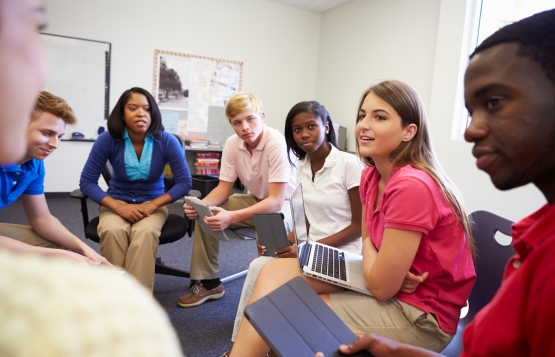
School, as the social community in which our children spend most of their waking hours, is the obvious place to begin teaching the civic virtues—those positive character traits that allow us to live well in society together and work towards a common good. These virtues should be taught not simply as concepts to be understood, but as a praxis to be lived out every day, in the classroom and well beyond it.

Civility is the most basic and obvious virtue to be taught in our public schools. Civility is derived from the Latin words for citizen (civis) and city (civitas) because it is the virtue that makes us fit to enjoy the benefits, as well as to carry out the responsibilities of being a member of society. Civility is a virtue that strikes a mean of action between two extremes that must be avoided: displaying lack of respect for others as equal participants in some society, on the one hand, and being overly ingratiating towards them, on the other. Civility governs the way we speak with and behave towards one another as members of a society. When we teach civility to students, we must be clear that the basis of its demands is that we all deserve, as members of the learning community, equal respect and equal opportunities to succeed. Yet we cannot have truly equal participation and equal opportunities unless we are treated with the fundamental respect we deserve simply as fellow human beings.

Civility is also connected to truth because there is a difference between respect for others as persons and other attitudes, like flattery or admiration. A student shows respect to classmates and teachers by following the mutually agreed upon rules and social norms for the school, but civility does not demand that a student never disagree with anyone, or that he is never frustrated, angered, or dismayed by what someone has said or done to him at school. If true civility is promoted in our schools, students will feel empowered to speak their minds because one fruit of civility is mutual trust between persons. When we respect one another in speech and deed, we come to trust one another as equals, and it is this trust that gives us the freedom to state our grievances, concerns, and objections without undue worry of retaliation or reproach. In a classroom where rules of civility are recognized and enforced, students can trust that they will be heard and understood and that disagreements will be handled respectfully.

Civility is key to success in learning. Students need to feel that they can speak their minds freely in the classroom, but they cannot have this freedom outside the context of civility, else the exchange of ideas becomes nothing more than a battle of wills. Moreover, empirical research suggests that incivility in our schools makes it difficult for children to learn; it tends to create a climate of fear, anxiety, and avoidance, and lowers measures of student well-being and academic performance.

Civility is not just external gestures of respect, but also inner feelings because the cultivation of civility helps bonds of civic friendship grow. We cannot and should not expect all students in a school to be close friends; the sort of deep friendships that are the hallmark of happy and meaningful lives is by nature far more discriminating and exclusive than the bonds of civic friendship. However, civic friendship is real friendship because it too involves mutual goodwill, affection, and shared activities and ends in common. We can and should try to foster this civic friendship between students. We do this when we help students realize that they are all participants in the same community, and thereby all working towards the same common ends and goods.

It is part of a true education for students to come to understand themselves as parts (in the sense of participants) in a larger whole whose fortunes are tied to their own: family, school, church, city, state, and nation. We should make these connections clear not just in our families and private lives, but also in our schools because here, too, students learn to engage in cooperative activities with one another under a system of rules that are enforced by recognized authorities. Too often, today’s students are unable to understand the connection between the rules that govern their lives and their own flourishing. But if we adopt the broader lens of virtue in education, students come to see these rules as the necessary limits within which their own success is possible. Rules should, therefore, not simply be articulated and enforced, but explained in ways that enable students to understand why they are practically necessary—necessary in the sense that the goods they desire depend upon them.

In our fractured and divided society, we need civility now more than ever. It is no minor virtue. We need our schools to understand, appreciate, and teach civility because the health of our democracy depends on it.

view

The long road to education recovery: Three ways for districts to redeem themselves

Dale Chu
12.16.2021
Flypaper

This school year was supposed to be the one when things returned back to normal. If only that were true. Instead, many districts have been wrestling with what one educator recently described to me as the “most challenging in twenty-five years of education.” That’s because schools across the country got off to a rocky start this fall when public health imperatives collided with severe staff shortages, wreaking havoc on school systems and sending into a tailspin many grand plans to get students back on track. To wit, one superintendent called the current state of play not one of education recovery, but of “survival.”

It’s time to accept that many districts are simply unready to enter the recovery phase, despite nearly two years of ongoing disruptions and sporadic school shutdowns. This is a bitter pill to swallow, to be sure. But as schools reel, there’s little capacity or appetite for taking on new initiatives, never mind doing them well.

Even as we see a dismal outlook for schooling for the rest of this academic year, districts need to be doing some planning so they can start the recovery effort in earnest soon, certainly by next fall. Here are three ideas worth considering:

1. Adopt a “split-screen” approach to improving traditional schools. Considered by many to be the godfather of the charter school movement, Ted Kolderie has been advocating a “split-screen strategy” for years, including writing a book on the topic. I first learned of Kolderie’s idea from my friend and former Dallas superintendent Mike Miles. What it calls for is districts hedging their bets and innovating with teaching and learning while continuing to improve existing schools. Think of it as running improvement and innovation side by side.

A superintendent might pursue this strategy by carving out a subset of schools—say one or two feeder patterns—and completely rethink it. Given today’s staffing problems and the underwhelming results of remote learning, this should include more asynchronous days for teachers and fewer for kids. As it stands, there’s little flexibility in how school days are organized. There are better ways to do scheduling, and we need a few savvy districts to boldly lead the way on transforming the profession into something more manageable for mere mortals.

2. Invest in high-quality charter schools. Besides rethinking teaching and learning within the existing system, the best way to do “split-screen” reform is to create new schools through chartering. This could be an especially appealing approach for those who want to try things that district schools aren’t permitted to do under state law, but charters are. It could also be a shrewd maneuver as the public school population continues to plummet amid a boom in charter school enrollment, which is to say it’s a way of altering the school supply to pace with changing demand.

In a bit of unvarnished good news, former New York City mayor Mike Bloomberg earlier this month announced a $750 million effort to create 150,000 more high-quality seats in charters over the next five years. It’s a huge investment for the philanthropic sector, though long-term recovery will require not only the generosity of astute benefactors, but also the sustained commitment of district authorizers who are interested less in ideology and more in creating the robust infrastructure needed to help all students thrive.

3. Listen to parents and their pleas for better options. While districts struggle and stumble to catch their students up, the timetable upon which this happens will not be fast enough for parents who watched their local public schools stay closed last year while many private schools opened safely. This doesn’t diminish the time and space required by school officials to effectuate change, but it should also create newfound urgency around providing reforms that parents actually want.

From hybrid homeschooling and open enrollment to homeschool enrichment and microschools, districts—in recognizing their limitations—should seize upon every opportunity in the next few years to expand the choice palette and become more flexible and creative about what schooling entails. School leaders need to ask themselves: What do the communities we serve need their schools to do? And how do we ensure these options are viable for students and families?

—

In hindsight, the tumult of staffing shortages and the resulting toll should come as little surprise. Reaching back into the history vault, it’s as if Kolderie foresaw in 1990 the chaotic problems that schools are mired in right now:

It is time to say this: Our system of public education is a bad system. It is terribly inequitable. It does not meet the nation’s needs. It exploits teachers’ altruism. It hurts kids.

We ought to change it. It is unproductive and unfair to put people under incentives that are not aligned with the mission they have been given to perform. That leads to blaming the people for failures that are the fault of the system...and we are now deeply into blaming people for the failures of public education. Parents blame teachers and administrators. Educators in response blame parents, and kids.

It is all wrong. We should stop blaming people. We should fix the system.

Hear, hear! The best time to begin addressing these issues would have been in March 2020 when schools first shut down. The second best time would have been last summer in anticipation of the difficulties educators would face with students returning to in-person learning after more than a year out of school. The third best time is now.

view

Build Back Better’s risks on early childhood education are manageable and outweighed by the benefits

Elliot Regenstein
12.14.2021
Flypaper

The funding system for early childhood education envisioned in Build Back Better is far superior to the one we have now. But as always in public policy, the transition from one condition to another is fraught with risks. In this case, one risk that has been identified is that the middle class will get squeezed as the program rolls out because supercharging the subsidies for low-income families when supply is limited will crowd out affordable opportunities for the middle class.

To assess this risk, it’s important to understand how the market for child care works. Families seek child care on the open market, and low-income families can receive a subsidy for some portion of their costs. But the reimbursement they receive isn’t closely tied to the actual cost of care, or to their family income. States tend to spread the money thinly to try to reach as many families as possible, which then leaves families having to bear significant child care expenses—even when they’re receiving public subsidies. And in practice, many families who are eligible for subsidies don’t even receive them.

Build Back Better would address these challenges in two major ways. First, it would change how states calculate the cost of quality to include adequate compensation for child care professionals and then require states to tie reimbursement to those costs. Second, it would cap the amount of money families would have to provide to cover child care costs; families with incomes over 150 percent of the poverty level would pay 7 percent of their income, and families with lower incomes would pay a lower percentage.

In general, the bill’s rollout approach—which prioritizes the needs of the lowest-income families—makes sense. In the child care market, the families with the most money are the ones most likely to find the services they want. Build Back Better provides support for lower-income families so they can compete for services, and it increases the odds that providers will find it worthwhile to offer services in neighborhoods that are currently “child care deserts.”

But there is a risk that the middle class will get squeezed. If workers in subsidized programs start receiving dramatically higher wages, that could drive up costs for all child care programs, given a limited supply. If middle-class families can’t compete with either the wealthy or the subsidized, it will leave them in a bind.

Ultimately, that risk is the price of having a transition like the one the bill contemplates. Leaving the current system in place would be a terrible mistake, and so some kind of plan for change is needed. And the bill’s focus on prioritizing low-income families is directionally correct.

So states will need to pay attention to the impact of their policies to make sure their policy choices are not overheating the market. For example, states have some flexibility to set reimbursement rates. Even more important, they have some flexibility when it comes to the rollout of eligibility; while states are expected to prioritize children with the greatest need, they have control over how rapidly the program expands to serve additional children.

Because of these flexibilities, it’s by no means inevitable that states will adversely impact the child care market for middle-class families as they implement new policies regarding costs, quality, salaries, and eligibility. But it’s not inevitable that they won’t, either. So it’s important for states to have good information about the impact their decisions are making, and the ability to correct course if state policy choices on reimbursement and eligibility are sending the market in an unhealthy direction.

Right now, states don’t even know how changes in the child care market are affecting the middle class. Indeed, most states don’t have good enough data to track supply and demand in the market in a timely way. Without that information, states can’t track the impact of their policy decisions, and would come dangerously close to flying blind. At this point, most states have at best a rudimentary understanding of how middle-class families are experiencing the child care market—let alone how they might be impacted by different choices in the implementation of Build Back Better.

No state is going to intentionally squeeze middle-class families out of child care. But federal law is a very broad sword, and without the right management systems, states could inadvertently end up swinging it in the wrong place. Ideally, states will rise to meet the challenge by collecting better data—and then using that data to adjust reimbursement and eligibility policies in a way that maximizes access for low-income families, while avoiding spiraling prices for families who aren’t getting the subsidy. And the federal government will have to accept states’ needs to make occasional course-corrections in management that are in keeping with Build Back Better’s direction, even if they stray mildly from what they’ve committed to in their initial plans.

In practice, the heaviest lift may be helping states and communities build up the capacity to manage effectively whatever flexibility is on offer, which is particularly important given the seismic shifts that are about to occur. Fortunately, building data and analytic capacity is an allowable use of federal funds, and should be one of the first priorities for states when the money comes through. Build Back Better is a major opportunity for states and communities to create analytic systems that help them adjust on the fly. Some states and communities are already working to build that kind of capacity, using funds from the federal Preschool Development Grants to get a running start. But there is a long way to go.

Early childhood is a complicated system, and the Build Back Better law won’t exactly reduce its complexity. It will, however, support states in achieving important goals. There’s no question that implementing the law will be a challenge. But the current system isn’t working for children and families. Build Back Better is a chance for states to make the break and reset that the early childhood system sorely needs.

view

Online courses and college degree completion

Jeff Murray
12.16.2021
Flypaper

Students’ inability to enroll in required courses—due to capacity or scheduling constraints—can stymie progress toward a college degree. New findings published in Educational Evaluation and Policy Analysis suggest that online courses can help keep students on track to college graduation.

The data come from a large, unnamed public research university in California. Researchers examined six years of data for three cohorts of incoming students—those who entered in the fall of 2009, 2010, and 2011—in thirteen of the largest majors. They look at how online course-taking impacted degree completion and the time it took to earn them. For each major, researchers collected information on all the course requirements and which courses could be taken online. On average, 3 percent of major-required courses (MRCs) were offered online during the study period, although there was much variability across majors. Eight percent of students in the study took at least one MRC online in their first four years of college. The vast majority of those online courses were taken in students’ first year, which proves important.

The topline findings are that a 1 percent increase in the number of MRCs offered online—simply offering the online option—was related to a 1.2 percent greater likelihood of students completing their degree within four years. In turn, a 1 percent increase in the proportion of MRCs actually taken online is related to a 14.4 percent greater chance of successfully graduating within four years. And a 1 percent increase in the proportion of first-year MRCs taken online was related to a 9 percent greater chance of successfully graduating within four years.

For students taking longer than four years to complete their degree, only first-year online MRCs had a significant impact on their time-to-degree. A 1 percent increase in the proportion of lower division MRCs offered online was associated with a decrease of 1.3 percent of a year (approximately 0.16 months) in time-to-degree, while a 1 percent increase in the proportion of lower division MRCs actually taken was associated with a 12 percent decrease in time-to-degree, corresponding to approximately 1.4 months.

While these results emerge despite the minimal offerings available—testing the methodology in a setting where more online options exist would likely prove enlightening—the researchers do urge caution in interpretation because there is no random assignment of students to online versus in-person versions of the courses. They are, in most cases, choosing of their own accord which version of a course they take and why. Additional caveats noted by the researchers are of a similar student-centric nature: possible effects on completion time from non-major courses taken online, students switching majors during the timeframe (especially if they do so to finish faster), double- and triple-major students whose graduation times can become extended, and savvy students petitioning for use of other courses to fulfill major requirements. It is also likely that students able to take major courses in their first year (rather than starting from scratch with general education credits) are those coming in with those base college credits via dual enrollment or AP and may represent more focused or motivated students than average.

Despite the fact that some research shows slight negative impacts of online course taking for near-term measures of student learning and performance in college—such as course completion, course grades, and success in subsequent courses—many students can and do utilize the flexibility afforded by online courses to efficiently reach the goal of completing a degree. Quality of online courses matters, but so does the ability to schedule and take needed courses. One hopes that the necessary burgeoning of online options in the Covid era will help with both. But far more analytical attention is being paid to the former while the latter goes unnoticed. This research shows that quantity of offerings matters, too.

SOURCE: Christian Fischer et. al., “Increasing Success in Higher Education: The Relationships of Online Course Taking With College Completion and Time-to-Degree,” Educational Evaluation and Policy Analysis (November 2021).

view

Boosting the effectiveness of STEM role models

Jeff Murray
12.16.2021
Flypaper

Providing relatable role models for young people is a guiding principle by which STEM practitioners hope to motivate scientists of the future and diversify their ranks. Conscious of the importance of this endeavor, New York University researchers Jessica Gladstone and Andrei Cimpian examined the literature on role modeling to identify strategies for maximizing its motivational impact. Their meta-analysis suggests important nuances that should be taken into account when designing such programs.

Gladstone and Cimpian began by analyzing four theories of motivation—social cognitive theory, expectancy-value theory, mindset theory, and attribution theory—and find considerable overlap in the features of an effective role model. When specifically applied to STEM, these features include a role model’s perceived competence, their perceived similarity to the student, and the seeming attainability of their STEM career. Each of these could increase students’ motivation to pursue STEM, but the researchers hypothesize that different attributes impact different students in a variety of ways. (None of this is rocket science, so to speak.)

They then dug into the extensive role modeling literature looking for studies conducted in a STEM-relevant domain that also included STEM-specific outcome variables such as performance, interest, and sense of belonging in a scientific field. The researchers identified fifty-five studies published between 1976 and 2019 and analyzed each for evidence of the impacts of the role model attributes noted above. They also looked for the ways in which four specific student-level moderators (gender, race and ethnicity, age, and identification with STEM) interacted with role model effects.

Gladstone and Cimpian found evidence that suggests that the perceived competence of role models is highly motivating for students, particularly if the student and role model share characteristics such as gender or race, but there also seems to be a limit. Role models perceived as “exceptional” (think perfect ACT scores, medal winners, top of the class at Yale, etc.) were actually demotivating to all but a handful of students. The researchers caution that this evidence emerged from a small fraction of the studies they analyzed, but it stands to reason that being exposed to only “the best and the brightest” exemplars would be less impressive to young people who do not see themselves that way.

This conclusion led Gladstone and Cimpian to break down the perceived similarity characteristic between students and role models into demographic and psychological dimensions. When role models belonged to groups that are underrepresented in STEM (e.g., women and people of color), they often had positive effects for all students, regardless of demographic similarity. In contrast, majority-group models (e.g., men or White people) did not motivate students from underrepresented groups and were sometimes demotivating in a similar manner as was seen in the competence dimension.

Characteristics that increased the role model’s psychological similarity to students—such as stereotypical “non-nerdy” pursuits like playing music or sports—generally had positive effects on student motivation. Prompting students to reflect on their similarity to the role models was also sometimes effective in boosting connection and motivation. Finally, every instance in which exposure to a role model lowered STEM motivation was linked in some way to the perceived unattainability of the role model’s career. Efforts to “demystify” STEM careers and the pathways to reach them were generally positively related to student motivation.

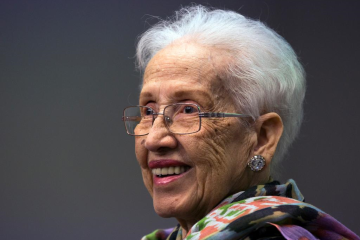
Overall, it appears that not all STEM role models are motivating to all students. In fact, a number of the role models that adults may think are super awesome can serve to turn off students who cannot see themselves resembling those individuals. Very few people in middle or high school will seriously picture themselves becoming the next Stephen Hawking, but Katherine Johnson’s life and work, unsung for far too long, shows us a more relatable option. And best of all, there are far more of the latter than the former available to showcase. Gladstone and Cimpian offer four solid recommendations for choosing and presenting role models in the most effective way. STEM practitioners need to think outside of the box if they want to move kids from seeing what they can be to being what they have seen.

SOURCE: Jessica R. Gladstone and Andrei Cimpian, “Which role models are effective for which students? A systematic review and four recommendations for maximizing the effectiveness of role models in STEM,” International Journal of STEM Education (December 2021).

view

Education Gadfly Show #799: Build Back Better’s big impact on pre-K and child care

12.15.2021
Podcast
 

On this week’s Education Gadfly Show podcast, Elliot Regenstein, partner at Foresight Law + Policy and former member of Illinois’s Early Childhood Funding Commission, joins Mike Petrilli and David Griffith to discuss how the Build Back Better plan would affect pre-K and child care. Then, on the Research Minute, Amber Northern covers a study that examines why students of color benefit from having teachers of the same race and ethnicity.

Recommended content:

  • Elliot’s posts on Flypaper outlining his thoughts: “The Build Back Better plan would improve both pre-K and child care,” and “Build Back Better’s risks on early childhood education are manageable and outweighed by the benefits”
  • A previous Education Gadfly Show podcast episode, on which Lindsey Burke, director of the Center for Education Policy at the Heritage Foundation, makes the case against the Build Back Better plan’s early childhood provisions: “Education Gadfly Show #794: Universal pre-K seems imminent. Should we celebrate?”
  • The study that Amber reviewed on the Research Minute: David Blazar, “Teachers of Color, Culturally Responsive Teaching, and Student Outcomes: Experimental Evidence from the Random Assignment of Teachers to Classes,” Annenberg Institute at Brown University (December 2021).

Feedback welcome!

Have ideas or feedback on our podcast? Send them to our podcast producer Pedro Enamorado at [email protected].

view

Cheers and Jeers: December 16, 2021

The Education Gadfly
12.16.2021
Flypaper

Cheers

  • Eric Adams has picked David Banks to run New York City’s public schools, a former teacher and principal and the founder of a network of six public schools that serves Black and Hispanic boys in New York and Newark. —Wall Street Journal 
  • Under pressure from the state, the school board in Aurora, Colorado, will drop a discredited reading curriculum and make literacy a top priority. —Chalkbeat Colorado
  • “Supreme Court oral argument in Carson v. Makin sends hopeful signal for religious school aid.” —Education Next

Jeers

  • Although student violence and misbehavior are growing, some districts have eliminated the use of suspensions. —Wall Street Journal
  • Teachers are struggling to curb student fights, online harassment, and vandalism as students return to classrooms. —Los Angeles Times
  • Schools are addressing teacher burnout with half days that cut into student learning. —Washington Post
view

What we're reading this week: December 16, 2021

The Education Gadfly
12.16.2021
Flypaper
  • Parents, demonstrating more practical wisdom than activists and policymakers, are in favor of more career-oriented programs in high school. —City Journal
  • Miami Superintendent Alberto Carvalho, with a strong record on accountability and school improvement, was selected to lead the Los Angeles school district. Can he replicate his success? —The 74
  • “We have all of this talent just sitting there,” says Jonathan Plucker about the state of gifted education in America. “And the child isn’t benefiting from their own skills. That is a massive societal failure. We simply have to do better.” —The 74
  • A new report shows widening inequities in schools’ pandemic recovery, with some students in majority-Black schools now trailing White peers by a full twelve months of learning. —McKinsey
Fordham Logo

© 2026 The Thomas B. Fordham Institute
Privacy Policy
Usage Agreement

National

P.O. Box 110
Burke, VA 22009

202.223.5452

[email protected]

Ohio

P.O. Box 82291
Columbus, OH 43202

614.223.1580

[email protected]

Sponsorship

130 West Second Street, Suite 410
Dayton, Ohio 45402

937.227.3368

[email protected]