Mobile Navigation

  • National
    • Policy
      • High Expectations
      • Quality Choices
      • Personalized Pathways
    • Research
    • Commentary
      • Gadfly Newsletter
      • Flypaper Blog
    • Events
    • Scholars Program
  • Ohio
    • Policy
      • Priorities
      • Media & Testimony
    • Research
    • Commentary
      • Ohio Education Gadfly Biweekly
      • Ohio Gadfly Daily
  • Charter Authorizing
    • Application
    • Sponsored Schools
    • Resources
  • About
    • Mission
    • Board
    • Staff
    • Career
Home
Home
Advancing Educational Excellence

Main Navigation

  • National
  • Ohio
  • Charter Authorizing
  • About

National Menu

  • Topics
    • Accountability & Testing
    • Advanced Education
    • Career & Technical Education
    • Charter Schools
    • Curriculum & Instruction
    • ESSA
    • Evidence-Based Learning
    • Facilities
    • Governance
    • Personalized Learning
    • Private School Choice
    • School Finance
    • Standards
    • Teachers & School Leaders
    • Think Again
  • Research
  • Commentary
    • Gadfly Newsletter
    • Flypaper Blog
    • Gadfly Podcast
  • Events
  • Scholars Program

The Education Gadfly Weekly

Sign Up to Receive Fordham Updates

We'll send you quality research, commentary, analysis, and news on the education issues you care about.
Thank you for signing up!
Please check your email to confirm the subscription.

The Education Gadfly Weekly: 2021 election recap: How four key school board races shook out

Volume 21, Number 44
11.4.2021
11.4.2021

The Education Gadfly Weekly: 2021 election recap: How four key school board races shook out

Volume 21, Number 44
view
High Expectations

2021 election recap: How four key school board races shook out

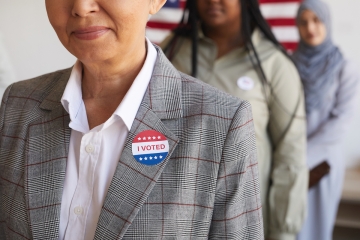
While the gubernatorial upset in Virginia drew the brightest spotlight, Tuesday’s election featured an unusual surge in the number of school board candidates vying for thousands of seats all over the country. Four races were especially noteworthy, both for the charged political rancor leading up to November 2, as well as the potentially broader implications from the results.

Dale Chu 11.4.2021
NationalFlypaper

2021 election recap: How four key school board races shook out

Dale Chu
11.4.2021
Flypaper

Reconnecting knowledge and virtue

Jennifer Frey
11.4.2021
Flypaper

Lessons on protecting viewpoint diversity in classrooms

Robert Pondiscio | Tracey Schirra
11.4.2021
Flypaper

Even better than the real thing: Four-day school weeks make adults very happy

Jeff Murray
11.1.2021
Ohio Gadfly Daily

The complexities of accountability and private school choice

Jessica Poiner
11.4.2021
Flypaper

Education Gadfly Show #794: Universal pre-K seems imminent. Should we celebrate?

11.4.2021
Podcast

Cheers and Jeers: November 4, 2021

The Education Gadfly
11.4.2021
Flypaper

What we're reading this week: November 4, 2021

The Education Gadfly
11.4.2021
Flypaper
view

Reconnecting knowledge and virtue

Jennifer Frey 11.4.2021
Flypaper
view

Lessons on protecting viewpoint diversity in classrooms

Robert Pondiscio, Tracey Schirra 11.4.2021
Flypaper
view
RAND four day school week report SR image

Even better than the real thing: Four-day school weeks make adults very happy

Jeff Murray 11.1.2021
Ohio Gadfly Daily
view

The complexities of accountability and private school choice

Jessica Poiner 11.4.2021
Flypaper
view

Education Gadfly Show #794: Universal pre-K seems imminent. Should we celebrate?

Michael J. Petrilli, David Griffith, Ph.D., Amber M. Northern, Ph.D., Lindsey Burke 11.4.2021
Podcast
view

Cheers and Jeers: November 4, 2021

The Education Gadfly 11.4.2021
Flypaper
view

What we're reading this week: November 4, 2021

The Education Gadfly 11.4.2021
Flypaper
view

2021 election recap: How four key school board races shook out

Dale Chu
11.4.2021
Flypaper

While the gubernatorial upset in Virginia drew the brightest spotlight, Tuesday’s election featured an unusual surge in the number of school board candidates vying for thousands of seats all over the country. Like many things exacerbated and aggravated by the pandemic, these contests—ordinarily sleepy and often uncontested affairs—were an unlikely outpost in the larger culture war over race and Covid-safety protocols. Across the 463 districts monitored by Ballotpedia, the number of candidates per school board race increased 17 percent from 2018; in Colorado, that number rocketed up a whopping 165 percent—more than the state has seen at any time in the last twenty years. There were also some closely watched recall efforts, with incumbents in one affluent suburb of Milwaukee soundly beating back a slate of Republican challengers that ran on an anti–critical race theory platform.

The school board elections in four districts were especially noteworthy, both for the charged political rancor leading up to November 2, as well as the potentially broader implications from the results. Let’s take a look, starting east and then moving west.

Columbus. The results from Ohio’s largest school district are notable because controversial Democratic incumbent James C. Ragland lost his re-election bid. His own local party set their sights on him at the behest of the teachers union because Ragland called out teacher absenteeism and spoke in support of school choice, once appearing at an event with Betsy DeVos. After his defeat became apparent, Ragland said:

You cannot play politics with the lives of these kids. I stand by everything that I did. I stand by everything that I said. I told the truth, and those that are in power punished me for it. And I’m OK with that.

A lesson from this deep blue capital city might be that the schism ed reformers should be wary of is often less about party-line divides and more about internecine rifts among Democrats (see Denver, next).

Denver. How the mighty have fallen. Since Denver’s historic “flip” two years ago, the union-backed school board has gradually dismantled what were once the most promising examples of education reform in the country. On Tuesday, this majority appeared to consolidate their power with all four of their candidates winning, which would mark the first time in recent history that the board has been unanimously union-backed. It’s hard to say where things go from here, as board members have struggled to articulate their vision beyond being nebulously anti-reform, rattling off the requisite buzzwords. One thing is for certain, though, in this Democratic stronghold: School reform in the Mile High City is indefinitely stalled.

Douglas County, Colorado. In my backyard, more than half of Douglas County’s school board was replaced Tuesday as a slate of conservative candidates convincingly swept their races. Located just south of Denver, Republicans here outnumber Democrats by two to one, but unaffiliated voters make up the largest segment of the electorate. The hotly contested school board battle garnered national attention for the vitriol around mask mandates and race-related issues. But the district has had a long history of making headlines, in part because of the perpetual tug of war between pro- and anti-school choice forces. To wit, AEI’s Rick Hess once called Douglas County the “most interesting school district in America.”

Albuquerque. A major shakeup in New Mexico’s largest district was never in doubt, as all four members with terms ending this year called it quits. Tuesday’s results were encouraging, as a slate of business-backed candidates are poised to win three of the four seats in races that have often been decided by the local teachers union. This bodes well for an agenda that properly puts a focus back on accountability and improving student performance. A decisive shift in power will be a positive development in Albuquerque, which serves one in five New Mexico students, because the district tested only 1 percent of their kids last spring—which came as no surprise given the shenanigans the previous board pulled to deliberately depress participation.

—

An unanswered question is whether Tuesday’s atmospherics are a preview of what’s in store for school board elections in the coming years—or whether they’ve outlived their utility as fodder for political satire on SNL. It’s worth remembering that the strife seen in many places leading up to Tuesday’s decisions were due in no small part to the fact that school board members are often in office because of off-cycle elections in which the overwhelming majority of eligible voters didn’t even cast a ballot. At the same time, no clear trend emerged from these four contests, perhaps suggesting that, despite pandemic school closures and the national brouhaha, school board races at least remain highly contingent.

view

Reconnecting knowledge and virtue

Jennifer Frey
11.4.2021
Flypaper

Editor’s note: We're happy to introduce Jennifer Frey, who will be writing regularly for the Fordham Institute over the next year. She is an associate professor at the University of South Carolina, where she focuses on virtue ethics.

Early in October, a group of professors, administrators, teachers, scholars, and journalists gathered in Annapolis for the Classic Learning Test’s third annual Higher Education Summit. The theme was “bringing fire to the next generation.” Despite the political, religious, and ethnic diversity of the group, we were united in our shared love for classical education, our common commitment to see it grow and flourish, and our concern that contemporary education’s abandonment of it is a great disservice to students.

What is classical education? The best definition is broad and conveys its essence: Classical education seeks to develop the whole person by reconnecting knowledge and virtue. Classical educators understand that the value of our received tradition is not “the worship of ashes, but the preservation of fire.” As a member of the CLT’s Board of Academic Advisors, I was happy to participate in a gathering whose main purpose was to celebrate a vision of education that I firmly believe should be the model for the future in this country—a model that embraces the classical idea that a true education, what the Greeks called paideia and the Germans called bildung, is about building personal character, not just conveying useful information or developing worthwhile skills. A classical education equips students for success in the deep and abiding sense of being able to flourish as free and good human beings.

Princeton’s celebrated professor Robert George spoke personally and movingly about his humble roots in West Virginia and how he felt his public education had failed to prepare him for university study. Besides lacking certain skills, George identified a deeper problem: He had no idea why he was at Swarthmore College beyond his desire for upward mobility. Reading Plato’s Gorgias changed that, and he came to see that he should want to know and understand the world for its own sake because human freedom and flourishing are tied to the pursuit of truth. Like all higher aspirations, this pursuit requires virtues, including patience, humility, courage, and studiousness.

The connection between truth and freedom was picked up in a conversation between me and Cornel West, now a professor at Union Theological Seminary. We were discussing James Baldwin, and Dr. West rightly pointed out that innocence about racial terror and trauma in the United States is a “pre-paideia condition” because the ability to see one’s society clearly takes character virtues, such as honesty, which checks every form of self-flattery and self-deception. Dr. West stressed the need to cultivate the civic love that is the root of justice in order to be able to see one another’s suffering and respond appropriately, and the further need to develop a sense of self-transcendence that virtue brings along with it.

Jessica Hooten Wilson of the University of Dallas picked up on the theme of self-transcendence in her talk on the metaphor of fire in our literary tradition. She pointed out that, while fire surely has destructive potential, it also carries the power to purify, reshape, and renew, and in literature is often associated with knowledge and hope. Dr. Hooten Wilson argued that, for educators to carry the fire is to help students imagine themselves as part of a story that began long ago and will continue long after they are gone. When we learn this story, through reading the great texts of our received tradition, we broaden and deepen our vision and expand our imaginations, preparing us to write our own stories in a way that keeps the broader human story firmly in mind.

Anika Prather, adjunct professor of classics at Howard University, discussed how we need to create a learning environment where all students can gather around the fire and be able to see themselves as part of the tradition that is being handed on. Dr. Prather spoke movingly about how the fire of paideia was so important to Black intellectuals fighting for civil rights, seminal figures such as W.E.B. Du Bois, Anna Julia Cooper, Frederick Douglass, and Martin Luther King Jr.

Finally, Spencer Klavan, host of the Young Heretics podcast, reminded us all of the importance of the virtue of gratitude. Klavan spoke eloquently about the monks who labored in their cold cells, dutifully copying ancient manuscripts so as to keep the fire of classical culture burning when almost all its institutions had fallen asunder. Klavan reminded us that many forces are now working against classical ideals, including the standardized-testing regime, which forces students to read lifeless prose in a lifeless way, and educators who brag about getting rid of Homer and assert that tradition is nothing more than white supremacy and patriarchy. Klavan pressed us to keep the fire going because, just as we are grateful to those long-ago laboring monks, future generations will be grateful for our labors now. This gratitude is the stuff of piety, a virtue that is all but lost today.

The sad truth is that contemporary education has stopped carrying the fire. It has become technocratic and divorced from virtue. But it needn’t and shouldn’t remain this way.

view

Lessons on protecting viewpoint diversity in classrooms

Robert Pondiscio | Tracey Schirra
11.4.2021
Flypaper

A story that became a flashpoint in national conversations around the effects of “CRT bans” is reaching its denouement: This past week, a hearing officer appointed to adjudicate the case ruled that the Sullivan County, Tennessee, school board was justified in firing high school teacher Matthew Hawn earlier this year.

The hearing officer concluded, reports Education Week, that Hawn, who taught a contemporary issues class, “was insubordinate and unprofessional and violated the [Tennessee state] teacher code of ethics when he failed to provide students ‘varying viewpoints’ on the existence of white privilege.” (Contrary to widespread coverage and social media chatter, Hawn was not charged with violating Tennessee’s recently enacted “CRT ban.”)

It was the right call if you take viewpoint diversity seriously, and not a difficult decision if you’re uncomfortable with teachers conceiving of their roles as a form of social justice activism (whether or not you share their views). The case bodes well for other school districts and states who may be considering adopting or enforcing teacher codes of conduct similar to the one that resulted in Hawn’s dismissal as a tool to recommit teachers to open and free classroom discussion, with multiple points of view represented.

That said, there are two matters in the story that illuminate details that schools, districts, and states need to attend to if they want to use codes of conduct effectively.

The first is the importance of ensuring that teachers understand what it means to provide varying viewpoints. Even after the ruling upheld his dismissal, Hawn still seemed at a loss for why he was at fault. Education Week relays:

In a school district and county that’s overwhelmingly white and conservative, Black writers like Coates, Lacey, and Blake are the varying viewpoint, Hawn said.

“Whenever I teach perspectives from African American people, I have to immediately compare and contrast it with a white narrative,” said Hawn, a white self-described ‘anti-racist’ teacher in a district where more than 94 percent of students are white. “That’s what they want me to do with my lesson plans.”

If we take Hawn at his word, it highlights the need to train teachers on what viewpoint diversity actually looks like (perhaps not a strong suit of our schools of education) and, most importantly, what issues might present tripwires in their communities. As we argue in a forthcoming AEI report, teachers often work in isolation, creating blind spots where they either don’t recognize sensitivities about issues or mistakenly assume their personal views are common and uncontroversial. Codes of conduct, taken seriously as a driver of school culture, would encourage teachers to seek input from their colleagues and administrators before teaching a controversial topic to ensure they present multiple views accurately, professionally, and without unduly indulging their personal views. Collaborating with colleagues to ensure one is exercising discernment and commonsense could also help avoid the compliance mentality that leads to nonsensical declarations that opposing views need to be presented on historical matters, such as whether the Holocaust occurred or if there are two sides to slavery.

The second matter concerns whether students should be allowed to grapple with controversial, contemporary issues at all. Contrary to Hawn’s claim, reported by Education Week, that the school district removed its contemporary issues class from the curriculum, we confirmed with Sullivan County officials that the course is still being taught. This is also the right call. Schools absolutely should be teaching age-appropriate controversial issues. We have drifted a long way from the founding purpose of American education as preparation for self-government, an essential component of which is the ability to grapple thoughtfully with contentious public issues. Indeed, in a diverse and divided nation, that skill has never been more necessary or in shorter supply.

But that puts the onus on educators to commit themselves to fairness, inquiry, and rigor—not the whims of social justice advocates. Instilling and enforcing teacher codes of conduct that stipulate that teachers are welcomed and encouraged to address age-appropriate controversial topics with students, so long as teachers provide students access to varying points of view when they do so, can go a long way towards threading this needle. Ultimately, though, such codes will only work if districts lean into the idea that teachers should teach controversial issues—not cancel the classes that enable this to happen.

Sullivan County appears to have gotten this one right, in taking a stand for viewpoint diversity, respecting their students’ ability to weigh evidence and to think independently, and maintaining their commitment to the public purpose of public education. Here’s hoping others—many others—follow their lead.

Editor’s note: A slightly different version of this article was first published by the American Enterprise Institute.

view
RAND four day school week report SR image

Even better than the real thing: Four-day school weeks make adults very happy

Jeff Murray
11.1.2021
Ohio Gadfly Daily

The most commonly expressed motivator for school districts to adopt a four-day school week is monetary: lowering expenditures on hourly staff, transportation, and utilities costs. It is not incidental that the most recent uptick in districts opting for them was in the aftermath of the Great Recession. The second motivator is as a low-cost perk for hiring and retaining teachers. Kids? Well, they are somewhere further down on the list. A new report from the RAND Corporation is one of the largest and most detailed to date examining the implementation and outcomes of four-day school weeks, focusing strongly on how those motivators play out in practice.

This study employed both qualitative and quantitative analyses, examining existing data from six states (Colorado, Idaho, Missouri, New Mexico, Oklahoma, and South Dakota) and original data collected explicitly for this study in three of those states—Idaho, New Mexico, Oklahoma—chosen due to their high numbers of districts utilizing four-day weeks. The analysis was conducted using a sample of eighteen four-day districts (six from each of the three focus states) and eighteen districts on a standard five-day week (six comparable districts from each state). The original data included in-person interviews with more than 460 students, parents, teachers, principals, and other stakeholders in twelve four-day school week districts, as well as online survey data from over 6,000 middle and high school students and more than 1,200 parents of elementary school students in both types of districts.

The descriptive detail matches that of previous research. Four-day week districts typically have, on average, about fifty minutes of additional daily instruction time than do five-day week districts. This is largely driven by the need for districts to meet required minimum hours of instruction per year set by their states. However, four-day week districts ultimately average fifty-eight fewer instructional hours per year than do their peers with five-day weeks. The most typical schedule consists of classes on Monday through Thursday with Fridays off, followed by classes Tuesday through Friday with Mondays off, and a schedule which switches up the off-day at various times of the year.

Most four-day week districts reported holding sports practices or competitions on the off day; far fewer reported clubs or student activities that met on the off-day. Academic enrichment activities were offered on rare occasions. Despite sports and club offerings being common, 80 percent of high school students and 90 percent of elementary students surveyed reported that home was the primary place they spent their time on the off-day. Typical non-school activities for students on the off-day include recreational sports, employment, and spending time with family and friends.

A majority of teachers reported doing some amount of school-related work on the off-day, although focus groups indicated that this was largely intended to open the weekend fully for non-work activities. A non-trivial number of teachers reported working a second job on the off-day, including substituting in a nearby five-day week district, with the highest concentration of such reports occurring in Oklahoma. Parental survey responses indicated that the popularity and continued existence of four-day school weeks could be influenced by how easy it was to find an adult to watch children as needed on the off-day. Thus, communities with multiple generations living in proximity or communities with a number of flex-time employers would likely be more supportive of a shortened formal school schedule.

As for the outcomes, empirical data suggest that cost savings to districts from a shortened school week are less than 5 percent per year as compared to similar districts with a traditional schedule. A number of school leaders interviewed claimed far more extensive savings than would seem possible, but a majority said that any savings were meaningful, especially if the four-day week allowed them to retain and recruit staff. Board members, administrators, school staff, and principals were generally in agreement that four-day weeks were an incentive to teachers. However, teacher responses were decidedly mixed, and context seemed to matter. For instance, a number of districts switched back and forth from four-day to five-day weeks several times, but teachers reported staying put throughout the switches. As a result, they were considered by the researchers as not influenced by the “perk” of a shorter week. Teachers in areas where a lot of districts operated with a shortened week were similarly immune. It seems an extra day off isn’t considered a perk if everyone gets it. Meanwhile, in areas where the shortened week was a rarity, more teachers reported seeking jobs and remaining employed in their four-day week districts due to the perceived benefit.

Teacher attendance appears to have greatly improved after the adoption of a four-day week. Teachers across the board reported scheduling medical appointments and family errands on the off-day rather than taking a work day to attend to them. Additionally, having “cleared the decks” on the off-day, weekends were reportedly more restful for teachers, leading to less reported fatigue or burnout. Their survey responses indicated high satisfaction with the four-day week. Unfortunately, no quantitative data on teacher absenteeism were available to corroborate these survey responses.

Students and parents also reported strong satisfaction with the four-day school week based on perceptions of increased sleep time, positivity toward school, and general well-being for children. Quantitatively, however, there were no statistical differences between four-day week districts and their five-day peers in terms of student attendance. Survey responses between the two groups of districts also showed no statistical differences on perceptions of student emotional well-being, parent stress levels, or school climate.

There are many more dimensions explored in the RAND report, including a reminder that previous research has found both negative and positive academic effects of reduced in-class learning time in four-day week districts. Without new quantitative data included, the perceptions of adults are the main contribution of this report to the literature. The happiness of adults who believe they are saving precious time and money, even when they are probably not, still seems to be the driving force for embracing four-day school weeks. When we shift our focus away from perception and toward hard evidence, that shiny picture of the four-day week model begins to lose definition. And when we shift our priorities toward actual student learning and achievement—if we can still manage to do so—the image is more noise than signal.

SOURCE: M. Rebecca Kilburn, et. al., “Does Four Equal Five? Implementation and Outcomes of the Four-Day School Week,” RAND Corporation (October 2021).

view

The complexities of accountability and private school choice

Jessica Poiner
11.4.2021
Flypaper

Among its many educational impacts, the pandemic has reenergized efforts to expand private school choice. States like Ohio, where it already existed, have expanded eligibility and increased funding. Meanwhile, Kentucky, Missouri, and West Virginia established their first-ever programs. In total, thirty-one states, as well as the District of Columbia and Puerto Rico, now have private school choice.

It’s possible that even more states will join these ranks over the next few years. As newly established programs grow, the number of participating students may skyrocket—and policymakers will be confronted with plenty of complicated questions. Chief among them is the age-old question: How should private schools that receive public funds be held accountable? (For more on this topic, see Fordham’s previous work.)

Nicole Stelle Garnett of the University of Notre Dame Law School offers some insight on this question in a brief recently published by the Manhattan Institute. She begins by examining the history of private school choice, as well as the current policy landscape. For the most part, private schools are free from the regulations imposed on traditional public and charter schools. Laws vary across states, but almost all are minimal. For example, although forty states regulate curricula in some way, most exempt private schools from those mandates. But the laws that govern private school choice programs tend to be strict, as taxpayer funds come into play. Some states mandate minimum qualifications for teachers and basic curricular requirements, such as teaching civics. Some voucher programs regulate school admissions policies. And all programs manage school finance in some capacity, such as restricting scholarship amounts to the school’s tuition level.

Holding private schools accountable for student outcomes is a little more complicated. Garnett outlines four challenges for accountability in the private school choice context: politics, namely the fierce debates between school choice proponents and opponents; the tension between quality (only high performing schools are permitted to participate) and quantity (parents should have as many options as possible); selection bias, which can make it difficult to compare the performance of students participating in private school choice programs with their public school peers; and the limitations of standardized-test-based accountability, as parents often look beyond test scores to gauge school quality.

According to Garnett, whether or not these challenges can be overcome depends on the purpose of accountability. If the point is to ensure that parents have only “good” choices, then overcoming these complexities will be extremely difficult. But if the goal is simply to help parents make choices, the path forward is smoother and worth pursuing. She offers four suggestions for how to design private school choice accountability regulations so that they give families the information they need, while also expanding the number and variety of options.

Encourage transparency at the school level. In some states, private school choice programs don’t require participating schools to administer any standardized tests. Those that do rarely require the results to be made publicly available. There are a few states that do both, such as Ohio, Wisconsin, Indiana, and Louisiana. Other states would be wise to follow suit, though Garnett notes that only requiring voucher recipients to take the assessment—and not all students—creates an imperfect measure of school quality.

Permit testing flexibility. Private schools shy away from administering state tests for a variety of reasons. Some fear that it’s a slippery slope toward being forced to align their curricula to state exams, while others believe they aren’t an accurate reflection of student achievement and progress. Permitting the use of multiple assessments can assuage some of these concerns, though it also creates a problem: Apples-to-apples comparisons between private and public schools are far more difficult when multiple tests are used. A compromise would be to allow private schools to administer a research-backed test of their choosing, so long as they publicly report the results for all students.

Develop alternative measures of school quality. Families value academic performance, but that’s not the only factor that they consider when making their schooling decisions. If the goal of accountability is to help parents make informed choices, then accountability systems should report on factors that matter to parents. One way to do this would be to require participating private schools to publicly report testing results and at least one noncognitive measure of school quality, such as attendance rates or information about college enrollment and persistence. Doing so would provide families with more information and could help mitigate issues created by allowing test flexibility.

Structure policies to preserve better choices. In the interest of giving families as many choices as possible, accountability policies should be structured to prevent the exclusion of private schools that struggle academically but are higher performing than other schools in their community; the comparative strength of other local schools should matter.

Garnett argues that the ultimate goal of private school accountability should be to ensure that families have access to more and better schools. That means giving parents and guardians the information they need to make wise choices—information that is transparent, easy to interpret, and reflective of the school-quality criteria that matter to them.

SOURCE: Nicole Stelle Garnett, “Accountability and Private-School Choice,” The Manhattan Institute (October 2021).

view

Education Gadfly Show #794: Universal pre-K seems imminent. Should we celebrate?

11.4.2021
Podcast
 

On this week’s podcast, Lindsey Burke, director of the Center for Education Policy at the Heritage Foundation, joins Mike Petrilli and David Griffith to discuss what the Democrats' still-in-the-works “social infrastructure” bill may mean for pre-K and childcare. On the Research Minute, Amber Northern examines how differences in parental beliefs across socioeconomic backgrounds affect educational inequities.

Amber's Research Minute:

John A. List, Julie Pernaudet, and Dana Suskind, "It All Starts with Beliefs: Addressing the Roots of Educational Inequities by Shifting Parental Beliefs," NBER Working Paper #29394 (October 2021). 

Have questions or feedback about the podcast? Email [email protected].

view

Cheers and Jeers: November 4, 2021

The Education Gadfly
11.4.2021
Flypaper

Cheers

  • After Glenn Youngkin’s win in Virginia’s governor’s race, “Democrats probably need a new way to talk about progressive ideology and education.” —Ross Douthat
  • “School-based quarantine is not a good idea. It is disruptive without having any public health benefit.” —Emily Oster
  • Montgomery County, Maryland, is finally updating its quarantine protocols to keep more kids in school. —Washington Post
  • We must beware of right-wing illiberalism underlying the push for anti-CRT laws. —David French

Jeers

  • Far too many repeat the false trope that programs for gifted and talented children are elitist or racist—just as a recent AP News headline did.
  • In recent years, union-backed Denver school board candidates put a stop to the district’s formidable and effective reforms. —Education Next
view

What we're reading this week: November 4, 2021

The Education Gadfly
11.4.2021
Flypaper
  • Congress is inching closer to making universal pre-K, expanded free school meals, and cash benefits for working-class families a reality. —Chalkbeat
  • “The Democratic unraveling began with schools.” —The Atlantic
  • Fights over education issues helped Republicans win elections in Virginia, but that wasn’t true everywhere. —AP
  • Some school systems are embracing charter-like reforms, such as P-TECH high’s partnership with IBM, to give disadvantaged students a leg up. —Jay Mathews
  • “Violence in schools seems to be increasing. Why?” —Education Week
Fordham Logo

© 2026 The Thomas B. Fordham Institute
Privacy Policy
Usage Agreement

National

P.O. Box 110
Burke, VA 22009

202.223.5452

[email protected]

Ohio

P.O. Box 82291
Columbus, OH 43202

614.223.1580

[email protected]

Sponsorship

130 West Second Street, Suite 410
Dayton, Ohio 45402

937.227.3368

[email protected]