Mobile Navigation

  • National
    • Policy
      • High Expectations
      • Quality Choices
      • Personalized Pathways
    • Research
    • Commentary
      • Gadfly Newsletter
      • Flypaper Blog
    • Events
    • Scholars Program
  • Ohio
    • Policy
      • Priorities
      • Media & Testimony
    • Research
    • Commentary
      • Ohio Education Gadfly Biweekly
      • Ohio Gadfly Daily
  • Charter Authorizing
    • Application
    • Sponsored Schools
    • Resources
  • About
    • Mission
    • Board
    • Staff
    • Career
Home
Home
Advancing Educational Excellence

Main Navigation

  • National
  • Ohio
  • Charter Authorizing
  • About

National Menu

  • Topics
    • Accountability & Testing
    • Advanced Education
    • Career & Technical Education
    • Charter Schools
    • Curriculum & Instruction
    • ESSA
    • Evidence-Based Learning
    • Facilities
    • Governance
    • Personalized Learning
    • Private School Choice
    • School Finance
    • Standards
    • Teachers & School Leaders
    • Think Again
  • Research
  • Commentary
    • Gadfly Newsletter
    • Flypaper Blog
    • Gadfly Podcast
  • Events
  • Scholars Program

Curriculum & Instruction

Displaying 1201-1230 of 1594 results
Commentary
9.18.2019
Curriculum & Instruction, Teachers & School Leaders

Teachers’ views on learning strategies and research

Tran Le

A new report by Ulrich Boser and The Learning Agency investigates what K–12 educators know—or mistakenly believe—about effective learning strategies and where they obtain information about learning research.

Book
9.17.2019
Curriculum & Instruction, Advanced Education

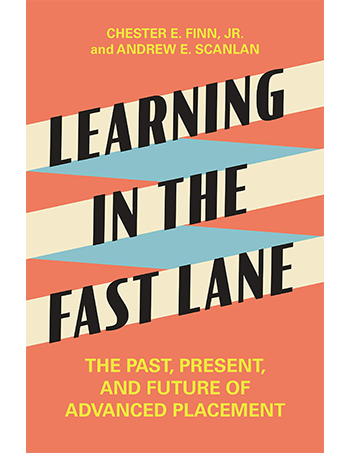
Learning in the Fast Lane: The Past, Present, and Future of Advanced Placement

Chester E. Finn, Jr., Andrew Scanlan

Termed by the Washington Post’s Jay Mathews “the most comprehensive book on Advanced Placement, the most powerful educational tool in the country,” this book traces AP’s history from its mid-twentieth-century origins as a niche benefit for privileged students to its contemporary role as a vital springboard to college for high school students nationwide, including hundreds of thousands of poor and minority youngsters. It's a must-read for anyone with a stake in American K–12 education.

Commentary
9.11.2019
Accountability & Testing, Charter Schools, Curriculum & Instruction, Governance, Advanced Education, Standards, Teachers & School Leaders

The GAS Factor: Lessons learned at Success Academy

Robert Pondiscio

Much of the initial response to Robert’s new book, "How The Other Half Learns," has focused on the winnowing effects of Success Academy’s enrollment process, which ensures that the children of only the most committed parents enroll and persist. But that’s just the start of the story. You have to look at what parent buy-in actually buys: a school culture that drives student achievement, and which can only be achieved when parents are active participants, not unwilling conscripts.

Commentary
9.11.2019
Accountability & Testing, Evidence-Based Learning, Curriculum & Instruction, Standards, Teachers & School Leaders

The scourge of education malpractice

Dale Chu

What if you were told that elementary schools in the United States are teaching children to be poor readers?

Commentary
9.11.2019
Accountability & Testing, Evidence-Based Learning, Charter Schools, Curriculum & Instruction, Personalized Learning, Teachers & School Leaders

How personalized learning enthusiasts can ensure they aren’t lowering the bar for the kids who are behind

Michael J. Petrilli

Editor’s note: This is the second in a series of posts looking at how two school networks—Rocketship Public Schools and Wildflower Schools—enable their students to master standards at their own pace. See the first post here.

Commentary
9.6.2019
Accountability & Testing, Curriculum & Instruction

End-of-course exams should be a matter of course

Dale Chu

A new study released by the Thomas B. Fordham Institute looks at end-of-course exams (EOCs) and their relationship with high school graduation rates and college entrance exam scores.

Commentary
9.4.2019
Evidence-Based Learning, Charter Schools, Curriculum & Instruction, Personalized Learning, Teachers & School Leaders

In most elementary classrooms, kids are all over the map academically. Here’s how two schools cope.

Michael J. Petrilli

Almost a decade ago, I wrote that “the greatest challenge facing America’s schools today [is] the enormous variation in the academic level of students coming into any given classroom.” Unlike plenty of what I’ve said over the years, this one has stood the test of time.

Commentary
9.4.2019
Evidence-Based Learning, Curriculum & Instruction, Personalized Learning, Teachers & School Leaders

Effective social studies interventions for students with emotional and behavioral disorders

Pedro Enamorado

Teaching students to engage with history and civics is important in a democratic society. The critical thinking and communication skills taught in social studies classes are all the more essential to students with Emotional and Behavioral Disorders (EBD) because they equip them to overcome difficulties interacting with and relating to peers.

Commentary
8.28.2019
Accountability & Testing, Evidence-Based Learning, ESSA, Curriculum & Instruction, Standards

End-of-course exams benefit students—and states

Chester E. Finn, Jr., Amber M. Northern, Ph.D.

Very little previous research has looked at end-of-course exams. Our new study on their relationship to student outcomes helps remedy that. We learned much that’s worth knowing and sharing. Probably most important: EOCs, properly deployed, have positive academic benefits and do so without causing kids to drop out or graduation rates to falter.

Commentary
8.28.2019
Accountability & Testing, Curriculum & Instruction, Advanced Education, Standards

Influences affecting the educational trajectory of students

Jeff Murray

A new study from Georgetown University reaffirmed an uncomfortable but familiar finding: Socioeconomic status has a significant effect on students’ long-term outcomes, regardless of their academic performance in kindergarten or the quality of the schools they attend in K–12.

Commentary
8.28.2019
Evidence-Based Learning, Curriculum & Instruction, Personalized Learning, Teachers & School Leaders

Can educational data mining predict student performance and enhance personalized learning?

Olivia Piontek

Artificial intelligence and machine learning are ubiquitous, playing a role in everything from Netflix and Instagram algorithms to transportation and healthcare delivery. But it’s also increasingly being used to improve educational pedagogy and delivery through a process called educational data mining (EDM).

Podcast
8.28.2019
Accountability & Testing, Evidence-Based Learning, Curriculum & Instruction

The Education Gadfly Show: Boosting student outcomes with end-of-course exams

On this week’s podcast Mike Petrilli and David Griffith talk to Adam Tyner about the new Fordham report he co-authored with Matthew Larsen on end-of-course exams and student outcomes. On the Research Minute, Amber Northern examines efforts to improve the college application process.

Commentary
8.27.2019
Accountability & Testing, Curriculum & Instruction, Standards

NEW REPORT: End-of-Course Exams and Student Outcomes

Adam Tyner, Ph.D., Matthew Larsen

This report provides a rich longitudinal look at state policies related to end-of-course exams over the past twenty years and the effects of administering EOCs in different subjects on high school graduation rates and college entrance exam scores.

Commentary
8.21.2019
Accountability & Testing, Curriculum & Instruction, Governance, Standards

The kids who had been “left behind” are doing much better today than 25 years ago. But what about everyone else?

Michael J. Petrilli

The past quarter-century has included dramatic progress of America’s lowest-performing students, many of whom are also low-income and children of color. But how’s the vast middle class doing? It’s a mixed bag: They still don’t read very well, but their math skills have improved a bit and they are graduating from college in higher and higher numbers.

Commentary
8.21.2019
Curriculum & Instruction, Advanced Education, Personalized Learning

Can AP ease Gotham’s selective-high-school deadlock?

Chester E. Finn, Jr., Andrew Scanlan

Controversy surrounds New York City’s selective-admission high schools and Mayor Bill de Blasio’s plan to change the time-honored path by which students gain entry to them; the dispute largely concerns how to ration the limited supply of a valued commodity in the face of mounting demand.

Commentary
8.21.2019
Curriculum & Instruction, Teachers & School Leaders

Training teachers and principals to support the needs of diverse students

Tran Le

A new report by William Johnston and Christopher Young from the RAND Corporation examines the perspectives of teachers and principals about their pre-service training programs, with an emphasis on their preparation for work with non-white and low-income students.

Podcast
8.14.2019
Curriculum & Instruction

The Education Gadfly Show: Media literacy in our schools

On this week’s podcast, Alice Huguet, an associate policy researcher at RAND, joins David Griffith and Adam Tyner to discuss whether and how K–12 schools should teach students media literacy. On the Research Minute, Adam Tyner examines the effects of flipped classrooms.

Commentary
8.14.2019
Accountability & Testing, Charter Schools, Curriculum & Instruction, Personalized Learning, Teachers & School Leaders

The new PDK poll: Gems amid the gravel

Chester E. Finn, Jr.

For more than half a century now, back-to-school time has brought another Phi Delta Kappan survey of “the public’s attitudes toward the public schools.” They invariably recycle some familiar questions (e.g., the grades you would give your child’s schools and the nation’s schools). Other topics, however, come and go.

Commentary
8.14.2019
Curriculum & Instruction, Teachers & School Leaders

Should schools give children more time to play?

Chester E. Finn, Jr.

The education solar system is endlessly distorted by the extraordinary presence within it of two separate suns with gravitational fields that tug the policy planets in different directions.

Commentary
8.14.2019
Accountability & Testing, Curriculum & Instruction, Teachers & School Leaders

Promising state-led assessment innovations

Pedro Enamorado

In the last decade, states have experimented with many new assessment systems in math and reading. A new Bellwether brief by Bonnie O’Keefe and Brandon Lewis examines recent innovations used or proposed by states that could serve educators well.

Commentary
8.7.2019
Curriculum & Instruction

The Lost Children of Hirsch: Will a fresh argument for content-rich curricula make a difference?

Robert Pondiscio

The case for content cannot be made too often or too emphatically, but it’s also been made repeatedly for thirty years, to little avail. Natalie Wexler’s new book, "The Knowledge Gap," offers a strong argument for offering a knowledge-rich education to every child, but also documents our frustrating lack of progress. It's one hell of an indictment of American education.

Podcast
5.8.2019
Curriculum & Instruction

The Education Gadfly Show: Should U.S. schools mandate foreign language instruction?

On this week’s podcast, William Egginton, a professor of the humanities at Johns Hopkins University, joins Mike Petrilli and David Griffith to make the case for foreign language instruction in America’s schools. On the Research Minute, Amber Northern examines a new analysis of Career and Technical Education course-taking by AEI’s Nat Malkus.

Event
4.17.2019
Career & Technical Education, Curriculum & Instruction

Education 20/20: Rod Paige and Peter Wehner

The Fordham-Hoover “Education 20/20” speaker series continued with our penultimate event on May 1, as we brought you another awesome duo. Rod Paige opened by arguing that tomorrow’s school reform needs to focus not just on changing schools, but even more on boosting student effort. Then Pete Wehner made a forceful, principled case for reviving old-fashioned character education in America’s schools.

Podcast
4.10.2019
Curriculum & Instruction

The Education Gadfly Show: Is Checker going soft on “social and emotional learning”?

On this week’s podcast, Checker Finn joins Mike Petrilli and David Griffith to discuss his new paper with Rick Hess on how the social and emotional learning movement can avoid going off the rails. On the Research Minute, Amber Northern examines the big new RAND study on principal pipelines.

Commentary
4.3.2019
Curriculum & Instruction

The prevalence and effects of math anxiety

Jeff Murray

In the U.S. we call it “math phobia”; in the U.K. they call it “maths anxiety.” Either way you dub it, a negative emotional reaction to mathematics, which can manifest as a fear of or aversion to doing math-related work, is a real threat to mathematical competency. A new summary of research from the University of Cambridge adds a huge amount of detail to the picture of what causes math phobia in young people and what if anything can be done to mitigate its effects.

Commentary
3.29.2019
Curriculum & Instruction

From great materials to great instruction

Three years ago, two districts with similar enrollments, proficiency scores, and student demographics—not twenty miles apart—chose the same curriculum for middle school English language arts: Expeditionary Learning. But that is where the similarity in this story ends.

Event
3.28.2019
Career & Technical Education, Curriculum & Instruction

Education 20/20: Arthur Brooks and Adam Meyerson

The Fordham-Hoover “Education 20/20” speaker series continued on April 11 with another star-studded double feature.

Report
3.14.2019
Evidence-Based Learning, Curriculum & Instruction, Teachers & School Leaders

Toward a Golden Age of Educational Practice

Michael J. Petrilli

In recent years, we have reached a homeostasis in education policy, characterized by clearer and fairer but lighter-touch accountability systems and the incremental growth of school choice options for families—but little appetite for big and bold new initiatives.

Commentary
3.11.2019
Curriculum & Instruction

The limitations of "Learning by the Book"

Michael J. Petrilli

The new study from the Harvard Center for Education Policy Research was clearly a herculean effort, with data collection across six states, surveys of thousands of teachers, and the participation of some of the nation’s leading researchers.

Event
3.1.2019
Curriculum & Instruction

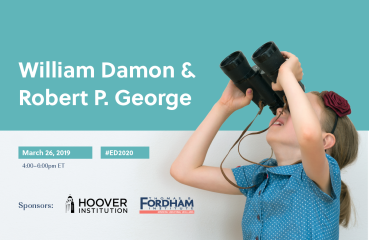
Education 20/20: William Damon & Robert P. George

The provocative Fordham-Hoover “Education 20/20” speaker series resumes on March 26th with another star-studded duo.

Pagination

  • First page « First
  • Previous page ‹ Previous
  • Page 37
  • Page 38
  • Page 39
  • Page 40
  • Current page 41
  • Page 42
  • Page 43
  • Page 44
  • Page 45
  • Next page Next ›
  • Last page Last »

Type

  • Book (3)
  • Commentary (1464)
  • Event (11)
  • Podcast (68)
  • Report (34)

Topics

  • Accountability & Testing (504)
  • Advanced Education (267)
  • Career & Technical Education (84)
  • Charter Schools (1117)
  • (-) Curriculum & Instruction (1594)
  • ESSA (129)
  • Evidence-Based Learning (837)
  • Facilities (25)
  • Governance (1416)
  • Personalized Learning (51)
  • Private School Choice (140)
  • School Finance (169)
  • Standards (190)
  • Teachers & School Leaders (1456)

Date

  • 2026 (121)
  • 2025 (158)
  • 2024 (142)
  • 2023 (148)
  • 2022 (197)
  • 2021 (203)
  • 2020 (170)
  • 2019 (94)
  • 2018 (13)
  • 2017 (5)
  • 2016 (46)
  • 2015 (76)
  • 2014 (50)
  • 2013 (38)
  • 2012 (15)
  • 2011 (83)
  • 2010 (6)
  • 2009 (8)
  • 2008 (6)
  • 2007 (2)
  • 2005 (2)
  • 2004 (3)
  • 2003 (4)
  • 2002 (1)
  • 2000 (2)
  • 1998 (1)
Fordham Logo

© 2026 The Thomas B. Fordham Institute
Privacy Policy
Usage Agreement

National

P.O. Box 110
Burke, VA 22009

202.223.5452

[email protected]

Ohio

P.O. Box 82291
Columbus, OH 43202

614.223.1580

[email protected]

Sponsorship

130 West Second Street, Suite 410
Dayton, Ohio 45402

937.227.3368

[email protected]