Mobile Navigation

  • National
    • Policy
      • High Expectations
      • Quality Choices
      • Personalized Pathways
    • Research
    • Commentary
      • Gadfly Newsletter
      • Flypaper Blog
    • Events
    • Scholars Program
  • Ohio
    • Policy
      • Priorities
      • Media & Testimony
    • Research
    • Commentary
      • Ohio Education Gadfly Biweekly
      • Ohio Gadfly Daily
  • Charter Authorizing
    • Application
    • Sponsored Schools
    • Resources
  • About
    • Mission
    • Board
    • Staff
    • Career
Home
Home
Advancing Educational Excellence

Main Navigation

  • National
  • Ohio
  • Charter Authorizing
  • About

National Menu

  • Topics
    • Accountability & Testing
    • Advanced Education
    • Career & Technical Education
    • Charter Schools
    • Curriculum & Instruction
    • ESSA
    • Evidence-Based Learning
    • Facilities
    • Governance
    • Personalized Learning
    • Private School Choice
    • School Finance
    • Standards
    • Teachers & School Leaders
    • Think Again
  • Research
  • Commentary
    • Gadfly Newsletter
    • Flypaper Blog
    • Gadfly Podcast
  • Events
  • Scholars Program

Teachers & School Leaders

Displaying 1351-1380 of 1450 results
Commentary
11.6.2019
Accountability & Testing, Advanced Education, Teachers & School Leaders

High achievers are doing better on NAEP, and that’s good news. Period.

Brandon L. Wright

Most everyone has read by now about the dismal scores on our Nation’s Report Card, which again measured how fourth and eighth graders did in math and reading. Aside from fourth grade math, marks on the 2019 National Assessment of Education Progress were generally flat or down, especially for our lowest-performing children. One prominent official remarked that “the bottom fell out.” But the results among high achievers offer a bright spot that has been mostly overlooked and undercelebrated.

Commentary
11.6.2019
Evidence-Based Learning, Teachers & School Leaders

The relationship between racial discipline and achievement gaps

Tran Le

A new study published in AERA Open investigates whether and to what extent racial discipline gaps are associated with racial achievement gaps in grades three through eight in school districts across the U.S. It also examines if these relationships persist after accounting for differences across districts.

Commentary
11.6.2019
Evidence-Based Learning, Curriculum & Instruction, Teachers & School Leaders

From Play-doh to Plato: All students need to grapple with grade-level text

Harriett Janetos

My thirty-plus years in teaching have taken me on an unplanned path from Plato to Play-doh. When I taught Advanced Placement English to seniors three decades ago, I would have confidently bet against finding myself twenty-five years later teaching kindergarteners how to read.

Commentary
11.6.2019
Evidence-Based Learning, Curriculum & Instruction, Teachers & School Leaders

Tailored paths that can combine pre-, on-, and post-grade skills are the solution for students below grade level in math

Joel Rose

Standards are written to reflect the instructional path that students should follow throughout their educational journey. In math, that includes concepts such as basic algebraic thinking in the early elementary grades, multiplying fractions in the fifth grade, working with ratios and rates in the sixth grade, and so forth. Let’s call this the “standard instructional path.”

Commentary
11.5.2019
Accountability & Testing, Curriculum & Instruction, Teachers & School Leaders

To help students who are behind, find out if their assignments match their goals

Dan Weisberg

A typical sixth-grade teacher we work with serves a wide range of students. She likely has some who read above grade level, some who are a little behind, a student who doesn’t speak English but has excellent reading and writing skills in another language, and several students—some of whom have diagnosed learning disabilities—who are reading at an early elementary level.

Commentary
11.5.2019
Accountability & Testing, Evidence-Based Learning, Charter Schools, Curriculum & Instruction, Teachers & School Leaders

Rigor or personalized learning? Just ask Dr. Seuss.

Jessica Shopoff

What’s the best way to help students who are several grade levels behind?

Commentary
11.4.2019
Evidence-Based Learning, Curriculum & Instruction, Teachers & School Leaders

2019 WONKATHON THIRD-PLACE ENTRY: Follow schools’ leads to embrace personalized learning and academic rigor

Gwen Baker, Lauren Schwartze, Bonnie O'Keefe

Editor’s note: This was the third-place submission, out of nineteen, to Fordham’s 2019 Wonkathon, in which we asked participants to answer the question: “What’s the best way to help students who are several grade levels behind?”

Commentary
11.4.2019
Evidence-Based Learning, Curriculum & Instruction, Teachers & School Leaders

To help students who are several “grade levels” behind in reading, focus on building—and assessing—students’ knowledge

Natalie Wexler

What’s the best way to help students who are several grade levels behind? We can’t answer that question without first understanding what “grade level” means. Math and reading are quite different when it comes to assessing grade level, and I’m going to focus on reading.

Commentary
11.1.2019
Curriculum & Instruction, Governance, Teachers & School Leaders

To help students who are several grade levels behind, implement IEPs in elementary and middle school

Charles Ogundimu, Ph.D.

The obvious but fundamental question is: Why are the students several grade levels behind? Undoubtedly, the answer is complex and will include, inter alia, insufficient preparation (student and teacher), poor teaching, poverty, inadequate foundation, behavior, and other psycho-social factors.

Commentary
11.1.2019
Accountability & Testing, Evidence-Based Learning, Governance, Teachers & School Leaders

On our Nation’s Report Card, strong leadership gets an “A”

Mike Magee

This week, the federal government released the results of the National Assessment of Educational Progress (NAEP)—known colloquially as “the Nation’s Report Card.” As always, the results are the subject of intense scrutiny, and are fodder for arguments on both sides of the political aisle and all sides of education debates.

Commentary
10.31.2019
Accountability & Testing, Evidence-Based Learning, Curriculum & Instruction, Governance, Teachers & School Leaders

2019 WONKATHON WINNER: Beyond the binary: We can foster equity in both opportunity and outcomes

Abby Javurek

Editor’s note: This was the first-place submission, out of nineteen, to Fordham’s 2019 Wonkathon, in which we asked participants to answer the question: “What’s the best way to help students who are several grade levels behind?”

Commentary
10.30.2019
Accountability & Testing, Curriculum & Instruction, Teachers & School Leaders

The zombie pedagogical debate

Dale Chu

With Wonkathon season kicking into high gear, asking participants what’s the best way to help students who are several grade levels behind, it occurred to me that this year’s question, as fundamental and challenging as it may be, is a withering indictment o

Podcast
10.30.2019
Charter Schools, Governance, Private School Choice, Teachers & School Leaders

The Education Gadfly Show: On education, Warren’s got a pander for that

On this week’s podcast, Mike Petrilli and David Griffith talk to Checker Finn about Senator Warren’s flawed education proposal. On the Research Minute, Amber Northern examines improvements to the student teaching experience that can help candidates feel more prepared for success in the classroom.

Commentary
10.23.2019
Evidence-Based Learning, Curriculum & Instruction, Standards, Teachers & School Leaders

Why struggling students remain below grade level, and how to help them

Mike Goldstein

Editor’s note: This is a submission to Fordham’s 2019 Wonkathon, in which we ask participants to answer the question: “What’s the best way to help students who are several grade levels behind?” This entry does so via answers to hypothe

Commentary
10.18.2019
Accountability & Testing, Curriculum & Instruction, Teachers & School Leaders

NewSchools isn't overselling SEL: A response to Checker Finn

Stacey Childress

Our team at NewSchools recently released a report titled, Using Expanded Measures of Student Success for School Improvement. In it, we share some on-the-ground lessons from innovative public schools in our portfolio.

Commentary
10.16.2019
Evidence-Based Learning, Governance, Teachers & School Leaders

Don’t oversell SEL

Chester E. Finn, Jr.

Social and emotional learning could do much good if deployed in pursuit of academic learning, but it runs multiple risks of going off the rails when its boosters ignore its limitations. It’s in this context that a recent brief by the NewSchools Venture Fund lands. There’s considerable wisdom in it, but leaders and policymakers should be careful what they do with the SEL measures for which it advocates. They should not, for example, incorporate them into accountability systems. Nor should they get so preoccupied with them that they neglect English, math, science, and history, or forget how much those matter in the real world.

Commentary
10.16.2019
Charter Schools, Governance, Teachers & School Leaders

Denver’s rapidly-shrinking school choice tent

Dale Chu

Just weeks away from what could be a watershed school board election, Denver hosted a community

Commentary
10.16.2019
Governance, Teachers & School Leaders

When a school is improving, stay out of the way, warns an important new book

Robert Pondiscio

There’s a not-so-secret tension that separates frontline educators from ed reformers, policymakers, and even district office poobahs. This tension, and the cost of top-down initiatives disrupting what’s working on the ground, form the through line of Eric Kalenze’s important new book, What the Academy Taught Us.

Commentary
10.11.2019
Accountability & Testing, Curriculum & Instruction, Teachers & School Leaders

Everything we know about teacher effectiveness

Andrew Scanlan

On Wednesday, we sat down with Dan Goldhaber, director of the National Center for Analysis of Longitudinal Data in Education Research (CALDER), on our Education Gadfly Show podcast for thirty minutes of engaging discussion.

Commentary
10.10.2019
Accountability & Testing, Charter Schools, Curriculum & Instruction, Teachers & School Leaders

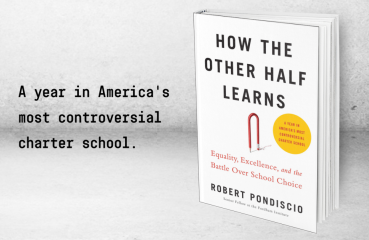
Chad Aldeman: A review of Robert Pondiscio’s “How the Other Half Learns”

Chad Aldeman

Robert Pondiscio won’t like my review of his new book, How the Other Half Learns.

Commentary
10.9.2019
Accountability & Testing, Curriculum & Instruction, Advanced Education, Teachers & School Leaders

AP: Great for gifted high schoolers

Chester E. Finn, Jr., Andrew Scanlan

When considering the available options for gifted high-school kids, the Advanced Placement (AP) program may not be the first thing that comes to mind. That’s too bad because AP might be America’s most effective large-scale “gifted and talented” program at the high school level.

Commentary
10.9.2019
Evidence-Based Learning, Governance, Teachers & School Leaders

No witch left behind

Dale Chu

Pop quiz: When was the first law providing for public education in America enacted? It’s true that the Bay State passed the first universal education law in 1852, but the very first law put down its roots two centuries earlier, also in what became Massachusetts.

Podcast
10.9.2019
Accountability & Testing, Curriculum & Instruction, Teachers & School Leaders

The Education Gadfly Show: Research Deep Dive: Everything we know about effective teachers

On this week’s podcast, Dan Goldhaber, the director of CALDER, joins Mike Petrilli, David Griffith, and Amber Northern to discuss what rigorous research says about identifying, developing, and retaining effective teachers.

Commentary
10.4.2019
Governance, Teachers & School Leaders

Restorative justice gone wrong: One mother’s horror story

Julia Carlson

In 2015, I started a three-year journey to acquire my doctorate in educational leadership. On top of going back to graduate school, I was a high school principal. It was a job I loved and for which I felt tremendous passion. The high school I led was plagued by a history of low academic performance, discipline issues, attendance problems, and low morale among faculty and staff.

Commentary
10.2.2019
Curriculum & Instruction, Governance, Teachers & School Leaders

The metric that matters most: Ask kids, “Are you in?”

Robert Pondiscio

Editor’s note: At last week’s PIE Network Summit in Austin, Texas, Fordham senior fellow Robert Pondiscio was asked to participate in a panel discussion on “What is the purpose of education?” His answer to the question consisted of the following remarks.

Commentary
10.2.2019
Evidence-Based Learning, Teachers & School Leaders

Closing the teacher quality gap

Pedro Enamorado

It’s long been surmised that the socioeconomic achievement gap is caused by—or at least, in part, persists because of—a teacher quality gap. Low-performing, high-poverty schools have significant issues that lead many educators to leave, whether to a different, less challenging position, or out of the profession entirely, contributing to measurable differences in teacher quality.

Commentary
9.25.2019
Accountability & Testing, ESSA, Governance, Teachers & School Leaders

A new era of accountability in education has barely just begun

Michael J. Petrilli

Most states have spent the past decade overhauling their standards, tests, and accountability systems, and finally committing real resources to capacity-building, especially in the form of curriculum implementation. These pieces have only begun to come together in the last year or two, culminating with the release of school ratings as required by ESSA. What’s needed isn’t to spin the wheel of education policy once again, but to show some patience and commitment—and finish what we started.

Commentary
9.25.2019
Curriculum & Instruction, Teachers & School Leaders

How to improve literacy after elementary school

Robert Pondiscio

It’s a bit of an education cliché to say “every teacher is a literacy teacher.” Since background knowledge is a fundamental building block of language proficiency, it’s technically true: A teacher in any subject can’t help but be a literacy teacher, even if the effects are diffuse.

Commentary
9.25.2019
Evidence-Based Learning, Curriculum & Instruction, Teachers & School Leaders

Do flipped classrooms boost student outcomes?

Adam Tyner, Ph.D.

Flipped classroom in K–12 and higher education have been popular for years.

Commentary
9.24.2019
Accountability & Testing, ESSA, Curriculum & Instruction, Governance, Personalized Learning, Teachers & School Leaders

In math, grade-level tests are holding back low-achieving students

Joel Rose

Imagine that you’re a sixth-grade math teacher. It’s the first day of school, and the vast majority of your students arrived multiple years behind where they should be. Your job is to teach them concepts such as understanding percentages and dividing fractions.

Pagination

  • First page « First
  • Previous page ‹ Previous
  • Page 41
  • Page 42
  • Page 43
  • Page 44
  • Page 45
  • Current page 46
  • Page 47
  • Page 48
  • Page 49
  • Next page Next ›
  • Last page Last »

Type

  • Commentary (1363)
  • Event (3)
  • Podcast (34)
  • Report (37)

Topics

  • Accountability & Testing (503)
  • Advanced Education (266)
  • Career & Technical Education (84)
  • Charter Schools (1115)
  • Curriculum & Instruction (1589)
  • ESSA (129)
  • Evidence-Based Learning (833)
  • Facilities (25)
  • Governance (1409)
  • Personalized Learning (51)
  • Private School Choice (139)
  • School Finance (167)
  • Standards (190)
  • (-) Teachers & School Leaders (1450)

Date

  • 2026 (143)
  • 2025 (188)
  • 2024 (159)
  • 2023 (156)
  • 2022 (206)
  • 2021 (269)
  • 2020 (203)
  • 2019 (86)
  • 2018 (8)
  • 2017 (9)
  • 2016 (3)
  • 2014 (3)
  • 2013 (3)
  • 2012 (4)
  • 2008 (1)
  • 2007 (1)
  • 2006 (1)
  • 2005 (1)
  • 2004 (1)
  • 2001 (2)
  • 2000 (1)
  • 1999 (2)
Fordham Logo

© 2026 The Thomas B. Fordham Institute
Privacy Policy
Usage Agreement

National

P.O. Box 110
Burke, VA 22009

202.223.5452

[email protected]

Ohio

P.O. Box 82291
Columbus, OH 43202

614.223.1580

[email protected]

Sponsorship

130 West Second Street, Suite 410
Dayton, Ohio 45402

937.227.3368

[email protected]