How can we depolarize “gifted education”?
Editor’s note: This was first published on Mike Petrilli’s Substack, SCHOOLED.
What’s missing in today’s conversations about American education is that the declines we’ve seen since 2013 or so came on the heels of two decades of remarkable progress. Perhaps my fellow ed-policy wonks understand that, but I doubt the general public does. And it wasn’t just test scores. Students graduated from high school and college in much greater numbers, too.
The new federal tax-credit scholarship is being hailed as a breakthrough for school choice: more options, more opportunity, more innovation. But history offers a warning. Even though these tax-credit funds never technically enter federal coffers, once Washington confers a benefit, its influence tends to follow.
Mark Twain famously said that there are three kinds of falsehoods: “lies, damned lies, and statistics.” We need to add a fourth to that list: state-issued report cards on schools. Drafted with good intentions, these accountability measures have been redrafted into glorified district propaganda and are in need of not just reformation, but a complete restructuring.
The science of reading (SOR) has been one of education’s hottest topics in recent years, with 40 states and the District of Columbia
This week, Mike Petrilli flies solo to discuss New York City mayoral candidate Zohran Ma
After our record-setting Wonkathon that brought in 48 submissions, the polls are now open to crown 2025's Wisest Wonk. Vote now using our survey! Everyone will have until 1:00 p.m. ET on Monday, November 24, to pick a favorite. We’ll then tally everything up and announce our first-, second-, and third-place winners in the Tuesday, November 25, edition of the Education Gadfly Weekly. In the meantime, read the entries.
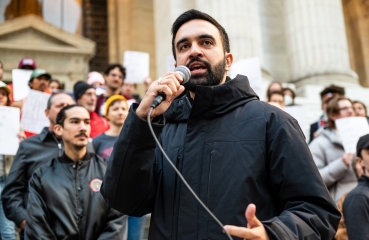
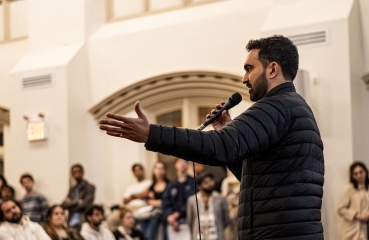
Democratic Socialist mayoral candidate Zohran Mamdani has proposed phasing out the successful and popular Gifted and Talented (G&T) progr
Zohran Mamdani, the Democratic Party’s nominee for mayor of New York City, has announced his intention to end kindergarten entry into the city’s Gifted & Talented (G&T) programming by September 2027.
While local school board members’ partisanship and ideology largely mirror the American public’s, that’s not the case when it comes to their views on charter schools and teachers unions. And in terms of how they see their own districts’ schools, they might as well being wearing rose-colored glasses. Those are some of the findings in our latest study, which sheds light on the surprising ways that representation does and doesn’t work in one of the country’s most important democratic institutions.
Coming out of Covid and with an efflorescence of alternatives to traditional public schools, it’s been clear for a while that the relationship between families and s
From Silicon Valley to the World Economic Forum, boosters insist that artificial intelligence will transform education—closing learning gaps and personalizing instruction for every child. We’re betting it won’t.
Except for cancelled proms and mothballed graduation celebrations, the class of 2020 largely escaped the negative impacts of pandemic school closures that wreaked havo
In the 2020 presidential election, barely half of 18- to 24-year-olds voted, compared to 76 percent of those in the 65–74 age group.
This week, Aneesh Sohoni, CEO of Teach for America, joins The Education Gadfly Show to discuss TFA’s impact in the clas
School boards have become ground zero for America’s education culture wars, with fiery debates over race, gender, curriculum, and pandemic policies making national headlines. But beyond the noise, how well do these elected bodies actually represent their communities?
Political scientist Charles Murray paints a stark picture of America in 2050: a small but thriving “cognitive elite”—married, working, earning, raising children, pursuing fulfilling careers—alongside
I’m no fan of many so-called “equitable” grading reforms.
My last column on teacher standards focused on the how. How should we deliver professional development? How long? Which teachers? Who leads? They were recommendations for structural changes about the medium of delivery.
The age-old debate over whether principals or district offices should hold the reins in schools has gotten a fresh empirical test, courtesy of a new NBER working paper from Northwestern University economist Kirabo Jackson.
This week, Fordham’s president emeritus Checker Finn an
Editor’s note: This was first published on Mike Petrilli’s Substack, SCHOOLED.
The first time I encountered “no-zeros” grading, I was still a teacher. To demonstrate how to use a new data entry system, our technology coordinator plugged a zero into the software, and to everyone’s surprise, the online gradebook rounded up to 49.9 percent. He’d accidentally exposed a yet-to-be-announced grading policy (the “50 percent” rule).
We face a gnarly problem in reading instruction.
Critics contend that the National Assessment Governing Board, which sets policies for the Nation’s Report Card, sets the bar too high—that the definition of “proficient” is too challenging. This aligns with moves to lower the bar in parts of the country, including efforts in some states to make it easier for kids to pass end-of-year assessments or to eliminate those tests completely. This line of thinking and these polices are deeply misguided.

What do the conservative former U.S.
As a Los Angeles Unified School District parent during the pandemic, I had a front row seat as my fellow Democrats and their teachers union allies lit the match that turned a global health crisis into an education inferno.
The teacher pipeline concerns currently being debated in the media are not new. They’re merely the most recent iteration of a slow-burning problem that has become more acute since Covid school closures upended K–12 education. One suggestion for boosting the number and diversity of new teachers is to relax licensing requirements.
Nothing elicits a groan from teachers quite like the word “professional development” or “PD.” It conjures images of peppy consultants who spent less than a year in the classroom, state-mandated training videos with all the excitement of a dental waiting room, or a waste of five precious hours just days before the school year begins.
This week, Chandler Fritz, author of Harper’s Magazine’s cover