Commentary

It’s back-to-school season, with an estimated 47.2 million K–12 public school students and 3.2 million teachers returning to their classrooms.

Michael Petrilli recently made a sensible case for charter school regulation—not for its own sake, but because charter authorizers should concern themselves with how our public schools are being run.

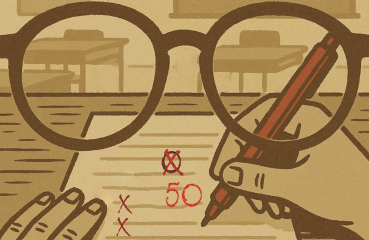
Teachers hate it when the powers that be take a sledgehammer to their few sources of leverage over student motivation and effort. Nor do they like giving students grades they don’t deserve. How did we get here?
When still a teacher, I considered my building principal a consequence vending machine. When all else failed, press H5 for an in-school suspension. Having been on both sides now, I realize that the role of the administrator in maintaining school order is far more consequential.

Classical education has become one of the brightest spots in the K–12 landscape. Once a niche movement, it now encompasses more than 1,500 public, private, and charter schools serving nearly 700,000 students.
Student participation in career and technical education (CTE) has grown significantly in recent years, backed by bipartisan support and

On this week’s solo episode, Mike shares his though
Policies like "no zeros," eliminating late penalties, and allowing unlimited retakes aim to make grading fairer for disadvantaged students. Critics argue the changes inflate grades, erode accountability, and harm learning—and many teachers agree.

First a bit of history: Before he got canceled during the #Me-Too Movement, Garrison Keillor headlined a very popular public radio variety show called “A Prairie Home Companion.” Most weeks, he regaled listeners with stories from the fictional Lake Wobegon, Minnesota; I remember lis

The Chinese high school leaving exam’s English section is more challenging—in a foreign language—than SAT reading passages. —Yascha Mounk, Substack “A century ago, men stepped up to build spaces for boys and were cheered on for doing so.


Many pundits claim that the charter schools sector once had great potential for innovation, but because of dastardly authorizers and other red-tape-loving bureaucrats, charters instead became overly cautious, impeding innovation in a way that has hamstrung and limited the entire charter school movement. Is that true?

One could argue that the University of Virginia cognitive psychologist Daniel Willingham is one of the most influential Americans of the 21st century. Willingham has observed that we have learned more about how people learn in the last 25 years than in the previous 2,500 combined.

States can play a powerful role in improving student learning by improving instruction. I know this from my experience working at a state agency and from observing how the districts and schools that partner with my organization, Instruction Partners, orient to the expectations and initiatives of their state agencies.

The four-day school week has become one of the fastest-growing trends in American K–12 education, particularly in rural communities. By 2023, roughly 850 districts across 24 states had adopted the shorter week, up from about 600 before the pandemic.

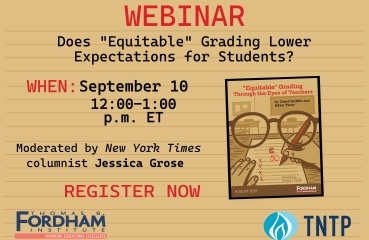
Over the last several years, so-called “equitable” grading reforms have generated controversy in many of the school districts across the country that have adopted them. Although their advocates claim that policies like "no zeros" for assignments, eliminating late penalties, and allowing unlimited retakes can make classrooms more equitable, critics argue that they effectively codify lower expec
This week, Matthew Kraft, professor of education and economics at Brown University, joins The Ed
Alternative certification programs can help schools to fill vacant teaching roles with eager and promising teaching candidates.

On the 2024 National Assessment of Educational Progress, just 30 percent of eighth-graders were proficient in read

Five years post-pandemic, chronic absenteeism remains widespread across income and achievement levels. —The Hechinger Report The new federal voucher program sparks state-level political debates nationwide.


If reading truly makes us smarter, then picture books are where smart begins. They give children access to sophisticated language, teach them how stories work, and lay the groundwork for background knowledge and cultural literacy.

Education savings accounts in Texas. Open enrollment in Missouri. Each week seems to bring a new story and more education options for American students.

In her memoir, Dear Diary Boy: An Exacting Mother, Her Free-Spirited Son, and Their Bittersweet Adventures in an Elite Japanese School, author Kumiko Makihara recounts her son Taro’s experience attending first through sixth grade in her home country of Japan.

On this week’s Education Gadfly Show, Ben Austin, Founding Director of Education Civil Rights Now, joi
The education and healthcare sectors are doomed to face low productivity and rising wages.


What if a federal program reached four fifths of K–12 students nationwide for just 70 cents each, yielded a 9-to-1 return, seed-funded over 100 entrepreneurial education technology startups, and introduced AI and other novel solutions in classrooms? Skeptics might rightly raise an eyebrow.

Once upon a time, governors were the most potent drivers of K–12 education reform in America. It started in the ’80s, propelled by leaders on both side of the aisle. Today is different. As choice-focused reforms burgeon in red states, there’s backsliding almost everywhere when it comes to standards, assessment and accountability, leadership is scarce, and bipartisanship is rare indeed. Could a new NGA report represent a return to form?