Mobile Navigation

  • National
    • Policy
      • High Expectations
      • Quality Choices
      • Personalized Pathways
    • Research
    • Commentary
      • Gadfly Newsletter
      • Flypaper Blog
    • Events
    • Scholars Program
  • Ohio
    • Policy
      • Priorities
      • Media & Testimony
    • Research
    • Commentary
      • Ohio Education Gadfly Biweekly
      • Ohio Gadfly Daily
  • Charter Authorizing
    • Application
    • Sponsored Schools
    • Resources
  • About
    • Mission
    • Board
    • Staff
    • Career
Home
Home
Advancing Educational Excellence

Main Navigation

  • National
  • Ohio
  • Charter Authorizing
  • About

National Menu

  • Topics
    • Accountability & Testing
    • Advanced Education
    • Career & Technical Education
    • Charter Schools
    • Curriculum & Instruction
    • ESSA
    • Evidence-Based Learning
    • Facilities
    • Governance
    • Personalized Learning
    • Private School Choice
    • School Finance
    • Standards
    • Teachers & School Leaders
    • Think Again
  • Research
  • Commentary
    • Gadfly Newsletter
    • Flypaper Blog
    • Gadfly Podcast
  • Events
  • Scholars Program

Reports, Books

Displaying 91-120 of 268 results
Report
11.4.2015
Charter Schools, Governance

Is Detente Possible? District-charter school relations in four cities

Daniela Doyle, Christen Holly, Bryan C. Hassel

Whether you think the end game of the current “mixed economy” of district and charter schools should be an all-charter system (as in New Orleans) or a dual model (as in Washington D.C.), for the foreseeable future most cities are likely to continue with a blend of these two sectors. So we wanted to know: Can they peacefully co-exist? Can they do better than that?

Book
9.15.2015
Advanced Education

Failing Our Brightest Kids: The Global Challenge of Educating High-Ability Students

Chester E. Finn, Jr., Brandon L. Wright

In Failing Our Brightest Kids, Chester E. Finn, Jr. and Brandon L. Wright argue that for decades, the United States has focused too little on preparing students to achieve at high levels.

Report
8.26.2015
Governance

Schools of Thought: A Taxonomy of American Education Governance

Dara Zeehandelaar Shaw, Ph.D., David Griffith, Ph.D.

Questions of education governance are often considered moot by policymakers, who typically assume that the governance challenges plaguing their local schools are both universal and inevitable. Given the ubiquity of everything from local school boards to state superintendents, this seems to be a logical assumption.

Report
8.6.2015
School Finance, Governance

Who Should Be in Charge When School Districts Go into the Red?

Dara Zeehandelaar Shaw, Ph.D., Victoria McDougald

School districts across the land are contending with rising education costs and constrained revenues. Yet state policies for assisting school districts in financial trouble are uneven and complex. Interventions are often haphazard, occur arbitrarily, and routinely place politics over sound economics.

Report
12.1.2014
Governance

Education for Upward Mobility

At the Education for Upward Mobility conference, the Thomas B.

Report
11.25.2014
Teachers & School Leaders

Building a Lattice for School Leadership

Jonathan Supovitz

Over the past decade, the English government has revamped that country’s approach to school leadership. At the center of the reform is the sensible idea that school leadership needs to be a team endeavor. While not a new idea—there’s been for years plenty of discussion about “distributed leadership” on both sides of the pond—the Brits got busy actually making it happen as opposed to jawboning about it. Central to their leadership structure is the formalization of three levels of school leaders, each with distinct roles and responsibilities: headteachers who lead schools (equivalent to the principal’s role in the U.S.), senior leaders or deputy heads who assist the headteacher (similar to the vice principal role in American education but...

Report
10.29.2014
Governance

Redefining the School District in Michigan

Nelson Smith

What happens when policymakers create statewide school districts to turn around their worst-performing public schools?

Report
10.15.2014
School Finance

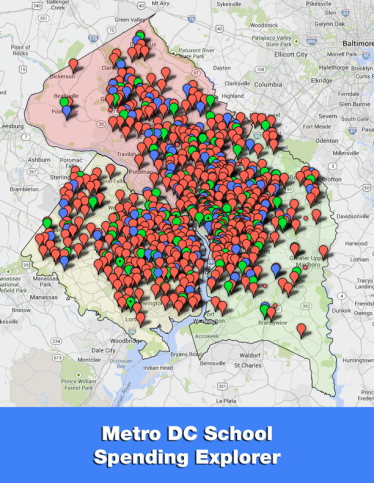
Metro D.C. School Spending Explorer

The Thomas B. Fordham Institute set out to answer a basic (yet complicated) question: how much does each school in the D.C. metro area spend on day-to-day operations for each student it enrolls? In the Metro D.C.

Report
8.12.2014
School Finance, Governance, Teachers & School Leaders

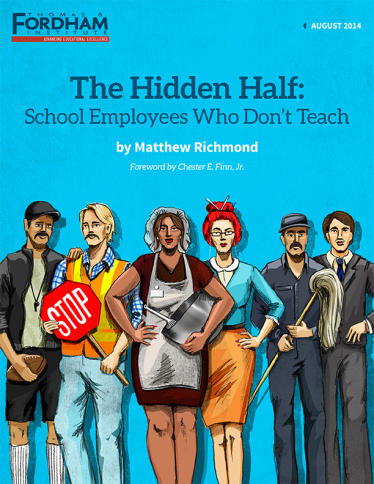
The Hidden Half: School Employees Who Don't Teach

Matt Richmond

The number of non-teaching staff in the United States (those employed by school systems but not serving as classroom teachers) has grown by 130 percent since 1970. Non-teachers—more than three million strong—now comprise half of the public school workforce. Their salaries and benefits absorb one-quarter of current education expenditures. 

Report
6.24.2014
Teachers & School Leaders

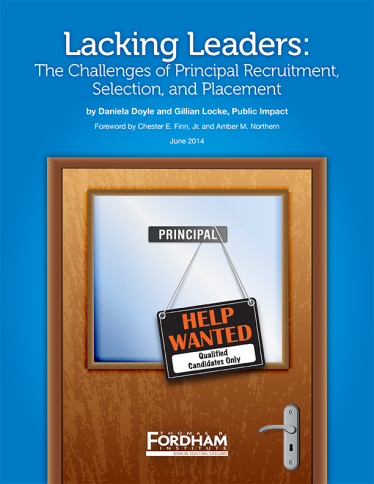
Lacking Leaders: The Challenges of Principal Recruitment, Selection, and Placement

A school’s leader matters enormously to its success and that of its students and teachers. But how well are U.S. districts identifying, recruiting, selecting, and placing the best possible candidates in principals’ offices? To what extent do their practices enable them to find and hire great school leaders? To what degree is the principal’s job itself designed to attract outstanding candidates?

Report
5.29.2014
Accountability & Testing

State Accountability in the Transition to Common Core

Victoria McDougald

The Common Core is at a critical juncture. While many surveys show that support for the standards themselves remains strong, implementation has not been without major challenges.

Report
5.13.2014
Personalized Learning

Expanding the Education Universe: A Fifty-State Strategy for Course Choice

After twenty years of expanding school-choice options, state leaders, educators, and families have a new tool: course choice, a strategy for students to learn from unconventional providers that might range from top-tier universities or innovative community colleges to local employers, labs, or hospitals.

Report
4.21.2014
Governance

The State Education Agency: At the Helm, Not the Oar

Juliet Squire

In recent years, policymakers and reform advocates have viewed State Education Agencies (SEAs) as the lead organizations for implementing sweeping reforms and initiatives in K–12 education—everything from Race to the Top grants and federal waivers to teacher-evaluation systems and online schools.

Report
3.25.2014
Governance

Does School Board Leadership Matter?

Arnold F. Shober, Michael T. Hartney

Are the nation’s 90,000-plus school board members critical players in enhancing student learning? Are they part of the problem? Are they harmless bystanders? Among the takeaways are the following:

Report
2.26.2014
Standards

Common Core in the Districts: An Early Look at Early Implementers

by Katie Cristol and Brinton S. Ramsey Foreword by Amber M. Northern and Michael J. Petrilli

Report
1.22.2014
Standards

Knowledge at the Core: Don Hirsch, Core Knowledge, and the Future of the Common Core

Children cannot be truly literate without knowing about history, science, art, music, literature, civics, geography, and more. Indeed, they cannot satisfactorily comprehend what they read unless they possess the background knowledge that makes such comprehension possible.

Report
1.8.2014
Accountability & Testing, School Finance, Private School Choice

Public accountability & private-school choice

Adam Emerson

The Fordham Institute supports school choice, done right. That means designing voucher and tax-credit policies that provide an array of high-quality education options for kids that are also accountable to parents and taxpayers.

Report
11.24.2013
School Finance

Financing the Education of High-Need Students

Matt Richmond, Daniela Fairchild

School districts face an enormous financial burden when it comes to educating our highest-need students. Financing the Education of High-Need Students focuses on three specific challenges that are often encountered when districts—especially small ones—grapple with the costs of serving their highest-need special-education students.

Report
11.18.2013
Teachers & School Leaders

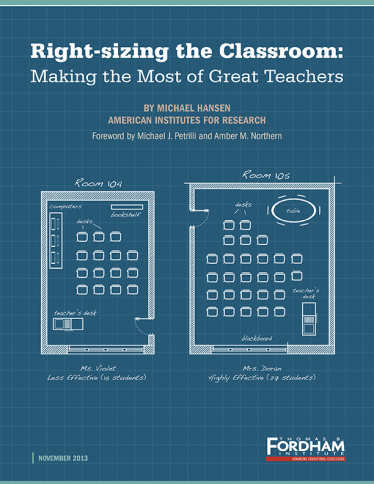
Right-sizing the Classroom: Making the Most of Great Teachers

Michael Hansen

In the overwhelming majority of American classrooms, pupils are divided roughly equally among teachers of the same grade in the same school. Parceling them out uniformly is viewed as fair to teachers—and doing otherwise might be seen as unfair. Parents might wonder, too.

Report
10.22.2013
Curriculum & Instruction

Common Core in the Schools: A First Look at Reading Assignments

Tim Shanahan, Ann Duffett

In Common Core in the Schools: A First Look at Reading Assignments, researchers analyze what texts English teachers assign their students and the instructional techniques they used in the classroom.

Report
9.9.2013
Governance, Teachers & School Leaders

Ohio Pension Reform in Cleveland: New Teachers Beware

Robert M. Costrell, Larry Maloney

At first glance, the recent teacher-retirement reforms in Ohio seem to bring good fiscal news to school systems in the Buckeye State. Thanks to Senate Bills 341 and 342—and a series of cutbacks on retiree healthcare—the Cleveland Metropolitan School District is projected to spend less on retirement costs in 2020 than it does today. But these reforms come at a big price.

Report
8.26.2013
Curriculum & Instruction

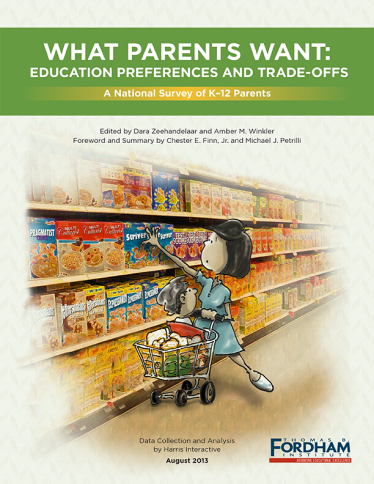
What Parents Want: Education Preferences and Trade-offs

Dara Zeehandelaar Shaw, Ph.D., Amber M. Northern, Ph.D.

This groundbreaking study finds that nearly all parents seek schools with a solid core curriculum in reading and math, an emphasis on science, technology, engineering, and math (STEM) education, and the development in students of good study habits, strong critical thinking skills, and excellent verbal and written communication skills.

Report
8.20.2013
Standards

Commentary on Appendix L: Alignment of the Next Generation Science Standards with the Common Core State Standards for Mathematics

W. Stephen Wilson

Among the shortcomings of the NGSS is its acute dearth of math content, even in situations where math is essential to the study and proper understanding of the science that students are being asked to master. Also problematic is the alignment of NGSS math with the Common Core State Standards for mathematics. Appendix L of the NGSS seeks to explain the alignment and apply math more thoroughly to NGSS science. This commentary by Johns Hopkins mathematician appraises that appendix. Download Commentary on Appendix L: Alignment of the Next Generation Science Standards with the Common Core State Standards for Mathematics to read the appraisal.

Report
8.20.2013
Standards

Exemplary Science Standards: How Does Your State Compare?

Kathleen Porter-Magee, Brandon L. Wright, Laurel Horn

With states weighing whether to adopt the Next Generation Science Standards (NGSS), a new analysis from the Thomas B. Fordham Institute compares the existing science standards of thirty-eight states with the NGSS and with exemplary standards from three other states. (The thirty-eight are those states with standards that are either “clearly inferior” to the NGSS or “too close to call,” based on our Final Evaluation of the Next Generation Science Standards and The State of Science Standards 2012.)

Report
7.17.2013
School Finance, Governance

Milwaukee: Saved by Act 10...For Now

Robert M. Costrell, Larry Maloney

One of three technical reports on retirement costs and school-district budgets.

Report
6.11.2013
Standards

Final Evaluation of the Next Generation Science Standards

Paul Gross, Douglas Buttrey, Ursula Goodenough, Noretta Koertge, Lawrence S. Lerner, Martha Schwartz, Richard Schwartz

In the final evaluation of the Next Generation Science Standards (NGSS), the Thomas B. Fordham Institute grants the standards a C grade. The NGSS grade is superior to grades we granted to the science standards of sixteen states and the PISA framework in the State of State Science Standards 2012 but inferior to those of twelve states and the District of Columbia, as well as the NAEP and TIMSS frameworks.

Report
6.3.2013
School Finance, Teachers & School Leaders

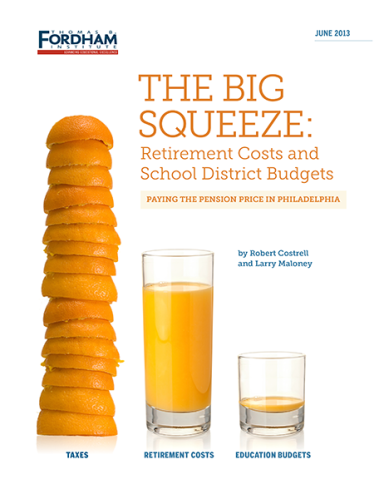
Paying the Pension Price in Philadelphia

Robert M. Costrell, Larry Maloney

One of three technical reports on retirement costs and school-district budgets.

Report
6.3.2013
School Finance, Governance

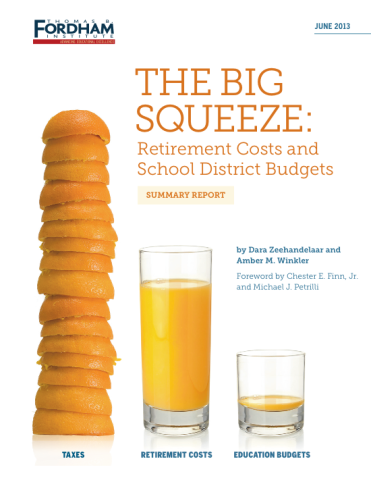
The Big Squeeze: Retirement Costs and School-District Budgets

Dara Zeehandelaar Shaw, Ph.D., Amber M. Northern, Ph.D.

When it comes to pension reform in the education realm, it’s hard to stay positive. Here, we’re saddled with a bona fide fiscal calamity (up to a trillion dollars in unfunded liabilities by some counts), and no consensus about how to rectify the situation. No matter how one slices and dices this problem, somebody ends up paying in ways they won’t like and perhaps shouldn’t have to bear. All we can say is that some options are less bad than others.

Report
4.17.2013
Governance

Redefining the School District in Tennessee

Nelson Smith

As the challenges of education governance loom ever larger and the dysfunction and incapacity of the traditional K-12 system reveal themselves as major roadblocks to urgently-needed reforms across that system, many have asked, “What’s the alternative?”

Report
3.20.2013
Charter Schools, Governance

Governance in the charter school sector: Time for a reboot

Adam Emerson

When charter schools first emerged more than two decades ago, they presented an innovation in public school governance. No longer would school districts enjoy the “exclusive franchise” to own and operate public schools, as chartering pioneer and advocate Ted Kolderie explained. Charters wouldn’t gain all of the independence of private schools—they would still report to a publicly accountable body, or authorizer—but they would be largely freed from the micromanagement of school boards, district bureaucracies, and union contracts. Autonomy, in exchange for accountability, would reign supreme.

Pagination

  • First page « First
  • Previous page ‹ Previous
  • Page 1
  • Page 2
  • Page 3
  • Current page 4
  • Page 5
  • Page 6
  • Page 7
  • Page 8
  • Page 9
  • Next page Next ›
  • Last page Last »

Type

  • (-) Book (10)
  • Commentary (17478)
  • Event (51)
  • Podcast (380)
  • (-) Report (258)
  • Video (98)

Topics

  • Accountability & Testing (45)
  • Advanced Education (17)
  • Career & Technical Education (4)
  • Charter Schools (47)
  • Curriculum & Instruction (37)
  • ESSA (6)
  • Evidence-Based Learning (5)
  • Governance (81)
  • Personalized Learning (4)
  • Private School Choice (8)
  • School Finance (31)
  • Standards (49)
  • Teachers & School Leaders (37)

Date

  • 2026 (8)
  • 2025 (7)
  • 2024 (8)
  • 2023 (9)
  • 2022 (7)
  • 2021 (7)
  • 2020 (8)
  • 2019 (9)
  • 2018 (7)
  • 2017 (9)
  • 2016 (10)
  • 2015 (5)
  • 2014 (13)
  • 2013 (18)
  • 2012 (18)
  • 2011 (19)
  • 2010 (7)
  • 2009 (9)
  • 2008 (11)
  • 2007 (7)
  • 2006 (9)
  • 2005 (9)
  • 2004 (7)
  • 2003 (9)
  • 2002 (4)
  • 2001 (8)
  • 2000 (9)
  • 1999 (5)
  • 1998 (11)
  • 1997 (1)
Fordham Logo

© 2026 The Thomas B. Fordham Institute
Privacy Policy
Usage Agreement

National

P.O. Box 110
Burke, VA 22009

202.223.5452

[email protected]

Ohio

P.O. Box 82291
Columbus, OH 43202

614.223.1580

[email protected]

Sponsorship

130 West Second Street, Suite 410
Dayton, Ohio 45402

937.227.3368

[email protected]