Mobile Navigation

  • National
    • Policy
      • High Expectations
      • Quality Choices
      • Personalized Pathways
    • Research
    • Commentary
      • Gadfly Newsletter
      • Flypaper Blog
    • Events
    • Scholars Program
  • Ohio
    • Policy
      • Priorities
      • Media & Testimony
    • Research
    • Commentary
      • Ohio Education Gadfly Biweekly
      • Ohio Gadfly Daily
  • Charter Authorizing
    • Application
    • Sponsored Schools
    • Resources
  • About
    • Mission
    • Board
    • Staff
    • Career
Home
Home
Advancing Educational Excellence

Main Navigation

  • National
  • Ohio
  • Charter Authorizing
  • About

National Menu

  • Topics
    • Accountability & Testing
    • Advanced Education
    • Career & Technical Education
    • Charter Schools
    • Curriculum & Instruction
    • ESSA
    • Evidence-Based Learning
    • Facilities
    • Governance
    • Personalized Learning
    • Private School Choice
    • School Finance
    • Standards
    • Teachers & School Leaders
    • Think Again
  • Research
  • Commentary
    • Gadfly Newsletter
    • Flypaper Blog
    • Gadfly Podcast
  • Events
  • Scholars Program

Governance

Displaying 1021-1050 of 1416 results
Commentary
5.21.2021
Governance

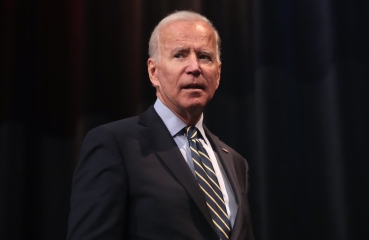
Preschool support, sure. Biden’s plan, no.

Chester E. Finn, Jr.

The overriding problem with President Biden’s education scheme, as presented in his grandiose “American Families” package, is its focus on more schooling rather than more learning.

Undefined
5.20.2021
Charter Schools, Governance, Teachers & School Leaders

Was Eli Broad right to try to improve urban districts or should he have focused solely on charter schools?

Dale Chu

Eli Broad, who passed away late last month at the age of eighty-seven, long sought to rectify the excessively bureaucratic, overly politicized, and woefully underperforming big city school district. But should he have pivoted instead to charter schools?

Undefined
5.19.2021
Curriculum & Instruction, Governance, Teachers & School Leaders

Promoting student well-being is an investment in academic growth

Turnaround for Children

Editor’s note: This essay is an entry in Fordham’s 2021 Wonkathon, which asked contributors to address a fundamental and challenging question: “How can schools best address students’ mental health needs coming out of the Covid-19 pandemic without shortchanging academic instruction?”

Undefined
5.19.2021
Evidence-Based Learning, Curriculum & Instruction, Governance, Teachers & School Leaders

Taking a racial equity approach to support student mental health

Abby Quirk

Editor’s note: This essay is an entry in Fordham’s 2021 Wonkathon, which asked contributors to address a fundamental and challenging question: “How can schools best address students’ mental health needs coming out of the Covid-19 pandemic without shortchanging academic instruction?”

Undefined
5.18.2021
Evidence-Based Learning, Curriculum & Instruction, Governance, Teachers & School Leaders

Cultivating an equitable culture of K–12 health advocacy in the wake of Covid-19

Ebony Lambert, Ph.D.

Editor’s note: This essay is an entry in Fordham’s 2021 Wonkathon, which asked contributors to address a fundamental and challenging question: “How can schools best address students’ mental health needs coming out of the Covid-19 pandemic without shortchanging academic instruction?”

Undefined
5.18.2021
Evidence-Based Learning, Curriculum & Instruction, Governance, Teachers & School Leaders

Cultivating SEL in a digital learning environment

Cody Bendix

Editor’s note: This essay is an entry in Fordham’s 2021 Wonkathon, which asked contributors to address a fundamental and challenging question: “How can schools best address students’ mental health needs coming out of the Covid-19 pandemic without shortchanging academic instruction?”

Undefined
5.18.2021
Evidence-Based Learning, Curriculum & Instruction, Governance, Teachers & School Leaders

Addressing unfinished learning with targeted help and high-dosage tutoring

A growing body of evidence indicates that many students will enter the 2021–22 school year with a substantial amount of unfinished learning. The tendency of educators may be to use benchmark assessments to determine the extent of unfinished learning and then group those students according to how far below grade level they’ve fallen.

Undefined
5.17.2021
Evidence-Based Learning, Curriculum & Instruction, Governance, Teachers & School Leaders

To support the whole child, support the whole school

Laura Encalade, Dr. Hank Staggs

Editor’s note: This essay is an entry in Fordham’s 2021 Wonkathon, which asked contributors to address a fundamental and challenging question: “How can schools best address students’ mental health needs coming out of the Covid-19 pandemic without shortchanging academic instruction?”

Undefined
5.17.2021
Curriculum & Instruction, Governance, Teachers & School Leaders

The non-negotiables for addressing students’ mental health needs coming out of the Covid-19 pandemic

Charles Ogundimu, Ph.D.

Editor’s note: This essay is an entry in Fordham’s 2021 Wonkathon, which asked contributors to address a fundamental and challenging question: “How can schools best address students’ mental health needs coming out of the Covid-19 pandemic without shortchanging academic instruction?”

Undefined
5.17.2021
Governance, Teachers & School Leaders

Break up urban school districts into smaller, independent ones

Howard Husock

The resistance of teachers unions to return to the classroom in urban areas, despite early signals from health agencies that it was relatively safe to reopen schools and the knowledge that in-person learning is essential to the success of our children, has brought attention to what many astute observers have noticed for some time.

Commentary
5.14.2021
Curriculum & Instruction, Governance, Advanced Education, Teachers & School Leaders

Six ways schools can serve gifted students after the pandemic

Now more than ever, high-ability students from low-income families will need specialized attention and guidance from their parents and teachers. Many less-resourced families have experienced illness or personal and financial instability, and low-income students’ schooling may have experienced long interruptions due to a lack of resources at home.

Commentary
5.13.2021
Evidence-Based Learning, Curriculum & Instruction, Governance, Teachers & School Leaders

Some things I’ve learned

Robert Pondiscio

Two decades into what was supposed to be a two-year public service stint in education, I’ve learned a few lessons as a teacher, a writer, and an ed reformer. They include the following: teaching has to be a job that ordinary people can do well; innovation is an overrated virtue; and there’s no such thing in education as a magic bullet—but there might be magic buckshot. Read more.

Commentary
5.13.2021
Accountability & Testing, Curriculum & Instruction, Governance, Teachers & School Leaders

Improving assessments and accountability in the post-Covid era

Chester E. Finn, Jr.

As U.S. schools reopen in the fall, a year and a half after nearly all of them closed due to the pandemic panic, what should be different? What needs to change if kids are actually to catch up? What’s important to retrieve from pre-Covid days? And what other changes, changes that should have been made pre-Covid, is there now a rare opportunity to initiate?

Commentary
5.13.2021
Evidence-Based Learning, Governance

How school district consolidation affects student outcomes and economic efficiency

Amber M. Northern, Ph.D.

Between 1940 and 2018, the number of public school districts in the U.S. declined from 117,108 to 13,551 due to consolidation, whereby smaller districts merged with each other or with a larger neighbor to boost economies of scale in the resource-intensive business of running schools.

Podcast
5.13.2021
Governance

The Education Gadfly Show #769: Should we break up behemoth school districts?

  On this week’s podcast, Howard Husock, adjunct scholar in Domestic Policy Studies at AEI

Commentary
5.12.2021
Curriculum & Instruction, Governance, Teachers & School Leaders

Supporting English learners when students return to classrooms

Meeting the needs of the diverse and growing number of English learners (ELs) is a pressing challenge for many schools, districts, and charter management organizations. Although many general education programs and curricula do not provide all of the specific supports ELs need, pull-out programs for most students generally do more harm than good.

Commentary
5.10.2021
Accountability & Testing, Evidence-Based Learning, Curriculum & Instruction, Governance, Teachers & School Leaders

The culture wars come for the Nation’s Report Card

Chester E. Finn, Jr.

Trouble continues at the National Assessment Governing Board (NAGB), the policy body for the National Assessment of Educational Progress (NAEP).

Commentary
5.6.2021
Curriculum & Instruction, Governance, Teachers & School Leaders

Biden can’t seem to decide whether all young Americans need a postsecondary education. He’s not the only one who’s conflicted.

Michael J. Petrilli

Let’s stop denigrating the straight-into-the-workforce pathway for high school graduates. As we were reminded over the past year, so-called “low skill” jobs are critical to society. And they can be their own form of postsecondary education, as young people gain on-the-job skills that will lead to more opportunities and better wages going forward. Read more.

Commentary
5.6.2021
Charter Schools, Curriculum & Instruction, Governance, Teachers & School Leaders

Cancel culture versus parent choice

Terry Ryan

Can parent choice survive the cancel culture that is becoming ever more prevalent on both the political left and political right? What happens when the principles of diversity and choice in schools conflict with either the left’s or the right’s firm view of truth and falsehoods?

Commentary
5.6.2021
Curriculum & Instruction, Governance, Teachers & School Leaders

How schools can fund and implement strong mental health supports after the pandemic

Sarah Broome

Editor’s note: This essay is an entry in Fordham’s 2021 Wonkathon, which asked contributors to address a fundamental and challenging question: “How can schools best address students’ mental health needs coming out of the Covid-19 pandemic without shortchanging academic instruction?”

Commentary
5.6.2021
Accountability & Testing, Evidence-Based Learning, Governance, Teachers & School Leaders

Inaugural PISA data on students’ growth mindset and teaching practices

Jeff Murray

Since 1997, the Program for International Student Assessment (PISA) has tested students around the globe every three years to determine the educational status of fifteen-year-old students in dozens of countries and economic regions that are part of the Organization for Economic Cooperation and Development (OECD).

Commentary
5.3.2021
Accountability & Testing, Governance

Don’t let them make you do it, Haley!

Chester E. Finn, Jr.

You wouldn’t expect a conservative Republican like former Mississippi governor Haley Barbour to turn into a facsimile of Chairman Xi as muzzler of dissent and monitor of communications, but something of the sort has reared its head at the National Assessment Governing Board (NAGB), which Barbour chairs. (He’s a DeVos appointee, and last I looked, those terms run a year at a time.

Commentary
4.30.2021
School Finance, Charter Schools, Governance

Don’t believe the haters. The federal Charter Schools Program deserves full funding.

Libby Sobic

In the coming weeks, the House Appropriations subcommittee that decides on education spending will consider how much money to allocate to the federal Charter School Program (CSP).

Commentary
4.29.2021
Curriculum & Instruction, Governance, Teachers & School Leaders

Three things to watch for in schools’ post-Covid recovery

Dale Chu

Despite the progress schools and districts have made on returning fully to in-person instruction, some of the habits and apprehensions they’ve developed over the last thirteen months could impede their upcoming education recovery efforts.

Commentary
4.29.2021
Evidence-Based Learning, Curriculum & Instruction, Governance, Teachers & School Leaders

How to pump the Acceleration Imperative up to full speed

Kalman R. Hettleman

Think of Michael Petrilli’s bold ideas and the Acceleration Imperative as newly designed Ford(ham) vehicles for K–12 recovery from the pandemic. Happily, there is much to admire in the showroom.

Commentary
4.29.2021
Evidence-Based Learning, Governance

How parents determine childcare quality

Amber M. Northern, Ph.D.

Numerous studies have found that the quality of child care is too low and that we need to do more to

Commentary
4.29.2021
Governance, Teachers & School Leaders

The bias toward complexity when humans attempt to solve problems

Jeff Murray

Problem solving involves a complex set of mental steps, even when it happens quickly. A group of researchers from the University of Virginia sought to test one specific aspect of the process—the types of solutions people consider—and uncovered what could be an important human attribute, with significant implications for public policy.

Podcast
4.29.2021
Accountability & Testing, Governance

The Education Gadfly Show #767: The fight to get kids back in class five days a week


Commentary
4.22.2021
Accountability & Testing, Evidence-Based Learning, Governance, Teachers & School Leaders

Testing, SpaceX, and the quest for consensus

Chester E. Finn, Jr.

A suite of technologies that are already widely used in some private-sector testing can and should be embraced by state and national assessments, as well as the private tests that aren’t yet making maximum use of them. Read more.

Commentary
4.22.2021
Charter Schools, Curriculum & Instruction, Governance

Not all non-traditional schooling is created equal

Julie Fitz

When we imagine the typical school, at least one from the pre-pandemic era, generally the first thing that comes to mind is a teacher instructing a classroom full of students.

Pagination

  • First page « First
  • Previous page ‹ Previous
  • Page 31
  • Page 32
  • Page 33
  • Page 34
  • Current page 35
  • Page 36
  • Page 37
  • Page 38
  • Page 39
  • Next page Next ›
  • Last page Last »

Type

  • Book (3)
  • Commentary (1239)
  • Event (2)
  • Podcast (81)
  • Report (78)

Topics

  • Accountability & Testing (504)
  • Advanced Education (267)
  • Career & Technical Education (84)
  • Charter Schools (1117)
  • Curriculum & Instruction (1594)
  • ESSA (129)
  • Evidence-Based Learning (837)
  • Facilities (25)
  • (-) Governance (1416)
  • Personalized Learning (51)
  • Private School Choice (140)
  • School Finance (169)
  • Standards (190)
  • Teachers & School Leaders (1456)

Date

  • 2026 (149)
  • 2025 (192)
  • 2024 (189)
  • 2023 (177)
  • 2022 (184)
  • 2021 (220)
  • 2020 (156)
  • 2019 (56)
  • 2018 (11)
  • 2017 (13)
  • 2016 (4)
  • 2015 (4)
  • 2014 (5)
  • 2013 (8)
  • 2012 (11)
  • 2011 (7)
  • 2010 (1)
  • 2009 (2)
  • 2008 (5)
  • 2007 (4)
  • 2006 (1)
  • 2005 (1)
  • 2004 (1)
  • 2003 (1)
  • 2002 (1)
  • 2001 (6)
  • 2000 (3)
  • 1999 (2)
  • 1998 (2)
Fordham Logo

© 2026 The Thomas B. Fordham Institute
Privacy Policy
Usage Agreement

National

P.O. Box 110
Burke, VA 22009

202.223.5452

[email protected]

Ohio

P.O. Box 82291
Columbus, OH 43202

614.223.1580

[email protected]

Sponsorship

130 West Second Street, Suite 410
Dayton, Ohio 45402

937.227.3368

[email protected]