Mobile Navigation

  • National
    • Policy
      • High Expectations
      • Quality Choices
      • Personalized Pathways
    • Research
    • Commentary
      • Gadfly Newsletter
      • Flypaper Blog
    • Events
    • Scholars Program
  • Ohio
    • Policy
      • Priorities
      • Media & Testimony
    • Research
    • Commentary
      • Ohio Education Gadfly Biweekly
      • Ohio Gadfly Daily
  • Charter Authorizing
    • Application
    • Sponsored Schools
    • Resources
  • About
    • Mission
    • Board
    • Staff
    • Career
Home
Home
Advancing Educational Excellence

Main Navigation

  • National
  • Ohio
  • Charter Authorizing
  • About

National Menu

  • Topics
    • Accountability & Testing
    • Advanced Education
    • Career & Technical Education
    • Charter Schools
    • Curriculum & Instruction
    • ESSA
    • Evidence-Based Learning
    • Facilities
    • Governance
    • Personalized Learning
    • Private School Choice
    • School Finance
    • Standards
    • Teachers & School Leaders
    • Think Again
  • Research
  • Commentary
    • Gadfly Newsletter
    • Flypaper Blog
    • Gadfly Podcast
  • Events
  • Scholars Program

The Education Gadfly Weekly

Sign Up to Receive Fordham Updates

We'll send you quality research, commentary, analysis, and news on the education issues you care about.
Thank you for signing up!
Please check your email to confirm the subscription.

The Education Gadfly Weekly: Why urban charters outperform traditional public schools

Volume 22, Number 41
10.6.2022
10.6.2022

The Education Gadfly Weekly: Why urban charters outperform traditional public schools

Volume 22, Number 41
view
Quality Choices

Why urban charters outperform traditional public schools

High-quality studies continue to find that urban charter schools boost achievement and other outcomes by more than their traditional-public-school peers—an advantage that has only grown larger as the charter sector has expanded and matured. Where the research literature is less clear is why urban charter schools consistently, and increasingly, outperform district schools. Still, it does offer some hints and plausible hypotheses.

Michael J. Petrilli, David Griffith, Ph.D. 10.6.2022
NationalFlypaper

Why urban charters outperform traditional public schools

Michael J. Petrilli | David Griffith, Ph.D.
10.6.2022
Flypaper

High-achieving middle and high schoolers gain from latest NYC ed reform

Chester E. Finn, Jr. | Brandon L. Wright
10.6.2022
Flypaper

Instructional time lost to Covid will likely mean persistent and widening gaps in literacy

Robert Pondiscio
10.6.2022
Flypaper

Doug Lemov’s vision for fostering meaning, purpose, and belonging in our classrooms

Daniel Buck
10.6.2022
Flypaper

Teacher compensation compared to other professions

Jeff Murray
10.3.2022
Ohio Gadfly Daily

Education Gadfly Show #840: The state of state education reform

10.4.2022
Podcast

Cheers and Jeers: October 6, 2022

The Education Gadfly
10.6.2022
Flypaper

What we're reading this week: October 6, 2022

The Education Gadfly
10.6.2022
Flypaper
view

High-achieving middle and high schoolers gain from latest NYC ed reform

Chester E. Finn, Jr., Brandon L. Wright 10.6.2022
Flypaper
view

Instructional time lost to Covid will likely mean persistent and widening gaps in literacy

Robert Pondiscio 10.6.2022
Flypaper
view

Doug Lemov’s vision for fostering meaning, purpose, and belonging in our classrooms

Daniel Buck 10.6.2022
Flypaper
view
EPI report SR image

Teacher compensation compared to other professions

Jeff Murray 10.3.2022
Ohio Gadfly Daily
view
IStock/Getty Images Plus/ jacoblund

Education Gadfly Show #840: The state of state education reform

Michael J. Petrilli, David Griffith, Ph.D., Amber M. Northern, Ph.D., Jennifer Alexander 10.4.2022
Podcast
view

Cheers and Jeers: October 6, 2022

The Education Gadfly 10.6.2022
Flypaper
view

What we're reading this week: October 6, 2022

The Education Gadfly 10.6.2022
Flypaper
view

Why urban charters outperform traditional public schools

Michael J. Petrilli | David Griffith, Ph.D.
10.6.2022
Flypaper

High-quality studies continue to find that urban charter schools boost achievement by more than their traditional-public-school counterparts—an advantage that has only grown larger as the charter sector has expanded and matured. For example, a 2015 analysis of charter performance in forty-one urban locations, conducted by the Center for Research on Education Outcomes (CREDO), estimated that students who attended charter schools in these cities gained an average of twenty-eight days of learning in English language arts (ELA) and forty days of learning in math per year. Students who enrolled in urban charters for at least four years gained a total of seventy-two days of learning in ELA and 108 days—over half a year’s worth of learning—in math. Moreover, the gains were even larger for Black and Latino students, and the performance of the charter sector improved dramatically over the course of the study period (i.e., between the 2008–09 and 2011–12 school years).

Understandably, some were skeptical of these results. Yet evaluations of matching approaches such as CREDO’s suggest that its estimates closely resemble those generated by a random lottery, meaning they aren’t the product of “selection bias” or unobserved differences between students in charter and traditional public schools. Nor, according to multiple studies, is there much evidence that charter schools cream the best students. (Indeed, some research suggests that charters enroll unusually low-performing students.)

Emerging research also suggests that the gains associated with charter school attendance go far beyond test scores. For example, recent studies have also found a positive relationship between enrollment in urban charter schools and long-term, real-world outcomes, including college enrollment, teenage pregnancy, incarceration, and voting.

Where the research literature is less clear is why urban charter schools consistently, and increasingly, outperform district schools. Still, it does offer some hints and plausible hypotheses:

  • Urban charter schools are more likely to embrace evidence-based practices.

In a landmark study, Will Dobbie and Roland Fryer, Jr. examined charter schools in New York City and found that five factors were predictive of their success: “frequent teacher feedback, the use of data to guide instruction, high-dosage tutoring, increased instructional time, and high expectations.” According to subsequent research, these practices also tend to be embraced by urban charter schools that have been grouped under the “No Excuses” banner (as in, there are no excuses for not raising student achievement). And many of the best-known charter networks, such as KIPP, Success Academy, and Achievement First, rely heavily on some combination of them. Now that schools run by such networks account for at least 40 percent of the charter sector, their embrace of evidence-based practices could be a major factor in the success of the sector writ large.

  • Urban charter schools are more likely to maintain diverse and effective teaching staffs.

In theory, freedom from district bureaucracies and teacher-union contracts should allow charter schools to make better hiring decisions, appropriately reward strong performance, and part ways with ineffective teachers when necessary. And there’s some evidence of precisely that happening in the real world. For example, one recent study finds a strong relationship between performance and retention in New Orleans’s “market setting,” while a recent Fordham Institute study found that charter schools in Pennsylvania were more likely to promote their high-performing teachers into leadership roles. Another Fordham study found significantly lower rates of teacher absenteeism in charter schools than in traditional public schools—a sign of more effective management that could also help to explain charters’ strong results, given the negative impact of teacher absenteeism on student learning. Finally, a more recent Fordham study found that North Carolina charter schools were more likely to have diverse teaching staffs than their district peers, which allowed for more frequent matching of Black students with Black teachers who tended to boost their achievement.

  • Charter authorizers have closed low-performing schools, including in states that used to have low-quality sectors, like Texas and Ohio.

For example, another landmark CREDO study found that at least 300 low-performing charter schools closed between 2006 and 2012—a phenomenon that likely contributed to the sector’s gradual improvement during that period. Closure has also played a visible role in the handful of states that used to have low-performing charter school sectors. In Ohio, for example, charters’ impact on achievement went from negative to positive after a 2015 policy change that ramped up accountability on charter authorizers and led to dozens of school closures. Similarly, in 2013, Texas simultaneously boosted funding for all charter schools and moved to close its lowest-performing schools. Following the law’s passage, CREDO’s estimate of Texas charter schools’ effect on math learning went from negative seventeen days per year (for 2012–13) to positive seventeen days per year (for 2014–15), with even larger gains for poor students and the state’s ever-expanding Latino population.

To be clear, everyone involved in education should root for all schools to succeed, regardless of sector. One hope for charter schools, in fact, was that their innovative practices might migrate into traditional public schools (and Roland Fryer led a project to encourage exactly that in Houston, with some success).

Still, there’s little doubt that educators in most urban districts face significant challenges in adopting promising practices, from burdensome teachers union contracts, to dysfunctional central offices, to meddlesome school boards. By wiping the slate clean of these impediments, policymakers have given charter schools the chance to dramatically improve student outcomes. Thankfully, many urban charters are seizing the opportunity.

view

High-achieving middle and high schoolers gain from latest NYC ed reform

Chester E. Finn, Jr. | Brandon L. Wright
10.6.2022
Flypaper

Amid nonstop controversy, New York City, which runs the nation’s largest school system, is again moving in the right direction when it comes to advancing the education of able students and opening opportunities to more high achievers. This after much retrograde activity during the regime of former Mayor Bill de Blasio.

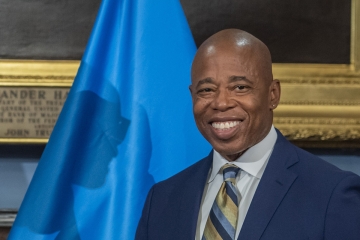
Earlier this year, Mayor Eric Adams and his team expanded the number of sites for gifted education at the elementary level, and changed screening policies to include more students from lower-income families. Now they’re moving to improve services in middle schools and expand the supply of schools and seats for motivated and academically successful high school students, while also giving pupil performance more weight in admission to selective middle and high schools. The city is thus putting greater emphasis on merit in the endlessly contentious rationing of a much-valued but far too scarce good—challenging, high-quality schooling for those who want and are prepared to take advantage of it—and it is taking steps to ease the scarcity.

We say hurrah, even as others boo. Merit-based admission to anything (except perhaps the Olympics) is out of favor in today’s progressive circles and among equity hawks. They view test scores as taboo, and call for dismantling academic programs for high achievers instead of expanding these precious services for Black, Hispanic, and other historically disadvantaged students.

Nowhere have such misguided views been more intense than New York City, where they were embraced by de Blasio and those he chose to run the school system. Hence their efforts to tear down the structures of gifted-and-talented education in the elementary grades and replace them with superficial add-ons. Hence also their plans to demolish New York’s network of eight “exam” high schools and fiddle with the performance-based elements of admission to all the city’s “screened” middle and high schools.

When Adam took office on New Years Day 2022, he thus inherited a situation that was confusing, contentious, and headed in the wrong direction—in a city and school system so vast and complex that any change of significance entails a lot of time, mid-course corrections, and special exceptions to get right.

But Adams appears, thankfully, to see things more clearly than his predecessor, and is working toward the right goals—“equity and excellence for all.” He also knows that the only way to achieve them in New York is slowly and steadily. That means any policy changes he and schools chancellor David Banks make are likely to be incomplete at the outset. That was the case when they rescued elementary gifted education from the abyss. Yes, the present arrangement is far from perfect: Children are screened too early for admission, the process for screening them is prone to bias and error, and the programs themselves are far too scarce. But the abyss was avoided, and the improvements launched by Adams and Banks point in the right direction.

They turned last week to middle and high schools with reforms that again are incomplete but again point in the right direction.

In the complex governance structure of New York’s public education system, the central administration is responsible for high schools, while middle schools more or less belong to thirty-two community-level sub-systems that have a degree of autonomy in operating them. What hizzoner and the chancellor did with regard to middle schools is to allow those local districts again to factor academic performance (grades, test scores, etc.) in admitting students to “screened” schools, most of which are in high demand—although within the ranks of those who qualify for a particular school, a lottery arrangement will continue.

According to the city’s Department of Education, each local superintendent is now supposed to “partner with school communities’ leadership, staff, and parents to thoughtfully determine if and where middle school screened programs should exist based on instructional and community needs. Where screening is allowed, students would be ranked based on a composite of their course grades from fourth grade. The number of academically screened schools will be limited and based on the needs of the community.” Note, however, that all this is supposed to happen by October 26, with a student-application deadline of December 1 for the 2023 admission cycle—a mighty tight timeline.

As for high schools, where city-wide choice has long been the practice and all upcoming high schoolers must rank order a dozen of their preferred schools or programs among hundreds of options, it will remain complicated.

The city boasts the eight “specialized high schools” to which admission is based on scores on a much-discussed assessment called the Specialized High School Admissions Test. These include such world-renowned secondary institutions as Stuyvesant and Bronx Science. Then there are dozens of “screened” high schools and programs that operate their own admissions criteria. They include some technically-oriented programs like Aviation High School and others that are rigorously academic, such as Eleanor Roosevelt and Townsend Harris. Although part of the city-wide choice system, to actually enter one of them a student must qualify under the school’s own criteria—and often fit within geographic preferences and such.

For several years now, the screened schools have been barred from considering students’ middle-school grades as part of their criteria. Instead, the city used a lottery system in which the majority of eighth graders were entered. As Alina Adams reports in The 74 , “60 percent of eighth graders were deemed ‘high-achieving’ and entered into a lottery that made no distinction between those who might have a 100 grade-point average and those with a GPA in the low 80s. Those in the top tier were given first crack at the most coveted schools, but with so many applicants, many straight A students were shut out of their chosen high-performing schools.”

Lotteries will remain in 2023, but screened schools may again include grades in setting eligibility standards, which will shrink the pool of students eligible for each high school. How exactly this will work is hard to parse, but Amélie Marian of Rutgers University, who analyzes NYC DOE admissions data, estimates that 20 to 25 percent of applicants will earn make it into the lotteries.

Complicated, yes. What’s not is to acknowledge that New York’s best public high schools don’t have enough capacity to meet the demand from motivated, well-qualified students and their ardent parents. And there on the supply side, to their considerable credit, Adams and Banks have taken a step to create more capacity while hinting that more lies ahead. Here’s that portion of their announcement:

Chancellor Banks and this Administration believe that there are academically brilliant children in every neighborhood, however many students have to travel for long hours to reach academically accelerated learning high schools. To fill the gap that exists in some underserved communities of color, three new accelerated learning academies will be opened—informed by community needs. The schools will be located in the South Bronx, Ocean Hill-Brownsville, and Southeast Queens, with a geographic priority for students from those areas. The schools will open by Fall 2024. Engagement with families will begin to identify the potential for further expansion of high-quality options throughout the city based on community interest.

Double hurrah for that—triple, actually, for skillfully dealing in the same policy shift with both excellence and equity. We’ll say it again: The right path for expanding opportunity for able, hard-working, high-achieving youngsters who are Black, Brown, or from disadvantaged and oft-marginalized backgrounds is not endless tinkering with the rationing system (and incurring the wrath of those squeezed out by the tinkering), but instead expanding the capacity and accessibility of the programs and schools that best meet their educational needs and boost their future prospects.

Several of Banks’s predecessors, including the estimable Joel Klein and the late, great Harold Levy, understood this and worked to make it happen. Then came the long de Blasio dry spell. Now the reservoir may once again be starting to fill.


view

Instructional time lost to Covid will likely mean persistent and widening gaps in literacy

Robert Pondiscio
10.6.2022
Flypaper

An analysis in the New York Times last month cheerily assured readers that Covid-related learning losses “look real but sub-catastrophic.” The damage also appears “to not be permanent, with students recovering at least some ground already,” opined David Wallace-Wells, a columnist for the NYT Magazine.

I’m less sanguine. I expect gaps in reading scores not just to persist, but to widen, particularly among those whose essential early childhood and elementary school years were lost or thrown into chaos by the pandemic.

It’s no surprise to see math test scores drop more than reading, as they have in New York City, for example. Nor is it reassuring that reading scores appear more resilient in the first rounds of post-pandemic testing. Both are exactly what we should have expected. Math is largely a school-based subject, instructionally-sensitive, and more likely to show immediately the effects of lost instructional time. This also makes it easier to catch kids up. But language proficiency is different, and we shouldn’t be lulled into complacency if it appears to be less impacted by Covid. Reading test scores are stubbornly tied to what happens outside of school, and there’s not much mystery why: Children of well-educated parents enjoy verbal advantages at home that grow each day. Their lives are enriched by rich dinner table conversation with educated adults, bedtime read-alouds, weekend visits to museums, all manner of summer activities, plus other out-of-school learning opportunities, sports teams, music lessons, and sundry forms of “concerted cultivation.”

Reading researcher Keith Stanovich dubbed the impact of these structural advantages and disadvantages in language and knowledge the “Matthew Effect,” after a passage in the New Testament Gospel of Matthew: “For to everyone who has, more will be given, and he will have abundance; but from him who does not have, even what he has will be taken away.” In simple language, the rich will get richer, the poor will get poorer. Privileged children come to school on day one with larger stores of knowledge and vocabulary than their disadvantaged peers. Those accumulations provide fertile soil in which to grow new knowledge and vocabulary.

My favorite illustration of this phenomenon is one I stole from Alice Wiggins, whom I worked with at the Core Knowledge Foundation years ago. She demonstrated for teachers how knowledge builds vocabulary with a series of sentences using the obscure word “excrescence” and pointing out how encountering words in context creates understanding:

  • “To calculate fuel efficiency, aerospace engineers needed an accurate estimation of excrescence drag caused by the shape of the plane’s cabin.”
  • “Excrescences on the valves of the heart have been known to cause a stroke.”
  • “The wart, a small excrescence on his skin, had made Jeremy self-conscious for years.”
  • “At the far end of the meadow was what, at first glance, I thought a huge domed building, and then saw was an excrescence from the cliff itself.”

By the time you read the fourth sentence, you probably figured out that an excrescence is a growth, or something that sticks out from a surface. This is how we acquire the vast majority of words in our vocabulary: not by memorization, but through repeated exposure to unfamiliar words in context. With each encounter with an unfamiliar word, the possible meanings get narrowed down until you have command of the word and can use it confidently.

But look at those sentences again. You’re able to learn the new and unfamiliar word excrescence because you already know words like “aerospace” and “drag,” what an engineer does, how it feels to be self-conscious, and what it means to suffer a stroke. You’re already rich in knowledge and vocabulary, and you just got richer. If you’re language- and knowledge-poor, you just fell a little further behind.

Critically, gaps don’t merely persist, they widen. Common sense suggests that months or years of school lost or disrupted by Covid did far less damage to kids who spent the last two years marinating in their linguistically rich homes, earning compound interest on the foundational language and knowledge they already possessed. Low-income kids in comparatively disadvantaged homes enjoyed fewer of these advantages and gained less as they spent time away from school, perhaps the most knowledge- and language-rich environment they have.

Remember the “30-million-word gap” study by Betty Hart and Todd Risley? It was once among the most commonly cited pieces of education research. Mention it today, however, and you’re likely to hear that it’s been “debunked.” Not exactly. As Tim Shanahan observed, it was “far from a perfect study,” but despite its shortcomings, the vast weight of evidence shows “environmental differences (as opposed to genetic ones) still seems to be the best explanation of why poverty kids are underprepared when reading instruction begins.” 

None of the reassuring, post-Covid commentary that I’ve seen accounts for this. It is overly sanguine, at least for literacy, to analogize learning loss to “a cross-country road trip” where students ran out of gas but now “they’re back in their cars and humming along at fifty-five miles an hour again…still far away from the destination they would have arrived at if they hadn’t run out of gas.” That might be true for math, but the literacy and language proficiency destination isn’t a fixed location; what’s been lost is potential growth. The more apt analogy is compound interest. If we both have $1,000, and you put yours in an interest-bearing account while I put mine under the mattress for two years before going to the bank to deposit it in an interest-bearing account of my own, we’re earning the same interest rate from that day forward. If interest rates go up, my account will grow faster. But my savings will never catch up to yours because of the interest already added to yours while my money was under the mattress. In fact, every year you’ll pull even further ahead. The logic of the Matthew Effect suggests that time lost can’t easily be recovered. Face it, if we knew how to accelerate language proficiency, we’d have been doing it for the last half century.

None of this is intended to discourage or deprecate the earnest and energetic efforts visible in many places to make up for lost time. There’s really no other choice. But we should be skeptical of any efforts to minimize the challenge or to waive away the damage that has been done. Time not spent in environments rich in knowledge and language can never be recovered. The language-rich grew richer. The language-poor mostly waited.

view

Doug Lemov’s vision for fostering meaning, purpose, and belonging in our classrooms

Daniel Buck
10.6.2022
Flypaper

For teachers, especially newer ones, Doug Lemov’s work acts as something of a life-saving manual. Where prep programs posture and compete to cite the most esoteric French philosopher in their research—leaving new teachers woefully unprepared for real classrooms—Teach Like a Champion and other Lemov works offer practical advice for educators who have real students arriving in thirty minutes.

Yet many academics and advocates like to kvetch about how his approach fosters mere obedience and subservience, a carceral pedagogy worthy of cancellation. With that in mind, Lemov’s forthcoming book, with his co-authors Hilary Lewis, Darryl Williams, and Denarius Frazier, Reconnect: Building School Culture for Meaning, Purpose, and Belonging is a splendid and damning rejoinder to his critics.

While again abounding in practical advice, the thesis undergirding this book argues that scholarly learning happens best in well-structured environments—the undercurrent of his former books—but also community, critical thought, and other goals, like emotional well-being, that are sacrosanct to progressive theorists.

“Interactions among students, especially in the classroom,” Lemov writes, “must deliberately be orchestrated to build a sense of connection, belonging, and shared scholarly endeavor.” Like it or not, classrooms are socially engineered environments. And within these environments, “orderliness is surprisingly central to belonging.” No child will feel welcomed in a classroom that feels chaotic, unpredictable, or even unsafe. Community requires structure.

Any teacher who has worked in a school with chaotic classrooms will tell you the same. A handful of students enjoy the experience—usually those throwing paper airplanes or competing to make the best farting noise—but the large majority dread entering these environments. They want to learn and so grow increasingly frustrated when their fellow classmates disrupt that goal. In many cases, they come to resent each other. Conversely, when a classroom is well-oriented towards academic achievement, community and belonging result. Learning follows.

C.S. Lewis provides a useful image to explain Lemov’s view of a classroom community: Where lovers tend to face each other, friends stand side by side, absorbed in some common interest. Communities will develop in classrooms that do their core function well. Lemov points to sports teams and churches as examples of tightly-knit communities. In both cases, members grow in their attachments through an endeavor that is outside themselves.

Much of the practical advice that Lemov provides mirrors the advice he gives in his earlier work, but his justification for that advice now differs. Take “tracking the speaker,” for example, the idea that students ought to look at whoever is talking. Tracking benefits students beyond academics. Ritual forms of civility create a sense of belonging—seemingly insignificant gestures like smiling, saying please and thank you, or even just eye contact. “The accrual of these signals” he argues “is almost assuredly more influential than grand statements of togetherness.” Small classroom habits like keeping eyes on the speaker that seem paternalistic to judgmental outsiders ensure that those actually inside the classroom feel welcome.

There is also much new in this book, not only on how classrooms can foster community, but on schools as a whole: communal game areas, family-style lunches, phone bans, and regular pep assemblies to align school culture.

Perhaps what may prove most controversial is his chapter on social and emotional learning, a current political football. Lemov is skeptical, making special note of the paucity of research on SEL. Where improvements are found, they come from student surveys on school climate showing improvements on the scale of a 2–4 percentage point increase—hardly solid enough data to make correlational links, let alone tying specific actions to improvements causally.

In place of kitschy activities and contrived lessons, Lemov argues for restructuring the school itself for social and emotional health. “Most likely to help,” he writes, “is the careful selection of manageable strategic efforts that focus on rewiring daily social interactions and cognitive habits.” Social and emotional health doesn’t come from instruction, but from healthy environments. When schools are well-ordered towards learning, everything else flows from it.

For me, perhaps the most striking sentence in the whole book followed Lemov’s description of a classroom, switching back and forth between silent, independent work and a buzzing conversation. After that description, he concludes that, “students are learning as they deserve to learn.” Lemov’s book is another work that can allow more students to access the learning that they deserve.

view
EPI report SR image

Teacher compensation compared to other professions

Jeff Murray
10.3.2022
Ohio Gadfly Daily

Sylvia Allegretto and her colleagues at the union-backed Economic Policy Institute (EPI) have been arguing for over eighteen years that teachers are underpaid. Her latest in a long line of reports on the topic was published in August and follows the same methodology as all previous versions.

Using data from the Bureau of Labor Statistics (BLS), Allegretto compares teacher wages and benefits in all fifty states and the District of Columbia to those of a large group of workers in a BLS classification known as “civilian professionals.” This is, Allegretto writes, the “broadest category available that corresponds with all college graduates,” and thus is felt by EPI to be the most directly comparable with teachers. Wages comprise regular pay as reported to the IRS, which includes both direct pay for hourly or salaried work and supplemental pay for things like overtime, bonuses, profit-sharing, and paid leave. The benefits category includes health and life insurance, retirement plans, and payroll taxes such as Social Security, unemployment, and workers’ compensation. All forms of compensation are reported on an earnings-per-week basis, which Allegretto says adjusts for the fact that most teachers do not receive pay for their regular jobs during the summer. My Fordham colleague Aaron Churchill took issue with this methodology upon the release of a previous version of this report in 2016, partly because it assumes that all bachelor’s degrees represent a similar level of skills, and also because it ignores the fact that, even during the school year, teachers report working fewer hours than other professionals.

The findings from 2021 are in line with EPI’s earliest analysis. To wit, teacher wages lag that of civilian professionals, just as they have done in every studied year since 1996. In 2021, the wage gap between the two groups was the largest EPI’s analysts have ever seen: 23.5 percent. It is, as ever, headline news.

Inflation-adjusted average weekly wages of teachers have been relatively flat since 1996—increasing just $29 between 1996 and 2021—while the comparison group of college graduates rose by $445. Allegretto notes that there have been some time periods when the gap narrowed and others when the gap increased, generally based on broad economic trends. She wisely points out that wage volatility—both upward and downward—impacts teachers less than civilian professionals because teacher pay scales are set by long-term contracts. Allegretto also discusses pandemic labor market disruptions, concerned that they could distort the methodology EPI has been using. However, data suggests that college-educated workers were much less affected by the pandemic than were other workers. Thus, the previous methodology remained in place with the caveat that “any pandemic-related issues with the data that come to light will be addressed in future updates.”

Benefits are, unsurprisingly, higher for teachers than for the comparison group. This has also been a steady trend over all the years of study. In 2021, the benefits gap favoring teachers was at the highest level ever seen: 9.3 percent. Combining the wage and compensation gaps results in a total compensation gap of 14.2 percent, with civilian professionals coming out on top.

Allegretto includes numerous breakdowns of the wage differential by itself—male teachers fare worse than females, teachers in Colorado have a far larger gap than their peers working in Rhode Island, etc.—but not for the combined wage/benefits differential. Those data would likely impact the conclusions of the report and perhaps change the headlines they generate.

The Fordham Institute reviewed EPI’s first report on teacher compensation back in 2004. Their methodology hasn’t changed and neither have our quibbles with it. The comparison group of workers is needlessly broad; the difference between free market and union-negotiated wages and benefits is treated as a statistical quirk rather than a heavy thumb on the scale of supply and demand; and teacher scheduling (school day schedules, summers off, etc.) is averaged out of the equation, despite it likely being a hugely valuable non-monetary incentive for many teachers (not to mention the popularity of those schools with four-day weeks).

There’s another unanalyzed factor to consider that’s become a larger issue recently. With baby-boomer teachers retiring en masse, the average teacher is much younger and less experienced than in previous years. This “composition effect” drives down average salaries. But that’s a statistical mirage, as the inflation-adjusted pay for teachers at any given point on the pay scale (new teachers, ten years of experience, etc.) is up sharply. Comparing teachers to workers with similar skills and similar years of experience would significantly change the outcome.

But to add a new question into the ongoing discussion: What if we assume for a moment that EPI’s analyses have all been right and that their overriding call throughout the years—more pay for teachers!—should have be heeded following the release of at least one of these recurring reports since 2004. Why hasn’t it? Each iteration of these EPI reports has concluded with some tie in to current events to attempt to ground and amplify that call. “Now more than ever...” But neither housing bubble nor Race to the Top nor Great Recession have done anything to change the trajectory of teacher wages and benefits, nor the gap between them and their nonteacher professional peers. Why not? Now that would be some valuable research. Perhaps the latest call—tied to a putative teacher shortage—will be the one that finally works to get policymakers to see the light. Or perhaps it won’t.

SOURCE: Sylvia Allegretto, “The teacher pay penalty has hit a new high,” Economic Policy Institute (August 2022).

view
IStock/Getty Images Plus/ jacoblund

Education Gadfly Show #840: The state of state education reform

10.4.2022
Podcast
 

On this week’s Education Gadfly Show podcast, Jennifer Alexander, Executive Director of the Policy Innovators in Education (PIE) Network, joins Mike Petrilli and David Griffith to discuss recent state-level education reform victories, including Tennessee’s school funding overhaul and Illinois’s new charter facilities financing law. Then, on the Research Minute, Amber Northern discusses a study that examines the impact family structure has had on student achievement and discipline over time. 

Recommended Content: 

  • PIE Network’s 2022 Eddie Awards Nominees: “Game Changer Campaign of the Year,” (August 2022). 
  • The study that Amber reviewed on the Research Minute: Nicholas Zill and Bradford Wilcox, “Strong Families, Better Student Performance: The More Things Change, the More They Remain the Same,” Institute for Family Studies (August 2022)
  • Jeff Murray’s Fordham Institute review of Zill and Bradford’s study: “Family structure and academic outcomes,” (September 6, 2022). 

Feedback Welcome!

Have ideas for improving our podcast? Send them to our podcast producers Nathaniel Grossman and Lilly Sibel at [email protected] and [email protected]

view

Cheers and Jeers: October 6, 2022

The Education Gadfly
10.6.2022
Flypaper

Cheers

  • By doing less, schools can dedicate time and resources to what really works for students. —Justin Reich
  • Awash in federal Covid-19 relief funds, many states and districts are using ESSER dollars for literacy instruction and tutoring. —K-12 Dive
  • The universal expansion of Arizona’s Empowerment Scholarship Account makes the states a national leader in school choice. —Nicole Stelle Garnett 
  • Equity in schools should not come at the expense of academic excellence. —Jessica Levin
  • Schools should use a combination of high-quality curricula and researched-backed tutoring programs to tackle Covid-era learning loss. —Amanda Neitzel

Jeers

  • New York University fired a well-respected professor with decades of experience after some students complained that his organic chemistry class was “too hard.” —New York Times
  • The president of the Massachusetts Teachers Association clams that the state’s focus on college and career readiness for K–12 students is “tied to the capitalist class and its needs for profit.” —CommonWealth
  • The “un-grading” movement attempts to ease the transition into college—by eliminating A–F grades for freshman. —The Hechinger Report
view

What we're reading this week: October 6, 2022

The Education Gadfly
10.6.2022
Flypaper
  • A Georgia teachers union has endorsed the Republican incumbent for state superintendent because his Democratic challenger supports school choice. —The 74
  • A nationwide teacher shortage has some school districts resorting to extreme measures to fill classroom positions, even recruiting teachers from abroad. —Eli Saslow
Fordham Logo

© 2026 The Thomas B. Fordham Institute
Privacy Policy
Usage Agreement

National

P.O. Box 110
Burke, VA 22009

202.223.5452

[email protected]

Ohio

P.O. Box 82291
Columbus, OH 43202

614.223.1580

[email protected]

Sponsorship

130 West Second Street, Suite 410
Dayton, Ohio 45402

937.227.3368

[email protected]