Mobile Navigation

  • National
    • Policy
      • High Expectations
      • Quality Choices
      • Personalized Pathways
    • Research
    • Commentary
      • Gadfly Newsletter
      • Flypaper Blog
    • Events
    • Scholars Program
  • Ohio
    • Policy
      • Priorities
      • Media & Testimony
    • Research
    • Commentary
      • Ohio Education Gadfly Biweekly
      • Ohio Gadfly Daily
  • Charter Authorizing
    • Application
    • Sponsored Schools
    • Resources
  • About
    • Mission
    • Board
    • Staff
    • Career
Home
Home
Advancing Educational Excellence

Main Navigation

  • National
  • Ohio
  • Charter Authorizing
  • About

National Menu

  • Topics
    • Accountability & Testing
    • Advanced Education
    • Career & Technical Education
    • Charter Schools
    • Curriculum & Instruction
    • ESSA
    • Evidence-Based Learning
    • Facilities
    • Governance
    • Personalized Learning
    • Private School Choice
    • School Finance
    • Standards
    • Teachers & School Leaders
    • Think Again
  • Research
  • Commentary
    • Gadfly Newsletter
    • Flypaper Blog
    • Gadfly Podcast
  • Events
  • Scholars Program

The Education Gadfly Weekly

Sign Up to Receive Fordham Updates

We'll send you quality research, commentary, analysis, and news on the education issues you care about.
Thank you for signing up!
Please check your email to confirm the subscription.

The Education Gadfly Weekly: What you make depends on where you live, not just whether you went to college

Volume 20, Number 20
5.20.2020
5.20.2020

The Education Gadfly Weekly: What you make depends on where you live, not just whether you went to college

Volume 20, Number 20
view
Personalized Pathways

What you make depends on where you live, not just whether you went to college

The COVID-19 pandemic and its economic fallout has yielded yet another cautionary tale about the perils of entering the workforce with nothing but a high school diploma. But that doesn’t mean that everyone needs a four-year college degree, or that we should build our high schools around that singular mission. In many American cities, workers with associate degrees earn middle-class wages.

Amber M. Northern, Ph.D., Michael J. Petrilli 5.20.2020
NationalFlypaper

What you make depends on where you live, not just whether you went to college

Amber M. Northern, Ph.D. | Michael J. Petrilli
5.20.2020
Flypaper

The coronavirus campaign: How the VP contenders stack up on ed reform

Dale Chu
5.20.2020
Flypaper

On distance learning, Success Academy once again leads the way

Robert Pondiscio
5.20.2020
Flypaper

Information equals access: Perceptions of postsecondary student supports in public high schools

Jeff Murray
5.19.2020
Ohio Gadfly Daily

The final tally: Three-year outcomes for the ASAP community college student support program

Jeff Murray
5.11.2020
Ohio Gadfly Daily

The Education Gadfly Show: Teacher to Chief: Pathways to Education Leadership

5.18.2020
Podcast
view

The coronavirus campaign: How the VP contenders stack up on ed reform

Dale Chu 5.20.2020
Flypaper
view

On distance learning, Success Academy once again leads the way

Robert Pondiscio 5.20.2020
Flypaper
view
Supports for college and career SR image

Information equals access: Perceptions of postsecondary student supports in public high schools

Jeff Murray 5.19.2020
Ohio Gadfly Daily
view
ASAP three year results SR image

The final tally: Three-year outcomes for the ASAP community college student support program

Jeff Murray 5.11.2020
Ohio Gadfly Daily
view

The Education Gadfly Show: Teacher to Chief: Pathways to Education Leadership

Michael J. Petrilli, Julia Rafal-Baer, Donald Fennoy, Lewis Ferebee, Elizabeth Green, Robert Avossa, Latanya McDade 5.18.2020
Podcast
view

What you make depends on where you live, not just whether you went to college

Amber M. Northern, Ph.D. | Michael J. Petrilli
5.20.2020
Flypaper

The COVID-19 crisis has cruelly reminded us not only of the fragility of human life, but also of the chasms in our economy and society, many of them caused by fault lines in our educational attainment. That’s not just because the white-collar jobs that come with obtaining a college degree tend to pay more and are more secure when the economy tanks, but also because those jobs can be accomplished more easily from the safety of home. Yet “remote work” is not an option for the millions of service-sector employees who risk getting sick every day for a modest paycheck.

The current crisis thus yields another cautionary tale about the perils of entering the workforce with nothing but a high school diploma. But does it also mean that everyone needs a four-year college degree? That those of us involved in K–12 education should tell all our young charges they would be wise to go “to and through” college? And that we should build our high schools around that singular mission?

The answer, of course, is no. In the real world, young people need not make a binary choice between four-year college or no college. In between are multiple options, including all manner of industry credentials, certificates, and two-year degrees, any of which may provide buffering—economic and otherwise—against hardship during troubled times and open various career doors during better times.

It’s true that innumerable studies demonstrate a significant “college earnings premium” from four-year degrees. But it’s also true that people tend to get paid more with an industry credential or two-year technical degree than with just a high school diploma, especially in certain fields. Also important is that not everyone wants to get a bachelor’s degree or to work a white-collar office job. There’s ample reason to tell young people who may be more interested in a trade or a technical career to go that route, rather than enroll in an academic degree program that is apt to yield frustration, debt, and regret.

It struck us that this would be even truer in places where the cost of living is low and the cost of college high. We surmised that workers in some parts of the country may do just about as well with industry credentials or two-year degrees as with bachelor’s degrees. So we enlisted John Winters, associate professor of economics at Iowa State University, to author our new report, What You Make Depends on Where You Live: College Earnings Across States and Metropolitan Areas.

The primary analysis is focused on how college earnings premiums vary across states and metropolitan areas, as well as by metro size and degree of urbanization. It includes profiles and online interactive figures for average earnings by education level for your own state and its large metro areas.

Winters finds yet again that bachelor’s degree holders strongly outearn workers with just high school diplomas. That’s true everywhere in the nation and is no surprise. What is somewhat more surprising is the degree to which bachelor’s degree holders strongly outearn workers with associate degrees, too: They make at least 25 percent more in all but three rural states—North Dakota, Alaska, and Vermont, all of whose economies tend to rely heavily on natural resources.

Yet Winters’s analysis also reveals significant variation across the country. College earnings premiums are substantially greater in large cities and urbanized areas—as we hypothesized. For instance, among the largest metro areas, defined by the Census Bureau as those where populations exceed 500,000, the three with the largest earnings premiums for a bachelor’s versus associate degree are the New York City metro area, southern Connecticut near New York City, and Brevard County, Florida, which is home to the Kennedy Space Center. The larger the metro area, the greater the premium to higher education. Bachelor’s degree holders in greater New York City earn roughly 70 percent more than those with an associate degree—$125,123 versus $73,617.

“The results are consistent with rising concerns that workers with less education struggle to keep up with their more educated counterparts,” writes Winters. “Competition for housing and other services in big cities drives up prices and further threatens the economic security of the least educated.” This means that a four-year degree is likely necessary for living comfortably in a large metropolitan area, but less so in smaller ones and rural communities.

It also means that we shouldn’t just ask high school students what they want to be when they grow up. We should ask them where they want to live. Teenagers should take geography into account when they make decisions about whether and what kind of higher education to pursue.

We’re not the first to offer this advice. Recent research from the American Enterprise Institute finds that workers who never went to college earn less in denser areas after the cost of housing is accounted for. Richard Florida’s work on geographic inequality reaches a similarly somber conclusion: “Once we factor in huge differences in housing costs between expensive cities and the rest, members of the working and service classes actually have little to gain financially from living in expensive cities, despite the fact that these places may offer slightly higher wages or more job opportunities.”

The encouraging news is that many states are recognizing the importance of providing students with better information to plan their lives after high school. Several enterprising states are introducing Right to Know initiatives that provide high schoolers with information about that state’s in-demand and/or promising careers, including average wages and common degree requirements, as well as the average cost of college and student loan payments. States are also coming together to define what a high-quality non-degree credential looks like.

Also welcome is that there are multiple cities across the nation where individuals with an associate degree can afford to buy a median-priced home, taxes and all. Take Pittsburgh, where such individuals earn an average of $57,081 and homeowners need $36,581 in salary to afford a median- priced home ($152,000). Likewise, those with associate degrees in Oklahoma City, Cleveland, Louisville, Kansas City, and a number of other cities can afford to buy median-priced homes.

The coronavirus won’t be with us forever. We will defeat it. Still, 2020 will long be remembered as the year when lives were upended—some tragically lost, some mercifully recovered, and some merely inconvenienced.

But let’s also remember that those facing some of the greatest challenges amid the pandemic and economic downturn are the non-college-educated service sector workers in large metro areas who are on the wrong side of the largest college earnings premiums and who face exorbitant housing costs. They are the ones most likely to be out of work or working on the front lines at the risk of getting sick.

Many of our colleagues in the education-reform movement have internalized these realities, considering how many of us live in the coastal, “creative class” meccas ourselves, which also means we see the hardship faced by young people without four-year degrees up close and personal. So the “college for all” impulse is understandable. But let’s not forget that in much of America, there are highways to middle-income lifestyles whose routes don’t pass through leafy university campuses. Our high schools should take this fact into account and offer students quality pathways into apprenticeships and technical postsecondary programs, not just academic ones.

Yes, what you make depends on what you know and what credentials you carry. But let’s not forget that it also depends on where you live.


view

The coronavirus campaign: How the VP contenders stack up on ed reform

Dale Chu
5.20.2020
Flypaper

With everything going on in the world, one can be forgiven for forgetting that we’re in the midst of an election year. But in 167 days, Americans will decide whether to give President Trump four more years. Joe Biden has essentially locked up the Democratic nomination, so the next big question is whom he will tap to be his running mate.

Back in March, the seventy-seven-year-old suggested that he understood the importance of the VP pick when, with Senator Kamala Harris and Governor Gretchen Whitmer standing behind him, he said, “Look, I view myself as a bridge, not as anything else. There’s an entire generation of leaders you saw stand behind me. They are the future of this country.” These words suggest that, if Biden wins, his VP selection could be one of the most consequential in modern political history, given that Uncle Joe is unlikely to serve more than one term. And because the former vice president has already committed to selecting a woman, her views on education will be important to consider, as they could potentially shape how things play out in our sector over the next four to eight or even twelve years.

Who will be the Democratic VP nominee? Let’s take a look at some of the top prospects according to the Washington Post and their views on education:

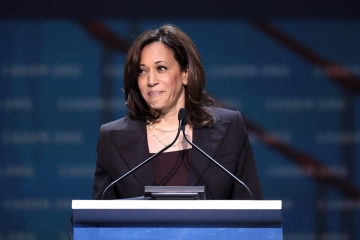
  1. Sen. Kamala Harris (CA): Sure, California is dependably blue regardless of who’s in the race, but some argue that Harris would bring much needed enthusiasm to the campaign. On education, she was first out of the gate last year with a proposal to increase teacher pay at a cost of $300 billion over ten years, though it’s unclear how anything like that would be remotely possible now with the looming economic shortfalls. Harris is also remembered for launching a pointed attack at Biden on school busing and desegregation, but she ended up backpedaling when pressed on her own views. All told, what she’s said on education hews tightly to the union playbook.

  2. Sen. Amy Klobuchar (MN): Boasting centrist credentials, Klobuchar—who earned the praise of conservative columnist George Will—would be viewed as a pragmatic selection. She’s used her own family’s trying ordeal to raise awareness of the coronavirus. Klobuchar’s record on education is relatively thin, and she notably dropped out of the race prior to releasing a K–12 education plan. On the campaign trail, she often drew attention to her mother’s role as a public school teacher and the need for more mental health services in schools.

  3. Stacey Abrams (GA): Of all the women actively auditioning for the veepstakes, none has done so more conspicuously than former Georgia gubernatorial candidate Stacey Abrams—who has been unusually direct in gunning for the job. Her outlandish bravado belies her timid beliefs on education, especially her votes against creating a statewide charter authorizer and empowering state takeover of low-performing schools.

  4. Gov. Michelle Lujan Grisham (NM): A three-term congressional veteran who served as chair of the Congressional Hispanic Caucus, Lujan Grisham is one of a handful of governors who would bring experience governing a state through the coronavirus pandemic to the Democratic ticket. But she created an educational crisis of her own by campaigning on dismantling New Mexico’s reform edifice. Indeed, with a stroke of the pen on her first days in office, Lujan Grisham withdrew from the PARCC consortium and decoupled teacher evaluation from student performance. One would be hard pressed to identify another state that has done as dramatic a 180 on reform as New Mexico has under her watch.

  5. Gov. Gretchen Whitmer (MI): Representing one of three “Blue Wall” states that Trump narrowly carried in 2016 (the others being Pennsylvania and Wisconsin), Whitmer makes a ton of sense strategically. Up until very recently, her stock had been rising, in no small part due to her being one of the current president’s most vocal critics during this pandemic. Unfortunately, her combative approach doesn’t neatly translate to schools. After taking a tough stance against a low-performing high school in Benton Harbor, she backed down from her threats of closure. Whitmer also vetoed funding for charter schools, but the money was eventually restored. Last month, she proposed a GI Bill program for essential workers, though her legacy on education may rest with the recent settlement of a landmark federal appeals court ruling on the right to basic literacy.

  6. Sen. Catherine Cortez Masto (NV): As the nation’s Hispanic population continues to trend upwards, there’s a good argument to be made that a Latina should be on the ticket. Along with Lujan Grisham, Cortez Masto, the first Latina elected to the U.S. Senate, has the best shot at it, albeit a considerably long one. Elected in 2016 to fill the seat of then Democratic minority leader Harry Reid, education has not been one of Cortez Masto’s main issues. Yet this might be the best reformers can hope for in a field chock full of status quo sympathizers.

  7. Sen. Elizabeth Warren (MA): In her seventies as well, it’s hard to see how Warren would inspire confidence if Biden is serious about quickly passing the torch. An unapologetic technocrat, Warren had a plan for everything during her campaign, including an $800 billion one for education that my colleague Checker Finn described as “pretty awful.” Suffice it to say, she would be the least encouraging choice for reformers.

  8. Sen. Tammy Duckworth (IL): A combat veteran who lost both of her legs in the Iraq War, Duckworth, a religiously unaffiliated Asian American, would be seen as a middle-of-the road choice. More workhorse than show horse when compared to others, her personal record of service and sacrifice would make a formidable addition to the ticket. However, Duckworth’s record on education is far less impressive. She’s against private school choice of all stripes, and is a reliable ally of the teachers unions.

  9. Sen. Tammy Baldwin (WI): Being the first openly gay person ever elected to the U.S. Senate, and from a true battleground state no less, Baldwin would be a low-profile choice who checks off a number of boxes for Democrats. She’s served on the Senate education committee since she was first elected to the Senate in 2012 and served in the House for fourteen years before that, where her focus has been on higher ed, career and technical education, and combatting the opioid scourge. Otherwise, her record in supporting the education establishment is nothing to write home about.

Taken together, there’s not much to get excited about vis-à-vis the contenders. Most of them are content to plagiarize from the unions’ talking points, and those that haven’t have been relatively mum on the subject. The theatrics of his unity task force aside, it seems likely that Biden will be thinking more about the crisis and the economy than about education as part of the vetting process. Nevertheless, a review of their education records portends a bleak future for reform—certainly when it comes to the federal role.

view

On distance learning, Success Academy once again leads the way

Robert Pondiscio
5.20.2020
Flypaper

In the summer of 2013, After New York’s adoption of new, more rigorous testing benchmarks under the Common Core State Standards Initiative, student test scores plummeted around the state, wiping out years of paper gains. Fewer than one in three New York City School District students scored proficient in math. Yet students enrolled in the Success Academy charter school network stunned the education establishment with their performance: More than 80 percent achieved proficiency in math.

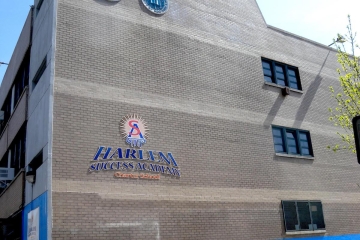
Now, amid the pandemic-driven national experiment in compulsory homeschooling and online learning, Success Academy and its president and CEO, Eva Moskowitz, appear poised to shock the education system again—serving as both inspiration and rebuke. Two months into the state lockdown, the network of forty-five New York City schools serving 18,000 students is close to replicating itself remotely, with full days of instruction, professional development, and planning meetings for staff. Principals are observing teachers giving online lessons. In a matter of weeks, Success has converted itself into a functional digital school, while eliminating none of its ambitious regimen of academics, internal assessments, and progress monitoring—even as New York, like every state, has abandoned standardized testing for the year.

Only 44 percent of U.S. school districts are providing instruction online and monitoring students’ attendance and progress, according to data compiled by the Seattle-based Center on Reinventing Public Education (CRPE). “For most children, the school year effectively ended in March,” observed University of Michigan’s Susan Dynarski in the New York Times last week. Even schools and districts making “remote-learning” efforts have mostly limited themselves to reviewing material covered previously in an attempt to prevent learning loss. Most U.S. school districts have adopted pass/fail grading for what’s left of the school year; the San Francisco Board of Education has considered giving every student an A in classes disrupted by the pandemic.

Moskowitz will have none of it. “We don’t think it’s fair for kids who have to be prepared for the next grade to just dispense with grades,” she said last week on Fox 5’s Good Day New York. Success Academy is pressing ahead, with average daily attendance holding steady at 97 percent among a predominantly low-income, minority student body.

Never one to be paralyzed by indecision, Moskowitz decided on March 12 to close her schools, and announced that decision to Success families the following day. At the time, Mayor Bill de Blasio was still insisting that Department of Education schools should remain open because health and hospital workers needed child care while fighting the pandemic—a questionable stance even then, and one that now looks close to reckless.

“This is a time for simplicity and being careful not to throw in too many bells and whistles,” Moskowitz advised in the early days of remote learning. Elementary school staff, she said, would focus on “inspiring and engaging” students. Teachers were initially instructed to call students twice a day to check in and discuss reading assignments and math problems that they would complete independently or with parental supervision. Two months later, even the youngest Success Academy “scholars” spend a full day of online instruction in all subjects, including small-group math and “guided reading” with their teachers.

“You hit a routine with the younger kids and then they add another layer,” notes Erica Woolway, who works with school districts and charter-management organizations nationwide as an education consultant. Her three children, in first, third, and sixth grades at Success Academy, follow a schedule from 9 a.m. through 3 p.m. daily. As we spoke, her middle son participated in a network-run soccer practice with his coach via Zoom.

Woolway is impressed with the effort Success is making but clear-eyed about how challenging it would be for other schools to match it—and for parents of younger children to monitor and keep pace. “I’m healthy and an educator. Is working from home and supporting my kids’ online learning the hardest thing I’ve ever had to do?” She pauses. “Maybe. If I had more kids, health or housing issues, or if I were a front-line worker, how in the world would I be able to do it?”

The answer, at least in part, is that Success Academy is reaping the harvest of the habits, expectations, and culture that Moskowitz has carefully built for more than a decade. Its admissions process and academic model require deep parental commitment. Success Academy has long required parents to read nightly with their children, update reading logs, check homework, drill sight words and math facts, and maintain frequent contact with teachers. The parents are more conditioned than those at most other schools, charter or public, to play an active role in their children’s schooling. The expectations and level of engagement resemble what parents have come to expect from elite private schools.

Success entered the COVID-19 crisis better positioned than most for the transition to remote learning. Every student from grade four onward already had a school-issued Chromebook. By fifth grade, children take digital assessments and get feedback electronically from teachers. Middle and high school students, as well as their teachers, have Audible accounts and can access online-learning resources that include DreamBox, Mathalicious, BrainPop, Newsela, and Lichess. When it became clear that in-person schooling would not resume anytime soon, network staff acquired and distributed more than 10,000 Chromebook tablets to students in grades K–3. By May, every student had one. Digital communications between home and school, which many disrupted schools have struggled to set up and maintain, has long been a standard feature of life at Success Academy.

The contrast with the experience of most American students could not be more stark. “Kids in the majority of districts, which are either providing no instruction or offering instruction but not tracking progress, have little or no chance of finishing their current grade and being ready for the next grade in the fall,” observes CRPE’s Paul T. Hill. With no state tests by which to compare Success Academy’s performance with New York City district schools or competing charters, it will be at least a year before reliable third-party data exist to gauge pandemic-related learning loss at schools in New York or across the country. But it should surprise no one if, when the dust clears, Success Academy students are once again defying the odds.

Editor’s note: This article was first published by City Journal.

view
Supports for college and career SR image

Information equals access: Perceptions of postsecondary student supports in public high schools

Jeff Murray
5.19.2020
Ohio Gadfly Daily

Ohio and other states are working hard to increase the postsecondary readiness of high school students, but it is not at the state level where readiness actually occurs. Schools themselves are the conduit, and their leaders are the providers of readiness pathways, such as early college courses and career training programs. Why then does a significant body of evidence suggest that high school grads remain underprepared for both college coursework and employers’ skill requirements? A new report surveys teachers and principals across the country to get their perspectives on the availability and quality of today’s postsecondary readiness pathways. It indicates that educator complacency may be a big part of the problem.

Data come from spring 2019 surveys administered to nationally-representative samples of public school teachers and principals via RAND’s American Teacher Panel and American School Leader Panel, respectively. Both are part of the Learn Together Surveys, funded by the Bill and Melinda Gates Foundation. Specifically, the report covers the responses of 2,141 teachers and 770 principals in charter and traditional district schools serving students in grades nine through twelve. Respondents were asked about the availability and quality of postgraduation transition supports for college and careers, whom they perceive as holding responsibility for student readiness, the extent to which students have equitable access to information and supports, and what changes might be needed to improve access to and quality of transition pathways.

A huge majority of both teachers (87 percent) and principals (72 percent) expressed positive opinions about the quality of their own schools’ supports for students’ future career preparation. There was very little variation in this pattern, with only teachers in high-poverty schools expressing less than overwhelming positivity. However, it is unclear from whence this certainty comes. For example, almost half of the surveyed teachers reported having no information or resources about apprenticeships to share with students, and another 20 percent reported never sharing the apprenticeship information they had with any students. Similarly, more than half of principals reported having no access to data on their students’ postsecondary remedial education or graduation rates. And while most teachers (61 percent) reported that high-achieving students were well supported for postsecondary transitions in general, support rates for underachieving students (32 percent), minority students (43 percent), and low-income students (44 percent) were much lower.

Teachers and principals reported that postsecondary readiness pathways and services were readily available, which include advanced courses like AP or IB, dual enrollment, ACT/SAT prep, college application help, and FAFSA assistance. Supports for non-four-year pathways were also reported to be readily available, but the positivity expressed in that general category of support does not reflect the minimal amount of information sharing reported by teachers to students regarding things like part-time jobs or technical training programs.

In a bit of a surprise, teachers in urban and high-poverty schools reported significantly higher rates of data access than teachers in nonurban and low-poverty schools—things such as FAFSA completers, College Match scores, and SAT/ACT scores. Additionally, high-resource schools do not have more supports for college and career pathways than lower-resourced schools. Instead, school context (rural versus urban areas) and local employment levels were reported as playing a large role in the availability of supports. Principals tended to provide more-favorable responses than teachers about available services.

As to responsibility for readiness, the survey findings are high across the board. Teachers and principals put a high level of responsibility upon themselves for ensuring student readiness, but it is telling that parents were ranked equally high and that students themselves were seen as being even more responsible for it. With the reported gaps in information availability and distribution, this responsibility ranking should raise some alarm bells.

Be it career, college, or military, there is no pathway to postsecondary success that does not go through our nation’s high schools. Principals, teachers, and staff play a critical role in brokering access to college and career information and resources, not to mention providing many of the academic and soft skills needed to access a job or a college major. Thus, schools are responsible for allocating access to supports for each pathway and providing the students they serve with the opportunity to strengthen or combat disparities in both utilization and outcomes. Teachers and principals vary widely on their perceptions of the data they have, the quality of it, and the distribution of that information to their students. All of this bodes ill for the students who look to them for the key to their futures.

SOURCE: Melanie A. Zaber and Laura S. Hamilton, “Teacher and Principal Perspectives on Supports for Students' College and Career Pathways,” RAND Corporation (March 2020).

view
ASAP three year results SR image

The final tally: Three-year outcomes for the ASAP community college student support program

Jeff Murray
5.11.2020
Ohio Gadfly Daily

The Accelerated Study in Associate Programs (ASAP) began in the City University of New York (CUNY) system with the intent to comprehensively support students to persist and complete community college within three years. In 2015, the program expanded to three community colleges in Ohio: Cincinnati State Technical and Community College, Cuyahoga Community College, and Lorain County Community College. The initial results, released in early 2019, were promising. Evaluators found that the program adapted easily to a new environment, was more cost-effective in its new home, and was even more successful in boosting student success.  

The program utilized an array of tools to overcome barriers to student success like onerous remedial course requirements, part-time course-taking, financial burdens, and class-scheduling difficulties. These tools included mandatory advisory meetings, tuition assistance and other financial incentives (e.g., gas or grocery gift cards), scheduling preference, and incentives to increase full-time enrollment. Both barriers and supports were identified via interviews with current students. Program-eligible students had to be degree-seeking, willing to attend full-time, majoring in degree programs that could be completed in three years or less, and qualify for a Pell Grant. A lottery determined which students entered ASAP (806 participants) and which comprised the control group (695 non-participants). Students in the control group had access to the usual suite of services the colleges provided but not the more-intensive supports enumerated above.

At the end of three years, the positive findings continued. While full-time enrollment in both groups declined across each semester, the declines were far more modest for students in the program group. Nearly 50 percent of ASAP students were enrolled full time at the end of three years versus less than 20 percent of the control group. In terms of degree completion, 35 percent of the program group earned degrees (including certificates, associate degrees, and even a handful of bachelor’s degrees) by the end of three years, as compared to 19 percent of the control group. Meanwhile, 18 percent of the program group had transferred to a four-year institution (including some overlap with the degree-earners), as compared to 12 percent of the control group.

Approximately 75 percent of students entering the study were deemed to need remedial coursework, typical for students entering community college in Ohio and often a major stumbling block to persistence and completion. The program students, per the ASAP model, were encouraged via advising and incentives to take remedial courses early, but data show that this encouragement had no effect on developmental requirement completion in the form of course credits earned. Both program and control groups completed a miniscule number of remedial courses. However, the institutions offered two alternative—non-remedial—ways for developmental education requirements to be satisfied, including retaking placement tests for a higher score or passing college-level courses in the relevant subjects. The program group students were 12 percentage points more likely to have completed their developmental education requirements by the end of three years than were control group students. The question arises whether the control group students were adequately aware of the alternatives, let alone given guidance to access and complete them as the program students clearly were. It wouldn’t take a program as extensive as ASAP to rectify such a structural problem.

The new report covers a host of other program-related outcomes, including comparisons between the Ohio and CUNY versions in terms of staffing and execution. But the most important continues to be the cost-effectiveness of the effort. ASAP supports cost about $8,000 more per student over six semesters than the colleges’ business-as-usual services, but the program increased graduation rates so much that the cost per degree-earned was 22 percent lower for program group students than it was for the control group.

Sadly, the report concludes by noting that, despite its strong bang for the buck, ASAP will not be continuing at the Cincinnati and Cuyahoga County institutions because its funding from the Ohio Department of Higher Education and other sources ended with the three-year demonstration project. Lorain County Community College announced plans to not only continue ASAP with its own resources, but also to eventually expand it. However, outside considerations unseen by any before March of 2020 may result in budget crunches among higher education institutions in Ohio that will curtail the ASAP program and more besides.

SOURCE: Cynthia Miller, Camielle Headlam, Michelle Manno, and Dan Cullinan, “Increasing Community College Graduation Rates with a Proven Model: Three-Year Results from the Accelerated Study in Associate Programs (ASAP) Ohio Demonstration,” MDRC (January 2020).

view

The Education Gadfly Show: Teacher to Chief: Pathways to Education Leadership

5.18.2020
Podcast

This week we're hosting "Teacher to Chief," a special episode with members of Chiefs for Change on their pathways to education leadership. The discussion is tied to a new multimedia report designed to spark teachers’ interest in the chief role. Elizabeth Green, founder of Chalkbeat, also moderates a candid conversation with aspiring, current, and former chiefs about what the job is really like.

The Education Gadfly Show is available on Google Podcasts, Libsyn, Spotify, iHeartRadio, Apple Podcasts, TuneIn, The Podcast App, PodBean, Podbay, Chartable, Castbox, and myTuner Radio.

Fordham Logo

© 2026 The Thomas B. Fordham Institute
Privacy Policy
Usage Agreement

National

P.O. Box 110
Burke, VA 22009

202.223.5452

[email protected]

Ohio

P.O. Box 82291
Columbus, OH 43202

614.223.1580

[email protected]

Sponsorship

130 West Second Street, Suite 410
Dayton, Ohio 45402

937.227.3368

[email protected]