Mobile Navigation

  • National
    • Policy
      • High Expectations
      • Quality Choices
      • Personalized Pathways
    • Research
    • Commentary
      • Gadfly Newsletter
      • Flypaper Blog
    • Events
    • Scholars Program
  • Ohio
    • Policy
      • Priorities
      • Media & Testimony
    • Research
    • Commentary
      • Ohio Education Gadfly Biweekly
      • Ohio Gadfly Daily
  • Charter Authorizing
    • Application
    • Sponsored Schools
    • Resources
  • About
    • Mission
    • Board
    • Staff
    • Career
Home
Home
Advancing Educational Excellence

Main Navigation

  • National
  • Ohio
  • Charter Authorizing
  • About

National Menu

  • Topics
    • Accountability & Testing
    • Advanced Education
    • Career & Technical Education
    • Charter Schools
    • Curriculum & Instruction
    • ESSA
    • Evidence-Based Learning
    • Facilities
    • Governance
    • Personalized Learning
    • Private School Choice
    • School Finance
    • Standards
    • Teachers & School Leaders
    • Think Again
  • Research
  • Commentary
    • Gadfly Newsletter
    • Flypaper Blog
    • Gadfly Podcast
  • Events
  • Scholars Program

The Education Gadfly Weekly

Sign Up to Receive Fordham Updates

We'll send you quality research, commentary, analysis, and news on the education issues you care about.
Thank you for signing up!
Please check your email to confirm the subscription.

The Education Gadfly Weekly: Teachers get real about discipline reform

Volume 19, Number 30
7.31.2019
7.31.2019

The Education Gadfly Weekly: Teachers get real about discipline reform

Volume 19, Number 30
view

Teachers get real about discipline reform

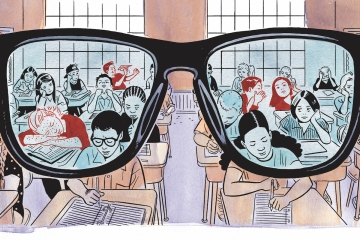
Our newest study, “Discipline Reform through the Eyes of Teachers,” is the first scientifically rigorous and nationally representative survey on the topic to be published in at least a decade and a half. Teachers report that disciplinary protocols are inconsistently observed and that the recent decline in suspensions is at least partly explained by higher tolerance for misbehavior or increased underreporting. And many black teachers say that “exclusionary discipline” should be used more often—despite the likely costs for students who misbehave and their belief that disciplinary consequences are racially biased.

Amber M. Northern, Ph.D., Michael J. Petrilli 7.31.2019
NationalFlypaper

Teachers get real about discipline reform

Amber M. Northern, Ph.D. | Michael J. Petrilli
7.31.2019
Flypaper

The federal Charter Schools Program: A short, opinionated history, part II

Chester E. Finn, Jr.
7.31.2019
Flypaper

Colin Kaepernick and the death of the common school

Robert Pondiscio
7.31.2019
Flypaper

How much knowledge is necessary for comprehension?

Robert Pondiscio
7.31.2019
Flypaper

The relationship between suspensions and arrests

David Griffith, Ph.D.
7.31.2019
Flypaper

The Education Gadfly Show: Is it time to reform discipline reform?

7.31.2019
Podcast
view

The federal Charter Schools Program: A short, opinionated history, part II

Chester E. Finn, Jr. 7.31.2019
Flypaper
view

Colin Kaepernick and the death of the common school

Robert Pondiscio 7.31.2019
Flypaper
view

How much knowledge is necessary for comprehension?

Robert Pondiscio 7.31.2019
Flypaper
view

The relationship between suspensions and arrests

David Griffith, Ph.D. 7.31.2019
Flypaper
view

The Education Gadfly Show: Is it time to reform discipline reform?

Michael J. Petrilli, David Griffith, Ph.D., Adam Tyner, Ph.D. 7.31.2019
Podcast
view

Teachers get real about discipline reform

Amber M. Northern, Ph.D. | Michael J. Petrilli
7.31.2019
Flypaper

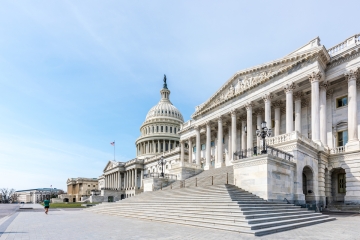
Last December, a headline in Chalkbeat announced the end of a contentious two-year debate among school discipline reformers and other ed-policy aficionados: “It’s official: DeVos has axed Obama discipline guidelines meant to reduce suspensions of students of color.”

The voided guidance, as you probably recall, warned that districts with significant racial disparities in their student discipline rates could be subject to a federal review to determine whether they had violated civil rights laws. In rescinding it, Trump administration officials made clear that they would continue to investigate all complaints of discrimination but explained that racial disparities in discipline rates would not in and of themselves be grounds for federal investigation.

Although Secretary of Education Betsy DeVos has made some missteps, we believe that she and her team got this one right, in part because of how other large-scale reforms have played out in the eras of No Child Left Behind and Race to the Top (think teacher evaluation). Federal policymakers issue a new mandate with the goal of improving schools, especially for poor kids and students of color, but by the time it migrates from the capital to the statehouse and from there to local school boards, to central offices, to principals, to other administrators, and (finally) to teachers in an elaborate game of telephone, much has changed—and almost never for the better.

We worried that something like this was happening with school discipline. Reformers’ goal was to prod schools toward alternatives to suspensions and expulsions by improving school climate, fostering more engaging teaching, adopting restorative practices, and the like. But we surmised that on the ground (in real schools) teachers would simply be told that students couldn’t be disciplined like they used to be—and that they’d be on their own when it came to dealing with the consequences.

It’s abundantly clear that similar concerns are not shared by the many presidential candidates battling it out for the Democratic nomination, some of whom insist that the administration’s action on school discipline was an abdication of federal responsibility to uphold students’ civil rights. To wit, eight candidates who held Congressional seats at the time signed a letter appealing to Secretary DeVos not to rescind the guidance, including Bernie Sanders, Amy Klobuchar, Elizabeth Warren, Kamala Harris, Cory Booker, Kristen Gillibrand, Michael Bennett, and Tim Ryan.

So we know what prominent Democratic politicians think. But what about those closest to the action, the classroom teachers who see the consequences of indiscipline in their classrooms and school corridors and who have the most firsthand experience with the attempted solutions?

Our newest study, Discipline Reform through the Eyes of Teachers, sought their input. Specifically, it asked a nationally representative sample of over 1,200 white and African American teachers in grade 3–12 classrooms how they see school discipline playing out. To our knowledge, it is the first nationally representative survey on school discipline to be published in fifteen years, as well as the first time that analysts have included a specific focus on the views of African American teachers and teachers in high-poverty schools.

To conduct the study, we joined the survey experts at RAND, who used their American Teacher Panel to draw the sample and administer the survey. Fordham’s uber-talented senior research and policy associate David Griffith co-developed the survey instrument (with other Fordham staff and the FDR Group) and served as lead author, with associate director of research Adam Tyner lending expert assistance with data analysis.

The survey (which was fielded in the fall of 2018) asked teachers a wide range of questions about how discipline policy is carried out in their schools; their views on the impact of school suspensions (both in school and out of school); their opinion of newer disciplinary approaches such as positive behavioral interventions and supports and restorative justice; and what they think their schools should be doing differently, if anything, to improve student behavior.

But in a nutshell, the authors found the following: Compared to their peers in low-poverty schools, teachers in high-poverty schools report higher rates of disciplinary incidents, such as verbal disrespect and physical fighting. In general, teachers say that disciplinary protocols are inconsistently observed and that the recent decline in suspensions is at least partly explained by higher tolerance for misbehavior or increased underreporting. Although they see value in new approaches to combating student misbehavior, most teachers also say that suspensions are appropriate in some circumstances—and that some chronically disruptive students shouldn’t be in their classrooms at all. Finally, many black teachers say that “exclusionary discipline” should be used more often—despite the likely costs for students who misbehave and their belief that disciplinary consequences are racially biased.

That’s a lot to chew on, and the full study brims with even more details that are worthy of your attention. But for now, allow us to make just three observations:

First, the overwhelming majority of grade 3–12 teachers say that school discipline is broken, especially in high-poverty schools.

Teachers can find virtue in almost any disciplinary approach, provided it is implemented consistently and fairly. However, in practice, most teachers say that discipline is inconsistent, that they are putting up with more misbehavior than they used to, that administrators underreport serious incidents, and that the majority of students suffer at the hands of "a few persistent troublemakers."

Almost every discipline problem that low poverty schools deal with is magnified in high-poverty schools. Yet, despite considerable disagreement when it comes to the prevalence of racial bias, black and white teachers in these schools tend to view discipline similarly—and most of them aren't very happy about what they are seeing.

Second, teachers have strong opinions—which are worth heeding—about how misbehavior should be managed.

Even a quick glance at the results shows that teachers have fervent views on school discipline. We don’t see many “I don’t knows” in their survey responses. Moreover, in addition to answering the multiple- choice questions that comprised the bulk of the survey, roughly 10 percent of respondents also opted to complete a voluntary, open-ended question at the end, wherein they expressed their hopes, frustrations, and convictions relative to managing student behavior.

It’s as though they felt they hadn’t been heard. So now that they have been, we hope that their sage advice, as synthesized by Griffith and Tyner, will be heeded.

In a nutshell, that means giving teachers and their principals more discretion when it comes to suspending students, while improving the environments to which disruptive children are removed so the root causes of their misbehavior can be addressed. In practice, that may mean hiring more mental health professionals, social workers, or other qualified adults to enrich such environments, rather than using scarce public resources to train teachers in largely unproven disciplinary “alternatives.”

Finally, our results make plain the dangers of including suspension rates in accountability systems.

Although the Every Student Succeeds Act requires that states report schools’ overall suspension rates on their report cards, it does not further stipulate how those data are used. For example, states are not required to use suspension rates as an indicator of school quality, or to incorporate them into schools’ overall grades.

Our findings serve as a stern caution against states using suspension rates to hold schools accountable. In our view, policymakers should resist the urge to use suspension data to tag schools as troubled, as that incentivizes them to misreport serious incidents and/or issue across-the-board bans or limits on suspensions, all of which will do more harm than good.

Currently, according to the Learning Policy Institute, three states (California, Rhode Island, and West Virginia) use suspension rates to help identify schools that are in need of improvement, and six (Alabama, Arizona, Arkansas, Kansas, Minnesota, and Washington) use suspensions to help gauge the success of the success of school improvement plans. These states in particular should listen to what the teachers are saying and heed their concerns.

—

In the end, it’s not just presidential aspirants who need to wise up if they want to align with classroom teachers on this topic. It's also state and local policymakers. Instead of reducing the complexity that is school discipline to a sound bite about “ending the school-to-prison pipeline,” how about putting an end to the oversimplification, political correctness, and naivete surrounding this issue? That would be a swell start and one that would do a lot of kids a lot of good.


view

The federal Charter Schools Program: A short, opinionated history, part II

Chester E. Finn, Jr.
7.31.2019
Flypaper

This essay is part of the The Moonshot for Kids project, a joint initiative of the Fordham Institute and the Center for American Progress. It will run in three parts, with the third appearing in future issues of the Education Gadfly Weekly. The first introduced the federal Charter Schools Program (CSP)—which, with four billion dollars of funding over twenty-five years, has turned out to be one of the largest and more successful examples of government-supported R & D in K–12. Above all, it’s helped spread charter schools throughout the country, many of which otherwise could not have afforded to launch.

Clinton entered the Oval Office in January 1993 primed to develop his own version of a federal program to advance the national education goals and eager to include public-school versions of choice in that plan. Congress was still in Democratic hands. (That would change two years later.) The key Senate Democrat was already charter-receptive. So, drawing on long experience as governor of South Carolina, was education secretary Richard Riley. And so was the Democratic Leadership Council, which helped craft Clinton’s education plan.

In less than two years, Congress enacted both the “Goals 2000” act (a close cousin of America 2000) and the ESEA reauthorization known as the Improving America’s Schools Act. Included therein—pushed by Lieberman and Durenberger, as well as Chairman Kennedy and the Clinton team—was a small, new program of federal support for charter creation and expansion. Congress’s stated intent was to “improve the United States education system and education opportunities for all people in the United States by supporting innovation in public education in public school settings that prepare students to compete an contribute to the global economy and a stronger Nation.” Note the emphasis on “innovation.” It seems clear in retrospect that lawmakers viewed this new program in the frame of “research and development.”

The program’s actual operations, however, were somewhat more prosaic, as federal grant programs nearly always are. As explained by an analyst at the Congressional Research Service, federal support through CSP “is provided to assist with the opening of new charter schools and for the funding of charter school facilities.” In other words, the goal was to support innovation but the mechanism was to open more schools.

And the chief mechanism for doing that, from CSP’s outset until today, is via competitive grants to states of federal dollars that the state then disburses to assist with several years of planning and start-up costs for individual charter schools. Today, that can total as much as $1.5 million for a school over its first few years. In essence, the federal dollars enable those seeking to launch a new school to get it planned and up and running, since state operating dollars generally don’t start flowing until students have their butts planted in classroom seats.

From the very beginning, however, this relatively straightforward modus operandi presented questions that Congress and the Department of Education had to answer. What happens, for example, in a state with a charter law where people want to start schools but the state education agency—the usual recipient/disburser of federal CSP dollars—cannot or will not apply for such funds? Since the program is competitive, not formula-based, meaning that interested states must complete a thorough and convincing application in order to be considered for funding, charter advocates recognized that advancing the national goal of more such schools would be hard to do where state education agencies balked at participating. This conundrum yielded a pragmatic statutory fix: A state’s education department is no longer the only eligible applicant. The governor’s office can also apply—and then administer the funds—as can a statewide charter school board or “support organization” such as the Arkansas Public School Resource Center or Idaho’s BLUUM organization. Individual schools may also apply directly for “developer grants.”

Another challenge was deciding what federal rules a participating state must follow when determining what charter schools and would-be operators qualify for support. There was understandable angst in Congress that private schools might sneak in, that schools that discriminate on prohibited grounds (e.g., race, gender, handicap) might seek funding, and that schools not truly open to the public (i.e., those practicing selective admission) might qualify. So various prohibitions and regulations followed, in essence creating a federal definition of “bona fide charter school.”

This was not, however, just a matter of constraining states and schools. The program also tried, via its competitive priorities, its peer reviews and some of its requirements, to incentivize states to pass stronger charter laws (and, of course, to submit timely, persuasive and well-crafted applications for federal funding). The potential reward, obviously, was bettering a state’s chance of obtaining one of those competitive grants. Although such fiscal incentivizing and competition jiggering by Washington invites criticism—as befell Race to the Top a couple of decades later—it’s also a much-used strategy by which Uncle Sam seeks to induce change among those seeking federal dollars. In retrospect, it was good for the charter movement that CSP functioned via competitive rather than formula grants. No state (or school) was “entitled” to these dollars. It had to show merit and promise, at least as defined by Uncle Sam.

In other words, CSP never put federal funds on a stump for anyone to grab in the name of more charter schools. There were always requirements and norms, and some of them brought complications of their own, as well as standardization that doesn’t always comport with innovation. Washington declared, for example, that the way to ensure that a charter school was truly “public” was to handle admissions via lottery—and most state charter laws concurred. But it’s never quite that simple. Shouldn’t the siblings of kids already in the school get some sort of preference for admission so that families don’t get split up? Shouldn’t those living in the school’s neighborhood have an advantage? What about the children of those who teach in the school? And on and on. As is typical of federal programs in every realm, rules beget rules and statutes grow longer. In this case, the lottery requirement effectively ruled out the kinds of charter schools that might want to limit their enrollment to a special population, such as gifted-and-talented students (though it was okay to specialize in youngsters with disabilities), and the regs could have (but in the end didn’t quite) barred single-sex charters.

—

It was also evident from day one that start-up funds for school operators would not resolve all the challenges and obstacles to creating and operating successful schools. Facilities have almost everywhere been a huge headache for charter schools, and there was much interest in Uncle Sam helping, whether with outright subsidies or with credit enhancements such that it would be easier to lease or purchase viable places to put those kids and teachers. School authorizers, too, needed help in many places if they were to succeed with school monitoring and quality control, achieving the tricky balance between vouchsafing a school’s autonomy and ensuring its compliance.

Hence as the years passed, CSP grew more complex and multi-faceted as well as larger. Here’s a summary of changes made in the 2015 ESEA reauthorization (incorporating some made in the intervening years), as framed by the National Alliance for Public Charter Schools, which is now the leading advocacy organization in this space:

  • The CSP now includes dedicated funding for the replication and expansion of high-performing charter schools. In addition, state grants can also be used for the same purpose.
  • The state grant program can now be administered by governors, statewide authorizers, and charter support organizations in addition to state educational agencies.
  • The state grant program prioritizes funding to states that provide equitable resources to charter schools and that assist charters in accessing facilities.
  • The state grant program provides schools with additional spending flexibility for startup funds. For example, they will be allowed to use CSP funds to purchase a school bus and make minor facility improvements.
  • The state grant program includes new protections to ensure funds go to charter schools with autonomy and flexibility consistent with the definition of a charter school.
  • Charter school representatives must be included in Title I negotiated rulemaking and must be included, like other stakeholders at the state and local level, in the implementation of many federal programs.
  • CSP recipients will have more flexibility to use a weighted lottery to increase access to charter schools for disadvantaged students. CSP grantees will also be permitted to use feeder patterns to prioritize students that attended earlier grades in the same network of charter schools.

As that summary implies, today’s CSP is multifaceted. The largest component is still the grant program that invites states to compete for sizable sums that they then parcel out to within-state applicants seeking to open new charters and/or expand and replicate “high-quality” schools. But what about successful charter management organizations (CMOs) that operate in multiple states and seek to grow their portfolios? That doesn’t align well with a state-based funding program. So a provision was added to CSP that allows the U.S. Secretary of Education to make direct grants to proven CMO’s to assist them to grow. Thus, for example, 2018 brought fifteen such grants, all lasting five years, ranging from $1.5 million for a single Phoenix school chartered by Arizona State University to $117 million to assist with the rapid, multi-state expansion plans of Texas-based IDEA Public Schools.

CSP has also had two programs to assist with the cost of school facilities. The larger one--$40 million in fiscal 2018—is for “credit enhancement,” which makes it easier and cheaper for charter operators to get loans, mortgages and other forms of credit on the private market. Additionally, the Department of Education is winding up an “incentive grant” program that provides matching funds to states for actual school facility subsidies.

Besides all that, CSP supplies “national dissemination” grants to organizations that “support” charters and the charter movement. 2018 saw eight such grants made, totaling $16 million (over the multi-year life of the grants) to groups such as the National Alliance for Public Charter Schools, the National Association of Charter School Authorizers, and the California Charter Schools Association.

Stay tuned for part III.

view

Colin Kaepernick and the death of the common school

Robert Pondiscio
7.31.2019
Flypaper

Shortly before the Fourth of July, Colin Kaepernick was in the news again for his role in persuading Nike, the company for which he is a paid endorser, to withdraw from the market a new sneaker that featured an American flag circa 1776. He and others reportedly felt the so-called Betsy Ross flag is “an offensive symbol because of its connection to an era of slavery.” The outrage cycle in our public discourse moves at light speed; another day, another target. But my own response was closer to exhaustion tinged with despair. This one left a mark. Rich Lowry in the National Review put it succinctly: “The American flag's place in our culture is beginning to look less unassailable.”

I have long been an unapologetic disciple of E.D. Hirsch, Jr., and the ideas embodied in his Core Knowledge curriculum, simply because Hirsch alone among educational theorists described precisely what I saw for years in my South Bronx elementary school classroom: children who could decode with relative ease, but struggled with reading comprehension. The issue was not student engagement, a lack of authentic texts to read, culturally relevant pedagogy, or insufficient practice with reading “skills and strategies.” It was background knowledge. My students lacked “cultural literacy,” the taken-for-granted allusions, references, and knowledge of history, science, art, and literature that writers and speakers assume their readers and listeners possess, and which is the wellspring of language proficiency. Ensuring that disadvantaged children have access to a content-rich education remains the greatest, and mostly unaddressed, challenge in American education.

The absence of a common curriculum is one of the ways in which American education differs significantly from standard practice in many other countries. But let's state the matter bluntly and without flinching: A nation that cannot agree whether its original flag is a symbol of pride or oppression is not one prepared to reach consensus on what its children should learn in public schools. Those of us who advocate for a knowledge-rich core curriculum for students should accept this and move on. There is no foreseeable upside or winnable endgame in trying to impose our curricular prerogatives on one another, regardless of the weight of scientific evidence behind it. The centrifugal force of the American public sphere is becoming overwhelming, nearly unbearable. It is fanciful, if not delusional, to suggest that we can beat each other bloody over politics, culture, religion, even issues basic to civil society such as citizenship, but then set all that aside and “focus on what unites us” in our schools.

If this sounds dour and defeatist, it needn't. In a new paper for the Manhattan Institute, Ashley Berner of the Johns Hopkins Institute for Education Policy makes a strong and compelling case for educational pluralism, which she emphasizes is “not just a clever way to say ‘school choice.’” The school-choice movement in the U.S. “assumes the norm of uniformity, even while arguing against it,” Berner notes. “By contrast, pluralism carries quite different assumptions about what public education should look like.” Among them are that education is a “common good,” not merely a private one, and located within civil society, not entirely the domain of the individual or the government. In other words, all of us have a stake in the quality of education afforded all children, whether or not the government runs the schools, or merely funds and regulates them. Describing schools as public or private no longer makes sense. Pluralism shifts the conversation from “public schools” to “public education.”

I suspect I'm not alone in having assumed for so long that America's basic formula of public education—the government both funds and operates schools—was the default mode for most nations. Berner's paper makes the eye-opening point that the U.S. is closer to an outlier. “Educational pluralism—a school system in which the government funds and regulates, but does not necessarily provide, public education—is the democratic norm around the world,” Berner writes. “The list of educationally plural systems is long, and it includes the United Kingdom, Hong Kong, Belgium, Denmark, Indonesia, Israel, Sweden, and France.” Note that many of these countries also outperform the U.S.

The most persuasive point Berner makes is to acknowledge what we know but seldom say: Education is not a neutral enterprise. “Schools instruct children, whether explicitly or implicitly, about meaning, purpose, and the good life,” she writes. “Pluralism acknowledges the non-neutrality of education and thus supports a mosaic of schools that differ from one another in significant ways.” This echoes a point made in a compelling paper on social and emotional learning just published by the University of Arkansas’ Jay P. Greene, who agrees with SEL advocates that “something important is missing from modern public education,” while observing that their efforts are “likely to fall far short if they fail to acknowledge the moral and religious roots of SEL.”

What is true of SEL or character education is true of education at large, and not a threat to democracy or civil society. Our most committed social justice activists would surely approve of the Jesuit tradition of “educating for others, pursuit of justice, and concern for the poor and marginalized.” The search for truth, goodness, and beauty in the classical tradition only enriches education. Our nation would be richer, not poorer, if all parents had the option to educate their children within these traditions or myriad others, in a public-financed, plural system of schools.

Education is more meaningful and resonant when situated within an intellectual, cultural, or religious tradition—one that is embraced, not imposed or marginalized by a sentimental attachment to a Common School ideal that has proven wanting for too many for too long. If the argument is that common schools are needed to ensure tolerance and civic engagement in a diverse society, the record doesn't match the rhetoric. A robust body of research suggests that with few exceptions, private schools (particularly Catholic schools) are more likely to produce actively engaged citizens who are less bigoted toward other faiths and cultures.

Crucially, pluralism needn't be the death knell of common knowledge or curriculum. Berner cites the example of Alberta, Canada, which implemented a robust provincial curriculum that all students need to learn. “This curriculum can be delivered through distinctive school cultures and materials, but all students have to master the same information,” she writes. “Alberta is now one of the world's highest-performing systems.” A national curriculum is clearly unconstitutional in the U.S. States, and districts, however, would have no obvious barriers to establishing one.

Hirsch, myself, and many others have long lamented the content-free, skills-driven, curriculum-agnostic brand of schooling that has come to dominate American primary education. This state of affairs is due in part to mistaken notions about how children learn. Surely, it is also attributable at least in part to a reluctance to engage on controversial topics in public schools, from evolution and abortion to global warming and race relations, which are minefields for teachers. Adding endlessly to their number—including our founders and our flag—only incentivizes watering down the content of education to the insipid and anodyne, or to retreat further into skills-driven, student-selected mush, making it impossible for teachers to serve their honored and traditional role as guides to the best that has been thought and said. Wait. You're uncomfortable with teachers serving as arbiters of quality?

Of course you are. And that's why we need pluralism.

I remain a committed and unapologetic Hirschean. Kids need content. But I don't have the energy any longer to look for “things we can all agree on” as the basis for a common curriculum. Let Colin Kaepernick take a knee during the Star-Spangled Banner. I'll take one because I'm exhausted.

Editor’s note: This article was first published on Education Week’s blog Rick Hess Straight Up.

view

How much knowledge is necessary for comprehension?

Robert Pondiscio
7.31.2019
Flypaper

There’s an image I like to use when describing the role of prior knowledge and vocabulary in reading comprehension: Think of a reading passage like a game of Jenga, where you take turns removing one block at a time from a tower of blocks. Imagine that every one of those blocks is a bit of background knowledge or an essential vocabulary word. Pull out some number of blocks, and the tower still stands. Pull out one too many, and it collapses completely. All sense and meaning is lost.

But how many is too many? Can we predict with any certainty the point at which a lack of background knowledge and vocabulary is fatal to comprehension? A new study suggests there is a “knowledge threshold”—a point below which lack of background knowledge impedes understanding—and that it’s possible to predict whether students fall below or above it on a given topic.

An experiment was conducted by Tenaha O’Reilly, Zuowei Wang, and John Sabatini, and published in the journal Psychological Science, among a socioeconomically diverse set of about 3,500 high school students from thirty-seven schools in two states. It involved presenting students with a list of words—some related to the topic they were going to read about (in this case a passage about ecology); some unrelated—and asked the students to determine if each word was related to the topic or not. In short, students took two tests: a knowledge test, then a reading test. Using a sophisticated statistical analysis, the trio of researchers “were able to identify a quantifiable point (59 percent on the knowledge test) at which there was a qualitative change in the relationship between background knowledge and reading comprehension.”

That’s the knowledge threshold.

“We predicted that students’ performance in such a keyword-recognition test would be related to comprehension,” the authors note. And unsurprisingly, some words in the experiment were “more predictive of exceeding the knowledge threshold than others” (the words ecosystems, habitat, and species, for example). “This suggests that these might be words students must know in order to perform above the knowledge threshold,” the authors add. “Measuring students’ background knowledge before they read a text may reveal which students are likely to have a reading-comprehension problem and which may need to build additional background knowledge before reading,” they conclude. “But how much knowledge is too little? The answer to this question is complex but is likely discernible with an empirically identifiable knowledge threshold.”

The study has resonance that even its authors may not fully appreciate. They frame their discussion proceeding from the assumption that “background knowledge is critical in many models of reading.” This is their own bit of assumed knowledge, which may or may not be true among teachers. Elementary education still worships disproportionately at the altar of reading comprehension “skills and strategies,” which insist on a content-agnostic view of texts (the same is largely true of state reading tests). Among the most common strategies is to remind students to “activate your prior knowledge,” connecting new and unfamiliar information to what you already know. Works great when you have prior knowledge to activate.

The authors conclude that their findings “suggest this approach would be useful for helping identify who may have difficulty understanding a text on a particular topic.” I had a slightly different takeaway. If we follow the “knowledge threshold” idea where it leads, Job One for elementary and middle schools would be to help students build a robust store of prior knowledge to activate. If we know there is a critical mass of background knowledge that means the difference between comprehension and non-comprehension, there can be no more valuable use of school time than getting children on the good side of the knowledge threshold on as many subjects as possible.

SOURCE: Tenaha O’Reilly, Zuowei Wang, and John Sabatini, “How Much Knowledge Is Too Little? When a Lack of Knowledge Becomes a Barrier to Comprehension,” Psychological Science (July 2019).

view

The relationship between suspensions and arrests

David Griffith, Ph.D.
7.31.2019
Flypaper

A new study published in Justice Quarterly by Thomas Mowen, John Brent, John and Boman tries to quantify the effect of suspensions on students’ odds of criminal justice involvement. However, like its many predecessors, it comes up short.

Based on data from the National Longitudinal Survey of Youth (NSLY), which was repeatedly administered to 8,984 youth between the ages of twelve and sixteen between 1997 and 2000, the authors conduct a “Hierarchical Generalized Linear Model” analysis that nests time “within” individual students.

Overall, they find that “an individual is 157 percent more likely to report an arrest each year they are suspended relative to a year in which they are not suspended.” (That’s the “within” bit.) Similarly, they find that “an individual who is suspended relative to an individual who is not suspended is 417 percent more likely to report having been arrested.” Finally, they find that students who are suspended more often are far more likely to be arrested than students who are only arrested once.

For many reasons, those numbers are interesting, as is the theoretical framework for the study, which focuses on the potential importance of “turning points” (such as getting suspended) in the life of individuals. However, the authors’ get way out over their skis by claiming to have isolated the “effect” of suspensions on students’ odds of criminal justice involvement.

First, as the authors acknowledge, because the NSLY is a household-based survey, they can’t control for differences between schools, which matters because schools with higher suspension rates are usually located in neighborhoods with higher arrest rates.

Second, although they try to control for individuals’ underlying delinquency (which is the most obvious reason that suspensions and arrests are so strongly correlated), their measure of “delinquency” is problematic. In their words:

The NLSY97 asked youth to report how often they have engaged in any of the following activities within the previous 12 months: selling drugs, carrying a gun, belonging to a gang, destroying property, stealing an item worth less than US$50, stealing an item worth more than US$50, committing any other property crime, and attacking or assaulting someone. To create a single dimension to capture delinquency, we summed each of these seven measures to generate a count of the total number of delinquent acts engaged in over the prior year.

So yes, a student who steals a candy bar and a student who brings a gun to school and are assumed to be equally “delinquent.” Which is a little crazy. (As is the notion that delinquent individuals keep detailed records of their misdeeds so they can report them accurately.)

Third and arguably most important, the authors simply assume that students who reported being suspended and arrested in the same year were arrested because they were suspended. But a year is a long time. And as far as I can tell, they have no way of excluding students who were suspended after being arrested (but within the same year). Moreover, “it is possible that youth who are suspended in school were also arrested in school” (which would certainly undermine the argument that pushing kids out of school makes them more likely to be arrested).

As these examples demonstrate, ultimately the authors have no convincing way of linking suspensions and arrests to one another, even when they do come in that order. Which is just inherently problematic. (For example, suppose that a student was suspended in January and arrested in December. Should we really assume a causal link between the two?) And unfortunately, despite their claim to have “forced temporal ordering by dropping all cases where the youth reported receiving an arrest prior to receiving a suspension,” it seems that some version of this problem also carries over to the authors’ second approach, wherein they claim to establish that students’ risk of arrest is first doubled, then tripled, then quintupled by their second, third, and fourth suspensions (or, to be more precise, by reporting one or more suspensions in two, or three, or all four years of the study, since suspension is binary within each of these years).

Since the authors only drop seventy-nine respondents as a result of the aforementioned “temporal ordering,” it seems that they are not dropping students who reported being suspended and arrested in the same one-year period. In other words, they are once again assuming a causal link between suspension and arrest—even if a student who is first suspended as a freshman isn’t actually arrested until his or her senior year.

In short, when push comes to shove, all this study really demonstrates (yet again) is that suspensions and arrests are highly correlated. In other words, students who are misbehaving in school are also misbehaving outside of it.

Which isn’t really that surprising.

SOURCE: Thomas J. Mowen, John J. Brent, and John H. Boman IV, “The Effect of School Discipline on Offending across Time,” Justice Quarterly (July 2019).

view

The Education Gadfly Show: Is it time to reform discipline reform?

7.31.2019
Podcast
 

On this week’s podcast Mike Petrilli speaks with David Griffith and Adam Tyner about school discipline reform in America, and their new Fordham study of educators’ views on the issue.

David Griffith and Adam Tyner, Discipline Reform through the Eyes of Teachers, Thomas B. Fordham Institute (July 2019).

Fordham Logo

© 2026 The Thomas B. Fordham Institute
Privacy Policy
Usage Agreement

National

P.O. Box 110
Burke, VA 22009

202.223.5452

[email protected]

Ohio

P.O. Box 82291
Columbus, OH 43202

614.223.1580

[email protected]

Sponsorship

130 West Second Street, Suite 410
Dayton, Ohio 45402

937.227.3368

[email protected]