Mobile Navigation

  • National
    • Policy
      • High Expectations
      • Quality Choices
      • Personalized Pathways
    • Research
    • Commentary
      • Gadfly Newsletter
      • Flypaper Blog
    • Events
    • Scholars Program
  • Ohio
    • Policy
      • Priorities
      • Media & Testimony
    • Research
    • Commentary
      • Ohio Education Gadfly Biweekly
      • Ohio Gadfly Daily
  • Charter Authorizing
    • Application
    • Sponsored Schools
    • Resources
  • About
    • Mission
    • Board
    • Staff
    • Career
Home
Home
Advancing Educational Excellence

Main Navigation

  • National
  • Ohio
  • Charter Authorizing
  • About

National Menu

  • Topics
    • Accountability & Testing
    • Advanced Education
    • Career & Technical Education
    • Charter Schools
    • Curriculum & Instruction
    • ESSA
    • Evidence-Based Learning
    • Facilities
    • Governance
    • Personalized Learning
    • Private School Choice
    • School Finance
    • Standards
    • Teachers & School Leaders
    • Think Again
  • Research
  • Commentary
    • Gadfly Newsletter
    • Flypaper Blog
    • Gadfly Podcast
  • Events
  • Scholars Program

The Education Gadfly Weekly

Sign Up to Receive Fordham Updates

We'll send you quality research, commentary, analysis, and news on the education issues you care about.
Thank you for signing up!
Please check your email to confirm the subscription.

The Education Gadfly Weekly: Papering over school failure is no way to attract businesses

Volume 19, Number 21
5.22.2019
5.22.2019

The Education Gadfly Weekly: Papering over school failure is no way to attract businesses

Volume 19, Number 21
view

The results of Florida’s education reforms are impressive. Their ROI is totally off the charts.

Florida is celebrating the twenty-year mark of its A+ Plan for Education, which brought accountability, parental choice, and evidence-based practices to the state’s schools. These efforts produced results that put almost every other state to shame, and lifted Florida from the middle of the pack to the top tier. But even more impressive is that these outcomes occurred while the state kept spending per pupil flat as a pancake. This makes Florida a serious outlier, and represents an incredible and laudable return on investment.

Michael J. Petrilli 5.22.2019
NationalFlypaper

The results of Florida’s education reforms are impressive. Their ROI is totally off the charts.

Michael J. Petrilli
5.22.2019
Flypaper

Papering over school failure is no way to attract businesses to Ohio

Aaron Churchill
5.17.2019
Ohio Gadfly Daily

New American Schools: A short, opinionated history, part III

Chester E. Finn, Jr.
5.22.2019
Flypaper

How does teachers union strength affect school funding allotments?

Adam Tyner, Ph.D.
5.22.2019
Flypaper

Finding the right balance in an early college high school

Jeff Murray
5.22.2019
Flypaper

The Education Gadfly Show: Education leadership’s gender imbalance

5.22.2019
Podcast
view
Business case for accountability

Papering over school failure is no way to attract businesses to Ohio

Aaron Churchill 5.17.2019
Ohio Gadfly Daily
view

New American Schools: A short, opinionated history, part III

Chester E. Finn, Jr. 5.22.2019
Flypaper
view

How does teachers union strength affect school funding allotments?

Adam Tyner, Ph.D. 5.22.2019
Flypaper
view

Finding the right balance in an early college high school

Jeff Murray 5.22.2019
Flypaper
view

The Education Gadfly Show: Education leadership’s gender imbalance

Michael J. Petrilli, David Griffith, Ph.D., Amber M. Northern, Ph.D., Julia Rafal-Baer 5.22.2019
Podcast
view

The results of Florida’s education reforms are impressive. Their ROI is totally off the charts.

Michael J. Petrilli
5.22.2019
Flypaper

Florida is celebrating the twenty-year mark of the A+ Plan for Education, which brought accountability, parental choice, and evidence-based practices to the state’s schools. And to be sure, it’s an occasion worth celebrating, given the Sunshine State’s strong record of educational progress since then-governor Jeb Bush and his legislative partners ushered in the integrated suite of landmark reforms.

The most compelling numbers come from the National Assessment of Educational Progress, a.k.a. The Nation’s Report Card. From the late 1990s until 2017, the reading performance of black fourth graders in Florida skyrocketed 26 points—equivalent to more than two grade levels worth of progress. For Hispanic students, the gain was 27 points, and for low-income kids it was an astonishing 29 points. The numbers for eighth-grade math were almost as impressive: rises of 27 points for black, 19 for Hispanic, and 21 for low-income students.

These results—especially in reading—put almost every other state to shame, and lifted Florida from the middle of the pack to the top tier. And while much of this progress happened in the 2000s, Florida had the best showing in the nation on the 2017 NAEP in terms of progress over time, too.

To be sure, a handful of other states made strong gains at times over the past two decades, too. Massachusetts deserves special praise for zooming to the very top of the rankings in practically every category, but New Jersey, Indiana, and, more recently, Mississippi showed strength, as well.

But consider an important qualification: States like Massachusetts and New Jersey made progress, but spent a ton of money along the way. Schools in the Bay State, for example, increased spending 22 percent from 1999 to 2009—the period of its greatest NAEP gains—or about $3,000 per child in inflation-adjusted dollars. New Jersey schools, meanwhile, now spend an average of $21,000 a year, up about a third in real dollars since 1990.

Florida, on the other hand, kept spending per pupil flat as a pancake, actually inching downward from $9,765 per pupil in 1990 to $9,724 in 2016 in inflation-adjusted dollars. This makes Florida a serious outlier, as the next-stingiest state, Arizona, increased spending by 13 percent, or about $1,000 per pupil, over the same period. Considering Florida’s achievement gains, it means the return on investment of the A+ reforms are through the roof.

Some may assert that these numbers prove that “money doesn’t matter,” but let’s remember that correlation does not equal causation. Recent rigorous studies by Kirabo Jackson and others have shown that significant increases in state spending do generally lead to better outcomes for kids. Which makes the Sunshine State’s feat all the more improbable.

After Arizona adopted reforms comparable to Florida’s, it too saw dramatic improvements in achievement—and strong ROI. Similar fast-growing, low-spending states in the booming Sun Belt—hola, Texas!—should take note.

We’ve long had proof that the “Florida Model” can drive improvements in student achievement. What’s clear now is that Governor Bush and others may have hit on an approach that also gets incredible return on investment. That’s good news for kids, and for taxpayers to boot.

A version of this essay was first published by The Foundation for Florida’s Future.

view
Business case for accountability

Papering over school failure is no way to attract businesses to Ohio

Aaron Churchill
5.17.2019
Ohio Gadfly Daily

In a recent floor debate, Representative Phillip Robinson made an Orwellian “pro-business” case for eliminating state interventions in chronically low-performing districts, saying: “When businesses are looking to come to Ohio, they want to go into competitive communities where they can attract employees to bring their children [to schools] there.” Criticizing the state’s approach to school ratings, State Board of Education member Linda Haycock told the Lima News, “It’s like, ‘All of your schools are failing, why would I want to bring my business here?’” 

The argument is full of baloney. You simply can’t plaster schools with “A’s” and believe that companies will flock to areas where students—the future workforce—aren’t being well educated. Let’s not be naïve: Any responsible employer looking to invest millions in a community is going to get behind the façade and find out the truth.

More pernicious, however, is that the claim ignores everything we know about the importance of knowledge and skills—“human capital”—to economic flourishing. Any number of anecdotes could illustrate this point, but consider a local story relevant to the issue of attracting businesses. Back in the 1970s, Honda was looking to build its first manufacturing plant in the United States. Wooed by former Governor Jim Rhodes, the Japanese company chose Marysville—a small town outside of Columbus—to open its plant. While records indicate that company management weighed a number of factors, they were won over by the talent, ingenuity, and character of the people, especially those working at the cutting-edge R & D center nearby. The rest, as they say, is history: Today, Honda has four plants at its Marysville site, employing more than 9,000 Ohioans.

What about some cold, hard data? Reams of research find a link between human capital formation, including K–12 education, and economic outcomes, whether at an individual or societal level. But one recent analysis by a trio of researchers, including Stanford economist Eric Hanushek, merits special attention. Based on historical returns to K–12 education, they forecast economic gains if states improved students’ knowledge and skills.

For Ohio, the returns would be enormous. If, over the next decade, Buckeye students were able to match the nation’s top-performing state, Minnesota, on math exams, Ohio would gain an additional $974 billion dollars in cumulative GDP over the next eighty years, the timeframe in which the better educated workforce would fully replace older workers. “There is a huge economic incentive for each state to improve its schools,” conclude Hanushek and colleagues.

While the authors don’t recommend specific policies, strong accountability measures ought to remain central in Ohio’s improvement efforts. Research at the national, state (including here in Ohio), and city levels indicate that accountability can help drive the improvements needed for Ohio to reach the highest echelons of student achievement. Based on this and the principled conviction that accountability can improve outcomes, business groups and civil rights organizations have long fought for tough accountability policies.

Knowledge and skills matter greatly when it comes individuals’ and communities’ economic prosperity. Though not the only contributor, K–12 education continues to play a crucial role in human capital formation. This is precisely why Ohioans continue to invest billions to support schools, and it’s also why accountability for academic quality remains essential. So, no, accountability isn’t “bad for business.” Just the reverse: It’s a crucial check on student learning—and a necessary push when pupils are falling behind—that seeks to ensure that all young people exit high school ready to take their next steps in life. When that happens, it’s good for business, it’s good for communities—and it’s good for all Ohioans.

view

New American Schools: A short, opinionated history, part III

Chester E. Finn, Jr.
5.22.2019
Flypaper

This essay is part of the The Moonshot for Kids project, a joint initiative of the Fordham Institute and the Center for American Progress. This is the final of three parts. The first two explained how educators and ed reformers’ long appetite for school reinvention and holistic reform came together in the early 1990s in a major R & D initiative. The vehicle was a new nonprofit entity named the New American Schools Development Corporation—known as NASDC, commonly referred to simply as New American Schools, sometimes NAS. The conception was magnificent, but the reality would prove something less than that. The organization was bent on transforming existing, district-operated public schools, which is always a heavy lift, whether the existing schools are educational successes or failures.

The NAS teams faced all of these challenges in places like Philadelphia, Cincinnati, Miami, and Memphis. Almost everywhere they went it turned into a slog. This led RAND to conclude (as of 1998) that NAS’s initial aim—to “transform the achievement of large numbers of students with design teams and the assistance they provided to schools”—was “overly ambitious.” Roughly half the schools in the evaluation sample “made gains relative to the district” in which they were located—but the other half did not.

Simply scaling up brought challenges aplenty because the quantity of technical assistance required to transform even a single existing school, particularly one in trouble, proved costly, time consuming, and something best done by sophisticated individuals who were well versed not only in the new design but also in the myriad issues associated with school leadership, education (and municipal) politics, race relations, and organization theory. They also had to be pleasant, patient, tireless—and willing to spend many weeks far from home. If, however, a design team failed to achieve sufficient scale, it wouldn’t have the district fees it needed even to keep operating.

“By mid-1997,” Mirel writes, “NAS was well into becoming more of a clearinghouse than an initiator of reform and was changing the design teams into market-oriented purveyors of educational improvement. NAS increasingly focused on helping the teams become self-sufficient organizations capable of marketing and supporting their products.” Some of them, however, “had virtually no business or marketing experience.” Finances tightened, the more so because “so many of the clients targeted by NAS were low-performing, financially strapped districts.”

Various rescue-and-salvage attempts were undertaken, as was much Washington lobbying, which prompted Congress in 1997 to enact the Comprehensive School Reform Demonstration Program, commonly known (after its lead sponsors) as the “Obey-Porter Amendment.” This opened the federal till to release $150 million “for competitive grants to aid schools in adopting ‘proven’ whole-school reform models,” with the NAS teams widely viewed as the best-established and perhaps the best models available.

They were not, however, the only such, nor was it clear that they were even “proven.” “With the possible exception of Roots and Wings [which built on John Hopkins professor Robert Slavin’s well-established “Success for All” program]”, Mirel wrote, “at the time that Obey-Porter was enacted the NAS designs still couldn’t provide substantial evidence of effectiveness.”

Nor could many others! In 1999, the American Institutes of Research (AIR) published “An Educator’s Guide to Schoolwide Reform,” timed to take advantage of Obey-Porter, which examined twenty-four different whole-school designs in search of convincing data showing that, when properly implemented, they had a positive impact on student achievement. It turned out that just three of the twenty-four had “strong” evidence of that kind—and none was an NAS design. Among the eight NAS programs then still active, only one could boast “promising” evidence, and one other appeared “marginal” in boosting achievement. None of the others could even be rated because they had too little data.

For its part, RAND continued to evaluate the NAS designs themselves, comparing the performance within districts of schools that adopted them to similar schools that didn’t, again using pupil achievement as the marker. Again, the results were equivocal. (Strongest, I’m pleased to report, was the Hudson Institute-based “Modern Red Schoolhouse” team, with which I had a loose advisory affiliation for a time.) Of the eleven schools using its design that fell into RAND’s sample seven surpassed their districts in math gains and eight did so in reading. But taken as a whole, only about half the NAS schools in the study did better than their unchanged district counterparts.

Other problems followed, notably Memphis’s jettisoning of the entire NAS venture in 2001. That large, troubled city on the Mississippi had been by far the largest adopter of these new designs. A dynamic change-minded superintendent with a supportive school board had bought into the “break the mold” concept and induced nearly every school in town to work with one of the NAS teams. But reluctant schools dragged their feet on implementation; budgets tightened; the design teams had to cut back on technical assistance; and politics erupted. The reforming superintendent was ousted. Then so was NAS.

Sadly, similar tales can be recited of many other efforts at large-scale, top-down education change, whether at the municipal, state, or national levels. After an ambitious launch, with great leadership, political support and seemingly ample funding, things begin to go awry. Funding priorities change. Revenues declined. Leaders leave or are fired. Elections happen. And the giant rubber band of American public education follows its inherent need to snap back into its original shape once the external tension is eased.

Three years after being shown the door in Memphis, NAS itself would merge into AIR, which continues today to assist schools and districts in various ways to improve themselves, but which no longer has a unit—at least none that I can spot—dedicated entirely to “whole school reform” via “break-the-mold” designs. Meanwhile, however, NAS’s leaders were busy in the early 2000s, helping their teams strategize, steering some of them into what would become viable self-supporting ventures (sometimes of the for-profit kind), working cannily to persuade Uncle Sam to come up with fresh federal funding for such reforms and, as that money came on line, vetting many of the additional organizations that sought to partake of it.

“Comprehensive School Reform” got renewed traction in Washington, and much fresh money when 2002’s NCLB authorized a new federal program with that name, which lasted through 2005 (with some funds still being expended as late as 2008) and was then succeeded in 2009 by what became a massive federal program of School Improvement Grants (SIG), itself part of the same recession-recovery dollar gusher as “Race to the Top.” 

Disappointingly, an evaluation of that multi-billion venture, published in 2017, reported that, taken as a whole, it had no significant effect on student outcomes.

Policy analyst Andy Smarick might well have said “I told you so,” for an important article that he published in 2010 suggested that whole-school turnaround efforts rarely if ever succeed in converting sow-ear schools into silk purses. And a Fordham Institute study released that same year concluded that “low-performing public schools—both charter and traditional district schools—are stubbornly resistant to significant change.”

Yet the dreams never die: the dream that schools can be reinvented through “break the mold” development efforts (see for example the Emerson Collective’s ongoing “XQ SuperSchool” venture, targeted on high schools); the dream that good ideas and proven practices can be amassed into coherent, comprehensive school plans instead of competing, piecemeal reforms; and the dream that chronically low-performing schools can be “turned around.”

Yes, change occurs in schools, often for the better, but it’s almost always gradual and incomplete. Yes, bad schools can often be improved, but seldom totally rebooted. That generally calls for thoroughly replacing staff as well as curriculums, sometimes also replacing at least some of the students, all of which is contentious and politically problematic. Even when most of that happens, it’s no guarantee that the school will produce stronger outcomes—or that any stronger outcomes that it produces for a while will endure. (What happens when, for example, the charismatic new principal departs or the outside “turnaround specialists” go off to work on another basket case?)

After reviewing troves of research, here’s what the federally-supported What Works Clearinghouse concludes about “comprehensive school reform”:

CSR programs can modestly improve student achievement in most circumstances. Effects appear strongest after CSR has been implemented for several years…. Research suggests that schools can best implement CSR by fitting it to their circumstances, selectively pursuing cohesive reforms, and building time and resources for CSR into regular operation. The professional development component of CSR appears most effective when teachers and administrators share leadership and focus on evidence-based practices…. High costs and maintaining political will and buy-in from school districts, principals, and teachers are challenges to implementing and sustaining CSR programs over the long time horizon needed for change. Research indicates that most schools pursuing CSR do not fully implement it.

Yet there were more chapters to follow, for just coming into view as NASDC launched, and continuing today at the remarkable scale of 7,000 schools, the vast majority of them “start from scratch,” and primarily dedicated to improving the education of poor and minority children, was the phenomenon of public charter schools. It has always faced resistance—that rubber band yearns to snap back—and its performance to date ranges from appalling to astonishing, but charters look like they’re here to stay. And the federal government’s support in developing and scaling that particular reform has been important. In a later piece, I’ll have more to say about that.


view

How does teachers union strength affect school funding allotments?

Adam Tyner, Ph.D.
5.22.2019
Flypaper

A recent study in The Review of Economics and Statistics looks at changes in school funding over the last several decades, a period when courts ordered states to remedy the huge funding inequalities that had resulted from local funding of education by allocating additional state funds to poorer districts.

So how did districts spend these new funds, which were earmarked for education? It might seem that a new, dedicated funding source implies that money for schools must increase. But in reality, because the older funding sources aren’t dedicated, funding doesn’t necessarily have to rise at all. In many cases lawmakers reallocate the money that was already being spent, increasing spending in other areas or returning the money to taxpayers.

The authors of the study had an interesting hypothesis. They believed that teachers union strength—determined by a measure developed here at Fordham—might have an important effect on whether the new dollars actually resulted in increases to education spending in general, and teachers’ salaries in particular. They further hypothesized that those differences in funding levels might impact student achievement.

The results of the study provide evidence consistent with all of these hypotheses, and the study has three key takeaways.

First, the strength of teachers’ unions really does correlate with whether state aid actually leads to increased education spending. School districts in states with the strongest unions increased education expenditures nearly dollar-for-dollar with increases in state aid. But in districts in states with the weakest unions, local funding fell, and education expenditures increased less than twenty-five cents for each dollar of state aid.

Second, union strength also correlates with how the new dollars are spent. Districts in states with strong teachers unions allocated more of the additional spending toward increasing teacher salaries, while districts in weak-union states spent the money primarily on increased teacher hiring. Also, spending in non-instructional areas like capital outlays, administration, and classroom support increased more in strong teachers union states than in states with weak teachers unions.

Third, they find that the larger expenditure increases in strong teachers union states translates into increased student achievement: Ten years after the increases in state funding, students test scores in low-income districts had risen across the board—but in those districts in weak teachers union states, students scored 8 percent of a standard deviation higher, while in strong teachers union states, that increase doubled to 16 percent of a SD.

These results are fascinating because they touch on important issues for equity and raise questions about how additional school funding is best spent. Fordham has long discussed America’s skyrocketing per-pupil expenditure that, rather than being directed towards teachers’ salaries, has instead gone towards efforts to reduce class sizes and hire more support staff. This study again raises the question: Would we be better off just paying teachers more with all that extra money?

SOURCE: Eric Brunner et al., “School Finance Reforms, Teachers’ Unions, and the Allocation of School Resources,” Review of Economics and Statistics (March 2019).

view

Finding the right balance in an early college high school

Jeff Murray
5.22.2019
Flypaper

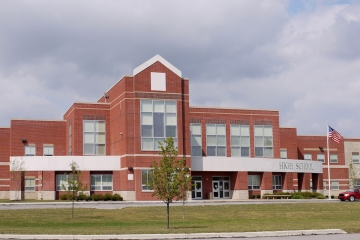
Early college high schools are those in which students pursue college credits as a requirement for graduation. A new report from American Enterprise Institute (AEI) authors Amy Cummings and Frederick Hess looks at the early college model built by the leaders of The 21st Century Charter School at Gary (21C) in Indiana, finding it unique, important, and worthy of replication. But the report raises questions.

It is probably fitting that what’s considered to be the pivotal breakthrough in building 21C’s early college model was a fluke. The leader of the Indiana charter school was trying to show a student who was bright but felt adrift in high school that he was “college material” and should persevere rather than drop out. In doing so, the leader discovered that the nearby community college had only one requirement for admission: passage of the ACCUPLACER assessment. No age limit, no prerequisite courses, no high school diploma. That student was the first at 21C shown to be “college material” after easily passing the test. Shortly thereafter, the leader decided to have every eighth grader at the K-12 school follow in his footsteps and take the test. Those who passed would begin college courses the following year.

That was back in 2010, and the program has evolved steadily over the years. Unlike most early college high schools, 21C is not located on a college campus. But school leaders still wanted their students—83.5 percent of whom qualify for free or reduced-price lunch, and most of whom would be the first in their families to go to college—to have the fullest possible experience of higher education. So the school decided to provide transportation for all the students taking college courses to and from campus every day—a huge and important commitment which required hundreds of thousands of dollars in startup funding and a complete revamping of the high school schedule, not to mention getting parents and students on board with it.

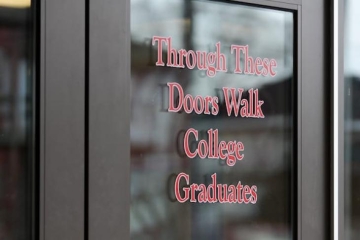
Even more impressive is the expansive menu of courses that students are allowed to choose from. They can attend any of four institutions in the area, including four-year colleges, such as Vincennes and Purdue, with very few limits on eligible classes. And all paid for out of the charter school’s budget. Students are offered ongoing counseling and support for their college work. And expectations are high: By 2012, 21C required every student to complete three college credit hours to graduate. By 2018, that number increased to twenty-four—the equivalent of a full year of college. The focus with which 21C has embraced every part of their rapidly-expanding model has even allowed many students to go far above those minimum requirements. For example, during the 2018–19 school year, nine students will earn associate degrees—two years of college—concurrent with their high school diplomas.

21C’s efforts to get students to and through college and on the path to the middle class are generally laudable, but questions arise in the form of a table of data provided by Cummings and Hess in the report. Those data show that 21C’s youngest students—grades three through eight—perform better on Indiana’s state math and English language arts tests than their Gary district peers. However, the overall passing rates for those youngsters are still very low, especially in math. Come the tenth grade tests in both subjects, 21C’s overall passing rates nearly flatline and fall well below those of Gary district students. In any other school—district or charter—those test scores would be extremely concerning.

So what to make of the dissonance between the low achievement of 21C students, on the one hand, and the loads of college credits they are clearly earning, on the other? It’s hard to say. Perhaps the hyper-focus on college means a shift in student attitudes. If kids are gunning for an associate degree starting in ninth grade, maybe tenth grade math tests just don’t matter. Perhaps Indiana’s changing graduation requirements—which will make the tenth grade tests optional for graduation starting in 2019–20—have something to do with those low numbers at 21C. Or perhaps the ACCUPLACER assessment and the college coursework taken by most students are actually below the level of even the tenth grade tests. To be clear, the leaders of 21C are not responsible for ACCUPLACER’s level of rigor or for the admissions criteria adopted by any of the colleges with which they work. They have built their early college model using the raw materials at hand.

However it’s happening, the AEI report makes clear that 21C students are succeeding at earning college credit. Early, quickly, and free of charge. The good folks at The 21st Century Charter School at Gary have taken tremendous positive steps for their students and are seeing some notable wins. But the very first key point made by the AEI authors is the most important: It is far too early to tell if this model actually “works.” They are right; the evidence at hand leaves more questions than answers.

SOURCE: Amy Cummings and Frederick M. Hess, “’A Small School with Big Chances’: The 21st Century charter school at Gary,” AEI (May 2019).

view

The Education Gadfly Show: Education leadership’s gender imbalance

5.22.2019
Podcast


On this week’s podcast, Julia Rafal-Baer, chief operating officer at Chiefs for Change, joins Mike Petrilli and David Griffith to discuss her organization’s recent report on the gender imbalances at the very top levels of educational leadership. On the Research Minute, Amber Northern examines how closing chronically underperforming schools affects neighborhood crime.

Amber’s Research Minute

Matthew P. Steinberg et al., “Schools as places of crime? Evidence from closing chronically underperforming schools,” Regional Science and Urban Economics (July 2019).

Fordham Logo

© 2026 The Thomas B. Fordham Institute
Privacy Policy
Usage Agreement

National

P.O. Box 110
Burke, VA 22009

202.223.5452

[email protected]

Ohio

P.O. Box 82291
Columbus, OH 43202

614.223.1580

[email protected]

Sponsorship

130 West Second Street, Suite 410
Dayton, Ohio 45402

937.227.3368

[email protected]