Mobile Navigation

  • National
    • Policy
      • High Expectations
      • Quality Choices
      • Personalized Pathways
    • Research
    • Commentary
      • Gadfly Newsletter
      • Flypaper Blog
    • Events
    • Scholars Program
  • Ohio
    • Policy
      • Priorities
      • Media & Testimony
    • Research
    • Commentary
      • Ohio Education Gadfly Biweekly
      • Ohio Gadfly Daily
  • Charter Authorizing
    • Application
    • Sponsored Schools
    • Resources
  • About
    • Mission
    • Board
    • Staff
    • Career
Home
Home
Advancing Educational Excellence

Main Navigation

  • National
  • Ohio
  • Charter Authorizing
  • About

National Menu

  • Topics
    • Accountability & Testing
    • Advanced Education
    • Career & Technical Education
    • Charter Schools
    • Curriculum & Instruction
    • ESSA
    • Evidence-Based Learning
    • Facilities
    • Governance
    • Personalized Learning
    • Private School Choice
    • School Finance
    • Standards
    • Teachers & School Leaders
    • Think Again
  • Research
  • Commentary
    • Gadfly Newsletter
    • Flypaper Blog
    • Gadfly Podcast
  • Events
  • Scholars Program

The Education Gadfly Weekly

Sign Up to Receive Fordham Updates

We'll send you quality research, commentary, analysis, and news on the education issues you care about.
Thank you for signing up!
Please check your email to confirm the subscription.

The Education Gadfly Weekly: Did public education have it coming?

Volume 22, Number 5
2.3.2022
2.3.2022

The Education Gadfly Weekly: Did public education have it coming?

Volume 22, Number 5
view
Quality Choices

Did public education have it coming?

In many ways, the educational failures of the past several years—including those caused by the pandemic—were far worse than they needed to be because of long-standing characteristics of American public education. Namely, the tendency to place employees’ interests first, the disempowering of parents, and the failure to innovate.

Chester E. Finn, Jr. 2.3.2022
NationalFlypaper

Did public education have it coming?

Chester E. Finn, Jr.
2.3.2022
Flypaper

The Maus that roared: Who do you want to decide what’s best for kids?

Robert Pondiscio
2.3.2022
Flypaper

The curriculum transparency trap

Dale Chu
2.3.2022
Flypaper

Digging in to public school choice in Detroit

Jeff Murray
1.31.2022
Ohio Gadfly Daily

Is Florida showing the way on boosting middle school outcomes?

Amber M. Northern, Ph.D.
2.3.2022
Flypaper

Education Gadfly Show #805: High schools didn’t get the memo that college isn’t for everyone

2.2.2022
Resource

Cheers and Jeers: February 3, 2022

The Education Gadfly
2.3.2022
Flypaper

What we're reading this week: February 3, 2022

The Education Gadfly
2.3.2022
Flypaper
view

The Maus that roared: Who do you want to decide what’s best for kids?

Robert Pondiscio 2.3.2022
Flypaper
view

The curriculum transparency trap

Dale Chu 2.3.2022
Flypaper
view
Detroit school choice SR image

Digging in to public school choice in Detroit

Jeff Murray 1.31.2022
Ohio Gadfly Daily
view

Is Florida showing the way on boosting middle school outcomes?

Amber M. Northern, Ph.D. 2.3.2022
Flypaper
view

Education Gadfly Show #805: High schools didn’t get the memo that college isn’t for everyone

Michael J. Petrilli, Chester E. Finn, Jr., David Griffith, Ph.D., Amber M. Northern, Ph.D. 2.2.2022
Resource
view

Cheers and Jeers: February 3, 2022

The Education Gadfly 2.3.2022
Flypaper
view

What we're reading this week: February 3, 2022

The Education Gadfly 2.3.2022
Flypaper
view

Did public education have it coming?

Chester E. Finn, Jr.
2.3.2022
Flypaper

Monday’s Washington Post featured a long, front-page article by the estimable Laura Meckler titled “Public schools facing a crisis of epic proportions.” In it, she skillfully summarized a laundry list of current woes facing traditional public education:

The scores are down and violence is up. Parents are screaming at school boards, and children are crying on the couches of social workers. Anger is rising. Patience is falling.

For public schools, the numbers are all going in the wrong direction. Enrollment is down. Absenteeism is up. There aren’t enough teachers, substitutes, or bus drivers. Each phase of the pandemic brings new logistics to manage, and Republicans are planning political campaigns this year aimed squarely at failings of public schools.

Public education is facing a crisis unlike anything in decades....

As I’m sure Ms. Meckler would agree, this is a “supply side” lamentation, a catalog of woes as seen from the perspective of those inside the education system. She might instead have written a very different article describing the “crisis” as viewed by consumers of public education. (You know—students, parents, taxpayers, us folks.) Such a piece might have read more like this:

The schools our kids attended were closed so long that students lost whole years of learning. Those from families with limited means lost even more. Those schools were closed far longer than they needed to be, apparently because the adults who work in them didn’t want (or were scared) to return and those running them put their employees’ interests ahead of those of their students and parents. We watched the firemen and nurses and utility workers keep coming to work despite the pandemic. Why not the teachers?

Worse, the closed schools’ failure to supply satisfactory forms of remote instruction meant that millions of children forgot how to study, how to get along with other kids, how to relate to grown-ups outside their families. Idleness, lassitude, and frustration took a toll of their physical and mental health and made life extremely difficult for us parents and other caregivers, including messing up our own work lives. Many of us had no choice but to quit our jobs. No wonder many of us took education into our own hands, seeking out other schools that managed to stay open, getting serious about homeschooling, hiring tutors when we could afford it, and teaming up with neighbors to create quasi-schools. Yes, we’re angry, furious even, and yes, our kids are upset and acting out. And it didn’t get any better when we got them back into school only to discover that, instead of the Three R’s, our schools were obsessing over racial and political issues. No wonder we’re protesting at school board meetings. No wonder a bunch of politicians are using our unhappiness to get themselves elected. And it’s no help at all when folks in Washington seem more interested in sending money and coddling misbehavers than in whether our children are learning.

Yes, it would have been a very different sort of lamentation. The point, though, isn’t journalism per se. It’s what’s the proper perspective from which to view the semi-meltdown of traditional public education: the system’s perspective or the perspective of those for whose benefit it exists and whose tax dollars pay for it? If the nation is still—or again—at grave risk because its children aren’t learning enough (and in many cases seem not even to be in places of learning), where ought responsibility for the melting be placed?

I’m not exactly saying the public schools had it coming. Nobody (except perhaps the denizens of a mysterious Wuhan laboratory) had any idea what was coming, and nobody is ever fully prepared for a full-scale catastrophe. No giant system that’s been doing the same thing for decades can be expected to turn on a dime. The inertia is profound. And yet, in many ways, the educational failures of the past several years were far worse than they needed to be because of long-standing characteristics of American public education. It’s worth recounting three of those.

  1. The tendency to place employees’ interests first. This has happened everywhere that public-sector unions—equipped with decisive collective bargaining, powered by influential lobbyists, political leverage and dependent legislators, and shielded by favorable laws and regulation—have been able to make governmental institutions work for them as much or more than for their “customers.” As David Leonhardt wrote in the New York Times in early January, “For the past two years...many communities in the U.S. have...tried to minimize the spread of Covid...rather than minimizing the damage that Covid does to society. They have accepted more harm to children in exchange for less harm to adults, often without acknowledging the dilemma or assessing which decisions lead to less overall harm.”

  2. The disempowering of parents. America’s decentralized school-governance arrangements hinge largely on locally elected school boards that may have been designed to take education out of politics, but that in fact have insulated it from much of the public. And the absence of accessible, high-quality school choice options has caused much of that public to be trapped within whatever educational arrangements the local board, the local bureaucracy, and the local unions were willing to give them. Within districts themselves, the paucity of options has fostered a one-size-fits-all mentality that is especially ill-suited to pandemic times. Some parents have been very cautious and want remote schooling or lots of quarantines or masks. Others are the opposite. But school systems, especially the big ones, haven’t been able to figure out a way to allow parents to choose schools (and hybrids and pods and other delivery arrangements) that meet their comfort levels.

  3. The failure to innovate, including sluggish, clumsy deployment of the same technologies that have revolutionized the rest of our lives. There’s an old, unfunny joke that if Rip Van Winkle were to awaken today after a half-century nap, among the very few institutions he would recognize would be the public schools. It’s no wonder few of them were able to mount quality distance-learning programs for homebound students. Education could have been 24/7 long before Covid-19 hit, available whenever and wherever one wanted to connect; it could have been year-round; it could have been move-at-your-own-speed and mastery-based; it could have diversified, flexible staffing arrangements; it could have “just in time” curricular units; it could have been so different. Just imagine how it might have developed if Google, Tesla, Amazon, or Apple were in charge instead of big, sluggish public-sector bureaucracies. Then imagine how much less painful would have been the plague-driven adaptations.

That’s what galls me about the many demands that we just “get our schools back to normal.” Normal wasn’t good enough, not by a long shot. Not only were kids not learning nearly enough; the system wasn’t nearly good enough, and it wasn’t—isn’t—fundamentally client-centered. Which is why I’m not too upset by signs that people are seeking alternatives to it and that its politics are no longer an endless loop.

Ms. Meckler wrote a fine piece in the Post. But there’s another way to hold the telescope she was looking through.

view

The Maus that roared: Who do you want to decide what’s best for kids?

Robert Pondiscio
2.3.2022
Flypaper

The school board in McMinn County, Tennessee, voted 10-0 to remove Maus, a Pulitzer Prize-winning graphic novel by cartoonist Art Spiegelman, from its eighth grade curriculum last month, citing concerns about explicit language and disturbing illustrations. When word got out last week, the condemnation from across the country was swift and pointed. That the vote seemed to coincide with Holocaust Remembrance Day (it was actually taken two weeks earlier) only fanned the flames.

“Yes, it is uncomfortable to talk about genocide, but it is our history and educating about it helps us not repeat this horror,” said teachers union president Randi Weingarten. “It has the breath of autocracy and fascism about it,” Spiegelman himself told CNN. “I’m still trying to figure out how this could be...I think of it as a harbinger of things to come.”

The story is not quite the way it’s been portrayed in the press and social media. And the episode, like several other curriculum battles in recent months, raises any number of questions that are proving too fine-grained for the ready-fire-aim cauldron of Twitter, Facebook, and our polarized public discourse. What kids should and should not be exposed to in school, at what age, and who should decide: Parents? Teachers? School boards? Someone else?

Let’s start with a precise description of the action taken by the school board. One sane voice, Derek Thompson of The Atlantic, pointed out that Maus had not been “banned”; it was removed from the district’s eighth grade curriculum. “Those are really different things. I found and read—and loved—Maus in our school library,” he tweeted. “It was never a part of the curriculum.”

But Maus had been part of the curriculum in McMinn County. A big part. None of the voluble coverage I’ve read has cited the fact that Maus is the “anchor text” in EL Education’s eighth grade language arts curriculum. Thus, when a school board member asked why they couldn’t just swap another Holocaust-themed text for Maus, the district’s instructional staff described how difficult that would be, since the entire curriculum module and several weeks of instruction revolve around that specific text. The same issue was cited when the board was reminded of its own policy allowing parents to opt out of materials they think are inappropriate for their children.

The biggest misconception is that the removal was because board members didn’t want kids learning about the Holocaust. “Our children need to know about the Holocaust, they need to understand that there are several pieces of history that show depression or suppression of certain ethnicities. It’s not acceptable today,” noted one board member, whose specific motion (which ultimately passed) directed “that we remove this book from the reading series and challenge our instructional staff to come with an alternative method of teaching the Holocaust.” A high school teacher at the meeting chimed in to say she teaches the Holocaust every year, but she doesn’t use Maus either. So the frequently repeated claim that the controversy was about keeping kids from learning “honest history” is simply incorrect based on a transcript of the meeting, which is available to any who care to read it.

Here are my takeaways from this high-profile and obviously distorted episode: Would I have let my eighth grade daughter read Maus? Yes, I would and without hesitation. I’m also favorably disposed toward EL Education’s language arts program. It’s knowledge-rich, usable for teachers, and draws upon complex texts and thoughtfully curated supplemental resources. If this controversy were to repeat itself in my town, I’d speak in support of Maus, the curriculum, and teaching the module as written. Finally, anyone inclined to make dark imprecations about teachers and administrators in rural east Tennessee should read the transcript. They made a very strong and sophisticated case for Maus. If I were on the McMinn County Board of Education, I would have cast the lone “no” vote on removal.

But here’s the thing: I’m not on the McMinn County Board of Education. So I draw the line at telling the people of a distant rural school district, six states and 500 miles away, what their children must read for a simple reason: I don’t want the people of McMinn County, Tennessee, telling me what my kid must read.

You don’t have to like or agree with the decision, but the question I haven’t seen considered in all the howling outrage is what alternative wouldn’t be worse in a diverse and divided nation, where even state control of education feels too distant and the grain size too large? If you don’t think a local, democratically-elected school board is the appropriate body to decide whether a book belongs in their school’s curriculum, who is? If not the nation’s 13,000 local school boards, in whose hands would you place the power to dictate the terms and conditions that govern your child’s school culture and curriculum? And what happens when a decision that’s in friendly hands and aligns with your tastes and values today ends up tomorrow in the hands of people you do not know and cannot stand? 

Shout all you like. It’s a free country, at least for now. But recognize that a strange spirit is at loose in the land. We seem eager to limit people’s access to ideas we don’t like, and at same time impose our ideas on people we don’t like. We see no conflict in these obviously contrary impulses. We condemn the McMinn County school board for “banning” Maus and in the very next Tweet applaud Neil Young trying to muzzle Joe Rogan on Spotify. Yes, yes, I know. It’s a false equivalence. One’s a government action and the other’s the free market doing its thing. But might I humbly suggest that if your first impulse is to explain why something is or is not censorship or compelled speech rather than being reflexively uncomfortable with it, you’ve already lost the plot.

Half of the seats on the ten-member McMinn County school board are up this year. The primaries are in May; the general election is in August. Now that they have offered a high-profile demonstration of their feel for community values and displayed their pedagogical discernment, the good people of McMinn County, Tennessee, will have the opportunity to express their support or disappointment with their board at the ballot box.

Got a better plan? Because I sure don’t.

view

The curriculum transparency trap

Dale Chu
2.3.2022
Flypaper

Amid the raging culture fires engulfing our politics and schools comes a concerted push among some conservative groups to codify a “parents’ bill of rights.” House minority leader Kevin McCarthy rolled out his proposal last November, as did U.S. Senator Josh Hawley. Although neither measure is likely to get much traction in Congress, at least not before the mid-term elections, kindred efforts are making headway in some states. Florida’s version was signed into law last June, and Texas and Virginia both jumped into the fray in January. A dozen or so states have bills pending. These plans typically include sections on school or curriculum “transparency,” which calls for information about curricula and instructional materials to be posted online or otherwise made accessible to parents and other interested parties.

They run the gamut from painless to preposterous. Some require schools to provide a list of core curricular materials (although this elides the much thornier question of how or whether such materials are used, never mind how they’re likely to be supplemented), or even an inventory of everything in the school library. Others allow parents to opt their children out of any lesson or assignment they find objectionable (giving new granularity to the concept of choice in education). Still others would allow teachers’ professional development sessions to be open to the public (though this would seem to work at cross purposes with pre-pandemic and post-Columbine efforts to “harden” schools). Some would let parents watch videos—livestreamed or recorded—of their children’s classrooms.

The principle of school transparency has undeniable appeal, yet we can’t avoid asking about the motives behind these efforts and wondering whether an unassailable value like transparency is being deployed as a wedge to worsen the politicization of our discourse and fragmentation of our culture.

Operationally speaking, putting into practice the kinds of curriculum transparency imagined in some of these proposals would be incredibly burdensome on teachers, schools, and districts, and strongly opposed by all their organizations. But before getting lost in the challenges of implementation, let’s ask whether the theory of action undergirding curriculum transparency even makes sense as policy.

It goes something like this: Compelled transparency will spur schools and districts to correct problems in order to avoid public outcry. This premise gained steam in the world of education policy with NCLB’s public reporting requirements (e.g., data disaggregated by student subgroups), but today’s approach to curriculum transparency presupposes simply the disclosure of information as distinct from direct government interventions based on that information. The theory is that more data with a lighter governmental touch is a best-of-both-worlds proposition. (See today’s love affair with education dashboards.) Sounds like a win-win, right? As it turns out, there’s considerable evidence to suggest that transparency alone doesn’t do much as a lever for policy change.

In an article written two years ago by researchers Morgan Polikoff and Ethan Hutt, “Toward a Framework for Public Accountability in Education Reform,” the authors show that transparency employed as a policy tool is subject to overly optimistic assumptions among lawmakers, policymakers, and parents alike. Though this problem is in no way limited to education (e.g., consider the subpar results of requiring disclosure of nutrition facts), it’s acute in our sector precisely because many education policies today rely exclusively on information disclosure as the means for securing desired outcomes. Polikoff and Hutt write:

As mandatory disclosure has become the focus of thousands of laws and regulations nationwide, scholars in many fields have begun to raise questions... These critics argue that disclosure policies fail to produce public accountability because they have an undertheorized view of the state’s operation and capacity for change [and] misperceive the value of information in people’s decision-making... For many, the sum total of these concerns is captured in the opening line of a recent book on the subject: “‘Mandated disclosure’ may be the most common and least successful regulatory technique in American law.”

In short, transparency as a policy driver has been greatly oversold. Transparency itself is a weak lever, not to be relied upon to cause much to change. This is not to say there isn’t an important role for public accountability; rather that the tradeoffs and limitations of today’s calls for greater transparency should be honestly weighed and examined if we’re serious about improving access to high-quality instructional materials and, by extension, student outcomes. What’s more, parents who are mostly wanting to be able to shield their kids from content they disapprove of would also do well to recognize and understand the shortcomings of statutory band-aids.

Of course, therein lies the rub. Amid the mudslinging that constitutes today’s national education dialogue, it’s impossible to disentangle curriculum transparency efforts from our larger disagreements—fraught with anger and frustration around race, free speech, and censorship. Which is a shame because the lack of information about what curricular materials schools are using could really stand to be improved upon.

The conversation we should be having around curriculum transparency is how to provide better information to parents without putting an undue burden upon schools. At the same time, what many parents witnessed of their children’s education on Zoom over the last two years left much to be desired; officials should address these concerns with empathy and reject the impulse to downplay them. Instead, what we’ve been given is a dishonest, “gotcha” game of one-upmanship that ratchets up the political temperature at the expense of shedding light on ways to resolve the tension between a sunshine strategy and a big government approach.

Only a good-faith exchange of ideas can yield a productive outcome, especially given today’s stratospheric levels of distrust. At the very least, states should consider including a sunset clause on their curriculum transparency efforts, so if it turns out to be a huge paperwork burden with little actual benefit, it can go away (assuming that policymakers will have moved on to other issues by then). Better yet, it would make sense for states to dial down their ambitions by starting small. A sensible place to begin could be in districts where parental complaints about curriculum have been unusually high. In the fight for more transparency, progress will require cooler heads to prevail.

view
Detroit school choice SR image

Digging in to public school choice in Detroit

Jeff Murray
1.31.2022
Ohio Gadfly Daily

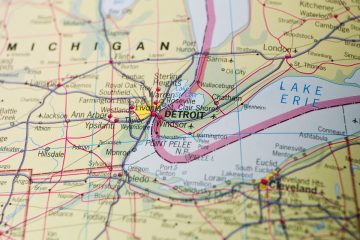
After the Brown v. Board of Education decision, school desegregation efforts in Detroit followed a familiar pattern: Busing of students to achieve racial balance was proposed, resistance and White flight occurred, and somebody sued. Milliken v. Bradley was finally decided in the U.S. Supreme Court in 1974, rejecting the idea that outlying districts had to be part of Detroit City Schools’ desegregation solution. A city-suburb divide thus persists to this day, with school district lines approximating historically redlined housing boundaries.

Though the percentage of Black suburban residents has grown, the metro Detroit area remains one of the most segregated in the country. Over 80 percent of Detroit students today are Black, while over 60 percent of suburban students are White. The rise of school choice in the 1990s, meant mainly to provide better school options for underserved students, could also have chipped away at this geographic divide. A new report from Wayne State University researchers Jeremy Singer and Sarah Winchell Lenhoff looks at data on interdistrict open enrollment and suburban charter school attendance to see whether the divide has been meaningfully breached.

Michigan is ranked fairly highly by NAPCS in its most-recent report on model charter school laws across the country, and charters in the state are numerous, with few geographical constraints. Interdistrict open enrollment is more limited, as districts are allowed to remain closed entirely to transfer students or to limit the number of non-resident enrollees. The researchers suggest unrestricted “administrative burdens” also limit enrollment, even in districts that are ostensibly “open.” Furthermore, Michigan law does not require either sending or receiving districts to provide transportation, access to which is a huge problem in this sprawling metropolis, even for district residents staying put. The good news is that many students seem to have overcome these barriers. Previous research by Lenhoff shows that nearly one in four Detroit resident students attend school in the suburbs.

The new report uses statewide student attendance and census data from the 2015–16 school year to compare public school choices, resident addresses, and various school quality measures. Overall, 22,170 resident students left Detroit that school year to attend a public school option in the suburbs. The vast majority of exiters were Black, and much smaller percentages were Hispanic and White. It should be noted that, per state law, the category “White” includes Arab American students of Middle Eastern and North African heritage. Data indicate that members of these communities—large and concentrated in a specific part of the Detroit metro area—drive the exit patterns observed for White students. Sixty-three percent of exiters attended suburban charters, while the rest enrolled in suburban district schools. A whopping sixty-six different suburban districts received at least one exiter, but more than 50 percent of all exiters went to one of just four border districts: Southfield, Oak Park, Harper Woods, and Dearborn. The average exiter had to travel 4.5 miles to school each day, compared to 2.3 miles for Detroit resident students staying put and 2.0 miles for suburban resident students.

In “open” districts—that is, ones with little or no known restrictions in place to limit enrollment from outside their borders—slightly more exiters landed in a district school than in a charter. In “managed” districts where formal or informal limits exist, nearly 60 percent of exiters attended charters. And, somehow, 5 percent of exiters landing in a “closed” district still managed to get a seat in that district (think, for example, children of district employees), while the other 95 percent in those districts understandably went to charters.

Compared with their known set of school choices available within Detroit, the average exiter chose a school with slightly lower levels of racial isolation and about the same level of economic disadvantage. When it came to school quality, exiters, on average, enrolled in schools with a slightly lower discipline rate, a slightly higher stability rate, and somewhat better average math and English language arts state test scores. Singer and Lenhoff, however, express concern that Black exiters experience lower school quality than White, Hispanic, and Asian peers who likewise exit Detroit schools. Unfortunately, the nuances of quality ratings among schools are not included here, so it is difficult to ascertain the full measure of the gap; hopefully future research will illuminate these details. So the while primary goal of school choice programs—better schools for chronically-underserved students—seems generally to be reached, any deeper aims remain elusive.

The researchers specifically discuss the observation that exiters are “isolated” in their new schools—by which they mean Detroit resident students are not integrated with suburban resident students despite crossing borders. This is an important point. Exiters do attend suburban schools where an average of 51 percent of their classmates are also Detroit residents. A bit surprising, perhaps, but not outside the realm of possibility. One can surmise without too much concern that suburban families don’t choose charters (in 2015–16, that is; things may have already begun changing in that regard), but the possibility that school districts may be funneling their open enrollees to separate buildings does raise an eyebrow. While not proven by the data at hand, that possibility could be easily eliminated with common sense tweaks to open enrollment – including eliminating closed borders except in cases of buildings over capacity – which empower parents and limit longstanding “opportunity hoarding” often associated with high-cost housing zones and the districts that have historically arisen from them. Very likely, such changes would also allow exiters to land in even better new schools, accomplishing both the primary and secondary aims of public school choice.

SOURCE: Jeremy Singer and Sarah Winchell Lenhoff, “Race, Geography, and School Choice Policy: A Critical Analysis of Detroit Students’ Suburban School Choices,” AERA Open (January 2022).

view

Is Florida showing the way on boosting middle school outcomes?

Amber M. Northern, Ph.D.
2.3.2022
Flypaper

Much has been written about the third grade retention policy Florida enacted in 2002. Less is known about the similar, middle-school-centric policies that followed in 2004 for English language arts (ELA) and expanded to other subjects in 2006. A recent study from CALDER examines the effects of this effort on both short- and long-term postsecondary outcomes and presents some positive findings.

Florida state policy requires all middle school students who score below the proficient level in reading or math on standardized tests to be subject to remediation in the corresponding subject the following year. However, “remediation” is a bit of a misnomer here, as, with few exceptions, those students have to take a regular course in the subject and a remedial course in the same year. Double dosing is the more apt terminology. In the large, unnamed urban district that is the focus of the study, 22 percent of all middle schoolers took a remedial ELA course in the 2006–07 school year along with their standard course, compared to just 6 percent in math. Thus the study focuses on the structure and effects of this double dosing form of ELA remediation.

The policy also states that remedial teachers must have a reading endorsement or certification and that the infrastructure must be “adequate” for the purpose of catching student up. The meaning of the latter is nebulous, but on the ground, data show those requirements translate into remedial courses with smaller class sizes and more experienced teachers with higher value added. The study sample includes students enrolled in K–12 between 2005–06 and 2018–19, with a special focus on middle schoolers whose postsecondary outcomes are available years later. A regression discontinuity design compares students right above and below the cutoff for double dosing per state policy. Because of this design, we don’t know how the additional courses might impact lower-performing students not near the cutoff—an important limitation.

Descriptively, students who score right below the cut off spend 133 minutes more per week in ELA courses, have 2.5 fewer students on average in their classes, and have lower achieving and lower income peers. The analysis shows no crowding out of traditional academic subjects, an understandable concern, as the policy does not call for a longer school day, but it does show that physical education and music courses get the squeeze.

The key finding shows a positive effect on reading scores, but it dissipates after the year of double dosing; no adverse effects on suspension or absences are observed. Remedial ELA course-taking also has a major negative effect on advanced course-taking in other subjects during the year of double dosing due to students being placed in lower tracks in other subjects during the double-dose year. However, that effect subsequently vanishes, suggesting they are no longer placed in lower tracks beyond the first year.

Significant positive benefits occur relative to advanced course taking further down the line, whereby double dosing on ELA courses increases the likelihood of students taking college credit bearing courses by 3.5 percentage points and by a smaller amount in social studies—although not at all in math or science. Double-dose course-taking does not impact the likelihood of students receiving a diploma either way.

Even further down the line, there is a small positive effect on the likelihood of double-dosed students ever enrolling in college, ever attending a very competitive college, persisting in college beyond the first year and second year (by a noteworthy 4.6–4.7 percentage points), and subsequently receiving a two- or four-year college degree. Although these longer-term impacts seem to contradict the short-term score effects that dissipated, the author comments that other studies have shown the same and may indicate that test scores have lower predictive validity on postsecondary and adult outcomes than other measures like course taking and non-cognitive skills. Finally, the study finds some evidence that, for higher-performing girls, double dosing on ELA courses in middle school has outsized impacts compared to their male peers on nearly all of the outcomes analyzed, including increasing the odds of enrolling in college by roughly 30 percent. Yet another troubling outcome for our young men in K–12 schools.

State law and this working paper may use the term “remediation,” but the double-dose design—providing remediation and grade-level work in the same year—and the requirement for highly-qualified teachers marks Florida’s program out as something different. And that is a good thing, since old school efforts are not what our kids need today. Good policy design, with faithful execution and positive results, is the right prescription—no matter what you call it.

SOURCE: Umut Özek, “The Effects of Middle School Remediation on Postsecondary Success: Regression Discontinuity Evidence from Florida,” CALDER Working Papers (September 2021).

view

Education Gadfly Show #805: High schools didn’t get the memo that college isn’t for everyone

2.2.2022
Resource
 

On this week’s Education Gadfly Show podcast (listen on Apple Podcasts and Spotify), Checker Finn, Mike Petrilli, and David Griffith discuss whether American education should stop trying to send every student to college, and what that may mean for high school course requirements. Then, on the Research Minute, Amber Northern examines a study on how universal school breakfasts affect disadvantaged student’s academic outcomes.

You can find this and every episode on all major podcast platforms.

Recommended content:

  • Mike’s piece that sparked the conversation: “We all agree that college isn’t for everyone. We should start acting like it.”
  • The study that Amber reviewed on the Research Minute: Rahi Abouk and Scott Adams, “Breakfast After the Bell: The Effects of Expanding Access to School Breakfasts on the Weight and Achievement of Elementary School Children,” Economics of Education Review (January 2022).


Feedback welcome!

Have ideas or feedback on our podcast? Send them to our podcast producer Pedro Enamorado at [email protected].

view

Cheers and Jeers: February 3, 2022

The Education Gadfly
2.3.2022
Flypaper

Cheers

  • In New York City’s Brooklyn Tech High School, “the ideals of meritocracy and equality, traditional values and public good…seamlessly come together.” There are lessons there for America. —Bret Stephens
  • The science of reading is clear. Here’s how parents and school leaders can make the most of it. —Hechinger Report
  • “There is a better way to defeat left indoctrination than banning books.” —Andrew Sullivan

Jeers

  • Despite a pledge to the community, curricular reforms, and ample federal funds, Portland’s public schools are still failing to improve math and reading outcomes for Black and Hispanic students. —The Oregonian/OregonLive
view

What we're reading this week: February 3, 2022

The Education Gadfly
2.3.2022
Flypaper
  • Ed reform must accept the fact that “there are some kids that are more academically talented than others.” —Freddie deBoer
  • Jeb Bush and Margaret Spelling comment on the culture wars and the future of education reform. —Dallas Morning News
  • “An 8-year-old slid his handwritten book onto a library shelf—it now has a yearslong waitlist.” —The Spokesman-Review
Fordham Logo

© 2026 The Thomas B. Fordham Institute
Privacy Policy
Usage Agreement

National

P.O. Box 110
Burke, VA 22009

202.223.5452

[email protected]

Ohio

P.O. Box 82291
Columbus, OH 43202

614.223.1580

[email protected]

Sponsorship

130 West Second Street, Suite 410
Dayton, Ohio 45402

937.227.3368

[email protected]