Mobile Navigation

  • National
    • Policy
      • High Expectations
      • Quality Choices
      • Personalized Pathways
    • Research
    • Commentary
      • Gadfly Newsletter
      • Flypaper Blog
    • Events
    • Scholars Program
  • Ohio
    • Policy
      • Priorities
      • Media & Testimony
    • Research
    • Commentary
      • Ohio Education Gadfly Biweekly
      • Ohio Gadfly Daily
  • Charter Authorizing
    • Application
    • Sponsored Schools
    • Resources
  • About
    • Mission
    • Board
    • Staff
    • Career
Home
Home
Advancing Educational Excellence

Main Navigation

  • National
  • Ohio
  • Charter Authorizing
  • About

National Menu

  • Topics
    • Accountability & Testing
    • Advanced Education
    • Career & Technical Education
    • Charter Schools
    • Curriculum & Instruction
    • ESSA
    • Evidence-Based Learning
    • Facilities
    • Governance
    • Personalized Learning
    • Private School Choice
    • School Finance
    • Standards
    • Teachers & School Leaders
    • Think Again
  • Research
  • Commentary
    • Gadfly Newsletter
    • Flypaper Blog
    • Gadfly Podcast
  • Events
  • Scholars Program

The Education Gadfly Weekly

Sign Up to Receive Fordham Updates

We'll send you quality research, commentary, analysis, and news on the education issues you care about.
Thank you for signing up!
Please check your email to confirm the subscription.

The Education Gadfly Weekly: Biden’s anticompetitive moves on charters and choice

Volume 21, Number 30
7.29.2021
7.29.2021

The Education Gadfly Weekly: Biden’s anticompetitive moves on charters and choice

Volume 21, Number 30
view
Quality Choices

Biden’s anticompetitive moves on charters and choice

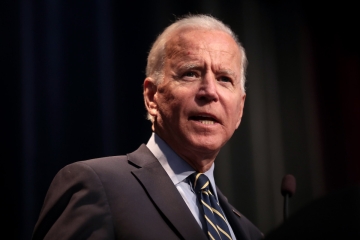
Earlier this month, President Biden issued a sweeping executive order encouraging federal agencies to undertake a series of initiatives aimed at increasing competition in the U.S. economy. But there’s a mismatch between his approach to competition in the private sector and his support for monopoly when it comes to public education.

Dale Chu 7.29.2021
NationalFlypaper

Biden’s anticompetitive moves on charters and choice

Dale Chu
7.29.2021
Flypaper

2.7 cheers for the NAEP Reading Framework

Chester E. Finn, Jr.
7.29.2021
Flypaper

Charter school teachers are teachers, too

Henry Seton
7.29.2021
Flypaper

How well do public schools in large cities overcome the effects of poverty and other barriers?

Jessica Poiner
7.29.2021
Flypaper

How do suspensions affect classroom learning?

Jeremy Smith
7.29.2021
Flypaper

The Education Gadfly Show #780: The state of teacher licensure

7.29.2021
Podcast

Cheers and Jeers: July 29, 2021

The Education Gadfly
7.29.2021
Flypaper

What we're reading this week: July 29, 2021

The Education Gadfly
7.29.2021
Flypaper
view

2.7 cheers for the NAEP Reading Framework

Chester E. Finn, Jr. 7.29.2021
Flypaper
view

Charter school teachers are teachers, too

Henry Seton 7.29.2021
Flypaper
view

How well do public schools in large cities overcome the effects of poverty and other barriers?

Jessica Poiner 7.29.2021
Flypaper
view

How do suspensions affect classroom learning?

Jeremy Smith 7.29.2021
Flypaper
view

The Education Gadfly Show #780: The state of teacher licensure

Michael J. Petrilli, Kate Walsh, David Griffith, Ph.D., Amber M. Northern, Ph.D. 7.29.2021
Podcast
view

Cheers and Jeers: July 29, 2021

The Education Gadfly 7.29.2021
Flypaper
view

What we're reading this week: July 29, 2021

The Education Gadfly 7.29.2021
Flypaper
view

Biden’s anticompetitive moves on charters and choice

Dale Chu
7.29.2021
Flypaper

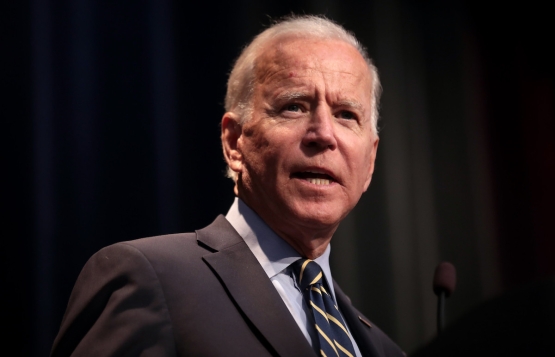
Earlier this month, President Biden issued a sweeping executive order that pushes federal agencies to undertake a series of initiatives aimed at increasing competition in the U.S. economy. The order itself was mostly symbolic, but it sent a strong signal about the administration’s preferred direction on U.S. competition policy. Only time will tell if and how any of its specific provisions pan out, but what’s already clear is the mismatch between the president’s approach to competition in the private sector and his support for monopoly when it comes to public education.

Biden’s aversion to competition in schooling was particularly vivid on the campaign trail, where he bluntly admitted that he was “not a charter school fan” despite the strong evidence of their efficacy. Consistent with the Democratic Party’s education platform and in contrast with his gesture towards competitiveness in the private economy, the president and his allies see no inconsistencies between their protection of the status quo when it comes to education and their calls for dismantling it on other fronts.

Consider the reaction to Biden’s EO from Senator Elizabeth Warren, one of Washington’s staunchest charter critics, who effusively praised its pro-competitive provisions. Warren writes:

In the world’s largest economy, a hearing aid shouldn’t cost as much as $5,000—sometimes more... This is wrong—plain and simple. If our nation’s economy isn’t serving ordinary working families, it doesn’t matter how big and powerful it is, it needs to change [emphasis added].

Sub out “economy” with “schools,” and the contrast becomes incandescently obvious. Warren goes further and adds, “For years, I have been telling anyone who will listen that markets without competition are theft.” Hear, hear, Senator! Countless millions of American students, especially poor and marginalized ones living in urban centers, were robbed of their education when the public school monopoly kept its doors closed for the greater portion of the pandemic.

Biden’s remarks at the signing ceremony were no less cringe-inducing when considered against what so many low-income and minority students and families were forced to endure over the last eighteen months:

The heart of American capitalism is a simple idea: open and fair competition—that means that if your companies want to win your business, they have to go out and they have to up their game; better prices and services; new ideas and products... But what we’ve seen over the past few decades is less competition and more concentration that holds our economy back. We see it in big agriculture, in big tech, in big pharma. The list goes on.

Indeed it does. Instead of competing for students or trying to meet them where they were during Covid, “big teacher” continues to work ferociously against anything that it doesn’t exclusively control. In Denver, for example, this even includes the small subset of district-run “innovation schools,” which have been afforded flexibility from state laws, district policies, and union contracts. That flexibility is now in jeopardy due in no small part to the local teacher’s union.

This hostility towards competition vis-à-vis charters and choice defies logic in light of studies showing that charter competition does not harm student achievement, and in some cases even boosts it. The malice is also difficult to stomach coming from a man who once served in an administration that embraced and encouraged such options. With then Vice President Biden at his side, former President Obama advocated for charter schools and tussled with the teachers unions. New York Times columnist David Brooks once wrote, “Obama has been the most determined education reformer in the modern presidency.”

Today, however, Biden, stands strong with the forces of resistance and repeal in calling charter schools “very misguided.” To be fair, that hostility towards them has so far been more evidence on the campaign trail than in office. Yet there’s reason to be worried that the groundwork is now being quietly laid against them. To wit, House Democrats have proposed cutting the federal Charter Schools Program; deep-sixing the popular yet perennially scrutinized D.C. Opportunity Scholarship Program; and in what may end up as a purely symbolic gesture, floating “anti for-profit” language that could keep all charter schools from receiving federal funding. We don’t know for sure whether the administration is egging them on. We do know that Biden didn’t sign this year’s charter schools week proclamation, the first time a sitting president hasn’t done so in thirty years! So much for asking public schools and systems to “up their game.”

On balance, it’s not a big surprise. While Biden is inconsistent on the merits of competition, he is being slavishly consistent on policies that he and his allies view as being pro-union. To put a finer point on this, monopolies are bad, but if they’re owned by the Democratic base, then they’re A-OK. When applied to schools, the president’s ostensible approach pits adults against students, and that’s a problem because children will almost always lose out in this equation. 

view

2.7 cheers for the NAEP Reading Framework

Chester E. Finn, Jr.
7.29.2021
Flypaper

Gadfly habitues have seen me grump, criticize, lament and recently brighten over the protracted fracas that the National Assessment Governing Board (NAGB) engaged in—and triggered—as it has struggled to revamp the framework that will guide the National Assessment (NAEP) of reading from 2026 onward.

Today, I’m pleased to say, there’s good cause for brightness. The Board has just released what is almost certainly the final version of that much-debated framework, ready for a vote at next week’s quarterly NAGB meeting.

Taken as a whole, it’s a masterful, praiseworthy piece of work, and—assuming the board agrees to it, preferably on a unanimous vote—a remarkable achievement by Chairman Haley Barbour, Vice chair Alice Peisch, and a handful of members who put their shoulders to a big, creaky wheel and (with staff help) pushed not just for a compromise, but also for a coherent, forward-looking and intelligible approach to the modern assessment of students’ reading prowess and comprehension.

This matters not only because reading is the most basic of all subjects and NAEP is the country’s most trusted and accurate gauge of how our kids and schools are doing at it. It also matters because of the signals this framework will send throughout K–12 education, from teacher preparation to curriculum development to state accountability regimes. And it was a heavy lift indeed to take this much-disputed, jargon-heavy, massive document and set it right amid all the noise. Different bodies of research were invoked to justify rival approaches to reading. Contemporary racial, cultural, and political tensions entered in. A hundred experts declared themselves. A thousand constituencies had to be considered. NAGB itself almost came unglued.

The result will update NAEP’s approach to reading in important ways, such as taking account of the multiple formats and media in which people now read. It will improve the reporting of NAEP results so that we’ll know more about—for example—different SES levels within demographic groups and more about gradations within the lamentably wide swath of kids who score “below basic” on the board’s achievement levels. And the framework’s architects have almost certainly managed to do this without breaking NAEP’s multi-decade trend line for reading achievement, which from a policy standpoint is surely the foremost consideration.

All good, all cheer-worthy. Why, then, instead of total gushing, do I withhold part of a cheer? Not because I’m alarmed by what’s likely to happen in 2026, but because NAEP frameworks typically last for decades, and within this one lurk potential future problems.

It leaves much discretion and many judgments to “assessment developers” in crucial realms, especially deciding when to provide test-takers with “universal design elements” (UDEs) to help them navigate and understand the test. Therein lies the risk of reducing its rigor and distancing it from the real world of reading.

Per this framework, UDEs come in three categories, termed “task-based,” “motivational,” and “informational.” The first may be thought of as aids to navigating and understanding what the test asks students to do. The second seeks to encourage them to do it. And the third helps them understand things on the test that may be unfamiliar to them. According to the framework, “UDEs provide orientation, guidance, and motivation to sustain readers’ journeys through the block [of test questions]. They are designed to mirror typical (non-testing) reading situations to improve the validity of the assessment.”

An unimpeachable sentiment, you say, and it’s hard to argue. Yet it might not be true. How many “typical reading situations” actually supply those kinds of help—which in earlier versions of the new framework were, perhaps more honestly, termed “scaffolding”?

The other morning I encountered a (for me) “typical reading situation.” The newspaper article was headlined “Beijing’s regulatory blitz spurs a selloff.” The third paragraph, in its entirety, read as follows: “Over the weekend, state media made public a severe curtailing of after-school tutoring was in the works, while regulators ordered Tencent to give up some exclusive music-licensing rights.”

I’m a really good reader. There’s a chance I’d reach the “advanced” level on NAEP. Yet this was a challenge, first because I don’t think the sentence quite parses. Never mind that it passed muster with front-page editors of a very prominent newspaper. Isn’t there at least a “that” missing from it?

I understood my task and was adequately motivated to make sense of it. I care about stuff like after-school tutoring and worry a lot about what’s going on in China. So I certainly didn’t need the first two kinds of UDE. But what do music-licensing rights have to do with after-school tutoring? What exactly are “state media”? Who or what is Tencent? Neither the previous nor the following paragraphs helped at all.

I could more or less figure it out with a bit of effort. I recognize and know the meaning of the individual words, save for the proper noun. Possibly I could look that one up—which I realize test-takers can’t do. More likely, I would infer what’s going on in this passage from other information that I already possess. I could get close, though my comprehension would remain limited. But what if this was part of an assessment of my comprehension? Should the test developers make it easier for me? Should my understanding of that passage be judged by what I can do for myself or be inflated by help from the test itself? And if the latter were to happen on a frequent basis, wouldn’t my actual comprehension be masked and my reported score be inflated?

The new reading framework opens the door to this sort of thing happening with NAEP’s reading assessment and with others that take their cues from NAEP. I’m confident that the current governing board and the powers that be at NCES and IES don’t intend for that to happen, and I don’t expect it to happen in 2026. But what about later?

Keep in mind that reading, that most fundamental of subjects, is not in good shape in America today. We know this from PISA, from PIRLS, from the most recent several rounds of NAEP, from SAT scores, and from so many other indicators, both formal and casual. We need to bend every effort to teach reading better and ensure that kids learn it well. We don’t need to conceal their deficiencies.

That said, my 2.7 cheers for those who turned a sow’s ear of a draft NAEP reading framework into a mostly-silk purse are sincere. We should thank them for a job well done—and pray that their successors don’t undo it.

view

Charter school teachers are teachers, too

Henry Seton
7.29.2021
Flypaper

I was excited to meet a fellow high school teacher at a neighborhood potluck, but when she found out I worked at a charter school, she immediately said, “I don’t support charter schools.”

It happened again on my first day of graduate school, during our second round of icebreakers. Efforts were made to create diverse, inclusive circles—including the naming of gender pronouns—yet when it came up that I worked at a charter school, one of my new classmates jumped in to declare that I was part of an evil corporate empire.

And it’s happened to many colleagues, too. An award-winning charter teacher was leading a free workshop about his best practices only to be interrogated about his school’s policies during the Q & A. A Black friend facilitating a supportive affinity space for teachers of color was repeatedly berated with questions like “Who is funding you?”

Does this happen to people in other fields—where within seconds of meeting someone who shares their profession, they are told to their face that they are bad people because of where they work?

Politicians often cast publicly funded alternative schools such as charters as adversaries of traditional districts over issues such as funding and unionization. Many states and cities fund neither type of school adequately, leaving them to compete for scarce resources.

And charters frequently hurt their own cause, sometimes speaking condescendingly of “saving” poor Black and Brown children from “broken” district schools only to end up in the news for problematic behavior themselves.

Yet how have we created a climate in which teachers so quickly assail one another over where they work?

We as teachers bemoan our nation’s political polarization but impulsively reproduce it ourselves. We call for kindness, yet so rapidly resort to the call out. We argue for assuming best intentions, yet don’t trust fellow educators to choose the available job where they think they can be most effective. We celebrate critical thinking, yet so readily accept misleading talking points—e.g., that charters are far-right-funded, for-profit parasites out to bust unions and destroy public education.

As always, the reality is much more complex. I myself worked for a decade in a charter founded by left-leaning educators who had unsuccessfully fought for years for racial equity in the local district.

Over the past year, while some traditional districts adeptly responded to the pandemic, others clearly struggled. How are we so confident each of our nation’s 15,000-plus school districts best serves the needs of each of our 50-plus million K–12 students? Why can’t we instead agree that within any sector of schooling—whether district, charter, parochial, or private—there are stronger and weaker examples of the type?

We do our profession and our pupils a disservice when we impulsively lash out against each other, rather than envisioning ourselves as part of a diverse constellation of educators all doing our best to serve our students’ diverse needs. We all have a role to play—as sociologist Eve Ewing argues—in creating high-quality schools for all children. And the work of groups like Teach Plus reveals how powerful we can be as united teacher-leaders striving towards this mission.

Perhaps the greatest irony is that, when we as teachers lead with attack rather than inquiry, we forego a tremendous learning opportunity. Next time we meet a teacher who works in a different setting, let’s instead ask what it’s like at their school and how they came to work there. Ask what the school does well, what it’s still working on, if they like their job, and if they would send their own children there. When we approach these conversations with genuine curiosity, teachers usually respond with remarkable vulnerability about their own schools. 

We can even use these moments to test our own biases: “I’ve heard that X schools often struggle with Y. Is that true in your experience?” For example, teachers unions are frequently villainized in the charter sector, so I might ask district teachers about the role that unions play in their school and about the degree to which they support or hamper larger improvement efforts. The range of responses I receive both reinforces and complicates the typical narrative—giving me more perspective on initiatives in my school, and a more complete picture of how my practice fits into the larger landscape.

And when Covid-19 hopefully recedes, why not go a step further and set up half-day visits to each other’s school? Contracted professional days can often be used for such observations instead of the usual boring workshops. Over the past decade, I have used them to visit dozens of schools. These observations almost always leave me with inspiring ideas to bring back to my school, and they have helped me build a diverse network of teacher-leaders to whom I can reach out when future dilemmas arise.

In this era of intense polarization, let us not fall for those who seek to divide us and instead reach out and learn from the disparate sectors of our profession. Let’s have high school teachers visit pre-kindergarten programs. Let Quaker school teachers visit Catholic schools. Such interactions will only challenge our assumptions and deepen our insights into how we can better serve all of our students.

view

How well do public schools in large cities overcome the effects of poverty and other barriers?

Jessica Poiner
7.29.2021
Flypaper

A recently released report by the Council of the Great City Schools seeks to determine whether urban public schools—including charters—are succeeding in their efforts to mitigate the effects of poverty and other educational barriers.

To conduct the analysis, the council used student-level data from administrations of the National Assessment of Educational Progress (NAEP) from 2009 through 2019 in math and reading for grades four and eight. The analysis compares two mutually exclusive and non-overlapping groups: Large City Public Schools (LCPS) and All Other Schools (AOS), a category that includes both public and private schools. Both groups include charters.

In terms of demographics, the makeup of students in large city schools is substantially different than that of all other schools. The population of LCPS was more predominantly Black and Hispanic, and these schools were more likely to have higher numbers of students who were eligible for free or reduced-price lunch or were identified as English learners. In fact, students in large city schools were approximately 50 percent more likely to be poor, twice as likely to be English learners, and twice as likely to be Black or Hispanic. Large city schools also tended to have a higher percentage of students whose parents didn’t finish high school.

The council begins its analysis by comparing actual NAEP performance levels—unadjusted scale scores—for large city schools and all other schools. Given the demographic differences outlined above, large city schools unsurprisingly scored below all other schools on every NAEP administration between 2009 and 2019. However, LCPS improved their performance faster than AOS. In fact, gaps between the nation’s urban schools and all other schools narrowed by between one-third and nearly one-half during this time period, depending on grade and subject level.

Next, the council compared large city schools and all other schools using adjusted scale scores. They controlled for a laundry list of demographic variables, allowing them to statistically predict expected results and compare those to actual NAEP results. The difference between actual and predicted scores was dubbed “the district effect,” and was used to identify which urban school districts produced enough “educational torque” to mitigate poverty and other barriers. (Keep in mind that, despite the nomenclature, the analysis includes charter schools.)

The results are clearly in the favor of large city schools. Their effects were larger than expected for every NAEP administration in the study’s timeframe with the exception of eighth grade reading in 2011 and 2013. AOS did show significant gains in district effects between 2009 and 2019. But LCPS boasted district effects that, when compared to AOS, were 1.8 times greater in fourth grade reading, 5.6 times greater in eighth grade reading, 2.5 times greater in fourth grade math, and 3.6 times greater in eighth grade math. These large effects are likely what’s helped narrow the gap in unadjusted scale scores between the two groups.

The council also examined data from the Trial Urban District Assessment (TUDA), a voluntary initiative that over-samples students in participating NAEP districts to obtain district-level estimates of reading and math performance. These data allowed researchers to examine city-specific results by looking at the district effect of TUDA participants. Charter schools are included in these findings when TUDA samples incorporated them, but they were excluded for districts where charters are independent and therefore not counted in the district’s scores. The council examined the 2019 fourth grade results of twenty-seven jurisdictions and found that seventeen showed statistically significant positive effects in math and fifteen did so in reading. There were only twenty-six jurisdictions in the eighth-grade analysis (student questionnaire data wasn’t collected in Denver, so adjusted NAEP scores weren’t available), but the results were similar. In eighth grade math, fifteen locales had positive district effects compared to nine cities with those effects in reading.

Five jurisdictions registered positive effects in all four test areas: Atlanta, Boston, Hillsborough County, Miami-Dade County, and Chicago. Another nine, including Cleveland, demonstrated positives in three of the four areas. Some locales are also exhibiting impressive growth over time. In fourth grade math, for instance, there are three places that went from negative impacts in 2009 to positives in 2019: Chicago, Cleveland, and the District of Columbia.

To better understand how jurisdictions improved, the council visited six that showed substantial progress between 2009 and 2019—Boston, Chicago, Dallas, the District of Columbia, Miami-Dade County, and San Diego. These places took different approaches to reform, but shared several common features such as strong and stable leadership, accountability and collaboration, intentional support for struggling schools and students, and community investment and engagement. For instance, Dallas implemented an initiative called Accelerating Campus Excellence, which identified historically failing schools and provided them with prescriptive and data-driven instructional practices, schoolwide systems for social and emotional learning, extended learning time, and classroom upgrades. Miami-Dade, meanwhile, paired its support for struggling schools with school choice initiatives. And while the report doesn’t spend much time discussing school choice, it’s worth noting that a vibrant school choice sector is something many of these fast-improving places have in common.

Overall, these data should be encouraging for big-city reformers. It shows that urban public schools are outperforming expectations on NAEP, and that they “seem to be doing a better job than other schools at dampening the effects of poverty, English language proficiency, and other factors that often limit student outcomes.” Several TUDA districts, such as Cleveland, Chicago, and the District of Columbia, showed impressive improvement between 2009 and 2019. And though the council doesn’t explicitly mention school choice as a factor, many of the jurisdictions they identified as models for improvement have vibrant school choice sectors. Obviously, there is no silver bullet. But the most successful cities appear to have several strategies in common, and these strategies should definitely be part of any reform efforts going forward. 

SOURCE: Michael Casserly, Ray Hart, Amanda Corcoran, Moses Palacios, Renata Lyons, Eric Vignola, Ricki Price-Baugh, Robin Hall, and Denise Walston, “Mirrors or Windows: How Well Do Large City Public Schools Overcome The Effects Of Poverty And Other Barriers?” Council of the Great City Schools (June 2021).

view

How do suspensions affect classroom learning?

Jeremy Smith
7.29.2021
Flypaper

A recent study in the journal Education Finance and Policy uses quarterly achievement and discipline data on nearly 16,000 seventh through eleventh grade students in an inner-ring suburban California school district to estimate the effect of suspensions on the English language arts and math achievement of non-suspended classmates.

The findings are both predictable and surprising: Students whose disruptive classmates are suspended show gains in math achievement—but not in ELA.

The researchers looked at both out-of-school suspensions (OSS) and in-school suspensions (ISS). They found that the effect of each additional OSS for major infractions—those that are dangerous or illegal, like violence or drug possession—on classmates was equivalent to the effect one might expect if those students had five fewer absences in math class. For disruptive infractions—something that interrupts learning, like talking out of turn, but isn’t dangerous or illegal—the effect of each additional ISS on non-suspended peers’ math scores was equivalent to eight fewer absences. These results are not independent of each other, however. Classes with more OSS are also more likely to have more ISS.

The disconnect between the estimates for math and ELA is intriguing. Perhaps students need a more orderly environment to learn math than they do to learn ELA. Or perhaps other factors, such as a students’ home environment or the quality and quantity of the social studies instruction he or she receives, play a greater role in ELA learning.

Regardless, this study provides more evidence that there are real trade-offs associated with suspensions. The negative impacts on suspended students are doubtless real, but so are the impacts of disruptive behavior on classmates. Still, given the greater effect from ISS on classmates’ test scores for disruptive infractions and the role that OSS plays in the school-to-prison pipeline, there is a clear case for relying on ISS for infractions that are disruptive but not a threat to student safety.

SOURCE: NaYoung Hwang and Thurston Domina, “Peer Disruption and Learning: Links between Suspensions and the Educational Achievement of Non-Suspended Students,” Education Finance and Policy, (July 1, 2021).

view

The Education Gadfly Show #780: The state of teacher licensure

7.29.2021
Podcast
 

On this week’s podcast, Kate Walsh, president of the National Council on Teacher Quality, joins Mike Petrilli and David Griffith to discuss NCTQ’s new analysis on teacher licensure tests. On the Research Minute, Amber Northern examines the importance of informational text, be it oral, written, or visual.

Amber's Research Minute

Joy Lorenzo Kennedy et al., “Mahsi’choo for the Info! Molly of Denali Teaches Children About Informational Text,” Education Development Center (April 2021).

If you listen on Apple Podcasts, please leave us a rating and review - we'd love to hear what you think! The Education Gadfly Show is available on all major podcast platforms.

view

Cheers and Jeers: July 29, 2021

The Education Gadfly
7.29.2021
Flypaper

Cheers

  • Greg A. Richmond, a charter-school pioneer and former public school administrator, was chosen to be the superintendent of schools for the Archdiocese of Chicago. —Chicago Tribune
  • How Denver’s University Prep Charter Schools created a post-pandemic recovery plan and invested federal funds in accelerating students. —The 74
  • “Students at Dayton Leadership Academies are getting a leg up on math and reading this summer.” —Teach for America

Jeers

  • There’s an unsettling parallel between China’s recent crackdown on for-profit education and the aims of House Democrats’ bill. —Jay P. Greene’s Blog
view

What we're reading this week: July 29, 2021

The Education Gadfly
7.29.2021
Flypaper
  • Americans used to flock to California to find opportunity, but now residents are leaving the state. It must reform its education system, especially by empowering parents and expanding choice for disadvantaged students, to keep the California Dream alive. —The Atlantic
  • The University of California is lying. Considering SAT and ACT scores in admission does not harm disadvantaged students’ prospects, research finds. —The Atlantic
  • “Bob Moses, crusader for civil rights and math education, dies at eighty-six.” —New York Times
  • The data suggest that the government stimulus may have triggered a small baby boom. —Institute for Family Studies
  • The pandemic led to a rise in homeschooling. Now, many families that have historically preferred public schooling are sticking with their shifts. —AP
  • “Social studies knowledge map™: abbreviated sample report.” —JHU Institute for Education Policy
Fordham Logo

© 2026 The Thomas B. Fordham Institute
Privacy Policy
Usage Agreement

National

P.O. Box 110
Burke, VA 22009

202.223.5452

[email protected]

Ohio

P.O. Box 82291
Columbus, OH 43202

614.223.1580

[email protected]

Sponsorship

130 West Second Street, Suite 410
Dayton, Ohio 45402

937.227.3368

[email protected]