Mobile Navigation

  • National
    • Policy
      • High Expectations
      • Quality Choices
      • Personalized Pathways
    • Research
    • Commentary
      • Gadfly Newsletter
      • Flypaper Blog
    • Events
    • Scholars Program
  • Ohio
    • Policy
      • Priorities
      • Media & Testimony
    • Research
    • Commentary
      • Ohio Education Gadfly Biweekly
      • Ohio Gadfly Daily
  • Charter Authorizing
    • Application
    • Sponsored Schools
    • Resources
  • About
    • Mission
    • Board
    • Staff
    • Career
Home
Home
Advancing Educational Excellence

Main Navigation

  • National
  • Ohio
  • Charter Authorizing
  • About

National Menu

  • Topics
    • Accountability & Testing
    • Advanced Education
    • Career & Technical Education
    • Charter Schools
    • Curriculum & Instruction
    • ESSA
    • Evidence-Based Learning
    • Facilities
    • Governance
    • Personalized Learning
    • Private School Choice
    • School Finance
    • Standards
    • Teachers & School Leaders
    • Think Again
  • Research
  • Commentary
    • Gadfly Newsletter
    • Flypaper Blog
    • Gadfly Podcast
  • Events
  • Scholars Program

Governance

Displaying 61-90 of 1413 results
Closed school
Commentary
7.9.2026
Evidence-Based Learning, Facilities, School Finance, Governance

Do school closures save money?

Alicia Anderson

Throughout the first quarter of the 21st century, schools built up capacity to accommodate growing student populations, adding classroom space, teacher positions, and the many resources that go into educating a child. The Covid-19 pandemic accelerated the build-up through the injection of giant sums of federal money to supplement state and local budgets.


Closed school
Students with hands raised
Commentary
7.8.2026
Curriculum & Instruction, Governance, Advanced Education, Teachers & School Leaders

Kids ready for advanced math should get it automatically

Jim Cowen

In the latest National Assessment of Educational Progress Long Term Trends analysis, 23 percent of the 13-year-olds surveyed report that they are enrolled in Algebra I. For those seventh and eighth graders, that’s great news.

Students with hands raised
Empty classroom
Commentary
7.2.2026
Evidence-Based Learning, School Finance, Governance, Teachers & School Leaders

A school-closure study that does not support its own conclusions

Brian R. Fitzpatrick, Ph.D.

A new white paper from NWEA, and its accompanying op-ed in The Hill, claim that districts are more likely to permanently shutter schools with a high proportion of poor and/or Black stud

Empty classroom
American flag in a classroom
Commentary
6.25.2026
Curriculum & Instruction, Governance, Teachers & School Leaders

Civics, citizenship, and America 250

Chester E. Finn, Jr.

As the nation approaches its 250th anniversary, civics education and American citizenship are receiving much attention. Yet recent surveys reveal widening generational and partisan divides over patriotism, the nation’s founding, and what schools should teach about American history. The findings are troubling even as the growing effort to strengthen civic knowledge and commitment offers some grounds for hope.

American flag in a classroom
Scoreboard
Commentary
6.25.2026
Accountability & Testing, Evidence-Based Learning, Governance

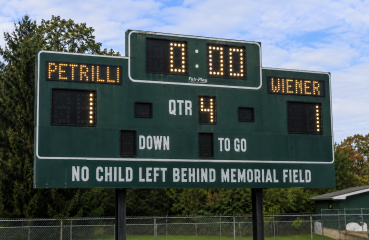
On NCLB, Wiener and Petrilli fight to a draw

Robert Pondiscio

As Americans are discovering during this summer’s World Cup, soccer often produces an outcome that is unsatisfying to our domestic sports sensibilities: a tie. One team controls possession while the other creates better scoring chances. Both leave the pitch claiming vindication, but neither gets to declare victory.

Scoreboard
US Supreme Court Building
Commentary
6.25.2026
Governance

Advocates beware: Plyler v. Doe is vulnerable because it’s bad law

Joshua Dunn

When the Supreme Court bases a decision on policy considerations, the downstream consequences can be significant. A compelling example is 1982’s Plyler v.

US Supreme Court Building
Charles Barone
Podcast
6.24.2026
Governance

Can Uncle Sam help kids read? | Episode 1023 of The Education Gadfly Show


Charles Barone
Path with sun and shade
Commentary
6.18.2026
Evidence-Based Learning, Career & Technical Education, Curriculum & Instruction, Governance, Teachers & School Leaders

Creating more pathways isn’t enough. They need to work, too.

Bruno V. Manno

For several decades, K–12 ed-reformers and policy leaders have pushed to expand public school options and pathways.

Path with sun and shade
Caution tape
Commentary
6.18.2026
Governance, Private School Choice

The Education Freedom Tax Credit could blow up in our faces

Daniel Buck

The Education Freedom Tax Credit could be an utter disaster, argues Buck. The greatest risk is that, in time, the program will become a stick that the federal government can wield to thwack private schools into submission. But that’s not the only problem.

Caution tape
Preschool classroom
Commentary
6.18.2026
Curriculum & Instruction, Governance, Private School Choice

The case for including early childhood education in education choice programs

Elliot Regenstein, Theresa Hawley , Katie Reed

Lately there has been a lot of discussion about whether states should opt in to the federal “Education Freedom Tax Credit”—a dollar-for-dollar federal tax credit for individual contributions to nonprofit s

Preschool classroom
C grade on a test
Commentary
6.11.2026
Accountability & Testing, Governance, Teachers & School Leaders

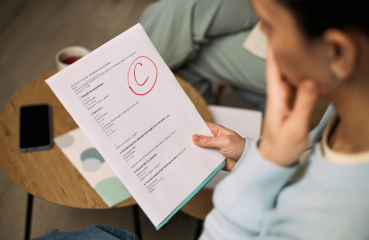
The assessment that does everything is too good to be true

Dale Chu

More than a dozen states are designing, piloting, or implementing some form of through-year assessment as a replacement for the traditional end-of-year test used for federal accountability. But their enthusiasm rests on a shaky assumption: that a single assessment can simultaneously satisfy accountability requirements, improve instruction, provide timely feedback, reduce testing burden, preserve local flexibility, and produce valid statewide comparisons.

C grade on a test
Teacher and students
Commentary
6.11.2026
Evidence-Based Learning, Curriculum & Instruction, Governance, Teachers & School Leaders

What a recent survey tells us about teachers and the science of reading

Kari Kurto

Editor’s note: This discussion between members of the Fordham research team and Kari Kurto, The Reading League’s National Director of Policy and Partnerships, comes in the wake of Fordham’s recent survey, From the Teacher’s Desk: A Science of Reading Progress Report.

Teacher and students
Child on a windy day
Commentary
6.4.2026
Governance, Standards, Teachers & School Leaders

A second wind for standards?

Chester E. Finn, Jr.

Recent weeks have brought a few encouraging signs that the decades-long effort to kill academic standards in the name of equity has wreaked enough havoc and that something of a counter-movement can be glimpsed.

Child on a windy day
Bored student
Commentary
6.4.2026
Evidence-Based Learning, Curriculum & Instruction, Governance, Advanced Education, Teachers & School Leaders

Mixed-achievement math classrooms are a net negative

Julia Hayes

It’s much disputed in England whether grouping students by achievement level or mixing them together is a more effective strategy for teaching in secondary schools. This practice resembles achievement grouping in the U.S., particularly when done in specific subjects like math.

Bored student
Shaking a piggy bank
Commentary
6.3.2026
Evidence-Based Learning, School Finance, Governance, Advanced Education

Broad support, barely funded: The paradox of advanced education in America

Jonathan Plucker, Alicia Anderson, Matthew Makel, Shaun M. Dougherty

For every dollar states spend on K–12 education, less than half a penny is earmarked for advanced learning. This surprising finding comes from our recent study of K–12 education spending in the U.S., generously supported by the Carina Initiative.

Shaking a piggy bank
People on phones
Commentary
5.29.2026
Accountability & Testing, Evidence-Based Learning, Curriculum & Instruction, Governance, Teachers & School Leaders

Why is Gen Z obsessed with technology?

Jill Hoppe, Elainah Elkins

Editor’s note: This is the second in a three-part series written by Elainah Elkins and Jill Hoppe, born in 1999 and 2000, respectively. There is growing discourse surrounding Gen Z, but the voices of Gen Zers themselves are often missing from the conversation. This is their response.

People on phones
Low battery
Commentary
5.28.2026
Governance, Teachers & School Leaders

The diminishing power of teacher unions

Amber M. Northern, Ph.D., Michael J. Petrilli

Our latest study gauges teacher union strength in every state. Those with the strongest are Vermont, California, Massachusetts, New Jersey, and Hawaii. The states with the weakest are Arkansas, Oklahoma, Tennessee, North Carolina, and Mississippi. There’s a clear red state/blue state divide, but that’s not the whole story.

Low battery
Report
5.27.2026
Governance

A Crowded Table: Teacher Union Strength in 2026

Melissa Arnold Lyon, Sandy Frost Waldron, Rebecca Jacobsen

Researchers use the latest publicly available data and a fresh survey of K–12 stakeholders in all 50 states to provide a comprehensive update to Fordham’s 2012 rankings of state teacher union strength.

Board meeting
Commentary
5.22.2026
Curriculum & Instruction, Governance, Teachers & School Leaders

If school boards approve curriculum, they should understand it

Julia Hayes

School board members are possibly the most overlooked decision-makers in education, and they rarely dominate reform conversations. However, local school board members routinely approve one of the most important decisions school districts make: curriculum. As science of reading reforms accelerate across districts and states, this role is becoming more consequential—and more complicated.

Board meeting
Students taking tests
Commentary
5.21.2026
Accountability & Testing, Governance

The Nation’s Report Card gets an overdue upgrade

Chester E. Finn, Jr.

The National Assessment Government Board made some very good news last week, albeit a decade or two late, when it voted to commence more frequent testing of civics and, especially, to make 12th grade results available at the state level.

Students taking tests
School recess
Commentary
5.21.2026
Curriculum & Instruction, Governance, Teachers & School Leaders

Everyone loves recess, but should states mandate it?

Dale Chu

From Oklahoma to California, states across the political spectrum are moving to require

School recess
Graduate
Commentary
5.21.2026
Governance, Teachers & School Leaders

Does “a portrait of a graduate” downplay rigorous academic expectations?

Michael J. Petrilli

It’s commencement season, including for my firstborn son, who graduates high school in less than two weeks. So it’s a good time to check in on the “portrait of a graduate” movement. If that term is unfamiliar to you, CASEL defines it as:

Graduate
Apprentice
Commentary
5.14.2026
Evidence-Based Learning, Career & Technical Education, Governance

What do we know about the value of CTE credentials?

Shaun M. Dougherty

A new Fordham report estimates the value of earning industry-recognized credentials and certificates as part of high school CTE pathways. The study provides some of the best evidence to date on the economic value of technical education that students can earn during high school. Now, Shaun Dougherty, one of the nation’s leading CTE scholars, puts the Plasman study in the context of the larger research literature.

Apprentice
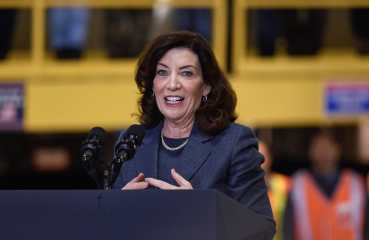
New York Governor Kathy Hochul
Commentary
5.14.2026
Governance, Private School Choice

Trump’s education tax credit is poorly designed, but blue states should opt into it anyway

Michael J. Petrilli

New York Governor Kathy Hochul has announced her intention to participate in the federal Education Freedom Tax Credit, joining Colorado Governor Jared Polis as the only Democrats thus far to do so. Should those who support school choice in all its varieties but aren’t crazy about the particulars of the federal initiative celebrate these decisions?

New York Governor Kathy Hochul
Adults and students in a school
Commentary
5.14.2026
Governance, Teachers & School Leaders

Five policies for school boards to improve discipline

Daniel Buck

One year, I decided to write down bullet-pointed notes on all the chaos, violence, and disorder that occurred in my school: Two students held a peer against a wall while a third pummeled them in the face and stomach; another student beat up a special needs child on the bus; a girl brought a hammer to school but it was confiscated before she could use it.

Adults and students in a school
School phone box
Commentary
5.14.2026
Evidence-Based Learning, Curriculum & Instruction, Governance, Teachers & School Leaders

Findings from the new phone ban study may not be so bleak after all

Meredith Coffey, Ph.D.

Over the six years I taught high school, I tried every response to student cellphone use that was available to me: one warning, three warnings, no warnings; reacting to the mere sight of a phone, looking the other way if the use wasn’t conspicuous; calling the front office, calling the counselor, revisiting “classroom norms,” emailing parents, buying

School phone box
Happy students
Commentary
5.13.2026
Charter Schools, Governance

The small federal charter school program that helped grow public school choice

Bruno V. Manno

National Charter Schools Week (May 10 to 16) rightly focuses our attention on the millions of students attending public charter schools. Less attention goes to the federal program that helped make much of that growth possible.

Happy students
Podcast
5.13.2026
Governance

Can Arkansas make teaching great again? | Episode 1017 of The Education Gadfly Show

  Arkansas Education Secretary Jacob Oliva joins The Education Gadfly Show to discuss the

Apprenticeship
Commentary
5.8.2026
Evidence-Based Learning, Career & Technical Education, Curriculum & Instruction, Governance

Unraveling the case for credentials in high school

Lindsey Phillips

Students can earn more than 1.8 million credentials in the United States today. We know education pays—particularly for those with a bachelor’s degree.

Apprenticeship
Teacher and a student reading
Commentary
5.7.2026
Evidence-Based Learning, Curriculum & Instruction, Governance

The science and culture of reading instruction

Chad Aldeman

After decades of reading wars, policy stalemates, and children quietly falling behind, teachers across the country are embracing the science of reading. That finding comes from a new Fordham report, which also tells a harder story about what’s left to do.

Teacher and a student reading

Pagination

  • First page « First
  • Previous page ‹ Previous
  • Page 1
  • Page 2
  • Current page 3
  • Page 4
  • Page 5
  • Page 6
  • Page 7
  • Page 8
  • Page 9
  • Next page Next ›
  • Last page Last »

Type

  • Book (3)
  • Commentary (1237)
  • Event (2)
  • Podcast (80)
  • Report (78)

Topics

  • Accountability & Testing (504)
  • Advanced Education (266)
  • Career & Technical Education (84)
  • Charter Schools (1116)
  • Curriculum & Instruction (1592)
  • ESSA (129)
  • Evidence-Based Learning (835)
  • Facilities (25)
  • (-) Governance (1413)
  • Personalized Learning (51)
  • Private School Choice (139)
  • School Finance (168)
  • Standards (190)
  • Teachers & School Leaders (1454)

Date

  • 2026 (146)
  • 2025 (192)
  • 2024 (189)
  • 2023 (177)
  • 2022 (184)
  • 2021 (220)
  • 2020 (156)
  • 2019 (56)
  • 2018 (11)
  • 2017 (13)
  • 2016 (4)
  • 2015 (4)
  • 2014 (5)
  • 2013 (8)
  • 2012 (11)
  • 2011 (7)
  • 2010 (1)
  • 2009 (2)
  • 2008 (5)
  • 2007 (4)
  • 2006 (1)
  • 2005 (1)
  • 2004 (1)
  • 2003 (1)
  • 2002 (1)
  • 2001 (6)
  • 2000 (3)
  • 1999 (2)
  • 1998 (2)
Fordham Logo

© 2026 The Thomas B. Fordham Institute
Privacy Policy
Usage Agreement

National

P.O. Box 110
Burke, VA 22009

202.223.5452

[email protected]

Ohio

P.O. Box 82291
Columbus, OH 43202

614.223.1580

[email protected]

Sponsorship

130 West Second Street, Suite 410
Dayton, Ohio 45402

937.227.3368

[email protected]