Mobile Navigation

  • National
    • Policy
      • High Expectations
      • Quality Choices
      • Personalized Pathways
    • Research
    • Commentary
      • Gadfly Newsletter
      • Flypaper Blog
    • Events
    • Scholars Program
  • Ohio
    • Policy
      • Priorities
      • Media & Testimony
    • Research
    • Commentary
      • Ohio Education Gadfly Biweekly
      • Ohio Gadfly Daily
  • Charter Authorizing
    • Application
    • Sponsored Schools
    • Resources
  • About
    • Mission
    • Board
    • Staff
    • Career
Home
Home
Advancing Educational Excellence

Main Navigation

  • National
  • Ohio
  • Charter Authorizing
  • About

National Menu

  • Topics
    • Accountability & Testing
    • Advanced Education
    • Career & Technical Education
    • Charter Schools
    • Curriculum & Instruction
    • ESSA
    • Evidence-Based Learning
    • Facilities
    • Governance
    • Personalized Learning
    • Private School Choice
    • School Finance
    • Standards
    • Teachers & School Leaders
    • Think Again
  • Research
  • Commentary
    • Gadfly Newsletter
    • Flypaper Blog
    • Gadfly Podcast
  • Events
  • Scholars Program

The Education Gadfly Weekly

Sign Up to Receive Fordham Updates

We'll send you quality research, commentary, analysis, and news on the education issues you care about.
Thank you for signing up!
Please check your email to confirm the subscription.

The Education Gadfly Weekly: What it means for schools if the mass protests don’t lead to a Covid-19 spike

Volume 20, Number 23
6.10.2020
6.10.2020

The Education Gadfly Weekly: What it means for schools if the mass protests don’t lead to a Covid-19 spike

Volume 20, Number 23
view
High Expectations

Florida’s new math and English standards aren’t ready for prime time

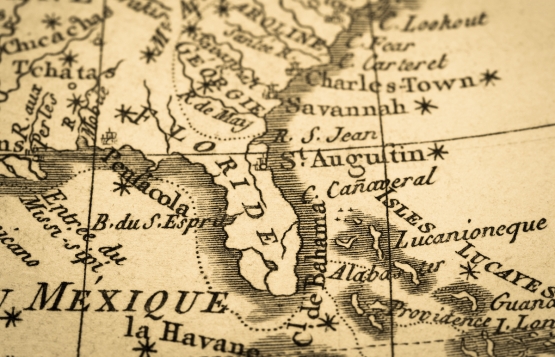
When policymakers contend that their standards deserve to be replicated, especially when those policymakers lead big, highly regarded states like Florida, we at Fordham think their claims merit a closer look. So we gathered a team of expert reviewers to review the state's new standards, and published a new report based on their results. The verdict: Other states should indeed look for models to emulate, but they won’t find them in Florida.

Amber M. Northern, Ph.D., Michael J. Petrilli 6.10.2020
NationalFlypaper

Florida’s new math and English standards aren’t ready for prime time

Amber M. Northern, Ph.D. | Michael J. Petrilli
6.10.2020
Flypaper

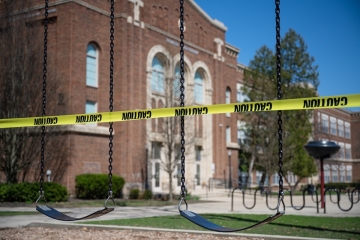
If a spike in Covid-19 cases does not follow the mass demonstrations, it should change the calculus for reopening schools

Dale Chu
6.10.2020
Flypaper

In the era of Covid-19, put learning first—and other lessons

Kerri Briggs | Trent Kaufman | Mavis Snelson
6.10.2020
Flypaper

The educational cost of coronavirus

Jeff Murray
6.5.2020
Ohio Gadfly Daily

Portrait of the teaching force in America

Jeff Murray
6.1.2020
Ohio Gadfly Daily

The Education Gadfly Show: School districts failed the remote learning test

6.10.2020
Podcast
view

If a spike in Covid-19 cases does not follow the mass demonstrations, it should change the calculus for reopening schools

Dale Chu 6.10.2020
Flypaper
view

In the era of Covid-19, put learning first—and other lessons

Kerri Briggs, Trent Kaufman, Mavis Snelson 6.10.2020
Flypaper
view
Cost of COVID school closures SR image

The educational cost of coronavirus

Jeff Murray 6.5.2020
Ohio Gadfly Daily
view
Teacher characteristics SR image

Portrait of the teaching force in America

Jeff Murray 6.1.2020
Ohio Gadfly Daily
view

The Education Gadfly Show: School districts failed the remote learning test

Michael J. Petrilli, Robin Lake, David Griffith, Ph.D., Olivia Piontek 6.10.2020
Podcast
view

Florida’s new math and English standards aren’t ready for prime time

Amber M. Northern, Ph.D. | Michael J. Petrilli
6.10.2020
Flypaper

It’s no secret that the Common Core State Standards ushered in much higher-quality academic expectations for K–12 students across the nation. It’s also no secret that their arrival in 2010 unleashed a national melee that a decade later is still playing out in political theatre at state and local levels. Arguably, nowhere is that drama more visible right now than in Florida, where Governor Ron DeSantis, who had campaigned on eradicating the standards, issued an executive order upon taking office to “eliminate the Common Core from Florida schools.”

Following this announcement, the Florida Department of Education pressed the pedal to the metal. Within one year, new standards were to be drafted, shared with stakeholders, presented at public hearings, revised several times, and presented to the State Board of Education for approval. It was a tall order on an accelerated timeline, but the stakes were high: Florida has long been viewed as a pioneering education-reform state that had produced historically high growth for Hispanic students and (more recently) outsize gains for fourth graders, who outperformed the national average in reading and math.

By all accounts, the state education department approached the standards revision process with the seriousness and sweat equity that such a challenge demanded.

In mid-February, almost on schedule, the state unveiled their English language arts (ELA) and mathematics standards. Dubbed Florida’s B.E.S.T., which stands for Benchmarks for Excellent Student Thinking, Governor DeSantis boasted at the time that “Florida has officially eliminated Common Core. I truly think this is a great next step for students, teachers, and parents… Florida’s B.E.S.T. Standards were made by Florida teachers for Florida students, and I know they will be a model for the rest of the nation.”

That last part got our attention. We at Fordham have long supported model standards that could be emulated and adopted by states nationwide. That’s why we were such big supporters of Common Core in the first place—once we reviewed it and found the standards worthy of emulation and adoption. When policymakers contend that their standards deserve to be replicated, especially when those policymakers lead big, highly regarded states like Florida, we think their claims merit a closer look.

Hence our new report, The State of the Sunshine State's Standards: The Florida B.E.S.T. Edition—the latest in a long line of evaluations of state academic standards that we’ve been conducting since the late 1990s.

Once the Florida’s standards were released, we asked expert reviewers to evaluate them. The mathematics team was led by Solomon Friedberg of Boston College, and the ELA team was led by Tim Shanahan of the University of Illinois at Chicago. They were ably assisted by several other reviewers, including Francis (Skip) Fennell of McDaniel College and Roger Howe of Yale and Texas A&M for mathematics, and Douglas Fisher of San Diego State University for ELA.

Using the same criteria, scoring system, and format that we used in our 2018 report The State of State Standards Post-Common Core, each team, working independently, awarded the B.E.S.T. Standards for ELA and math a score of six out of ten, which equates to “weak” on our scoring rubric. That means reviewers recommend “significant and immediate revisions” and that the Florida’s “standards are not suitable until and unless these revisions occur.”

Florida’s total scores of six in each of the two subjects we evaluated means they’re worse than the standards of several states that we reviewed in 2018. In ELA, Florida’s standards are on par with those in Arizona, South Carolina, and Texas, but worse than seven of the fourteen states we reviewed then. And yes, the original Common Core standards fared better, too. For math, Florida’s standards are on par with those in Minnesota and North Carolina, but worse than those in four states—and the Common Core.

Our reviewers find several key strengths in Florida’s B.E.ST. Standards, but also many weaknesses. On ELA, major strengths include reasonably clear learning progressions for several components of the subject that put the focus on college and career readiness; effective development of the ability to read and interpret literary and informational texts in grades K–12; and clear definitions and expectations relating to the reading and understanding of complex texts, including useful examples of what constitutes appropriate texts and lots of well-chosen sample texts for possible use in teaching particular reading standards.

In several other respects, however, Florida’s new ELA standards either fail to address important aspects of the subject or do so in such general and repetitive ways as to be of little value. For instance, the B.E.S.T. Standards ignore disciplinary literacy (the specialized ability to read history, science, or technical materials in appropriate and sophisticated ways). And although they require that students learn to make formal oral presentations and use technological or multimedia supports in doing so, the development of both the ability to listen and participate in discussions is absent altogether, as are any standards for the interpretation of multimedia information. During Florida’s rushed schedule for standards development, is it possible that the writers simply ran out of time?

With respect to math, our reviewers praise the detailed, topic-by-topic treatment of the subject. In the standards for both the elementary and middle grades, they judged the amount of time devoted to major content strands generally appropriate. Florida’s standards rightly emphasize numbers and operations in the early grades; ratio, proportion, and linearity in the middle grades; and algebra and geometry in high school. Data and probability are also appropriately developed.

The big problem in math is that conceptual understanding is sacrificed on the altar of procedural fluency. High-quality standards should strive for a balance across conceptual understanding, procedural fluency, and application. Although Florida’s math standards reference conceptual understanding, its discussion serves primarily as prelude to the goal of procedural fluency; actual standards about conceptual understanding are few and far between. Indeed, the vast majority of the benchmarks about topics in arithmetic are procedural. Yet conceptual understanding in mathematics is as critical as procedural fluency, as it lays the groundwork for one’s ability to use math, to reason, and to handle new mathematical situations.

We’re in no way dismissing the necessity of procedural fluency. Many of the pre-2010 state standards in mathematics were weak on that front, with some going so far as to allow students to use calculators in the early grades. So we applaud Florida’s clear expectation that students will use basic arithmetic facts and algorithms with “automaticity.” Yet there’s such a thing as going too far and thereby downplaying conceptual understanding to the extent that students will lack the capacity to transfer what they are able to do into other contexts.

Developing standards is extremely difficult, not to mention exhausting—especially under the gun of an expedited timeline so that a new governor can make good on a campaign promise. We empathize, then, with what the standards writers had to do. But we won’t empathize with policymakers who decline to make needed improvements to the standards on the grounds that they’re now “finished.” If our ELA review is any indication, that’s not the right word to describe them. And if our math review is any indication, there are loads of fixes that ought to be made.

As for other states, they should indeed look for model standards, but they won’t find them in Florida. Common Core opponents might look instead to Indiana for ELA or Texas for math. Others should review the smart improvements that Massachusetts and California made several years ago to the Common Core.

At Fordham, we’ll likely wait a few years to review state ELA and math standards again, but Floridians shouldn’t wait that long to improve what they’ve recently been given.

view

If a spike in Covid-19 cases does not follow the mass demonstrations, it should change the calculus for reopening schools

Dale Chu
6.10.2020
Flypaper

In a few weeks, the planning underway for the start of the coming school year could take an interesting and unexpected turn. Up to this point, with nary a vaccine in sight, states and districts have been circumspect about the prospects of students returning to school, erring on the side of caution, with many signaling the need to continue virtual classes in the face of anticipated financial hardships and ongoing health concerns.

Indeed, less than two weeks before the nationwide demonstrations began, a Metro Denver school district released a draft plan with the goal of having students in classrooms just once a week. The district’s superintendent said it would fall upon society to adapt: “All of these restrictions are likely to be with us until we have some resolution to this virus. People and businesses are going to have to think about how they adjust work schedules, how we can have one parent at home.”

If we don’t see a huge spike in Covid-19 cases after the mass protests around the country, however, the pervasive fear of an in-person return to school might be tempered (e.g., according to a recent survey, a third of Michigan teachers may leave their jobs due to coronavirus related concerns). At which point, weather permitting, school leaders will have another tool at their disposal—holding more classes outdoors—to facilitate a safe return to full-time schooling this fall.

Although many organizations support outdoor learning in schools, it’s often been in the context of “green” efforts and helping the environment. Out of necessity, districts should tap these resources to broaden the scope. More than a third of states, specifically those in the West, Southwest, South, and Southeast, could reasonably take advantage of the outdoors year-round. Others might get face-to-face instruction for a couple of months before Thanksgiving, which would still be a plus. Sports, which play a fundamental role in the lives of millions of students, should also be back on the table, especially outdoor pastimes like football, baseball, and track. In which case, schools may want to follow the lead of higher education in limiting the number of fans in the stands.

Before the protests, it was all too easy for school reopening plans to “prioritize the science” at the expense of students’ academic and social well-being, to say nothing of the economic imperative of allowing parents to go back to work. As illustrated by the superintendent’s quote, there has been a largely unspoken and unshakable belief that businesses, families, and communities must bend their needs to fit the designs of school districts. However, as reasonable as it may sound in theory, one to two days of in-person learning per week is wildly unrealistic for working-class families, less than 10 percent of whom can work from home. Add in the draconian prescriptions being floated limiting the interactions kids can have with one another when they are allowed to return, and many parents might decide not to send their children back at all, fueling an enrollment crisis that could further decimate school budgets.

So far, we’ve been acting under the purported impossibility of normalcy absent a vaccine, which elides the very real possibility—one taken seriously by many experts—that we may never get one. What’s more, Covid-19 may not be the last of our pandemics. New diseases emerge across the world every year. Are schools to be effectively frozen every time one rears its ugly head? While virtual learning holds great potential, this spring’s involuntary effort was a dismal substitute for real classrooms. Regardless of how much training and additional devices are purchased this summer, that will remain true this fall and for the foreseeable future. Knowing this, is limiting the number of students in school and staggering their schedules the best response our education system has to offer?

No, if these preliminary reopening plans have taught us anything, it’s that schools are being organized around public-health imperatives, not pedagogical ones. The tepid tack of limiting the school calendar to a day or two a week on campus fails to recognize that closing schools was a stopgap, not a strategy. For most students, there’s no replacement for learning in a school setting. The sooner we stop telling ourselves otherwise, the sooner we’ll have serious plans for the fall.

We’ve spent the last few months being hectored by public health and elected officials that easing lockdown policies was immoral and that refusing to social distance or wear masks was reprehensible, even profane. Teachers unions have been ginned up to “scream bloody murder” if schools try to hold classes without more money. Here in Colorado, the same Metro Denver school district released a parent survey ostensibly designed to manufacture a consensus against restarting in-person schooling. Then came the protests and marches, and we learned instead that the health advice wasn’t as absolute as originally believed. Let’s hope there’s a similar realization that a safe and sensible return to school is the only option worth considering.

view

In the era of Covid-19, put learning first—and other lessons

Kerri Briggs | Trent Kaufman | Mavis Snelson
6.10.2020
Flypaper

As quickly as the NBA put its season on hold and the summer Olympics rescheduled, schools across America switched to “school from home.” It happened almost overnight. Regardless of teacher training, parent comfort, or students’ technology access—remote learning was the new reality. It was amazing to watch, noteworthy for both incredible bright spots and complex challenges. An April survey by Learning Heroes found that two-thirds of families felt more connected to their child’s education as a result of remote learning. At the same time, schools reported limited internet access and technology, absent students, and ongoing problems with video meeting platforms.

We at the Cicero Group—an organization that provides data-driven consulting services in PK–12 schools and education nonprofits, among other areas—engaged with dozens of schools as they fully shifted to remote learning. In reflecting on what we saw and experienced, a number of lessons and success stories emerged. As we and the country rightly focus on racial justice, an issue of paramount importance to both society and to our nation’s youth, we encourage educators not to miss the opportunity to learn from their experiences this spring. We hope these lessons will help schools plan for an uncertain school year, with a focus on students and family.

1. Don’t let the perfect be the enemy of the good

Trying to move our public education system out of the classroom and into a remote model is a monumentally complex task that we may never fully get right. This was especially true this spring, when we had to move quickly and with little warning. It will still be true in the fall, when we may have to implement creative, longer-term solutions.

The schools we worked with this spring seemed to fall into two camps: those whose first reaction was to convene a series of planning meetings, and those that immediately started collecting working laptops and passing them out. While the second strategy wasn’t without its challenges—software updates had to be made remotely, notes scribbled on scrap paper had to be retrofitted into a technology check-out system, etc.—we found it to be much more successful. Jumping into action ensured that there was little to no gap in learning time or lost momentum, and kids didn’t have time to slide into an “early summer” mindset. Educators still created plans—they just didn’t wait until they were done to act.

2. Family engagement is no longer optional

While we all know how important it is to engage families, the relationship between home and school changed dramatically when remote learning began. Family partnerships became essential. Schools needed parents more than ever before, and for many parents, the reverse was also true. Although communication with moms and dads was an obstacle for many, others saw it as an opportunity for a different type of connection. The most successful schools we saw were those that prioritized building authentic relationships with families, as opposed to those whose outreach strategy consisted mostly of demands.

This dynamic was clear in every school we support. Teachers and schools that built strong relationships with families saw increasing levels of student engagement, while those that hounded parents about assignments, Zoom sessions, and grades often saw more and more students and families growing fatigued and throwing in the towel as the end of the school year grew closer.

So how can schools build those authentic relationships? A few things we saw work were transparent communication about what schools knew and didn’t know, really listening to families’ challenges and helping them find creative solutions, and being flexible and not over-focusing on deadlines and grades. Educators should consider these a starting point for reimagining their relationships with families this fall.

3. Put learning first

Maybe it was a side effect of the emphasis we place on accountability, but we saw the stresses of grading and graduation have an outsized impact on teachers’ plans, with a huge amount of the dialogue focused on the quantity of assignments submitted. But we were impressed by what happened at a few schools that gave themselves permission to go off script. For example, one small, rural high school made the choice to completely scrap their traditional curriculum and replace it with a series of cross-curricular, schoolwide projects centered around what students have access to at home. While it didn’t result in many discrete assignments tied to grade-level standards that teachers could put into the gradebook, it did yield high student engagement. We are willing to bet that these students ultimately learned more than those at schools that took a more traditional approach.

—

A final insight based on years of working with schools is that there’s tremendous benefit in focusing on a few core solutions and using data to continuously inform and improve. That advice holds true in the Covid-19 era. Schools that were most successful created a narrow and simplified plan, worked together to implement it, and communicated transparently with teachers, staff, and parents about how it was working. They used data to ground their conversations—not just to be “data-driven,” but because looking at the actual percentages of student engagement, for example, allowed them to pinpoint challenges and create collaborative, customized solutions. That’s what worked before March 2020, and it’s what will continue to work no matter what comes next.

No one can predict what the next school year will look like. During these summer months, our hope is that schools will use this opportunity to rethink, in fundamental ways, how learning can occur. It is our opinion that if we simply offer the same learning program but add masks and six feet of distance, we will be doing students, families, and educators a huge disservice. Embrace the imperfections. Work with families. Put learning first.

view
Cost of COVID school closures SR image

The educational cost of coronavirus

Jeff Murray
6.5.2020
Ohio Gadfly Daily

As unprecedented as our current times may appear to be, large scale disasters and emergencies such as those provoked by the global spread of COVID-19 are not new. Crises as diverse as World War II, the Cultural Revolution in China, and years of political and social unrest in Argentina in the 1990s have been studied extensively in terms of their long-term impact on citizens who experienced them as children or teenagers. All of these events resulted in systemic education disruptions for various lengths of time, and led to persistent earnings declines that often lasted decades. For instance, research suggests that the negative economic impacts of the 1918 influenza pandemic—the closest cousin to today’s—were felt into the 1980s. Predictive research on the topic has been done in recent times as well. Modeling in the U.K. and U.S. found that closing all schools—for any reason—for just four weeks (far shorter than what most countries are currently experiencing) would cost between 0.1 and 0.4 percent of gross domestic product (GDP) just in the short term.

With these precursors to build from, a new working paper from the policy research arm of the World Bank takes a look at the potential cost of school closures in response to the current pandemic. Lead researcher George Psacharopoulos and his team estimate the GDP losses globally and across countries due to prolonged school closures—four months in the case of this initial formula—as well as assessing the cost to affected students in terms of expected lifetime earnings.

Two variables are key to their formula. The first is the rate of return on education, which research pegs at about 9 percent over an individual’s lifetime. That is, every additional year of schooling equates to about 9 percent in additional future earnings. This varies from country to country, but the outputs of the formula are reported globally and then by three country-income groups (low-, middle-, and high-income countries) to account for this variation. The second variable, however, is the most important. It is a mitigating factor against learning loss generated by distance learning during the period of school closure. More on that in a moment.

The estimated present value loss in lifetime earnings at the individual level is $612 in low-income countries, $4,425 in middle-income countries, and $37,982 in high-income countries. At the global level, the loss is $9,787 per student. Perhaps not a terrible outcome per person, but the global totals—from $78 billion in low-income countries up to $8.8 trillion in high-income countries—are staggering. With 1.5 billion students across the globe experiencing educational disruption of some length this year, projected losses from school closures hover around 15 percent of a given country’s annual GDP, depending on the wealth group of the country.

Not only are these outcomes unsurprising, given the structure of the modeling, but they have also been borne out by history. The Argentinian example is particularly instructive, as the negative financial impacts fell almost entirely upon the lowest income levels of society. In fact, the prolonged nature of the crisis there appeared to allow higher-income families time to adapt to the new reality—finding their own means to continue educating their children in spite of systemic educational disruption.

And this is where the second variable comes in. The researchers categorize their mitigation variable as an “optimistic” one. In it, only 10 percent of students suffer learning loss; the other 90 percent continue to learn at their regular rate due to distance learning opportunities. The research team adopted this mitigation factor—and their putative four-month school closure—based on UNESCO estimates in the early days of the pandemic, but the realities of both are likely far too volatile and fast moving to determine a real picture of closure length or learning loss mitigation now. For every country, state, district, or school doing well generally by its students, there is at least one whose efforts are patchy and another struggling mightily. If in reality there is less mitigation than this optimistic formula presents, the poorer mitigation efforts disproportionally affect low-income students, and the closures continue into next school year, the educational and economic losses from the COVID-19 pandemic will be far worse than even the most clear-eyed analysts are yet predicting.

SOURCE: George Psacharopoulos, et. al., “Lost Wages: The COVID-19 Cost of School Closures,” World Bank Policy Research (May 2020).

view
Teacher characteristics SR image

Portrait of the teaching force in America

Jeff Murray
6.1.2020
Ohio Gadfly Daily

The National Center for Education Statistics (NCES) recently published the latest data from the National Teacher and Principal Survey (NTPS), conducted during the 2017–18 school year. It gives us an important snapshot of today’s teaching force in both public and private schools.

The 2017–18 NTPS uses a nationally representative sample of public and private schools. The teacher side of the survey sample includes about 60,000 public school teachers working in 10,600 traditional district and charter public schools and roughly 9,600 private-school teachers working in 4,000 private schools.

The main finding is a portrait: The average American teacher across all school types is non-Hispanic white, around forty years of age, holds a bachelor’s degree, and has at least ten years of experience. She earns in excess of $51,000 per year in base salary, leads a classroom of about twenty-one students, and reports having been evaluated at least once in the last year in a manner that’s had a positive impact on her teaching.

Digging down a bit further, charter school teachers are more racially diverse than those in traditional public schools, which in turn are more diverse than those in private schools. Whites account for 85.1 percent of teachers in private schools, 80 percent in district schools, and 68 percent in charter schools. Just less than 7 percent of all district school teachers are black, and 9.3 percent are Hispanic. However, charter schools have notably higher percentages of teachers who are black (10.4 percent), Hispanic (15.6), Asian (3.0), and mixed-race (2.3) than do their traditional district counterparts (6.5, 9.0, 2.1, and 1.7 percent, respectively). The tenure data reported in the survey includes a caveat that the response rate was very low, and thus the results are not as clear cut as other data. Charter school teachers report having, on average, ten years of experience, as compared to traditional district and private school teachers’ approximately fourteen years of experience.

Twenty-one percent of private school teachers report having additional income from jobs outside their school system during the school year, versus 19 percent of charter school teachers and 17.8 percent of traditional district teachers. Most in both sectors also report earning additional income above their base salary from other within-system sources, largely in the realm of overseeing extracurricular activities. But far more charter school teachers (15.8 percent) report receiving performance bonuses than do their peers in traditional district (7.7 percent) and private (a mere 0.6 percent) schools. A striking 49.2 percent of public school teachers have a master’s degree (49.8 percent for traditional district teachers to 38.6 percent for charter school teachers), while 40 percent of private school teachers have master’s degrees.

For veterans working in education policy, some of the data provided in this snapshot are unsurprising. But they’re important for properly framing a number of ongoing discussions around teacher diversity, educator pay, and differences across the public, private, and charter sectors. Having basic information such as this should help keep such discussions grounded in reality rather than myths.

SOURCE: Soheyla Taie and Rebecca Goldring, “Characteristics of Public and Private Elementary and Secondary School Teachers in the United States: Results From the 2017–18 National Teacher and Principal Survey First Look,” National Center for Education Statistics (April 2020).

view

The Education Gadfly Show: School districts failed the remote learning test

6.10.2020
Podcast

On this week’s podcast, Robin Lake, director of the Center on Reinventing Public Education, talks with Mike Petrilli and David Griffith about how well school districts handled remote learning this spring. On the Research Minute, Olivia Piontek joins Mike and David to examine data on academic growth affects parents’ perception of school quality.

Amber's Research Minute

David M. Houston, Michael B. Henderson, Paul E. Peterson, & Martin R. West, “Status, Growth and Perceptions of School Quality,” retrieved from Annenberg Institute at Brown University (June 2020).

The Education Gadfly Show is available on Google Podcasts, Libsyn, Spotify, iHeartRadio, Apple Podcasts, TuneIn, The Podcast App, PodBean, Podbay, Chartable, Castbox, and myTuner Radio.

Fordham Logo

© 2026 The Thomas B. Fordham Institute
Privacy Policy
Usage Agreement

National

P.O. Box 110
Burke, VA 22009

202.223.5452

[email protected]

Ohio

P.O. Box 82291
Columbus, OH 43202

614.223.1580

[email protected]

Sponsorship

130 West Second Street, Suite 410
Dayton, Ohio 45402

937.227.3368

[email protected]