Mobile Navigation

  • National
    • Policy
      • High Expectations
      • Quality Choices
      • Personalized Pathways
    • Research
    • Commentary
      • Gadfly Newsletter
      • Flypaper Blog
    • Events
    • Scholars Program
  • Ohio
    • Policy
      • Priorities
      • Media & Testimony
    • Research
    • Commentary
      • Ohio Education Gadfly Biweekly
      • Ohio Gadfly Daily
  • Charter Authorizing
    • Application
    • Sponsored Schools
    • Resources
  • About
    • Mission
    • Board
    • Staff
    • Career
Home
Home
Advancing Educational Excellence

Main Navigation

  • National
  • Ohio
  • Charter Authorizing
  • About

National Menu

  • Topics
    • Accountability & Testing
    • Advanced Education
    • Career & Technical Education
    • Charter Schools
    • Curriculum & Instruction
    • ESSA
    • Evidence-Based Learning
    • Facilities
    • Governance
    • Personalized Learning
    • Private School Choice
    • School Finance
    • Standards
    • Teachers & School Leaders
    • Think Again
  • Research
  • Commentary
    • Gadfly Newsletter
    • Flypaper Blog
    • Gadfly Podcast
  • Events
  • Scholars Program

The Education Gadfly Weekly

Sign Up to Receive Fordham Updates

We'll send you quality research, commentary, analysis, and news on the education issues you care about.
Thank you for signing up!
Please check your email to confirm the subscription.

The Education Gadfly Weekly: Was Eli Broad right to try to improve urban districts?

Volume 21, Number 20
5.20.2021
5.20.2021

The Education Gadfly Weekly: Was Eli Broad right to try to improve urban districts?

Volume 21, Number 20
view
High Expectations

Was Eli Broad right to try to improve urban districts or should he have focused solely on charter schools?

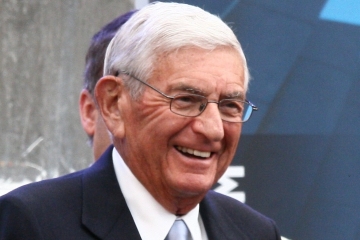
Eli Broad, who passed away late last month at the age of eighty-seven, long sought to rectify the excessively bureaucratic, overly politicized, and woefully underperforming big city school district. But should he have pivoted instead to charter schools?

Dale Chu 5.20.2021
NationalFlypaper

Was Eli Broad right to try to improve urban districts or should he have focused solely on charter schools?

Dale Chu
5.20.2021
Flypaper

To the fountains for healing: Classical education in the post-pandemic classroom

Jennifer Babisak
5.14.2021
Flypaper

Cultivating an equitable culture of K–12 health advocacy in the wake of Covid-19

Ebony Lambert, Ph.D.
5.18.2021
Flypaper

The effects of immigrant students on the educational performance of their U.S.-born peers

Jeff Murray
5.20.2021
Flypaper

Impact of video presentations on learning outcomes in college courses

Jeff Murray
4.21.2021
Ohio Gadfly Daily

Cheers and Jeers: May 20, 2021

The Education Gadfly
5.20.2021
Flypaper

What we're reading this week: May 20, 2021

The Education Gadfly
5.20.2021
Flypaper

The Education Gadfly Show #770: Hooray for Florida’s new school choice legislation

5.20.2021
Podcast
view

To the fountains for healing: Classical education in the post-pandemic classroom

Jennifer Babisak 5.14.2021
Flypaper
view

Cultivating an equitable culture of K–12 health advocacy in the wake of Covid-19

Ebony Lambert, Ph.D. 5.18.2021
Flypaper
view

The effects of immigrant students on the educational performance of their U.S.-born peers

Jeff Murray 5.20.2021
Flypaper
view
Remote projects SR image

Impact of video presentations on learning outcomes in college courses

Jeff Murray 4.21.2021
Ohio Gadfly Daily
view

Cheers and Jeers: May 20, 2021

The Education Gadfly 5.20.2021
Flypaper
view

What we're reading this week: May 20, 2021

The Education Gadfly 5.20.2021
Flypaper
view

The Education Gadfly Show #770: Hooray for Florida’s new school choice legislation

Michael J. Petrilli, Amber M. Northern, Ph.D., David Griffith, Ph.D., Doug Tuthill 5.20.2021
Podcast
view

Was Eli Broad right to try to improve urban districts or should he have focused solely on charter schools?

Dale Chu
5.20.2021
Flypaper

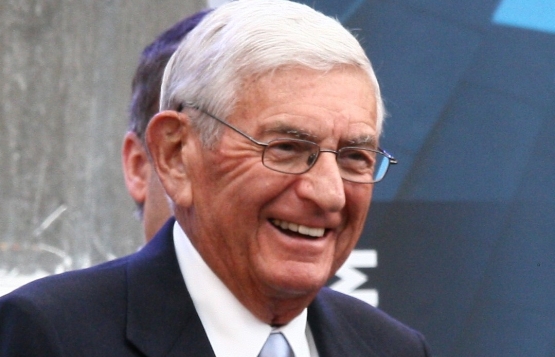
Much has been written on the proclivities and idiosyncrasies of billionaire magnate and education provocateur Eli Broad, who passed away late last month at the age of eighty-seven. A self-proclaimed “venture philanthropist,” Broad began making his mark on education in the early aughts—though his support for ed-related issues started much earlier—by opening his deep pocketbook to reforming urban public school systems and investing heavily in attracting new talent to our sector. His education legacy will continue to be hotly debated—as will his style, an aggressive involvement and legendary impatience that could put people off—but on substance, love him or hate him, it’s hard to argue with the problem Broad initially sought to rectify: the excessively bureaucratic, overly politicized, and woefully underperforming big city school district, as typified by his adopted hometown system, Los Angeles Unified.

The most public face of this effort was the Broad Prize for Urban Education, which at one point—along with the accompanying $1 million award—was considered the nation’s most prestigious recognition for large urban districts, akin to winning the Super Bowl.[1] Yet even as Broad’s Foundation was awarding these prizes, reform-oriented district chiefs from Michelle Rhee and Joel Klein to Cami Anderson and Mike Miles were being pushed from their perches, and by 2015 Broad had abandoned this strategy. Fast forward to today: With the head of Chicago Public Schools recently announcing her plans to depart, the top posts at the nation’s three largest districts will have turned over this year. The never-ending churn has led to renewed criticisms that urban school districts are impervious to change and ultimately ungovernable, raising the question of whether Broad was right to try to improve them in the first place. Should he have known better?

It’s an intriguing question, but perhaps an even better one is why he stuck with big urban districts for as long as he did. Indeed, Broad was a big believer in the traditional public system, having grown up and attended schools in Detroit when labor politics was still a rough and tumble sport. His father was a union organizer, and from him Broad internalized the importance of trying to work with unions and taking calculated risks to do so. To wit, he was the only philanthropic backer when then New York City union leader Randi Weingarten wanted to start a charter school in Brooklyn back in 2005. The experiment failed. But if it hadn’t, Broad might have co-opted the unions’ hostility towards charters and choice, an antipathy that has only deepened during the intervening years.

Although there’s a widespread perception that Broad shifted his focus from traditional districts to charter networks, in fact he had long taken a vigorous and muscular approach towards both. With urban systems, Broad understood the crucial role of governance and accountability, which is why he was a diehard proponent of mayoral control. While it didn’t work out in his own backyard in Los Angeles, he pressed hard for it in other locales, with his influence most felt in the Big Apple and the nation’s capital. This footprint extended to Broad’s backing of teacher merit pay programs in both cities. On charters, Broad was an early and plucky investor in their incubation, development, and expansion, a dedication well documented in his giving.

Broad’s support for education reform was as wide as it was deep. From teaming up with his best friend, former Los Angeles mayor Richard Riordan, to install a reform-oriented school board and bankrolling various academies and residencies focused on elevating game-changing leadership, to underwriting bold if ill-fated policy campaigns and raising millions for after-school programs, his influence is difficult to overstate. Broad drove the development of what would become President Obama’s Race to the Top, and his generous giving to Democrats and their causes served as something of a counterweight to the outsized financial influence of the teachers unions.

What’s more, Broad helped to organize some of our nation’s top education donors, including Walton, Gates, Fisher, Robertson, Hastings, and the Arnolds. His passing leaves a sizable hole not just as a funder, but also as a strategist and advocate—a role that fit synergistically with his temperamental inability to accept the status quo, a stance he also brought to many other realms besides education. Even after he gave up on urban districts as the unit of change, Broad was undaunted in his convictions. “I’ve never been afraid of failure,” he once said, “and the worst thing that can happen is—nothing changes.”

We may be seeing more of that today. The pandemic has only emboldened the forces of resistance and repeal at a time when large districts need to get serious about pulling in the same direction if their students are to have a shot at getting back on track.

If Broad’s adopted home in the City of Angels is any indication, the prospects are grim. To wit, the district just abandoned its plan to extend the upcoming school year, and by doing so showed its inability even to go through the motions of putting students’ interests first. It’s this type of bureaucratic (and union) intransigence that undoubtedly sowed frustration with the restless philanthropist, but it didn’t deter Broad from ambitious designs like the one he backed to place half of Los Angeles’s students in charter schools—earning him a special kind of ire from the teachers union. To his credit, Broad never seemed to be troubled by the blowback. As he once remarked, “We don’t mind taking risks. We don’t mind being criticized, at times even being hung in effigy.”

Broad’s holistic strategy included investments in charter intermediaries, as well as donations to charter-friendly school board candidates. Unlike the laundry list of maladies that continue to afflict urban systems, the evidence base behind high-quality charter schools is unimpeachable. As my colleagues Mike Petrilli and David Griffith have noted:

Our back-of-the-envelope arithmetic suggests that moving from 25 percent to 50 percent charter market share in urban areas could cut the achievement gap in half for at least 2.5 million Black and Latino students in the coming decade. And of course, with more equitable funding, improved oversight, and an expanded role for truly high-performing networks, the dividends might be even larger. With so much to be gained for America’s most poorly served children, there is simply no reason not to prioritize the expansion of charter-school policies and programs in the years ahead.

Suffice to say, the difference in ROI between charter schools and traditional ones in the urban context couldn’t be clearer. Yet Eli Broad ought not be faulted for trying to sway the direction of America’s urban districts, if only because, collectively, these institutions serve north of eight million students, over 70 percent of whom are Black or Hispanic and poor. If anything, we need more civic leaders like Broad who are willing to put in the time, money, and sweat for our most marginalized students, not in spite of, but because of the overwhelming odds.


[1] I remember this well because during a conversation I had many years ago with a state official about the possibility of a local district vying for the prize, he turned to me and deadpanned, “Super Bowl? More like the toilet bowl.” By which he meant the district’s academic performance was in the proverbial crapper.

view

To the fountains for healing: Classical education in the post-pandemic classroom

Jennifer Babisak
5.14.2021
Flypaper

Editor’s note: This essay is an entry in Fordham’s 2021 Wonkathon, which asked contributors to address a fundamental and challenging question: “How can schools best address students’ mental health needs coming out of the Covid-19 pandemic without shortchanging academic instruction?” Click here to learn more.

I found my husband sitting in a plastic Adirondack chair in our backyard, cigar in hand, the flames of the fire pit licking his feet.

“What are you doing?” I asked in confusion.

“I’m happy,” he smiled.

The image of him content and voluntarily spending time in nature perplexed me. We are a house of long hours and dirty dishes, of off-key piano tunes, whirlwind strewn toys, and shrieking children costumed as sequined rock star or sword-wielding knight. We are not calm starlit hours by a fire.

I investigated the incongruence. “I’m free,” he said of his newfound happiness, “and I’ve found a place where I buy in.”

He referenced his decision to walk away from the public school system where he had labored for thirteen years, to slash his salary and feed his soul in a new role at a private classical school.

The scene painted the mental toil an authoritarian, utilitarian school system exacts on both teachers and students. It pointed me to an unrealized benefit of classical education: transcendent beauty that stirs the heart, challenges the mind, and lifts spirits to dwell on concepts greater than self.

Substance in education matters to mental health.

The focus on how to teach reading or math, the obsession with STEM offerings at the cost of decimating basic civic understanding, may have allowed students and teachers to limp through the public school system in past years. But reintegrating students into schools after a year of personal loss, learning loss, and loss of trust in institutions requires more. It requires drawing from the whole depth of wisdom in the classical canon.

The devastating realities of the past year cannot be erased by reading Homer or Shakespeare; students and teachers have experienced trauma not easily soothed by any means. But students and teachers in both private and public schools who go to the fountains of classical literature, history, and theology find predecessors in struggle and resilience who offer hope for our dark days.

As Tolkien writes in Mythopoeia:

“They have seen Death and ultimate defeat,
and yet they would not in despair retreat,
but oft to victory have turned the lyre
and kindled hearts with legendary fire,
illuminating Now and dark Hath-been
with light of suns as yet by no man seen.”

An attempt to pierce students’ veils of depression, grief, and anger with the “light of suns” found in the Western cannon may seem unhinged from their practical needs. However, if education is an inheritance, we owe students the gifts and lessons of the thousands of generations before us. Just as we would learn from flawed physical inheritances—a propensity toward alcoholism, a family estate saddled with debt—and perhaps choose wiser, so students can learn from the flawed intellectual inheritance of Western civilization. From people who have fought valiantly, despaired completely, and rose triumphantly, students can glimpse strategies for walking through their own darkness into light.  

This substantive richness can even make students better learners, as counterintuitive as it might seem that a focus on content would improve study skills. However, psychology researchers found that students with a transcendent purpose for learning were more likely to show academic self-regulation, choosing to study when they would rather be doing something else.

And a Notre Dame study confirms that the benefits of classical education on mental and emotional health extend into adulthood, finding classically educated students scoring far higher on positive life outlook metrics than students with any other educational background.

In part, these positive outcomes flow naturally from the experience of awe inherit to the classical focus on the sublime. Dacher Keltner, psychologist and pioneer of awe-related theory, describes the mental health benefits of experiencing awe, “Awe is a positive emotion triggered by awareness of something vastly larger than the self and not immediately understandable—such as nature, art, music…” Keltner says. “Experiencing awe can contribute to a host of benefits, including an expanded sense of time and enhanced feelings of generosity, well-being, and humility.”

When we replace small curricula—fragmented works of literature scattered in textbooks, standardized test reading passages devoid of context—with grand whole works of literature, we give students the opportunity to stand in awe. We enhance the wonder when we present them great works of art and music, balanced with the unraveling of the universe’s mysteries in math and science.

Not only does this classical approach to teaching and learning give students a grasp of the arc of the moral universe—and the analytical skills to decide whether it bends towards justice—but it positively impacts their mental health. As Keltner indicates, standing in awe promotes emotional well-being.

Referencing Dr. King’s famous line brings us to a primary objection against classical education: advocating this method as a mental health support during a time of racial strife may seem tone deaf. After all, why foist the words of dead white men upon diverse classrooms? Vocal reformers boast of disrupting texts and ridding classrooms of such influence. But some Black educators assert that classical education has been a precursor of many steps toward equality, lifting people from oppression and feelings of hopelessness and empowering them to work for change.

“In reading the human stories of Odysseus or Achilles, the mind dark with hopelessness finds the light of hope to fight for freedom and to reason on how to fight the battle against oppression,” writes professor and classical school founder Dr. Anika Prather, who works to engage African American students with classic texts.

In fact, MLK’s stirring Letter from a Birmingham Jail is replete with classical literature references. In that dark moment, MLK encouraged and rebuked others with the words of Homer, Augustine, Aquinas, Luther, Lincoln, and other great thinkers. Students may feel that they have been in prisons of their own this past year, kept inside away from friends and extended family. We owe them the freeing words of not only MLK but of the great writers that fed and empowered him.

While a classical curriculum cannot soothe all the harm that students have experienced over the past year, this original “social emotional learning” of virtue and wisdom provides a foundation for emotional recovery from which other efforts can build. Understanding that their steps follow the paths of trial and triumph blazed by those who preceded them, students can grasp emotional resilience to help them face current challenges and difficulties to come.

view

Cultivating an equitable culture of K–12 health advocacy in the wake of Covid-19

Ebony Lambert, Ph.D.
5.18.2021
Flypaper

Editor’s note: This essay is an entry in Fordham’s 2021 Wonkathon, which asked contributors to address a fundamental and challenging question: “How can schools best address students’ mental health needs coming out of the Covid-19 pandemic without shortchanging academic instruction?” Click here to learn more.

This year’s Wonkathon prompt has the right energy, but asks the wrong question.

While academic outcomes matter, ed reformers and policy wonks too often overemphasize their importance. Although we don’t have a set position on this (or anything else) at Bellwether, I believe the evidence suggests school and district leaders should prioritize students’ holistic well-being and quality of life over their academic performance. Notwithstanding a global health crisis, research demonstrates that healthy students have better academic outcomes. So after more than a year of collective trauma brought on by Covid-19, a better question is: “How can schools best prioritize student health and well-being coming out of the pandemic, leveraging federal and community resources to equitably support students and families on their healing journeys?”

This is more than semantics. How we define a problem impacts how we solve it, or if we solve it at all.

To provide support to students, we must first broadly reframe “mental health needs’’ as facets of overall well-being. As a health psychologist and education researcher, “mental health” is a phrase I often see educators and ed reformers overuse without unpacking. School leaders and teachers talk about social and emotional learning and students’ mental health needs without fully understanding the interconnectivity of all aspects of well-being. The mental health concerns that schools seek to help students cope with—anxiety, depression, grief, trauma, and suicidality—have physiological components, including fatigue, changes in appetite, and racing heartbeat. Emotions are embodied processes, grounded in, and happening to, bodies every day.

There is universal agreement that factors outside of academics impact student learning, including how well students and teachers are supported. However, the field has generally been slow to build the infrastructure needed to truly support student health in holistic ways. Below are three policy and practice approaches schools and districts can take to begin cultivating a culture of holistic health advocacy in schools to better support students and families as they work to heal.

1. Adopt a holistic wellness framework to fully understand and address student well-being

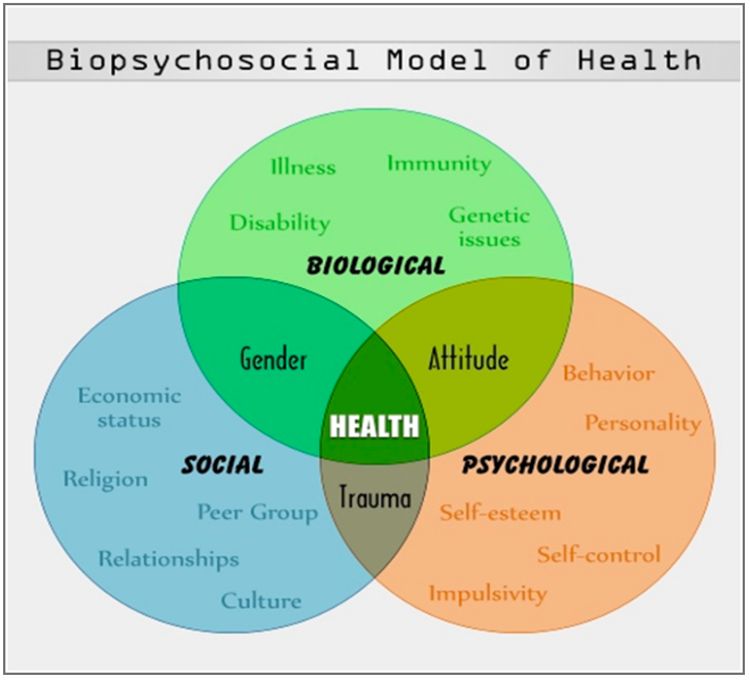
Mental and physical health are inextricably linked. Efforts to prevent illness and promote wellness often need to take many factors and social determinants of health into account, including neighborhood environment, racism, and access to education. Schools and districts should adopt a holistic wellness framework such as the biopsychosocial ecological model, which takes a systems-level approach to collectively consider biological, psychological, and social factors and their complex interactions in understanding health, illness, and health care delivery.

1

Source: Hart, 2018. Safety & Health Practitioner Online.

What do biopsychosocial models look like in practice? School-based health care approaches  exemplify these models, as they are grounded in a focus on developing partnerships, frameworks, and policies that provide students with greater access to holistic care to thrive in and outside of the classroom. The many benefits of this approach include enabling school leaders to name, measure, and address all factors that potentially affect students’ well-being and academic outcomes, and tailor supports and interventions to meet students’ and families’ needs.

Biopsychosocial approaches also help situate access to a high-quality education as a human right and a health equity issue. Drawing on holistic wellness models pave the way for a systems-level approach to student well-being—one that contextualizes the work of improving student outcomes with the knowledge that the educational inequities educators are diligently working to address impact bodies in visceral ways.

2. Gauge community needs to develop a clear understanding of where to direct resources

To develop a culture of health advocacy, schools and districts must engage key stakeholders and partners. As pandemic recovery efforts roll out, equitable, data-driven processes should support the holistic aspects of student well-being to uncover gaps in care.

Community health and mental health data are often available at the state and county level through departments of health. The County Health Rankings & Roadmap tool can help localities determine the most pressing well-being and quality-of-life issues that their communities face. The KIDS COUNT Data Center also provides information that schools and districts can use to better understand local youth health and mental health needs.

Educators should view schools as unique health care settings; attempts to gauge student and family well-being must consider schools’ impact on health outcomes. Truly inclusive approaches should solicit student and family input on the role schools play in supporting or detracting from their well-being—through factors such as general stress, exposure to racism, and/or poor school building conditions—and embed it in broader data-driven family engagement strategies.

3. Equitably distribute funding and resources to support those hardest hit by the pandemic

Once schools and districts have thought critically about their framework for understanding student well-being and gauged community needs, they must equitably allocate funds and resources to marginalized communities. Schools and districts have historically struggled with this; recent research shows that 45 percent of school districts across forty states do not allocate more funding to higher poverty schools.

The Biden administration’s American Rescue Plan Act allows schools to use its ample funds to ensure provision of mental health care and pay for equipment, repairs, and training to foster safe school spaces. To ensure equity, schools and districts should allocate more funds to historically underserved communities, including school facility investments in under-resourced neighborhoods to create clean, safe, and healthy learning environments. Schools and districts should also use funds to hire more mental health professionals of color to better support students who have disproportionately experienced racial trauma throughout the pandemic, and to prioritize the provision of wraparound supports in areas with limited access to high-quality health and mental health care services.

Finally, schools and districts can use funds to leverage existing community resources that provide targeted supports for specific student populations. Schools and districts can foster community partnerships with organizations that specialize in supporting the health and mental health needs of communities of color, people who identify as LGBTQ, and people from low-income backgrounds to develop educator capacity in culturally sustainable and trauma-sensitive practices. There is also an opportunity for schools and districts to allocate funding to incentivize cross-agency partnerships focused on improving student well-being to improve multiagency coordination in areas that predominantly serve students with multiple marginalized identities.

Prioritizing students’ well-being is not counter to improving students’ academic outcomes, and will actually help in that respect. Similarly, students’ mental health needs are important to consider coming out of the pandemic, but they do not exist in a vacuum. As schools and districts move forward, adopting a holistic approach to understanding student well-being, engaging stakeholders, and building plans to equitably distribute resources can better address the multifaceted needs of students and families to ensure improvements in education and health outcomes alike.

view

The effects of immigrant students on the educational performance of their U.S.-born peers

Jeff Murray
5.20.2021
Flypaper

According to U.S. Census data, 23 percent of students in America’s K–12 schools were either first- or second-generation immigrant children in 2015. That was up from 11 percent in 1990 and 7 percent in 1980. This demographic shift required big changes in schools to support those children and their families, especially in areas with exceptional concentrations of immigrant children. What impacts did this influx and the associated changes have on U.S.-born students? The research base is limited, but a new analysis from the National Bureau of Economic Research shines light on this question.

The research team made use of longitudinal data from Florida to address two perennial sticking points in studying this question. First, immigrant students are not randomly assigned to schools and in fact are more likely to enroll in schools educating students from disadvantaged backgrounds. Second, U.S.-born students may decide to leave when large numbers of immigrant students enter their school. Thus, posit the analysts, the negative impacts of immigrant students on U.S.-born students found in previous analyses may not have been accurately evaluated.

With the Florida data, the researchers were able to identify siblings in different grades in the same schools and use their differing levels of exposure to immigrant peers—as well as their responses to it—to build what they judge to be a more accurate model of impact. Instead of a full-cohort analysis as is typically done, they compare math and reading test scores of siblings who experience different cumulative exposures to immigrants based on their ages and grade levels. Additionally, they compare the school-transition experiences of siblings based on their relative exposures to immigrant students. That is, two siblings who start in the same school in different years are held to have the same probability of changing schools over the years, absent the variation in immigrant exposure. This creates a measure of “native flight” against which the academic outcome findings can be compared.

When this model is run, the traditionally-observed negative impacts of immigrant exposure on U.S.-born students’ academic outcomes are actually reversed. All students exposed to immigrants perform better, and this occurs independent of the actual performance level of the immigrant students themselves. The researchers explain that, “[m]oving from the 10th to the 90th percentile in the distribution of cumulative exposure (1 percent and 13 percent, respectively) increases the score in mathematics and reading by 2.8 percent and 1.7 percent of a standard deviation, respectively. The effect is double in size for disadvantaged students.” For White and wealthy U.S.-born students, the effect is still positive but much smaller. Perhaps unsurprisingly, it is just those students from more advantaged backgrounds—youngsters for whom a higher number of acceptable choices are available—who are more likely to exit their schools when immigrant concentrations grow. Those students who remain experience the academic boost. For Black students, however, the positive effect of immigrant exposure appears in both models, perhaps because they’re not “taking flight” in either case.

What might be causing the boost? Parental education level and cultural influence from the country of origin are part of the answer in terms of magnitude, but something else must be involved because the boost appears regardless of immigrant students’ own performance level. The researchers investigate two possibilities: that more resources are available to schools with higher concentrations of immigrant students, and that there is an inherent positive impact of diversity on learning. Neither theory can be proven with the available data. So we don’t know exactly what the mechanism is. We are simply left with the observation that an increase in immigrant exposure boosts academic outcomes for almost all U.S.-born students in a school, but that this boost is only achieved when a specific segment of U.S.-born students leave that school in response to same.

The findings are simultaneously compelling and depressing. If the mechanism at play could be understood, perhaps it could be harnessed to help all students. And with a baby bust underway here in the U.S., the percentage of immigrant students in U.S. classrooms could continue to climb, making that effort even more important going forward.

SOURCE: David N. Figlio, Paola Giuliano, Riccardo Marchingiglio, Umut Özek, and Paola Sapienza, “Diversity in Schools: Immigrants and the Educational Performance of U.S. Born Students,” National Bureau of Economic Research (March 2021).

view
Remote projects SR image

Impact of video presentations on learning outcomes in college courses

Jeff Murray
4.21.2021
Ohio Gadfly Daily

A new report from the Journal of Chemical Education takes a look—pre-pandemic—at the ways in which college students benefited from a new opportunity to participate remotely in their education.

In this study, college juniors taking a core course in chemical engineering at the University of Michigan were required to complete a nine-week team-based project on the topic of mass and heat transfer. They had to identify a relevant problem they wanted to tackle, develop a solution via experimentation, and then present their findings in various forms both written and visual to an audience. Traditionally, the visual presentation consisted of an in-person replication of the team’s experiment in front of the class. But in 2017, an option was added for students to create a video presentation instead.

The researchers used this change to test whether the video presentation option had an effect on students’ engaged-learning outcomes. Specifically, the analysts were looking to see the effect of the presentation modality on students’ perceptions of their creativity, innovation and risk taking, social responsibility (for addressing social and ethical issues and for public outreach), teamwork, confidence in their ability to apply engineering concepts and to tackle future challenges, and communication for written and oral presentations.

A total of 248 students completed the course project in the fall semesters of 2017 and 2018, with 137 choosing an in-person presentation and 111 choosing to create a video. Multiple surveys and focus groups were conducted with participants throughout the semester, including a pre-project questionnaire to obtain baseline data. Slightly less than 60 percent of students reported ever creating a similar video presentation before, but the students’ reported comfort score was nearly identical for both video and in-person presentations, indicating a familiarity with non-academic presentations such as YouTube videos or Vines.

A post-project survey showed that students who created a video presentation experienced significantly greater impact on their perceived creativity (mean score: 8.9/10) as compared to those who delivered an in-person presentation (mean score: 7.7/10). This is consistent with the pre-project survey findings. Similarly, video creators reported experiencing a higher impact on risk taking (mean score: 7.7/10) compared to their in-person peers (mean score: 6.1/10), as the pre-project data suggested.

As an example of this, the researchers cite focus group data which specifically noted the time constraints on the in-person presentation. A handful of students reported creatively condensing their in-person presentations, but a majority responding said they chose shorter options that could be completed within the 10 to 15 minutes allotted, thus limiting their choice of problem and solution. By contrast, a majority of students opting to create a video reported conducting experiments that took far longer than 15 minutes to complete, editing hours or even days of data/footage into short and illustrative bites.

The impact of the presentation modality on teamwork, self-confidence, and communication was not significant, perhaps indicating that these learning outcome areas were more strongly influenced by the research phases of the project—which were largely similar regardless of ultimate presentation type.

The upshot is that video presentations built on the strengths of the other aspects of the project and helped students in this class be more creative and take more risks in pursuit of their education. However, video creators reported a much lower impact on social responsibility than their in-person peers, entirely attributed to the lack of in-person communication with the audience. In-person presenters reported that a live Q & A session boosted understanding of the subject matter for both the audience and themselves, while video creators received feedback only from their instructors and reported no additional a lack of engagement beyond the completion of the work itself.

Over the last year, pandemic-related disruptions of traditional education models have led to a greater reliance on digital teaching and learning in both K–12 and higher education. While the preference of many is to return to a fully in-person model, some students and teachers managed to adapt quite well to various aspects of the virtual and hybrid models. Live, synchronous interaction is important, but we have evidence that subject matter knowledge, individual and group creativity, and personal self-confidence can also be boosted by thoughtful and well-designed remote learning experiences as well.

SOURCE: Andrew J. Zak, Luke F. Bugada, Xiao Yin Ma, and Fei Wen, “Virtual versus In-Person Presentation as a Project Deliverable Differentially Impacts Student Engaged-Learning Outcomes in a Chemical Engineering Core Course,” Journal of Chemical Education (March 2021).

view

Cheers and Jeers: May 20, 2021

The Education Gadfly
5.20.2021
Flypaper

Cheers

  • “Common Core is a meal kit, not a nothingburger.” —Caroline Damon
  • The pipeline to STEM courses and careers begins in elementary school. —Andrew Rotherham
  • Texas will reward its best teachers in high-poverty schools with more than $100,000 annually to tackle pandemic learning loss. —The 74
  • Terry Ryan left a mark on Idaho education, and he is still at it. —Idaho Education News
  • Two professors argue that if Kentucky wants educational investments that pay off, they should turn to school choice. —Northern Kentucky Tribune

Jeers

  • “California leftists try to cancel math class.” —WSJ
  • Some schools teaching critical race theory are bumping against the law. —Education Next
view

What we're reading this week: May 20, 2021

The Education Gadfly
5.20.2021
Flypaper
  • Here’s what these high school students went through as they tried to weather life during the pandemic. —New York Times
  • Universal preschool, if not implemented correctly, could have unintended, negative consequences. —EdSurge
  • “Trying to fight educational inequality by getting rid of the SAT is like trying to fight climate change by getting rid of thermometers.” —Freddie deBoer
  • Experts worry that Biden’s plan to get more students into community college will leave existing problems unaddressed. —WSJ
  • Educator Erin McLaughlin is on a mission to get viewpoint diversity at the center of K–12 schools’ cultures and instructional practices. —The Atlantic
  • “What is critical race theory, and why is it under attack?” —EdWeek
view

The Education Gadfly Show #770: Hooray for Florida’s new school choice legislation

5.20.2021
Podcast
 

On this week’s podcast, Doug Tuthill, president of Step Up for Students, joins Mike Petrilli and David Griffith to discuss the potential impact of and lessons from Florida’s new school choice expansion. On the Research Minute, Amber Northern examines how users engage with professional learning that takes place online.

Amber's Research Minute

Jane Lee, Taren Sanders, Devan Antczak, Rhiannon Parker, Michael Noetel, Philip Parker, & Chris Lonsdale, "Influences on User Engagement in Online Professional Learning: A Narrative Synthesis and Meta-Analysis," Review of Educational Research (March 9, 2021).

If you listen on Apple Podcasts, please leave us a rating and review - we'd love to hear what you think! The Education Gadfly Show is available on all major podcast platforms. 

Fordham Logo

© 2026 The Thomas B. Fordham Institute
Privacy Policy
Usage Agreement

National

P.O. Box 110
Burke, VA 22009

202.223.5452

[email protected]

Ohio

P.O. Box 82291
Columbus, OH 43202

614.223.1580

[email protected]

Sponsorship

130 West Second Street, Suite 410
Dayton, Ohio 45402

937.227.3368

[email protected]