Mobile Navigation

  • National
    • Policy
      • High Expectations
      • Quality Choices
      • Personalized Pathways
    • Research
    • Commentary
      • Gadfly Newsletter
      • Flypaper Blog
    • Events
    • Scholars Program
  • Ohio
    • Policy
      • Priorities
      • Media & Testimony
    • Research
    • Commentary
      • Ohio Education Gadfly Biweekly
      • Ohio Gadfly Daily
  • Charter Authorizing
    • Application
    • Sponsored Schools
    • Resources
  • About
    • Mission
    • Board
    • Staff
    • Career
Home
Home
Advancing Educational Excellence

Main Navigation

  • National
  • Ohio
  • Charter Authorizing
  • About

National Menu

  • Topics
    • Accountability & Testing
    • Advanced Education
    • Career & Technical Education
    • Charter Schools
    • Curriculum & Instruction
    • ESSA
    • Evidence-Based Learning
    • Facilities
    • Governance
    • Personalized Learning
    • Private School Choice
    • School Finance
    • Standards
    • Teachers & School Leaders
    • Think Again
  • Research
  • Commentary
    • Gadfly Newsletter
    • Flypaper Blog
    • Gadfly Podcast
  • Events
  • Scholars Program

The Education Gadfly Weekly

Sign Up to Receive Fordham Updates

We'll send you quality research, commentary, analysis, and news on the education issues you care about.
Thank you for signing up!
Please check your email to confirm the subscription.

The Education Gadfly Weekly: Rigorous courses are a good thing—and good for equity

Volume 21, Number 38
9.23.2021
9.23.2021

The Education Gadfly Weekly: Rigorous courses are a good thing—and good for equity

Volume 21, Number 38
view
High Expectations

Performative teaching is undermining trust in schools

Increasingly, teachers are not shy about expressing their views on charged racial and political views. This may be a symptom of a profound shift in our relationship with institutions and the role they play in our lives. Where institutions once functioned as molds of our character and behavior, they’re now platforms on which we stand to be seen. And this could be cratering our trust in them.

Robert Pondiscio 9.23.2021
NationalFlypaper

Performative teaching is undermining trust in schools

Robert Pondiscio
9.23.2021
Flypaper

Rigorous courses are a good thing—and good for equity

Brandon L. Wright
9.23.2021
Flypaper

There’s a fiscal cliff coming, and some districts appear hell-bent on making it worse

Marguerite Roza
9.23.2021
Flypaper

Suburban school districts can help urban students succeed

Aaron Churchill
9.20.2021
Ohio Gadfly Daily

A flawed study of Indiana’s voucher program

Jeremy Smith
9.23.2021
Flypaper

The Education Gadfly Show #788: Has the pandemic caused an exodus to charter schools?

9.23.2021
Podcast

Cheers and Jeers: September 23, 2021

The Education Gadfly
9.23.2021
Flypaper

What we're reading this week: September 23, 2021

The Education Gadfly
9.23.2021
Flypaper
view

Rigorous courses are a good thing—and good for equity

Brandon L. Wright 9.23.2021
Flypaper
view

There’s a fiscal cliff coming, and some districts appear hell-bent on making it worse

Marguerite Roza 9.23.2021
Flypaper
view
Boston integration open enrollment program SR image

Suburban school districts can help urban students succeed

Aaron Churchill 9.20.2021
Ohio Gadfly Daily
view

A flawed study of Indiana’s voucher program

Jeremy Smith 9.23.2021
Flypaper
view
teacher in classroom

The Education Gadfly Show #788: Has the pandemic caused an exodus to charter schools?

Michael J. Petrilli, David Griffith, Ph.D., Amber M. Northern, Ph.D., Debbie Veney 9.23.2021
Podcast
view

Cheers and Jeers: September 23, 2021

The Education Gadfly 9.23.2021
Flypaper
view

What we're reading this week: September 23, 2021

The Education Gadfly 9.23.2021
Flypaper
view

Performative teaching is undermining trust in schools

Robert Pondiscio
9.23.2021
Flypaper

A teacher in Newport Beach, California, made herself TikTok famous last month when she posted a video bragging about tricking her students into pledging allegiance to the rainbow Pride flag in her classroom rather than the American flag, which she removed because “it made me uncomfortable.” In the same week, another California teacher was caught on camera praising Antifa and saying of his students, “I have 180 days to turn them into revolutionaries” and to “scare the f-ck out of them.”

There’s more. Just last week, the Los Angeles Unified School District was forced to issue a statement after photos emerged on social media of a history teacher’s classroom covered with flags representing Palestine, the Black Lives Matter movement, LGBTQ pride, and transgender pride, as well as posters reading “F--- the police” and “F--- AmeriKKKa. This is native land.”

To put it mildly, teachers are not shy about expressing their views on charged racial and political views. Another viral video by a Virginia high school teacher criticized the state’s discipline system as “white supremacy with a hug.” My AEI colleague Tracey Schirra and I recently wrote about a Tennessee teacher who’s being held up as something of a martyr after he was fired from his job teaching a high school contemporary-issues class. He insisted that teaching about white privilege didn’t warrant multiple perspectives as his state’s ethical standards demand because it is “a fact.” 

What’s going on here? Yuval Levin put his finger on the pulse, I suspect, in his recent book A Time to Build, which describes a profound shift in our relationship with institutions and the role they play in our lives. These teachers are simply “participating in the cultural theater” that is now a commonplace feature of institutions. Though, this hasn’t always been so. Institutions, Levin posits, once functioned as molds of our character and behavior but have now become platforms on which we stand to be seen. In Levin’s analysis, the nature of institutions has undergone a dramatic transformation from being primarily formative to performative.

Evidence of this shift is visible far and wide. “When we don’t think of our institutions as formative but as performative—when the presidency and Congress are just stages for political performance art, when a university becomes a venue for vain virtue signaling, when journalism is indistinguishable from activism—they become harder to trust,” Levin explains. “They aren’t really asking for our confidence, just for our attention. And in our time, many of our most significant social, political, cultural, and intellectual institutions are in the process of going through this transformation from mold to platform.” Significantly, even ominously, this shift has “dramatically magnified our loss of trust in institutions,” he writes.

This insight, I think, gets to the heart of much of what ails K–12 education at present—a failure to appreciate, protect, and defend the formative role of schools at both the institutional level and in classrooms among individual teachers. At all levels, there is even a conscious resistance to the notion that schools should be formative. Classroom teaching doesn’t carry the same opportunities for attention-seeking and performative posturing as being a member of Congress or a cable news host, but the impulse is the same, writ small. Turning the classroom into a platform is a particularly pernicious form of the phenomenon Levin describes, since it hijacks a public institution and conscripts a captive audience of impressionable children to advance a personal or political agenda. For this reason, courts have long recognized strict limits on teacher speech in the classroom, a standard of professional conduct that is increasingly seen more often in the breach than the observance.

It’s easy to dismiss anecdotes of teachers exceeding their brief as exactly that—anecdotes—not indicative of a broader trend. But that overlooks a long-standing trend of teachers explicitly encouraged to conceive of their work as a form of activism. “Over the last decade or so, conceptualizing teaching and teacher education in terms of social justice has been the central animating idea for education scholars and practitioners who connect their work to larger critical movements,” noted a comprehensive review of teacher education published by AERA in 2005. “Advocates of a social justice agenda want teachers to be professional educators as well as activists committed to diminishing the inequities of American society.” The formative role of the institution is irreconcilable with a view from within that institution that it’s inherently oppressive. Seen through this lens, “performative teaching” doesn’t merely delegitimize the institution; delegitimization is the point.

Levin wisely notes that the shift from “molds” to “platforms” undermines our trust in schools, a bedrock institution in American life and civil society. “When they are flourishing, our institutions make us more decent and responsible—habituating us in exactly the sorts of virtues a free society requires,” Levin concludes. “But when they are flagging and degraded, our institutions fail to form us, or they deform us to be cynical, self-indulgent, or reckless—reinforcing exactly the vices that undermine a free society.”

This line of thought goes against the grain of much of the current moment and mindset (Levin himself notes that “we resist the strictures of institutionalism for some powerful reasons”), but it’s worth thinking long and hard about what is lost when we disregard or abandon the character-forming role of institutions. When I spent a year observing classes at New York City’s Success Academy, I ended up writing a book about school culture nearly by accident. I had expected to write about curriculum and instruction, but it became clear that the real strength of Eva Moskowitz’s school model was its extraordinary consistency and the normalizing power of its exacting school culture. In retrospect, the best teachers I observed there were successful at working within a prescribed model. Some bridled against it and struggled; others failed and weren’t asked back. The same is arguably true of families and students; many thrived while other resisted or were unwilling to be molded. 

Finally, there’s an inevitable and perhaps unresolvable tension between the conception of schools as formative institutions, and our long-standing cultural tendency to idolize teachers who are individualists and mavericks, Levin observes. “People frequently seek platforms in order to be seen taking the side of their tribe in [culture war] struggles,” he concludes. “And as political and cultural polarization has intensified, the desire for such platforms has increasingly overtaken the desire to be formed and enabled, and therefore also constrained, by institutional responsibility.”

It is frequently observed that trust among teachers, parents, and school leaders is an essential feature of successful schools. Levin’s book, which I highly recommend, provides a powerful lens through which to view trust—and an implicit critique of those who accidentally or deliberately undermine it.

view

Rigorous courses are a good thing—and good for equity

Brandon L. Wright
9.23.2021
Flypaper

“As a broader mechanism for equity, [Advanced Placement] has fallen short, unable to overcome the powerful structural forces that disadvantage far too many students,” writes Anne Kim in a recent long-form article in Washington Monthly titled “AP’s Equity Face-Plant.” “If the ultimate goal of K–12 education is to offer equitable access to high-quality curricula leading to greater college access and success, policymakers need to rethink their approach to AP and look beyond it,” she says, offering dual enrollment, where high school students spend some of their time doing college coursework, as a promising alternative.

Kim rightly clarifies that “the answer...is not to eliminate Advanced Placement,” and that “when students have access to classes and the resources to succeed, the program provides undeniable benefits.” But the implication of her piece, intended or not, is that AP courses are failing, at least in part, because their outcomes and benefits aren’t evenly or proportionately distributed across socioeconomic and racial lines.

This is well-meaning and even, at first glance, somewhat persuasive. But it’s misguided. And worse, this sort of approach to equity, in which mechanisms that simply reveal inequity or inequality are deemed themselves to be problematic, may ultimately harm the very students it is trying to help. In short, the real problem is not Advanced Placement, it’s everything that comes before it.

The disproportionate distribution of AP’s benefits, be it additional college credit or more skills and knowledge, isn’t due to some significant inherent flaw. Advanced Placement itself is not inequitable, or broken, or racist. It’s simply difficult, its courses rigorous. And because of America’s wide-ranging systemic disadvantages, by the time Black, Hispanic, and low-income students reach eleventh grade, they are less prepared to succeed in advanced classes than their more advantaged peers, who are disproportionately White. As my colleague Chester E. Finn, Jr. is quoted as saying in the article, “The disease is in a K–12 system that is incubating an excellence gap and sustaining an excellence gap.... This is like a thermometer showing you a result you don’t like.”

But the Black, Hispanic, and low-income students who do enroll and succeed in AP courses do benefit, perhaps greatly. Kim’s piece starts with a story about Chloe Pressley, an eighteen-year-old from Washington, D.C., who earned admission to multiple prestigious universities, and will attend Yale. Pressley tells Kim that “one secret to her success...was a class schedule loaded up with the College Board’s Advanced Placement courses.” Five of them, to be exact. Kim also cites promising data that illustrate the growing impact of AP on teens like Pressley. “In 1997, Black students took 3.8 percent of all exams,” Kim writes. “As of 2019, that figure is 65 percent larger. The raw number of exams taken by Black students has also skyrocketed, from under 35,000 per year to more than 310,000 over the same period.”

But in Kim’s view of equity, the magnitude of outcomes within racial and ethnic groups is less important than the disparity in rates of outcomes between those groups. “Students like Chloe Pressley remain the exception, not the rule,” she writes. “And instead of closing educational divides, AP is widening them.”

This framing, again, is misguided. Millions of Black and Hispanic students are enrolling in challenging courses that help maximize their skills and knowledge, that earn them additional college credit, and that make them more competitive for selective universities, thereby increasing their chances of professional and financial success later in life. This is a great outcome, one that should be celebrated, and one that is facilitated, in part, by Advanced Placement.

Kim is, however, correct that we as a country should care deeply that Black, Hispanic, and other disadvantaged teenagers are less prepared to succeed in challenging courses than their more advantaged peers. And in virtually every type of policymaking—employment, housing, food security, criminal law, healthcare, social welfare, schooling, and more—changes ought to be made that make it easier for marginalized groups to succeed in America, that together will make outcomes of all kinds more equitable.

She’s also correct that, for teenagers who aren’t prepared to succeed in Advanced Placement courses, dual enrollment is a worthwhile way to get them extra preparation for college. As Kim writes, “success is not dependent on a single test,” students have a “potentially better shot at passing,” and “students who pass also have the certainty of college credit from the partner institution, while colleges vary widely in whether they accept AP (and many colleges only confer credit on top scorers anyway).” But for these same reasons, as well as some others, dual enrollment is a poor replacement for Advanced Placement. They each have different benefits for different students.

Longer-term, if the goal is to prepare more Black, Hispanic, and low-income students to succeed in our most rigorous high school classes—and it definitely should be—we must do a much better job, much earlier, of maximizing the potential of disadvantaged children. Kim recognizes this, too, writing in her closing paragraph, “the bottom line is that no single program—whether dual enrollment or AP—can substitute for the top-to-bottom reforms that K–12 education needs.”

But in an article about equity in American education, this should be the story, not a kicker. If we make changes that help a greater proportion of our disadvantaged students achieve at high levels—by, for example, creating better gifted education programs and frontloading rigorous learning early and often—we’ll diversify advanced programs like AP without lowering the very expectations that generate the benefits for the students who succeed in them. If we instead, in the name of equity, frame these beneficial advanced programs as problematic and, in response, lower their rigor or steer students away from them and into easier alternatives, many of those benefits would be lost. And it’s those students—including the millions who are Black, Hispanic, or low-income—who would stand to lose the most.


view

There’s a fiscal cliff coming, and some districts appear hell-bent on making it worse

Marguerite Roza
9.23.2021
Flypaper

We’ve been polling district finance leaders about their biggest concern in this moment, and the most common answer is financial problems down the road. A RAND survey recently uncovered the same fiscal unease: District leaders are worried about the fiscal cliff when the federal relief aid runs out in a few years.

There’s good reason to worry. We’ve seen this playbook before. Federal aid brings needed relief to districts, but when it’s gone, districts must then transition back to spending less. If history is any guide whatsoever, it tells us—or rather, screams at us—that school districts have a helluva time reducing spending when revenues shrink from one year to the next.

If I’m sounding strident, it may be because I’ve been writing about how difficult it is for districts to reduce spending since 2006. It doesn’t seem to matter why funding drops—be it a result of steady enrollment decline, the arrival of a new more equitable state funding formula, a local levy failure, or in this case, when federal relief funding inevitably ends—a reduction of even 1 percent of funds wreaks fiscal havoc on most districts. The reduction forces a disruptive cycle of decisions where new programs get scrapped, layoff notices incite fury, key positions remain unfilled, deserving staff forgo needed raises, and district leaders find themselves focusing on little other than budget cuts.

This time we can see it coming, and even so, some of the pain will be self-induced.

In other words, some district leaders are right now making choices that will exacerbate the very fiscal cliff they’re worried about. They’re making financial commitments that are all but guaranteed to bring financial mayhem in two years or so.

At the most basic level, there’s the mismatch of choosing to use one-time federal money to buy things that commit the district to spend money beyond this year and next. Case in point: using temporary funds to hire a slew of new employees, most with an expectation of continued employment, steady salary raises, and future retirement benefits. Handing out pink slips is always hard, but it can derail even the most savvy leaders when layoff practices (often enshrined in contracts) disproportionately hurt students with the greatest needs or infuriate communities for being capricious (e.g., when a layoff decision hinges on the last digit in one’s social security number). Many districts are indeed using the federal relief funds to expand labor rolls, as evidenced by the largest jobs hiring figures we’ve seen in decades.

Another problematic commitment comes in the form of outsized increases in pay scales. For leaders accustomed to constrained finances, the federal relief dollars can create a cash-a-plenty mindset where leaders agree to salary schedule raises that translate to new permanent commitments and look to holiday bonuses or generous retirement giveaways that, if enacted, could raise labor expectations for similar payments going forward.

Beyond labor commitments, some districts are tapping technologies that require annual fees or outlays for upkeep, or expanding facilities in ways that will increase custodial or utility costs, without penciling out a plan for when relief funds end.

In many districts, the fiscal cliff will be compounded by declining student enrollment. Some declines may be a result of the pandemic (public school enrollment fell last year by 3 percent); others were in place well before Covid-19. Since district revenue is generally tied to numbers of students, fewer kids will eventually mean fewer dollars down the road.

At that point, districts will be left with less revenue (with federal recovery aid ending and possibly lower enrollment) alongside more recurring spending obligations the district took on with the temporary federal money. Rather than work to downsize the district’s operations, some have used the federal funds to maintain services for students who will never return.

So, less revenue and more costs. Behold the fiscal cliff.

There are options beyond handwringing

Many leaders feel an urgency to make dollars count for students sooner rather than later. And to be sure, students face critical needs today, which the federal funding is supposed to help schools address. Beefed up mental health supports and well-designed tutoring programs, for example, can help kids get back on track.

But spending quickly needn’t mean spending in a way that risks financial insolvency. In fact, there are other district leaders proactively making choices intended to both deploy resources now and at the same time keep their districts financially healthy and stable over the long haul. These choices will spare their students from the disruption of a fiscal cliff.

The most important rule-of-thumb involves recurring costs. Districts should avoid adding new ones. Where districts need more labor, such as in the form of additional mental health staff or tutors, they can use stipends and contracts, which can work as one-time expenses without long-term obligations. Districts with a specific labor shortage (say, special education teachers) can pay targeted bonuses, hiring incentives, moving costs, and the like to attract just the needed staff instead of raising base pay systemwide.

To accommodate enrollment shifts, districts could work now to link their allocations more directly to each school’s student count by introducing or enhancing weighted student formulas. Chicago and New York City districts let each school’s budget automatically expand and contract with enrollment shifts—and, therefore, with revenues. Doing so enables school leaders to make customized choices to make adjustments over time, nipping and tucking as needed or redesigning roles amid staff attrition to minimize impact on their students.

District leaders may know the math, but politics and pressure can rule

In our work with districts, we see a disconnect between the finance side and the political governance side. The finance leaders may know the math, but other district leaders, as well as the elected school boards who pass the budgets, are under pressure from many constituencies to overcommit—without necessarily understanding long-term implications of those spending commitments.

Toward this end it’s imperative that finance leaders spell it out. In St. Paul, Minnesota, the superintendent says “it’s about managing expectations.” That’s good advice when some school board members themselves admit they don’t have the training needed to recognize what spending decisions made today mean for future finances. Leaders in Bozeman, Montana, did just this when they warned publicly about financial insolvency when federal aid disappears. The Oregon state education agency helps ensure that deliberation happens by calling on all districts to develop and publicly report a multi-year spending plan.

Fiscal cliffs are hard on district staff who have to deal with the blowback from their communities when budget cuts start flying. But the bigger issue is that these decisions are even more consequential for students as classrooms and teachers are shuffled, schools are destabilized, staff are frustrated, and leaders focus on nothing else. Let’s hope that district leaders’ worry about the fiscal cliff translates into action—before they find themselves teetering over the edge.

view
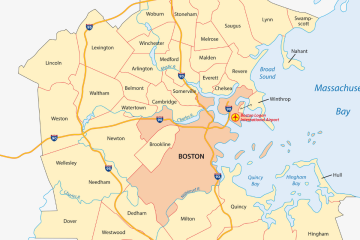
Boston integration open enrollment program SR image

Suburban school districts can help urban students succeed

Aaron Churchill
9.20.2021
Ohio Gadfly Daily

It’s no secret that many of the best public schools are located in America’s leafy suburbs. They’re typically staffed by well-trained teachers, boast up-to-date textbooks and technology, and offer advanced and specialized coursework. But sadly, most of these schools, despite being “public” institutions, are not open to all. Children must live in the right zip code to attend, thus denying entry to those who live in nearby urban communities.

But what would happen if suburban schools cracked their doors open a little wider? A recent analysis tackles this question and uncovers very promising results for urban students who are given opportunities to attend these schools.

Authored by Ann Mantil of Brown University, the study examines a Boston-area program called METCO, named after the non-profit organization that administers it. For decades, this program has allowed Boston students to attend public schools in the suburbs without having to change their residence. Families apply to participate in METCO and school districts voluntarily accept non-resident pupils on a space available basis. The program today serves just over 3,000 students annually—roughly 4 percent of the city’s students—and more than 90 percent of its participants are Black or Hispanic.

To gauge program impacts, Mantil tracks ninth-grade METCO participants’ high school graduation and college enrollment rates and compares them to two groups: (1) Boston students who never applied to METCO and thus attended the city’s district or charter schools, and (2) Boston students who applied to the program but were not selected for participation. The first comparison includes a larger sample of students, but may not account for unobserved differences between the METCO and non-METCO students (e.g., parental motivation). The second comparison group is more limited in size, but the methodology better controls for unobserved variables. Regardless of the comparison, the results are overwhelmingly positive. Consider the following:

  • Controlling for pupil demographics, METCO students’ graduation rates were a whopping 35 percentage points higher than students attending Boston district schools, and their college enrollment rates were 32 percentage points higher. METCO participants also held a significant advantage in graduation rates relative to Boston charter students—30 percentage points higher—though their college enrollment rates were more comparable (an 11-percentage-point advantage). METCO students’ superior college enrollment rates were almost entirely driven by their higher rates of matriculation to four-year universities (rather than two-year colleges). 
  • Again controlling for demographics, METCO students registered significantly higher graduation and college enrollment rates relative to students who applied but were not accepted into the program. In terms of high school graduation, METCO students’ rates were 18 percentage points higher than the comparison group and 17 points higher for college enrollment. For this analysis, no breakdown of results versus Boston district or charter school students were given, perhaps reflecting the smaller sample size.

Given these impressive benefits—which we also found for Ohio’s Black students who use interdistrict open enrollment—policymakers should consider ways to unlock opportunities in suburban public schools. One option is statewide open enrollment, something Ohio lawmakers should strongly consider. Absent that, local leaders could step up and create regional programs that coordinate interdistrict transfers such as the one in the Boston area. However accomplished, giving more inner-city children the chance to attend great schools and climb the social ladder is the right thing to do.

Source: Ann Mantil, “Crossing District Lines: The Impact of Urban-Suburban Desegregation Programs on Educational Attainments,” Educational Evaluation and Policy Analysis (2021).

view

A flawed study of Indiana’s voucher program

Jeremy Smith
9.23.2021
Flypaper

A recent study looks at the impact of Indiana’s Choice Scholarship Program (ICSP) on school proficiency rates in math and reading at traditional public schools. Its finding that public school proficiency rates on state tests decreased in the long term after ICSP was introduced seems to suggest that the program has a negative long-term impact on public school students. But its reliance on school-level proficiency rates as opposed to student-level data means we can draw few meaningful conclusions about ICSP’s real impact.

The scholarship program, which serves low- and (more recently) middle-income families, is one of the most expansive school voucher programs in the U.S. today. Nearly eighty percent of Indiana students are eligible for the vouchers, although fewer than 4 percent currently make use of them. Because the money follows the student in Indiana, public schools have an incentive to improve their operations to compete with ICSP.

The study has the trappings of a rigorous regression analysis, including controls for student demographics and a large sample size (1268 schools in 283 districts), leading to some impressively-precise-sounding results. It found that a 1-percentage-point increase in a school district’s participation rate in ICSP resulted in a 0.922-percentage-point decrease in a public school’s math proficiency rate and a 0.840-percentage-point decrease in that school’s reading proficiency rate.

At first, one might conclude that the program harms student outcomes, but this is a statistical illusion. To understand ICSP’s impact on public school students, student-level data are needed. School-level data on proficiency rates are not enough. Suppose, for example, that students using the program in a school district are almost all achieving proficiency on state tests. If a 1-percentage-point increase in ICSP participation from such students results in a less than 1-percentage-point decrease in proficiency rates among the other students, then ICSP is actually improving student outcomes.

Even if some of the students using the program are not proficient, the results could be misleading. Imagine a population of one hundred students. Suppose that, before ICSP existed, all of these students would have attended the same public school, and that fifty of those students would have achieved proficiency at that school. That’s a proficiency rate of 50 percent. With the ICSP in place, however, twenty of these students decide to use it to attend other schools, sixteen of whom would have achieved proficiency at the public school. At the same time, the public school makes some improvements so that four students who would have not have been proficient under the old system now achieve proficiency. Suppose also that all students who would have achieved proficiency at the public school without the scholarship program also achieve proficiency at the public school with ICSP. Overall, the effect on students was positive, since four more are now proficient. But our public school now has thirty-eight students who are proficient, and forty-eight students who are not proficient, a proficiency rate of 44 percent!

In other words, this study does not reveal much about the ICSP’s competitive effects on public schools because proficiency rates are a flawed measure of school performance. That’s unfortunate because studies of the long-term impact from school voucher policies are important.

SOURCE: Yusuf Canbolat, “The Long-Term Effect of Competition on Public School Achievement: Evidence from the Indiana Choice Scholarship Program,” Education Policy Analysis Archives (July 2021).

view
teacher in classroom

The Education Gadfly Show #788: Has the pandemic caused an exodus to charter schools?

9.23.2021
Podcast
 

On this week’s podcast, Debbie Veney, Senior Vice President at the National Alliance for Public Charter Schools, joins Mike Petrilli and David Griffith to discuss her new report on Covid-era enrollment trends in charter and traditional public schools. On the Research Minute, Amber Northern examines the prevalence and use of industry-recognized-credential programs in high schools.

Amber's Research Minute

Joshua Eagan and Cory Koedel, "Career Readiness in Public High Schools: An Exploratory Analysis of Industry Recognized Credentials," CALDER Working Papers (September 2021).

view

Cheers and Jeers: September 23, 2021

The Education Gadfly
9.23.2021
Flypaper

Cheers

  • Eleven D.C charter schools are giving admissions preference to students in foster care, experiencing homelessness, or receiving special assistance. —WTOP News
  • “As the pandemic set in, charter schools saw their highest enrollment growth since 2015, 42-state analysis shows.” —The 74
  • English teacher Julie Cohen thought her traffic jam was caused by anti-mask protests. Instead, she soon found herself celebrating the memory of a young, fallen soldier with her four-year-old son. —Washington Post
  • “State superintendent sets goal to get all California third graders reading by 2026.” —EdSource

Jeers

  • President Biden’s federal vaccine mandate will only apply to half of America’s 3.5 million teachers. —The Hill
  • The Massachusetts Teachers Association absurdly blames the state’s annual exams for allowing “white supremacy to flourish in public school.” —Boston Herald
view

What we're reading this week: September 23, 2021

The Education Gadfly
9.23.2021
Flypaper
  • There is a growing gap in college enrollment and graduation between men and women. Is it driven by the effects of more children growing up in single-parent homes? —New York Times
  • “Student quarantines will cause the next major school disruptions. Here are three ways to help ensure kids will keep learning.” —John Bailey
  • Florida Governor Ron DeSantis plans to replace the state’s annual exams, but the details are still to come. —The 74
  • “Tennessee law restricting classroom discussions on race inspires passionate, poignant and enraged feedback.” —Chalkbeat
  • California public schools in many districts are preparing to receive an influx of Afghan refugee students. —EdSource
Fordham Logo

© 2026 The Thomas B. Fordham Institute
Privacy Policy
Usage Agreement

National

P.O. Box 110
Burke, VA 22009

202.223.5452

[email protected]

Ohio

P.O. Box 82291
Columbus, OH 43202

614.223.1580

[email protected]

Sponsorship

130 West Second Street, Suite 410
Dayton, Ohio 45402

937.227.3368

[email protected]