It’s no secret that many of the best public schools are located in America’s leafy suburbs. They’re typically staffed by well-trained teachers, boast up-to-date textbooks and technology, and offer advanced and specialized coursework. But sadly, most of these schools, despite being “public” institutions, are not open to all. Children must live in the right zip code to attend, thus denying entry to those who live in nearby urban communities.
But what would happen if suburban schools cracked their doors open a little wider? A recent analysis tackles this question and uncovers very promising results for urban students who are given opportunities to attend these schools.
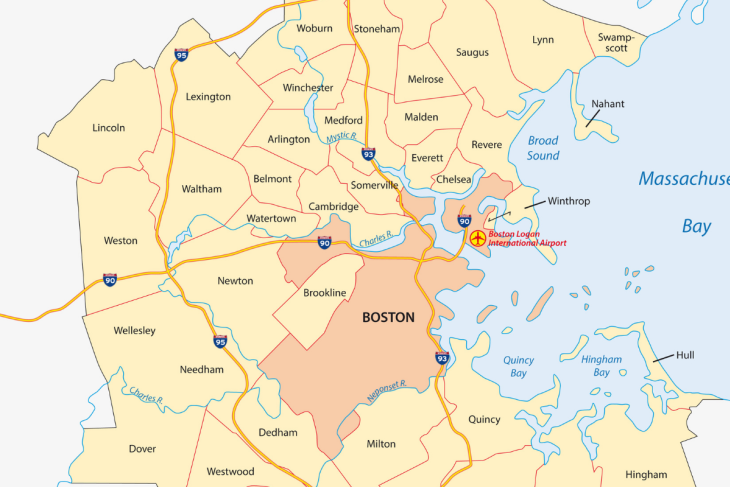
Authored by Ann Mantil of Brown University, the study examines a Boston-area program called METCO, named after the non-profit organization that administers it. For decades, this program has allowed Boston students to attend public schools in the suburbs without having to change their residence. Families apply to participate in METCO and school districts voluntarily accept non-resident pupils on a space available basis. The program today serves just over 3,000 students annually—roughly 4 percent of the city’s students—and more than 90 percent of its participants are Black or Hispanic.
To gauge program impacts, Mantil tracks ninth-grade METCO participants’ high school graduation and college enrollment rates and compares them to two groups: (1) Boston students who never applied to METCO and thus attended the city’s district or charter schools, and (2) Boston students who applied to the program but were not selected for participation. The first comparison includes a larger sample of students, but may not account for unobserved differences between the METCO and non-METCO students (e.g., parental motivation). The second comparison group is more limited in size, but the methodology better controls for unobserved variables. Regardless of the comparison, the results are overwhelmingly positive. Consider the following:
- Controlling for pupil demographics, METCO students’ graduation rates were a whopping 35 percentage points higher than students attending Boston district schools, and their college enrollment rates were 32 percentage points higher. METCO participants also held a significant advantage in graduation rates relative to Boston charter students—30 percentage points higher—though their college enrollment rates were more comparable (an 11-percentage-point advantage). METCO students’ superior college enrollment rates were almost entirely driven by their higher rates of matriculation to four-year universities (rather than two-year colleges).
- Again controlling for demographics, METCO students registered significantly higher graduation and college enrollment rates relative to students who applied but were not accepted into the program. In terms of high school graduation, METCO students’ rates were 18 percentage points higher than the comparison group and 17 points higher for college enrollment. For this analysis, no breakdown of results versus Boston district or charter school students were given, perhaps reflecting the smaller sample size.
Given these impressive benefits—which we also found for Ohio’s Black students who use interdistrict open enrollment—policymakers should consider ways to unlock opportunities in suburban public schools. One option is statewide open enrollment, something Ohio lawmakers should strongly consider. Absent that, local leaders could step up and create regional programs that coordinate interdistrict transfers such as the one in the Boston area. However accomplished, giving more inner-city children the chance to attend great schools and climb the social ladder is the right thing to do.
Source: Ann Mantil, “Crossing District Lines: The Impact of Urban-Suburban Desegregation Programs on Educational Attainments,” Educational Evaluation and Policy Analysis (2021).